Inconel 718 (UNS N07718 / GH4169) is a precipitation-hardened nickel-chromium superalloy that retains high strength to 700°C, resists oxidation to 980°C, and welds more easily than most age-hardened nickel alloys. Engineers specify it when a component must withstand extreme temperatures, pressures, and cyclic loading without losing dimensional stability.
Roughly half the hot-section weight of a modern jet engine is Inconel 718. That single statistic explains why it dominates aerospace, but it also hides a sourcing problem: not every bar stamped “718” can safely replace another. Heat treatment, melt practice, and certification pathway determine whether a delivery passes qualification or triggers a rejection. In this guide, you will learn exactly how Inconel 718 works, where it outperforms alternatives, and what to verify when sourcing certified material from China.
We will cover the composition and metallurgy that give 718 its strength, the mechanical and physical properties that matter for design, the heat treatment and specifications that control performance, and the procurement checks that prevent costly mistakes.
Key Takeaways
- Inconel 718 delivers 1,034–1,120 MPa yield strength at room temperature and still holds roughly 925 MPa at 650°C.
- Niobium drives γ″ (gamma double prime) precipitation hardening, making 718 both strong and weldable.
- AMS 5662 is solution-annealed and usually requires buyer aging; AMS 5663 is already aged to peak strength.
- China’s GH4169 is chemically aligned with Inconel 718, but Western aerospace projects still require qualification beyond the material certificate.
- Melt practice matters: VIM/ESR or triple-melt (VIM+ESR+VAR) is required for rotating aerospace components.
- 2026 China pricing ranges from roughly 25/kgforindustrialbarto25/kgforindustrialbarto65/kg for aerospace-certified material with full traceability.
What Is Inconel 718?

Definition and Global Designations
Inconel 718 is an age-hardenable nickel-iron-chromium alloy strengthened by niobium, titanium, and aluminum precipitates. It was developed in the early 1960s and remains the most widely used superalloy in the world. The alloy is known under several designations:
| Designation | Standard / Origin |
|---|---|
| UNS N07718 | Unified Numbering System (USA) |
| W. Nr. 2.4668 | DIN/EN designation (Europe) |
| GH4169 | Chinese national alloy grade |
| Inconel 718 | Special Metals Corporation trademark |
The Chinese equivalent GH4169 is governed by GB/T 14992 (classification and designation) and GB/T 15062 (bars, forgings, and rings). Chemically, GH4169 and Inconel 718 overlap closely, but the certification path for international projects requires more than a matching certificate.
How Inconel 718 Is Made
The performance of Inconel 718 starts at the melt. Three melt practices dominate the market:
| Melt Practice | Process | Typical Use |
|---|---|---|
| Air melt + ESR | Electric arc furnace remelted through electroslag | Industrial fasteners, lower-stress components |
| VIM + ESR | Vacuum induction melting plus electroslag remelting | Aerospace structural parts, turbine discs |
| Triple melt (VIM + ESR + VAR) | VIM/ESR followed by vacuum arc remelting | Rotating aerospace components, critical discs |
VIM removes dissolved gases and volatile tramp elements. ESR improves cleanliness and macro-segregation. VAR adds another purification cycle and is often mandated for rotating parts where fatigue initiation at a non-metallic inclusion could be catastrophic. After melting, the alloy is forged or rolled, then solution-annealed and aged to develop its final strength.
At Jiangsu Zhonggongte, we route aerospace-grade Inconel 718 round bar through VIM/ESR or triple-melt practice and verify every heat with in-house OES spectrometry before release.
Mini-Story: The $500,000 Turbine Disc Rejection
In 2022, a European aerospace MRO accepted a GH4169 disc from a non-VIM/ESR mill because the room-temperature tensile report matched the drawing. Six months later, the disc failed a creep-rupture qualification test at 650°C. The root cause was a stringer of non-metallic inclusions that only became a failure path under sustained load and temperature. The supplier could not produce VAR pedigree, and the entire lot was scrapped. The direct material loss was modest; the program delay and re-qualification costs exceeded $500,000.
Inconel 718 Chemical Composition

Element Breakdown
The balance of elements in Inconel 718 is deliberately narrow. Small shifts in niobium, titanium, or carbon change hardening response, weldability, and creep life.
| Element | Min % | Max % | Function |
|---|---|---|---|
| Nickel (Ni) | 50.0 | 55.0 | Austenitic matrix, corrosion resistance |
| Chromium (Cr) | 17.0 | 21.0 | Oxidation and corrosion resistance |
| Iron (Fe) | Balance | Balance | Cost control, matrix toughening |
| Niobium + Tantalum (Nb+Ta) | 4.75 | 5.50 | Primary γ″ hardening element |
| Molybdenum (Mo) | 2.80 | 3.30 | Solid-solution strengthening, pitting resistance |
| Titanium (Ti) | 0.65 | 1.15 | γ′ and γ″ formation |
| Aluminum (Al) | 0.20 | 0.80 | γ′ formation, oxidation resistance |
| Cobalt (Co) | – | 1.00 | Trace control |
| Carbon (C) | – | 0.08 | Carbide formation, grain boundary control |
| Manganese (Mn) | – | 0.35 | Deoxidizer |
| Silicon (Si) | – | 0.35 | Deoxidizer |
| Sulfur (S) | – | 0.015 | Kept low to avoid hot cracking |
| Phosphorus (P) | – | 0.015 | Kept low for ductility |
Niobium is the most influential addition. During aging, it combines with nickel to form Ni₃Nb precipitates known as γ″ (gamma double prime). These coherent precipitates create an enormous resistance to dislocation motion. A secondary γ′ phase, Ni₃(Al,Ti), adds further strengthening. The combination gives Inconel 718 its high strength while preserving enough ductility for forming and welding.
Chinese Equivalent GH4169
GH4169 was developed as China’s equivalent to Inconel 718 and is produced by most major Chinese superalloy mills. For industrial applications such as fasteners, tooling, and lower-temperature pressure parts, GH4169 and Inconel 718 are often interchangeable when the same heat treatment is applied. For aerospace, the material certificate must be supported by:
- Melt practice declaration (VIM/ESR or triple melt)
- Full chemical analysis, including gas content (O, N)
- Mechanical property tests at room and elevated temperatures
- Non-metallic inclusion rating
- NDT report (ultrasonic or eddy current as applicable)
- EN 10204 3.1 or 3.2 certification for traceability
Aerospace buyers should treat GH4169 as a starting point, not a finished qualification. Customer approval is still required before substituting GH4169 for an AMS-specified Inconel 718 delivery.
Inconel 718 Mechanical Properties
Room Temperature Properties
After standard double aging, Inconel 718 reaches strength levels that rival many steels while keeping nickel-alloy corrosion resistance.
| Property | Typical Range |
|---|---|
| Tensile strength | 1,241–1,345 MPa |
| Yield strength (0.2% offset) | 1,034–1,120 MPa |
| Elongation | 12–20% |
| Hardness | 36–42 HRC |
| Modulus of elasticity | 200 GPa |
These values apply to solution-annealed and aged bar or forgings in the AMS 5663 condition. Cold-worked or direct-aged variants can shift these numbers up or down depending on section size and processing history.
Elevated and Cryogenic Performance
Inconel 718 was designed for service where ordinary stainless steels and titanium alloys soften. Strength retention is the primary reason it is chosen over alternatives.
| Temperature | Tensile Strength | Yield Strength |
|---|---|---|
| Room temperature | 1,241–1,345 MPa | 1,034–1,112 MPa |
| 200°C | 1,180–1,280 MPa | 970–1,060 MPa |
| 400°C | 1,100–1,200 MPa | 880–980 MPa |
| 650°C | 1,000–1,080 MPa | ~925 MPa |
| 700°C | 900–980 MPa | 780–860 MPa |
For comparison, Inconel 625 drops to roughly 380 MPa yield strength at 650°C. That gap explains why 718 is chosen for discs, shafts, and bolts in hot gas paths where 625 would not survive. At the opposite extreme, Inconel 718 retains excellent toughness down to -253°C, making it suitable for cryogenic pressure vessels and liquid-fuel rocket turbopumps.
Creep and fatigue resistance are also strong. Under sustained load above 550°C, 718 resists creep deformation better than precipitation-hardened stainless steels. Its low-cycle fatigue life is one reason it dominates turbine disc applications.
Physical Properties
| Property | Value |
|---|---|
| Density | 8.19 g/cm³ |
| Melting range | 1,260–1,336°C |
| Maximum load-bearing temperature | ~700°C |
| Oxidation resistance limit | ~980°C |
| Thermal conductivity (room temp) | 13.4 W/(m·K) |
| Coefficient of thermal expansion (21–100°C) | 13.0 µm/(m·K) |
The density is roughly 10% lower than that of many cobalt-based superalloys and slightly higher than that of titanium. In aerospace design, the weight penalty is usually accepted because the alloy allows thinner sections and fewer parts.
Heat Treatment and Specifications
Standard Heat Treatment
The classic heat treatment for Inconel 718 is a solution anneal followed by a two-step age:
- Solution anneal: 980–1,020°C, air cool or water quench. This dissolves the strengthening phases and sets grain structure.
- First aging step: 720°C for 8 hours, furnace cool to 620°C at 55°C/hour.
- Second aging step: 620°C for 8–10 hours, air cool.
The slow furnace cool between 720°C and 620°C is critical. It allows fine γ″ precipitates to nucleate uniformly. Deviating by ±10°C or skipping the controlled cool can reduce hardening effectiveness by 15–20% and leave the material short of specified strength. Heat treatment must be performed in calibrated furnaces, and aerospace buyers should ask for furnace charts as part of the material test report.
AMS 5662 vs AMS 5663 vs ASTM B637
| Specification | Condition | Typical Use |
|---|---|---|
| AMS 5662 | Solution annealed | Aerospace forgings, bars; buyer performs aging |
| AMS 5663 | Solution annealed and aged | Aerospace components delivered at full strength |
| ASTM B637 | Annealed or aged | General industrial bar and wire |
AMS 5662 is the standard aerospace solution-annealed condition. It is supplied soft enough for forming or machining before the buyer applies the final aging cycle. AMS 5663 is already aged to peak strength and is used when the part geometry does not require post-delivery forming. ASTM B637 covers a wider range of product forms and conditions for industrial applications where an aerospace pedigree is not required.
For NACE MR0175 / ISO 15156 sour-service applications, additional hardness limits apply. Buyers should confirm that the specified heat treatment will meet the maximum hardness required by the standard.
Corrosion and Oxidation Resistance

High-Temperature Oxidation
Chromium in Inconel 718 forms a protective Cr₂O₃ oxide scale. This gives the alloy useful oxidation resistance up to about 980°C, although its load-bearing limit is closer to 700°C. Above 700°C, the strengthening precipitates begin to over-age, and long-term creep becomes the governing design factor rather than oxidation.
Aqueous and Chemical Resistance
Inconel 718 resists chloride stress-corrosion cracking better than austenitic stainless steels. It performs well in:
- Jet engine combustion environments
- Sour oil and gas fluids (when hardness is controlled)
- Seawater and marine atmospheres
- Mild reducing and oxidizing acids
In strongly oxidizing acids or chloride environments, Hastelloy C276 corrosion resistance may be the better choice. Inconel 625 also outperforms 718 in severe corrosion service because of its higher molybdenum content, though it sacrifices high-temperature strength. See our Inconel 625 vs 718 selection guide for a side-by-side comparison.
Inconel 718 Applications by Industry
Aerospace
Inconel 718 is the backbone of modern gas turbine engines. Typical components include:
- Turbine discs and compressor discs
- Blades, vanes, and seals
- Fasteners and casings
- Rocket turbopump housings
- Additive-manufactured fuel nozzles
GE Aviation has produced more than 30,000 additively manufactured fuel nozzles in Inconel 718 for the CFM LEAP engine program. The LEAP nozzle combines 20 formerly separate parts into one 3D-printed component that is both lighter and more durable. SpaceX uses 718 for Merlin rocket engine turbopump components because of its strength across cryogenic to elevated temperatures. For a deeper dive, see our dedicated Inconel 718 aerospace applications article.
Oil and Gas
Downhole tools, wellhead components, blowout preventer parts, and high-pressure, high-temperature (HPHT) fasteners use Inconel 718 when sour gas, high chloride levels, and elevated temperature coincide. NACE MR0175 compliance is essential for these applications; suppliers must demonstrate that the delivered hardness falls within the allowed range.
Power Generation, Marine, and Nuclear
Gas turbine hot-section hardware, nuclear fuel element spacers, marine propulsion shafts, and exhaust valves all exploit the alloy’s combination of strength and oxidation resistance. In nuclear applications, 718’s good neutron economy and dimensional stability make it useful for reactor internals.
Inconel 718 Product Forms
Bar, Plate, Pipe, Sheet, Forging, and Powder
| Form | Common Specs | Typical Stock Range |
|---|---|---|
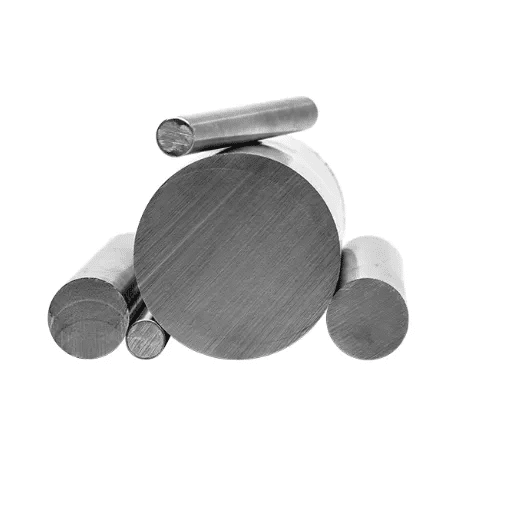
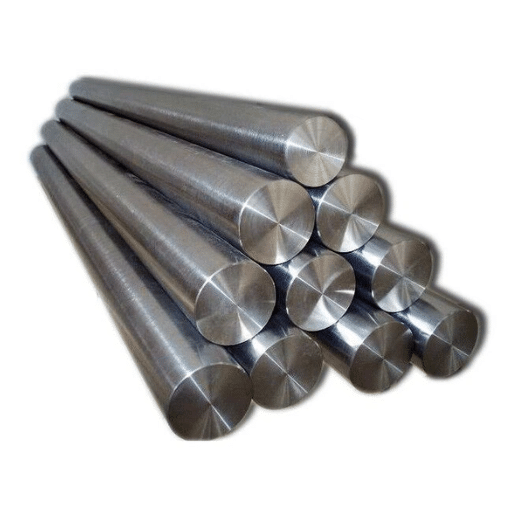
| Round bar | AMS 5662, AMS 5663, ASTM B637 | 6 mm – 300 mm diameter |
| Flat bar/plate | AMS 5596, AMS 5597, ASTM B670 | 3 mm – 50 mm thick |
| Sheet/strip | AMS 5596, AMS 5597 | 0.4 mm – 3 mm |
| Pipe/tube | AMS 5589, AMS 5590 | Schedule and OD per spec |
| Forgings | AMS 5662, AMS 5663, AMS 5664 | Custom per drawing |
| Powder | AMPERPRINT, Höganäs | Additive manufacturing feedstock |
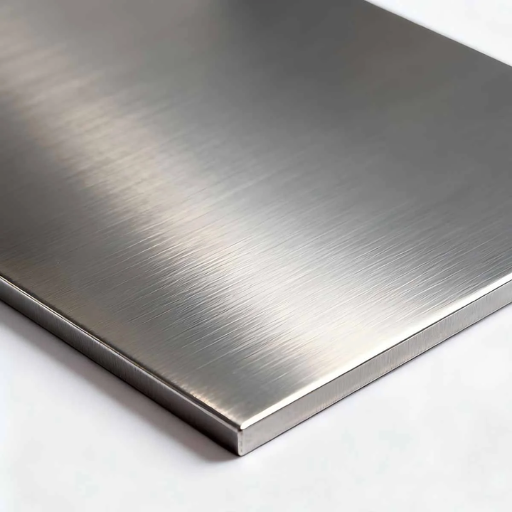
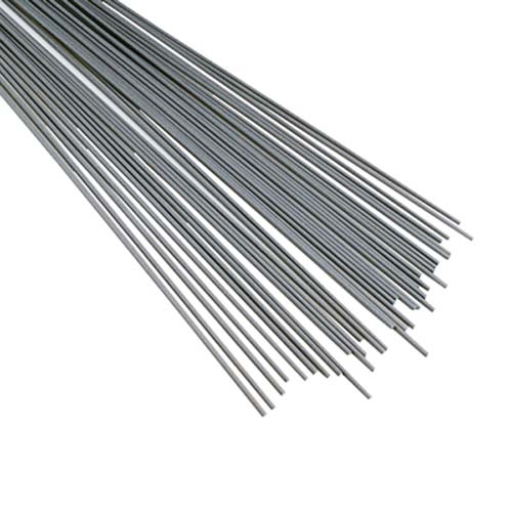
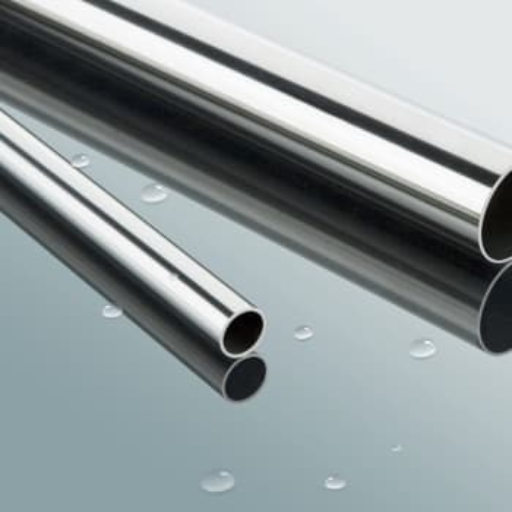
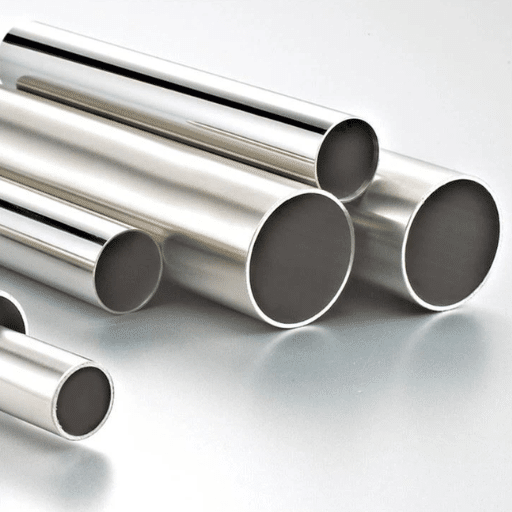
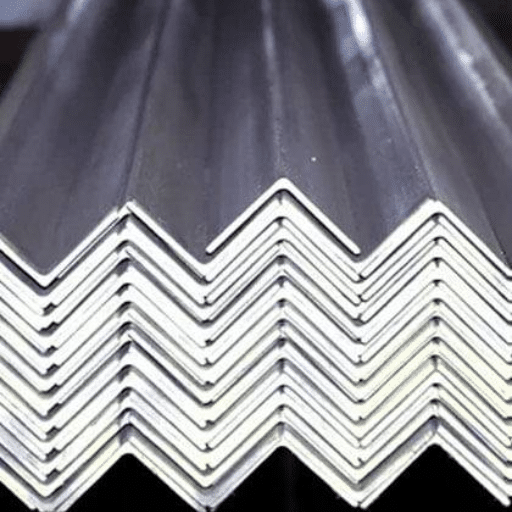
Bar is the most common starting form for machined aerospace parts. Plates and sheets are used for casings, heat shields, and structural panels. Pipe and tube serve heat exchangers and pressure lines. Forgings are required when the part needs grain-flow alignment for fatigue resistance. Powder is increasingly used for additive manufacturing and near-net-shape components.
Machining and Welding Overview
Machining Challenges
Inconel 718 work-hardens rapidly. A dull tool rubs rather than cuts, creating a hardened skin that accelerates wear on subsequent passes. Recommended practices include:
- Use rigid setups and positive rake carbide or ceramic inserts.
- Keep cutting speeds moderate; heat is the enemy of tool life.
- Avoid dwells and interrupted cuts where possible.
- Use flood coolant to pull heat out of the tool edge.
- Machine to near-finish size in one continuous pass when feasible.
Because of the work-hardening behavior, roughing allowances and finishing passes should be planned so the final cut removes enough material to get below any hardened layer.
Welding Basics
Inconel 718 is considered one of the more weldable precipitation-hardened nickel alloys. The recommended filler metal is ERNiFeCr-2, which matches the base metal chemistry. Common processes include gas tungsten arc welding (GTAW/TIG) and gas metal arc welding (GMAW/MIG).
Key welding considerations:
- Solution-annealed material welds more easily than aged material.
- Preheat is generally not required; keep interpass temperature below 175°C.
- Post-weld heat treatment usually requires a full solution and double-aging cycle to restore strength in the heat-affected zone.
- Avoid contamination from sulfur, lead, or zinc, which cause cracking.
Aerospace weldments typically require qualification to AMS standards and may demand NADCAP-accredited heat treatment after welding.
Sourcing Inconel 718 from China
GH4169 Interchangeability
For non-aerospace buyers, GH4169 is often a cost-effective equivalent to Inconel 718. For aerospace and critical energy applications, interchangeability requires a qualification package that proves equivalence, not just similarity. The minimum documentation should include:
- Full chemical analysis
- Mechanical test reports at room and elevated temperatures
- Heat treatment records with furnace charts
- Melt practice declaration
- Inclusion and macro-etch reports
- NDT reports
- EN 10204 3.1 or 3.2 certificate
Without this package, a buyer is simply trusting a certificate, which is the same mistake that caused the turbine disc rejection described earlier.
Mini-Story: The Cost-Per-Component Win
A rocket engine manufacturer in 2023 was machining a titanium turbopump housing from a 180 mm billet. Titanium’s lower density was attractive on paper, but the alloy galled during aggressive turning and required frequent tool changes. After a design review, the team switched the housing to Inconel 718. The part weight increased by 12%, but machining hours dropped by 30% because the material could tolerate higher cutting parameters without tearing. High-temperature durability also improved, eliminating a separate thermal barrier coating step. The total cost per finished component fell by roughly 18%.
Supplier Qualification Checklist
Use this checklist when qualifying a Chinese Inconel 718 supplier:
| Check | Why It Matters |
|---|---|
| VIM/ESR or triple-melt capability | Determines cleanliness and fatigue life for critical parts |
| In-house OES or XRF spectrometry | Confirms chemistry before release; reduces certificate-only risk |
| NADCAP or AS9100 for aerospace | Validates heat treatment, NDT, and quality systems |
| EN 10204 3.1 / 3.2 documentation | Provides traceability and third-party verification |
| Elevated-temperature test capability | Room-temperature data alone can hide high-temperature weaknesses |
| Furnace chart records | Proves the critical 720°C-to-620°C controlled cool was executed |
| Stock program and lead time | Avoids air-freight premiums on urgent jobs |
Cost Factors
In 2026, Inconel 718 pricing from Chinese mills typically spans:
| Form / Grade | Price Range (USD/kg) |
|---|---|
| Industrial round bar, air melt | 25–25–35 |
| Aerospace bar, VIM/ESR | 45–45–55 |
| Aerospace bar, triple melt | 55–55–65 |
| Additive manufacturing powder | 80–80–150 |
Prices move with nickel and niobium markets. Aerospace-certified material carries a premium because of additional testing, tighter tolerances, and full traceability. Volume, diameter, and delivery terms also affect final cost. Submit your AMS specification, and our metallurgical engineers will confirm certification compliance and pricing within 24 hours.
Inconel 718 vs Other Alloys
Inconel 718 vs Inconel 625
| Factor | Inconel 718 | Inconel 625 |
|---|---|---|
| Primary advantage | Higher strength to 700°C | Superior corrosion resistance |
| Yield at 650°C | ~925 MPa | ~380 MPa |
| Weldability | Good, but requires post-weld aging | Excellent, generally no post-weld heat treatment |
| Best for | Hot-section aerospace, HPHT fasteners | Seawater, chemical processing, sour service |
Use 718 when the strength at temperature governs the design. Use 625 when the environment is corrosive and the temperature is moderate.
Inconel 718 vs Inconel X-750
Inconel X-750 is a nickel-chromium alloy strengthened primarily by γ′ and offers good creep resistance to about 815°C. However, it is harder to form and weld than 718. For components requiring both high strength and good weldability below 700°C, 718 is usually the better choice.
Inconel 718 vs Titanium
Titanium alloys such as Ti-6Al-4V offer lower density and excellent specific strength. They are preferred where every gram counts, such as airframe structures. Inconel 718 wins where the operating temperature exceeds titanium’s capability, where stiffness matters, or where the total manufacturing cost, including machining, coatings, and rework, is lower. See our titanium alloy aerospace grade overview for a broader comparison.
FAQ: Inconel 718
What is Inconel 718 used for?
Inconel 718 is used for high-stress, high-temperature components in jet engines, rocket turbopumps, oil and gas downhole equipment, gas turbines, nuclear hardware, and marine propulsion systems.
What temperature can Inconel 718 withstand?
It retains useful load-bearing strength to about 700°C and resists oxidation to roughly 980°C. Long-term creep design limits are usually set below 700°C.
Is Inconel 718 magnetic?
In its standard solution-annealed and aged condition, Inconel 718 is essentially non-magnetic. Cold work can induce a minor magnetic response, but it is not considered a magnetic alloy.
Can GH4169 replace Inconel 718?
For many industrial applications, yes. For aerospace and other regulated applications, GH4169 must go through customer qualification with full documentation, including melt practice, mechanical tests, and traceability certificates.
What is the difference between AMS 5662 and AMS 5663?
AMS 5662 is solution-annealed material, usually aged by the buyer. AMS 5663 is solution-annealed and already aged to peak strength.
Is Inconel 718 difficult to machine?
It work-hardens quickly and generates heat, so it requires sharp carbide or ceramic tooling, rigid setups, and careful cutting parameters. With correct practice, the machines predictably.
Can Inconel 718 be welded?
Yes. It is one of the more weldable precipitation-hardened nickel alloys. ERNiFeCr-2 filler wire is standard, and solution-annealed base metal welds more easily than aged material.
How much does Inconel 718 cost per kg?
In 2026, industrial bar from China ranges from about 25/kgto25/kgto35/kg. Aerospace-certified VIM/ESR or triple-melt bar ranges from 45/kgto45/kgto65/kg. Powder feedstock is higher.
What certifications are required for aerospace Inconel 718?
Typical requirements include AMS 5662 or AMS 5663, AS9100 or NADCAP accreditation at the supplier, EN 10204 3.1/3.2 certificates, and full traceability from melt to final test.
How does Inconel 718 compare to Inconel 625?
Inconel 718 is stronger at high temperatures; Inconel 625 is more corrosion resistant and easier to weld. The choice depends on whether temperature-strength or environmental resistance is the critical design factor.
Mini-Story: The Additive Manufacturing Breakthrough
GE Aviation’s LEAP fuel nozzle became the first FAA-certified 3D-printed aerospace component in production. Made from Inconel 718 powder, the nozzle integrated 20 parts into one, reduced weight by 25%, and improved durability fivefold compared with the welded assembly it replaced. That single part proved 718 could deliver geometries impossible with conventional forging, and established a new supply chain where certified powder, melt pedigree, and build parameters matter as much as the alloy chemistry itself.
Conclusion
Inconel 718 dominates critical high-temperature applications because no other alloy combines its level of strength, corrosion resistance, and weldability across such a wide temperature range. From turbine discs to rocket turbopumps and 3D-printed fuel nozzles, it remains the default choice for engineers who cannot afford a failure.
The difference between a successful project and a costly rejection usually comes down to three decisions: the right specification, the right melt practice, and the right supplier qualification. Get those right, and Inconel 718 will deliver exactly what the drawing promised.
If you need certified Inconel 718 bar, plate, or pipe with full MTR and EN 10204 3.1/3.2 documentation, submit your AMS specification today. Our metallurgical team will confirm the certification pathway and return a firm quote within 24 hours.