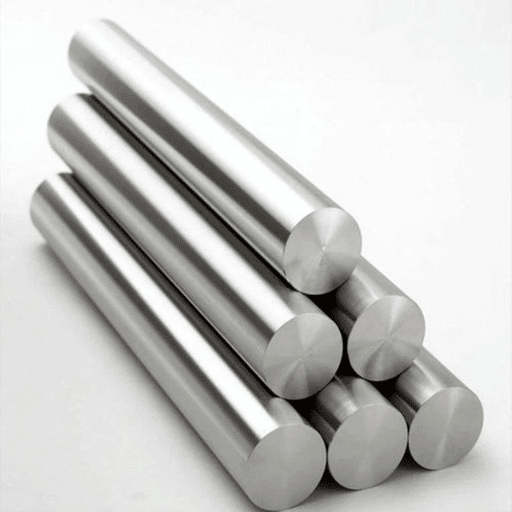
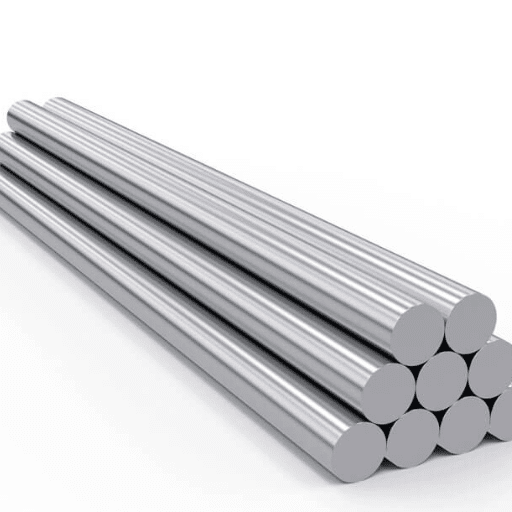
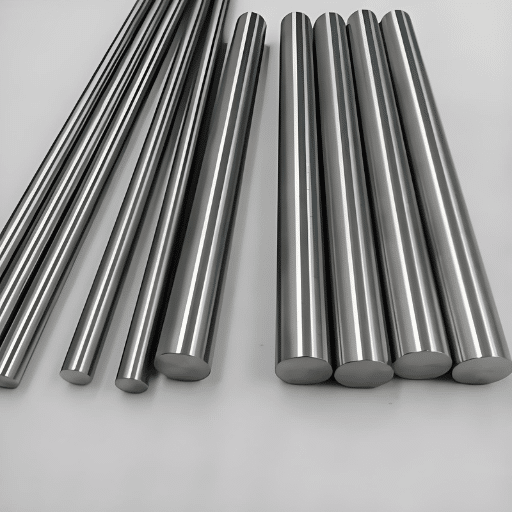
17-4PH is a precipitation-hardening martensitic stainless steel optimized for strength and hardness; 316 is an austenitic stainless steel optimized for corrosion resistance, ductility, and weldability. Choose 17-4PH for high-strength, load-bearing parts; choose 316 for marine, chemical, and food-grade applications.
Last year, a procurement team at a Midwest pump OEM specified 316 annealed bar for a high-torque drive shaft because corrosion resistance was on the drawing. Six months into service, the shaft deflected under load and wore prematurely. The fix wasn’t more 316, it was 17-4PH H900. That single change doubled the yield strength but also altered the magnetic response, the weld procedure, and the corrosion budget.
17-4PH vs 316 isn’t a contest of which grade is better; it’s a question of which properties your application actually pays for.
In this guide, you will learn how these two stainless steel grades differ in composition, mechanical properties, corrosion behavior, heat treatment, welding, machining, and cost. You will also get a decision matrix for choosing by industry, plus an RFQ checklist that prevents the specification mistakes we see in our technical inbox every week.
Key Takeaways
- 17-4PH vs 316 comes down to strength versus corrosion resistance: 17-4PH H900 delivers ≥1,310 MPa tensile strength; 316 annealed delivers ~515 MPa but resists chlorides far better.
- 17-4PH is magnetic, heat-treatable, and condition-dependent (H900 to H1150D); 316 is non-magnetic in the annealed condition and can’t be strengthened by heat treatment.
- 316 contains 2–3% molybdenum for pitting resistance; 17-4PH contains 3–5% copper for precipitation hardening and no intentional molybdenum.
- For offshore, chemical, food, and medical applications, 316 or 316L is usually the safer default; for aerospace fasteners, shafts, gears, and high-stress tooling, 17-4PH is the engineering choice.
- A vague RFQ like “17-4PH or 316 bar” can produce quotes that vary by 40%; always specify condition, standard, form, and certification.
What Is 17-4PH Stainless Steel?

17-4PH stainless steel (UNS S17400, AISI 630, EN 1.4542, Chinese equivalent 0Cr17Ni4Cu4Nb) is a precipitation-hardening martensitic stainless steel. The name itself describes the composition: roughly 17% chromium, 4% nickel, and 4% copper, with the “PH” indicating precipitation hardening.
Unlike austenitic grades, 17-4PH starts with a martensitic microstructure. That gives it a magnetic response and a body-centered tetragonal crystal structure that responds to aging heat treatments. By holding the material at temperatures between 480°C and 620°C for controlled times, nano-scale copper precipitates form inside the martensite matrix. Those precipitates are what push tensile strength past 1,300 MPa in the H900 condition.
For a deeper foundation on this grade, see our complete 17-4PH stainless steel guide. If you need full property tables, our complete 17-4PH properties guide covers every H-condition.
17-4PH Conditions Explained
The mechanical properties of 17-4PH aren’t fixed; they’re controlled by the aging condition. Common designations include:
- Condition A: Solution-annealed, lowest strength, highest ductility, easiest to machine.
- H900: Aged at ~480°C, highest strength and hardness (≥1,310 MPa tensile, 40–47 HRC).
- H1025, H1075, H1100: Intermediate aging temperatures that balance strength and toughness.
- H1150 / H1150D: Double-aged for maximum stress-corrosion cracking resistance and toughness, lower hardness.
This condition dependency is the most important thing to remember when you compare 17-4PH vs 316. Saying “17-4PH” without a condition is like saying “steel” without a grade.
What Is 316 Stainless Steel?
316 stainless steel (UNS S31600, EN 1.4401, Chinese equivalent 0Cr17Ni12Mo2 or 06Cr17Ni12Mo2) is an austenitic stainless steel. Its microstructure is face-centered cubic, which gives it excellent ductility, toughness down to cryogenic temperatures, and essentially no magnetic response in the annealed condition.
The key alloying addition in 316 is molybdenum, typically 2.0–3.0%. Molybdenum improves resistance to pitting and crevice corrosion in chloride environments, which is why 316 dominates marine, chemical, pharmaceutical, and food-processing equipment. The low-carbon variant, 316L (UNS S31603, Chinese 022Cr17Ni12Mo2), contains ≤0.03% carbon to minimize sensitization and intergranular corrosion after welding.
316 can’t be strengthened by heat treatment. You can only harden it by cold working. For engineers who need both corrosion resistance and moderate strength, cold-drawn 316 bar or spring wire is common, but it will never reach the strength of 17-4PH H900.
Within the broader stainless steel grades family, 316 sits at the corrosion-resistant end of the spectrum, while 17-4PH sits at the high-strength end.
17-4PH vs 316: Chemical Composition
The composition differences explain most of the performance gap. 17-4PH is built to precipitate harden; 316 is built to form a stable passive chromium-oxide film in aggressive media.
| Element | 17-4PH (UNS S17400) | 316 (UNS S31600) |
|---|---|---|
| Chromium (Cr) | 15.0–17.5% | 16.0–18.0% |
| Nickel (Ni) | 3.0–5.0% | 10.0–14.0% |
| Copper (Cu) | 3.0–5.0% | ≤0.75% |
| Molybdenum (Mo) | ≤0.50% | 2.0–3.0% |
| Carbon (C) | ≤0.07% | ≤0.08% |
| Manganese (Mn) | ≤1.00% | ≤2.00% |
| Silicon (Si) | ≤1.00% | ≤1.00% |
| Niobium + Tantalum (Nb+Ta) | 0.15–0.45% | Not specified |
| Iron (Fe) | Balance | Balance |
Why Each Element Matters
- Chromium: Both grades rely on chromium for stainless behavior. 17-4PH and 316 operate in roughly the same chromium range, so basic atmospheric corrosion resistance is similar.
- Nickel: 316 needs high nickel to stabilize austenite. 17-4PH uses far less nickel because its matrix is martensitic.
- Copper: Copper is the precipitation-hardening element in 17-4PH. It forms the intermetallic precipitates that create the H900 strength peak. 316 keeps copper low to avoid hot-working issues.
- Molybdenum: Molybdenum is the corrosion differentiator. It improves the stability of the passive film in chlorides, which is why 316 outperforms 17-4PH in seawater and chemical environments.
- Niobium: Niobium in 17-4PH refines grain size and stabilizes the precipitate distribution during aging.
ASTM A564 covers 17-4PH bar and wire, while ASTM A276 covers 316 bar and ASTM A240 covers 316 plate and sheet. You can review the official standards at ASTM A564 and ASTM A276.
17-4PH vs 316: Mechanical Properties
This is where the 17-4PH vs 316 comparison becomes decisive. The grades aren’t close in strength.
| Property | 17-4PH H900 | 17-4PH H1150D | 316 Annealed | 316 Cold-Worked |
|---|---|---|---|---|
| Tensile Strength | ≥1,310 MPa | ≥860 MPa | ~515 MPa | ~620–860 MPa |
| Yield Strength (0.2%) | ≥1,170 MPa | ≥725 MPa | ~205 MPa | ~310–620 MPa |
| Elongation | ≥10% | ≥16% | ≥40% | ≥12–35% |
| Hardness | 40–47 HRC | 24–32 HRC | ~90 HRB (~20 HRC) | Up to ~30 HRC |
| Density | 7.78 g/cm³ | 7.78 g/cm³ | 7.99 g/cm³ | 7.99 g/cm³ |
What the Numbers Mean
17-4PH H900 is roughly 2.5 times stronger in tensile and nearly 6 times stronger in yield than annealed 316. That translates to smaller diameters, lighter shafts, higher torque capacity, and less deflection. For a pump shaft, a landing-gear pin, or a high-pressure valve stem, that strength gap is the entire reason to specify 17-4PH.
However, 316 pays back in ductility. With ≥40% elongation, 316 can absorb more deformation before fracture. It also withstands deeper forming, tighter bends, and more severe flaring operations without cracking.
When we receive RFQs for stainless steel bar in these grades, the first question our metallurgists ask isn’t “which grade?” but “what load and what environment?” The answer usually points to one of these two grades within minutes.
17-4PH vs 316: Corrosion Resistance

Corrosion behavior is the mirror image of mechanical strength. Where 17-4PH dominates strength, 316 dominates corrosion resistance.
Pitting Resistance Equivalent Number (PREN)
PREN is a quick way to compare pitting resistance in chloride environments:
| Grade | PREN Range |
|---|---|
| 17-4PH H900 | ~15–17 |
| 316 / 316L | ~23–29 |
| 316L Cold-Worked | ~23–29 |
Higher PREN means better chloride resistance. 316 wins clearly in seawater, brine, bleach, and many process chemicals.
Performance by Environment
- Marine / Seawater: 316L is the default for pumps, valves, fasteners, and fittings in seawater. 17-4PH H900 has been used for high-strength marine fasteners, but it requires coatings or cathodic protection and isn’t recommended for continuous seawater immersion.
- Chloride Exposure: 316 resists pitting and crevice corrosion better than 17-4PH at chloride levels above a few hundred ppm.
- Sour Gas (H₂S) Service: 316L and duplex grades are common in oil and gas sour service. 17-4PH in the H1150D condition can meet NACE MR0175 / ISO 15156 requirements for some components, but the specification must be explicit. See the NACE ISO 15156 standard for details.
- General Atmospheric: Both grades resist rust in normal indoor and outdoor atmospheres. 17-4PH develops a gray patina; 316 remains bright longer.
A valve manufacturer on the Gulf Coast learned this the hard way. They used 17-4PH H900 for a high-pressure seawater valve to gain strength and reduce wall thickness. Within 18 months, localized pitting appeared at the seat.
Switching to 316L eliminated the corrosion, but the valve body had to grow in section to handle the same pressure. The project saved on corrosion risk but spent more on material volume.
17-4PH vs 316: Heat Treatment & Fabrication
Heat Treatability
17-4PH is heat-treatable; 316 isn’t. This is a fundamental process difference.
For 17-4PH, you solution-treat at ~1,040°C, air cool or quench to form martensite, then age at 480–620°C to develop strength. Each aging temperature produces a different H-condition. For a detailed process map, see our 17-4PH heat treatment guide.
316 is used in the annealed condition or cold-worked condition. Annealing 316 at ~1,040°C followed by rapid water quench dissolves carbides and restores corrosion resistance. You can’t increase 316 strength by aging; you must cold work it.
Weldability
316 and 316L are among the most weldable stainless steels. They can be welded by TIG, MIG, SMAW, and resistance welding without preheat in most thicknesses. Low-carbon 316L is preferred when post-weld corrosion resistance matters.
17-4PH is weldable, but the procedure is more restrictive. Use matching 17-4PH filler metal, keep heat input controlled, and perform a post-weld solution and aging treatment to recover strength and corrosion resistance. Welding in the aged condition can produce soft heat-affected zones and cracking risk. For procedure details, see our 17-4PH welding guide.
Machinability
In Condition A, 17-4PH machines similarly to 304 stainless steel. In H900, tool wear increases significantly. Most shops machine 17-4PH in Condition A, then age to final strength. For feeds, speeds, and tooling guidance, see our 17-4PH machining guide.
316 is gummy and work-hardens quickly, but it is forgiving with sharp carbide tools and adequate coolant. Cold-drawn 316 machines more cleanly than annealed 316.
Formability
316 wins on formability. Its austenitic structure allows deep drawing, bending, and spinning. 17-4PH in Condition A can be formed, but springback is higher, and forming in H900 conditions risks cracking. Form 17-4PH before final aging whenever possible.
17-4PH vs 316: Magnetic Properties
17-4PH is magnetic because of its martensitic microstructure. 316 is essentially non-magnetic in the annealed condition, though cold working can induce a small amount of martensite and slight magnetism.
This distinction matters in:
- Sensor and actuator housings: Non-magnetic 316 won’t interfere with magnetic field measurements.
- Medical imaging: 316L is preferred for instruments and implants near MRI equipment.
- Aerospace fasteners: Magnetic 17-4PH is acceptable for most structural applications.
- Separation equipment: Magnetic 17-4PH can be sorted from non-magnetic austenitic scrap.
If magnetism is a design constraint, 316 is the safer choice unless you specifically need a magnetic stainless grade.
17-4PH vs 316: Cost Comparison
Raw material cost is only one part of the 17-4PH vs 316 equation, but it shapes early budget decisions.
| Cost Factor | 17-4PH | 316 / 316L |
|---|---|---|
| Raw Material per kg | Typically 15–25% higher than 316 | Lower base cost |
| Heat Treatment | Required; adds process cost and lead time | Not required for standard annealed supply |
| Machining | Higher tool wear in H900; often machined in Condition A then aged | Moderate; work-hardens quickly |
| Welding | Requires controlled procedure and post-weld heat treatment | Straightforward; lower labor cost |
| Certification | MTR, spectral report, sometimes NACE | MTR, spectral report, sometimes EN 10204 3.2 |
A pump OEM we work with once sent an RFQ for “17-4PH or 316 bar, 50 mm diameter, 500 pcs.” Quotes came back 40% apart. The reason: one supplier quoted 17-4PH H900 with full MTR and spectral verification; another quoted 316 annealed with a basic certificate. Once the buyer added “ASTM A564 H900 with EN 10204 3.1 MTR” versus “ASTM A276 316L with PMI report,” pricing converged to within 5% for comparable quotes.
For project buyers, the real cost question is total landed cost, not just per-kilogram price. 17-4PH can reduce section size and machining time in high-strength parts. 316 can reduce protective coating, inspection, and replacement costs in corrosive service.
17-4PH vs 316: Applications by Industry

The 17-4PH vs 316 choice becomes clearer when you look at it by industry. Each sector prioritizes either mechanical performance or environmental resistance.
Aerospace & Defense
17-4PH H900 and H1025 dominate aircraft fasteners, landing-gear components, missile cases, and structural pins. 316 is used for fuel-line fittings, exhaust components, and non-magnetic hardware.
Marine & Offshore
316L is the workhorse for pumps, valves, propeller shafts, fasteners, and deck hardware. 17-4PH is used selectively for high-strength propeller hubs, actuator rods, and tensioning hardware where coatings protect the surface.
Chemical & Petrochemical
316 and 316L handle reactors, heat exchangers, storage tanks, and piping in chloride-containing process streams. 17-4PH is limited to high-strength internals, bolts, and wear components inside less aggressive sections.
Food, Pharma & Medical
316L is preferred for hygienic equipment, surgical instruments, and implant hardware. Its non-magnetic nature, excellent polishability, and corrosion resistance make it the default choice. 17-4PH is rarely used here unless high strength is essential.
Oil & Gas
316L and duplex grades handle downhole and surface corrosive service. 17-4PH in H1150D can qualify for NACE sour-service bolting and wellhead components when specified correctly.
Industrial Machinery
17-4PH H900 is common for gears, shafts, couplings, and tooling where wear resistance and strength matter. 316 is used for frames, guards, and hardware exposed to washdown chemicals.
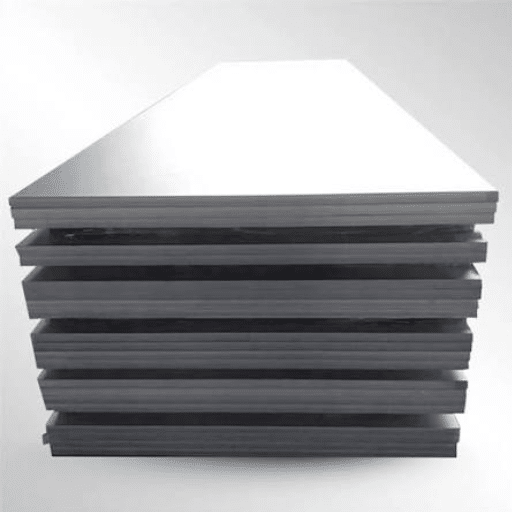
If your project needs flat product, we supply both grades as stainless steel sheet and plate with cut-to-size processing and full traceability.
How to Choose: Decision Matrix
Use this 17-4PH vs 316 decision matrix to route the choice quickly.
| Your Priority | Recommended Grade | Why |
|---|---|---|
| Maximum strength and hardness | 17-4PH H900 | ≥1,310 MPa tensile, 40–47 HRC |
| Best corrosion resistance in chlorides | 316 / 316L | Higher PREN, stable passive film |
| Weldability without post-weld heat treatment | 316L | Standard weld procedure, low carbon |
| High strength + some corrosion resistance | 17-4PH H1150D | Tougher, better SCC resistance than H900 |
| Non-magnetic requirements | 316 annealed | Austenitic structure |
| Magnetic response needed | 17-4PH | Martensitic structure |
| Lowest cost per kg | 316 annealed | Lower raw-material and processing cost |
| High-temperature service above 300°C | 316 | 17-4PH overages and loses strength |
| Cryogenic toughness | 316L | Retains ductility down to -196°C |
When in doubt, describe your operating temperature, media, mechanical load, and fabrication method to our metallurgical engineers. The right grade usually becomes obvious once those four variables are known.
Sourcing 17-4PH and 316 from China
Sourcing 17-4PH vs 316 from a Chinese mill or distributor introduces the same risks regardless of grade: composition variance, documentation gaps, and lead-time surprises. A strong RFQ eliminates most of them.
RFQ Specification Checklist
- Grade and standard: ASTM A564 (17-4PH) or ASTM A276/A240 (316/316L). Include UNS number.
- Condition for 17-4PH: H900, H1025, H1075, H1100, H1150, H1150D, or Condition A.
- Product form: stainless steel bar, plate, sheet, pipe, tube, wire, forging, or fastener.
- Dimensions and tolerances: Diameter, thickness, width, length, and applicable tolerance class.
- Certification: EN 10204 3.1 or 3.2 mill test report, spectral analysis, hardness test, tensile test.
- Special requirements: NACE MR0175, PMI testing, ultrasonic NDT, or third-party inspection.
- Quantity and delivery: MOQ, incoterms, and required delivery window.
MTR Verification Points
- Check that the heat number on the MTR matches the material marking.
- Verify chromium, nickel, molybdenum, and copper against the standard.
- For 17-4PH, confirm hardness aligns with the specified H-condition.
- For 316L, confirm carbon ≤0.03% and molybdenum within 2.0–3.0%.
At Jiangsu Zhonggongte, we verify every batch in-house with direct-reading spectrometers, tensile testing machines, and hardness testers before shipment. We also supply original mill certificates for material sourced through our authorized global mill partners.
Need a competitive quote for 17-4PH or 316? Submit your RFQ and our technical team will respond within 24 hours with pricing, availability, and certification options.
17-4PH vs 316 FAQ
These 17-4PH vs 316 FAQ answers cover the questions we hear most often from procurement and engineering teams.
Q: Which is stronger, 17-4PH or 316?
A: 17-4PH is significantly stronger. In the H900 condition, 17-4PH delivers ≥1,310 MPa tensile strength and ≥1,170 MPa yield strength. Annealed 316 delivers ~515 MPa tensile and ~205 MPa yield. Even cold-worked 316 rarely matches 17-4PH H900.
Q: Is 17-4PH better than 316 for corrosion resistance?
A: No. 316 has a higher PREN (~23–29 vs ~15–17 for 17-4PH) and performs better in chloride, seawater, and chemical environments. 17-4PH is acceptable in mild atmospheres and some chemical exposures, but 316 is the corrosion-resistant choice.
Q: Can 17-4PH be welded like 316?
A: 17-4PH is weldable, but the procedure is more demanding. Use matching filler metal, control heat input, and perform post-weld solution and aging to restore properties. 316L is far more forgiving and usually needs no post-weld heat treatment.
Q: Is 17-4PH magnetic?
A: Yes. 17-4PH is martensitic and magnetic. 316 is austenitic and essentially non-magnetic in the annealed condition, although cold working can introduce slight magnetism.
Q: What is the Chinese equivalent of 17-4PH and 316?
A: The common Chinese equivalent for 17-4PH is 0Cr17Ni4Cu4Nb (GB standard). For 316, the equivalents are 0Cr17Ni12Mo2 or 06Cr17Ni12Mo2; for 316L, 022Cr17Ni12Mo2.
Q: How much more expensive is 17-4PH than 316?
A: 17-4PH raw material is typically 15–25% more expensive per kilogram than 316, but the total cost depends on form, condition, heat treatment, certification, and order quantity.
Q: Which grade is better for pump shafts?
A: It depends on the fluid. For corrosive or seawater pumps, 316L is usually better. For high-torque, high-speed fresh-water or oil pumps, 17-4PH H900 provides the strength to prevent deflection and wear.
Q: Can 17-4PH replace 316 in marine applications?
A: Only with caution. 17-4PH H900 has been used for high-strength marine fasteners, but continuous seawater immersion can cause pitting. Coatings, cathodic protection, or a switch to 316L, duplex 2205, or super duplex 2507 is usually safer.
Q: What does H900 mean for 17-4PH?
A: H900 means the material has been aged at approximately 480°C to produce maximum strength and hardness. Other conditions like H1025, H1075, H1100, and H1150D use progressively higher aging temperatures to trade strength for toughness.
Q: How do I verify the grade in a mill test report?
A: Cross-check the chemical composition against ASTM limits, confirm the heat-treatment condition for 17-4PH or the carbon content for 316L, and verify that hardness and tensile results match the specified grade and condition.
Conclusion
17-4PH vs 316 isn’t a question of good versus bad; it’s a question of priorities. If your design is governed by strength, hardness, and magnetic response, 17-4PH H900 is the clear answer. If your design is governed by corrosion resistance, ductility, weldability, and non-magnetic behavior, 316 or 316L is the safer default.
The costliest mistake we see is choosing the grade for the wrong reason, or worse, leaving the condition and standard out of the RFQ. A precise specification protects both your engineering performance and your procurement budget.
At Jiangsu Zhonggongte, we supply both grades in bar, plate, sheet, pipe, tube, and custom-forged forms with full MTR documentation and in-house spectral verification. Request a quote today and our metallurgical engineers will confirm the right grade, condition, and certification for your application within 24 hours.