Hastelloy C276 and C22 are not interchangeable. C276 (UNS N10276) is the right choice for strongly reducing acids such as concentrated hydrochloric and sulfuric acid, while C22 (UNS N06022) is the right choice for oxidizing, mixed, wet-chlorine, and welded-critical service where its higher chromium content resists heat-affected-zone attack. Choose on your process stream, not on habit or price.
Most engineers know C276. It’s been the default nickel-chromium-molybdenum workhorse since the 1960s, and its reputation as a “universal” corrosion alloy is well earned. But the less-famous C22 was engineered as its successor. In exactly the environments where modern chemical plants fail, wet chlorine, oxidizing chlorides, and welded joints, C22 outperforms it.
At the same time, if your service is purely reducing, buying C22 is spending money on capability you’ll never use. This guide gives you the full comparison: composition, corrosion data, welding truth, cost, and the decision rules to get the grade right the first time. You’ll also learn how to source both grades certified, with NS3304 and NS3308 equivalents, so your procurement and quality teams can verify every batch on arrival.
Key Takeaways
- C276 wins in reducing acids (HCl, H₂SO₄) with higher molybdenum and tungsten; C22 wins in oxidizing and mixed services with higher chromium.
- C22 was designed to resist weld-zone corrosion and needs no post-weld heat treatment; C276 can suffer heat-affected-zone attack in oxidizing chloride service.
- In Haynes’ saturated wet-chlorine tests, C22 showed no localized attack at 95°C liquid while C276 suffered weld-metal and intergranular attack at 80°C.
- C22 typically costs 5-15% more per kg than C276, but its longer service life in oxidizing duty usually offsets the premium.
- Both ship with full mill test reports (MTRs); PMI spectral verification is the only reliable way to confirm you received the grade you specified.
Direct Answer: Which Alloy Should You Choose?

Choose Hastelloy C276 for strongly reducing environments, concentrated hydrochloric acid, reducing sulfuric acid, and mixed acids where oxidizers are absent. Its higher molybdenum and tungsten content provides superior resistance to uniform and localized attack in these services, usually at lower material cost.
Choose Hastelloy C22 for oxidizing environments, wet chlorine, ferric or cupric chlorides, hypochlorite, mixed acids such as HNO₃ + HCl, and any welded fabrication where heat-affected-zone corrosion is a risk. Its higher chromium content forms a more stable passive film and resists localized attack that C276 cannot.
If your process fluctuates between oxidizing and reducing conditions, C22 is the safer choice. Its broader corrosion envelope absorbs swings that would expose C276’s limits. If the service is clearly, consistently reducing, C276 delivers equal or better performance at a lower price and with a larger installed base to draw from. The engineering question is never “which alloy is better.” It’s “what is in your process stream, at what temperature, and what contaminant concentrations?”
What Are Hastelloy C276 and C22?
Designations and Equivalents
Both alloys belong to the nickel-chromium-molybdenum (Ni-Cr-Mo) family, but they are specified under different standards across markets. Getting the designation right matters for procurement, because the same alloy has a different name in every region.
| Property | Hastelloy C276 | Hastelloy C22 |
|---|---|---|
| UNS number | N10276 | N06022 |
| German W. Nr. | 2.4819 | 2.4602 |
| DIN code | NiMo16Cr15W | NiCr21Mo14W |
| Chinese GB (GB/T 15007) | NS3304 | NS3308 |
| Japanese JIS | NW 0276 | NW 6022 |
| Product standards | ASTM B575/B574/B622 | ASTM B575/B574/B622 |
A sourcing note for international buyers: the correct Chinese GB designation for C22 is NS3308, not the “NS3302” that appears on some supplier listings. That distinction is a quick test of a supplier’s technical competence. If a vendor cannot name the right GB equivalent, question what else they may have gotten wrong.
Alloy Lineage: The Workhorse and the Successor
Hastelloy C276 entered service in the 1960s and became the most specified corrosion-resistant alloy in chemical processing. Its balance of molybdenum, chromium, and tungsten gave it broad resistance across reducing and oxidizing conditions, earning its “universal” label.
Hastelloy C22 was developed by Haynes International as an improved successor. The design goal was explicit: eliminate preferential weld-zone corrosion. By raising chromium to 20-22.5% and rebalancing molybdenum and tungsten, Haynes created an alloy that forms a more stable passive film in the as-welded condition and resists the localized attack that can appear in C276’s heat-affected zones under oxidizing chloride service. It is the reason C22 is often used as filler metal on C276 base metal and why many engineering firms now default to C22 for fabricated, welded equipment.
For a broader view of the full family, our Hastelloy alloy guide covers every grade we supply, from C276 to C2000 and the B-series reducing-acid alloys.
Chemical Composition Comparison
The entire C276 vs C22 decision comes down to one story in the composition table: chromium versus molybdenum.
| Element | Hastelloy C276 (N10276) | Hastelloy C22 (N06022) |
|---|---|---|
| Nickel (balance) | ~57% | ~56% |
| Chromium | 14.5-16.5% | 20.0-22.5% |
| Molybdenum | 15.0-17.0% | 12.5-14.5% |
| Tungsten | 3.0-4.5% | 2.5-3.5% |
| Iron | 4.0-7.0% | 2.0-6.0% |
| Carbon (max) | 0.01% | 0.010% |
| Silicon (max) | 0.08% | 0.08% |
| Manganese (max) | 1.0% | 0.50% |
| Cobalt (max) | 2.5% | 2.5% |
C276 carries roughly 16% molybdenum and 3.75% tungsten. Molybdenum and tungsten are the elements that build resistance to reducing acids and chloride-induced localized corrosion. They are why C276 excels in hydrochloric and reducing sulfuric acid.
C22 carries roughly 21% chromium. Chromium is the element that drives passivation, the formation of a thin protective oxide film, in oxidizing environments. It is why C22 resists wet chlorine, ferric chloride, hypochlorite, and mixed oxidizing acids where C276 is only good, not excellent.
The tungsten difference is smaller but real: C276’s 3-4.5% tungsten contributes to its reducing-acid strength, while C22’s lower tungsten content is a trade-off that allows the higher chromium. Neither alloy is “better” on composition alone. The composition tells you which environments each alloy was built to survive.
Corrosion Resistance: The Reducing vs Oxidizing Divide
Corrosion resistance is where the two grades separate most clearly. The table below summarizes performance by environment, using the standard ratings published by Haynes International and independent sources.
| Environment | Hastelloy C276 | Hastelloy C22 |
|---|---|---|
| Hydrochloric acid (reducing) | Excellent | Very good |
| Reducing sulfuric acid | Excellent | Good |
| Ferric chloride (oxidizing) | Good | Excellent |
| Cupric chloride | Good | Excellent |
| Hypochlorite solutions | Good | Excellent |
| Mixed acid (HNO₃ + HCl) | Good | Excellent |
| Wet chlorine gas | Good | Very good |
| Seawater (crevice) | Excellent | Excellent |
| Acetic / formic acid | Excellent | Excellent |
| Flue gas condensate (SO₂/HCl) | Excellent | Excellent |
C276’s Strengths: The Reducing-Acid Champion
C276 is the reference alloy for hydrochloric acid at all concentrations up to boiling point, reducing sulfuric acid, phosphoric acid, and many organic acids. In these services its molybdenum and tungsten carry the load. For a heat exchanger handling hot concentrated HCl, C276 is the specification that has decades of field data behind it. It also remains the default for flue gas desulfurization (FGD) systems, where the corrosion envelope is broad but rarely strongly oxidizing.
C22’s Strengths: Oxidizing and Mixed Service
C22 pulls ahead the moment the process stream turns oxidizing. Wet chlorine, ferric and cupric chlorides, hypochlorite bleach solutions, and mixed acids containing nitric acid are all environments where C276 gives up ground. The higher chromium content forms and repairs a passive film that C276’s lower-chromium chemistry cannot sustain. In an oxidizing chloride service, C22’s resistance to pitting and crevice corrosion is measurably better, and its weld zones stay intact where C276’s do not.
The Wet Chlorine Test: Hard Data on the Difference
Haynes International ran a direct comparison of C276 and C22 in saturated wet chlorine, and the results are the clearest evidence of the gap between the two grades:
| Test condition | Hastelloy C276 | Hastelloy C22 |
|---|---|---|
| Liquid phase | Severe weld-metal corrosion and intergranular attack at 80°C | No localized attack at 95°C |
| Vapor phase | Severe weld-metal attack at 65°C | No localized attack at 90°C |
| Uniform corrosion rate | Not reported for survivable condition | 0.9-5 mpy |
In other words, C276 failed by localized weld-zone attack at temperatures more than 15°C below the temperature where C22 showed no localized attack at all. If your process handles wet chlorine, this single data point is the entire comparison.
Pitting and Crevice Corrosion
In acidified 6% FeCl₃ testing (ASTM G48), C22’s critical crevice temperature (CCT) is approximately 80°C compared to approximately 55°C for C276, and some independent sources report even higher C22 values. Both grades exceed 150°C critical pitting temperature in acidified FeCl₃, so in strongly pitting solutions neither is the weak link.
But in the “Green Death” solution, C22 begins pitting at about 120°C while C276 pits at boiling. In “Yellow Death” solution, C22 showed no pitting even at 150°C. For chloride-rich, oxidizing service, C22 is the higher-margin material.
Mechanical and Physical Properties
Mechanically, the two grades are close, which is why the decision so rarely comes down to strength. Both are supplied in the solution-annealed condition and meet the same minimum tensile strength.
| Property | Hastelloy C276 | Hastelloy C22 |
|---|---|---|
| Tensile strength (min) | 690 MPa (100 ksi) | 690 MPa (100 ksi) |
| Yield strength (min) | 283 MPa (41 ksi) | 310 MPa (45 ksi) |
| Elongation (typical) | ~50% | 40-45% |
| Density | 8.89 g/cm³ | 8.69 g/cm³ |
| Melting range | 1325-1370°C | 1325-1370°C |
| Maximum service temperature | ~677°C (1250°F) | ~677°C (1250°F) |
| Solution annealing | 1120°C, water quench | 1105-1135°C, water/air quench |
Both grades are non-magnetic in the annealed condition, a point buyers often confirm before specifying. C22’s slightly higher yield strength and marginally lower density are secondary benefits but rarely decisive. The properties that matter for selection are corrosion performance, weld behavior, and cost, not the mechanical table.
Welding and Fabrication: Where C22 Was Built to Win

Welding is the single biggest practical difference between the two grades, and it is the area most comparison articles skip. For fabricated equipment, it is often the deciding factor.
Weld-Zone Corrosion: C276’s Hidden Weakness
When C276 is welded, the heat-affected zone (HAZ) adjacent to the weld can be the most vulnerable part of the entire component. In reducing acids the HAZ usually performs acceptably. But in oxidizing chloride service, C276’s HAZ is prone to preferential attack.
This is not a welding defect. It is a metallurgical consequence of the alloy’s lower chromium content and its susceptibility to grain-boundary precipitation during the weld thermal cycle. The component fails at the weld, not in the parent plate, which makes it far harder to predict and inspect.
C22’s Answer: No Post-Weld Heat Treatment
C22 was specifically formulated to eliminate this failure mode. Its higher chromium content produces a more stable passive film in the as-welded condition and reduces grain-boundary precipitation in the HAZ. In practice this means C22 can be used in the as-welded condition without post-weld solution annealing, and it resists preferential weld-zone attack that would compromise C276 in the same service.
Filler Metal Selection
Filler selection is straightforward once the design intent is clear:
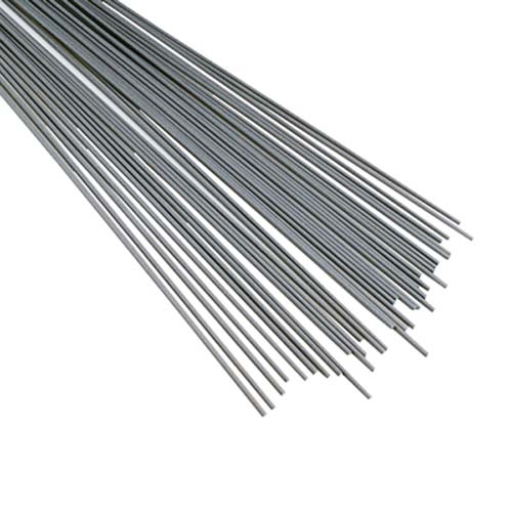
- C276 base metal is typically welded with ERNiCrMo-4 filler (matching C276 chemistry).
- C22 base metal is typically welded with ERNiCrMo-10 filler (matching C22 chemistry).
- C22 filler on C276 base is an accepted practice where the designer wants to improve HAZ corrosion resistance on a C276 fabrication. The higher-chromium filler produces a more corrosion-resistant weld deposit, at the cost of a slight composition mismatch that is generally acceptable in corrosion service.
- ERNiCrMo-10 (C22 chemistry) is also a common general-purpose filler for mixed Ni-Cr-Mo weldments, which is why many fabricators stock it for both alloys.
Practical Fabrication Notes
Both alloys are work-hardening and require low heat input, clean surfaces, and control of interpass temperature during welding. Neither needs preheat. C22’s slightly lower density and comparable strength make machining and forming behavior similar to C276.
The real difference is that C22 forgives more at the weld line. For a welded pressure vessel or a set of fabricated pipe spools, that forgiveness is worth real money.
For a deeper look at how these alloys behave under heat and fabrication, our nickel-based alloy technical guide covers the wider family of corrosion-resistant grades and their welding behavior.
Cost Comparison
Both alloys are premium materials, roughly 15-28x the cost of carbon steel, and both track the same raw-material drivers: nickel (about 56% of composition), molybdenum, and chromium. The consistent market relationship is that C22 trades 5-15% higher than C276 because of its higher chromium content and its status as the newer, more specialized grade.
Indicative 2026 Pricing (USD/kg)
| Product Form | Hastelloy C276 | Hastelloy C22 |
|---|---|---|
| Sheet and plate | $28-55 | $45-70 |
| Round bar and rod | $32-50 | $50-80 |
| Welded pipe | $35-50 | $55-85 |
| Seamless pipe and tube | $45-70 | $80-120 |
| Fittings | $60-90 | $90-150 |
| Forged flanges | $45-70 | $70-110 |
Chinese domestic pricing for C22 plate ran approximately ¥170-220/kg (about $24-31/kg) in early 2026, with imported material 15-30% higher. These figures are indicative only; nickel, molybdenum, and tungsten prices move weekly, and the only reliable number is a live quotation against your specific form, size, and quantity.
The Lifecycle-Cost Argument
The 5-15% premium on C22 looks painful on a purchase order, but it frequently disappears in service. In oxidizing and welded service, C22 components typically outlast C276 by a wide margin, often several years in wet-chlorine and chloride environments. One marine comparison found C22 delivering 3-5 additional years of service life versus C276 in sodium hypochlorite dosing systems, which more than offset its higher initial price.
The reverse is equally true. In a clean reducing-acid service, C276 matches C22’s performance at a lower price, and specifying C22 there is paying for unused capability. The lifecycle math only favors C22 where the environment actually demands it.
What Drives the Price
Nickel is the dominant cost driver, with LME nickel near 15,800/toninmid−2026.Molybdenumandtungstenarethenextcontributors,andbothC22andC276carrymeaningfulamountsofeach.C22′shigherchromiumcontentaddscostbecausechromiumisrefinedtotightpuritytolerancesforcorrosionalloys.Quantitymattersasmuchasthegrade:movingfroma100kgtoa1,000kgordercanreduceper−kgpricingby18−3015,800/toninmid−2026.Molybdenumandtungstenarethenextcontributors,andbothC22andC276carrymeaningfulamountsofeach.C22′shigherchromiumcontentaddscostbecausechromiumisrefinedtotightpuritytolerancesforcorrosionalloys.Quantitymattersasmuchasthegrade:movingfroma100kgtoa1,000kgordercanreduceper−kgpricingby18−303-10/kg depending on the scope.
Selection Decision Matrix
Use these rules to make the call. For each condition, start at the top and work down.
- If your process stream is wet chlorine, chlorine dioxide, or oxidizing chloride solution (ferric/cupric chloride, hypochlorite), choose C22. C276 cannot match C22’s weld-zone and pitting resistance here.
- If your service mixes oxidizing and reducing agents or fluctuates between them, choose C22. Its broader corrosion envelope absorbs the swings.
- If you are fabricating a welded vessel or piping system in an oxidizing chloride environment, choose C22 to eliminate heat-affected-zone corrosion and post-weld annealing.
- If your service is concentrated or boiling hydrochloric acid, reducing sulfuric acid, or phosphoric acid, choose C276. It matches C22 at lower cost with a larger field-proven installed base.
- If the service is clearly reducing and you are cost-constrained, choose C276. C22’s premium buys nothing in this environment.
- If you are uncertain about contaminants or future process changes, choose C22. It is the safer bet when the environment is not fully defined.
- For sour-gas service (NACE MR0175/ISO 15156), both grades are used in the annealed condition, but confirm the specific H₂S, chloride, and pH envelope with the standard before finalizing.
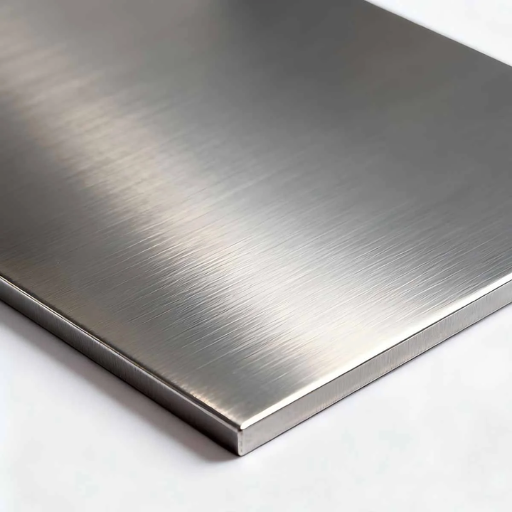
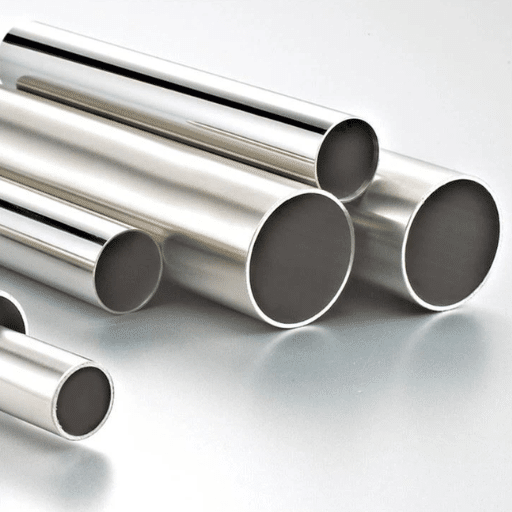
When you are ready to compare material availability and pricing for your specific form, our Hastelloy C276 plate stock and Hastelloy plate range show the forms we carry, and our Hastelloy seamless pipe and Hastelloy round bar pages cover the pipe and bar program.
Applications by Industry

Where C276 Remains the Default
C276 is the specification of choice for strongly reducing and mixed non-oxidizing service. Its largest installed base sits in:
- Flue gas desulfurization (FGD) absorbers and scrubber internals
- Hydrochloric acid processing, storage, and heat recovery
- Phosphoric acid production
- Chlorinated organic chemical manufacturing
- General chemical reactors and heat exchangers in non-oxidizing service
Where C22 Is the Better Specification
C22 is increasingly the default for fabricated, welded equipment in oxidizing and mixed service. Typical applications include:
- Wet chlorine handling and chlorine dioxide bleaching systems
- Chemical process vessels and reactors exposed to ferric/cupric chlorides
- Waste treatment and incineration off-gas systems
- Pharmaceutical process equipment where media purity and weld integrity matter
- Marine systems dosing sodium hypochlorite or free chlorine
- Nuclear waste container overpack materials, where C22 was selected over C276 and C-4 in qualification testing for its demonstrated superiority
The Welded Vessel Decision in Practice
A fabricator building a chemical reactor has two choices for the shell and nozzles. With C276, the welds carry the residual risk of HAZ attack in oxidizing service, and the specification often adds a post-weld solution anneal to restore corrosion resistance. With C22, the as-welded condition is acceptable, the passive film is stable across the weld line, and the fabrication schedule shortens by the annealing step. For a large vessel, eliminating the anneal is not a minor detail; it is a measurable cost and schedule win.
Sourcing C276 and C22 from China
NS3304 and NS3308: The Chinese Equivalents
If you are procuring from Chinese mills, you will see C276 specified as NS3304 and C22 as NS3308 under GB/T 15007. Delivery standards follow the product form: GB/T 15009 for plate and strip, GB/T 15008 for bar, GB/T 15010 for seamless pipe, and NB/T 47028 for pressure-vessel nickel-alloy forgings. Imported material destined for Chinese special-equipment inspection typically requires a conformity comparison report against GB/T 15007 in addition to the ASTM documentation.
The practical takeaway: if a Chinese supplier lists C22 as “NS3302” or “NS338,” they are using an incorrect designation, and you should request the mill certificate showing the GB/T 15007 grade before proceeding.
Verification: MTR, PMI, and the Off-Spec Risk
Every shipment of C276 or C22 should arrive with a full mill test report (MTR) documenting heat number, chemical composition, and mechanical properties. The single most reliable verification step is positive material identification (PMI) using a handheld X-ray fluorescence or optical emission spectrometer. This is not optional paranoia. Because C276 and C22 carry different chromium and molybdenum levels, an off-spec or mislabeled plate can be detected in seconds by checking chromium against the 14.5-16.5% (C276) or 20-22.5% (C22) window.
Consider what happens when that check is skipped. A Midwest chemical processor ordered 20 tonnes of “C22” plate for a chlorine scrubber rebuild. On arrival, the receiving inspector’s handheld spectrometer read 19.1% chromium, below the 20% minimum for C22.
The material was a lower-chromium substitute that would have failed in service within the first year. The batch was quarantined before fabrication, which turned a potential catastrophic failure into a scheduling inconvenience.
This is exactly why our quality system runs every batch through in-house direct-reading spectrometers before shipment and ships MTRs with every order. We hold C276 in extensive warehouse stock across plate, bar, pipe, and fittings, and we source C22 through our authorized mill partnerships and custom procurement program when it is not on the shelf. If you are choosing between these two grades, tell us your operating temperature, media composition, and fabrication method, and our metallurgical engineers will confirm the right grade and form within 24 hours.
Hastelloy C276 vs C22 FAQ
What is the difference between Hastelloy C276 and C22?
C276 (UNS N10276) contains about 15.5% chromium and 16% molybdenum, giving it superior resistance to reducing acids. C22 (UNS N06022) contains about 21% chromium and 13.5% molybdenum, giving it superior resistance to oxidizing environments and welded heat-affected-zone corrosion. For mixed or fluctuating service, C22 is the safer choice.
Is Hastelloy C22 better than C276?
It depends entirely on the environment. C22 is better in oxidizing, wet-chlorine, and welded-critical service. C276 is better in clean reducing acids and usually costs less. There is no universally “better” grade.
Can C22 be used without post-weld heat treatment?
Yes. C22 was designed to be used in the as-welded condition. Its higher chromium content stabilizes the passive film across the weld zone and reduces grain-boundary precipitation, eliminating the need for post-weld solution annealing in most applications.
What filler wire is used for welding C22 and C276?
C276 is welded with ERNiCrMo-4 filler. C22 is welded with ERNiCrMo-10 filler. ERNiCrMo-10 is also an accepted general-purpose filler for mixed Ni-Cr-Mo weldments and can be used on C276 base metal to improve HAZ corrosion resistance.
Which is more expensive, C22 or C276?
C22 typically costs 5-15% more per kg than C276 due to its higher chromium content and newer grade status. In oxidizing and welded service, C22’s longer service life usually offsets the premium.
What is the Chinese equivalent of Hastelloy C22?
The correct GB/T 15007 designation for C22 is NS3308 (0Cr22Ni60Mo13W3, H06022). Some supplier listings incorrectly call it NS3302 or NS338; verify against the mill certificate before purchasing.
Is Hastelloy C276 magnetic?
No. Both C276 and C22 are non-magnetic in the annealed condition, which makes them suitable for applications where magnetic permeability must be controlled.
Is C276 or C22 better for hydrochloric acid?
C276 is the better choice for concentrated and boiling hydrochloric acid. Its higher molybdenum and tungsten content provides superior resistance in reducing HCl service, and it delivers this performance at a lower cost than C22.
Conclusion
Choosing between Hastelloy C276 and C22 is not a matter of which alloy is “better.” It is a matter of matching the grade to the process stream, and the cost of getting it wrong is measured in failed equipment, unplanned shutdowns, and wasted premium pricing.
The five decisions that matter:
- Reducing acids (HCl, H₂SO₄, H₃PO₄) point to C276.
- Oxidizing and mixed service (wet chlorine, chlorides, hypochlorite) point to C22.
- Welded fabrication in oxidizing chloride service points to C22, which needs no post-weld anneal and resists HAZ attack.
- Cost favors C276 in reducing service; C22’s premium pays for itself only where its service life advantage is real.
- Verification is non-negotiable: confirm chromium against the UNS window with PMI and demand the MTR with every batch.
Whatever your operating temperature, media composition, or fabrication method, the right answer is knowable before you order. Submit your material list and application details, and our technical team will respond within 24 hours with material availability, a certified quotation, and the documentation package your quality team requires. From a single plate to a full project material package, we treat every inquiry as the start of a long-term partnership.