Choose Hastelloy B3 (UNS N10675) for any welded construction or as-welded hydrochloric-acid service, and reserve Hastelloy B2 (UNS N10665) for clean, low-temperature, non-welded reducing-acid duty where cost is the deciding factor. These two nickel-molybdenum alloys carry nearly identical chemistry and the same mission, resisting hydrochloric acid, yet they separate on one metallurgical fact: what happens to them between 550°C and 900°C.
Hastelloy B2 was the HCl workhorse that secretly embrittled in its own heat-affected zones. Hastelloy B3 is the alloy B2 should have been, the same acid resistance with radically better thermal stability and full as-welded usability. Getting the Hastelloy B2 vs B3 decision wrong means paying for embrittlement-driven rework, a knife-line failure, or a post-weld heat treatment bill larger than the material savings B2 ever offered.
In this guide you’ll get the complete comparison: the composition story, the thermal-stability difference that decides everything, corrosion data in HCl and reducing media, welding truth, 2026 cost economics, and how to source both grades certified from China with NS322 and NS3203 cross-references. If you also need the broader family view, our Hastelloy B2 vs C276 comparison covers the B-versus-C decision.
Key Takeaways
- Hastelloy B3 (UNS N10675) is the thermally stable successor to B2 (UNS N10665); in the annealed condition both have essentially equal HCl resistance, and B3’s edge is as-welded integrity, impurity tolerance, and thermal stability.
- B2 precipitates brittle Ni₄Mo (β) and μ-phases in the 550-900°C range, which is why welded B2 often requires a 1040-1150°C post-weld solution anneal that B3 does not need.
- Roughly 500 ppm of ferric (Fe³⁺) contamination can multiply B2’s corrosion rate about sixteen times; B3 tolerates iron and copper contamination far better.
- B3 costs 10-25% more per kg, but removing post-weld annealing can make total welded B2 fabrication 25-30% more expensive, so B3’s lifecycle cost is often 15-20% lower.
- B2 is not “phased out”; it still wins for clean, low-temperature, non-welded service, but new welded designs should default to B3.
- Every shipment should carry a mill test report (MTR) plus PMI spectral verification, because off-spec, lower-molybdenum substitutes are a real market risk.
Direct Answer: Which Alloy Should You Choose?

Choose Hastelloy B3 when:
- Your fabrication is welded, and you want as-welded integrity without a post-weld heat treatment.
- The acid is hot or concentrated, up to boiling HCl.
- The stream could ever see iron or copper contamination.
- The component is complex, a large vessel, or a skid-mounted assembly where furnace annealing is impractical.
That covers most new chemical-plant equipment: HCl distillation and recovery columns, evaporators, and reactors. B3’s controlled chromium and micro-alloy additions suppress the phase precipitation that makes welded B2 unreliable, so it performs in the as-welded condition where B2 cannot.
Choose Hastelloy B2 when:
- Service is clean, low-temperature reducing acid.
- The component is not welded: linings, trays, internals, and simple machined parts.
- You are replacing existing B2 equipment and matching the installed material.
In that narrow slice B2 delivers the same corrosion performance at roughly 10-20% lower material cost.
When you run the full Hastelloy B2 vs B3 comparison against your actual process, welded service almost always lands on B3. The engineering question is never “which is better.” It’s: what is in your process stream, at what temperature, and does your component get welded? If you’re unsure whether your stream is fully reducing, contact our technical team with your operating conditions and we will confirm the grade.
What Are Hastelloy B2 and B3?
Both alloys belong to the nickel-molybdenum (Ni-Mo) B-family, the reducing-acid specialists of the Hastelloy alloy range. The C-family alloys (C276, C22, C2000) trade molybdenum for chromium to gain oxidizing-media tolerance; the B-family keeps chromium near zero and loads up on molybdenum, the element that carries the reducing-acid load. That single design choice is why B2 and B3 are the reference materials for hydrochloric acid.
Designations and Equivalents
The same alloy carries a different name in every market, and the cross-reference is where procurement mistakes happen. The table below maps both grades across the major designation systems.
| Designation System | Hastelloy B2 | Hastelloy B3 |
|---|---|---|
| UNS | N10665 | N10675 |
| W. Nr. (Werkstoff) | 2.4617 | 2.4600 |
| DIN | NiMo28 | NiMo29 |
| GB/T 15007 (China) | NS322 | NS3203 |
| Digital code (China) | H01665 | H01675 |
| Vd TÜV Werkstoffblatt | 436 | 517 |
| ASTM plate/sheet/strip | B333 | B333 |
| ASTM rod/bar | B335 | B335 |
| ASTM seamless pipe/tube | B622 | B622 |
| ASTM welded pipe/tube | B619 / B626 | B619 / B626 |
| ASTM fittings | B366 | B366 |
| ASTM forgings | B564 | B564 |
Two naming traps appear in the market. First, catalogs sometimes list “UNS N10065,” which is a typo for N10665, so verify against the mill certificate. Second, Chinese buyers know these grades as NS322 (B2) and NS3203 (B3), and those are the exact designations to require on a GB/T-certified mill certificate from a Chinese mill. A supplier who cannot name the correct GB equivalent should be treated with caution.
Alloy Lineage: The Workhorse and the Fix
Haynes International introduced Hastelloy B2 in the 1970s as a low-carbon, low-silicon refinement of the original Hastelloy B (UNS N10001), solving the weld-decay problem caused by M₆C carbides and silicides. B2 became the HCl standard. But it carried a hidden flaw: in the 550-900°C range, the same heat that welding introduces into the heat-affected zone (HAZ), the alloy precipitates brittle Ni₄Mo (β-phase) and μ-phase. Welded B2 equipment could fail by knife-line attack even while the base metal remained sound.
In the 1990s Haynes developed Hastelloy B3 to fix that flaw. By adding controlled chromium (1-3%), keeping carbon at 0.01% max, and adding small amounts of aluminum and titanium, B3 slows the precipitation kinetics dramatically. The manufacturer’s own position is that B-2 has been replaced by B-3. For the full standalone profile of the older grade, see our Hastelloy B2 properties guide.
Chemical Composition Comparison
The composition table is where the B2 vs B3 story starts. The molybdenum stays high in both, because molybdenum is what resists reducing acids. The chromium, carbon, aluminum, and titanium columns are where the metallurgy changes.
| Element | Hastelloy B2 (N10665) | Hastelloy B3 (N10675) |
|---|---|---|
| Nickel (balance) | 65% min | 65% min |
| Molybdenum | 26.0-30.0% | 27.0-32.0% (ASTM 28.5-31.5%) |
| Chromium | 1.0% max | 1.0-3.0% |
| Iron | 2.0% max | 1.0-3.0% |
| Carbon | 0.02% max | 0.01% max |
| Silicon | 0.10% max | 0.10% max |
| Cobalt | 1.0% max | 3.0% max |
| Manganese | 1.0% max | 3.0% max |
| Tungsten | – | 3.0% max |
| Aluminum | – | 0.50% max |
| Titanium | – | 0.20% max |
| Copper | – | 0.20% max |
What the Controlled Chromium Actually Does
B3’s 1-3% chromium is the quiet hero. Too much chromium would create oxidizing tendencies in a reducing-acid specialist, but at this level it stabilizes the alloy against mid-temperature phase precipitation and improves tolerance to the iron and copper contamination that commonly appears in real process streams. The same chemistry that protects the HAZ also protects the alloy from a contaminated feed.
Why Molybdenum Stays at 26-32%
Molybdenum is the engine of the B-family. At 26-30% (B2) and up to 32% (B3) it is the highest practical molybdenum content of any commercial alloy family. In reducing acids molybdenum suppresses the cathodic reaction that drives corrosion, which is why these alloys stand up to boiling HCl where 316L dissolves quickly and even C276 loses ground. The datasheet composition limits follow the Haynes HASTELLOY B-3 datasheet and ASTM B333.
The Decisive Difference: Hastelloy B3 Thermal Stability

This is the section most English-language comparison articles skip, and it is the entire decision.
B2’s Flaw: The Embrittlement Window
When Hastelloy B2 is held in the 550-900°C range, or passes through it slowly during welding, it precipitates ordered Ni₄Mo (β-phase) and, at higher temperatures, μ-phase. Both are brittle intermetallic compounds. The precipitation depletes molybdenum from the surrounding matrix, and because B2 has no chromium to form a passive film, the depleted zones corrode preferentially at the weld fusion line, a failure mode called knife-line attack.
The practical consequences are severe:
- The HAZ of a welded B2 joint can lose a large fraction of its ductility.
- As-welded B2 equipment is at risk of knife-line and HAZ attack in hot HCl service.
- Restoring the alloy requires a full post-weld solution anneal at 1040-1150°C followed by a rapid water quench, which is expensive and often impossible for large vessels.
- Interpass temperature must be held at or below 120°C, and heat input kept low, or the HAZ spends too long inside the danger window.
B3’s Fix: Suppressed Precipitation
Hastelloy B3 achieves the same corrosion resistance with a far slower precipitation response. The 1-3% chromium, the 0.01% max carbon, and the aluminum and titanium additions stabilize the matrix and slow Ni₄Mo nucleation. B3 can be welded and used in the as-welded condition for pure HCl service, and its wider hot-working window, roughly 850-1230°C, makes forging and hot forming more forgiving.
The difference is not that B3 never precipitates phases. It’s that the kinetics are slow enough that normal welding and service do not push B2’s failure mode. For a detailed thermal-stability discussion, see Haynes’ HASTELLOY B-3 thermal stability page.
What This Means in Practice
- Welded equipment: B3 is usable as-welded for HCl; B2 usually is not.
- Hot forming: B3’s wider window reduces cracking risk during forging and hot rolling.
- Service excursions: A brief temperature excursion into the danger window degrades B2 permanently; B3 shrugs it off.
This is where the first hard decision lands. If your component is welded, B3 is the engineering default. That is why our B2 welding guide covers the HAZ mechanics in depth.
Corrosion Resistance in Hydrochloric Acid & Reducing Media
Annealed-Condition HCl: The Honest Correction
A claim circulates that “B3 is 30% better in HCl.” That is overstated. In the solution-annealed condition, B2 and B3 have essentially the same excellent resistance to hydrochloric acid at all concentrations up to boiling, typically below 0.5 mm/year. Chinese technical literature reports a measurable edge at 20% boiling HCl (B3 under 0.1 mm/year versus B2 at 0.15-0.2 mm/year), but the honest engineering statement is that both are superb in annealed HCl.
As-Welded HCl: Where B2 Degrades and B3 Holds
The real gap appears in the as-welded condition. Welded B2 that has not been re-annealed suffers in the HAZ, while welded B3 holds its corrosion performance. If you are searching “Hastelloy B2 vs B3 for hydrochloric acid” and your equipment is welded, B3 is the answer.
Impurity Tolerance: The 500 ppm Story
The largest practical difference is contamination tolerance. A heat exchanger handling clean 10% HCl on B2 is a decades-long service. Add a recycle stream carrying roughly 500 ppm of ferric ions (Fe³⁺), and B2’s corrosion rate can multiply about sixteen times.
B3’s controlled chromium and higher molybdenum content let it absorb that contamination far better. If your process stream could ever see iron or copper ions, B3 is the safer specification.
Other Reducing Media
Both alloys resist reducing sulfuric acid, phosphoric acid, acetic, formic, and other organic acids, plus hydrogen fluoride service where applicable. Both are immune to chloride stress corrosion cracking, which is a common reason engineers move up from austenitic stainless steel. For environment-by-environment data, our Hastelloy B2 corrosion resistance guide breaks down the full acid range.
The Oxidizing-Media Red Line
Neither B2 nor B3 survives oxidizing media. Ferric and cupric chlorides, wet chlorine, nitric acid, hypochlorite, and dissolved oxygen above trace levels attack both alloys. If your stream can swing oxidizing, the B-family is the wrong family entirely, and you need a chromium-bearing C-family grade such as C276 or C22, which we compare in Hastelloy C276 vs C22.
Mechanical & Physical Properties
Both grades are moderate-strength, highly ductile austenitic alloys, similar in feel to annealed stainless steel. Neither is specified for load-bearing service; their value is corrosion performance. The minimums below are what a buyer should see on a mill test report.
| Property | Hastelloy B2 (annealed min) | Hastelloy B3 (annealed min) |
|---|---|---|
| Tensile strength Rm | 690 MPa (typical 690-825) | 760 MPa (some sources 620-760) |
| Yield strength Rp0.2 | 310-350 MPa | 350 MPa |
| Elongation | 40% | 40% |
| Density | ~9.22 g/cm³ | ~9.22 g/cm³ |
| Melting range | 1330-1380°C | ~1370-1418°C |
| Magnetic response | Non-magnetic | Non-magnetic |
Both grades are fully austenitic and non-magnetic in the annealed condition. Density is high, about 9.2 g/cm³ versus 8.0 g/cm³ for stainless steel, which matters for shipping weight and skid-mounted package budgets. Working range is roughly -200°C to +400°C; above about 400°C the corrosion advantage narrows and, for B2, you approach the embrittlement window. For the full property profile of the older grade, see the AZoM Hastelloy B-3 (UNS N10675) article.
Welding & Fabrication: The As-Welded Advantage
Filler Selection
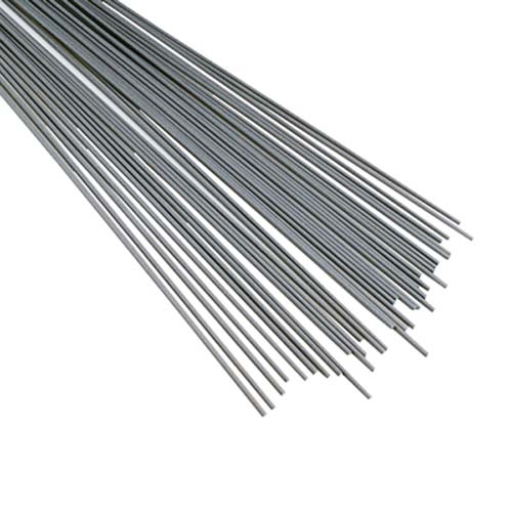
- B2 is welded with ERNiMo-7 filler (W. Nr. 2.4615). Because B2’s HAZ is the weak link, the matching filler alone does not save an un-annealed weldment.
- B3 is welded with ERNiMo-10 filler (often sold under the Haynes 233 brand). The matching filler preserves weld-zone corrosion resistance in the as-welded condition.
Process Windows
| Parameter | Hastelloy B2 | Hastelloy B3 |
|---|---|---|
| Interpass temperature | 120°C max | 150°C max |
| Heat input | Low (tight control) | 1.5 kJ/mm max |
| Post-weld solution anneal | Often required (1040-1150°C + water quench) | Optional for pure HCl; recommended for HF or HCl+HF service |
| Cold work | Standard | >15% deformation needs intermediate anneal at ~1065°C |
The As-Welded Economics
Here is the conversion lever that almost no comparison page quantifies. A large welded B2 vessel often must be solution-annealed at 1040-1150°C and water-quenched after welding. For a 40-meter vessel or a skid assembly with valves and nozzles already attached, that furnace pass is either impossible or ruinously expensive. B3 removes it for pure HCl service.
A fabricator learned this the hard way. A Shandong shop welded a B2 HCl stripping column and shipped it without post-weld annealing to hold the delivery date. Within four months, knife-line attack opened along the heat-affected zones. The rework, plus a full re-anneal, cost more than the 12% material premium B3 would have added up front. For detailed B2-specific procedure, see our Hastelloy B2 welding guide.
Cost Comparison: Material Premium vs Fabrication Economics
Form-by-Form 2026 Pricing
Indicative 2026 export pricing, in USD per kg, before quantity and specification discounts. All prices move with the nickel and molybdenum markets, so treat these as planning numbers, not quotes.
| Product form | Hastelloy B2 | Hastelloy B3 | B3 premium |
|---|---|---|---|
| Plate | $25-38 | $28-42 | ~10-15% |
| Round bar | $26-42 | $30-45 | ~10-20% |
| Pipe/tube | $28-45 | $30-48 | ~5-15% |
| Flanges | $45-70 | $48-75 | ~5-15% |
Chinese domestic pricing in 2026 runs lower: B2 round bar around ¥140-300/kg versus B3 at ¥170-360/kg, and B2 hot-rolled plate ¥120-200/kg versus B3 ¥150-240/kg. Imported ATI or Haynes material typically costs 30-50% more than comparable Chinese product.
Cost Drivers
Molybdenum is the dominant cost driver. Roughly a 10% rise in the molybdenum price translates to a 3-5% rise in finished Hastelloy price, because molybdenum is over a quarter of the alloy by weight. B3 also costs more because its production volume is smaller and the tighter chemistry, with controlled chromium and micro-alloys, adds smelting difficulty.
The Lifecycle-Cost Argument
The material premium is only half the story. When B2’s mandatory post-weld solution annealing is factored in, total welded B2 fabrication can run 25-30% more expensive than B3. In a nuclear fuel-processing project that priced both grades, the team chose B3 at about 20% higher material cost and finished 10-15% lower in total ownership cost once PWHT and rework risk were removed. The lifecycle argument, not the per-kg price, is what decides the B2 vs B3 cost question for welded equipment.
When B2 Genuinely Saves Money
B2 still wins for clean, low-temperature, non-welded components: linings, trays, machined internals, and maintenance replacements where no weld zone exists. In that slice, the 10-20% material saving is real and safe. The discipline is knowing when the “cheap” grade is actually cheap.
Selection Decision Framework
| Your situation | Recommended grade |
|---|---|
| Welded HCl equipment, hot or concentrated acid | B3 |
| As-welded service without PWHT | B3 |
| Risk of Fe³⁺/Cu²⁺ contamination in the stream | B3 |
| Complex fabrication or large vessel | B3 |
| Clean, low-temperature HCl, non-welded component | B2 |
| Maintenance replacement of existing B2 equipment | B2 |
| Cost-sensitive, simple machined/rolled parts, clean service | B2 |
| Any oxidizing media (FeCl₃, wet Cl₂, HNO₃, O₂) | Neither; use C-family |
The new-design rule of thumb is simple: default to B3, and specify B2 only with a documented reason. The documentation requirement forces the engineering conversation about contamination and welding that B2 deserves.
Applications by Industry

Hastelloy B3
- HCl distillation and recovery columns
- Evaporators and crystallizers handling hot reducing acids
- Hot HCl reactors in chlor-alkali and fine-chemical plants
- Welded chemical-plant equipment built for as-welded service
- Pharmaceutical and fine-chemical reactors
- Nuclear fuel reprocessing and waste-treatment systems
Hastelloy B2 (Legacy and Maintenance)
- HCl storage tank linings and brick-liner backing
- Simple column internals, trays, and packing supports
- Replacement parts for existing B2 equipment
- Cost-sensitive clean reducing-acid service
Sourcing B2 and B3 from China
Chinese Standards and Delivery
Chinese mills deliver these grades under GB/T designations: NS322 for B2 and NS3203 for B3, per GB/T 15007, with bar delivered to GB/T 15008 and tube to GB/T 2882. ASTM B333 (plate), B335 (bar), B622 (seamless pipe), B619/B626 (welded pipe), B366 (fittings), and B564 (forgings) cover the equivalent international product forms. A competent supplier should offer both certification systems on request. For the broader nickel-based alloy picture, see our nickel-based alloy guide.
Verification: MTR and PMI
The counterfeit risk in B-grade nickel alloys is a lower-molybdenum, off-spec substitute delivered under a B-grade label. Every order should ship with a mill test report (MTR) certifying the full chemistry, and buyers should run PMI spectral analysis on arrival to confirm the molybdenum content against the UNS window. In one incoming-inspection case at a Jiangsu fabrication plant, a PMI gun caught a drum labeled “B2” that carried only 22% molybdenum, nowhere near the 26-30% spec. The MTR and PMI together are the only reliable proof of grade.
Both Grades From One Inventory
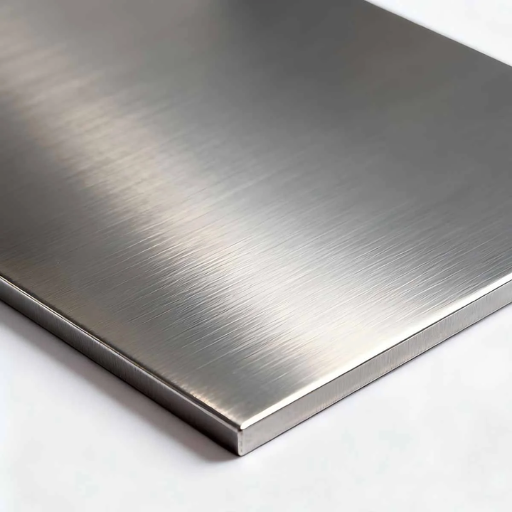
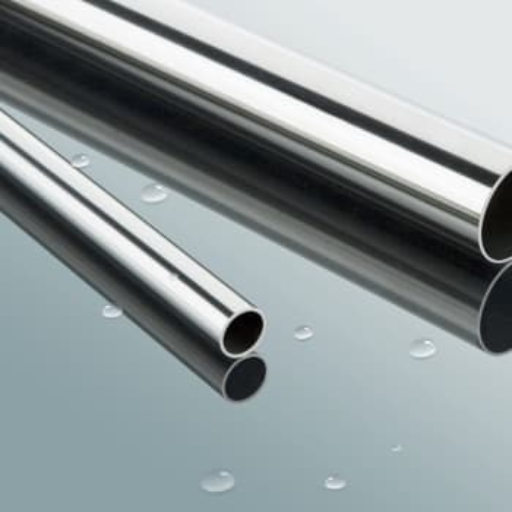
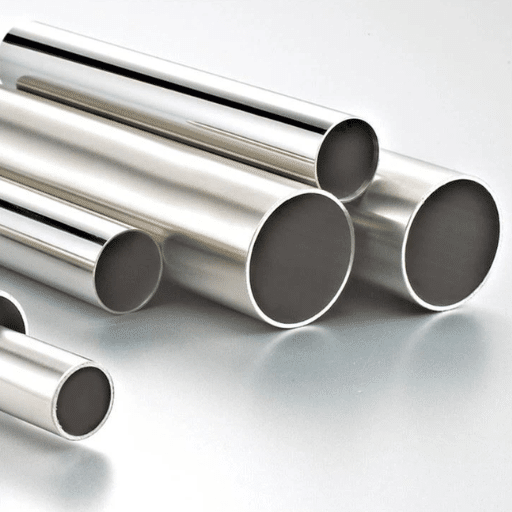
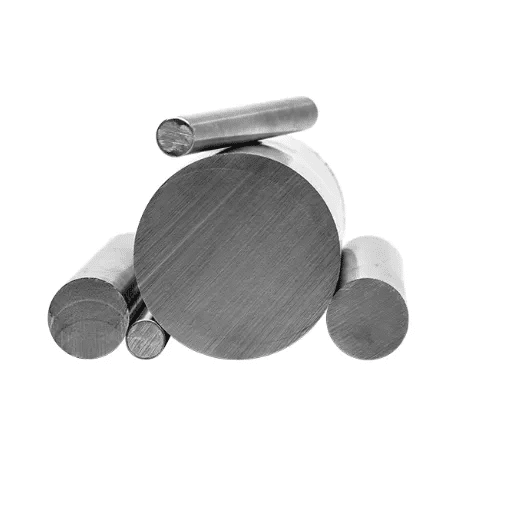
Sourcing both grades from a single mill inventory simplifies your quality program: one supplier, one MTR system, one PMI protocol. We stock B2 in rod and bar (see our Hastelloy B2 rod product), with Hastelloy seamless pipe and Hastelloy plate and sheet across the family.
Hastelloy B2 vs B3 FAQ
What is the difference between Hastelloy B2 and B3?
B3 (UNS N10675) is the thermally stable successor to B2 (UNS N10665). Both resist HCl equally in the annealed condition, but B3’s controlled chromium and micro-alloys suppress the Ni₄Mo β-phase embrittlement that makes welded B2 unreliable, enabling as-welded service.
Is Hastelloy B3 better than B2?
For welded construction, hot or contaminated HCl service, and any component needing post-weld integrity, yes. For clean, low-temperature, non-welded reducing-acid service, B2 delivers equal corrosion resistance at lower cost.
Does Hastelloy B3 need post-weld heat treatment?
Not for pure HCl service. B3 is designed for the as-welded condition. A solution anneal is still recommended for hydrofluoric acid or HCl+HF service.
Why is Hastelloy B2 brittle after welding?
Welding heats the heat-affected zone into the 550-900°C window where B2 precipitates brittle Ni₄Mo (β) and μ-phases, causing knife-line and HAZ attack and ductility loss. A post-weld solution anneal at 1040-1150°C with water quench is often required to restore it.
What filler wire is used for B2 and B3?
B2 is welded with ERNiMo-7 (W. Nr. 2.4615); B3 is welded with ERNiMo-10 (Haynes 233).
Which is more expensive, B2 or B3?
B3 costs about 10-25% more per kg. But for welded equipment, B2’s mandatory post-weld annealing can make total fabrication 25-30% more expensive, so B3’s lifecycle cost is often lower.
What is the Chinese equivalent of Hastelloy B3?
The GB/T 15007 designation is NS3203 (digital H01675), with NS322 (H01665) for B2. Verify the designation against a current mill certificate, as supplier listings occasionally use incorrect codes.
Is Hastelloy B2 being phased out?
Haynes states B2 has been replaced by B3, and new welded designs should default to B3. But B2 remains in widespread service and is legitimately cheaper for clean, non-welded reducing-acid applications, so it is not going away.
Is Hastelloy B2 or B3 magnetic?
Neither. Both are fully austenitic and non-magnetic in the annealed condition.
Hastelloy B3 vs zirconium for hot HCl?
Zirconium beats both B-grades in pure hot HCl but is extremely sensitive to ferric/fluoride contamination and costs substantially more. B3 is the robust, economical choice when stream purity cannot be guaranteed.
Conclusion
The Hastelloy B2 vs B3 decision comes down to one job and one critical difference. B3 is the alloy B2 should have been: same annealed HCl resistance, radically better thermal stability, and usable as-welded. B2 remains the value pick for clean, low-temperature, non-welded service. For the full family picture, see our complete Hastelloy alloy range guide.
The five decisions that matter:
- Welded equipment points to B3, which needs no post-weld anneal.
- Hot or concentrated HCl points to B3.
- Contamination risk (Fe³⁺, Cu²⁺) points to B3, which tolerates it far better.
- Cost favors B2 only in clean, non-welded, low-temperature service; elsewhere B3’s lifecycle cost wins.
- Verification is non-negotiable: demand the MTR and run PMI spectral analysis on every batch.
Whatever your operating temperature, acid concentration, fabrication method, and contamination risk, the right answer is knowable before you order. Tell our metallurgists what is in your stream and how you fabricate, and we will confirm the grade and respond within 24 hours with material availability, a certified quotation, and the MTR plus PMI documentation your quality team requires. From a single plate to a full project material package, we treat every inquiry as the start of a long-term partnership. Request your certified B2 or B3 (NS322/NS3203) quote today.