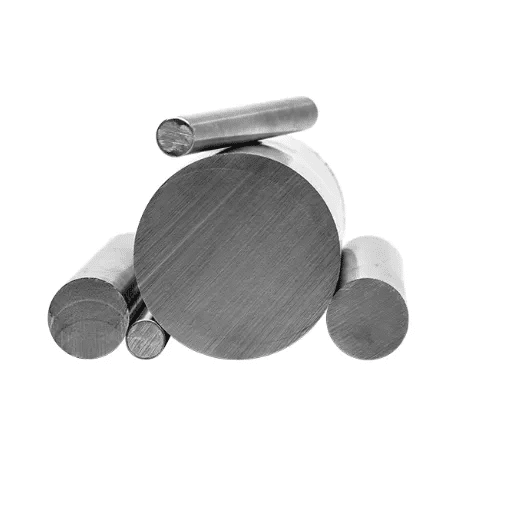
Hastelloy B2 properties make it the most corrosion-resistant alloy in the world for hydrochloric acid, and the one most likely to fail catastrophically if a trace oxidizer enters the stream. This nickel-molybdenum alloy, known as UNS N10665 in the US, W. Nr. 2.4617 in Europe, and NS322 in China, carries 26-30% molybdenum, holds corrosion rates below 0.1 mm/year in boiling HCl, and is immune to chloride stress corrosion cracking.
It is also sensitive to roughly 50 ppm of ferric or cupric ions, which can turn a B2 application into a failure within weeks. Most engineers know B2 is “good for HCl” but under-specify it or ignore that one non-negotiable limit.
That tension is the real story of this alloy. B2 was engineered for one job: standing up to reducing acids, and nothing oxidizes a reducing-acid stream quite like a contaminated recycle line or a valve that bleeds oxygen into the loop. Get the environment right and B2 outlasts stainless steel by a decade. Get it wrong and the corrosion rate jumps by three orders of magnitude.
In this guide, you’ll get the complete Hastelloy B2 property profile: the full UNS N10665 / NS322 chemical composition, ASTM B333 and B335 mechanical minimums, physical data, corrosion performance across reducing acids, the oxidizer and embrittlement limits most catalogs omit, welding requirements, applications, and a China sourcing playbook with NS322 cross-references. If you need to compare grades first, our Hastelloy B2 vs C276 guide covers the selection decision.
Key Takeaways
- Hastelloy B2 (UNS N10665 / NS322) is a nickel-molybdenum alloy with 26-30% molybdenum and essentially no chromium, built for reducing-acid service.
- It resists hydrochloric acid at all concentrations up to boiling, with corrosion rates typically under 0.1 mm/year, and is immune to chloride stress corrosion cracking.
- Roughly 50 ppm of ferric (Fe³⁺) or cupric (Cu²⁺) ions triggers catastrophic attack, so B2 is only safe in strictly reducing, contaminant-free streams.
- The 550-850°C range causes β-phase (Ni₄Mo) and μ-phase embrittlement; fabrication demands low heat input, interpass temperature at or below 120°C, and a final solution anneal.
- Weld with ERNiMo-7 (W. Nr. 2.4615) filler, and specify MTR plus PMI spectral analysis on every order because low-molybdenum substitutes are a real risk.
- B3 (UNS N10675) fixes B2’s mid-temperature embrittlement; choose it for as-welded service or complex weldments, and B2 for clean low-temperature reducing service on cost.
What Is Hastelloy B2?

Hastelloy B2 is a solid-solution-strengthened, nickel-molybdenum alloy developed by Haynes International as the low-carbon, low-silicon successor to the original Hastelloy B (UNS N10001). Those Hastelloy B2 properties are engineered around a single job: standing up to hydrochloric acid and other strongly reducing environments where conventional stainless steels and even the nickel-chromium-molybdenum C-family alloys corrode too fast.
The alloy has no chromium by design. That sounds like a flaw until you understand the chemistry: in pure reducing acids, chromium offers no passivation benefit and can actually lower corrosion resistance. B2 replaces it with molybdenum, the element that carries the reducing-acid load.
Designations and Equivalents
| Designation System | Hastelloy B2 |
|---|---|
| UNS | N10665 |
| W. Nr. (Werkstoff) | 2.4617 |
| DIN | NiMo28 |
| GB/T 15007 (China) | NS322 |
| ASTM plate/strip | B333 |
| ASTM rod/bar | B335 |
| ASTM seamless tube | B622 |
| ASTM welded tube | B619 / B626 |
| ASTM fittings | B366 |
Two naming traps show up in the market. First, some catalogs list “UNS N10065,” which is a typo for N10665. Second, buyers familiar with Chinese standards know this grade as NS322, and that is the exact designation you want on a GB/T-certified mill certificate from a Chinese mill. If your drawing says NS322, you are looking at Hastelloy B2.
The B-Family vs the C-Family
B2 belongs to the nickel-molybdenum B-family, while C276 belongs to the nickel-chromium-molybdenum-tungsten C-family. That one letter difference changes everything about corrosion behavior. B-family alloys are reducing-acid specialists. C-family alloys are generalists that tolerate both oxidizing and reducing media.
Our Hastelloy C276 properties guide walks through the C-side of that equation.
For a full look at the family, see our Hastelloy alloy hub.
Hastelloy B2 Chemical Composition
The composition below is the alloy’s identity card. Every element is either doing a job or deliberately held low. For the manufacturer-side datasheet, see Rolled Alloys’ Hastelloy B-2 product page.
| Element | UNS N10665 / NS322 (wt%) |
|---|---|
| Nickel (Ni) | 65% min (balance) |
| Molybdenum (Mo) | 26.0-30.0 |
| Iron (Fe) | 2.0 max |
| Chromium (Cr) | 1.0 max |
| Cobalt (Co) | 1.0 max |
| Manganese (Mn) | 1.0 max |
| Carbon (C) | 0.02 max |
| Silicon (Si) | 0.10 max |
| Phosphorus (P) | 0.04 max |
| Sulfur (S) | 0.03 max |
Why Molybdenum Dominates
Molybdenum is the engine of B2’s corrosion resistance. At 26-30%, it is the highest practical molybdenum content of any commercial alloy family. In reducing acids, molybdenum suppresses the cathodic reaction that drives corrosion, which is why B2 stands up to boiling HCl where 316L dissolves quickly and even C276 loses ground.
Why Carbon and Silicon Are Held Low
The low limits on carbon (0.02% max) and silicon (0.10% max) exist for one reason: the weld heat-affected zone. In the original Hastelloy B, higher carbon and silicon allowed M₆C carbides and silicides to precipitate during welding. Those precipitates created chromium-depleted zones that corroded preferentially, which made as-welded equipment fail even though the base metal was fine. B2’s tight limits suppress that precipitation and restore intergranular corrosion resistance in the welded condition.
Why Chromium and Iron Are Minimized
Chromium and iron are held to 1% and 2% maximum respectively. They are minimized to protect the metallurgy, not the corrosion performance. High chromium and iron promote the precipitation of the brittle β-phase (Ni₄Mo) in the mid-temperature range, which we cover in the embrittlement section. Keep them low, and the alloy stays stable across its useful life.
Hastelloy B2 Mechanical Properties

Room-Temperature Minimums (Annealed)
B2 is supplied in the solution-annealed condition. The numbers below are the guaranteed minimums a buyer should see on a mill test report (MTR), with typical values shown in parentheses.
| Property | Plate / Strip (cold-rolled, ≤5 mm) | Plate / Bar (hot-rolled) | Seamless Tube |
|---|---|---|---|
| Tensile strength Rm (MPa) | 755 min | 745 min | 755 min |
| Yield strength 0.2% (MPa) | 325 min (typical 350) | 310 min | 325 min |
| Elongation A5 (%) | 40 min | 40 min | 40 min |
| Hardness | HRB 89-98 | HB 200-250 | HRB 89-98 |
In broader terms, annealed B2 tensile strength runs 690-825 MPa, yield strength 310-350 MPa, and elongation 40% or better. That is a moderate-strength, highly ductile alloy, similar in feel to annealed austenitic stainless steel. It is not a high-strength alloy, and nobody specifies it for load-bearing service. Its entire value is corrosion performance.
Temperature Behavior
B2 behaves well across a practical working range of roughly -200°C to +400°C. It stays fully austenitic and ductile at cryogenic temperatures because the nickel-rich matrix resists a ductile-to-brittle transition. Above about 400°C, two problems appear: the corrosion advantage narrows, and you enter the start of the embrittlement zone that dominates fabrication planning. For continuous hot service, B2 is not the right pick.
Hastelloy B2 Physical Properties
| Property | Value |
|---|---|
| Density | 9.2-9.24 g/cm³ |
| Melting range | 1330-1380°C |
| Elastic modulus | ~217 GPa |
| Thermal conductivity | ~10-11.2 W/(m·K) |
| Coefficient of thermal expansion (20-100°C) | ~10.3 × 10⁻⁶/K |
| Electrical resistivity | ~137 µΩ·cm |
| Magnetic response | Non-magnetic (FCC austenitic) |
Physical Hastelloy B2 properties start with density: at 9.2-9.24 g/cm³, B2 is noticeably heavier than stainless steel (about 8.0 g/cm³) and comparable to other nickel-molybdenum alloys. You will see this number matter most in two places: shipping cost on large plate orders and weight budgets on skid-mounted process packages.
B2 is non-magnetic in the annealed condition because of its fully austenitic face-centered-cubic structure. That matters for instruments, valves, and process equipment near sensitive electronics. It also means magnetic permeability sorting, sometimes used to screen stainless heats, tells you nothing useful about B2.
Hastelloy B2 Corrosion Resistance in Reducing Media
Hydrochloric Acid
Hydrochloric acid is where Hastelloy B2 properties have no equal among commercial wrought alloys. B2 resists HCl at all concentrations up to the boiling point, with corrosion rates typically below 0.1 mm/year. To put that in perspective, 316L in hot HCl corrodes at rates measured in millimeters per month, and even 20-grade alloys and C276 are outclassed in clean, deaerated acid.
| HCl Concentration | Temperature | Typical B2 Corrosion Rate |
|---|---|---|
| All concentrations | Up to boiling | < 0.1 mm/yr |
| 10% | 60°C | < 0.05 mm/yr |
| Boiling (all concentrations) | 100°C+ | 0.1 mm/yr range |
The “deaerated” caveat is the whole game. In real plant service, HCl is rarely perfectly clean. The moment oxidizing species appear, B2’s resistance collapses, which is why the application section of this guide always starts with stream chemistry.
Other Reducing Media
The same molybdenum-driven mechanism that beats HCl extends to a family of non-oxidizing acids:
- Sulfuric acid under reducing conditions, across dilute and intermediate concentrations
- Phosphoric acid in reducing environments
- Acetic acid, formic acid, and other organic acids
- Hydrochloric acid with chloride salts and reducing chlorides
B2 also shows immunity to chloride-induced stress corrosion cracking. Austenitic stainless steels crack in hot chloride environments; B2 does not, because the SCC mechanism depends on a passive oxide film that B2 never forms in the first place. This makes it a reliable choice for chloride-laden reducing streams where SCC is the failure mode to eliminate.
For environment-by-environment corrosion data, see our Hastelloy B2 corrosion resistance guide.
When Hastelloy B2 Properties Fail: Oxidizers & Embrittlement
The Oxidizer-Contamination Warning
Here is the warning that saves careers. Every Hastelloy B2 property that makes the alloy great in reducing acid, from the sub-0.1 mm/yr HCl rate to the SCC immunity, depends on a strictly reducing environment. Any oxidizer, even in trace amounts, reverses the corrosion chemistry and attacks the molybdenum-rich matrix.
| Contaminant | Danger Threshold | Consequence for B2 |
|---|---|---|
| Ferric ions (Fe³⁺) | ~50 ppm | Rapid, catastrophic attack |
| Cupric ions (Cu²⁺) | ~50 ppm | Rapid, catastrophic attack |
| Dissolved oxygen (O₂) | ~50 ppm | Localized pitting and general corrosion |
| Nitric acid (HNO₃) | Any | Not rated, unacceptable corrosion |
| Wet chlorine / hypochlorite | Any | Not rated for these services |
That ~50 ppm ferric figure is not a rounding detail. It’s roughly the amount of iron you could pick up from a rusty flange gasket upstream.
In 2019, a chemical plant in the US Gulf Coast ran a B2 HCl heat exchanger for two years without issue. Then a contractor installed a carbon-steel spool piece in the recycle loop during a turnaround. The ferric ions that leached off that spool attacked the exchanger, and it failed through in nine weeks. The metallurgist’s report cited ferric-ion contamination at just over 50 ppm.
The carbon-steel spool cost 400.TheB2bundlecost400.TheB2bundlecost180,000.
If your stream can ever see iron contamination, copper salts, dissolved oxygen, nitric acid, or wet chlorine, B2 is the wrong grade. That’s the moment to switch to the Hastelloy B2 vs C276 decision guide, where the crossover conditions are spelled out.
The 550-850°C Embrittlement Window
The second limit is metallurgical. Between roughly 550°C and 850°C, B2 precipitates two embrittling phases: β-phase (Ni₄Mo) and, at the higher end, μ-phase. This is the classic “embrittlement window” that separates B2 from its successor, B3. Haynes International’s B-3 thermal-stability data documents this precipitation behavior.
| Temperature Range | Precipitate | Consequence |
|---|---|---|
| 550-650°C | β-phase (Ni₄Mo) | Ductility loss, cracking risk |
| 650-750°C | β-phase growth (fastest kinetics) | Severe embrittlement |
| 750-850°C | β-phase + μ-phase | Brittle failures in service |
The worst kinetics sit around 650-750°C. That’s not a temperature range most processes run at, which is why B2 survives in service. The danger is fabrication. Welding deposits heat into the heat-affected zone, and if a weldment sits in that window during cooling, the HAZ embrittles even though the base plate stays fine.
The fix is discipline, covered next.
Welding & Fabrication of Hastelloy B2

Filler Selection
Weld B2 with matching filler: ERNiMo-7 (AWS A5.14) for the filler wire, ENiMo-7 (AWS A5.11) for coated electrodes, corresponding to W. Nr. 2.4615. Match the base composition closely. A stainless filler would fail in reducing acid immediately and defeat the purpose of the alloy.
Heat Input and Interpass Control
The embrittlement window dictates the procedure. Keep heat input low, control interpass temperature at or below 120°C, and purge the back side with argon so the root pass does not oxidize. Multiple weld passes on thick sections are where interpass control breaks down, because each pass reheats the previous one into the danger zone.
A fabricator in northern China learned this the hard way in 2021. They welded a 12 mm B2 pipe spool without tracking interpass temperature, letting it climb to roughly 250°C between passes on a long seam. Ultrasonic testing after the final solution anneal flagged microcracks in the heat-affected zone.
The spool was scrapped and re-fabricated with a strict interpass controller. The first spool cost about ¥48,000 in material alone. The delay pushed the project two weeks past schedule.
Post-Weld Solution Annealing
After welding, solution anneal at 1060-1150°C (commonly 1060-1080°C), followed by a fast water quench. This dissolves any β-phase that formed during welding and restores full ductility and corrosion resistance. The quench must be fast enough to skip the embrittlement window on the way down. Air cooling is generally not acceptable for sections that spent time in the danger zone.
Machining and Forming
B2 work-hardens rapidly, so machining plans should favor carbide tooling, rigid setups, light cuts, and consistent feed rates. Forming follows the same rules as other nickel alloys: generous bend radii, slow speeds, and springback allowance. Cold work raises hardness, which is fine for the corrosion performance but means annealing is required before any further forming.
If your shop has not welded Hastelloy B2 before, ask a supplier with fabrication experience to review your WPS (welding procedure specification). We do this at no charge for our customers, because an improperly welded B2 vessel fails just like an improperly specified one.
ASTM/ASME Specifications & Product Forms
B2 ships against a clear set of international and Chinese standards. Ask for the right one by product form.
| Product Form | ASTM/ASME Spec | GB/T (China) |
|---|---|---|
| Plate & strip | B333 / SB-333 | GB/T 15008 |
| Rod & bar | B335 / SB-335 | GB/T 15010 |
| Seamless tube & pipe | B622 / SB-622 | GB/T 15011 |
| Welded tube & pipe | B619 / B626 / SB-619 / SB-626 | GB/T 15011 |
| Fittings | B366 / SB-366 | GB/T 15011 |
In China, the GB/T 15007 designation NS322 covers this grade, and delivery against GB/T 15008, 15010, and 15011 maps directly onto the ASTM product forms. A buyer sourcing from a Chinese mill should request the equivalent ASTM designation as the acceptance standard, with the GB/T certificate as supporting documentation.
Product Form Selection
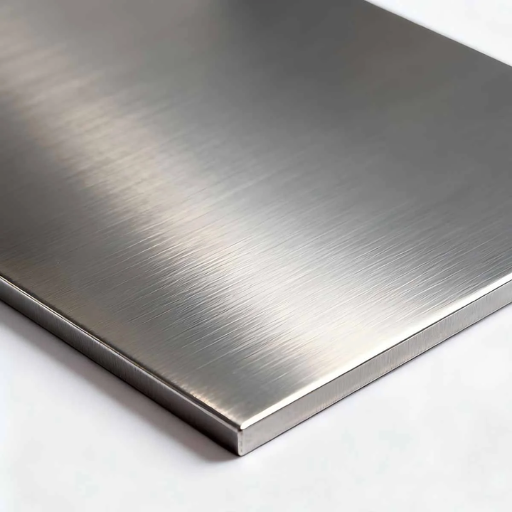
- Plates and sheets for tanks, liners, baffles, and heat exchanger tube sheets, cut to size and verified for flatness.
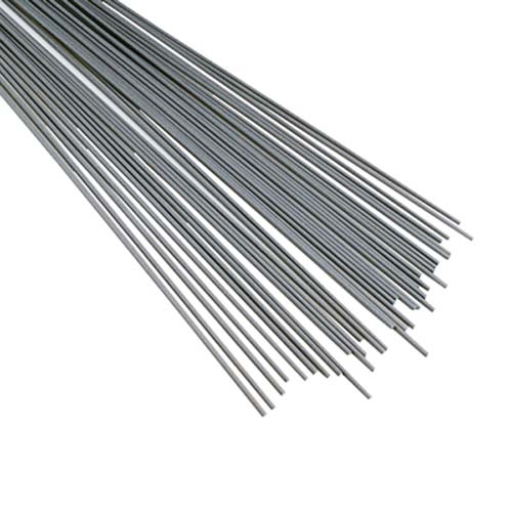
- Rod and bar for valve trim, pump shafts, fasteners, and machined fittings. Our Hastelloy B2 rod stock covers the common diameters with full MTRs.
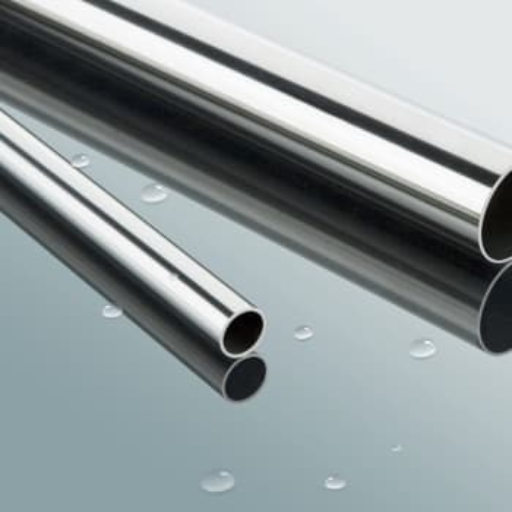
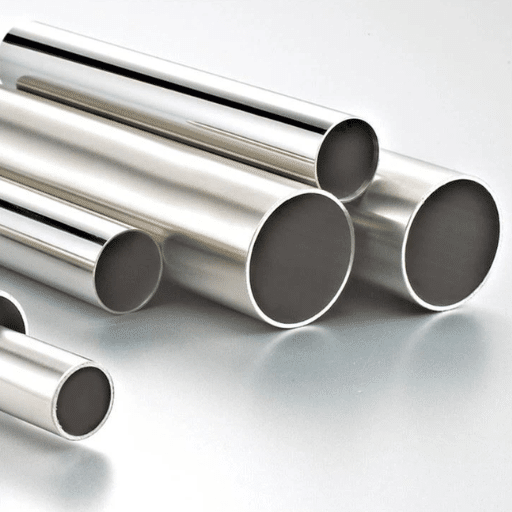
- Seamless pipe and tube for HCl transfer lines, heat exchanger tubing, and reactor coils. Seamless Hastelloy pipe avoids the weld seam entirely for critical service.
Hastelloy B2 Applications by Industry
B2 earns its place wherever reducing acids are the process, the byproduct, or the cleaning medium:
- Chemical and petrochemical processing: HCl synthesis and absorption units, alkylation columns, storage tanks, evaporators, and strippers.
- Pharmaceutical and fine chemical reactors: batch reactors handling reducing acid chemistries, where purity and corrosion control go together.
- Wet metallurgy and surface treatment: HCl pickling lines, metal cleaning baths, and regeneration loops.
- Nuclear fuel reprocessing and pollution control: reducing-acid streams in reprocessing and off-gas treatment where traceability and certified material are mandatory.
- Catalysis: aluminum chloride and butane isomerization units, where the chloride-rich reducing environment matches B2’s strengths.
Every application above shares one requirement: a documented, reducing stream with oxidizer control. When that condition holds, B2 delivers the longest corrosion life of any wrought alloy. When it does not, it delivers the shortest.
Hastelloy B2 vs B3: The Successor Question
B3 (UNS N10675) was engineered specifically to fix B2’s mid-temperature embrittlement. The two share a similar molybdenum-rich reducing-acid profile, but B3 tolerates the 550-850°C window far better.
| Property / Behavior | Hastelloy B2 (N10665) | Hastelloy B3 (N10675) |
|---|---|---|
| Reducing-acid resistance | Excellent | Excellent |
| Mid-temperature embrittlement risk | High (550-850°C) | Low |
| As-welded corrosion resistance | Needs tight controls | Better tolerance |
| Interpass temperature limit | ≤120°C | More forgiving |
| Relative cost | Lower | Higher |
Choose B2 when the service is clean, low-temperature, reducing acid, and the cost difference matters. Choose B3 when you need as-welded service, complex weldments, or any chance the component sees the embrittlement window. Our Hastelloy B2 vs B3 comparison digs into the full trade-off, including high-temperature HCl behavior where B3 extends the usable envelope.
Sourcing Hastelloy B2 from China (NS322)
The NS322 Cross-Reference
When you source from a Chinese mill, the grade appears on the certificate as NS322 under GB/T 15007. The composition is the same alloy as UNS N10665, but the certification language is the Chinese national standard. A competent supplier issues both the GB/T certificate and the equivalent ASTM designation so your engineering and quality teams can approve it without translation friction.
Verification: MTR, PMI, and Certification
B2 is a high-molybdenum alloy, and molybdenum is the expensive element. That creates a counterfeit incentive: a lower-molybdenum substitute certified as B2. The consequences in HCl service are not cosmetic.
A buyer once received a full plate order certified as N10665 from a trading desk, and the price was a little too good. A portable PMI (positive material identification) gun showed molybdenum at 21.8%, well below the 26% minimum. The “B2” was actually a leaner Ni-Mo alloy that would have failed in boiling HCl within months.
The order was rejected on PMI evidence, and the buyer moved to a manufacturer with in-house spectrometers.
That is why verification is non-negotiable:
- Request the MTR with full chemical composition and mechanical test results, traceable to the heat number.
- Ask for PMI spectral analysis on receipt, or run it yourself. Any molybdenum reading under 26% fails the grade.
- Request EN 10204 3.1 certification when your project standard requires it, and 3.2 with third-party inspection if specified.
- For pressure equipment, confirm the material is certified to ASME SB and that NDT reports (ultrasonic, where required) accompany the shipment.
One accuracy note on the market: some distributors list NACE MR0175 compliance on B2 product pages. B2 is generally excluded from H₂S and sour-gas service, so NACE listing does not mean sour-gas suitability. If your environment contains hydrogen sulfide, this is not the alloy, and our nickel-based alloy guide covers the appropriate grades.
Price Context (2026)
Hastelloy B2 price per kg tracks nickel and molybdenum markets, so these ranges move. As an indicative guide for 2026:
| Form | Price Range (per kg) |
|---|---|
| Plate | $25-38 |
| Bar | $26-42 |
| Pipe / tube | $28-45 |
| Fittings | $32-60 |
| Flanges | $45-70 |
Chinese bulk supply runs roughly ¥165-260/kg (about $23-36), with certified small-lot orders commanding a 2-4x premium because of testing and handling costs. Lead times for stock plate and bar run 1-3 weeks; mill-rolled special sizes run 6-10 weeks depending on the heat schedule. We hold stock in our Wuxi warehouse and can arrange air or sea dispatch through our 24-hour logistics center when a deadline is tight.
If you need certified Hastelloy B2 (NS322) plate, rod, pipe, or custom-processed dimensions, send us your specification. Our metallurgists will confirm the right grade for your stream chemistry, verify the MTR requirements against your standard, and return a competitive quotation within 24 hours.
FAQ: Hastelloy B2 Properties
What is Hastelloy B2 used for?
Hastelloy B2 is used for equipment that handles reducing acids, primarily hydrochloric acid at all concentrations up to boiling. Typical applications include HCl synthesis units, storage tanks, evaporators, pickling lines, and pharmaceutical reactors.
Is Hastelloy B2 resistant to hydrochloric acid?
Yes. B2 resists HCl at all concentrations up to the boiling point, with corrosion rates typically below 0.1 mm/year in clean, deaerated acid.
Can Hastelloy B2 handle nitric acid or other oxidizers?
No. B2 fails rapidly in oxidizing media including nitric acid, wet chlorine, hypochlorite, and any stream contaminated with ferric or cupric ions at roughly 50 ppm.
Does Hastelloy B2 need post-weld heat treatment?
Yes. After welding, B2 should be solution annealed at 1060-1150°C and water quenched to dissolve any β-phase formed in the heat-affected zone.
Is Hastelloy B2 magnetic?
No. B2 is non-magnetic in the annealed condition due to its fully austenitic face-centered-cubic structure.
What is the Chinese equivalent of Hastelloy B2?
The Chinese designation is NS322 under GB/T 15007. It is the same composition as UNS N10665.
How does Hastelloy B2 compare to B3?
B2 offers lower cost and excellent clean reducing-acid performance but embrittles in the 550-850°C range. B3 resists mid-temperature embrittlement better and suits as-welded or complex weldments.
What filler wire is used to weld Hastelloy B2?
ERNiMo-7 (AWS A5.14) for wire and ENiMo-7 (AWS A5.11) for electrodes, corresponding to W. Nr. 2.4615.
Conclusion
Hastelloy B2 properties come down to a single controlled extreme. It is the best alloy in existence for clean hydrochloric acid and reducing-acid service, with corrosion rates below 0.1 mm/year and total immunity to chloride stress corrosion cracking. It is also the alloy most likely to fail catastrophically if you contaminate the stream with oxidizers or let weld heat sit in the 550-850°C window.
Specify it correctly and the service life speaks for itself. Verify the chemistry with an MTR and PMI on receipt, because the molybdenum content is exactly what you’re paying for. Control the fabrication, because the embrittlement window punishes shortcuts. And when in doubt about oxidizer exposure, reach for B3 or C276 instead.
If you are ready to source certified Hastelloy B2 (NS322), submit your material list today. Our metallurgical team will confirm property compliance against your standard, arrange PMI verification, and return a quotation within 24 hours.