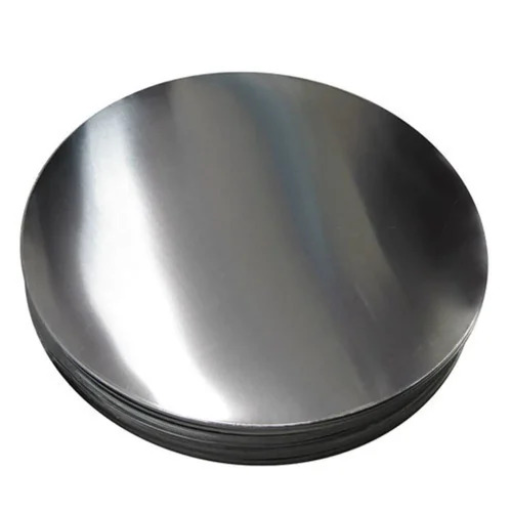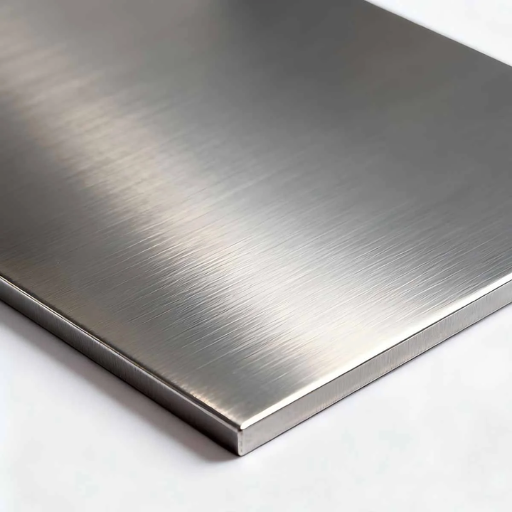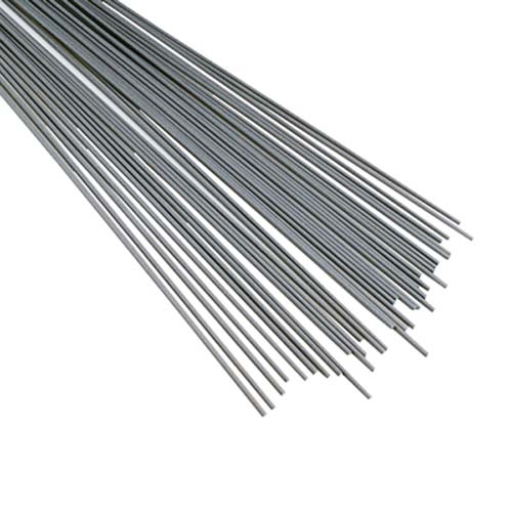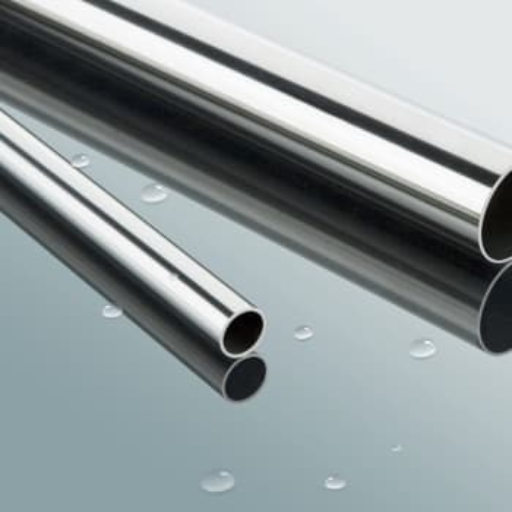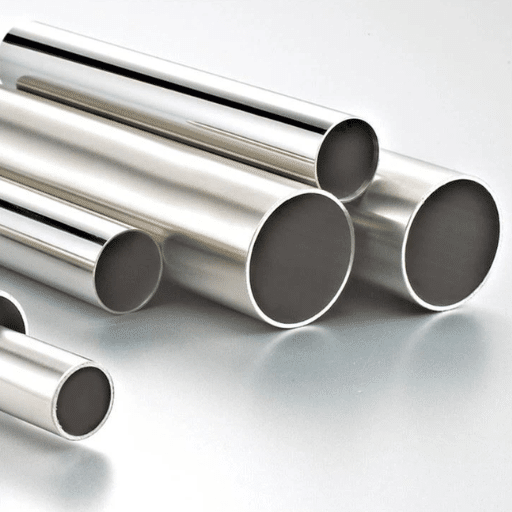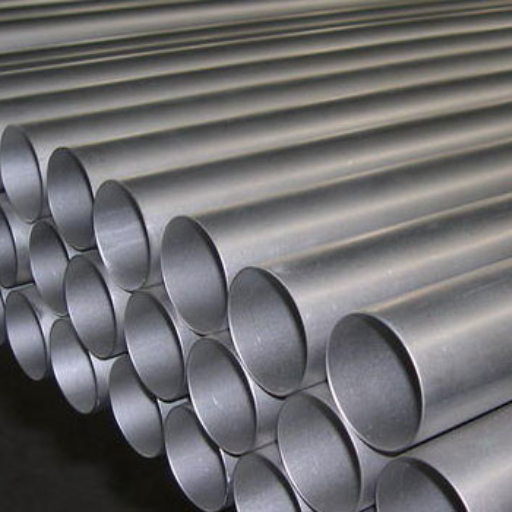
Incoloy 825 (UNS N08825) is a titanium-stabilized nickel-iron-chromium alloy with molybdenum and copper that resists both oxidizing and reducing acids. It is the most economical nickel-based alloy for sulfuric and phosphoric acid service, the default material for moderately sour oil and gas applications under NACE MR0175, and the grade engineers specify when 316L and 904L are not enough, but Inconel 625 is more than the application justifies.
A design engineer at a phosphoric acid plant faced exactly this decision last spring. Her evaporator tubes were failing every 14 months in 316L, but her budget would not stretch to Inconel 625 across the full tube bundle. She specified Incoloy 825 instead. Three years later, the tubes are still in service, and the plant has not replaced a single bundle.
This guide gives you the complete picture: what Incoloy 825 is, its chemical composition, mechanical and physical properties, corrosion resistance by environment, temperature limits, how it compares with six competing grades, its NACE sour gas limits, welding practice, available standards and forms, 2026 pricing, and how to verify material when you source it from China.
Key Takeaways
- Incoloy 825 (UNS N08825 / W. Nr. 2.4858 / NS142) is an austenitic Ni-Fe-Cr alloy with 2.5-3.5% Mo, 1.5-3.0% Cu and 0.6-1.2% Ti, giving it dual resistance to oxidizing and reducing media.
- Its practical long-term corrosion ceiling is 540-550°C; ASME pressure-vessel approval runs to roughly 450°C and ASTM cites 538°C, while sigma phase begins above 550°C.
- PREN is approximately 31-35, below 904L (34-36) and far below Inconel 625 (about 51), so warm high-chloride seawater is not its application.
- Under NACE MR0175 / ISO 15156-3, solution-annealed 825 is qualified to 232°C and 200 kPa H₂S partial pressure, with tighter limits for cold-drawn product.
- 2026 FOB China pricing runs roughly 18−40/kgforbar,18−40/kgforbar,20-48/kg for plate and sheet, and $28-55/kg for seamless pipe, about 20-25% below Inconel 625.
What Is Incoloy 825?
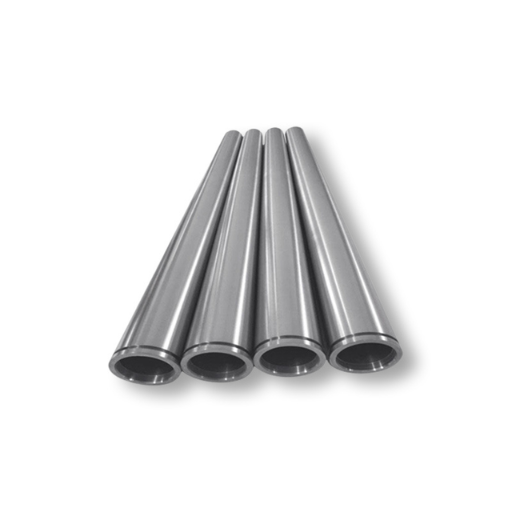
Incoloy 825 is an austenitic nickel-iron-chromium alloy containing molybdenum, copper and titanium, designed to resist both oxidizing and reducing corrosive environments. It carries the UNS designation N08825, the European Werkstoff number 2.4858, and the Chinese grade NS142, and is supplied in the solution-annealed condition as plate, sheet, bar, pipe, tube, wire and forgings. The manufacturer datasheet published by Special Metals, the alloy’s original developer and trademark holder, remains the reference source for its nominal composition and properties.
The grade was developed to solve a specific problem that stainless steels cannot. Type 316L handles mildly corrosive media but fails quickly in sulfuric acid. High-nickel alloys such as Inconel 625 handle almost everything but cost far more than most chemical process equipment justifies. Incoloy 825 was engineered to fill the gap: a nickel content high enough to resist chloride stress corrosion cracking, molybdenum and copper for reducing acids, chromium for oxidizing media, and titanium to stabilize the alloy against sensitization.
In the performance ladder from stainless steel to superalloy, 825 sits between 904L and Inconel 625. It costs roughly 2 to 3 times 316L, delivers roughly the corrosion performance of 904L with better sour-service credentials, and costs roughly 20-25% less than Inconel 625. See the Incoloy 825 equivalent grades guide for the complete designation cross-reference, including NS1402 and 0Cr21Ni42Mo3Cu2Ti.
Incoloy 825 Chemical Composition
The composition of Incoloy 825 explains everything about how it performs. Each alloying element addresses a specific corrosion mechanism, which is why the grade resists environments that defeat simpler alloys.
| Element | Content (wt%) | Role in the Alloy |
|---|---|---|
| Nickel (Ni) | 38.0-46.0 | Resists chloride stress corrosion cracking; promotes austenitic stability |
| Chromium (Cr) | 19.5-23.5 | Resists oxidizing media such as nitric acid and nitrates |
| Iron (Fe) | ≥22.0 (balance) | Base structure; lowers cost versus pure nickel alloys |
| Molybdenum (Mo) | 2.5-3.5 | Improves pitting, crevice and reducing-acid resistance |
| Copper (Cu) | 1.5-3.0 | The key addition for sulfuric and phosphoric acid resistance |
| Titanium (Ti) | 0.6-1.2 | Stabilizes carbon, preventing intergranular corrosion after welding |
| Carbon (C) | 0.05 max (some sources ≤0.025) | Kept low to limit carbide precipitation |
| Manganese (Mn) | 1.0 max | Deoxidation and processing control |
| Silicon (Si) | 0.5 max | Deoxidation |
| Sulfur (S) | 0.03 max | Impurity control |
| Aluminum (Al) | 0.2 max | Deoxidation |
The copper and molybdenum pairing is what distinguishes 825 from the Incoloy 800 series. Copper gives the alloy its resistance to dilute sulfuric acid, the one environment where 825 outperforms even Inconel 625. Titanium, combined with a proper solution anneal, ties up the carbon so the alloy resists intergranular attack in the as-welded condition.
Carbon content varies by standard. ASTM specifications permit up to 0.05%, while some producers and the German 2.4858 sheet hold to 0.025% maximum. Both are within specification for the grade, but when you are ordering material for intergranular corrosion service, confirm the carbon limit on the mill certificate. For a deeper look at how these elements drive performance, see the Incoloy 825 properties guide.
Incoloy 825 Mechanical & Physical Properties
Incoloy 825 is supplied in the annealed condition. The published specification minimums and the representative values for actual mill product differ, and confusing the two is a common source of over-engineering.
| Property | Specification Minimum | Representative Value |
|---|---|---|
| Tensile strength | ≥586 MPa (85 ksi) | ~645 MPa (93.5 ksi) |
| Yield strength (0.2% offset) | ≥241 MPa (35 ksi) | ~295 MPa (42.8 ksi) |
| Elongation | ≥30% | ~54% |
| Hardness | 327 HB max | 135-200 HB |
| Density | , | 8.14 g/cm³ |
| Elastic modulus | , | ~196-197 GPa |
| Melting range | , | 1370-1400°C |
| Thermal conductivity | , | 10.7-11.1 W/m·°C |
| Coefficient of thermal expansion | , | 14-15 × 10⁻⁶/°C |
The gap between 586 MPa minimum and 645 MPa typical tensile strength is not a quality issue. It reflects the difference between a specification that guarantees a floor and a mill that consistently produces above it. When you see a datasheet quoting a much lower tensile strength than 586 MPa, that figure is usually for a different product form or a cold-worked condition.
The alloy is not age-hardenable. It gains strength only through cold work, which is why you will see spring temper wire products quoting tensile strengths up to 1035 MPa. For pressure equipment and process piping, the annealed properties in the table above are the ones that matter.
Incoloy 825 Corrosion Resistance: What It Actually Resists
Corrosion resistance is the reason Incoloy 825 exists. The alloy resists sulfuric, sulfurous, phosphoric, nitric, hydrofluoric and organic acids, plus alkalis, acidic chloride solutions and seawater. The details of that resistance, environment by environment, are what separate a good specification from a failed tube bundle.
Sulfuric Acid: The Core Strength
Incoloy 825 performs across a wide sulfuric acid concentration band, from 10% up to 90%, at corrosion rates below 0.1 mm/year up to approximately 150°C. Its best performance falls in the 10-30% concentration range, an area where reducing conditions dominate, and copper content is the decisive alloying addition. This is the application where 825 genuinely outperforms Inconel 625, because 625 lacks copper and its strength lies in oxidizing and chloride environments. The Nickel Institute’s sulfuric acid corrosion reference records 825 rates as low as nil in dilute and plant pickling conditions.
Other Acids
The chromium content handles oxidizing media such as nitric acid, nitrates, and oxidizing salts. Phosphoric acid service, especially in wet-process evaporators, is a mainstay application. Sulfurous, organic and hydrofluoric acids are all within the grade’s envelope. For the full corrosion-rate tables by concentration and temperature, see the Incoloy 825 corrosion resistance data guide.
Chloride Stress Corrosion Cracking
In U-bend tests in boiling magnesium chloride over 300 hours, Incoloy 825 showed no cracking at 25% and 35% MgCl₂. Type 316L stainless steel cracked at both concentrations under the same test. At 42% MgCl₂, 825 also cracked. This result is the clearest single data point on why 825 is a step above austenitic stainless steel for chloride service, and why it is not the answer for severe chloride environments.
Pitting, Crevice and Seawater
Incoloy 825’s pitting resistance equivalent number (PREN, calculated as Cr + 3.3Mo + 16N) falls in the 31-35 range. In seawater, the grade can pit: published maximum pit depths are approximately 740 µm in quiet seawater and 1,300 µm in flowing seawater. It is also susceptible to crevice attack in seawater and brine. The grade is classified as “resistant, with some pitting,” the same classification applied to Monel 400.
That seawater limitation deserves emphasis, because it is where the cost of a wrong specification shows up. A Southeast Asian refinery specified 825 tubes for a seawater-cooled heat exchanger to save on material cost. Elevated inlet temperature caused pitting within 14 months and the exchanger leaked. Switching to Inconel 625 solved the problem permanently. The 60% material premium was recovered in the first shutdown the plant avoided.
Flue Gas Desulfurization
For flue gas desulfurization (FGD), corrosion studies from the Nickel Institute rank the materials Hastelloy C-276 first, Incoloy 825 second and 316L third. Incoloy 825 is the cost-effective mid-range choice for scrubber components and ductwork. It is not suited to scrubber slurry or to systems where pH approaches 2 with chloride above 0.1%, where C-276 or Inconel 625 becomes necessary.
Incoloy 825 Temperature Limits & Sigma Phase
Search results for Incoloy 825’s maximum temperature return a confusing range of figures: 537°C, 538°C, 540°C, 550°C and even 982°C. These numbers come from different contexts, and conflating them is the most common error about this grade. Here is the framework that resolves the contradiction.
| Context | Temperature Limit | Source |
|---|---|---|
| ASME pressure-vessel design use | ~450°C | ASME approval |
| ASTM pressure-vessel reference | 538°C (1000°F) | ASTM product specs |
| Practical long-term corrosion service | ≤540-550°C | Corrosion-service practice |
| Sigma-phase precipitation onset | >550°C | Metallurgical limit |
| Sensitization discussion (different mechanism) | ~982°C | Do not confuse with aqueous service |
| Cryogenic lower limit | ~-196°C | Ductility limit |
The 982°C figure that appears on some datasheets refers to a high-temperature metallurgical discussion, not to the aqueous corrosion-service limit. Publishing 982°C as a service temperature for a sulfuric acid application would be a specification error with serious consequences.
For a pressure vessel or process piping component in aqueous acid service, the practical working ceiling is 540-550°C. Above that, creep and oxidation behavior, not corrosion resistance, govern the design, and the Incoloy 800H series becomes the better tool.
Heat Treatment
Incoloy 825 is solution annealed at 900-1150°C (VDM specifies above 1010°C), held for 1 to 2 hours, then rapidly air cooled or water quenched. The rapid quench is essential to keep the titanium and carbon in solution and prevent sensitization. The alloy is not age-hardenable.
A stabilizing anneal is available for heavy sections that become sensitized during cooling, or for welded and hot-worked components exposed to media that cause intergranular attack. This is a conditional treatment, not a routine requirement.
Incoloy 825 vs 316L vs 904L vs Inconel 625 vs Hastelloy C276 vs Monel 400 vs 800H
Most of the demand for Incoloy 825 comes from a grade-selection question. The table below places 825 against the six grades buyers most often weigh it against.
| Grade | PREN (approx.) | Relative Cost | Temperature Ceiling | Best-Fit Environment | NACE MR0175 |
|---|---|---|---|---|---|
| 316L | ~24 | 1x | ~400°C | Mild chloride, general | Limited |
| 904L | ~34-36 | ~2-2.5x | ~400°C | Sulfuric/phosphoric acid, chlorides | Moderate |
| Incoloy 825 | ~31-35 | ~3-4x | ~540-550°C | Sulfuric/phosphoric acid, moderate sour service | Moderate, defined limits |
| Inconel 625 | ~51 | ~4-6x | ~815°C | Chlorides, seawater, severe sour, high temperature | All H₂S pressures |
| Hastelloy C276 | ~65 | ~6-8x | ~675°C | Severe chlorides, oxidizing + reducing | All H₂S pressures |
| Monel 400 | ~30 | ~3-4x | ~480°C | Seawater, hydrofluoric acid, alkalis | Limited |
| Incoloy 800H | ~20 | ~2-3x | ~900°C (creep) | High-temperature creep and oxidation | Not applicable |
The Decision Logic
Choose Incoloy 825 when the primary corrosive is sulfuric or phosphoric acid, operating temperature is below 540°C, sour service is mild to moderate, and the budget does not justify Inconel 625. Typical applications are acid heat exchangers, FGD scrubbers, chemical tanks, and vessels.
Choose Inconel 625 when chlorides, seawater, or brine are present at elevated temperatures, when operating temperature exceeds 540°C, when sour service is severe, or when a subsea or offshore fatigue-loaded component is involved.
Incoloy 825 vs 800H Settled
The two most-confused Incoloy grades appear together on every Incoloy search result, and almost nobody explains the real difference. Incoloy 825 is a corrosion grade, carrying molybdenum and copper for acid resistance. Incoloy 800H and 800HT are creep and oxidation grades, with controlled carbon and coarse grain size, and carry no molybdenum or copper at all.
The rule of thumb is simple: choose the grade that answers the mechanism that would end the campaign first. If corrosion would kill the equipment, specify 825. If high-temperature creep or oxidation would kill it, specify 800H or 800HT. For the full comparison, see the Incoloy 825 vs 800H guide.
Sour Gas & NACE MR0175 / ISO 15156 Service
Incoloy 825 is a standard material for moderately sour oil and gas service. It appears throughout NACE MR0175 / ISO 15156-3 for downhole tubing, wellhead components, sand-screen base pipe and sour-service heat-exchanger tube. The qualification limits depend on product condition.
| Product Condition | NACE MR0175 / ISO 15156-3 Table | Max Temperature | Max H₂S Partial Pressure |
|---|---|---|---|
| Solution-annealed / annealed | A.13 | 232°C (450°F) | 200 kPa (30 psi) |
| Solution-annealed / annealed | A.13 | 132°C (270°F) | Any |
| Annealed + cold-drawn | A.14 | 218°C (425°F) | 700 kPa (100 psi) |
| Annealed + cold-drawn | A.14 | 204°C (400°F) | 1,000 kPa (150 psi) |
| Annealed + cold-drawn | A.14 | 177°C (350°F) | 1,400 kPa (200 psi) |
The chloride bracket for these limits is published at chloride concentration up to 50 g/l and pH above roughly 4.5. Cold-worked product, common in downhole tubulars and valve trim, carries tighter limits than annealed product. Swagelok, for example, rates its Alloy 825 check valves to 5900 psig (406 bar) in sour service.
The NACE Scope Caveat
NACE MR0175 addresses cracking damage mechanisms, specifically sulfide stress cracking and stress corrosion cracking. It does not cover pitting resistance. A material can be fully MR0175-qualified and still pit in high-chloride sour service. When chloride levels are high, examine 825’s pitting behavior with supplementary test data such as NACE TR1F192 and AMPP-published results, rather than assuming the NACE listing covers localized corrosion. For refinery sulfide stress cracking, the applicable standard is NACE MR0103 / ISO 17945.
When conditions exceed these limits, the upgrade path is Inconel 625 for chloride-driven service or a Hastelloy C-276 grade for combined severe chloride and acid service. See the Incoloy 825 sour gas and NACE guide for the full framework.
Welding & Fabrication
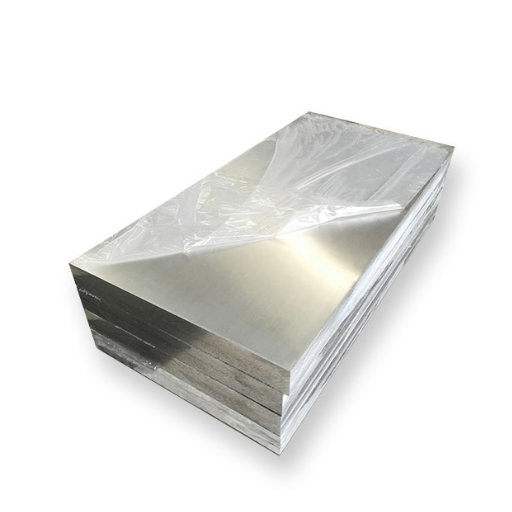
Incoloy 825 welds with the same nickel-based fillers used for Inconel 625, and its titanium stabilization means post-weld heat treatment is generally not required for intergranular resistance.
Filler Metals
- ERNiCrMo-3 (AWS A5.14 / EN ISO 18274 S Ni 6625 / NiCr22Mo9Nb) is the standard matching filler for 825 and 625. Typical composition is 61% Ni, 22% Cr, 9% Mo with Nb+Ta.
- ENiCrMo-3 (AWS A5.11) is the coated-electrode counterpart.
- INCO-WELD 686CPT provides the highest corrosion resistance for severe service.
- ERNiFeCr-1 is a matching iron-bearing filler option.
Technique
ERNiCrMo-3 weld metal is viscous and shrinks strongly. That behavior demands a wider root gap of 1 to 3 mm and a larger included angle of 60-70° for butt joints. Pure-argon root protection is required, and root backing is recommended. Use stringer beads, keep heat input at or below 1.5 kJ/mm, and hold interpass temperature at or below 150°C, with 100°C preferred. Strike the arc only in the weld area, clean surfaces with acetone, and use stainless brushes to avoid ferrous contamination.
Post-weld heat treatment is generally unnecessary because titanium stabilizes the carbon. A stabilizing anneal is conditionally required for welded or thermally treated sections that will operate in aggressive media.
Machining and Forming
Machine Incoloy 825 in the annealed temper. It work-hardens rapidly, like austenitic stainless steel, so use low cutting speeds, take chip depths deep enough to get under the work-hardened layer, and apply copious water-containing coolant. For hot working, preheat to roughly 1150-1180°C, forge between 1150°C and 900°C, and cool in air or water. The material requires roughly twice the forming pressure of austenitic stainless steel. Preheat dies to about 260°C and use sulfur-free and chlorine-free lubricants. For complete fabrication details, see the Incoloy 825 welding guide.
Standards & Product Forms
Incoloy 825 is covered by a specific ASTM standard for each product form. Specifying the wrong standard is a frequent cause of order rejection.
| Product Form | ASTM Standard | Notes |
|---|---|---|
| Plate, sheet, strip | ASTM B424 (also B906) | ASME SB424 |
| Rod, bar, wire, forging stock | ASTM B425 | ASME SB425 |
| Forgings | ASTM B564 | , |
| Seamless pipe and tube | ASTM B423 | ASME SB423 |
| Heat exchanger and condenser tube | ASTM B163 / B407 | Sour-service heat-exchanger tube |
| Welded pipe and tube | ASTM B704 / B705 | , |
| General pipe | ASTM B829 | Also B751, B775 |
| Fittings | ASTM B366 | , |
European and British equivalents include DIN 17750-17754 and BS 3072-3076 for grade NA16. Material is delivered in the solution-annealed condition.
For product-form buying guides, see Incoloy 825 pipe and tube and Incoloy 825 plate and sheet. Both cover size ranges, delivery conditions, and how to write a purchase order that seals the specified condition.
Applications by Industry
Incoloy 825 appears wherever an application needs resistance to both oxidizing and reducing acids plus practical chloride performance.
Chemical processing. Sulfuric and phosphoric acid plants, including reactors, evaporators, heat exchangers and pressure vessels. This is the grade’s core market.
Flue gas desulfurization. Scrubbers, absorbers and ductwork, where 825 is the mid-range choice between 316L and Hastelloy C-276. Avoid scrubber slurry and pH near 2 with chloride above 0.1%.
Seawater and cooling water. Heat exchangers, provided temperatures are moderate and velocity is not extreme. Warm, high-velocity or stagnant seawater requires Inconel 625 or a super duplex grade.
Oil and gas. Downhole tubing, wellhead components and sand-screen base pipe in moderate sour service, within the NACE limits above.
Acid production and pickling. Pickling tanks, heaters and acid-handling equipment.
Nuclear fuel reprocessing. Dissolvers and radioactive waste handling, where the grade’s corrosion resistance and ductility are both required. Our nickel-based alloy overview covers the family of grades used in these service conditions.
Power generation, geothermal and CCS. Heat exchangers, pollution control and process equipment.
Marine and offshore. Marine exhaust systems and selected seawater equipment, with the temperature and chloride caveats above.
Fertilizer plants. Phosphoric acid evaporators and associated equipment, a documented end-use for 825 built for projects in Southeast Asia.
Incoloy 825 Price & What Drives It
Incoloy 825 is the most expensive grade in the Incoloy family because of its nickel, molybdenum and copper content. The table below reflects 2026 FOB China ranges by product form.
| Product Form | FOB China (USD/kg) | Domestic China (RMB/kg) |
|---|---|---|
| Round bar (Φ10-200 mm) | $18-40 | ¥160-230 |
| Plate/sheet (1-50 mm) | $20-48 | ¥170-240 |
| Seamless pipe (OD 6-219 mm) | $28-55 | ¥220-320 |
Several factors move the price within these ranges:
- LME nickel. Nickel is the single largest cost driver, accounting for roughly 40-60% of unit cost depending on form.
- Molybdenum and copper. Both add cost, and both are priced on separate markets.
- Thickness. Thin cold-rolled sheet carries a premium because of lower mill yield.
- Certification. Import-brand material (VDM, ATI, Sandvik) or product supplied with EN 10204 3.2 or NACE documentation carries a 15-30% premium.
- Order volume. Orders above one tonne typically reduce unit price by 10-25%.
Treat any listing quoting ¥1.00/kg or similarly low figures as a placeholder “contact for price” artifact, not real price data. Because nickel volatility moves these numbers, request a live quotation against your actual specification. The Incoloy 825 price per kg guide carries the current table and cost-driver analysis.
For comparison, Inconel 625 typically runs 20-25% higher than 825, and 316L is roughly one-fifth to one-sixth the cost. Over-specifying 625 where 825 will work wastes budget; under-specifying 825 where chlorides are high costs more in downtime.
Need 2026 pricing for a specific form and quantity? Submit your specification and our technical team will respond within 24 hours with availability, price and delivery schedule.
Sourcing Incoloy 825 from China
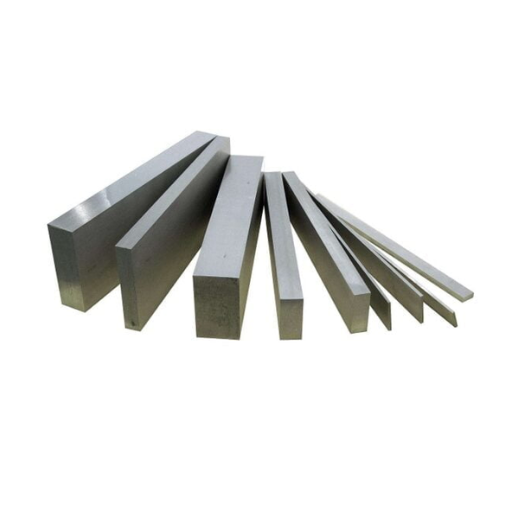
China produces Incoloy 825 through a supply chain concentrated in Wuxi and Jiangsu province, plus Shanghai. Understanding the designations, documentation and verification steps protects your project.
Chinese Equivalent Designations
Your incoming material certificates will carry designations that do not appear on Western datasheets. Match them against this list:
- NS142 (old GB/T 15007-1994 grade)
- NS1402 (new designation)
- 0Cr21Ni42Mo3Cu2Ti (full chemical grade)
- Referenced standards: GB/T 15007, 15008, 15009, 15010
European and other designations that may appear on mill certificates include W. Nr. 2.4858, DIN NiCr21Mo, NA16 (UK), NCF825 (Japan) and NC 21Fe Du (France).
Documentation and Verification
- EN 10204 3.1 is the standard mill test report for most industrial orders.
- EN 10204 3.2 adds independent third-party witness and is required for EPC and nuclear projects.
- PMI / OES verification should be performed specifically against the titanium and copper lines. These are the two elements counterfeit or mislabeled 825 most often gets wrong, and a quick positive material identification check catches it before material enters your plant.
- NACE MR0175 / ISO 15156 documentation is required for sour-service orders.
Imported vs Domestic Tiering
Imported brands such as VDM, ATI, and Sandvik carry a 15-30% premium and are common on projects with strict brand-approved vendor lists. Domestic Chinese mill product meets the same ASTM specifications at lower cost, provided the documentation is complete and independently verified.
At Jiangsu Zhonggongte Metallurgical Technology, we operate vacuum induction furnaces and electroslag remelting furnaces, with an in-house laboratory for direct-reading spectrometer analysis, tensile testing, hardness testing, and ultrasonic NDT. Every Incoloy 825 order ships with a full material test report, and we support third-party inspection for project orders. Product forms include plate, sheet, bar, pipe, tube, and forgings in grade N08825. See our Incoloy 825 bar stock for standard sizes.
Incoloy 825 FAQ
What is Incoloy 825 used for?
Incoloy 825 is used primarily in sulfuric and phosphoric acid equipment, flue gas desulfurization systems, seawater and cooling-water heat exchangers, moderately sour oil and gas components, acid production and pickling, nuclear fuel reprocessing, and fertilizer plants.
Is Incoloy 825 better than 316L?
Yes, in acid and chloride service. Incoloy 825 resists sulfuric and phosphoric acids across wide concentration ranges where 316L fails within months, and it resisted chloride SCC in boiling MgCl₂ at 25% and 35% where 316L cracked. It costs roughly 3 to 4 times more, so it is the right upgrade when 316L is genuinely inadequate.
Incoloy 825 vs Inconel 625, which is better?
Neither is universally better. Incoloy 825 wins in sulfuric and phosphoric acid and on cost. Inconel 625 wins in chloride, seawater and severe sour service, and at temperatures above 540°C. Choose the alloy that addresses the mechanism most likely to end the equipment’s life.
What is the difference between Incoloy 825 and 800H?
Incoloy 825 is a corrosion grade with 2.5-3.5% molybdenum and 1.5-3.0% copper for acid resistance. Incoloy 800H is a creep and oxidation grade with no molybdenum or copper, engineered with controlled carbon and grain size for high-temperature strength. Use 825 for wet corrosion, 800H for high-temperature service.
Is Incoloy 825 magnetic?
Incoloy 825 is austenitic and essentially non-magnetic in the annealed condition. Cold working can introduce slight magnetism, but the grade is not used for magnetic properties.
What is the maximum service temperature of Incoloy 825?
In aqueous corrosion service, the practical long-term ceiling is 540-550°C, with ASME pressure-vessel approval near 450°C and ASTM citing 538°C. Sigma phase begins above roughly 550°C. Cryogenic service is stable to about -196°C.
Is Incoloy 825 NACE MR0175 compliant?
Yes, within defined limits. Solution-annealed product is qualified to 232°C and 200 kPa H₂S partial pressure, with tighter limits for cold-drawn product. MR0175 covers cracking, not pitting, so high-chloride service needs supplementary localized-corrosion data.
Can Incoloy 825 be welded?
Yes. It welds with ERNiCrMo-3 filler and ENiCrMo-3 electrodes, uses a 1-3 mm root gap with pure-argon root protection, holds interpass temperature at or below 150°C, and generally needs no post-weld heat treatment because titanium stabilizes the carbon.
How does Incoloy 825 perform in seawater?
With some pitting risk. Published maximum pit depths reach roughly 740 µm in quiet seawater and 1,300 µm in flowing seawater, and the grade is susceptible to crevice attack. It suits moderate-temperature cooling water, not warm high-velocity or stagnant seawater.
What is the Chinese equivalent of Incoloy 825?
The Chinese equivalents are NS142 (old GB/T 15007-1994), NS1402 (new designation) and the full grade 0Cr21Ni42Mo3Cu2Ti.
Conclusion
Incoloy 825 earns its place as the workhorse corrosion-resistant nickel alloy. Its combination of chromium, molybdenum, copper and titanium delivers resistance to both oxidizing and reducing acids, chloride stress corrosion cracking and moderate sour service, at a cost well below Inconel 625.
The four facts that matter most when you specify it:
- Use it for sulfuric and phosphoric acid service up to 540-550°C, not for warm high-chloride seawater.
- Its NACE MR0175 sour-service limits are defined and condition-dependent, and cover cracking rather than pitting.
- Its corrosion grade logic distinguishes it clearly from the Incoloy 800H heat grades.
- Verify the titanium and copper lines by PMI, and match the NS142 / NS1402 / 0Cr21Ni42Mo3Cu2Ti designations on incoming certificates.
Choosing the right corrosion alloy is an engineering decision, not a price decision. It is the difference between a tube bundle that lasts three years and one that fails in fourteen months.
Tell us your operating temperature, media composition and chloride or H₂S level. Our metallurgical engineers will confirm the right grade and form factor for your application and return a certified quotation with full MTR documentation within 24 hours. Request a quote today.