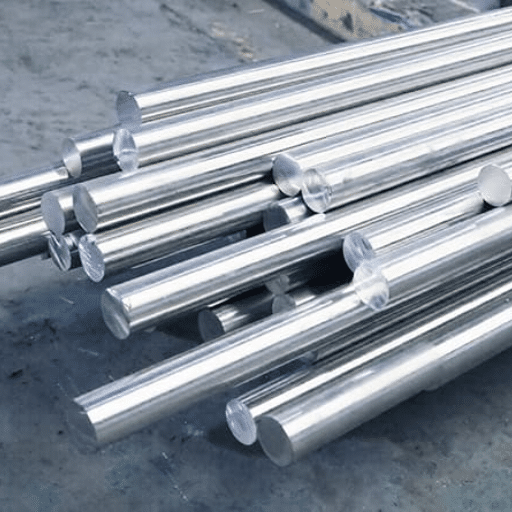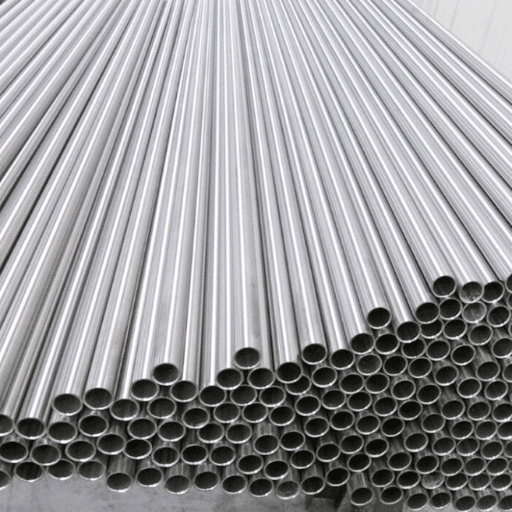
Duplex stainless steel heat treatment usually means solution annealing followed by suitable rapid cooling. It is used when the process route requires it. The aim is the intended phase structure and properties, rather than maximum hardness from a carbon-steel quench-and-temper cycle.
A temperature chart looks simple. The hard questions concern the grade, product form, section size, cooling route, and proof of condition. This guide connects those questions. Use it to compare a treatment proposal or quote, while keeping a datasheet range distinct from a full shop procedure.
Key Takeaways
- Match every annealing recommendation to its producer, grade, and product form.
- Review heating, load equalization, transfer, and cooling together.
- Separate intermetallic precipitation from lower-temperature ferrite aging.
- Ask for evidence of the required property; phase balance alone is insufficient.
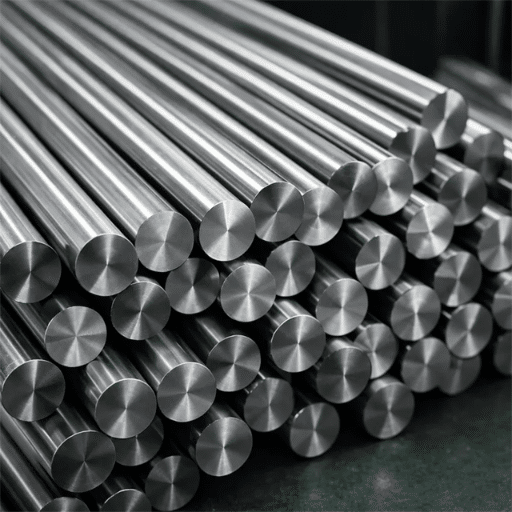
Illustrative scenario: Two quotations both describe 2205 as “solution annealed.” One concerns tube; the other concerns billet. Before comparing them, ask which condition and cooling record each description covers. The shared label doesn’t establish that the products followed the same route.
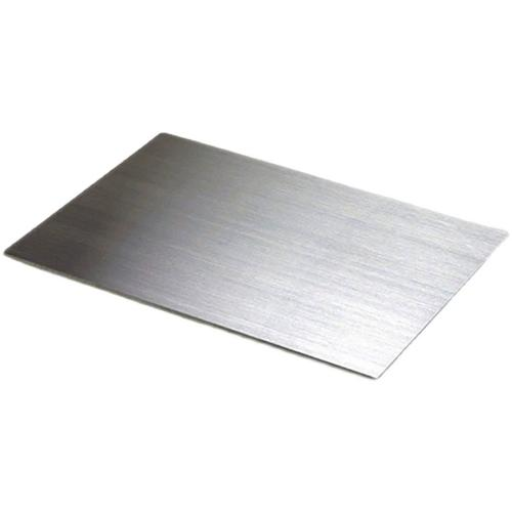
For broader alloy selection, start with our duplex stainless steel selection guide. If you are preparing a sheet enquiry, review the stainless steel sheet information and state the grade, dimensions, service conditions, and required records.
What duplex stainless steel heat treatment must preserve
Solution annealing is not a hardening schedule
Duplex stainless steels contain ferrite and austenite. Both phases help provide strength, toughness, and corrosion resistance. Heat treatment must protect that mix of properties. Chasing maximum hardness alone misses the point.
During solution annealing, suitable heat dissolves harmful phases and helps establish the intended condition. Rapid cooling then limits unwanted phase formation. Both parts of the cycle matter.
The IMOA fabrication handbook explains this link between thermal history and properties. Its guidance doesn’t make every duplex grade or product interchangeable.
This differs from hardening martensitic steel or aging a precipitation-hardening stainless grade. “Heat treated” therefore needs an explanation: which treatment, applied to which material, for which required condition? A request copied from another steel family can set the wrong goal. Precise furnace control cannot fix that mistake.
For a buyer, this also makes the starting condition worth checking. Is the product already solution annealed? Is it supplied hot worked for further processing?
Has later fabrication changed its condition? An earlier treatment record cannot describe a later heating step. Keep the process sequence linked to the material identity.
Phase balance is part of the evidence
The picture of roughly balanced ferrite and austenite is useful. It doesn’t mean every product must have exactly equal amounts. Grade chemistry, processing, and the region being examined affect the structure. The governing specification determines what must be demonstrated and where.
A phase-balance reading answers one part of the question. On its own, it doesn’t rule out harmful precipitates. Nor does it prove the required toughness or corrosion resistance. Nor should an attractive surface or weld profile substitute for those checks.
When someone offers a ferrite reading as proof of successful treatment, ask what method was used and what requirement it addresses. Then identify any other required checks. This avoids treating one convenient measurement as a certificate for all service properties.
Solution annealing: match temperature and cooling to the product
Reference temperatures need a grade and form
Producer guidance shows why scope matters. These values describe named products. They are reference ranges, not executable treatment cycles. Each still needs the governing product specification and a suitable procedure.
| Producer and product | Solution-annealing recommendation | Cooling wording and scope |
|---|---|---|
| Alleima SAF 2205 seamless tube and pipe | 1020–1100°C | Rapid cooling in air or water, for the product covered by that sheet |
| Alleima SAF 2205 billet | 1020–1100°C | Rapid cooling in water; the sheet distinguishes billet supply from separately treated test pieces |
| Alleima SAF 2507 seamless tube and pipe | 1050–1125°C | Rapid cooling in air or water, for this different grade and form |
Sources: Alleima’s 2205 tube/pipe, 2205 billet, and 2507 tube/pipe datasheets.
The first two rows share a range but differ in cooling wording. The third row changes both the grade and the range. Don’t extract the numbers while dropping those distinctions.
The billet test piece also has its own treatment history. Its properties do not, by themselves, prove the final condition of every billet or finished part.
Heating and equalization depend on the actual load
A furnace setting cannot prove the coldest part of a load is ready. Review the section thickness, shape, starting temperature, loading, and monitoring. All affect the process review.
Ask how the heat treater checks the workpiece temperature. Which points must reach it before the required hold begins?
The table gives no soak-time rule for all products. A thin tube and a heavy billet present different problems. So does a part with unequal walls.
More time alone cannot replace a defined process. Keep the chosen heat and hold within the approved route for that grade and product.
Bring drawings and the planned load layout to this discussion. Mark heavy junctions, tight spaces, and changes in section. Where is heat measured?
How does that reading relate to the workpiece? Use those questions to review the procedure. Don’t infer a core temperature from a furnace chart with no link to the part.
Cooling is a process, not just a medium
IMOA emphasizes prompt water quenching in its guidance on full annealing and mill products. Meanwhile, the scoped tube datasheets above allow rapid air or water cooling. Neither statement is a rule for every duplex part. Tie the choice to the product, section, and governing process requirements.
“Air cooled” is incomplete if it leaves the cooling conditions unknown. Rapid air cooling on a tube datasheet has a product scope. It doesn’t approve slow cooling in still air for a thick fabricated part.
“Water quenched” also leaves questions open. How was the load moved to the quench? Was it spaced to cool difficult sections?
Return to the two quotations in the opening scenario. Ask for the treatment and cooling basis behind each quote. There is no need for both suppliers to use identical words. Ask how the proposed route fits your part size and final condition.
Weld cooling has a separate task. The local cycle must allow suitable austenite formation while limiting harmful changes. That doesn’t authorize a slower whole-part quench after solution annealing.
The starting conditions and goals differ. A welding rule cannot replace an annealing procedure.
Thermal exposure risks: sigma phase and lower-temperature embrittlement
Intermetallic precipitation
Sigma and related intermetallic phases can reduce toughness and corrosion resistance. They also affect the chemistry of nearby material. Their formation depends on time, temperature, alloy chemistry, and prior processing. Temperature alone cannot predict the result.
The Outokumpu Forta datasheet, in its microstructure discussion, identifies a broad intermetallic-formation region of about 600–1000°C. This is the source’s broad warning band. It doesn’t mean every grade fails on entering it. Nor does time outside it prove an acceptable structure.
Review heating and cooling through these regions, as well as the peak. Include repeat heating in the history. The last recorded cycle may not tell the whole story.
If records have gaps, say so. Don’t calculate a time-to-sigma deadline from a generic chart. Ask what evidence can assess the actual condition.
Ferrite decomposition and “475°C embrittlement”
A separate mechanism affects ferrite at lower temperatures. Outokumpu describes ferrite decomposition over roughly 350–500°C, often discussed under the name “475°C embrittlement.” This can reduce toughness. It differs from the intermetallic problem at higher temperatures.
The name is not a sharp safe/unsafe boundary. Temperatures on either side of 475°C can still matter. Time at heat and alloy condition still matter.
A generic band cannot predict a part’s remaining life. A rule against one exact temperature can miss the wider aging concern.
Use this distinction when reviewing an unexpected exposure. Record the known temperature and duration. Separate estimates from measurements.
Ask the responsible materials specialist which mechanism and tests apply. Appearance alone cannot settle either bulk-phase question.
Fabrication time is not service qualification
A brief fabrication excursion differs from years of hot service. A fabrication warning chart cannot set one maximum operating temperature for all duplex. The grade, design rules, time in service, and allowed property change all matter.
If sustained temperature is part of the application, revisit material selection as well as processing. Our 904L versus 2205 comparison provides a route back to that discussion. It doesn’t approve an alternative grade for the project. Check its corrosion and temperature limits for the actual service.
For a useful exposure review, collect these details. Keep each answer linked to its source record so unknowns remain visible:
- Which heating steps are known, including repairs and repeat work?
- Where did each temperature reading come from?
- Is the duration measured, estimated, or unknown?
- Which part of the load could have cooled most slowly?
- Who will decide the test plan and release or hold decision?
Decide when post-fabrication heat treatment belongs in the route
Routine PWHT and stress relief
Ordinary qualified duplex welding generally does not need post-weld heat treatment (PWHT). An added stress-relief cycle at intermediate temperatures can cause harmful changes instead. IMOA’s PWHT discussion explains why full solution annealing, where needed, is fundamentally different from ordinary sub-solution stress relief.
Avoid an absolute “never” as well. Outokumpu acknowledges special stress-relief cases and directs users to producer guidance. That narrow exception is not a schedule for all duplex products.
First resolve the need with the original producer and the responsible project authority. Then decide whether the job traveler should include the step.
Illustrative scenario: A fabrication proposal carries over a stress-relief step from another steel. The team pauses that step. Does it fit the duplex grade, welded condition, and project specification?
No failed part is implied. The point is to check a familiar instruction before committing to it.
Operations that can change the requirement
| Operation or condition | Question to resolve before release |
|---|---|
| Hot forming | Does the producer require subsequent solution annealing for this grade and route? |
| Cold forming | Do the deformation, service, and specification require treatment or further assessment? |
| Qualified welding | Is the intended as-welded condition supported, or does this particular route require a full anneal? |
| Abnormal or uncertain exposure | What history and evaluation are needed before disposition? |
These are decision questions, not four automatic treatment instructions. Alleima’s 2205 tube guidance, for example, calls for solution annealing after hot bending. That statement applies to its product context. It doesn’t require the same treatment for every cold bend or weld.
Keep detailed filler selection, shielding, and welding qualification within the welding procedure. A heat-treatment guide cannot validate them by listing an annealing temperature. When comparing sheet product information, include any planned forming and thermal steps in the enquiry so the required final condition is clear.
Can the entire component be treated and accepted?
Before adding a full anneal, ask whether the whole part can be heated, moved, and cooled. Check unequal sections and overall size. Allow for distortion, final dimensions, and surface cleanup. A local torch treatment cannot replace a controlled process for the whole part.
Also define what happens after treatment. Re-annealing is not an automatic repair for cracks, distortion, or every form of prior damage. The responsible engineer must assess the actual defect and the required final evidence. A completed furnace cycle alone doesn’t close the issue.
Acceptance records: prove the property you need
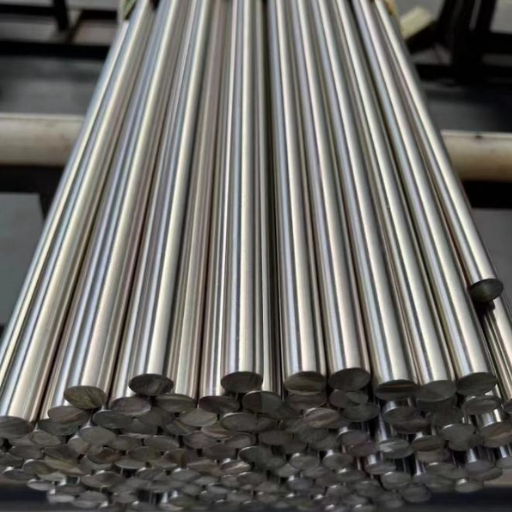
Connect each record to the order
Ask for records linking the heat or lot, grade, product form, required condition, and treatment history. Link the delivered item to its records. A large folder of unrelated certificates won’t do that.
Agree on the needed documents before ordering. Don’t wait to find the gap at receiving inspection.
State the governing specification and edition in the enquiry. Add the dimensions, final condition, planned fabrication, service, and required inspections. For tests, state the method, sample location, orientation, and pass criteria.
These are suggested buying questions. The contract sets the actual duties.
Illustrative scenario: A receiving pack contains a ferrite reading, but the project requires evidence of another property. The inspector asks for the relevant record and its sample identity. Keep the reading for its intended use.
Don’t declare the material failed on that basis. Identify the missing evidence without claiming more than the reading shows.
Methods and their limits
The public scope of ASTM A923-23 covers tests for harmful intermetallic effects in listed duplex steels. It also warns that meeting chemical and mechanical requirements may not rule out harmful phases. Its scope does not cover every cause of property loss.
| Evidence | Question it addresses | Limit to preserve |
|---|---|---|
| Treatment record | What documented thermal route was applied? | Does not alone prove every final property |
| Phase-balance measurement | What phase balance does this method report at the sampled location? | Is not a universal harmful-phase or performance test |
| A923 Method A | Etch-structure classification using sodium hydroxide | Apply the standard’s grade and interpretation requirements |
| A923 Method B | Charpy impact classification | Sampling and acceptance must match the specified requirements |
| A923 Method C | Ferric chloride corrosion classification | Is not a simulation of every service environment |
Use the agreed standard and edition for the actual limits. The public A923 scope isn’t a replacement for its full method, and this guide supplies no invented pass threshold. Use the required sampling plan. An unrelated test coupon cannot certify every region of an assembly.
Finish and release are separate checks
High-temperature processing can leave oxide that requires suitable descaling or pickling under the applicable route. A clean surface doesn’t prove the bulk phase condition. Bulk test results also don’t settle surface or size concerns. Keep surface inspection, dimensional checks, and metallurgical acceptance distinct in the release review.
Questions to resolve before ordering heat-treated duplex
Can duplex stainless steel be hardened by heat treatment?
Duplex solution treatment aims for the intended phase structure and properties. It is not a carbon-steel quench-and-temper hardening route. Don’t borrow a martensitic or precipitation-hardening schedule simply because both materials are called stainless steel. Start with the grade, supply condition, and required final properties.
What temperature is used to solution anneal 2205?
Alleima recommends 1020–1100°C for its SAF 2205 seamless tube/pipe and billet products, with product-specific cooling wording. Those recommendations are reference ranges, not complete cycles. The governing specification and procedure must cover the section, heat control, hold, transfer, cooling, and final acceptance.
Does duplex need post-weld heat treatment?
Routine qualified duplex welding generally uses an as-welded route without PWHT. Intermediate stress relief can introduce harmful metallurgical changes. Some manufacturing routes may require full solution annealing, but that is a different operation. Confirm the grade, producer guidance, project specification, and feasibility before adding any post-weld thermal step.
Must duplex always be water quenched?
Not always: IMOA emphasizes water quenching for full anneals and mill products. Named Alleima tube datasheets allow rapid air or water cooling. Each source has a product scope. Neither the word duplex nor a tube recommendation approves slow still-air cooling for a heavy fabricated assembly.
Does an acceptable ferrite reading rule out harmful phases?
No: a ferrite reading concerns a given method and location. It doesn’t prove every property or rule out all harmful phases. Check the grade, test method, sampling, and pass criteria. Where the project needs toughness or corrosion evidence, a phase reading cannot replace it.
Turn the questions into a clear enquiry
Begin with the grade and form, then describe the section size, supply condition, planned fabrication, and service. State which specification governs treatment and which records must come with the final material. Resolve any unclear cooling requirement before accepting an unqualified “solution annealed” description.
Return to the receiving-pack scenario: the next action is to identify the missing property evidence and who must provide it. It is not to infer a pass or failure from the record already at hand. That keeps the buyer and inspector working to the same requirement.
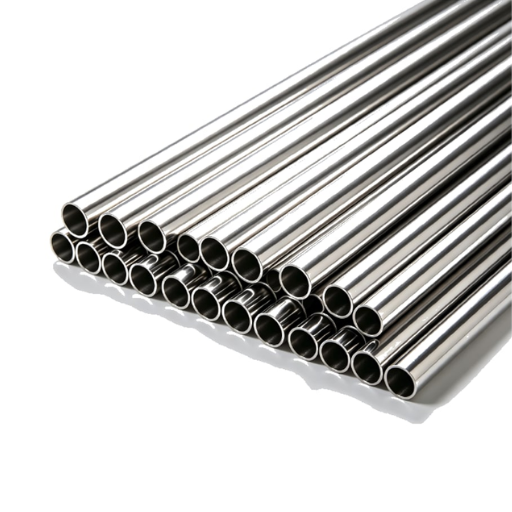
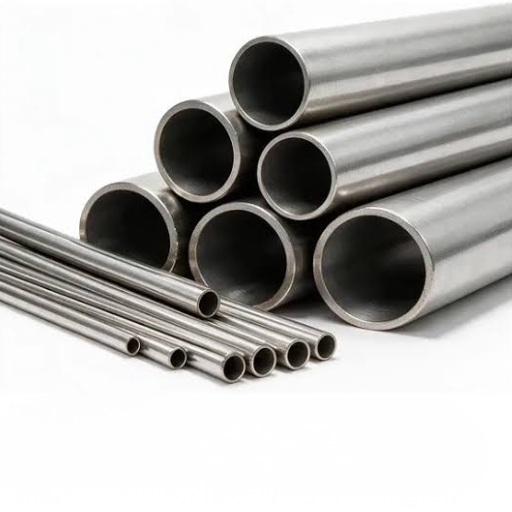
For a practical next step, review our stainless steel pipe information and prepare those requirements for the available enquiry path. A useful duplex stainless steel heat treatment request defines the material, process goal, and acceptance evidence together. It gives the supplier a clear basis to respond. A temperature chart cannot carry the whole specification.