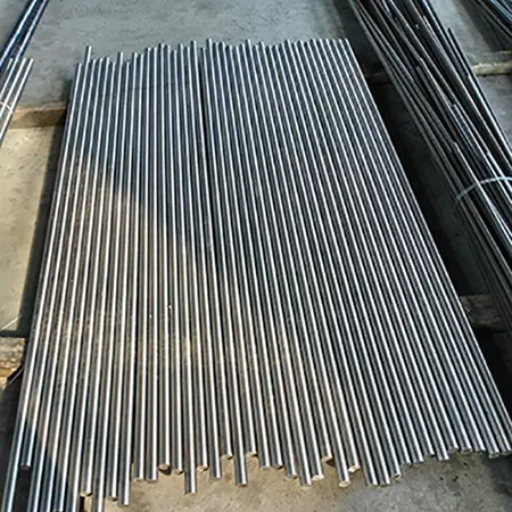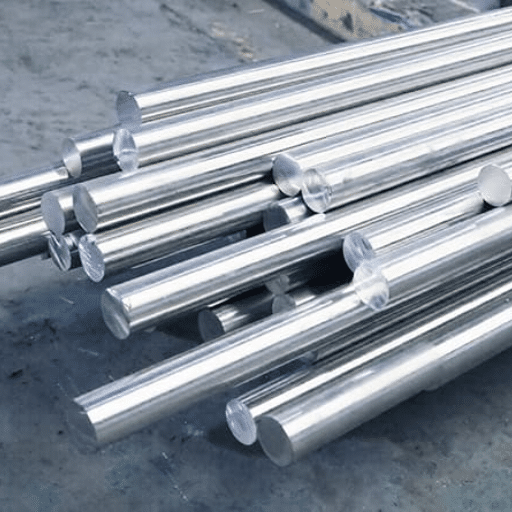
Incoloy 825 (UNS N08825) is a standard material for sour oil and gas service under ANSI/NACE MR0175/ISO 15156-3, but the standard does not qualify the grade as a whole. It sets environmental limits that depend on product condition and on the specific duty, and your duty has to fall inside them.
That distinction is where most Incoloy 825 sour gas procurement goes wrong, and it isn’t the buyer’s fault. The market has spent twenty years describing a materials standard as if it were a certificate.
Ask three suppliers for 825 tube in sour service and you may get three different documents. One is a mill test report. One is a certificate of compliance with no standard number and no edition. One is titled, in full confidence, “NACE Certificate.”
Two of those are useful. The third does not exist, and the supplier who issued it may not know that.
This guide covers what MR0175 actually requires, and why the current edition matters. It also covers what the standard does not address, and how the Chinese standard differs from the ISO text. Finally, it sets out what to put on the order so what arrives is what you specified. If you already have a duty and a grade, send both to our metallurgical team, and we will confirm what is certified within 24 hours.
Key Takeaways
- There is no NACE certificate. ANSI/NACE MR0175/ISO 15156 is a materials selection standard, not a certification scheme. Compliance is a declaration by the manufacturer, evidenced by documents you can check.
- ISO 15156-3:2020 is the current edition. The 2015 edition it replaced is withdrawn, and most supplier pages cite no edition at all.
- The standard only applies above an H₂S partial pressure of 0.05 psi (about 0.3 kPa). Below that threshold, MR0175 has nothing to say about your line.
- GB/T 20972.3-2025 is a modified adoption of ISO 15156-3:2020, not a translation. The Chinese certificate and the international specification are deliberately not identical.
- MR0175 covers cracking, not pitting. A fully compliant material can still pit in high-chloride sour service, and that is a separate question with a separate test.
Incoloy 825 NACE MR0175: What the Standard Actually Is
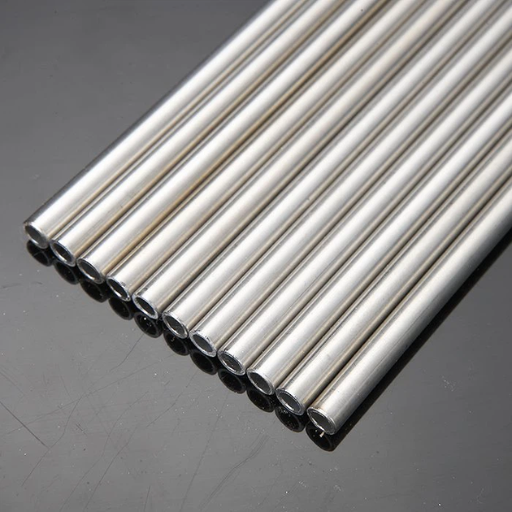
ANSI/NACE MR0175/ISO 15156 is a joint standard published in three parts. Part 1 sets general principles, Part 2 covers carbon and low-alloy steels, and Part 3 covers corrosion-resistant alloys and other alloys. Incoloy 825 lives in Part 3.
The document is maintained jointly by ISO and by NACE International, which merged with SSPC in 2021 to form AMPP. That is why the same standard appears under three names: NACE MR0175, ISO 15156, and ANSI/NACE MR0175/ISO 15156. They are one document, and the ISO catalogue entry is the cleanest place to check its current status.
A Materials Standard, Not a Certificate
This is the part that costs buyers money.
MR0175 doesn’t certify anything. NACE, now AMPP, runs no certification scheme for it: no register, no mark, no certificate number. A lab can test to NACE TM0177, but the standard itself qualifies nothing. What exists is a manufacturer’s declaration that a specific piece of material, in a specific condition, meets the metallurgical requirements the standard sets for the environment it is being offered into.
That declaration is supported by documents you can audit: the mill test report, the heat treatment record, the hardness result, the chemistry. The declaration is only as good as those documents.
A certificate of compliance with no standard number, no edition and no environment named tells you that someone signed a form. It doesn’t tell you what they checked.
Picture a valve packager in Singapore forwarding one to us for a second opinion. The document is headed “NACE Certificate” and carries a heat number, a chemistry table, a hardness value of 187 HB and a company chop. It carries no standard number, no edition and no environment.
The material is probably fine. The document proves nothing, and the end user’s inspector is right to reject the package on it.
Who Is Responsible for What
The standard divides the work, and knowing the split tells you what to ask for.
The manufacturer is responsible for the metallurgical requirements. Chemistry, condition of supply, hardness, heat treatment: those are the mill’s obligations, and they are what the certificate attests to.
The end user is responsible for confirming the material suits the intended environment. That means you, or your materials engineer, matching your H₂S partial pressure, temperature, chloride level and pH against the limits the standard publishes for that material and condition.
No mill can do the second job for you, because no mill knows your duty. A supplier who says “our 825 is NACE approved for all sour service” has answered a question you did not ask.
Incoloy 825 Sour Gas Service: What Decides Suitability
The limits decide, and they aren’t a property of the grade name.
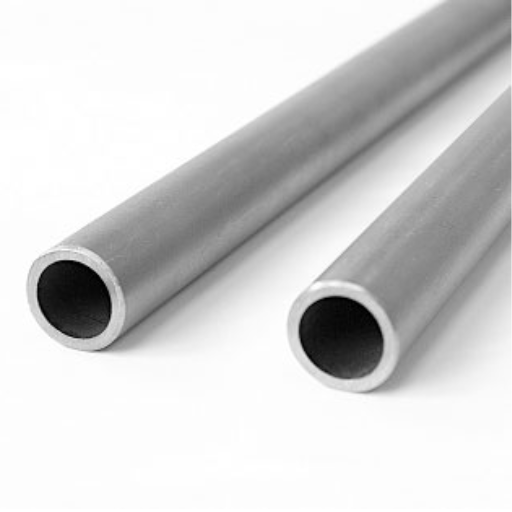
825 is a titanium-stabilized nickel-iron-chromium alloy with molybdenum and copper. It resists sulfide stress cracking well enough that the standard lists it as a candidate material for sour service. That is why it appears in wellheads, downhole tubulars, sand-screen base pipe and sour-service heat exchanger tube.
But “listed” is not “unlimited.” The standard publishes limits as a function of environment and condition of supply. The same heat of 825 can sit inside the limits in one condition and outside them in another.
The Scope Threshold Most Buyers Miss
Before any of that matters, check whether you are in scope at all.
MR0175 applies to environments containing H₂S at a partial pressure of 0.05 psi, roughly 0.3 kPa. Below that, and at low total pressure, the standard places the environment outside its scope. It isn’t a loophole. It’s the standard telling you that the cracking risk it addresses is not the controlling risk in a nearly sweet line.
Consider Daniel, a materials engineer who specifies a flowline to 825 for “sour service” on the strength of a 40 ppm H₂S analysis. At the line’s 900 psi operating pressure, the partial pressure comes out well under the threshold, so MR0175 never applies. The material selection question was never the one the project thought it was answering, and the 825 premium buys nothing that 316L would not have delivered.
Run the partial pressure arithmetic before you run the grade comparison. It takes two minutes and it can save an entire specification cycle.
Why Condition of Supply Changes the Answer
The limits the standard publishes are keyed to condition of supply, not just to alloy. Solution-annealed product is the reference condition. Cold-drawn and cold-worked product carries a narrower envelope, because cold work raises hardness and hardness is what sulfide stress cracking feeds on.
That matters because the forms used in sour service are often cold worked. Downhole tubulars are cold drawn, valve trim is machined from cold-worked bar, and sand-screen base pipe is welded and formed. N08825 is the same alloy in all three cases and the qualification isn’t.
So the question “is 825 suitable?” has no answer until you add the form and the condition. Ask for both.
What MR0175 Does Not Cover: Pitting
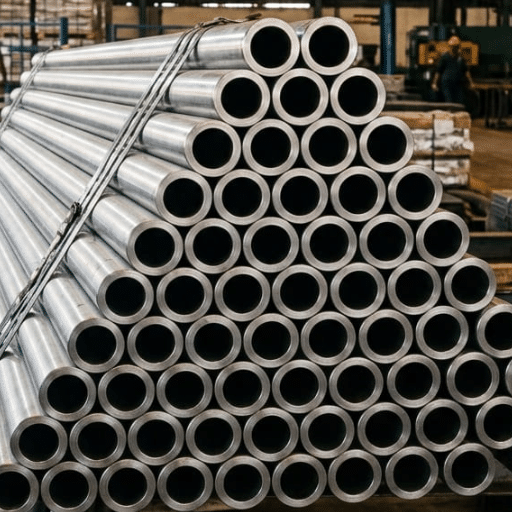
MR0175 addresses cracking damage mechanisms: sulfide stress cracking, stress corrosion cracking and hydrogen stress cracking. It doesn’t address pitting, crevice corrosion or general wastage.
This isn’t a gap in the standard. It’s a deliberate scope. A material can be fully qualified under MR0175 and still pit through in a high-chloride sour well, because the two failure modes have different drivers and different tests.
In practice, that means an MR0175 compliance statement answers roughly half the question for a high-chloride duty. The other half needs corrosion testing: pitting potential, critical pitting temperature, or actual service-environment exposure data. Our corrosion resistance guide sets out where 825 holds in chloride service and where it does not.
If your duty combines high chlorides with sour gas, say so explicitly in the enquiry. A mill that hears “sour service” will qualify for cracking and stop there, because that is what the standard asked of it.
NACE MR0175 vs MR0103: Upstream and Refinery
Two standards get confused constantly, and specifying the wrong one is a real error rather than a technicality.
| ANSI/NACE MR0175 / ISO 15156 | NACE MR0103 / ISO 17945 | |
|---|---|---|
| Scope | Oil and gas production, upstream and midstream | Petroleum refining, downstream |
| Limits set on | Environment and material condition | Material composition and hardness |
| Environmental limits | H₂S partial pressure, total pressure, temperature, chloride, pH, per alloy and condition | One H₂S threshold; no per-alloy envelope |
| Applies to 825 | Yes, Part 3 | Yes, where refinery service is the duty |
Both define sour service at an H₂S partial pressure of 0.05 psi, but they stop in different places. MR0175 adds a 65 psi total-pressure limb, then publishes per-alloy temperature, pressure, chloride and pH envelopes. MR0103 sets the one threshold, drops the total-pressure limb, and leaves the specific duty to the user. That’s why compliance with one says nothing about the other.
If your 825 is going into a refinery, name MR0103 on the order. If it is going into a well or a flowline, name MR0175. A supplier who treats them as interchangeable hasn’t read either.
That split governs every corrosion-resistant alloy, not just 825. The Hastelloy sour gas guide runs the same question for C-276.
The Chinese Standard: GB/T 20972.3-2025
This is the part of the subject that no English-language supplier page covers, and it matters if you are buying Chinese 825 for a sour-service project.
China publishes its own national standard for the same subject: GB/T 20972.3-2025. It was released on 24 January 2025 and replaces GB/T 20972.3-2008 in full. The openstd record carries the title and status.
Modified adoption means the Chinese text is based on ISO 15156-3:2020 but is not the same document. There are national modifications. A buyer who treats GB/T 20972.3 as a translation of the ISO standard is assuming something the standard itself doesn’t claim. A Chinese certificate and an international one aren’t interchangeable.
The companion parts are GB/T 20972.1-2026 for general principles and GB/T 20972.2-2025 for carbon and low-alloy steels, so the full Chinese set is now aligned to the ISO structure.
Consider a procurement lead whose project specification cites ISO 15156-3:2015, the edition her EPC’s master spec froze years earlier. The Chinese mill quotes GB/T 20972.3-2025, which is built on the 2020 ISO text, and the certificate comes back citing a standard that wasn’t the one on her specification.
Nothing is wrong with the material. The paperwork chain simply has two different editions in it, and closing the gap takes three weeks and a re-issued certificate.
What this means in practice is simple. If your project specification cites ISO 15156-3, ask the mill to certify to ISO 15156-3, and ask whether the Chinese certificate is being offered as an equivalent. If the answer is yes, ask which modifications apply. The adoption record is public, so the question is answerable.
The grade designation on that certificate will usually read NS1402 rather than N08825. Our equivalent grades guide carries the full cross-reference.
What to Put on the Purchase Order

“NACE MR0175 compliant” is not a specification for Incoloy 825 sour gas. It names a standard without naming the duty, the condition, the edition or the evidence. Here is what closes that gap.
| Line on the order | What it must say | Why it matters |
|---|---|---|
| Environment | H₂S partial pressure, total pressure, operating temperature, chloride concentration, pH | Five figures. Without them, nobody can tell you whether the material qualifies, including the mill |
| Edition | ISO 15156-3:2020, GB/T 20972.3-2025, or both | An edition-free citation is an incomplete one |
| Condition of supply | Solution annealed and pickled, cold drawn, or cold worked and stress relieved | This decides which set of limits applies |
| Product standard and form | B423 seamless tube, B424 plate, B425 bar, B564 forgings | The sour-service qualification sits on top of the product standard, not instead of it |
| Hardness result | A measured value, on the certificate | It’s the line that tells you which condition was actually supplied, and it’s the line most often missing |
| Test method | NACE TM0177-2024, Method A, B, C or D | The four methods answer different questions and aren’t interchangeable |
| Certificate content | Standard and edition, designation, condition, hardness, and the environment declared | A certificate naming the standard without the environment hasn’t told you what was checked |
That’s seven lines. It’s also the difference between a quotation you can compare and a number you have to take on trust.
Incoloy 825 Sour Gas FAQ
Is Incoloy 825 NACE certified?
No, because there is no NACE certificate to hold. ANSI/NACE MR0175/ISO 15156 is a materials selection standard, not a certification scheme. The manufacturer declares the material meets its metallurgical requirements for the stated environment and backs that with a mill test report and hardness result; the end user confirms it suits the duty.
Is Incoloy 825 suitable for sour gas service?
Yes, within the limits the standard sets for the environment and condition of supply. 825 is listed in ISO 15156-3 as a candidate material for sour service and is widely used in wellheads, downhole tubulars and sour-service heat exchanger tube. The grade name alone doesn’t establish suitability. The duty and the condition of supply do.
What are the Incoloy 825 sour gas service limits?
There’s no single number, which is the point. ISO 15156-3 publishes limits as a function of temperature, H₂S partial pressure, chloride concentration and pH, and the applicable limits change with condition of supply. Solution-annealed and cold-drawn product of the same heat do not share an envelope.
Those limits sit in Annex A of the paid standard. Read them there, for your condition, in the current edition, rather than applying a figure from a supplier page. We don’t reproduce the table here because a misquoted limit is worse than no limit. Send us the duty and we’ll read the applicable row for you.
What is the difference between NACE MR0175 and NACE MR0103?
MR0175 and ISO 15156 cover oil and gas production, upstream and midstream, and they bound the environment by H₂S partial pressure, total pressure, temperature, chloride and pH. MR0103 and ISO 17945 cover petroleum refining. They share the 0.05 psi H₂S threshold but drop MR0175’s 65 psi total-pressure limb, and they set composition and hardness requirements rather than per-alloy environmental envelopes. Compliance with one doesn’t establish compliance with the other.
Does NACE MR0175 cover pitting corrosion?
No. MR0175 addresses sulfide stress cracking, stress corrosion cracking and hydrogen stress cracking. Pitting, crevice corrosion and general wastage are outside its scope. A material can be fully qualified under MR0175 and still pit in high-chloride sour service, so a high-chloride duty needs supplementary corrosion testing in addition to the sour-service qualification.
What should a mill certificate say for sour service?
The standard and its edition, the alloy designation and the standard it is drawn from, the condition of supply, the hardness result, and the environment the material is declared suitable for. If the certificate names MR0175 without an edition or an environment, it hasn’t told you what was checked. Ask for the missing lines before you accept the material.
Conclusion
Incoloy 825 sour gas service comes down to one reframing. The standard does not approve a grade. It sets limits, and your duty either falls inside them or it does not.
Three things follow from that. Ask for the edition, because ISO 15156-3:2020 is current and the 2015 edition is withdrawn. Name the condition of supply, because solution-annealed and cold-drawn 825 are not the same qualification. And check the scope threshold, because below 0.05 psi H₂S partial pressure the standard doesn’t apply and the premium you paid for sour-service compliance bought you nothing.
Then put the seven lines on the purchase order. The environment in numbers, the edition, the condition, the product standard, the hardness result, the test method if one is required, and the certificate content. A supplier who can answer all seven is a supplier who has read the standard.
If your duty sits near a limit, or the chlorides are high, or the refinery and upstream standards are both in play, send us the environment and the form. Our metallurgical team will tell you what qualifies, what the certificate has to say, and where 825 stops and Inconel 625 starts, within 24 hours.
For the grade itself, the complete Incoloy 825 guide covers composition, properties and fabrication, and the properties data sits behind every hardness figure quoted here.