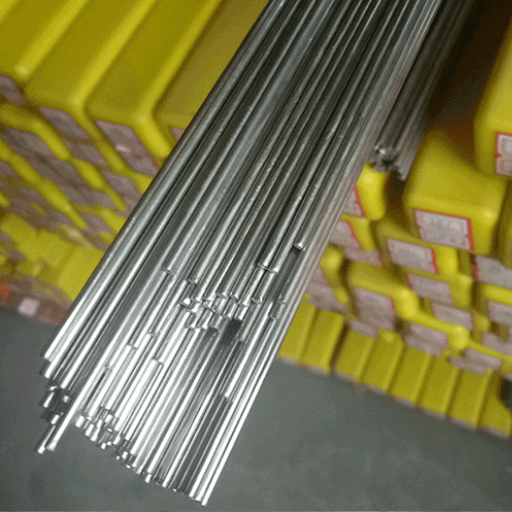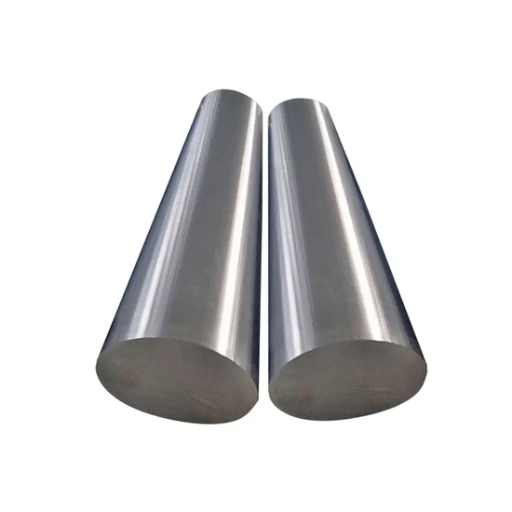
Inconel 600 (UNS N06600) is a nickel-chromium-iron solid-solution alloy with 72% minimum nickel, 14-17% chromium, and 6-10% iron. Its annealed room-temperature tensile strength is typically 550-690 MPa (80-100 ksi), its density is 8.47 g/cm³ (0.306 lb/in³), and its melting range is 1,354-1,413°C (2,470-2,575°F).
Those numbers are easy to find. The number that causes expensive mistakes is 1,100°C.
Several datasheets describe Inconel 600 as retaining strength up to 1,100°C. That figure is an oxidation limit, not a load-bearing limit.
At 760°C the typical tensile strength is about 190 MPa (27.5 ksi). At 871°C it is about 103 MPa (15 ksi). At 982°C it is about 52 MPa (7.5 ksi). Above 1,000°C the alloy still resists oxidation, but it carries almost no useful load.
This guide to Inconel 600 properties separates those two limits. It gives the composition, room-temperature and elevated-temperature mechanical data, physical constants, hardness by condition, and the standards that govern each product form. Every table is tied to a primary source so you can defend the number in a specification review.
If you already know the form and condition, send the requirement to our technical team and we will confirm availability against the applicable ASTM or AMS specification.
Key Takeaways
- Inconel 600 is 72% minimum nickel, 14-17% chromium and 6-10% iron. It contains no deliberate molybdenum, niobium, aluminum or titanium addition, so it cannot be age hardened and has little pitting resistance in chlorides.
- Annealed room-temperature tensile strength is typically 550-690 MPa (80-100 ksi), with 170-345 MPa (25-50 ksi) yield and 35-55% elongation. Cold-drawn bar reaches 725-1,035 MPa, and spring-temper wire reaches 1,170-1,520 MPa.
- The ASTM minimum for annealed bar, plate and forgings is 550 MPa tensile, 240 MPa yield and 30% elongation. ASTM B167 pipe relaxes yield to 205 MPa and requires 35% elongation.
- Oxidation resistance extends to 1,093°C (2,000°F) in air, but useful load-bearing capacity falls steeply above 650°C. At 760°C the typical tensile strength is about 190 MPa; at 982°C it is about 52 MPa.
- Hardness ranges from 65-85 HRB annealed to 30 HRC minimum in spring temper. The alloy is strengthened only by cold work.
- AMS 5540 covers sheet, strip and plate; AMS 5580 covers seamless tubing; AMS 5665 covers bar, forgings and rings; AMS 5687 covers wire. AMS 5580 is not a sheet or wire specification.
What Is Inconel 600 Made Of?
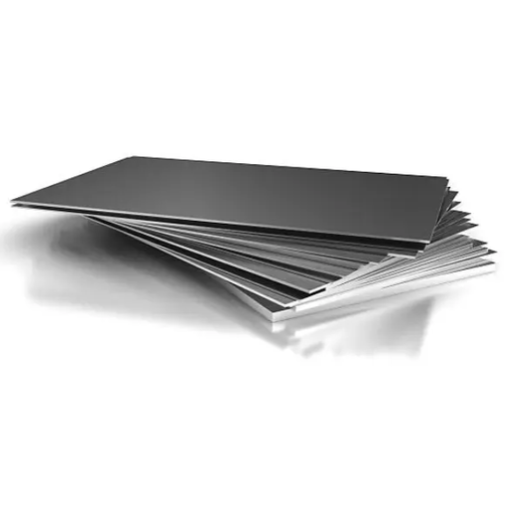
The Inconel 600 chemical composition is deliberately simple. Nickel provides the austenitic matrix and resistance to chloride stress-corrosion cracking and hot caustic. Chromium provides oxidation and sulfur resistance. Iron balances cost and phase stability. The composition sets the Inconel 600 properties that follow.
| Element | Limit (wt%) | What it does |
|---|---|---|
| Nickel plus cobalt | 72.0 min | Stabilizes austenite; resists chloride SCC and caustic; lowers the risk of sigma phase |
| Chromium | 14.0-17.0 | Forms the protective oxide scale; resists sulfur compounds and oxidizing conditions |
| Iron | 6.00-10.00 | Balances cost and phase stability; keeps the alloy workable |
| Carbon | 0.15 max | Strengthens the matrix but precipitates as carbides between 540°C and 760°C |
| Manganese | 1.00 max | Deoxidizer; helps control sulfur |
| Silicon | 0.50 max | Deoxidizer; affects weldability and scale adherence |
| Sulfur | 0.015 max | Kept low for hot workability and weld quality |
| Copper | 0.50 max | Residual element; not a deliberate addition |
What is absent matters as much as what is present. There is no molybdenum, so 600 has little meaningful pitting or crevice-corrosion resistance in seawater. Its PREN is roughly 15-19, and published seawater tests show crevice attack under deposits.
There is also no niobium, titanium or aluminum addition, so the alloy cannot be precipitation hardened. Cold work is the only way to raise its strength above the annealed condition.
That combination is why 600 sits in a different place from 625 or 718. It is a high-nickel, oxidation-resistant, chloride-SCC-resistant alloy, not a high-strength or seawater alloy. The nickel-based alloy hub lists the other grades if your duty needs molybdenum or precipitation hardening.
Inconel 600 Properties at Room Temperature
The published ranges are wide because the alloy is supplied in several conditions. The table below uses typical ranges from Special Metals SMC-027, Table 6. They are not specification minimums.
| Form and condition | Tensile strength | Yield strength (0.2% offset) | Elongation | Hardness |
|---|---|---|---|---|
| Bar, cold-drawn, annealed | 550-690 MPa (80-100 ksi) | 170-345 MPa (25-50 ksi) | 55-35% | 65-85 HRB |
| Bar, cold-drawn, as-drawn | 725-1,035 MPa (105-150 ksi) | 550-860 MPa (80-125 ksi) | 30-10% | 90 HRB to 30 HRC |
| Bar, hot-finished, annealed | 550-690 MPa (80-100 ksi) | 205-345 MPa (30-50 ksi) | 55-35% | 65-85 HRB |
| Plate, hot-rolled, annealed | 550-725 MPa (80-105 ksi) | 205-345 MPa (30-50 ksi) | 55-35% | 65-85 HRB |
| Plate, as-rolled | 580-760 MPa (85-110 ksi) | 240-450 MPa (35-65 ksi) | 50-30% | 80-95 HRB |
| Sheet, cold-rolled, annealed | 550-690 MPa (80-100 ksi) | 205-310 MPa (30-45 ksi) | 55-35% | 88 HRB max |
| Sheet, cold-rolled, hard | 830-1,035 MPa (120-150 ksi) | 620-860 MPa (90-125 ksi) | 15-2% | 24 HRC min |
| Strip, spring temper | 1,000-1,170 MPa (145-170 ksi) | 830-1,100 MPa (120-160 ksi) | 10-2% | 30 HRC min |
| Tube, cold-drawn, annealed | 550-690 MPa (80-100 ksi) | 170-345 MPa (25-50 ksi) | 55-35% | 88 HRB max |
| Wire, spring temper | 1,170-1,520 MPa (170-220 ksi) | 1,035-1,450 MPa (150-210 ksi) | 5-2% | Not specified |
The spread is not scatter. It is a condition.
Annealed bar and plate sit at 550-690 MPa. Cold-drawn bar goes to 725-1,035 MPa. Spring-temper wire reaches 1,170-1,520 MPa. A purchase order that says “Inconel 600” without a condition is incomplete.
ASTM and AMS Minimums
Specification minimums are lower than the typical values above. That gap is where procurement problems start.
| Product form | Specification | Tensile min | Yield min | Elongation min |
|---|---|---|---|---|
| Bar, rod and wire | ASTM B166, annealed | 550 MPa (80 ksi) | 240 MPa (35 ksi) | 30% |
| Plate, sheet and strip | ASTM B168, annealed | 550 MPa (80 ksi) | 240 MPa (35 ksi) | 30% |
| Plate, sheet and strip | ASTM B168, cold-rolled hard | 860 MPa (125 ksi) | 620 MPa (90 ksi) | 2% |
| Condenser and heat-exchanger tube | ASTM B163, annealed | 552 MPa (80 ksi) | 241 MPa (35 ksi) | 30% |
| Seamless pipe and tube | ASTM B167, ≤5 in OD | 550 MPa (80 ksi) | 205 MPa (30 ksi) | 35% |
| Seamless pipe and tube | ASTM B167, >5 in OD | 515 MPa (75 ksi) | 170 MPa (25 ksi) | 35% |
| Forgings | ASTM B564, annealed | 550 MPa (80 ksi) | 240 MPa (35 ksi) | 30% |
A certificate that reports 655 MPa typical is not the same as a certificate that meets the 550 MPa minimum. Both can be compliant, but the margin is different. If your design calculation assumed a typical value, write the required minimum into the purchase order and require the mill test report to state it.
Priya, a procurement manager for a chemical plant, learned that distinction on a valve package. Two mill certificates arrived for the same “Inconel 600 annealed” bar. One showed 560 MPa tensile; the other showed 670 MPa. Both met ASTM B166.
Her design had used 655 MPa from a datasheet, so the 560 MPa heat left less margin than the project assumed. She added a minimum tensile and yield requirement to the next purchase order and asked for the supplied condition on every certificate.
The grade had not changed. The specification had been incomplete.
Inconel 600 Properties at High Temperature
Short-time tensile data show where the alloy stops being a structural material. The values below are typical for annealed material. They are not design allowables.
| Temperature | Tensile strength | Yield strength (0.2% offset) | Elongation |
|---|---|---|---|
| 20°C (68°F) | 655 MPa (95 ksi) | 310 MPa (45 ksi) | 45% |
| 316°C (600°F) | 624 MPa (90.5 ksi) | 214 MPa (31 ksi) | 46% |
| 427°C (800°F) | 610 MPa (88.5 ksi) | 203 MPa (29.5 ksi) | 49% |
| 538°C (1,000°F) | 579 MPa (84 ksi) | 196 MPa (28.5 ksi) | 47% |
| 649°C (1,200°F) | 448 MPa (65 ksi) | 183 MPa (26.5 ksi) | 39% |
| 760°C (1,400°F) | 190 MPa (27.5 ksi) | 117 MPa (17 ksi) | 46% |
| 871°C (1,600°F) | 103 MPa (15 ksi) | 52 MPa (9 ksi) | 80% |
| 982°C (1,800°F) | 52 MPa (7.5 ksi) | 28 MPa (4 ksi) | 118% |
The shape of the curve matters more than any single row. Tensile strength holds above 550 MPa to about 538°C, then falls steeply. Between 649°C and 760°C it drops from 448 MPa to 190 MPa. By 982°C it is 52 MPa, roughly the strength of a soft aluminum alloy.
Creep and Rupture: The Real Load-Bearing Ceiling
For sustained load, short-time tensile data overstate the usable temperature. Creep and stress-rupture data govern.
At 538°C, the stress to produce rupture in 1,000 hours is about 234 MPa (34 ksi). At 649°C it is about 100 MPa (14.5 ksi). At 732°C it is about 63 MPa (9.2 ksi). At 760°C it falls to roughly 39 MPa (5.6 ksi), at 871°C to about 21 MPa (3 ksi), and at 982°C to about 12 MPa (1.8 ksi).
A part that carries 100 MPa at 700°C may survive a short excursion and fail after a few thousand hours. That is why the “maximum service temperature” question has no single answer. It depends on stress, time, atmosphere and the consequence of deformation.
The 1,100°C Claim, Corrected
The 1,093°C (2,000°F) figure that appears in most datasheets is the oxidation limit in air. At that temperature, the chromium oxide scale is still protective enough for lightly loaded parts. Above it, the scale becomes less stable, and chromium volatilization and spalling accelerate.
It is not a strength limit. A furnace retort, muffle or thermocouple sheath may run at 1,000-1,100°C because it carries little load and is supported. A structural member at the same temperature would deform under its own weight.
If the part carries load above about 800°C, look at 601, 690 or 800H before assuming 600 is adequate. The Incoloy 800H heat-resistant grade is one alternative with higher creep strength in that range. If the environment is also carburizing or sulfidizing, the choice changes again.
Daniel, a furnace engineer at a heat-treat shop, specified 600 for a retort that ran at 1,050°C. The alloy resisted oxidation exactly as the datasheet promised. After a few thermal cycles, the retort sagged.
The 1,050°C figure was below the oxidation limit but above the creep limit for the unsupported span and load. He fixed it by shortening the span and adding supports, not by changing the alloy.
The lesson is simple: oxidation data tells you whether the surface survives; creep data tells you whether the part survives.
Physical Properties: Density, Thermal, Electrical and Magnetic
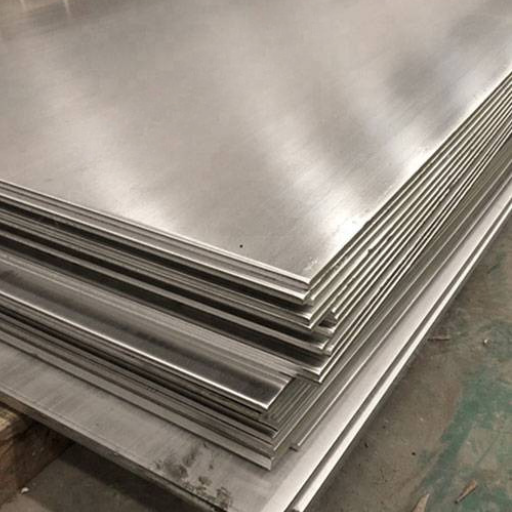
The physical constants below come from Special Metals SMC-027, Tables 2, 3, and 4.
| Property | Value at 20°C (68°F) | Notes |
|---|---|---|
| Density | 8.47 g/cm³ (0.306 lb/in³) | Some Chinese datasheets list 8.43 g/cm³; see the equivalence section |
| Melting range | 1,354-1,413°C (2,470-2,575°F) | Solidus to liquidus |
| Specific heat | 444 J/kg·K (0.106 Btu/lb·°F) | Rises to about 611 J/kg·K at 800°C |
| Thermal conductivity | 14.9 W/m·K (103 Btu·in/ft²·h·°F) | 23.9 at 600°C; 27.5 at 800°C |
| Mean CTE, 20°C to 100°C | 13.3 µm/m·K (7.4 µin/in·°F) | 15.3 from 20°C to 600°C; 16.1 to 800°C |
| Electrical resistivity | 1.03 µΩ·m | 1.13 µΩ·m at 600°C |
| Young’s modulus | 214 GPa (31.1 × 10³ ksi) | 180 GPa at 600°C; 164 GPa at 800°C |
| Shear modulus | 80.8 GPa (11.72 × 10³ ksi) | At 22°C |
| Poisson’s ratio | 0.324 | At 22°C |
| Curie temperature | -124°C (-192°F) | Below this, the alloy is ferromagnetic |
| Permeability at 200 Oe | 1.010 | Annealed material |
Thermal conductivity is low compared with carbon steel or copper. That matters in heat-exchanger design: a 600 tube wall runs hotter than a steel tube wall under the same heat flux, and the thermal gradient through the wall is steeper. The temperature-resolved values above are more useful than a single room-temperature number.
The modulus also falls with temperature. Between 22°C and 800°C, Young’s modulus drops from 214 GPa to 164 GPa, a loss of about 23%. A deflection calculation that uses the room-temperature modulus will underestimate deflection in hot service.
Is Inconel 600 Magnetic?
Annealed Inconel 600 is effectively non-magnetic at room temperature. Its relative permeability is 1.010 at 200 Oe, which is close to paramagnetic behavior. The Curie temperature is -124°C (-192°F), so the alloy becomes ferromagnetic only when cooled below that point.
The qualification matters. The 1.010 figure is for annealed material. If your application is magnetically sensitive, specify permeability testing on the finished condition rather than relying on a generic “non-magnetic” statement.
Hardness, Cold Work and Heat Treatment
Inconel 600 hardness is a condition marker, not a grade constant. The same heat of 600 can be soft and ductile in the annealed condition or hard and strong after cold work.
| Condition | Hardness range |
|---|---|
| Annealed bar, plate, sheet and strip | 65-85 HRB (about 120-170 HB) |
| Cold-drawn bar, as-drawn | 90 HRB to 30 HRC |
| Cold-rolled sheet, hard temper | 24 HRC minimum |
| Spring-temper strip | 30 HRC minimum |
| Cold-drawn tube, annealed | 88 HRB maximum |
Inconel 600 is not age-hardenable. You cannot heat treat it to a higher strength. Annealing softens it, and cold work strengthens it. That is the entire strengthening toolbox.
For soft material, Special Metals recommends an anneal of about 1,010°C (1,850°F) for 15 minutes. A brief exposure to 1,040°C (1,900°F) also softens the alloy without producing a coarse grain structure. For maximum creep and rupture strength, a solution treatment of 1,090-1,150°C (2,000-2,100°F) for 1-2 hours dissolves the carbides and increases grain size.
Cooling rate matters. The alloy is subject to carbide precipitation between 540°C and 760°C (1,000-1,400°F). If the material will be pickled or used in an environment that requires freedom from sensitization, cool rapidly through that range.
For caustic service, the published recommendation is a stress relief at 900°C (1,650°F) for 1 hour or 790°C (1,450°F) for 4 hours. Residual stress plus hot caustic is a known cracking combination, and the stress relief is not optional in that duty.
Standards and Product Forms
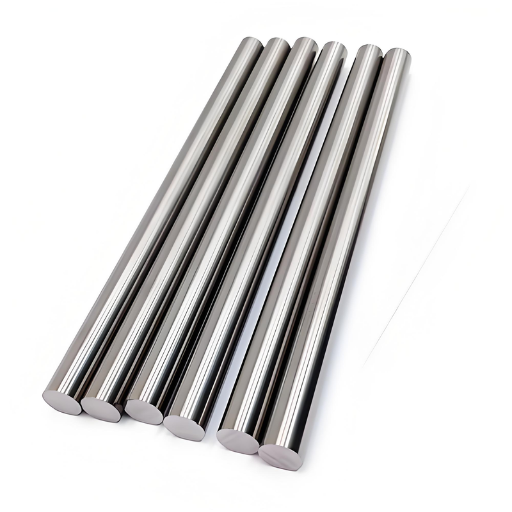
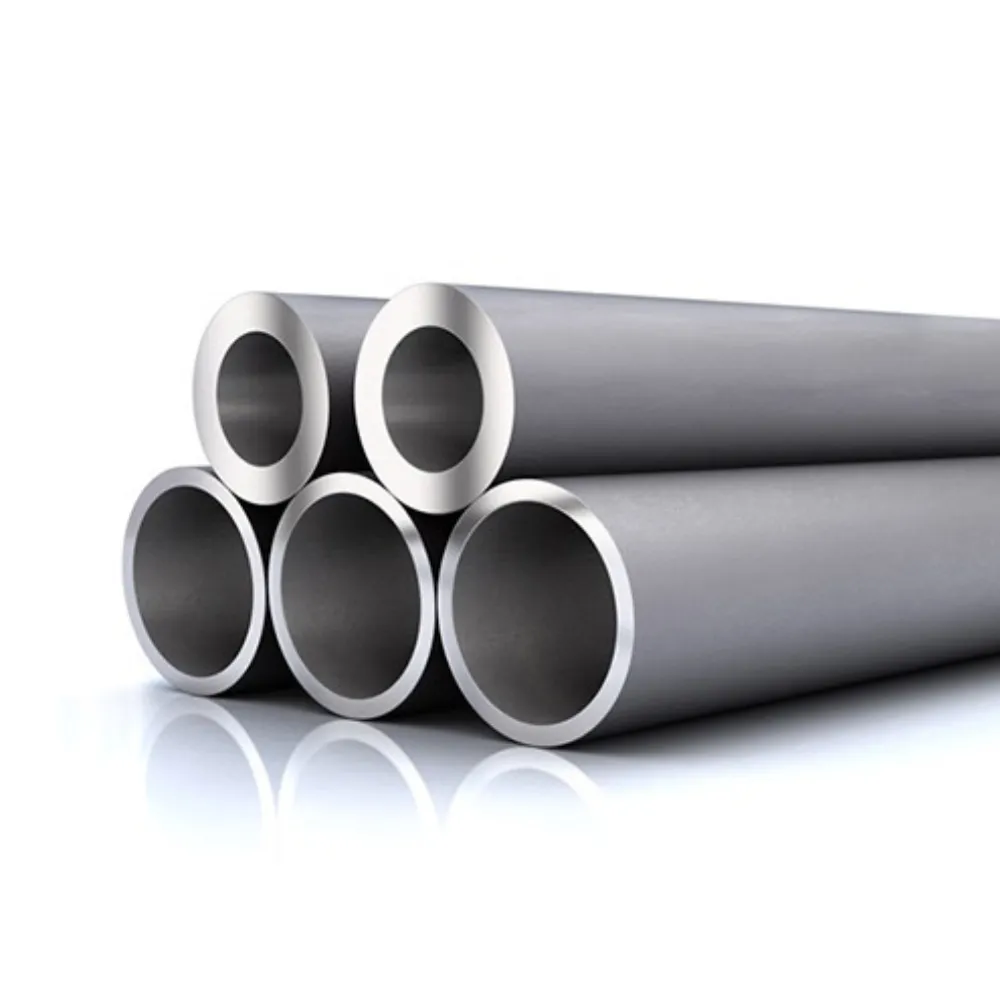
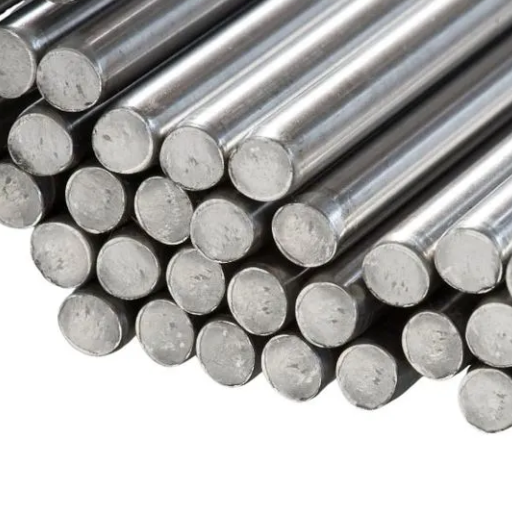
The Inconel 600 specifications depend on the product form, not just the grade. For bar and rod, ASTM B166 is the base specification. Plate and sheet use ASTM B168; pipe and tube use ASTM B167 or B163. This is the table to use when writing a purchase order.
| Product form | ASTM specification | AMS specification | What the certificate should state |
|---|---|---|---|
| Bar, rod and wire | ASTM B166 | AMS 5665 (bar and forging); AMS 5687 (wire) | UNS N06600, condition, tensile, yield, elongation, hardness if specified |
| Plate, sheet and strip | ASTM B168 | AMS 5540 | UNS N06600, condition, tensile, yield, elongation, grain size if ordered |
| Seamless pipe and tube | ASTM B167 | AMS 5580 | UNS N06600, condition, tensile, yield, elongation, hydrostatic or nondestructive test if ordered |
| Condenser and heat-exchanger tube | ASTM B163 | AMS 5580 | UNS N06600, condition, tensile, yield, elongation, eddy-current or hydrostatic test if ordered |
| Forgings | ASTM B564 | AMS 5665 | UNS N06600, condition, tensile, yield, elongation, hardness if specified |
A common error is to cite AMS 5580 for sheet or wire. AMS 5580 is a seamless tubing specification.
Sheet, strip and plate are covered by AMS 5540. Wire is covered by AMS 5687. Bar, forgings and rings are covered by AMS 5665.
The ASTM and AMS systems also differ in purpose. ASTM specifications are written for general industrial and pressure-service procurement. AMS specifications are aerospace material specifications with tighter controls on melting practice, grain size and testing frequency. If the drawing calls for AMS, the ASTM certificate alone is not a substitute.
For tube and pipe, our Inconel 600 tube page lists the standard size range and the ASTM B163/B167 basis. For plate and bar enquiries, the nickel alloy plate and nickel alloy bar categories show the forms we handle.
Before you accept a certificate, check four things: the UNS number is N06600, the condition matches the drawing, the specification revision is the one you ordered, and the reported tensile and yield values meet the minimum for that form. A certificate that reports only typical values is not a certificate of compliance.
Send the drawing and the required specification to our team, and we will review the mill test report against the ordered standard before shipment.
Equivalent Grades: GH3600, NS3102 and 2.4816
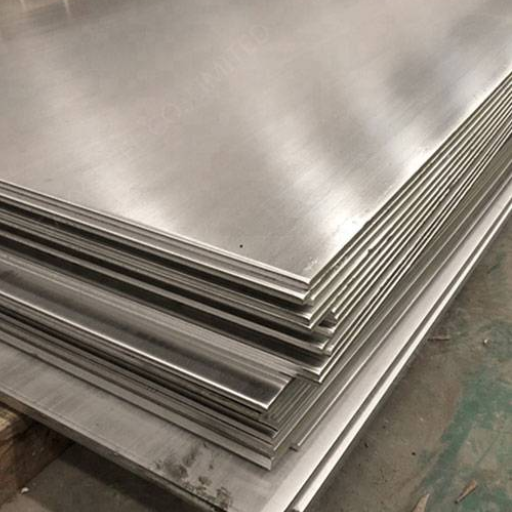
The Inconel 600 equivalent grades are known by several designations outside the United States. They refer to the same alloy family, but the property tables are not always identical.
| System | Designation | Standard or note |
|---|---|---|
| US | UNS N06600 | ASTM B166, B168, B163, B167, B564 |
| Germany | W.Nr. 2.4816, NiCr15Fe | DIN/EN designation |
| China, superalloy | GH3600 (old GH600) | GB/T 14992 |
| China, corrosion-resistant | NS3102 (old NS312) | GB/T 15007 |
| Japan | NCF 600, NCF600B | JIS designation |
| UK | NA14 | British designation |
| France | NC15Fe | AFNOR designation |
The Chinese designations are the ones that cause the most confusion. GH3600 is the wrought superalloy designation under GB/T 14992. NS3102, formerly written NS312, is the corrosion-resistant alloy designation under GB/T 15007. Both describe the same nickel-chromium-iron family, but they sit in different standard systems and may carry different test requirements.
Equivalence is not identity. Some GB/T datasheets list a density of 8.43 g/cm³ and a melting range of 1,370-1,430°C. Special Metals lists 8.47 g/cm³ and 1,354-1,413°C. The differences are small, but they show why you should not mix property tables from different systems.
A buyer sourcing 600 tube from China once received a mill certificate marked NS3102 with a density of 8.43 g/cm³. The design datasheet said 8.47 g/cm³. The alloy was correct; the certificate was using a different datasheet convention.
The fix was to require the purchase order to state the ordered standard, the UNS number and the property minimums, so the certificate could be checked against a single basis. The density line alone was never the right acceptance criterion.
For cross-system procurement, specify both designations on the inquiry and require the MTR to state the standard, the condition and the measured tensile, yield and elongation. That turns a naming question into a verifiable acceptance test.
Frequently Asked Questions
What is Inconel 600 made of?
Inconel 600 is made of 72% minimum nickel (plus cobalt), 14-17% chromium, 6-10% iron, and small controlled amounts of carbon, manganese, silicon, sulfur and copper. It contains no deliberate molybdenum, niobium, aluminum or titanium addition, so it is a solid-solution alloy rather than a precipitation-hardened one.
Is Inconel 600 magnetic?
Annealed Inconel 600 is effectively non-magnetic at room temperature, with a relative permeability of about 1.010 at 200 Oe. Its Curie temperature is -124°C (-192°F), so it becomes ferromagnetic only below that temperature. If magnetism matters, test the finished condition rather than relying on a generic statement.
Is Inconel 600 a stainless steel?
No. It is a nickel-based alloy, not a stainless steel. Its chromium content, 14-17%, is lower than the 16-20% typical of 304 or 316 stainless steel, and its nickel content, 72% minimum, is far higher. That chemistry gives it resistance to chloride stress-corrosion cracking and hot caustic that the standard austenitic stainless steels do not have.
What is the hardness of Inconel 600?
Annealed Inconel 600 is typically 65-85 HRB, roughly 120-170 HB. Cold-drawn bar can reach 90 HRB to 30 HRC, hard sheet is 24 HRC minimum, and spring-temper strip or wire is 30 HRC minimum. Hardness depends on the supplied condition, not just the grade.
What is the maximum service temperature of Inconel 600?
There are two answers. The oxidation limit in air is about 1,093°C (2,000°F) for lightly loaded parts. The practical load-bearing limit is much lower: typical tensile strength is about 190 MPa at 760°C and about 52 MPa at 982°C, and creep governs for sustained load. For a structural part, design to the creep or rupture data, not the oxidation limit.
What is Inconel 600 used for?
Inconel 600 is used for furnace retorts, muffles, roller hearths, heat-treating baskets and trays, thermocouple sheaths, nitriding containers, chemical-processing equipment, heat-exchanger tubing and aerospace components such as exhaust liners and turbine seals. It was also widely used in nuclear steam-generator tubing, although primary-water stress-corrosion cracking led the nuclear industry to move to Alloy 690 and Alloy 800 in new steam generators.
What is the equivalent of Inconel 600?
The common equivalents are UNS N06600 in the United States, W.Nr. 2.4816 in Germany, GH3600 in the Chinese superalloy system, NS3102 (formerly NS312) in the Chinese corrosion-resistant system, NCF600 in Japan, NA14 in the United Kingdom and NC15Fe in France. Equivalence means the same alloy family, not necessarily identical property tables, so specify the standard and the property minimums.
What is the density and melting point of Inconel 600?
The density is 8.47 g/cm³ (0.306 lb/in³). Its melting point range is 1,354-1,413°C (2,470-2,575°F). Some Chinese datasheets list 8.43 g/cm³ and 1,370-1,430°C; the difference is a datasheet convention, not a different grade.
Conclusion
The Inconel 600 properties that matter most in a specification review start with the chemistry: 72% nickel, 14-17% chromium and 6-10% iron. The density is 8.47 g/cm³, and the melting range is 1,354-1,413°C. Annealed room-temperature tensile strength is typically 550-690 MPa, and the ASTM minimum for bar, plate and forgings is 550 MPa tensile, 240 MPa yield and 30% elongation.
The most important distinction is the one most datasheets blur. Oxidation resistance extends to 1,093°C, but load-bearing capacity falls steeply above 650°C. At 760°C the typical tensile strength is about 190 MPa; at 982°C it is about 52 MPa. For sustained load, creep and rupture data govern, not the oxidation limit.
If you are specifying 600, state the product form, the condition, the ASTM or AMS specification, and the property minimums. That single step prevents most of the confusion around equivalence, hardness, and “typical” values.
Tell us the form, condition, temperature, and governing specification. Our metallurgical team will confirm the grade, review the mill test report against the ordered standard and quote the material. Contact our team to start the review.