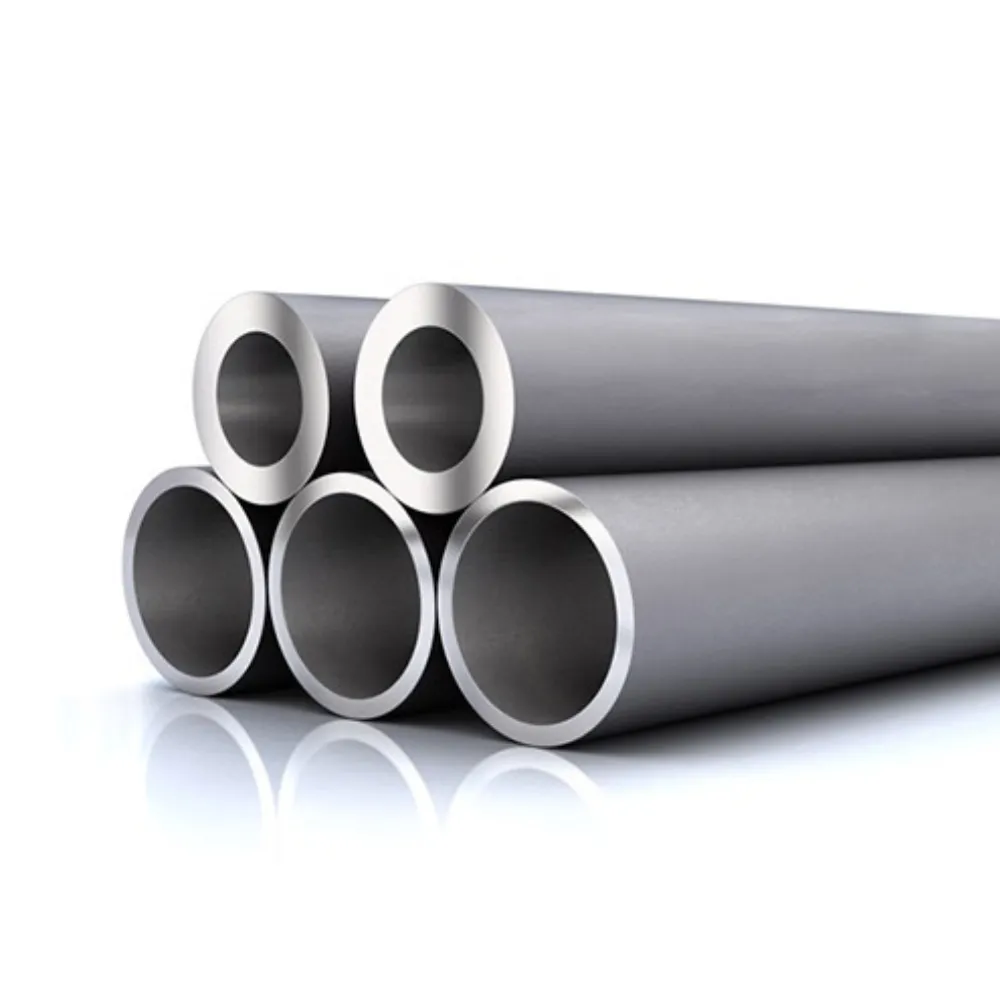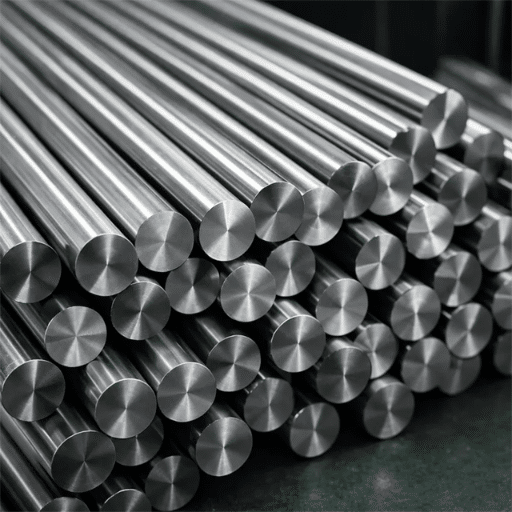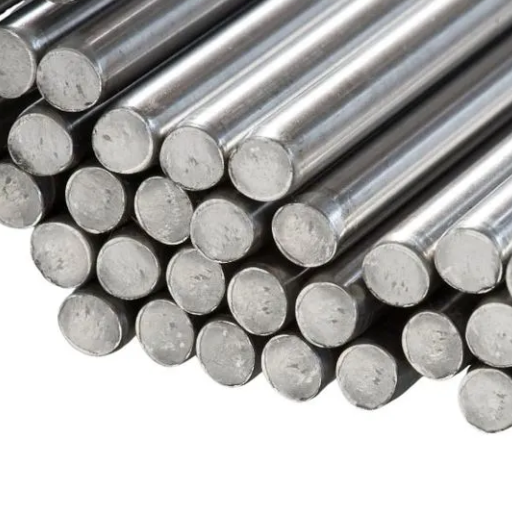
Incoloy 825 applications are concentrated in sulfuric and phosphoric acid equipment, flue gas desulfurization components, moderate-temperature cooling-water and seawater exchangers, sour-service oil and gas hardware, pickling lines, and selected waste-handling duty. It is not a nitric acid alloy, not a warm-seawater alloy, and not a scrubber-slurry alloy at low pH.
That distinction matters more than the list. In our experience, the grade is usually specified one application too far, most often into seawater above 45°C (113°F), into nitric acid, or into an absorber slurry, and then fails for a reason the mill datasheet never states.
This guide maps Incoloy 825 onto the actual equipment it serves. For each sector, you get the media window, the failure mode that ends the equipment’s life, and the grade to move to when the window is exceeded. We supply the alloy in bar, plate, sheet, pipe, and tube, so the advice below comes from seeing which specifications hold up in service and which come back.
Send us the medium, concentration, temperature, and chloride level, and our metallurgical team will confirm or rule out 825 within 24 hours. That’s faster than a failed tube bundle.
Key Takeaways
- Incoloy 825 earns its cost in reducing acids with moderate chloride: sulfuric and wet-process phosphoric acid equipment up to roughly 540°C (1,004°F).
- It isn’t a seawater alloy above about 30–45°C (86–113°F), not a nitric acid alloy, and not a scrubber-slurry alloy at low pH with elevated chloride.
- Chloride and fluoride, not acid concentration, decide most phosphoric acid and FGD life-of-equipment questions.
- The grade sits between 904L and Inconel 625 on both corrosion envelope and price, and most duty falls clearly on one side of that line.
- Every application has a product form and an ASTM standard, and mismatching them is a documentation failure rather than a material failure.
What Is Incoloy 825 Used For?
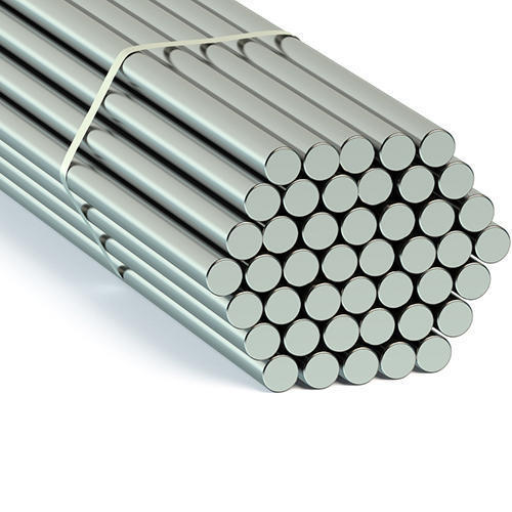
Incoloy 825 is a nickel-iron-chromium alloy (UNS N08825, W. Nr. 2.4858) with molybdenum, copper, and titanium additions. The nickel and copper handle reducing acids, the chromium handles mildly oxidizing ones, and the molybdenum raises pitting resistance.
That combination is why it appears in acid plants rather than in, say, nitric acid plants.
| Industry | Typical equipment | Media window | 825 verdict | Move up to |
|---|---|---|---|---|
| Chemical and acid processing | Reactors, storage tanks, mixer-settlers, extraction columns, heat exchangers, pumps, valves, piping | Sulfuric acid to 65°C (149°F) at low to mid concentration, 50°C (122°F) at 40–80% | Default choice | Alloy 20, 254 SMO, C-276 |
| Phosphoric acid and fertilizer | Attack and digestion tanks, evaporator stages, tube bundles, gypsum filtration, fluosilicic acid recovery | Pure acid to boiling 85%; wet-process acid only at low chloride and fluoride | Good, chloride-limited | Alloy 20, 25-6MO, Inconel 625 |
| FGD and air pollution control | Inlet duct, absorber zones, mist eliminators, spray headers, dampers | Absorber at pH 4.0–5.5; chloride below about 0.1% | Zone-dependent, not scrubber-wide | Inconel 625, C-276 |
| Seawater and cooling water | Tube bundles, water boxes, transfer piping | Clean flowing water below about 30°C (86°F) | Conditional | Super duplex 2507, Inconel 625 |
| Oil and gas | Wellheads, downhole tubulars, sand-screen base pipe, sour-service exchanger tube | ISO 15156-3 limits: 232°C (450°F), 200 kPa H₂S partial pressure | Within NACE limits only | Inconel 625, C-276 |
| Pickling and surface treatment | Tanks, heating coils, crates, baskets, chains, hooks | Sulfuric pickling liquor | Good | Test before specifying mixed HCl |
| Nuclear and waste handling | Mixed and waste streams, not nitric dissolvers | Non-nitric liquors only | Case by case | 304L, 310L, 690 for nitric duty |
| Power, geothermal and CCS | FGD equipment, brine exchangers, dehydration and compression hardware | Chloride and temperature limited | Case by case | Inconel 625, titanium |
This table is a starting point, not a qualification. Actual duty data, meaning the real chloride, fluoride, pH, and temperature at the metal surface, always wins over a generic application list. For composition, mechanical properties and the full grade background, see the complete Incoloy 825 guide.
The Three Variables That Decide Every Application
Nearly every Incoloy 825 specification question reduces to three variables. Get them right and the grade selection usually makes itself.
Reducing versus oxidizing acid. Nickel, molybdenum and copper carry the reducing side. Chromium carries the oxidizing side. 825 is balanced rather than universal, which is precisely why it performs in sulfuric and phosphoric acid and fails in nitric acid, where the oxidizing potential overwhelms the chromium.
Chloride and fluoride. These move pitting and crevice limits far more than acid strength does. A 50% phosphoric acid stream with 200 ppm chloride is a harder duty than an 85% stream with none. The same logic governs FGD, where the chloride in the limestone and the makeup water sets the zone-by-zone material choice.
Temperature against the 540°C ceiling. ASME Sections I and VIII and B31.3 list 825 to 538°C (1,000°F), and sigma phase forms above roughly 550°C (1,022°F). Above that line the question is no longer corrosion. The 825 corrosion data by medium covers the individual environments in detail.
Chemical Processing: Sulfuric and Mixed Acid Service
Chemical processing is where Incoloy 825 does most of its work. The equipment list is long and predictable: reactors and autoclaves, mixer-settlers, extraction columns, storage tanks, heat exchangers, pumps, valves and transfer piping.
The useful working number is the 5 mpy (0.13 mm/yr) isocorrosion envelope for sulfuric acid. In that contour, 0–10% and 10–40% acid are both acceptable to 65°C (149°F). The 40–80% band drops to about 50°C (122°F). From 80–100%, the limit climbs back to 65°C and reaches roughly 80°C (176°F) near 78% concentration.
That dip in the middle is the part most “resistant to sulfuric acid” claims skip. Aeration and trace chloride shift the contour further, usually downward. A tank that holds dilute acid comfortably can pit in the same plant’s spent-acid line once the chloride accumulates.
When to move up
Hot concentrated acid, or acid carrying chlorides, is where 825 stops being the economical answer. Alloy 20, 254 SMO and Hastelloy C-276 each cover part of that gap. The 825 vs 316L upgrade decision walks through where the cost step is justified and where 316L or 904L still wins.
Phosphoric Acid and Fertilizer Production
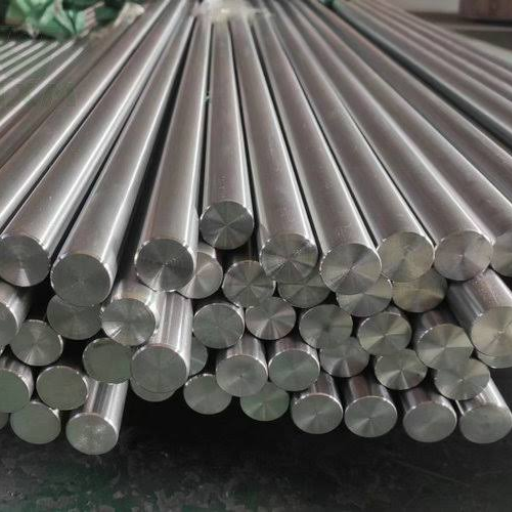
Phosphoric acid is the application Incoloy 825 is best known for, and the one where the marketing and the metallurgy diverge most.
In pure phosphoric acid, 825 is excellent. It resists boiling 85% acid, which is a genuinely demanding duty. Commercial wet-process acid is a different medium. It carries residual sulfuric acid, fluorides, chlorides and silica, and the Inco corrosion handbook is direct about the consequence: in commercial wet-process acid, significant pitting or crevice corrosion limits the application, and Alloy 020 or 25-6MO is recommended where contamination is high.
Laboratory rates show the spread. In 45% acid at 63–68°C (145–154°F), 825 corrodes at about 0.6 mpy, and in boiling 60–70% acid the rate climbs to 6.8–8.6 mpy. In 75% acid, half-immersed at 115–127°C (239–261°F), it runs about 3.9 mpy. In boiling 85% acid, the rate reaches 36–50 mpy.
These are laboratory values from the handbook, not field data, and should be read as a trend rather than a guarantee.
The equipment map follows the acid through the plant: attack and digestion tanks, evaporator stages, heat exchangers, fluosilicic acid recovery, gypsum filtration and ammonium sulfate duty. Erosion-corrosion from gypsum solids is a separate mechanism and shows up at tube inlets, U-bends and baffles, where inlet ferrules and velocity control do more for life than a thicker wall does.
When 904L, Alloy 20 or 625 wins
904L is the lower-cost answer where chloride stays low, and capital cost dominates. Alloy 20 handles hot contaminated acid well. Inconel 625 covers the hottest, highest-chloride evaporator stages. The 825 vs Inconel 625 comparison sets out the trade-off.
A phosphoric acid complex in Southeast Asia reached that conclusion the expensive way. Hana, the plant’s materials engineer, had 316L evaporator tubes failing every 14 months and a budget that wouldn’t stretch to 625 across the whole bundle, so she specified 825 instead.
Three years on, the bundle is still in service, and no tube has been replaced. The plant later found that its chloride control, not its alloy choice, was the real variable.
Flue Gas Desulfurization and Air Pollution Control
Incoloy 825 is never a scrubber-wide material. A limestone-gypsum absorber is a series of chemical zones, and each zone asks a different question of the alloy.
| Zone | Condition | Material logic |
|---|---|---|
| Inlet duct and quencher | pH at or below 1, high chloride, high temperature | 825 marginal; C-276 or 625 where chloride is high |
| Absorber, slurry zone | pH 4.0–5.5, chloride below about 0.1% | 825 is the mid-range choice between 316L/317L and C-276 |
| Outlet duct and reheat | Lower chloride, condensing acid | 825 workable, 317L often sufficient |
| Mist eliminator | Chloride concentration by evaporation | Verify chloride before specifying 825 |
| Spray headers and dampers | Velocity, erosion, wet-dry cycling | 825 with velocity control, or 625 |
The exclusion that competitors rarely state is the slurry itself. Low pH plus elevated chloride in a solids-laden slurry is not 825 duty, regardless of what the absorber walls are made from.
The installed-base evidence is stronger here than for most applications. The Nickel Institute’s scrubber testing reported 0.0 mm/yr average corrosion and 0.0 mm pitting and crevice depth for 825 in FGD service. Separately, a NACE survey of Laramie River Station Units 1 and 2 recorded ten double-loop limestone towers built from a mix of 904L, 316L, 317L, 825, Alloy G and 625, reported essentially corrosion-free in the quencher, absorber, ducts and dampers. That is a mixed-material survey across ten towers, not a controlled endorsement of 825 alone, and it should be read that way.
Seawater, Cooling Water and Marine Systems
Seawater is where Incoloy 825’s published figures conflict most, and the conflict is resolvable once you separate uniform corrosion from localized attack.
825 resists uniform corrosion in seawater well. That’s the source of the “practically resistant to 60°C” claim in older literature. Localized corrosion is the actual failure mode.
A practical working boundary sits near 30°C (86°F) for clean flowing water. Tube-inlet pitting appears above roughly 45°C (113°F), where the tube wall runs hotter than the bulk water and deposits form. Indicative critical pitting temperatures for 825 fall around 25–30°C, consistent with that behavior but drawn from supplier data rather than a standard.
Two independent studies point the same way. A University of Cape Town assessment of stagnant synthetic seawater between 30 and 60°C found grain-boundary attack below 45°C and pitting above 50°C. Nickel Institute crevice data recorded a maximum attack depth of 0.25 mm (10 mils) in 30 days in ambient seawater, with 825 being more susceptible under biofouling, because the deposit creates the crevice.
The practical rule: clean, flowing, cool seawater is workable. Warm, stagnant, biofouled or high-velocity seawater isn’t, and a thicker tube doesn’t fix it.
Marine exhaust gas cleaning
Scrubber wash-water piping and overboard lines are a growing 825 application, because discharge limits push pH and chloride into a range where 316L is out and 625 is expensive. Verify wash-water pH, chloride, and temperature before committing, and note that open-loop alkaline systems are a different duty from closed-loop brine recirculation.
When 2507 or 625 is the right answer
Warm, stagnant, or high-velocity seawater belongs to super duplex 2507 or Inconel 625. A Southeast Asian refinery learned this on a seawater-cooled exchanger. The plant specified 825 tubes to save material cost; the inlet temperature ran above the design assumption, and pitting appeared within 14 months. Replacing the bundle with 625 ended the problem, and the 60% material premium was recovered in the first shutdown the plant avoided.
Oil and Gas: Sour Service and Downhole Equipment
Incoloy 825 appears in wellheads, downhole tubulars, casing and tubing, sand-screen base pipe, sour-service heat exchanger tube, and LPG processing hardware. Its role is moderate sour service, not the end.
The governing document is ISO 15156-3 (NACE MR0175). For solution-annealed 825, it permits service to 232°C (450°F) and a 200 kPa (29 psi) H₂S partial pressure. Cold-drawn product carries tighter limits, which matters because downhole tubulars are often cold-worked.
One scope point saves arguments later. MR0175 addresses sulfide stress cracking, not pitting. A high-chloride produced-water stream can pass the NACE limits and still pit the tubing, so localized corrosion needs its own data.
The NACE MR0175 sour-service requirements article covers the documentation side, including why a “NACE certificate” doesn’t exist as a document.
There is also a magnetic caveat worth stating plainly. Annealed 825 is austenitic and essentially non-magnetic, but cold work raises permeability. Non-magnetic drill collars are not an 825 product, and any tooling claim that depends on low permeability should be verified by measurement rather than assumed from the grade name.
Pickling, Nuclear, Power and Other Process Uses
Pickling and surface treatment. Sulfuric pickling tanks, heating coils, crates, baskets, chains and hooks are a genuine 825 application, and the grade outlasts 316L in them by a wide margin. Mixed hydrochloric and sulfuric pickling liquor is a different question, and that duty is marginal for 825.
Test it rather than interpolating from sulfuric acid data. A stainless mill in Jiangsu replaced 316L pickling baskets with 825 and got roughly four times the service life, then lost a set of hooks in a mixed-acid tank nobody had tested.
Nuclear fuel reprocessing. Mill datasheets list this sector, and the listing is where most of the copying starts. 825 is not recommended for nitric acid, which is the medium in a straight nitric dissolver.
Its role is mixed and waste streams where the chemistry isn’t nitric-dominated. For straight nitric duty, the grades are 304L, 310L, and 690. Confirm the actual liquor composition before specifying, because a waste-stream designation covers a very wide range.
Power, geothermal and CCS. FGD equipment is covered above. Geothermal brine heat exchange is viable where chloride and temperature stay inside the windows in this article, and marginal outside them. CCS dehydration and compression duty is still emerging and should be qualified by testing rather than by analogy.
Pulp, copper refining and ore processing. Pulp digesters and bleach-plant components use 825 in places, though 904L often wins on cost. Copper refining draws on the grade where acid and chloride overlap.
Furnace internals, recuperators and other components held at temperature under load are not 825 duty at all. Those belong to the creep-resistant grades, principally 800H and 800HT.
When Incoloy 825 Is the Wrong Answer
This is the section most application pages leave out, and the one that saves the most money.
| Duty | Why 825 fails | Specify instead |
|---|---|---|
| Nitric acid, any concentration | Oxidizing acid overwhelms the chromium; the grade is not recommended | 304L, 310L, 690 |
| Hydrochloric acid above about 1–2% | Chloride destroys the passive film; pitting and crevice attack are rapid | C-276, C-22 |
| Warm, stagnant or biofouled seawater | Localized corrosion above the practical temperature boundary | Super duplex 2507, Inconel 625 |
| Wet-process phosphoric acid with high chloride and fluoride | Pitting and crevice corrosion in commercial acid | Alloy 20, 25-6MO, Inconel 625 |
| Sustained load above about 540°C (1,004°F) | Sigma phase and loss of creep strength; the question stops being corrosion | 800H, 800HT |
| Scrubber slurry at low pH with elevated chloride | The zone exclusion described above | C-276, Inconel 625 |
| High-strength or wear-critical components | 825 is a corrosion grade, not a strength or wear grade | Duplex or PH stainless, cobalt alloy |
None of these are edge cases. They are the routine reasons an 825 component fails early, and every one of them is cheaper to catch at the specification stage than at the shutdown.
Matching Application to Product Form and Standard
The last specification error we see is a standard that does not cover the form being ordered.
| Application | Form | ASTM standard | Note |
|---|---|---|---|
| Vessels, tanks, ducting | Plate and sheet | B424 | Covers plate, sheet and strip |
| Shell-and-tube bundles | Seamless tube | B163 | Heat exchanger tube |
| Transfer and process lines | Seamless pipe | B423 | Seamless pipe only |
| Welded tube and pipe | Welded tube and pipe | B704, B705 | Separate standards per form |
| Valve and pump trim, shafting | Bar and rod | B425 | Bar, rod and wire |
| Flanges, fittings, valve bodies | Forgings and fittings | B564, B366 | Buy forgings to B564 |
ASTM B407 is sometimes written on an 825 purchase order. B407 covers nickel-iron-chromium alloy seamless tube but does not apply to 825, and a mill will either query it or, worse, accept it and ship against a standard that says nothing about your grade. The 825 pipe and tube standards page sets out which standard covers which form.
Sourcing Incoloy 825 for Your Application
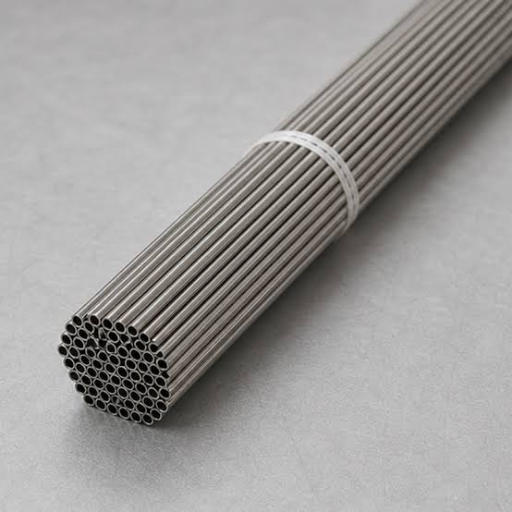
Buyers will see several designations for the same grade: UNS N08825, 2.4858, NS142 or NS1402 in the Chinese system, and 0Cr21Ni42Mo3Cu2Ti in the GB composition form. They describe one alloy, and a supplier who cannot cross-reference them is a risk.
Documentation is where application selection becomes procurement. Ask for an EN 10204 3.1 or 3.2 certificate, a material test report, and a NACE declaration where sour service applies. The declaration is a statement of compliance with ISO 15156-3, not a certificate issued by NACE, because no such certificate exists. For Incoloy 825 specifically, request positive material identification on the titanium and copper lines, since those two elements separate a genuine heat from a substituted one.
For 2026, indicative FOB China ranges run USD 18–40/kg for bar, USD 20–48/kg for plate and sheet, and USD 28–55/kg for seamless pipe. These are estimates for planning, not quotations, and they sit roughly 20–25% below Inconel 625 depending on form and quantity.
We hold Incoloy 825 bar stock and supply plate, sheet, pipe and tube with full certification. Send your duty, product form and required standard, and our engineers will return a material recommendation and a quotation within 24 hours.
FAQ
What is Incoloy 825 used for?
Incoloy 825 is used for sulfuric and phosphoric acid equipment, FGD ducting and absorbers, seawater and cooling-water exchangers at moderate temperature, sour-service oil and gas hardware, pickling equipment and selected waste-handling duty. Nitric acid and warm seawater are outside the grade’s practical envelope.
Is Incoloy 825 suitable for seawater?
Only at moderate temperature and with flow. Clean flowing seawater below about 30°C (86°F) is workable. Above roughly 45°C (113°F) tube inlets pit, and stagnant or biofouled seawater causes crevice attack up to 0.25 mm in 30 days. Warm or stagnant seawater belongs to super duplex 2507 or Inconel 625.
Can Incoloy 825 be used in phosphoric acid?
Yes in pure acid, with care in wet-process acid. 825 resists boiling 85% pure phosphoric acid well. Commercial wet-process acid carries chloride, fluoride and silica, and pitting and crevice corrosion limit the application where contamination is high. Test the actual liquor before specifying.
Is Incoloy 825 good for FGD scrubbers?
Yes for most zones, no for the slurry. The absorber at pH 4.0–5.5 with chloride below about 0.1% is squarely 825 duty, and Nickel Institute testing recorded 0.0 mm/yr corrosion. The inlet duct at pH 1 or below and the chloride-rich slurry need C-276 or 625.
What is Incoloy 825 used for in oil and gas?
Wellheads, downhole tubulars, casing and tubing, sand-screen base pipe and sour-service exchanger tube. It suits moderate sour service within ISO 15156-3, which allows solution-annealed 825 to 232°C (450°F) and 200 kPa H₂S partial pressure. Cold-drawn product has tighter limits.
When should I use Inconel 625 instead of Incoloy 825?
Use 625 when chloride or temperature pushes past the 825 window: seawater above about 45°C (113°F), hydrochloric acid above 1–2%, the hottest phosphoric evaporator stages, or scrubber slurry at low pH. 625 costs roughly 20–25% more, and that premium is usually cheaper than a premature bundle replacement.
Conclusion
Incoloy 825 is the right answer in the middle of the corrosion spectrum, and the applications above show where that middle sits. It handles reducing acids with moderate chloride better than 904L and at a fraction of the 625 price. It fails at the edges, and it fails predictably.
Three checks decide most Incoloy 825 applications before an order is placed. First, get the real chloride and fluoride figures for the stream, not the nominal acid concentration. Second, compare the metal temperature against the 540°C ceiling and against the seawater boundaries if cooling water is involved. Third, name the failure mode that would end the equipment’s life, because that’s what tells you whether you’re inside the window.
If the duty sits near an edge, send it to us before you specify. Our metallurgical team will review the medium, temperature and product form and come back within 24 hours with a recommendation you can put in the RFQ.