Incoloy 800H is a nickel-iron-chromium austenitic heat-resistant alloy that remains stable and oxidation-resistant up to 982°C in short-term service, with a practical long-term creep limit near 815°C. Engineers choose it when standard stainless steels lose strength above 700°C, but Inconel 600 would add unnecessary cost.
At 900°C, a 310 stainless steel radiant tube may survive one turnaround cycle. Then it scales and sags. A petrochemical plant in Southeast Asia learned this the hard way. Their ethylene cracking coils, originally specified in 310 stainless, required replacement every three years.
After switching to Incoloy 800H tubing with verified ASTM No. 5 grain size, the same coils reached six years of service without creep-related failure. The material cost was higher upfront. The avoided shutdowns more than paid for it.
This guide explains why Incoloy 800H is heat-resistant, where its Incoloy 800H temperature limit sits, how it compares to Incoloy 800, 800HT, and Inconel 600, and what procurement teams should specify when sourcing it from China.
To summarize, you will learn: the metallurgical reasons behind 800H heat resistance, the exact temperature ceiling for safe service, how to choose among 800-family grades, and what documentation to demand from suppliers.
Key Takeaways
- Incoloy 800H (UNS N08810) is an iron-nickel-chromium alloy with 30–35% nickel, 19–23% chromium, and controlled 0.05–0.10% carbon for creep resistance above 600°C.
- Its Incoloy 800H temperature limit is 982°C peak short-term exposure, with a long-term creep-limited ceiling around 815°C.
- Solution annealing at ≥1121°C produces a coarse ASTM No. 5 or coarser grain size, which is mandatory for creep-critical applications.
- Incoloy 800H vs 800HT: 800HT has tighter Al+Ti control (0.85–1.20%) and higher annealing temperature, making it the better choice above 700°C for maximum creep life.
- Factory-direct Incoloy 800H price per kg from China typically ranges from $15–40/kg, depending on certification, form, and volume.
What Is Incoloy 800H?

Incoloy 800H is the high-carbon variant of the Incoloy 800 family, designated UNS N08810 and W. Nr. 1.4958. It is an austenitic, solid-solution-strengthened alloy based on iron, with substantial additions of nickel and chromium. The alloy was developed for high-temperature service where oxidation resistance, carburization resistance, and creep strength matter more than room-temperature yield strength.
The “H” in 800H stands for high carbon. Carbon is controlled to 0.05–0.10%, compared with 0.10% maximum in base Incoloy 800. This small difference significantly improves creep-rupture strength above 600°C by promoting stable carbide formation at grain boundaries. For this reason, ASME SB-409 recognizes 800H for pressure vessel applications above 538°C, while base 800 is restricted to lower temperatures.
Incoloy 800H sits in the broader nickel-based alloy portfolio. Specifically, it is not a nickel-based superalloy in the strict sense; its iron content is higher than that of Inconel grades, which makes it less expensive and easier to fabricate for moderate to high-temperature duty.
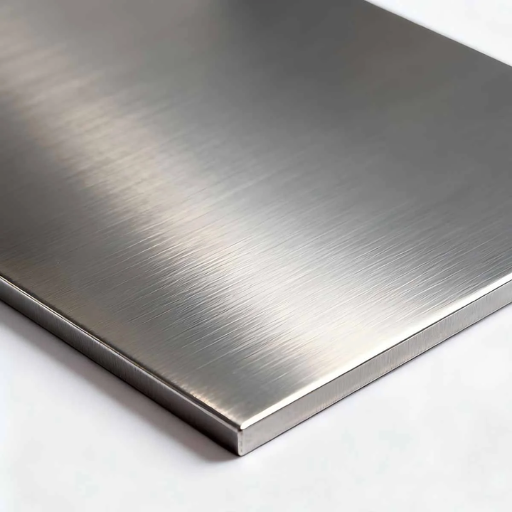
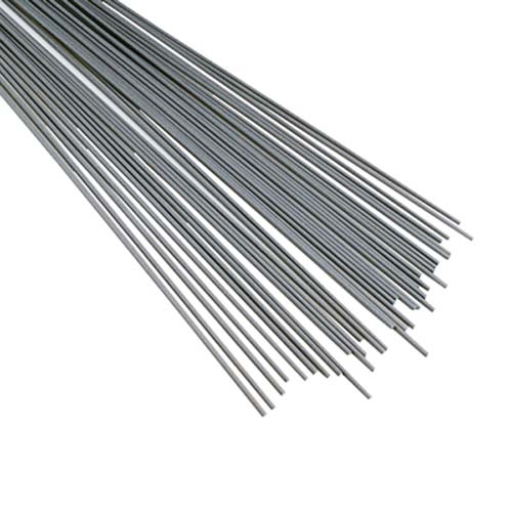
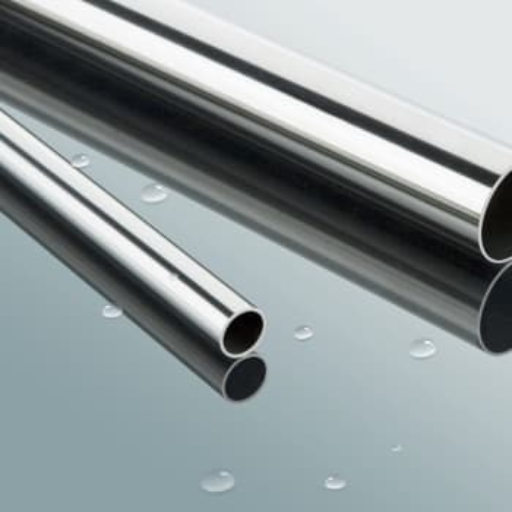
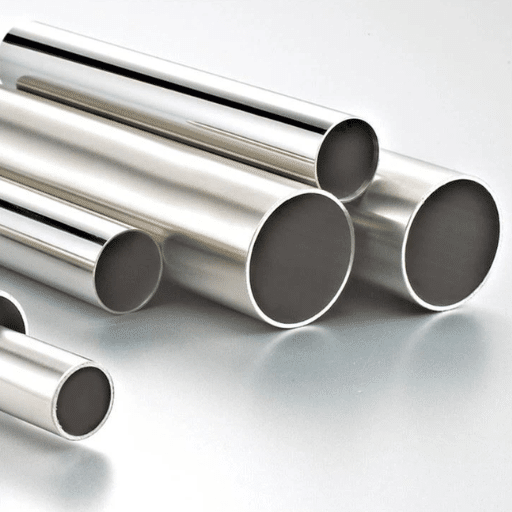
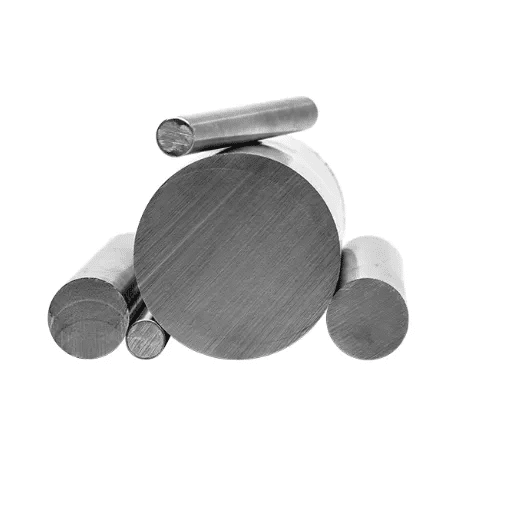
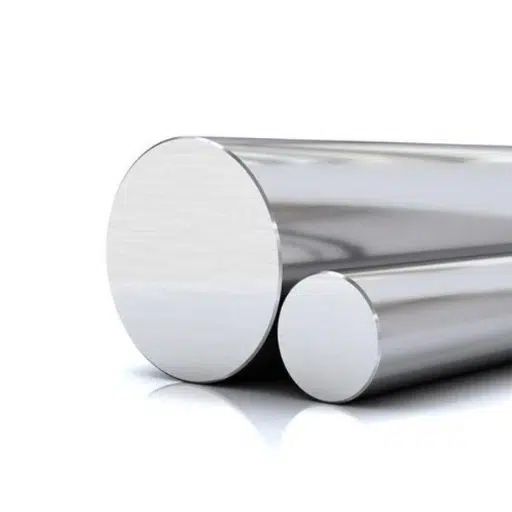
Available forms include plate, sheet, strip, bar, rod, pipe, tube, and forgings. Common specifications are ASTM B409 / ASME SB409 for plate and sheet, ASTM B407 / ASME SB407 for seamless pipe and tube, and ASTM B408 / ASME SB408 for bar and rod.
Incoloy 800H Chemical Composition
The Incoloy 800H chemical composition is balanced to form a protective oxide scale, maintain austenitic stability, and resist creep at elevated temperatures.
| Element | wt% (ASTM B409) | Purpose |
|---|---|---|
| Nickel | 30.0–35.0 | Stabilizes austenite; improves oxidation and carburization resistance |
| Chromium | 19.0–23.0 | Forms Cr₂O₃ oxide scale for oxidation and sulfidation resistance |
| Iron | 39.5 min | Base element; keeps cost below nickel-rich superalloys |
| Carbon | 0.05–0.10 | Improves creep-rupture strength through carbide stabilization |
| Aluminum | 0.15–0.60 | Promotes protective oxide; contributes to high-temperature strength |
| Titanium | 0.15–0.60 | Combines with aluminum and carbon; controls grain growth and creep |
| Al + Ti | 0.30–1.20 | Combined range ensures precipitation control and creep performance |
| Manganese | 1.50 max | Deoxidizer; minor solid-solution strengthening |
| Silicon | 1.00 max | Improves oxidation resistance; controlled to avoid low-melting phases |
| Sulfur | 0.015 max | Kept low to prevent hot cracking during welding |
The combined aluminum plus titanium content matters. In 800H, Al+Ti ranges from 0.30–1.20%. This range supports the formation of fine gamma-prime and carbide phases that strengthen the alloy at temperature without making it brittle. Carbon is intentionally held above 0.05% to ensure adequate creep resistance, but below 0.10% to avoid excessive carbide precipitation that would reduce ductility.
Procurement teams should request a chemistry report showing not only the main elements but also carbon, aluminum, and titanium. A supplier who only certifies “nickel, chromium, and iron” is not proving the material is 800H rather than generic 800.
Why is Incoloy 800H heat-resistant?
Three metallurgical mechanisms explain why the heat-resistant performance of Incoloy 800H exceeds that of standard austenitic stainless steels.
Protective chromium oxide scale. At high temperature, the 19–23% chromium content forms a continuous Cr₂O₃ layer on the surface. This scale slows further oxidation and provides resistance to sulfidation and carburization. In cyclic heating and cooling, the scale must remain adherent; the nickel content helps maintain scale integrity where pure iron-chromium alloys would spall.
Nickel-stabilized austenitic matrix. The 30–35% nickel keeps the microstructure fully austenitic across the service temperature range. This prevents the phase transformations that embrittle ferritic or martensitic steels and gives 800H its characteristic toughness after long exposure.
Coarse-grain size for creep resistance. Incoloy 800H is solution annealed at temperatures of 1121°C or higher. This produces a coarse ASTM No. 5 or coarser grain structure. Coarse grains reduce grain-boundary area, which slows creep deformation and grain-boundary sliding at temperatures above 600°C. This is the single most important reason 800H outperforms fine-grained stainless steels in creep-limited service.
For example, a power plant in the Middle East specified Inconel 600 for superheater tubing at 750°C because the design engineer wanted a maximum safety margin. The material performed well, but the project paid a 35% premium. A review by our metallurgical team showed that Incoloy 800H met all required design stresses at that temperature, with ample corrosion resistance for the clean steam environment. Switching the specification saved the EPC contractor several hundred thousand dollars without reducing safety.
Incoloy 800H Temperature Limits & Mechanical Properties

Understanding the Incoloy 800H temperature limit requires distinguishing between short-term peak exposure and long-term creep-limited service.
Short-Term vs Long-Term Limits
| Service Condition | Temperature Limit | Design Consideration |
|---|---|---|
| Continuous oxidation resistance | Up to 980°C | Surface scale protects base metal |
| Short-term peak exposure | Up to 982–1,038°C | Thermal cycling is limited by scale adhesion |
| Long-term creep-critical service | Around 815°C | Stress rupture life becomes a governing factor |
| ASME code pressure vessel | Up to 760°C | Per ASME SB-409 allowable stresses |
| Practical process limit | 600–900°C | Most petrochemical and power applications |
At room temperature, a solution-annealed Incoloy 800H plate typically shows:
Room and Elevated-Temperature Properties
| Property | Typical Value |
|---|---|
| Tensile strength | 520–690 MPa |
| Yield strength (0.2% offset) | 205–310 MPa |
| Elongation | 30–45% |
| Hardness | 120–180 HB |
Elevated-temperature tensile strength declines gradually. At 700°C, the typical tensile strength is approximately 450 MPa. At 800°C, it drops to roughly 280 MPa. Creep-rupture data is more relevant than short-term tensile data for furnace components.
At 700°C and 100 MPa, 800H commonly achieves rupture life in excess of 10,000 hours. At 815°C, the same stress may produce rupture in roughly 1,000 hours.
However, for applications above 815°C with sustained mechanical load, engineers usually move to Inconel 600, Inconel 625, or nickel-based superalloys such as GH4169. For static components exposed to lower stress, 800H can tolerate brief excursions above 900°C without catastrophic failure.
Incoloy 800H vs 800 vs 800HT
The Incoloy 800 family shares a base composition but differs in carbon, aluminum-plus-titanium control, and heat treatment. These differences determine which grade belongs in a given application.
| Property | Incoloy 800 (UNS N08800) | Incoloy 800H (UNS N08810) | Incoloy 800HT (UNS N08811) |
|---|---|---|---|
| Carbon | 0.10% max | 0.05–0.10% | 0.06–0.10% |
| Al + Ti | 0.30–1.20% | 0.30–1.20% | 0.85–1.20% |
| Annealing temperature | Typically 980–1,065°C | ≥1,121°C | ≥1,093°C, often 1,177°C |
| Grain size | Fine to coarse | ASTM No. 5 or coarser | ASTM No. 5 or coarser |
| Best for | General corrosion/heat to 600°C | Creep service 600–815°C | Maximum creep life above 700°C |
| ASME code limit | Lower | Higher pressure-temp rating | Highest creep-rupture allowables |
When to choose Incoloy 800: Use base 800 for general heat-resistant service below 600°C where creep is not the governing design factor. It is economical and widely available in sheet and bar.
When to choose Incoloy 800H: Specify 800H when sustained operating temperature exceeds 600°C and creep-rupture strength matters. This covers most ethylene cracking coils, reformer tubes, and superheater tubing.
When to choose Incoloy 800HT: Move to 800HT when the component will operate above 700°C for long periods and creep life is the critical constraint. The tighter Al+Ti range and higher annealing temperature produce the most stable microstructure for extended high-temperature exposure.
You usually do not need 800HT unless sustained service exceeds 700°C and creep life is the critical design constraint. For many petrochemical heaters and power boilers, 800H provides the best balance of performance and cost.
Incoloy 800H vs Inconel 600
Inconel 600 (UNS N06600) is the most common upgrade engineers consider when 800H seems marginal. The choice depends on temperature, environment, stress, and budget.
| Factor | Incoloy 800H | Inconel 600 |
|---|---|---|
| Base | Iron-nickel-chromium | Nickel-chromium |
| Nickel content | 30–35% | 72% min |
| Max useful temperature | ~815°C long-term | ~1,095°C long-term |
| Oxidation resistance | Excellent to 980°C | Excellent to 1,095°C |
| Creep strength above 800°C | Moderate | Superior |
| Carburization resistance | Good | Good |
| Fabrication cost | Lower | Higher |
| Typical cost premium vs 800H | Baseline | 30–40% higher |
Incoloy 800H is typically 30–40% lower cost than Inconel 600 for moderate high-temperature service. If the design temperature stays below 815°C and the environment is oxidizing or mildly carburizing, 800H is usually the more economical choice without sacrificing reliability.
Inconel 600 wins above 900°C, in strongly reducing environments, or where the highest creep-rupture strength is required. It is also preferred for some nuclear steam generator tubing applications due to its higher nickel content and chloride stress-corrosion resistance.
If your application needs better corrosion resistance than 800H provides, consider Incoloy 825 bar as a related option in the Incoloy family.
A decision matrix simplifies specification:
- Below 700°C, moderate stress: Incoloy 800 or 800H
- 700–815°C, creep-critical: Incoloy 800H or 800HT
- Above 815°C or highly stressed: Inconel 600 or higher nickel superalloy
- Nuclear steam generators, chloride exposure: Inconel 600 often preferred
Incoloy 800H Applications
Incoloy 800H applications cluster in industries where components must resist heat, oxidation, and creep simultaneously.
Petrochemical processing. Ethylene cracking furnace tubes and transfer lines operate at 800–950°C with hydrocarbon feedstock. Incoloy 800H resists carburization from the hydrocarbon stream and maintains creep strength across the coil length. Steam methane reformer tubes and catalyst tubes also use 800H for the same reasons.
Power generation. Superheater and reheater tubing in coal, gas, and waste-to-energy plants sees metal temperatures of 550–750°C with high internal pressure. 800H offers better creep resistance than T22 or T91 in some designs, especially where oxidation on the fireside is severe.
Heat treatment furnaces. Radiant tubes, muffles, retorts, and furnace fixtures made from nickel alloy plate and bar resist thermal cycling and maintain dimensional stability after thousands of heating cycles.
Nuclear energy. Incoloy 800H is used in steam generator tubing and high-temperature heat exchangers in some reactor designs. The grade meets nuclear material specifications when melted and certified to tight chemistry limits.
Heat exchangers and process equipment. Shell-and-tube exchangers handling hot process gas, hydrogen, or steam benefit from 800H’s combination of thermal fatigue resistance and oxidation protection. Nickel alloy pipe in 800H is common for tube bundles in these units.
Heat Treatment & Grain Size Requirements
The heat treatment of Incoloy 800H is not optional. It determines whether the material will perform as specified in creep-critical service.
Solution annealing is performed at a minimum of 1121°C, which corresponds to 2050°F. Some specifications require 1149°C or higher. The alloy is then rapidly cooled, usually by water quenching, to retain the high-temperature austenitic structure and prevent sensitization.
ASTM B409 and ASME SB409 require an ASTM grain size of No. 5 or coarser for 800H. This coarse-grained structure is what gives the alloy its creep resistance. Fine-grained material may meet the chemical composition of 800H but will fail prematurely in creep-limited service.
Consequences of improper heat treatment include:
- Fine grain size leading to reduced creep-rupture life
- An incomplete solution of carbides causes brittle phases
- Sensitization during subsequent welding or service
- Dimensional instability during thermal cycling
A European buyer once sourced an 800H plate from a Chinese trader who supplied a generic “800H equivalent” without grain-size verification. The material passed chemistry but failed the purchaser’s creep testing at 750°C. The lot was rejected, the project was delayed, and the buyer absorbed re-testing and air-freight costs. The lesson: always request a certified MTR showing solution-annealing temperature and ASTM grain size, not just elemental chemistry.
Incoloy 800H Welding & Fabrication

Incoloy 800H welding follows procedures typical of austenitic nickel alloys. The alloy is readily welded by gas tungsten arc welding (GTAW/TIG), gas metal arc welding (GMAW/MIG), and shielded metal arc welding (SMAW). The key is controlling heat input and avoiding contamination.
| Parameter | Recommendation |
|---|---|
| Processes | GTAW, GMAW, SMAW |
| Filler wire | ERNiCr-3 (AWS A5.14) or ERNiCrCoMo-1 for higher temperature service |
| Covered electrode | ENiCr-3 or ENiCrCoMo-1 |
| Shielding gas | Argon or argon-helium; back-purging required for root passes |
| Maximum interpass temperature | 120°C |
| Heat input | Low to moderate; avoid excessive grain growth |
| Preheat | Normally not required |
| Post-weld heat treatment | Normally not required for 800H |
ERNiCr-3 is the most common filler for 800H. It matches the nickel-chromium system and provides adequate strength and oxidation resistance for most service conditions. For components operating above 800°C, ERNiCrCoMo-1 or ENiCrCoMo-1 may offer better creep-rupture properties.
Heat input should be kept low to moderate. Excessive heat input promotes grain growth in the heat-affected zone and can reduce creep strength. Interpass temperature should not exceed 120°C. Back-purging with argon prevents oxidation on the inside diameter of pipe and tube welds, which is critical for heat exchanger and reactor tubing.
Post-weld heat treatment is normally not required for 800H. In fact, improper PWHT can re-sensitize the alloy or produce undesirable phases. If stress relief is necessary for dimensional reasons, consult the applicable code and use a temperature-time cycle that does not compromise corrosion resistance.
Sourcing Incoloy 800H from China
China is one of the world’s largest producers of nickel alloy semi-finished products. Factory-direct Incoloy 800H price per kg typically ranges from $15–40/kg for plate and bar, depending on thickness, certification level, order volume, and whether the material is domestically melted or imported from a Western mill.
When sourcing nickel alloy bar, plate, pipe, or tube from an Incoloy 800H plate supplier in China, specify clearly:
- Grade and UNS number: Incoloy 800H, UNS N08810
- Product form and dimensions
- ASTM/ASME standard: B409, B407, B408, or equivalent
- Solution-annealing condition and ASTM grain size requirement
- Melt practice: air melt, VIM, or VIM+ESR for critical applications
- Certificate type: EN 10204 3.1 or 3.2
The certificate package should include:
- Mill Test Report (MTR) with full chemical composition
- Mechanical test report at room temperature
- Heat treatment record showing solution-annealing temperature
- Metallographic report verifying ASTM No. 5 or coarser grain size
- Spectral analysis report from a direct-reading spectrometer
- Ultrasonic NDT report for plate or bar, if required
Also, be cautious of prices far below the market range; they often indicate substituted material, incorrect grade, or omitted testing.
Finally, red flags when buying include a supplier who cannot produce the original MTR, who quotes only “800H equivalent,” or who refuses to verify grain size.
Jiangsu Zhonggongte Metallurgical Technology Co., Ltd. supplies Incoloy 800H in nickel alloy plate, bar, pipe, and tube forms. Materials are melted in vacuum induction furnaces with optional electroslag remelting, tested on direct-reading spectrometers, and shipped with full MTRs and EN 10204 3.1/3.2 certification. Our metallurgical engineers provide 24-hour technical support for grade selection, welding consumables matching, and documentation requirements.
Frequently Asked Questions
Q: What is the maximum temperature for Incoloy 800H?
A: Incoloy 800H tolerates short-term peak exposure up to 982°C and continuous oxidation resistance to approximately 980°C. For long-term service under mechanical stress, the practical creep-limited ceiling is around 815°C.
Q: What is the difference between Incoloy 800H and 800HT?
A: Incoloy 800HT has tighter control of aluminum plus titanium (0.85–1.20%) and is typically annealed at a higher temperature. These differences give 800HT better creep resistance above 700°C, making it the preferred grade when maximum creep life is required.
Q: Is Incoloy 800H magnetic?
A: No. Incoloy 800H is austenitic and essentially non-magnetic in the annealed condition. It may develop a slight magnetic response after severe cold working, but this is uncommon in high-temperature applications.
Q: Can Incoloy 800H be welded to carbon steel?
A: Yes, with the correct filler metal and procedure. A nickel-based filler such as ERNiCr-3 or ERNiCrFe-7 is usually used to accommodate the dilution and thermal expansion mismatch. Joint design and post-weld inspection should follow applicable codes.
Q: What certification should I request when buying Incoloy 800H from China?
A: Request a Mill Test Report (MTR) with full chemical composition, mechanical properties, heat treatment record, and grain-size verification. For critical projects, specify EN 10204 3.2 certification reviewed by an independent inspector.
Q: How does Incoloy 800H compare to Inconel 600 in price?
A: Incoloy 800H is typically 30–40% less expensive than Inconel 600 for equivalent product forms. The cost advantage is significant for components operating below 815°C where 800H provides adequate performance.
Q: Why does grain size matter for Incoloy 800H?
A: Coarse grain size, ASTM No. 5 or coarser, reduces grain-boundary area and slows creep deformation at high temperature. Fine-grained material may meet chemistry but will fail prematurely in creep-critical service.
Conclusion
The heat-resistant performance of Incoloy 800H comes from a deliberate combination of nickel, chromium, carbon, and aluminum-titanium additions, finalized by high-temperature solution annealing that produces a coarse, creep-resistant grain structure. Its Incoloy 800H heat-resistant temperature limit of 982°C peak and roughly 815°C long-term makes it the right choice for ethylene cracking coils, reformer tubes, superheater tubing, and high-temperature heat exchangers.
Key points to remember:
- Specify UNS N08810 with full chemistry, including carbon and Al+Ti.
- Verify solution-annealing condition and ASTM No. 5 or coarser grain size on the MTR.
- Choose 800H over base 800 when service temperature exceeds 600°C.
- Reserve 800HT for the most demanding creep conditions above 700°C.
- Consider Inconel 600 only when the temperature or environment truly demands it.
Jiangsu Zhonggongte Metallurgical Technology Co., Ltd. manufactures and supplies certified Incoloy 800H plate, bar, pipe, and tube with full traceability, spectral verification, and 24-hour technical response. Submit your material list today and receive a competitive quotation within 24 hours.