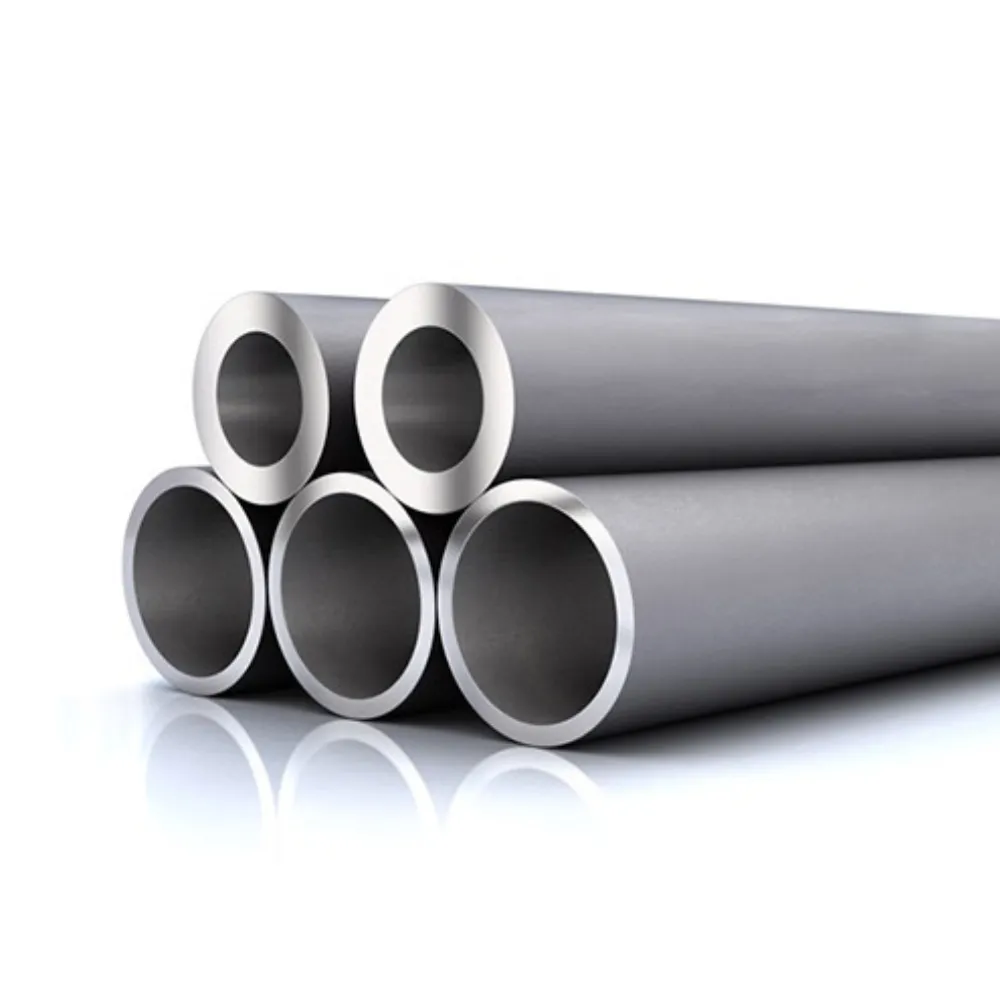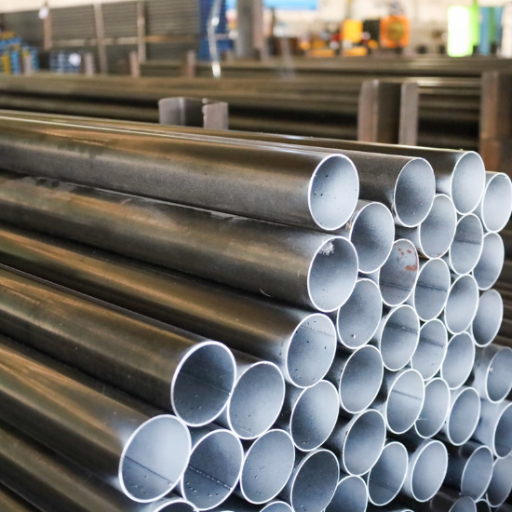
Inconel 600 heat treatment is not one cycle. The alloy is annealed at about 1,010°C (1,850°F) to soften it after cold work, stress-relieved at 900°C (1,650°F) for one hour or 790°C (1,450°F) for four hours when it will handle hot caustic, and solution-treated at 1,090-1,150°C (2,000-2,100°F) only when maximum creep strength is worth the grain growth. It can’t be hardened by aging, because it contains no deliberate aluminum, titanium or niobium addition.
The expensive mistake is not choosing the wrong number. It is running a cycle without knowing which of those four jobs it is supposed to do.
Between 540°C and 760°C (1,000°F and 1,400°F), alloy 600 precipitates chromium carbides at grain boundaries. A drawing that says “stress relieve at 620°C” points the furnace into the middle of that band. The part may come out looking correct, pass a hardness check and fail later by intergranular attack.
This guide separates the four cycles, shows the measured property response behind each one, and explains the carbide window that connects them. Temperatures and property tables come from the Special Metals alloy 600 bulletin, SMC-027, or from the product specification that governs the form.
If you are writing a heat-treatment clause into an RFQ, send the form, thickness, service and required condition. Our technical team will confirm the applicable cycle and the certificate scope before quotation.
Key Takeaways
- Inconel 600 is not precipitation hardenable. Cold work is the only way to raise its strength, so an aging cycle does nothing except risk carbide precipitation.
- The mill anneal is 1,010°C (1,850°F) for about 15 minutes in thin section. On hot-rolled rod it drops hardness to about 75 HRB and yield to about 210 MPa.
- The 540-760°C band sensitizes the alloy. A generic 620°C stress relief sits inside it and is not the mill’s caustic-service cycle.
- For high-temperature, high-strength caustic service, SMC-027 specifies 900°C (1,650°F) for 1 hour or 790°C (1,450°F) for 4 hours with a slow cool. If the surface will be pickled or must resist intergranular attack, cool fast through 540-760°C instead.
- A heat-treatment certificate should state the cycle, cooling, hardness, tensile result and grain size. “Annealed” alone does not define the condition.
What Heat Treatment Can and Cannot Do to Inconel 600
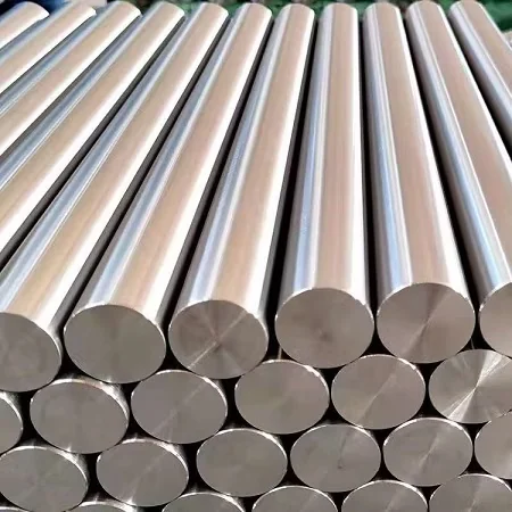
Inconel 600 (UNS N06600, 2.4816) is an austenitic nickel-chromium-iron alloy with 72% minimum nickel plus cobalt, 14-17% chromium and 6-10% iron. The full composition and room-temperature baseline are on our Inconel 600 properties page. For heat treatment, the important fact is what is missing from the composition.
There is no deliberate aluminum, titanium, or niobium addition. Those are the elements that let alloys such as 718 and X-750 precipitate a strengthening phase during aging. Without them, 600 has no comparable aging reaction.
SMC-027 states the position directly: the alloy is not precipitation-hardenable, and it is hardened and strengthened only by cold work.
That sentence rules out much of the heat-treatment advice published for nickel alloys. You can’t age 600 to a higher strength the way you age 718. A furnace cycle can soften the alloy, relieve residual stress, dissolve carbides, or deliberately precipitate them. It can’t raise strength above the cold-worked condition.
| Objective | Cycle | What the furnace actually changes |
|---|---|---|
| Soften after cold work | Mill anneal near 1,010°C | Recrystallizes the worked structure; lowers yield and hardness |
| Relieve residual stress | Stress relief, service-specific | Reduces locked-in stress; may also soften if hot enough |
| Dissolve carbides for creep strength | Solution treatment at 1,090-1,150°C | Dissolves carbides; coarsens grain; lowers short-time yield |
| Precipitate carbides deliberately | Thermal treatment near 704°C | Decorates grain boundaries; changes corrosion behavior |
| Increase strength | None | Cold work only |
The word “annealed” on a certificate is not a complete condition. It can mean a 1,010°C mill anneal, a 1,150°C solution treatment or a lower-temperature stress relief. Each produces a different grain size and a different property set. A purchase order that names only the word leaves the mill to choose the cycle.
The Four Inconel 600 Heat Treatment Cycles at a Glance
The four cycles overlap in equipment and overlap in temperature. They don’t overlap in purpose.
| Cycle | Temperature | Hold | Cooling | Primary purpose | Typical result |
|---|---|---|---|---|---|
| Mill anneal | 1,010°C (1,850°F) | 15 min; reference, thin section | Air | Soften after cold work; refine grain | 69-77 HRB; yield about 165-210 MPa |
| Solution treatment | 1,090-1,150°C (2,000-2,100°F) | 1-2 h | Air or water | Dissolve carbides; maximize creep strength | Coarse grain; yield about 162-167 MPa |
| Caustic stress relief | 900°C (1,650°F) or 790°C (1,450°F) | 1 h or 4 h | Slow cool | Relieve stress; prevent caustic SCC | Stress relief; some softening |
| Nuclear thermal treatment | 704°C (1,300°F) | 15 h | Controlled | Precipitate grain-boundary carbides | Improved PWSCC resistance, heat-dependent |
Two of these are easy to confuse. A 900°C stress relief is above the recrystallization temperature of most cold-worked 600, so it also anneals the material. The mill still calls it stress relief because the purpose is stress relief, not softening. If your design depends on retained cold-work strength, a 900°C cycle will not preserve it.
The heat treatment of nickel-based alloys shows how these cycles differ across the nickel family. The rest of this page is specific to 600.
Inconel 600 Annealing: The 1,010°C Cycle
SMC-027 gives a simple reference: an annealing treatment of about 1,850°F/15 min (1,010°C/15 min) produces soft material. A brief exposure to 1,900°F (1,040°C) also softens the alloy without producing a coarse grain structure.
The mill also explains why the window is narrow. Grain growth does not begin until the alloy reaches about 1,800°F (980°C). At that temperature, the fine carbide particles that pin the grain boundaries start to coalesce.
Carbide dissolution begins at about 1,900°F (1,040°C). Hold for 1 to 2 hours at 2,000-2,100°F (1,090-1,150°C), and the carbides dissolve completely and the grain size increases.
The 15-minute figure is a thin-section reference, not a universal soak. The mill says times and temperatures are usually determined experimentally because cold work, grain size, composition and section thickness all interact. A 15-minute hold on a 100 mm forging is not the same treatment as a 15-minute hold on 1 mm strip.
The measured response shows what the numbers mean in practice. This is hot-rolled rod from SMC-027 Table 7, air-cooled after each treatment.
| Treatment | Tensile strength | Yield strength (0.2%) | Elongation | Hardness |
|---|---|---|---|---|
| As-rolled | 672 MPa | 307 MPa | 46% | 86 HRB |
| 1,600°F (870°C) | 659 MPa | 283 MPa | 44% | 85 HRB |
| 1,800°F (980°C) | 624 MPa | 210 MPa | 49% | 75 HRB |
| 1,900°F (1,040°C) | 596 MPa | 141 MPa | 55% | 70 HRB |
| 2,000°F (1,090°C) | 595 MPa | 167 MPa | 55% | 70 HRB |
| 2,100°F (1,150°C) | 583 MPa | 165 MPa | 57.5% | 69 HRB |
Hardness falls from 86 to about 70 HRB. Yield falls much further, from 307 MPa to 165-210 MPa. Tensile strength drops less because the alloy remains a solid solution with substantial work-hardening capacity.
That gap explains why two certificates can both say “annealed” and both pass a hardness limit while carrying different design strength. If your calculation uses yield, the cycle matters more than the word.
Cooling rate after annealing has little effect on the mechanical properties, according to the mill. It has a large effect on corrosion behavior. The alloy precipitates carbides between 540°C and 760°C, so a slow furnace cool through that band can sensitize the surface even when the mechanical test passes. If the part will be pickled or used where intergranular attack matters, cool rapidly through 540-760°C.
Solution Treatment: 1,090-1,150°C for Creep Strength
Solution treatment is the high-temperature end of the same family. SMC-027 specifies 1 to 2 hours at 2,000-2,100°F (1,090-1,150°C) to dissolve the carbides completely and increase grain size. The mill calls the result beneficial for maximum creep and rupture strength.
It isn’t a better anneal. It’s a different product.
Fine grain is preferred for corrosion resistance, tensile strength, fatigue strength and impact strength. Coarse grain improves creep and rupture behavior because there are fewer grain boundaries to slide at high temperature. A part that must hold a load at 900°C for thousands of hours may need the coarse structure. A part that must resist thermal shock or corrosion usually doesn’t.
The property cost is visible in the plate data. At 1,800°F (980°C), hot-rolled plate tests about 199 MPa yield. At 2,100°F (1,150°C), the same table shows about 162 MPa. Hardness falls from 75 to 68 HRB over the same interval.
Use solution treatment when the design is creep-limited and the drawing or specification calls for it. Do not use it as a default “better anneal” for a general fabrication. It adds distortion risk, coarsens the grain and lowers the short-time yield that many room-temperature designs rely on.
If a drawing says “solution annealed” but the design calculation uses fine-grain annealed yield, the certificate and the design are in conflict. Resolve that before the furnace runs.
Stress Relief: What the Mill Actually Specifies
The general rule for solid-solution nickel alloys is that post-weld heat treatment is usually not required for corrosion-resistant service. The Nickel Institute guide to welded fabrication, publication 11012, states that position and then lists the exceptions.
Alloy 600 has one exception that matters. SMC-027 says 600 is subject to stress-corrosion cracking in high-temperature, high-strength caustic alkalies. Material for that service should be fully stress-relieved at 1,650°F/1 h or 1,450°F/4 h (900°C/1 h or 790°C/4 h) before use, and operating stresses should be kept to a minimum.
The same recommendation applies when the alloy contacts mercury at elevated temperature.
That is the only 600-specific stress-relief cycle published in the mill bulletin. It is not a general instruction to stress-relieve every 600 part at 900°C. It is a corrosion-control treatment for a specific service.
| Service or objective | Cycle | Cooling | Basis |
|---|---|---|---|
| High-temperature, high-strength caustic-alkali service | 900°C/1 h or 790°C/4 h | Slow | SMC-027; Nickel Institute 11012 |
| Mercury contact at elevated temperature | 900°C/1 h or 790°C/4 h | Slow | SMC-027 |
| Dimensional stability after machining | 870-900°C for 1-2 h | Air or controlled | Industry practice; drawing and service specification govern |
| Corrosion service with no specific requirement | No PWHT | Not applicable | Nickel Institute 11012 |
| Sensitization-sensitive service after any hot cycle | Anneal above 760°C, then cool fast through 540-760°C | Fast | SMC-027 cooling guidance |
The third row needs a warning. A 870-900°C hold is hot enough to soften most cold-worked 600. It is a process decision, not a mill recipe, and it will change the mechanical condition. If the part was cold-formed to a strength level, stress relief and strength retention are competing requirements.
A 600 vessel in a non-caustic corrosion service doesn’t automatically need post-weld heat treatment. Adding a generic cycle can create a sensitization problem that the service did not require you to solve.
Mei, a project engineer at a chemical plant, caught that distinction on an evaporator package. The quotation listed 600 tube bundles “stress relieved at 620°C.” She asked for the basis.
The supplier called it standard practice. SMC-027 called for 900°C/1 h or 790°C/4 h with a slow cool for caustic service.
The order was re-quoted with the mill cycle before fabrication began. The specification changed, and the failure that a 620°C soak would have invited did not enter the plant.
The 540-760°C Window: Sensitization and the 620°C Mistake
Chromium carbides precipitate from solid solution between 540°C and 980°C. The dangerous part of that range is 540-760°C. At those temperatures, carbides form preferentially at grain boundaries, and the chromium that forms them is drawn from the adjacent matrix. The result is a narrow chromium-depleted zone along each boundary.
In an aggressive medium, that zone corrodes first. The alloy is then sensitized. SMC-027 describes the consequence as susceptibility to intergranular attack, and it notes that the effect matters when the material will be pickled or used in an environment that requires freedom from sensitization.
The carbide type changes across the band. Above 760°C, Cr7C3 is the predominant carbide. Below 760°C, Cr23C6 is also present. Both consume chromium from the boundary region.
A 620°C hold sits in the middle of the window. It isn’t an anneal, because it is below the recrystallization temperature of most cold-worked 600. It is not the mill’s caustic stress relief, because that cycle is 900°C or 790°C. It is a carbide precipitation treatment whether or not anyone intended one.
The mechanical effect on cold-worked material is measurable. This is cold-drawn rod from SMC-027 Table 10.
| Treatment | Tensile strength | Yield strength (0.2%) | Elongation | Hardness |
|---|---|---|---|---|
| As-drawn | 851 MPa | 817 MPa | 16% | 28 HRC |
| 1,200°F (650°C) | 924 MPa | 779 MPa | 20% | 23 HRC |
| 1,300°F (705°C) | 1,021 MPa | 690 MPa | 22% | 99 HRB |
| 1,400°F (760°C) | 816 MPa | 623 MPa | 23.5% | 97 HRB |
| 1,500°F (815°C) | 685 MPa | 276 MPa | 42% | 76 HRB |
At 1,300°F (705°C), tensile strength rises from 851 to 1,021 MPa while yield falls from 817 to 690 MPa. The treatment has not restored the annealed condition. It has redistributed the strength between tensile and yield and left the part sensitized.
The hardness scales in that table aren’t directly comparable. Rockwell C and Rockwell B measure different ranges. The point is the direction of change, not a conversion.
The 5,000-hour consequence is corrosion, not a failed tensile test. A sensitized part can pass every mechanical check and still fail by intergranular attack in a medium that would not attack annealed material.
What should replace a 620°C default depends on the objective:
- To soften after cold work, anneal near 1,010°C and cool through the carbide band quickly.
- To prevent caustic SCC, use the mill cycle, 900°C/1 h or 790°C/4 h with a slow cool.
- To relieve stress in a sensitization-sensitive corrosion service, anneal above 760°C and cool fast through 540-760°C.
- To stabilize dimensions without changing strength, test the proposed low-temperature cycle against the service requirement. Do not assume it is harmless because it is below the annealing range.
There is one deliberate exception. Nuclear steam-generator tubing has used a thermal treatment near 704°C (1,300°F) for about 15 hours to precipitate grain-boundary carbides and improve resistance to primary-water stress corrosion cracking. The NRC review of thermal treatment notes that the benefit varies from heat to heat and that some heats of alloy 600 show little improvement. It is a controlled metallurgical treatment for a specific application, not a license to hold 600 at 700°C in a general furnace.
The same temperature band can be a defect or a designed treatment. The difference is the starting microstructure, the hold time, the cooling, and the service.
Cold Work Before and After Heat Treatment
Inconel 600 work-hardens. That is the only strengthening mechanism available, and it is why cold-drawn bar and spring-tempered wire reach strengths that annealed plate never approaches.
The amount of cold work also sets the temperature at which the structure recrystallizes. SMC-027 Table 25 gives the relationship for cold-rolled fine-grain sheet.
| Cold reduction | Recrystallization temperature, 15 min |
|---|---|
| 5% | 968°C (1,775°F) |
| 10% | 899°C (1,650°F) |
| 20% | 829°C (1,525°F) |
| 50% | 732°C (1,350°F) |
A heavily cold-worked part begins to recrystallize at a lower temperature than a lightly worked one. That is why a stress relief that is safe for a 10% formed part can soften a 50% formed part.
Below the recrystallization temperature, heating produces recovery. Residual stress falls, some dislocations rearrange, and the cold-worked strength is largely retained.
Above it, new grains nucleate and the strength drops toward the annealed condition. The transition is not a single temperature. It depends on time, composition and prior strain.
That is the practical difference between stress relief and annealing. Stress relief preserves useful strength. Annealing gives it up to restore ductility and a defined grain structure.
Daniel, a fabricator, learned that on a set of cold-formed 600 baffles. He formed the parts to about 20% strain, then stress-relieved at 700°C to stabilize them before machining. He expected the parts to machine more easily. They did not.
The 700°C hold was below the recrystallization temperature for that strain level but inside the carbide band, so the parts kept most of their work-hardened structure and picked up grain-boundary precipitation. A full anneal at 1,010°C, followed by a fast cool, gave him the soft, stable structure he actually wanted.
The lesson is not that 700°C is always wrong. It is that the cycle has to match the objective. “Stress relief” and “anneal” are not synonyms, and a cold-worked part is the case where the difference shows first.
For multi-pass cold forming, an intermediate anneal restores ductility before the next reduction. Plan the sequence before the first forming pass, not after the last one.
Furnace Atmosphere, Cleaning and Contamination
Nickel alloys are less forgiving of furnace contamination than stainless steels. SMC-027 requires the alloy to be clean before heating and to be heated in a sulfur-free atmosphere. For forging or open annealing, the furnace atmosphere should be slightly reducing to prevent excessive oxidation.
The cleaning step is not optional. Oil, grease, paint, marking crayons, temperature-indicating markers and cutting fluid all leave carbon or sulfur on the surface. At temperature, those elements diffuse into the grain boundaries and damage the part. A heat treatment that starts on a dirty surface can’t be repaired by a later pickle.
Bright annealing is possible only in very dry hydrogen or in vacuum. The alloy usually must be pickled if a bright surface is required. That is a process route, not a cosmetic choice.
The contaminating elements that matter for nickel alloys include sulfur, lead, zinc, copper, mercury and chlorine. Sources include lubricants, marking materials, galvanized fixtures, lead hammers, copper hold-down bars and zinc-rich paint. Molybdenum disulfide, a lubricant sometimes used to ease assembly, shouldn’t be used on parts that will later exceed 800°F (427°C), according to SMC-027.
Furnace hardware can be a source too. A nickel alloy load should not sit on galvanized or lead-containing supports. Use clean, compatible fixtures and keep them dedicated where possible.
When the order flows down AMS 2750, the furnace itself becomes part of the specification. Furnace class, temperature uniformity survey, sensor calibration and load thermocouples all need to be documented. A cycle that is correct on paper but run in an unqualified furnace isn’t a compliant cycle.
Record the load arrangement, the thermocouple locations and the actual chart. Those records are what let you defend the heat treatment months later, when the certificate is the only evidence left.
How to Specify Inconel 600 Heat Treatment
Inconel 600 heat treatment is only as good as its specification. A usable one needs four things: the condition, the cycle, the cooling and the test. The grade alone doesn’t define any of them.
Start with the product form, because the form selects the specification. The mechanical minima and the permitted supply conditions differ across the ASTM and AMS documents.
| Product form | Specification | Supply condition |
|---|---|---|
| Plate, sheet and strip | ASTM B168 | Annealed, as-rolled, cold-rolled hard |
| Bar, rod and wire | ASTM B166 | Annealed, cold-drawn, spring temper |
| Seamless pipe and tube | ASTM B167 | Annealed |
| Condenser and heat-exchanger tube | ASTM B163 | Annealed |
| Forgings | ASTM B564 | Annealed |
| Aerospace sheet, strip and plate | AMS 5540 | Annealed |
| Aerospace bar, forgings and rings | AMS 5665 | Annealed |
| Aerospace seamless tube | AMS 5580 | Annealed |
| Aerospace wire | AMS 5687 | Annealed |
ASTM B168 is the plate, sheet and strip specification. Its public table sets the annealed mechanical minima for UNS N06600 at 550 MPa tensile, 240 MPa yield and 30% elongation. It also states that as-rolled plate may be given a stress-relieving heat treatment after final rolling. It doesn’t fix a stress-relief temperature for 600 in the reviewed text.
That last point matters because a commonly repeated line says B168 requires an anneal at 1,850°F minimum for 600. In the reviewed reproduction, that footnote belongs to the N06690 row, not to N06600. Do not put it on a 600 purchase order as a B168 requirement. Put the cycle you actually want on the order.
A usable RFQ line reads like this: “Inconel 600 plate, ASTM B168, annealed at 1,010-1,040°C, hold per section, air cool, hardness 85 HRB maximum, tensile and yield to B168, grain size reported, EN 10204 3.1 certificate.” It tells the mill what to do and tells the inspector what to check.
For a caustic-service part, the line changes: “Solution anneal or stress relieve per SMC-027 for caustic service, 900°C/1 h or 790°C/4 h, slow cool, hardness and tensile reported, intergranular corrosion test if specified.”
For a creep-limited high-temperature part, it changes again: “Solution treat at 1,090-1,150°C for 1-2 h, air or water cool, grain size reported, tensile at room temperature and design temperature.”
The product forms and the certificate scope are covered on the Inconel 600 tube product page and the nickel alloy material certificate page.
Verifying Inconel 600 Heat Treatment: Hardness, Grain Size and Corrosion Tests
Verifying Inconel 600 heat treatment takes more than a hardness test. Hardness tells you that the part is softer or harder than the last one. It doesn’t tell you the grain size, the carbide state or the tensile properties.
A heat-treatment lot should be accepted on a combination of tests, chosen to match the risk:
- Hardness on every lot, with a conversion standard and a thickness check. Rockwell readings on thin stock can be affected by the anvil and the specimen thickness.
- Tensile test on a coupon from the same cycle, when the design uses yield or tensile strength.
- Grain size by ASTM E112, when creep, fatigue or corrosion behavior depends on it. Report the actual result, not just “fine grain.”
- Intergranular corrosion test, typically ASTM G28, when the service is aggressive and sensitization is a credible risk.
- Positive material identification and the mill test report, to confirm the grade and the heat number.
- EN 10204 3.1 or 3.2 certificate, when the purchase order requires independent verification.
The certificate should state the cycle, the furnace, the cooling method, the test results and the standard. A certificate that says only “annealed” and a hardness number leaves the buyer unable to tell a 1,010°C anneal from a 1,150°C solution treatment.
That is not a paperwork detail. It is the difference between a part that meets the design yield and one that meets the hardness limit while missing the strength assumption behind it.
How Inconel 600 Heat Treatment Differs from 718 and 625
The PAA set for this query asks whether Inconel 718 can be heat treated. It can, and that is exactly why 600 is confusing.
Inconel 718 is precipitation-hardened. Its strength comes from a solution treatment followed by a controlled two-step aging cycle. The furnace is the strengthening tool. Our Inconel 718 heat treatment guide covers the cycle in detail.
Inconel 600 heat treatment has no equivalent aging response. There is no 720°C/8 h plus 620°C/8 h cycle that raises its strength. A 600 part that is aged is either unchanged or sensitized, depending on the temperature and time. The only way to raise its strength is to cold-work it.
Inconel 625 sits closer to 600. It is a solid-solution alloy with molybdenum and niobium for corrosion resistance, and annealing softens it rather than aging it. The Inconel 600 vs 625 comparison covers the grade selection; for heat treatment, the shared rule is that neither alloy gains strength from an aging furnace cycle.
The practical test is simple. If a heat-treatment procedure for 600 includes an aging hold, the procedure was written for a different alloy. Stop and check the grade before the furnace runs.
Common Inconel 600 Heat Treatment Mistakes and Their Symptoms
Most Inconel 600 heat treatment failures are specification errors, not furnace errors. The furnace does what the cycle says. The cycle is what was wrong.
| Mistake | What it looks like | Consequence | Fix |
|---|---|---|---|
| Aging 600 | 720°C/8 h or 620°C/8 h hold | No strength gain; possible sensitization | Use cold work, or select a hardenable grade |
| Generic 620°C stress relief | “Stress relieve at 620°C” on the drawing | Carbide precipitation inside the sensitization window | Use the mill caustic cycle or define the objective |
| Over-annealing | 1,150°C for every part | Coarse grain, lower yield, distortion | Use 1,010°C for a general anneal |
| Slow cool before pickling | Furnace cool through 540-760°C | Sensitized surface; intergranular attack during pickling | Cool fast through the band |
| Dirty furnace load | Oil, marking, galvanized fixtures | Contamination and grain-boundary damage | Clean the part; sulfur-free, reducing atmosphere |
| Hardness-only acceptance | Certificate shows HRB only | Grain size, tensile and sensitization unknown | Add tensile, grain size and corrosion testing |
| “Annealed” equals “solution treated” | Purchase order names only the word | Coarse grain and lower yield than the design assumed | State the cycle and cooling on the order |
The symptoms arrive on different clocks. An over-annealed part shows low yield on the first tensile test. A sensitized part may pass every mechanical test and fail in service months later. A contaminated part may show cracking during the heat treatment itself or during the first pickle.
The fix is the same in every row: name the objective, choose the cycle that achieves it and write the cycle on the purchase order.
Frequently Asked Questions
Can Inconel 600 be heat treated?
Yes, but not hardened by heat treatment. It can be annealed to soften it, stress-relieved to reduce residual stress and solution-treated to dissolve carbides for creep strength. Its strength comes from cold work, not from aging.
What is the annealing temperature of Inconel 600?
SMC-027 gives about 1,010°C (1,850°F) for 15 minutes as a reference that produces soft material in thin section. A brief hold at 1,040°C (1,900°F) also softens it without coarse grain. Thick sections need a longer hold based on section size and furnace practice.
Can Inconel 600 be hardened by heat treatment?
No. The alloy has no deliberate aluminum, titanium or niobium addition, so it has no precipitation-hardening reaction. Cold work is the only way to raise its strength above the annealed condition.
Does Inconel 600 need stress relief after welding?
Usually not for corrosion-resistant service. The exception is high-temperature, high-strength caustic-alkali service, where SMC-027 calls for 900°C (1,650°F) for 1 hour or 790°C (1,450°F) for 4 hours with a slow cool. Our Inconel 600 welding guide covers the weld-specific decision.
What happens if Inconel 600 is held at 620°C?
It precipitates chromium carbides at grain boundaries and can become sensitized to intergranular attack. The hold is inside the 540-760°C window. It is not an anneal and it is not the mill’s caustic stress-relief cycle.
What is the solution treatment temperature for Inconel 600?
SMC-027 specifies 1 to 2 hours at 2,000-2,100°F (1,090-1,150°C) to dissolve carbides completely and increase grain size for maximum creep and rupture strength. It is not a general-purpose anneal.
How hard is Inconel 600 after annealing?
Typical annealed hardness is 65-85 HRB. The mill’s hot-rolled rod data show about 75 HRB after 1 hour at 1,800°F (980°C) and about 69-70 HRB after 1 hour at 2,000-2,100°F (1,090-1,150°C).
Is Inconel 600 heat treatment the same as Inconel 718?
No. Inconel 718 is precipitation-hardened and gains strength from a solution treatment plus a two-step aging cycle. Inconel 600 has no aging response and is strengthened only by cold work.
Conclusion
Inconel 600 heat treatment works when the cycle matches the job. Anneal near 1,010°C to soften after cold work. Stress-relieve at 900°C for 1 hour or 790°C for 4 hours with a slow cool when the service is hot caustic.
Solution-treat at 1,090-1,150°C only when creep strength justifies the grain growth. Avoid the 540-760°C window unless the treatment is deliberate, and cool fast through it when the surface will be pickled or must resist intergranular attack.
The certificate should prove which cycle ran. Hardness alone does not.
Send the product form, specification, dimensions, service and required condition, and our technical team will confirm the heat-treatment clause and the documentation scope for your order.