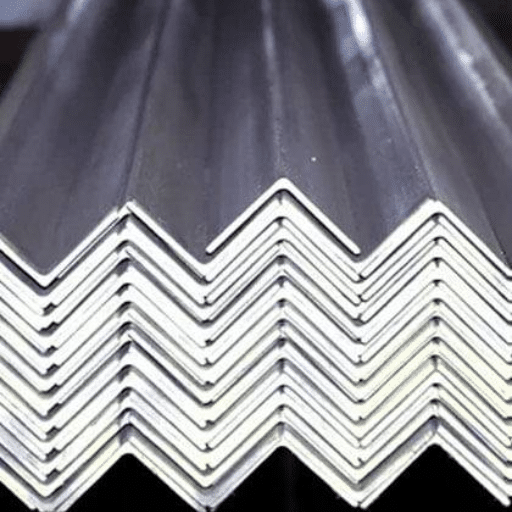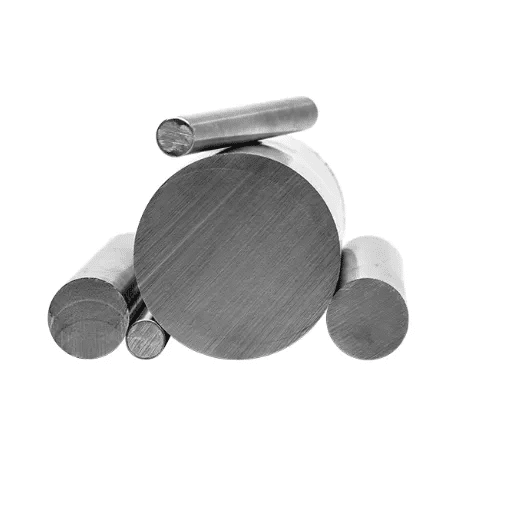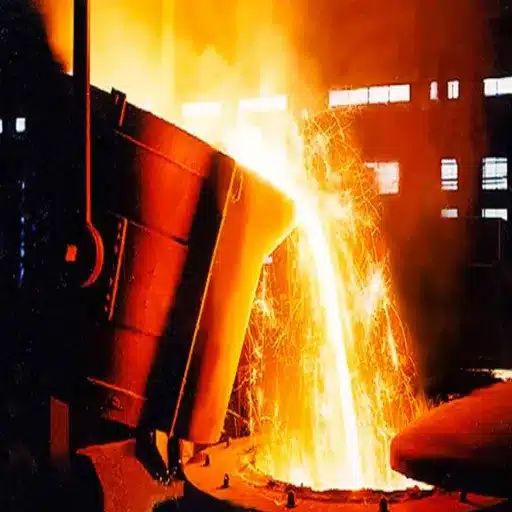
Steel has become ubiquitous in the modern world due to its multipurpose characteristics; it is used across different sectors, from the construction industry to the automobile industry. But what makes steel any less likely to crack? Many answers exist, but one of them is the steel melting temperature, which is fundamental when it comes to harvesting, forming, and employing steel. The present discussion provides the readers with an insight into the melting point of steel, applies it to other solid materials for comparisons, and describes the importance of the melting point of steel in metal processing and within a broader context. This article, like a guide, incorporates a vast set of information that will be useful to any working person, a curious student, or someone who is just interested in cutting and processing materials.
Introduction to Steel Melting Point
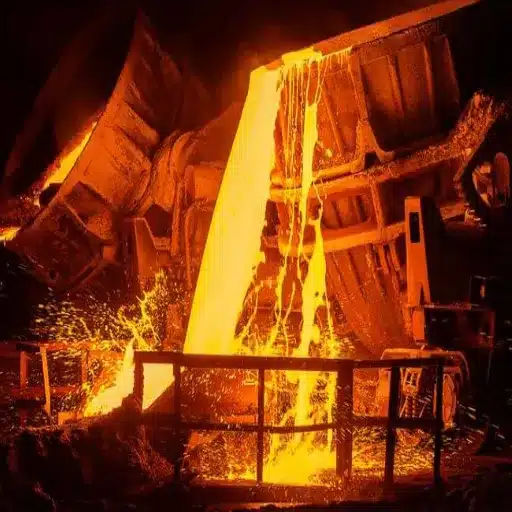
Importance of Knowing the Melting Point
The steel melting temperature (2500°F/1371°C) as a parameter is often used in a number of businesses so that they can determine what material they are going to use. It is for that reason very important to do research on material properties regarding these high temperatures.
In order to design and build structures, mechanisms and equipment, the boiling and melting points must be exempt so they are considered as performance and safety requirements. For example, steel applied in buildings, aircraft, or wind turbines must resist significantly lower temperatures than its melting point in order for any design to fulfill its purpose.
In addition, references for melting point are also purposeful in some operations as welding, hot work or casting. For example, while welders and the welding equipment are key, it is important to be aware of the melting point so that the heat does not exceed the allowed range, which would impair the strength of the welded material.
In comparison, aluminum for aluminum melt 660 °C, copper at 1084 °C, and other metals have relatively low melting points, and so steel is suitably apt for very high service temperatures. These distinctions illustrate the relevance of the material in numerous applications relating to strength and heat endurance.
Technological improvements in metallurgy also imply constant tendencies regarding breaking points of probable ways of altering steel melting temperature, due to industrial needs, for example, adding alloying elements such as chromium, nickel, or titanium. The current LA will allow new capabilities to be available.
Overview of Steel and Its Applications
Steel has a very high wear resistance coupled with excellent formability; hence, its application is predominant in supplementary as well as core activities. In fact, it is believed that global steel production surpasses 1.8 billion metric tons annually, indicating the significance of steel in various industries like construction, transport, and manufacturing. For instance, it is nearly impossible to conceptualize the construction of high-rise buildings, bridge construction or any other form of infrastructure without the incorporation of structural steel because of its high load-carrying capacity and strength. In the same way, the automobile industry has embraced the application of advanced high-strength steels that provide safety measures as well as lightweight conditions to improve the efficiency of the fuel.
New developments in the making of steel structures are dictated to a large extent by new raw material sustainability outlooks. These have for the better part, focused on internal and external recycling of steel, which, after it has been used it can be easily treated through melting and then recast into a new product, which is an advantage that is fully exploited in the Circular Economy. Aside from these, there is a new use of steel in the energy industries of wind and solar, where it is used for reinforcement and for shielding. Such developments remind us that the amazing qualities of steel are critical to the transition in technology and the environment.
Objectives of This Article
- Highlight Steel’s Role in Sustainability
The piece can emphasize how important steel is in sustainability. This material is 100% reusable and recyclable. Hence, it has a pertinent place in the circular dimension of the economy. According to the World Steel Association, around 630 million tonnes of recycled steel are produced annually, which significantly reduces energy use and CO2 emissions compared to primary steel production. - Showcase Applications in Renewable Energy
Another objective can be to examine its utility in the renewable energy sector. Under one head may be grouped various aspects, such as wind, solar heating or cooling, ethyl, photovoltaics, and other available forms of renewable energy production. For example, each megawatt of instantaneous energy produced by modern wind turbines requires up to 140 tonnes of steel. Again, steel is used in the mounting systems for solar panels to keep long-term application rationality and efficiency regardless of the extreme conditions under which it may have to operate. - Present Advancements in Steel Technologies
Today we are going to be discussing groundbreaking steel technologies, particularly, advanced high-strength steels that are now made for automotive to show off lightweight vehicles while increasing safety. Such technological advancements result in energy conservation and emission reduction, aligning with the ultimate end in sight for climate change prevention, a global reality. - Examine Environmental Impact and Data
Each on this article, an analysis has to be conducted on the environmental health repercussions that accrue when a comprehensive life cycle of steel is a major component of the manufacturing process. The recent facts revealed that energy consumption had decreased by about 60% during the last 50 years of the industrial reengineering of modern technology, a quality standard sought out by the making of substantially greener economies.
Facing a well-analyzed and factual input, the access also opens opportunities for a better understanding of steel that is continually changing its course in modern society and so might just shape a cleaner, more sustainable future.
Factors Influencing the Melting Point of Steel
Impact of Carbon Content on Melting Temperature
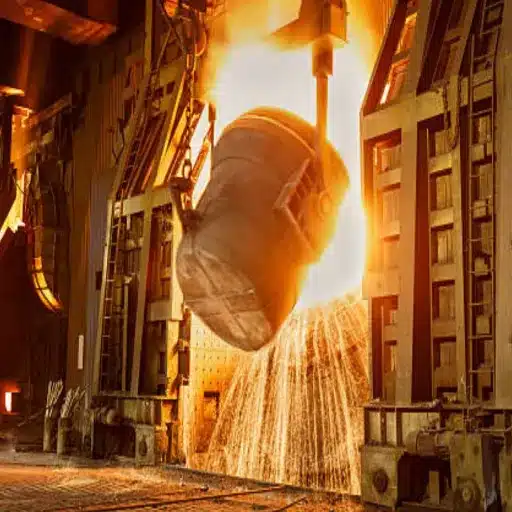
There are several facts worth noting to understand steel melting temperature. Say, for example, pure iron, it contains no carbon, and it is known that it melts at 2800°F or 1538°C. However, things change in the case of carbon steel because the melting point decreases with an increase in carbon content as carbon and iron form alloys. Changing its state to liquid, the carbon steel that contains carbon atoms ranging from 0.1% – 2.1% has a melting temperature of 1425 °C to 1450 °C or 2597 °F to 2642 °F.
The presence of carbon in the steel lowers the melting point because the alloy of iron and carbon begins to melt at even lower temperatures, close to the eutectic alloy composition melting point. A eutectic steel with approximately 4.3% carbon in it is found to melt at temperatures of about 1147°C (2097°F) in a graph. In other words, for this class of substances, it is beneficial that the temperature at which most of the turning operations, including welding and casting, are performed, does not exceed a given value but is enough to retain the hardness of a processed material at room temperature after cooling. As a result, it is very crucial to understand the influence of carbon percentage in relation to steel melting temperature in certain designed materials where the melting temperature of steel has to be maintained.
Role of Alloying Elements in Steel Melting
Steel can contain different elements, the melting temperature of the kind of steel, and its properties. For this reason, steel with additions of manganese, chromium, nickel, molybdenum, etc. are used in the areas where such qualities are desired. A special case is chromium alloying in stainless steels, which leads to enhanced corrosion and wear resistance of the steel. Toughness is added to the steel by adding nickel, which also helps in maintaining the toughness of the steel at low temperatures, whereas molybdenum makes steel of even higher strength and endurance for wear and temperature.
Control of the temperature of the steel melting component through bits projection envisages the possibilities of enhancement or degradation of the components, depending on the components and the corresponding lattice. Studies revealed that 1538 degrees Celsius or 2800 Fahrenheit is the liquid fraction temperature of iron. The wider range of variance in temperature remains even when a pure composition of iron is taken. But since iron is not utilized alone in steel making, the value of temperature changes in the presence of the different alloying agents. As an example, steels normally have manganese alloying within the proportion range of 0.5% to 1.5%, which slightly reduces this steel’s melting temperature in order to easily block or pour the metal. On the other end, other components like tungsten, extensively utilized in manufacturing steel for tools, make the steel heat up to higher temperatures as tungsten is associated with an extremely high melting point of about 3422 °C or 6192 °F.
Technological progress has enabled the precise control of alloying elements that govern the application of the particular type of steel in specific industries such as building and construction, automotive, or aerospace. High Strength Low Alloy (HSLA) steel with some amount of vanadium, titanium, or niobium, for example, can produce and use thinner sections while retaining enough mechanical properties, leading to modifications in the design to accommodate the new levels of safety. Yet the effectiveness of alloying components on shaping the microstructure and properties of metals, notably steels, has been understood wherever steel melting temperature was practiced.
Temperature Variations Among Different Steel Types
The performance of different types of steel at different temperatures varies due to the formation of the steel, the chemicals used in its production, and its utility. For example, the steel melting temperature of carbon can reach as high as approximately 2,500 °F. Meanwhile, stainless steel is mixed with chromium, which makes it less absorbent to heat, with its melting temperature ranging between 2,550 and 2,700 °F. Cutting tools made of high-speed steel are considered to be this type of steel in which heat is utilized to maintain the hardness of the tool at temperatures above 1,000 °F (538 °C) and often even more.
Adding these properties is possible due to the presence of alloying materials in high-speed steels, which provides a reason that such teams are able to function under such conditions. There is also a considerable emphasis on the heat treatment processing because it can and indeed does change steels in significantly many ways. Take, for instance, the case of martensitic stainless steels, which are quenched and tempered, and an optimal balance between hardness and price is achieved. Through such temperature changes, the particular characteristics of any steel are preserved, whether such features include protective operation, an optimized kitchen appliance, or an impact marine blueprint.
Melting Points of Different Types of Steel
Carbon Steel Melting Point
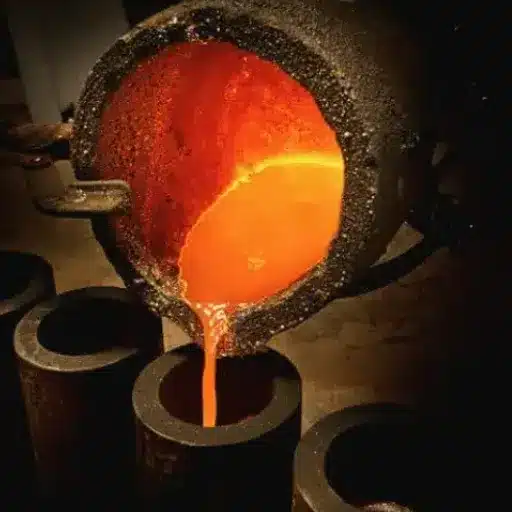
The gas-liquid transition or the softening point of carbon steel is variable, or the melting threshold of carbon steel is not constant and largely equipment dependent, which refers to the interatomic structure of carbon and other steel alloyed additions, among other types of factors. On average, steel melting temperature ranges from 2,500°F (1,370°C) to 2,800°F (1,540°C). As an example, the melting temperature of low-carbon steels is that of steel, which does not exceed 0.3% of carbon. In these cases, this means the melting temperature is at the higher end of the range since the carbon content is less. Conversely, higher carbon-carbon steel contains at least 0.6% carbon content, which would affect the melting temperature to become slightly lower, especially with the steel microstructure being the way it is.
It is also to be mentioned that the existence of manganese, silicon, or any other compositions can change the steel melting temperature. Carbon steel of increasing strength and formation capability is most likely to be quite cheap, for instance, in construction, automobile, or tools. Nevertheless, the corrosion response of these types of steel is lower than that of stainless steel; hence, they are not frequently used in some parts of the world.
Stainless Steel Melting Point: Comparing 304 and 316
Stainless steel has been the main cement material where high strengthening is necessary since its grade 304 and 316 stainless grades are ranked as the most common structural steels. As regards stainless steel melting temperature, grade 304 lies between 1400ºF (760ºC) and 1450ºF (788ºC), unlike grade 316, whose melting temperature is slightly less, varying between 1375ºF (746ºC) to 1400ºF (760ºC). The variation, however, is explained by the higher safe level of molybdenum, which is more or less concentrated in grade 316, enhancing its rigidity, thermal, and corrosion properties.
Grade 304 stainless steel is sturdy and still affordable, thus its main use is in cooking tools and utensils, piping, and walling purposes. On the other hand, the construction of marine structures, industrial chemicals, and medical devices are enhanced by 316 grade because of its higher maximum pitting potential.
An additional reason why such grades offer superior performance at elevated temperatures is that Grade 316 retains its properties even at higher temperatures compared to Grade 304. Therefore, it’s applicable in scenarios requiring higher temperatures or corrosion. Learning the composition and structure of stainless steel implies that there are existing practical uses in such industries or for commercial use in some stainless steels due to both affordable pricing and lasting life.
The above-mentioned steel variations contain nickel and chromium elements that make them more resistant to oxidation or corrosion-damaging layers, unlike conventional carbon steel. My opinion on the matter is at normal conditions, the carbon steel melting temperature is approximately 1400ºC, whereas stainless steel appears to have a lower melting temperature of approximately1320ºC.
Alloy Steel Melting Temperatures
Alloy elements do a lot in converting the melting points of alloy steel. Alloy melting point usually falls in the range from 2500-2800°F (1371-1538°C).
Here are some examples:
- The other name for low-alloy steel is carbon steel. It is largely made up of carbon and iron with some minimal elements included, so its melting point is roughly around 2500°F (1370°C).
- The major characteristic of high-alloy steel is that it has a melting point going up because great amounts of chromium, nickel, molybdenum, and other elements are present in it, thus pushing this range nearly up to 2800°F (1538°C).
Both high-alloy grades are grades of stainless steel; grade 304 and grade 316 are quite close to each other insofar as their melting points are concerned. For example, a melting range of 2550–2650°F (1399–1454°C) characterizes grade 304, while the melting range of grade 316 broadens to around 2500–2550°F (1371–1399°C), owing to the presence of additional molybdenum.
Very narrowly gathered data sources could allude to the point, how you need to consider melting temperatures because it gets really hot in that application, ensuring that you won’t have a haphazardly chosen steel having issues with the structure during work in that environment.
Industrial Applications of Steel Melting Temperatures
Manufacturing Processes and Steel Melting
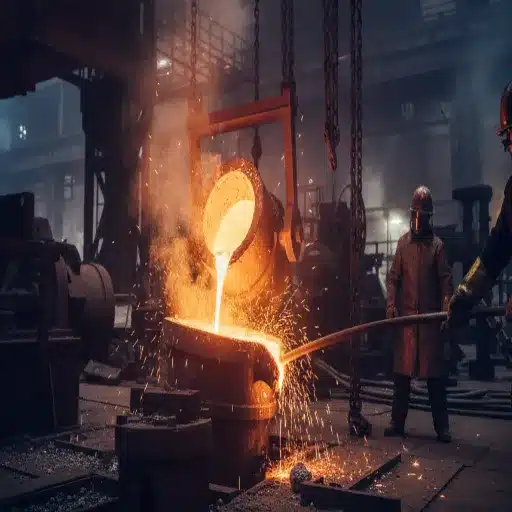
The melting temperature of steel is an essential parameter as it makes or breaks the applicability of this material in different processes and applications. For example, in construction and automotive industries, carbon steel is most common, and its melting temperature lies within the range of around 2600–2800°F (1427–1540°C) based on the content of carbon. In more detail, steels with low carbon concentrations usually melt at the lower part of this range, while as the carbon content increases, the melting point increases as well.
Chrome impacts the melting point of the stainless steel. This is because ferritic grades such as UNS 30402 embrace a melting point of around 2500–2750°F (1371–1510°C). A reason why austenitic stainless steels, or grades 304 and 316, also boast similar melting minimum and maximum temperatures of 2500–2650°F (1371–1454°C), one being enhanced with heat and corrosion-resistant properties.
Due to the modern developments in the industry of steel processing, the working melting characteristics have been further adjusted as per the industrial requirements. With the development of technologies such as EAF (Electric Arc Furnace), it has become possible to control the temperature in a more accurate way, thus heating the metal alloys with optimal energy expense. For example, EAFs are capable of achieving a temperature above 3000 °F (1649 °C) for various grades of steel melting.
The basic principle behind these concepts, as well as the meaning of differences of all these and many other details, is understood by the industries that can use maximum technology available, especially for the sake of higher temperatures, specific steels usage in various fields like aerospace, and even up to building construction.
Aerospace and Automotive Industries
Very sophisticated steel alloys are used in aeronautical industries and automobile industries whose engineering products require them in numerous high-tech applications, such as high-speed aircraft propulsion or automobile suspension components (Beaugnies et al., 2005). In all applications highly searched by an aerospace engineer and materials person, these materials have lightweight characteristics, durability in relatively high temperatures, pressure, and cycle fatigue. High-performance steels, mostly HSLA steels, are as they are known in the industry; thus, they are used in the manufacture of parts such as jet engines, landing gear, and structural members. The temperatures range from 1000°F to 2000°F (537°C to 1093°C), and these materials, stainless steels and nickel-based alloys, are required for the newest generation of turbines and the very latest aerospace systems.’
Much of the focus in automotive manufacturing is on the three pillars of strength, utility in energy consumption, and safety. Automotive Advanced High-Strength Steels (AHSS) are used in a variety of applications to produce car structures, crash structures, and suspension systems because they make for the best power-to-weight ratios. There have been studies in the automotive industry in the recent past that have been able to prove that reductions in AHSS weight can reach staggering figures, including up to 25%, which will lead to overall improved fuel consumption of around 6-8%. This does not mean, however, that safety is reduced. This material, if considered, really absorbs the kinetic energy, which to a great extent is saved when a human is hit. It gets the highest sustainability level it can for the passenger.
Metallurgy development is seen as a promising field of combined future exploration in which the two sectors may finally recognize the opportunities that steel materials provide, thus meeting the requirements of performance, energy, and safety by future lightweight, high-strength, and durable parts.
Construction Implications of Steel Melting Points
The melting point that all its kinds are composed of provides this type of steel with the knowledge that it should be between 2500 °F – 2800 °F (1370-1540 °C), and steel is normally suggested for most heavy structures under the most severe conditions where such structures might be exposed. So, its fairly high melting point tells that steel will chiefly be employed for constructing skyscrapers, bridges, industrial plants, and other related things that are very significant in terms of fire resistance and integrity while making buildings.
Ever since the advent of new technical modifications, steel itself has now had a lot to say because of its performance of quite impressive fire resistance and tensile properties that are able to become extremely high to form stiff panels. It has become possible to develop special types of alloys which, even under properly treated conditions, do not start warping until they reach 1800°F (980°C) or above. Key infrastructure elements can be maintained during major incidents of fire or simply as a result of thermal stress; Welcome to the modern era.
Another method employed by engineers for overcoming failures occurring during critical operational moments is utilizing fireproof coatings and insulating materials. These are data improvements, transformations from enhancements that show that enhancement depends on learning and improving thermophysical properties of steel for its current and future use in construction.
Reference Sources
-
Emissivity and temperature determination on steel above the melting point
This research focuses on temperature determination in hot metals, particularly liquid steel, and explains the temperature dependence of emissivity.
Read more here -
Thermal analytical study of steels at high temperature, including the range of melting
This study examines the thermal behavior of different steel types near their melting points.
Read more here -
Temperature distribution and melt geometry in laser and electron-beam melting processes
This study compares temperature distribution and melting processes for materials like stainless steel and titanium alloys.
Read more here
Frequently Asked Questions (FAQs)
What is the melting point of steel?
Melting points of carbon and stainless steels will often differ according to chemical content and grade, somewhere between 2500 and 2800°F (1370 to 1 540°C), respectively. In general, the melting temperature difference in this material is attributed to differences in composition: about how the element is alloyed and, depending on that, what the ultimate difference in melting points would be.
How do alloying elements affect steel’s melting temperature?
Elements like carbon, chromium, and nickel have a great impact on the phase boundary of steel. Carbon, in particular, shows improved bulk diffusion in steels such as mild steel. It holds: reducing the carbon in high-carbon steels reduces the rate of diffusion. Then this kind of change may be followed by a heat excursion.
Why is it important to know the melting temperature of steel for construction?
Knowledge concerning the melting point of steel material ensures the strength of the material object. This data would tell us how different metals behave when heated to very high temperatures. Such kind of information can support the design of a structure that would resist the heat of a fire. It reveals positive lines of approach regarding fireproofing materials and fire prevention strategies. This data then permits certain calculated, accidental, extremely rare risks to assume forms that can lead to intangible and critical failures.
How different is the melting point of steel from that of other metals?
Notwithstanding the pronounced high melting point of metallic steel, such as those of common metals like aluminum (1,220°F or 6600C) or copper (1,984°F or 1,085°C), it still remains to be rated somewhat lower than the melting value of tungsten at 6,192°F (3,422°C), yet this remains a composite material as aforementioned. Apart from the reasonable strength and fair to good thermal resistance, the application of steel is most likely important.
Can steel be optimized to withstand intense thermal stresses?
Extensive possibilities in materials technologies have made it possible to engineer steel for high thermal stress environments. Indeed, designing steel for resistance to deformation and failure at elevated temperatures can be achieved using the techniques of heat treatment and the application of fireproof coatings. Such applications, specifically in the manufacturing of skyscrapers, bridges, and industrial machinery, can be envisioned as highly crucial.
Why does thermal conductivity play a crucial role in steel temperature?
Thermal conductivity facilitates the understanding of the heat transfer efficiency of metal. Even though steel is considered to have lower thermal conductivity than copper and aluminum, its performance depends on its constitution. Additionally, some steel alloys possess low thermal conductivity, which retains heat for a longer time. These types of metal affect the whole process of fabrication and also have a considerable impact on steel’s stability.