Eighteen months after startup, the absorber tower at a coastal waste-to-energy plant began leaking. The 316L stainless internals had pitted through wherever chloride-laden flue-gas condensate pooled behind weld seams. The replacement, fabricated in Hastelloy C-276, has now run for twelve years without a single corrosion shutdown. Same scrubber. Same gas. A different rung on the alloy ladder.
That’s the flaw in the question most engineers type into search. “Hastelloy vs stainless steel” sounds like two materials fighting over one job. They’re not rivals. Stainless steel is iron-based, and it was the wrong tool in that scrubber, yet it remains the correct, low-cost tool in a thousand milder services. Hastelloy is a nickel-based alloy engineered for the environments where stainless steel can’t survive. Choosing between them is really about matching your process stream to the right step on a cost and corrosion ladder, and most comparison guides skip the middle rungs entirely.
This guide compares the Hastelloy family (C-276, C-22, C-2000, B-2/B-3, X) against the stainless grades engineers actually cross-shop (304, 316L, 904L, duplex 2205, super-duplex 2507, 310S) using PREN numbers, corrosion-rate data, temperature limits, and cost. You’ll leave with a decision framework that points you to the cheapest alloy that won’t fail, plus the numbers to justify it to management.
Key Takeaways
- Hastelloy C-276 (PREN ~69) resists pitting and chloride stress corrosion where 316L (PREN ~26) fails, but duplex 2205, super-duplex 2507, and 904L bridge much of that gap at a fraction of the cost.
- In Haynes HCl-gas corrosion tests, Hastelloy C-22 corroded more than 288 times slower than 316 stainless at 52°C (roughly 0.1 vs 28.8 mils/year).
- In 10% sulfuric acid at 80°C, 316L stainless corrodes faster than 2 mm/year while Hastelloy C-276 corrodes below 0.1 mm/year.
- Hastelloy costs roughly 10 to 20 times more per kg than 316L, yet in severe flue-gas desulfurization (FGD) service it can deliver about 87% lower lifecycle cost because stainless parts fail and need replacing.
- Pure hydrochloric acid service calls for the nickel-molybdenum B-grades (B-2/B-3), not the famous C-grades, which are reserved for mixed oxidizing/reducing media.
- For continuous oxidation above roughly 1,000°C, Hastelloy X outlasts 310S stainless, which is why combustion hardware is typically specified in X.
What Is the Difference Between Hastelloy and Stainless Steel?

The difference starts at the atomic level: what element forms the base of the alloy. That single fact drives every other difference in corrosion resistance, temperature capability, price, and weldability.
Iron-Based Stainless vs Nickel-Based Hastelloy
Stainless steel is an iron-based alloy containing at least 10.5% chromium. The chromium forms an invisible, self-repairing chromium-oxide film on the surface, and that passive film is what makes the steel “stainless.” The film is thin, only a few atomic layers, but it is effective in air, water, mild acids, and food and pharma environments. Iron remains the balance element, which is why stainless steel is comparatively inexpensive and easy to fabricate.
Hastelloy is a nickel-based alloy, typically 50% to 70% nickel, alloyed with high levels of chromium and molybdenum, and sometimes tungsten. It does not rely on a single oxide film the way stainless steel does. Nickel gives the alloy the ability to resist both oxidizing and reducing attack, while molybdenum and tungsten defend against localized pitting and crevice corrosion. Where a passive film is punctured by chlorides, stainless steel fails by pitting; a nickel alloy can carry on because its entire matrix is corrosion-resistant, not just its surface.
| Element | SS 304 | SS 316L | Duplex 2205 | Hastelloy C-276 | Hastelloy C-22 | Hastelloy B-2 |
|---|---|---|---|---|---|---|
| Nickel (balance in Ni alloys) | 8-10.5% | 10-14% | 4.5-6.5% | ~57% | ~56% | ~65%+ |
| Chromium | 18-20% | 16-18% | 21-23% | 14.5-16.5% | 20-22.5% | 1% max |
| Molybdenum | 0% | 2-3% | 2.5-3.5% | 15-17% | 12.5-14.5% | 26-30% |
| Tungsten | 0% | 0% | 0% | 3-4.5% | 2.5-3.5% | 0% |
| Iron | Balance | Balance | Balance | 4-7% | 2-6% | 2% max |
| Carbon (max) | 0.08% | 0.03% | 0.03% | 0.01% | 0.01% | 0.01% |
Nominal composition ranges per UNS and ASTM specifications. Always verify the exact specification against the mill test report for your heat.
Read the molybdenum row and you see the whole story. Molybdenum is the single strongest lever for resistance to chloride pitting and reducing acids. Stainless steel tops out around 3% (316L). Hastelloy C-grades carry 13% to 17%. The B-grades carry 26% to 30%. That is why a nickel-molybdenum alloy shrugs off environments that dissolve 316L in months. For a full inventory of every grade we produce and stock, see our Hastelloy alloy guide and our stainless steel product range.
Stainless Steel Is a Spectrum, Not One Material
Most “Hastelloy vs stainless” articles compare against one generic stainless, usually 316L. That’s a category error, because the stainless family spans a huge performance range. Before you jump to a nickel alloy, you should know the grades in between:
- 304 / 304L: the economic baseline. Fine for atmospheric, non-chloride, food, and architectural service.
- 316L: the chloride upgrade, adding 2-3% molybdenum. The default for mild marine splash, pharma, and chemical storage.
- 904L and 6-Mo super-austenitic: roughly 4% to 6% molybdenum plus nitrogen. Built for full seawater and moderate sulfuric acid.
- Duplex 2205 and super-duplex 2507: roughly twice the yield strength of austenitic grades, with strong resistance to chloride stress corrosion cracking.
- 310S: a high-chromium, high-nickel austenitic chosen for heat resistance up to roughly 1,000°C in continuous service.
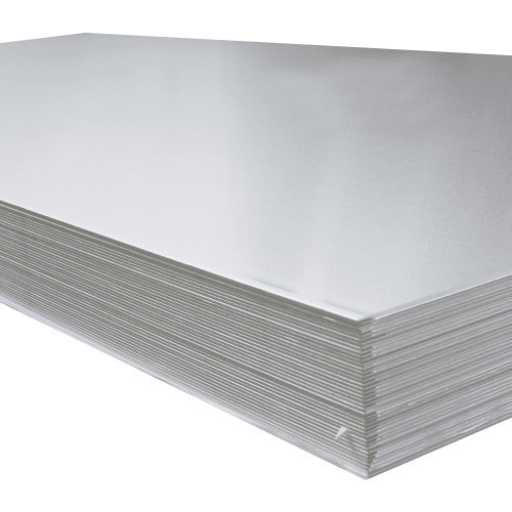
Understanding this spectrum matters because it protects you from over-specifying. Many chloride services that fail on 316L are solved with 2205 or 2507 at two or three times the cost of 316L, not twenty times the cost of a Hastelloy. We cover these stainless grades in depth in our stainless steel sheet guide.
Corrosion Resistance: Where Stainless Steel Fails and Hastelloy Excels

Corrosion is where the two families separate most sharply. The shorthand is this: stainless steel fails by localized attack, chloride pitting, crevice corrosion, and chloride stress corrosion cracking (SCC). Hastelloy is engineered specifically to survive those attack modes and strong acids.
Chloride Pitting and Stress Corrosion: The PREN Ladder
Pitting resistance equivalent number (PREN) is a quick ranking formula, roughly %Cr + 3.3 x %Mo, that predicts resistance to chloride pitting and crevice corrosion. It isn’t a guarantee of performance, but it’s an excellent first filter, and it’s the clearest way to see the upgrade ladder at a glance:
| Grade | Family | Approx. PREN |
|---|---|---|
| SS 316L | Austenitic stainless | ~26 |
| SS 904L | Super-austenitic | ~34 |
| Duplex 2205 | Duplex stainless | ~35 |
| Super-duplex 2507 | Duplex stainless | ~42 |
| Hastelloy C-276 | Nickel (Ni-Cr-Mo-W) | ~69 |
| Hastelloy C-22 | Nickel (Ni-Cr-Mo-W) | ~70 |
Two practical thresholds fall out of this ladder. First, austenitic stainless steels such as 304 and 316L become vulnerable to chloride stress corrosion cracking once service temperature passes roughly 60°C in wet chloride service. The combination of chlorides, tensile stress, and heat cracks the grain boundaries, and it can happen in weeks. Second, nickel alloys with high nickel content are essentially immune to chloride SCC, which is why chemical plants, offshore platforms, and FGD systems specify them for the hottest, most chloride-laden internals.
Hydrochloric Acid and Reducing Environments: The B-Grade Answer
316L stainless fails rapidly at essentially any meaningful concentration of hydrochloric acid. Even cold dilute HCl attacks it. When your process stream is pure HCl with no oxidizers, the answer is not the famous C-276; it is the nickel-molybdenum B-family, Hastelloy B-2 (UNS N10665) and B-3 (UNS N10675), which carry 26% to 32% molybdenum and almost no chromium.
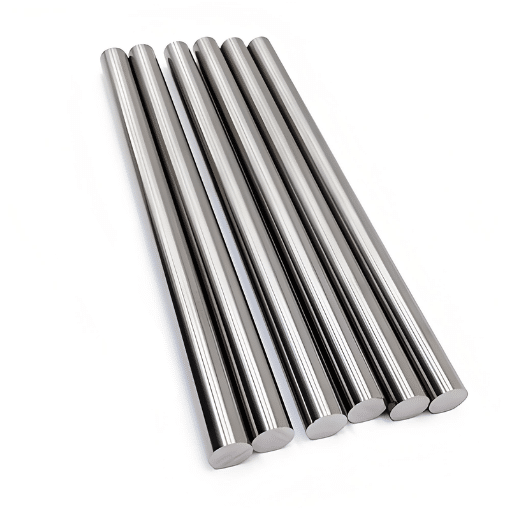
B-grades resist HCl across a broad range of concentrations and temperatures, generally below roughly 80°C for concentrated acid. This is the grade family most buyers miss because the marketing spotlight falls on C-276. See our Hastelloy B-2 rod for specifications and stock forms. For the full comparison of when to reach for B instead of C, read our Hastelloy C-276 vs C-22 guide, which explains the C-family split in detail.
Sulfuric Acid and Mixed Oxidizing/Reducing Media
Sulfuric acid is more forgiving than HCl, but only up to a point. In 10% sulfuric acid at 80°C, 316L stainless corrodes at more than 2 mm per year, which means a 3 mm pipe wall disappears in about 18 months. Hastelloy C-276 under identical conditions corrodes at less than 0.1 mm per year. That is a twenty-fold difference in a common industrial service.
When the acid stream also contains oxidizers, chlorides, or swings between oxidizing and reducing conditions, the C-grades come into their own. Hastelloy C-22 (UNS N06022) carries roughly 21% chromium, which lets it form a stable passive film in oxidizing service that C-276’s lower-chromium chemistry cannot sustain. Haynes International’s saturated wet-chlorine tests showed C-22 surviving with no localized attack where C-276 suffered weld-zone and intergranular attack, which is why C-22 is frequently the choice for fabricated, welded equipment in wet chlorine, hypochlorite, and mixed acid service. For oxidizing sulfuric-acid duty specifically, Hastelloy C-2000 (UNS N06200) adds copper to broaden its envelope, and we stock it in plate form.
FGD and Flue-Gas Environments
Flue gas desulfurization systems combine everything hostile in one box: chlorides from the fuel, sulfur dioxide, temperature swings, and wet/dry cycling. Below roughly 65°C, super-duplex and 6-Mo stainless grades can survive in some zones. Above it, and for absorber internals, quench sections, and outlet ducts, Hastelloy C-276 has become the de facto industry standard.
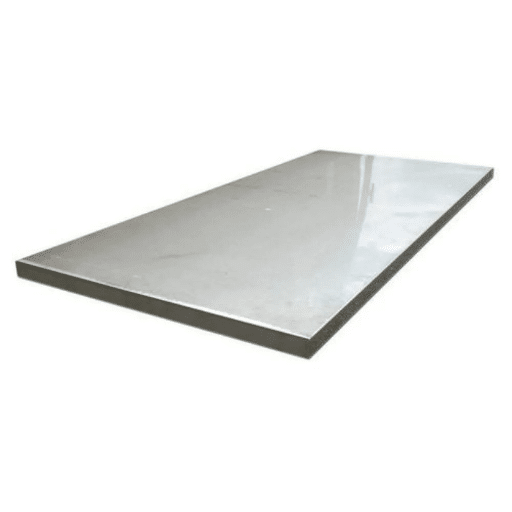
The corrosion-rate data are decisive. Every year a stainless component is misapplied in an FGD system, the plant pays for it in unplanned outages and rework. Our Hastelloy C-276 plate is supplied with full mill test reports for exactly these code-critical fabrications.
Mechanical Properties and Temperature Limits
Corrosion is not the only selection driver. Strength and temperature capability frequently decide the grade, especially where the two combine.
Room-Temperature Strength
The minimum tensile and yield values below are from the governing ASTM standards for annealed material, and they show why duplex grades earn their keep as a structural bridge between austenitic stainless and nickel alloys:
| Property (min) | SS 316L | Duplex 2205 | Hastelloy C-276 | Hastelloy C-22 |
|---|---|---|---|---|
| Tensile strength | 485 MPa | 620 MPa | 690 MPa | 690 MPa |
| Yield strength | 170 MPa | 450 MPa | 283 MPa | 310 MPa |
| Elongation | 40% | 25% | 40% | 45% |
| Reference | ASTM A240 | ASTM A240 | ASTM B575 | ASTM B575 |
Minimum room-temperature properties for annealed product per the listed ASTM standard. Actual values vary by heat and product form.
Notice that duplex 2205 offers more than 2.5 times the yield strength of 316L. If your driver is mechanical strength in a corrosive environment, a duplex or super-duplex grade can remove weight and cost from a structure while sidestepping chloride SCC, all before you pay the nickel-alloy premium.
Where Temperature Becomes the Decider
Austenitic stainless steels lose sustained strength rapidly above roughly 425°C, and they begin general scaling and oxidation in the 800°C range. 310S extends that limit, with a practical maximum for continuous oxidation around 1,035°C, but it suffers from thermal-fatigue cracking under cycling because of its relatively high thermal expansion.
Hastelloy C-276 remains usable to roughly 1,040°C, and it keeps useful mechanical properties where stainless steel has already sagged. For true combustion-zone service above 1,000°C, the specification is Hastelloy X (UNS N06002). X sustains continuous oxidation to about 1,175°C, runs roughly 20% higher thermal conductivity than 310S at 980°C, and carries a lower coefficient of thermal expansion, which measurably reduces thermal-fatigue cracking in furnace parts and gas-turbine hardware. When strength at temperature and oxidation resistance both matter, the nickel family wins outright.
Hastelloy vs Stainless Steel Cost: Price Per kg and Lifecycle Cost
Price is where most decision-makers get stuck, so let’s be direct about the numbers.
Material Cost Comparison
The table below shows 2025-26 spot-market estimates in USD per kilogram. Actual pricing depends on size, quantity, certification, and market conditions, so treat these as relative anchors, not quotes.
| Material | USD/kg (est.) | Relative to 316L |
|---|---|---|
| SS 304 | $1.50-4.00 | ~0.5-0.7x |
| SS 316L | $2.50-5.50 | 1.0x (baseline) |
| Duplex 2205 | $4.50-7.00 | ~1.3-1.5x |
| SS 904L / 6-Mo | $8.00-14.00 | ~2-3x |
| Hastelloy C-276 / C-22 | $50-130 | ~10-20x |
| Hastelloy B-2 / B-3 | $60-140 | ~12-25x |
Yes, Hastelloy costs 10 to 20 times more per kilogram than 316L. If you compare alloys only on purchase price, stainless steel wins every time, and that’s exactly how misapplications happen.
When the Premium Pays for Itself
The right comparison is lifecycle cost, not price per kg. Consider fasteners in an FGD absorber. One published cost study of FGD bolting found that stainless steel fasteners needed replacement roughly every 18 months, while Hastelloy fasteners survived the full design life of the vessel. Factoring in material, labor, scaffolding, crane time, and outage hours, the Hastelloy specification delivered roughly 87% lower lifecycle cost despite the far higher unit price. The stainless option was cheaper to buy and far more expensive to own.
Priya, a procurement engineer at a Gulf EPC, learned this the hard way. Her project team had speced 316L for a sulfuric-acid dosing line to protect a tight budget, then watched two failures force a redesign mid-construction. The change order, new spool pieces, and schedule delay cost more than the Hastelloy C-276 line would have cost from day one. When she re-ran the numbers for the plant’s sister unit, she specified C-276 up front.
The rule is simple: if the cost of one failure, plus downtime, plus replacement exceeds roughly three to five times the alloy premium, the nickel alloy is the cheaper specification.
Fabrication cost belongs in the same calculation. Hastelloy work-hardens and machines slower than stainless, and welding it requires clean joints, low heat input, and nickel-based fillers such as ERNiCrMo-4 with qualified welders. Installed cost runs meaningfully above material cost for both families, but the gap is larger for Hastelloy. For up-to-date market pricing on the C-family, our Hastelloy price per kg breakdown is a useful reference.
Hastelloy vs Stainless Steel: The Upgrade Ladder, Rung by Rung

If you take one thing from this guide, take this: stop treating the decision as a binary and start treating it as a ladder. Work up from the cheapest grade until you find the one that survives your worst operating condition with margin. Then stop.
The Rungs From Cheapest to Most Aggressive
- 304 / 304L: mild, non-chloride, atmospheric and food service.
- 316L: mild chlorides, marine splash, pharma, general chemical storage.
- 904L / 6-Mo super-austenitic: full seawater, moderate acids.
- Duplex 2205: high strength plus chloride SCC resistance, up to about 300°C.
- Super-duplex 2507: aggressive offshore and high-chloride service.
- Hastelloy C-276 / C-22: hot strong acids, mixed oxidizing/reducing media, FGD internals above 65°C.
- Hastelloy B-2 / B-3: reducing hydrochloric acid where oxidizers are absent.
- Hastelloy X: continuous oxidation service above roughly 1,000°C.
Choose Stainless Steel When
- The environment is mild: low chlorides, near-neutral pH, temperatures below roughly 60°C in wet service.
- The process fluid is food, beverage, potable water, or a dilute organic acid.
- Budget and fabricator availability are the dominant constraints.
- Standard welding procedures and local repair capability matter more than ultimate corrosion margin.
Choose Duplex or Super-Austenitic as the Cost Bridge
- Chloride SCC is a real risk but acid strength and temperature are moderate.
- You want roughly two to three times the performance of 316L at only 1.3 to 3 times the cost.
- Strength-to-weight ratio lets you down-gauge sections, as with duplex 2205’s 450 MPa minimum yield.
- Seawater service below about 65°C, where 2205 and 2507 routinely replace more costly alloys.
Choose Hastelloy When
- The stream contains hot hydrochloric, sulfuric, or mixed oxidizing/reducing acids.
- Wet chlorine, hypochlorite, or ferric and cupric chlorides are present.
- FGD internals run above roughly 65°C with chloride-laden condensate.
- Failure is unacceptable because of safety, environmental, or regulatory consequences.
- The environment is purely reducing HCl, which points to the B-grades.
- Oxidation service runs above roughly 1,000°C, which points to Hastelloy X.
| Industry / Application | Recommended Rung |
|---|---|
| Food and beverage tanks | 304 or 316L |
| Pharmaceutical water systems | 316L |
| Seawater heat exchangers | 904L / 6-Mo or 2507 |
| Offshore topsides and subsea | Super-duplex 2507 |
| Chemical reactor with hot H₂SO₄ | Hastelloy C-2000 or C-276 |
| Wet chlorine / hypochlorite | Hastelloy C-22 |
| Pure HCl dosing | Hastelloy B-2 / B-3 |
| FGD absorber internals | Hastelloy C-276 |
| Furnace and combustion hardware | Hastelloy X |
Real Savings, Told the Other Way
The ladder also works in reverse. Daniel, an engineering manager at a mid-size chemical plant, inherited a specification that called for Hastelloy C-276 on a citric-acid transfer line. The service was warm, slightly acidic, and essentially chloride-free. Reviewing the line against the ladder, his team re-specified 316L with a duplex backup for the one hot section, cutting material cost on that skid by roughly 80%. The plant saved close to $40,000 on a line that is still running without issue four years later.
Specifying the cheapest alloy that won’t fail isn’t a compromise. It’s the entire skill of materials engineering.
Fabrication, Weldability, and Sourcing Certified Material
The comparison does not end when you pick a grade. Fabrication differences and supply-chain verification decide whether the grade you chose actually works.
Machining and Welding Differences
Stainless steel is forgiving: standard tooling, a broad fabricator base, and simple TIG or MIG procedures. Hastelloy demands more discipline. It work-hardens quickly, so machining requires slower speeds, rigid setups, and sharp tooling. Welding needs low heat input, clean joints, and matching nickel-based filler metal, ERNiCrMo-4 for C-276 and C-22 base metal. Skilled welders and a qualified welding procedure specification are non-negotiable.
Dissimilar-metal welding between Hastelloy and stainless steel is routine in chemical plants, typically using an overmatching nickel filler, so the two families coexist in one system all the time. Both families are available in plate, sheet, bar, rod, pipe, tube, and forging forms, so form rarely limits the choice.
Why Dual-Family Sourcing Reduces Risk
Because we manufacture and stock both stainless steel and the full Hastelloy family, we can be honest about when stainless is the smarter buy, and we can quote both options side by side for the same project. Every shipment, stainless or nickel, leaves with a mill test report, and our in-house spectrometers verify composition before dispatch. For NACE sour-service, EN 10204 3.1/3.2, or project-specific documentation, we supply it. We carry Hastelloy pipe and Hastelloy rod alongside the stainless range, so a mixed-material order ships as one order with matched certification.
FAQ: Hastelloy vs Stainless Steel
Is Hastelloy better than stainless steel?
In aggressive acidic, chloride-laden, or above-1,000°C service, yes. Hastelloy is a nickel-based alloy engineered for environments where stainless steel fails, such as hot hydrochloric acid and wet chlorine. In mild environments, stainless steel is the better choice because it costs a fraction as much and fabricates far more easily.
Is Hastelloy more expensive than stainless steel?
Yes. Hastelloy typically costs 10 to 20 times more per kilogram than 316L stainless. But on a lifecycle basis, it is often cheaper, because stainless parts in severe service fail and need replacement while Hastelloy parts survive the design life. Compare total ownership cost, not unit price.
Can Hastelloy be welded to stainless steel?
Yes. Dissimilar-metal welding of Hastelloy to stainless steel is common in chemical plants. It requires an overmatching nickel-based filler such as ERNiCrMo-4, clean joints, low heat input, and a qualified welding procedure. A skilled fabricator handles the joint routinely.
Is Hastelloy magnetic?
No. Hastelloy alloys are essentially non-magnetic because of their high nickel content and austenitic (face-centered cubic) structure. This can actually be useful: a magnet is a quick field check to distinguish a nickel alloy from a ferritic or martensitic stainless.
Can Hastelloy rust?
Hastelloy does not form rust in the way carbon or low-alloy steel does. In severe service it can suffer corrosion if misapplied, for instance using a C-grade where only a B-grade survives pure HCl, but it does not produce the iron-oxide scaling associated with rust.
What stainless steel is closest to Hastelloy?
No stainless grade approaches Hastelloy’s corrosion resistance, but the closest on the chloride ladder is super-duplex 2507 or a 6-Mo super-austenitic grade. For heat resistance, 310S is the closest stainless, though Hastelloy X clearly outperforms it above 1,000°C.
When should you not use Hastelloy?
When a cheaper rung will survive. If your environment is mild and chloride-free, 304 or 316L is the correct economic choice. Also, do not use a C-grade (C-276, C-22) for pure reducing hydrochloric acid; that service belongs to the B-grades. And never substitute Hastelloy for an alloy your stress and code analysis actually requires, such as a specific titanium grade in certain oxidizing chloride services.
The Bottom Line
Stop asking which alloy is better and start asking which environment you have. The answer is a ladder, not a binary. Measure the chlorides, the acid concentration, the temperature, and the consequences of failure, then climb from 316L upward until you reach the grade that survives with margin. That grade might be duplex 2205, it might be super-duplex 2507, and only for genuinely aggressive duty will it be a Hastelloy. When it is, the right sub-family matters just as much: C-grades for mixed and oxidizing media, B-grades for reducing HCl, and X for combustion temperatures.
Three numbers will help you remember the framework: the PREN ladder climbs from roughly 26 (316L) to 69 (C-276), austenitic stainless becomes SCC-vulnerable above about 60°C in wet chlorides, and a Hastelloy premium pays for itself when one failure plus replacement costs more than three to five times the alloy upcharge.
If you send us your media composition, temperature, chloride level, and design life, our metallurgical engineers will confirm the lowest-cost alloy that will not fail, and quote stainless and Hastelloy options side by side, within 24 hours. Submit your operating conditions or email [email protected], and call +86 13306184668 for an urgent material requirement. For the wider family picture, our nickel alloy vs stainless steel guide covers every nickel family, not just Hastelloy.