NS322 and NS3304 are Chinese GB/T 15007 designations, and their Hastelloy equivalents are exact: NS322 equals Hastelloy B-2 (UNS N10665), and NS3304 equals Hastelloy C-276 (UNS N10276). They are the same alloys named under different national standards, so you can specify, source, and verify either designation with confidence once you know the mapping.
Here is the situation most buyers hit. You open a quotation from a Chinese supplier and read “NS3304 plate, ASTM B575.” Or your fabricator hands you a legacy drawing stamped “00Cr16Ni60Mo16W4.” Or an Alibaba listing offers “NS322 rod, equivalent to Hastelloy B-2.”
Every one of those names points to a material you already know, but only if you can decode the Chinese GB system. Get it wrong, and you risk ordering the wrong alloy, failing an inspection, or paying for a lookalike with no corrosion resistance.
This guide decodes the GB/T 15007 NS-series for international procurement and engineering teams. By the end, you’ll be able to translate NS322 and NS3304 into their US and European equivalents, read any Chinese nickel-alloy designation in the nickel-based alloy family, and verify with documentation that what you ordered is what you get. We manufacture and ship both grades from Wuxi, so this is the same mapping our engineers use every working day.
Key Takeaways
- NS322 is the Chinese GB/T 15007 designation for Hastelloy B-2 (UNS N10665), a nickel-molybdenum alloy (Mo 26-30%) engineered for reducing environments, above all hydrochloric acid.
- NS3304 is the Chinese designation for Hastelloy C-276 (UNS N10276), a nickel-chromium-molybdenum-tungsten alloy (Cr 14.5-16.5%, Mo 15-17%, W 3-4.5%) that resists both oxidizing and reducing media.
- NS334 is the old Chinese designation for C-276; NS3304 is the current name for the same material. Legacy drawings still carry NS334 and composition names like 00Cr16Ni60Mo16W4.
- “Equivalent” means specification-equivalent, not guarantee-equivalent. Always verify composition with a mill test report (MTR) and PMI spectral analysis, especially the molybdenum content in B-2.
- Both grades are available from certified Chinese mills as plate, sheet, bar, rod, pipe, and tube, shipped to ASTM and GB delivery standards with full documentation.
What Are the NS-Series Designations?

The NS series comes from GB/T 15007, the Chinese national standard for designations of nickel-based corrosion-resistant alloys. It is the functional equivalent of the UNS system in the United States or the W. Nr. system in Germany, a naming convention that lets a Chinese engineer write one code and know exactly what alloy is meant.
The system is straightforward once you understand it. The prefix “NS” marks the family as nickel-based corrosion-resistant alloys. The numbers that follow identify the specific grade. For example, NS322 and NS3304 are two different grades within the family, just as UNS N10665 and N10276 are two different grades within the UNS system.
Here is the part that confuses international buyers: one alloy carries several valid names depending on the standard and the era of the drawing. The same material might appear as:
- The Chinese designation: NS322 or NS3304
- The UNS number: N10665 or N10276
- The trade name: Hastelloy B-2 or Hastelloy C-276
- The German W. Nr.: 2.4617 or 2.4819
- The composition name: 00Ni70Mo28 or 00Cr16Ni60Mo16W4
None of these names contradict each other. They describe the same alloy through different standards. A supplier who writes “NS322 (Hastelloy B-2, UNS N10665, 2.4617)” is listing four names for one material, not four different materials.
One more naming layer deserves attention. Chinese suppliers sometimes use older designations alongside current ones. The grade now standardized as NS3304 was previously written as NS334, and older drawings may still carry the composition-based name 00Cr16Ni60Mo16W4 (also written 00Cr15Ni60Mo16W5Fe5).
When you see any of these on a legacy document, they all reference the same C-276-type alloy. For the full picture of the alloy family these grades belong to, see our complete Hastelloy guide.
Direct Answer: What Hastelloy Grades Do NS322 and NS3304 Equal?
The NS322 NS3304 Hastelloy equivalent mapping is a direct 1:1 correspondence: NS322 equals Hastelloy B-2 (UNS N10665), and NS3304 equals Hastelloy C-276 (UNS N10276). Under the Chinese national standard, these are the same alloys you would order under their UNS names from any international mill.
The table below shows the cross-reference across the major national systems for both grades.
| Designation System | NS322 (Hastelloy B-2) | NS3304 (Hastelloy C-276) |
|---|---|---|
| China (GB/T 15007) | NS322 (also NS3202) | NS3304 (also NS334) |
| China (composition) | 00Ni70Mo28 | 00Cr16Ni60Mo16W4 |
| USA (UNS) | N10665 | N10276 |
| Trade name | Hastelloy B-2 | Hastelloy C-276 |
| Germany (W. Nr.) | 2.4617 (NiMo28) | 2.4819 (NiMo16Cr15W) |
| ISO | NW0665 | NiMo16Cr15Fe6W4 |
| Japan (JIS) | NCF B-2 | NW0276 |
| UK (BS) | NA 44 | NC17D |
| France (AFNOR) | NiMo28 | NiMo16Cr15 |
A buyer in Chicago ordering “Hastelloy C-276, UNS N10276” and a buyer in Shanghai ordering “NS3304 plate” are specifying the same alloy. The engineering properties, corrosion behavior, and heat treatment are identical because the chemical composition limits in GB/T 15007 and ASTM B575 align.
The practical benefit of knowing this mapping is straightforward. When a Chinese supplier quotes you “NS3304,” you can translate it instantly to the C-276 you already know, check it against your ASTM B575 specification, and hold the supplier to the correct composition range. We supply both grades from our Wuxi facility, and both product lines ship under either designation with full documentation.
NS322 = Hastelloy B-2 (UNS N10665): The Reducing-Acid Alloy
NS322 is a nickel-molybdenum alloy designed for one job: surviving strongly reducing environments. Its defining characteristic is a deliberately high molybdenum content with essentially no chromium.
| Element | Composition Range |
|---|---|
| Nickel (Ni) | Balance (~65-70%) |
| Molybdenum (Mo) | 26.0-30.0% |
| Iron (Fe) | ≤2.0% |
| Chromium (Cr) | ≤1.0% |
| Cobalt (Co) | ≤1.0% |
| Carbon (C) | ≤0.02% |
| Silicon (Si) | ≤0.10% |
Typical mechanical and physical properties in the solution-annealed condition: tensile strength ≥745 MPa, yield strength ≥325 MPa, elongation ~25-40%, density ~9.2 g/cm³, and melting range 1330-1380°C.
Where NS322 (B-2) Excels
The high molybdenum content gives B-2 the best available resistance to hydrochloric acid at all concentrations and temperatures up to boiling point. It also handles:
- Sulfuric acid under reducing conditions (dilute and intermediate concentrations)
- Phosphoric acid in reducing service
- Hydrofluoric acid and HF alkylation environments
- Acetic acid and other organic acids
- Chloride-induced pitting and stress corrosion cracking in reducing media
In a genuinely reducing environment, B-2 corrosion rates are remarkably low. This is the alloy a pharmaceutical plant turns to when a hydrochloric acid distillation column keeps failing in stainless steel or C-276.
In one documented comparison, switching a distillation column from C-276 to B-2 extended service life from roughly 18 months to more than 7 years. The environment was purely reducing, and B-2’s chemistry was a perfect fit.
The Hard Limitation
NS322 contains no chromium, which is exactly why it fails in oxidizing media. Ferric ions (Fe³⁺), cupric ions (Cu²⁺), dissolved oxygen, nitric acid, wet chlorine, and hypochlorite all cause rapid, sometimes catastrophic attack. Even a few tens of parts per million of ferric or cupric contamination can destroy B-2 in weeks.
This limitation shapes every application decision. NS322 is only the right call when you can guarantee the process stream stays reducing. If oxidizers can enter the system from upstream piping, valves, or pumps, B-2 is the wrong grade regardless of how clean the primary chemistry looks.
NS3304 = Hastelloy C-276 (UNS N10276): The Broad-Spectrum Alloy

NS3304 is a nickel-chromium-molybdenum-tungsten alloy built for the opposite philosophy: handle almost anything. Where B-2 optimizes for one environment, C-276 covers a wide envelope of oxidizing and reducing conditions simultaneously.
| Element | Composition Range |
|---|---|
| Nickel (Ni) | ≥57% (balance) |
| Chromium (Cr) | 14.5-16.5% |
| Molybdenum (Mo) | 15.0-17.0% |
| Tungsten (W) | 3.0-4.5% |
| Iron (Fe) | 4.0-7.0% |
| Carbon (C) | ≤0.01% |
| Silicon (Si) | ≤0.08% |
| Cobalt (Co) | ≤2.5% |
Typical properties: tensile strength ≥690 MPa, yield strength ≥283 MPa, elongation ~40%, density ~8.89 g/cm³, and melting range 1325-1370°C.
Chromium is the key addition. It forms a passive oxide film that protects the alloy in oxidizing environments, while molybdenum and tungsten provide localized corrosion resistance. The result is one of the most versatile corrosion-resistant alloys ever developed, which is why C-276 earned the nickname “the universal alloy.”
Where NS3304 (C-276) Is the Right Call
Because it handles both oxidizing and reducing conditions, NS3304 is specified across chemical processing, petrochemical, marine, and pollution control:
- Mixed acids containing oxidizing impurities
- Wet chlorine, hypochlorite, and chlorine dioxide
- Ferric and cupric chlorides (the contaminants that destroy B-2)
- Seawater and chloride-rich environments with strong pitting and crevice resistance
- Sour gas service (H₂S) in the annealed condition
- Oxidizing acids such as nitric acid
Its pitting resistance equivalent number (PREN) sits around 69, slightly above B-2’s ~65, which matters in chloride-rich, stagnant, or crevice-prone zones. For the authoritative corrosion data on this grade, Haynes International publishes the complete HASTELLOY C-276 datasheet.
The NS334 Connection
Every buyer of NS3304 should know its old name. Under earlier versions of GB/T 15007, the same alloy was designated NS334. The composition-based name 00Cr16Ni60Mo16W4 also appears on legacy drawings.
If a project document references NS334 or 00Cr16Ni60Mo16W4, it’s specifying the C-276-type alloy now standardized as NS3304. The renaming did not change the material.
NS322 vs NS3304: Key Differences at a Glance
The two grades are the two most common Chinese Hastelloy designations a buyer will encounter, and they serve opposite sides of the corrosion spectrum.
| Property | NS322 (Hastelloy B-2) | NS3304 (Hastelloy C-276) |
|---|---|---|
| UNS number | N10665 | N10276 |
| Alloy family | Ni-Mo | Ni-Cr-Mo-W |
| Chromium | ≤1.0% | 14.5-16.5% |
| Molybdenum | 26-30% | 15-17% |
| Tungsten | None | 3.0-4.5% |
| Reducing-acid resistance | Outstanding (especially HCl) | Good |
| Oxidizing-acid resistance | Not rated | Excellent |
| Wet chlorine/hypochlorite | Not rated | Excellent |
| Chloride pitting resistance | Excellent | Excellent (slightly higher PREN) |
| Density | ~9.2 g/cm³ | ~8.89 g/cm³ |
| Typical tensile strength | ≥745 MPa | ≥690 MPa |
| Weldability | Demanding (embrittlement risk) | Forgiving (as-welded) |
The selection rule is simple. Choose NS322 (B-2) when the environment is strictly reducing and guaranteed free of oxidizers. Choose NS3304 (C-276) for everything else, including mixed, fluctuating, or uncertain conditions. For a complete selection framework covering welding, cost, and application detail, our Hastelloy B-2 vs C-276 comparison walks through the decision environment by environment.
There’s also a fabrication difference worth knowing. B-2 precipitates brittle Ni₄Mo (β-phase) when held in the roughly 550-850°C range during welding, which demands strict low-heat-input procedures and frequent post-weld solution annealing.
C-276’s low carbon content makes it far more forgiving, usable in the as-welded condition in most applications. For welded structures, that difference often matters more than the unit price of the material.
Complete Cross-Reference: NS-Series Grades and Their International Equivalents
NS322 and NS3304 are not the only NS designations you’ll see. Chinese suppliers list the entire nickel-alloy family under NS codes, so this broader table helps you decode any grade you encounter.
| Chinese NS Grade | Trade Name / Family | UNS Number | W. Nr. |
|---|---|---|---|
| NS111 | Incoloy 800 | N08800 | 1.4876 |
| NS112 | Incoloy 800H | N08810 | 1.4958 |
| NS142 | Incoloy 825 | N08825 | 2.4858 |
| NS312 | Inconel 600 | N06600 | 2.4816 |
| NS315 | Inconel 690 | N06690 | 2.4642 |
| NS321 | Hastelloy B | N10001 | 2.4800 |
| NS322 | Hastelloy B-2 | N10665 | 2.4617 |
| NS3203 | Hastelloy B-3 | N10675 | 2.4600 |
| NS3304 / NS334 | Hastelloy C-276 | N10276 | 2.4819 |
| NS335 | Hastelloy C-4 | N06455 | 2.4610 |
| NS3308 | Hastelloy C-22 | N06022 | 2.4602 |
| NS3405 | Hastelloy C-2000 | N06200 | 2.4675 |
| NS336 | Inconel 625 | N06625 | 2.4856 |
A few practical notes on this table. First, the NS321/NS322/NS3203 sequence maps cleanly to the Hastelloy B/B-2/B-3 series, and NS3304/NS335/NS3308/NS3405 maps to the C-276/C-4/C-22/C-2000 series, so the logic is consistent once you see the pattern. Second, don’t confuse NS3304 with NS335 (C-4) or NS3308 (C-22); they differ in chromium, molybdenum, and tungsten balance and serve different corrosion conditions.
Third, verify any cross-reference against a current GB/T 15007 table when you’re dealing with a less common grade. Standards are periodically revised, and old designations linger on drawings.
How to Verify You Are Getting the Correct Grade

An “equivalent” designation is a starting point, not a guarantee. The single biggest risk when sourcing NS322 or NS3304 from any supplier, Chinese or otherwise, is receiving a material that looks right but has the wrong chemistry. For B-2 the risk is acute, because the alloy’s value comes almost entirely from molybdenum, and a lower-molybdenum nickel alloy can be substituted and still pass a visual inspection.
Here is the verification checklist we recommend on every order:
- Request a mill test report (MTR) with the heat number, full elemental composition, and mechanical properties. Every legitimate shipment carries one.
- Run PMI spectral analysis at receipt. A portable spectrometer confirms the actual composition on the delivered material, not the paperwork.
- Confirm the critical elements. For NS322 (B-2), verify molybdenum at 26-30%. For NS3304 (C-276), verify nickel ≥57%, molybdenum 15-17%, chromium 14.5-16.5%, and tungsten 3-4.5%.
- Request EN 10204 3.1 or 3.2 certification when your project or end client requires it.
- Arrange third-party inspection (SGS, TUV, or equivalent) for critical or pressure-rated components.
- Keep the documentation chain intact. Heat number on the MTR should match the heat number marked on the material.
A buyer we worked with learned this lesson the hard way. Their plant ordered “NS322” rod from a broker for a hydrochloric acid line, and the material passed a visual inspection at the door. When the line was commissioned and the rod began corroding within weeks, PMI testing revealed the delivered material carried only about 22% molybdenum, well below the 26-30% requirement. The broker had shipped a lookalike.
The replacement, supplied under the correct B-2 specification with full MTR and PMI verification, has been in service for years. The verification point isn’t about geography. It applies to any supplier, which is why we test every batch in-house with direct-reading spectrometry before it ships and provide the MTR with every order. Our laboratory also runs tensile testing, hardness testing, metallographic analysis, and ultrasonic NDT.
Sourcing NS322 and NS3304 (Hastelloy B-2 & C-276) from China
For international procurement teams, buying NS322 or NS3304 from China offers a real cost advantage, but only when the supplier can bridge the Chinese designation and the international specification you actually need.
Delivery Standards by Product Form
Both grades are available under Chinese and international delivery standards, so you can specify the system you’re comfortable with:
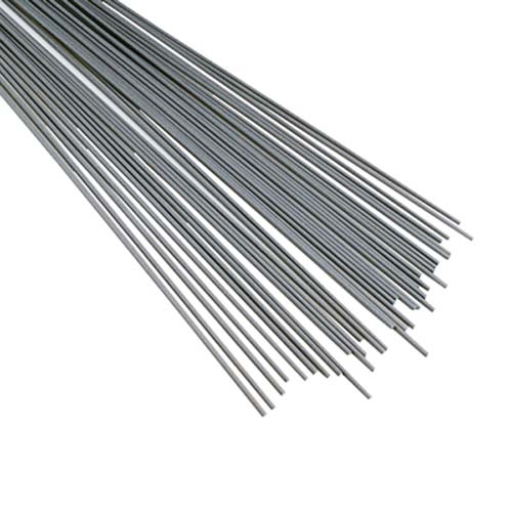
- Bars and rods: GB/T 15008, or ASTM B335 (B-2) and ASTM B574 (C-276)
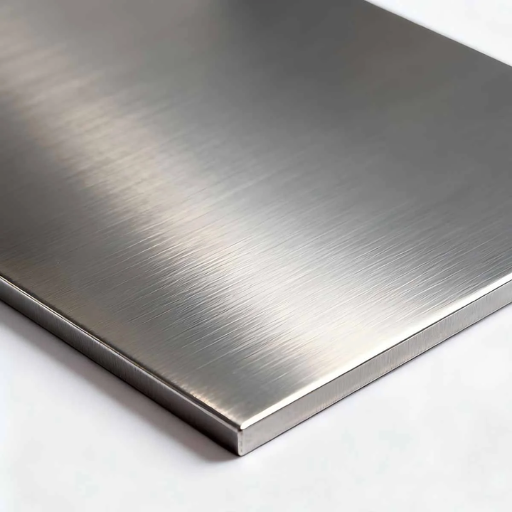
- Plates and sheets: GB/T 15009, GB/T 15010, GB/T 30059, or ASTM B333 (B-2) and ASTM B575 (C-276). See our Hastelloy plate stock for both grades.
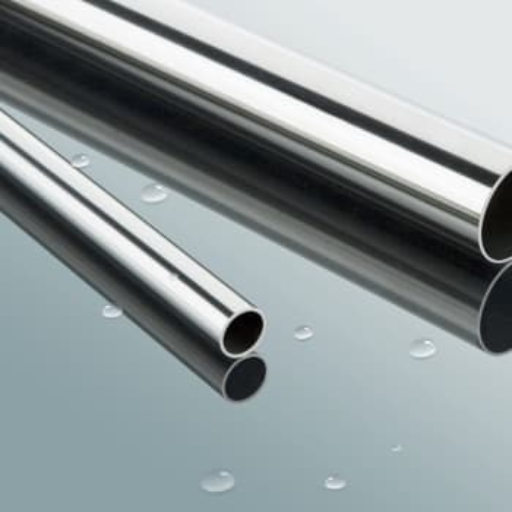
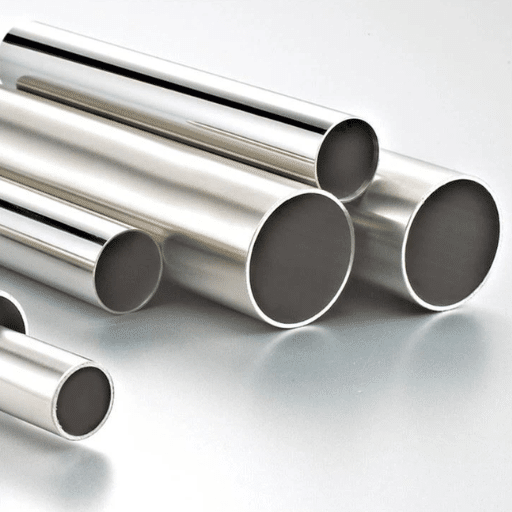
- Seamless pipe and tube: GB/T 15011, GB/T 36229, or ASTM B622
- Forgings: GB/T 37620 or ASTM B564
- Fittings: ASTM B366
A well-run Chinese mill ships to the ASTM standard your project references, and the GB/T 15007 designation simply confirms the alloy. When a supplier understands both systems, the NS322 or NS3304 name on the quotation and the ASTM B575 certification on the shipment are two views of the same material.
Forms We Stock and Ship
At Jiangsu Zhonggongte, we manufacture and stock both grades in the forms chemical processing and petrochemical projects need:
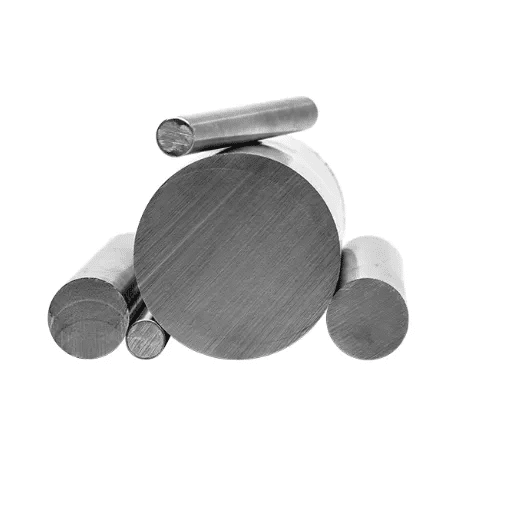
- NS322 (Hastelloy B-2): rod and bar, plate, pipe, and fittings. See our Hastelloy B-2 rod line for round bar and bar stock.
- NS3304 (Hastelloy C-276): plate, sheet, bar, pipe, and fittings. See our Hastelloy C-276 plate and Hastelloy pipe lines.
- Custom processing: cut-to-size plate, precision strip, special bar dimensions, and forgings to your drawings.
We operate vacuum induction furnaces and electroslag remelting furnaces, free forging hammers, hot and cold rolling tube lines, and heat treatment furnaces. Every shipment is verified in-house and supplied with MTR and spectral analysis documentation. We certify to ASTM, ASME, GB, and JIS standards and export globally with 24-hour logistics support.
NS322 NS3304 Hastelloy Equivalent FAQ
What is the Chinese equivalent of Hastelloy B-2?
The Chinese GB/T 15007 designation for Hastelloy B-2 (UNS N10665) is NS322, also written NS3202 or by composition name 00Ni70Mo28.
What is the Chinese equivalent of Hastelloy C-276?
The Chinese GB/T 15007 designation for Hastelloy C-276 (UNS N10276) is NS3304. The older designation NS334 and the composition name 00Cr16Ni60Mo16W4 refer to the same alloy.
Is NS334 the same as NS3304?
Yes. NS334 is the earlier designation for the C-276-type alloy now standardized as NS3304 in current GB/T 15007. The material is identical.
Is the Chinese NS grade exactly the same as the UNS grade?
For NS322 and NS3304, the composition limits align closely with the corresponding UNS specifications. Equivalent doesn’t mean identical in every minor tolerance, so always confirm against the specific standard you’re purchasing to.
Can Hastelloy B-2 and C-276 be interchanged?
No. They are different alloys for different environments. B-2 excels in strictly reducing service; C-276 covers oxidizing, reducing, mixed, and chloride environments. Substituting one for the other without reviewing the application risks corrosion failure.
Can Hastelloy B-2 withstand hydrochloric acid?
Yes. It is the premier alloy for hydrochloric acid at all concentrations and temperatures up to boiling, provided the environment stays reducing and free of ferric, cupric, or oxygen contamination.
How do I verify an NS322 or NS3304 order?
Request a mill test report, run PMI spectral analysis at receipt, and confirm the critical elements: molybdenum 26-30% for B-2, and nickel ≥57%, molybdenum 15-17%, chromium 14.5-16.5%, tungsten 3-4.5% for C-276.
Conclusion
The Chinese GB/T 15007 NS-series can look like a closed system to international buyers, but the NS322 NS3304 Hastelloy equivalent mapping is direct. NS322 is the designation for Hastelloy B-2 (UNS N10665), the reducing-acid specialist. NS3304 is the designation for Hastelloy C-276 (UNS N10276), the broad-spectrum workhorse. Learn these two equivalencies and you can decode the most common Chinese Hastelloy designations, read legacy names like NS334 and 00Cr16Ni60Mo16W4, and hold any supplier to the correct specification.
The five takeaways:
- NS322 = Hastelloy B-2 (UNS N10665); NS3304 = Hastelloy C-276 (UNS N10276)
- One alloy carries many valid names across GB, UNS, W. Nr., and trade systems; they describe the same material
- NS334 and 00Cr16Ni60Mo16W4 are old names for the C-276 alloy now called NS3304
- Choose NS322 for strictly reducing service, NS3304 for oxidizing, mixed, or uncertain conditions
- Always verify with MTR and PMI spectral analysis, because an equivalent designation is not a guarantee
Every material decision deserves engineering data, not guesswork. Submit your operating conditions, media composition, and material list, and our metallurgical team will confirm the correct grade and respond within 24 hours with certified NS322 or NS3304 (Hastelloy B-2 or C-276) pricing, availability, and delivery. Request a quote with full MTR documentation and get certainty on your next project.