Hastelloy price per kg ranges from roughly 25to25to120+ in 2026, and the exact figure is set by four variables: the grade (C276, C22, C2000, B2, B3, X), the product form (plate, bar, pipe, fittings), the certification package, and the current nickel and molybdenum markets. A raw-mill C276 plate from a Chinese factory can land near 28−42/kg, while cold-drawn seamless C276 pipe with full documentation can exceed 28−42/kg, while cold-drawn seamless C276 pipe with full documentation can exceed 85/kg.
When Priya, a procurement engineer at a chemical plant in Gujarat, requested quotes for Hastelloy C276 plate last spring, she received seven prices ranging from 31to31to97 per kg. None of the suppliers could explain the gap. Two of the lowest quotes would have shipped material without a traceable mill certificate, and the most expensive came from a distributor marking up imported plate by 40%.
You’ve probably seen the same thing. Search for “Hastelloy price per kg,” and you’ll find ranges so wide they’re useless for budgeting or comparing suppliers. This guide explains the real 2026 price bands by grade and product form, the market forces behind them, and exactly how to request a quote that a supplier can price accurately, with full certification, within 24 hours.
We’ll cover the cost drivers, how grade and form move the number, what certification adds, why China factory-direct pricing differs from Western distributor pricing, the 2026-2027 market outlook, and a procurement checklist that removes the guesswork from your RFQ.
Key Takeaways
- Hastelloy price per kg in 2026 spans roughly 25−120+,withC276plateat25−120+,withC276plateat28-60/kg and cold-drawn seamless C276 pipe up to $85-95/kg.
- Grade is the first price lever: C22 runs 5-15% above C276, while B2/B3 and X are generally less expensive per kg.
- Product form matters more than grade: seamless pipe and forged fittings cost 2-3x raw plate due to process yield and manufacturing complexity.
- Certification adds $3-15/kg: EN 10204 3.1 is usually included, while 3.2, NACE MR0175, and third-party inspection carry real premiums.
- The best value case is lifecycle cost: a C276 heat exchanger costs about 3x 316L upfront but can cut 20-year plant cost by 40-60%.
How Much Does Hastelloy Cost Per Kg in 2026?

Hastelloy is a family of nickel-molybdenum-chromium alloys, and each grade carries a different price per kg because of its composition. These are indicative 2026 ranges compiled from mill listings, supplier guides, and market data; actual quotes depend on size, quantity, finish, and delivery terms.
| Hastelloy Grade | UNS Number | Price per kg (USD) |
|---|---|---|
| Hastelloy C276 | N10276 | $28-60 |
| Hastelloy C22 | N06022 | $25-65 |
| Hastelloy C2000 | N06200 | $38-70 |
| Hastelloy B2 | N10665 | $25-38 |
| Hastelloy B3 | N10675 | $26-42 |
| Hastelloy X | N06002 | $22-45 |
| Hastelloy G30 | N06030 | $30-45 |
The product form changes the number more than the grade does. C276 is the reference grade, so we use it for the form-by-form breakdown. Fittings, flanges, and cold-drawn seamless pipe carry the largest premiums because they require specialized processing and lose more material in production.
| C276 Product Form | ASTM Standard | Price per kg (USD) |
|---|---|---|
| Raw mill plate, large volume | B575 | $28-42 |
| Plate/sheet / strip | B575 | $30-45 |
| Round bar/rod | B574 | $32-52 |
| Welded pipe | B619 / B626 | $38-65 |
| Seamless pipe (hot extruded) | B622 | $48-85 |
| Seamless pipe (cold drawn) | B622 | $55-95 |
| Buttweld fittings | B366 | $40-60 |
| Forged fittings | B564 / B366 | $50-75 |
| Flanges | B564 | $55-85 |
| Wire, fasteners, precision parts | various | $85-120+ |
Region is the third variable. The same certified C276 plate can trade at 25−45/kg FOB China, near 25−45/kg FOB China, near 75-100/kg from Indian distributors, 95−125/kg in Europe, and 95−125/kg in Europe, and 100-130/kg delivered in the United States. We break down that gap in the sourcing section below.
Where a video or infographic of price trends by form would help readers visualize the ranges, insert it here. A short explainer on how nickel and molybdenum drive alloy pricing is a strong candidate.
Why Is Hastelloy So Expensive?
The high price per kg of Hastelloy isn’t brand markup. It’s the cost of the alloying elements and the difficulty of converting them into usable material.
Raw materials dominate. Hastelloy C276 is roughly 57% nickel, 16% molybdenum, 15.5% chromium, 3.5% tungsten, and 5% iron. Nickel and molybdenum are expensive commodities, and together they account for 55-70% of the finished product cost, about $20/kg for C276 at current market levels. When LME nickel rises 10%, C276 pipe prices typically rise 5-7%.
Molybdenum is the wild card in 2026. C276 carries 15-17% molybdenum, nearly double the content of Inconel 625. Molybdenum traded near eight-year highs in 2026, up roughly 38% year to date, which is why C276 pricing has firmed even while nickel softened in some months.
Manufacturing is capital intensive. Hastelloy is melted in vacuum induction furnaces and refined by electroslag remelting to control cleanliness and homogeneity. That processing carries a 15-25% premium over standard refining, and it happens at far lower production volumes than stainless steel.
Supply is concentrated. Unlike stainless, which hundreds of mills produce globally, high-performance nickel alloys come from a handful of producers. That concentration reduces price competition and lengthens lead times to 12-24 weeks for specialty mill orders.
Fabrication is expensive. Hastelloy work-hardens aggressively during machining. Cutting speeds must run 30-50% below stainless levels, and tool life drops 40-60%. Every machined component inherits that cost.
Hastelloy Price by Product Form

Plate and Sheet
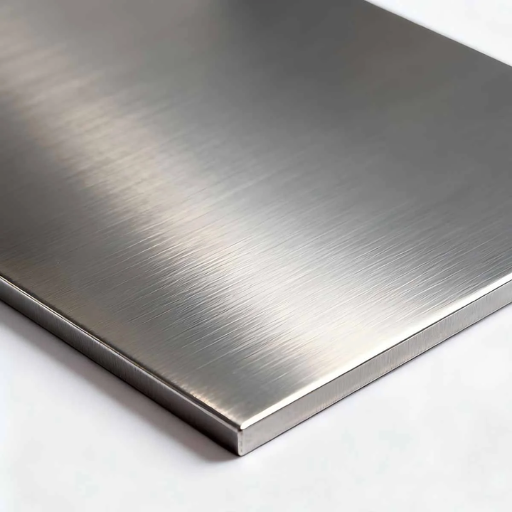
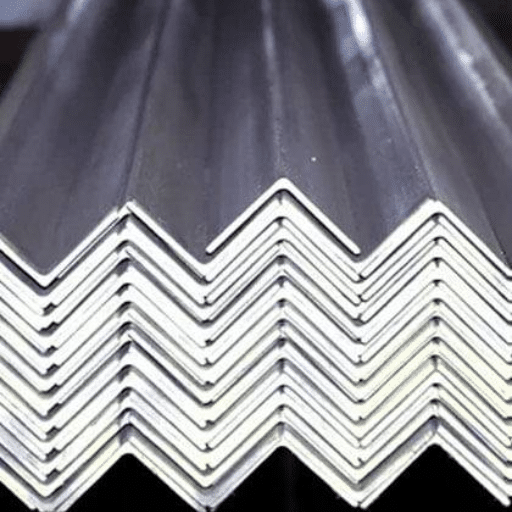
Hastelloy C276 plate and sheet are the most economical forms per kg because they are hot-rolled or cold-rolled in continuous mills. Expect 30−45/kg for standard plate, with thin cold−rolled sheet at the higher end and thick 25−50 mm plate closer to the lower end. Cut-to-size and precision flatness add 30−45/kg for standard plate, with thin cold−rolled sheet at the higher end and thick 25−50 mm plate closer to the lower end. Cut-to-size and precision flatness add 2-5/kg. Our Hastelloy C276 plate stock ships with full MTR and spectral verification.
Round Bar and Rod
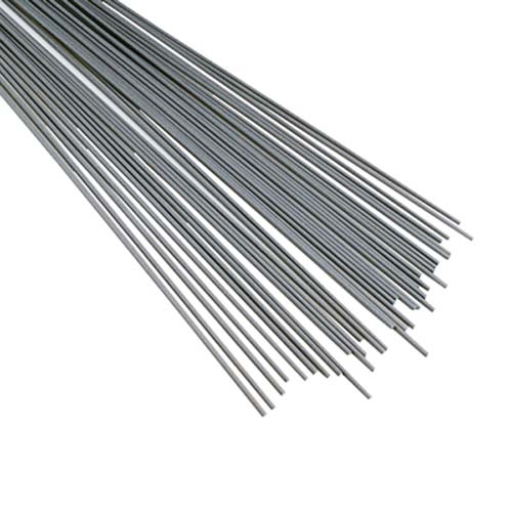
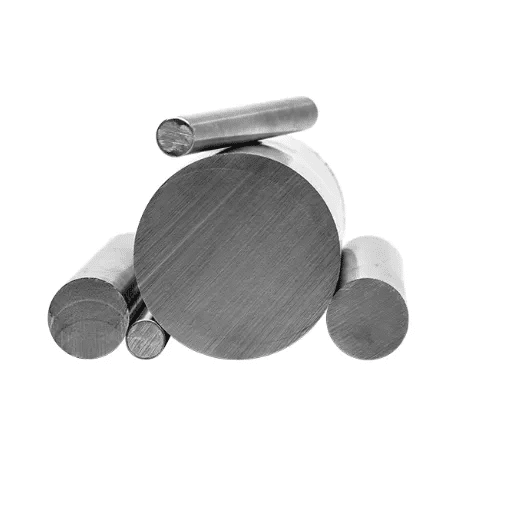
C276 round bar typically runs 32−52/kg.Smalldiametersunder20mmcostmoreperkg,andturned−and−groundorbrightbarscarrya32−52/kg.Smalldiametersunder20mmcostmoreperkg,andturned−and−groundorbrightbarscarrya10-20/kg premium over black bars. If your application is valve stems, pump shafts, or fasteners, request the bar condition explicitly, because it moves the quote as much as the grade does. See the full Hastelloy rod range.
Pipe and Tube
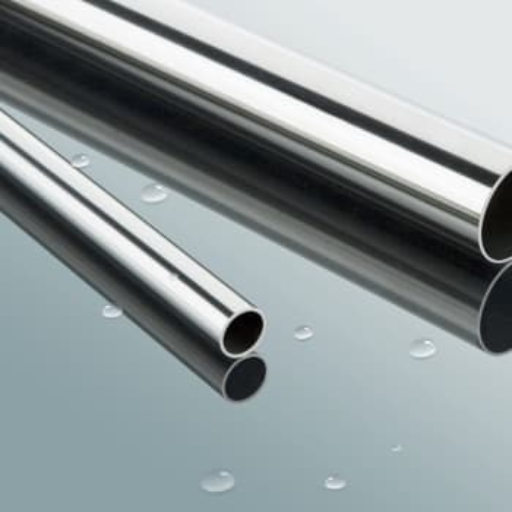
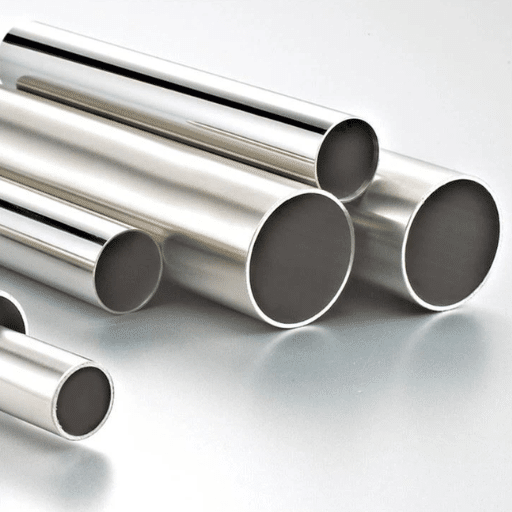
Pipe and tube is where the price per kg climbs fastest. Welded C276 pipe runs 38−65/kg,hot−extrudedseamlesspipe38−65/kg,hot−extrudedseamlesspipe48-85/kg, and cold-drawn seamless pipe up to $95/kg. Seamless costs 2.5-3x plate because extrusion and drawing are slow, low-yield processes: only 60-70% of input material becomes finished pipe. For pressure-vessel and heat-exchanger duty you generally need seamless C276 per ASTM B622, so budget accordingly. Browse our Hastelloy pipe options.
Fittings, Flanges, and Forgings
Buttweld fittings run 40−60/kg,forgedfittings40−60/kg,forgedfittings50-75/kg, and flanges $55-85/kg. These are machined from billet or bar with significant material loss, which is why they sit at the top of the per-kg range. If a project needs a full pipe package, ask for fittings and flanges quoted together with the pipe so you see the blended cost.
Wire, Fasteners, and Precision Parts
Wire, fasteners, and precision components run 85−120+/kg.Smallcross−sections,tighttolerances,anddrawn−to−sizeprocessingpushtheunitcostupsharply.Powderforadditivemanufacturingsitswellabove85−120+/kg.Smallcross−sections,tighttolerances,anddrawn−to−sizeprocessingpushtheunitcostupsharply.Powderforadditivemanufacturingsitswellabove100/kg and is a separate purchasing category.
How Grade Selection Changes the Price
Choosing the right grade is usually cheaper than choosing the cheap grade. A quote for the wrong alloy is a false economy, because the material fails, production stops, and the replacement cost dwarfs the original saving.
C276 vs. C22. C22 generally runs 5-15% above C276 because its higher chromium content improves resistance to oxidizing media. If your process stream is strongly oxidizing, C22 is the right call. If it is mixed oxidizing-reducing, as in many flue gas desulfurization systems, C276 offers the better balance at lower cost.
C276 vs. C2000. C2000 adds copper for resistance to sulfuric and hydrochloric acids in reducing media. It typically prices $10-15/kg above C276. Specify it only where the acid service demands it.
B2 and B3 vs. C276. B2 and B3 are the grades for pure reducing acids like hot hydrochloric and sulfuric acid in oxygen-free service. They are often less expensive per kg than C276 on raw material, but they are brittle after welding unless heat-treated, which adds fabrication cost. B3 is preferred over B2 today for better weldability.
Grade selection is an engineering decision, not a price decision. Tell us the operating temperature, media composition, and fabrication method, and our metallurgical team will confirm the right grade before you commit to a purchase. That consultation is part of the service, not an upsell.
How Certification and Testing Change the Price
The certification package explains why one 28/kg quotean done 28/kg quotean done 48/kg quote can both be legitimate for the same grade and form. The difference is documentation and verification.
| Certification / Test | Typical Add-on |
|---|---|
| EN 10204 3.1 MTR | Usually included in the base price |
| EN 10204 3.2 (third-party witness) | +0.70−1.80perlb( 0.70−1.80perlb( 3-8/kg) |
| NACE MR0175 / ISO 15156 compliance | +$0.45-1.00 per lb |
| PMI / XRF verification | +$0.05-0.15 per lb |
| Ultrasonic NDT | +$0.70-2.00 per lb |
| Third-party inspection (SGS, etc.) | +10-15% premium |
| Nuclear-grade traceability | +$5-15/kg |
For aerospace, nuclear, and critical offshore work, these add-ons are not optional, and no serious buyer should accept a quote that omits them. For less critical service, you can save by specifying exactly what you need and no more.
Every order from Zhonggongte ships with a material test report backed by in-house verification. Our laboratory runs direct-reading spectrometers, tensile testing, hardness testing, metallographic analysis, and ultrasonic NDT, so the composition and properties are confirmed before the material leaves the plant, not after it arrives at yours.
Ready to compare certified pricing across grades? Send us your specifications, and our engineers will respond within 24 hours with an itemized quotation covering material, certification, and delivery.
Hastelloy Price Per Kg in China vs Other Regions
Chinese factory-direct pricing is the most competitive in the world for Hastelloy, but it comes with a qualification: the price is only a bargain if the supplier is a real manufacturer with traceable certification. The table below shows indicative 2026 levels for C276 plate and bar.
| Region | C276 Plate (USD/kg) | C276 Bar (USD/kg) |
|---|---|---|
| China (FOB/factory) | $25-45 | $30-70 |
| India (distributor) | ~$75-100 | ~$80-110 |
| Europe (delivered) | $95-125 | $105-130 |
| United States (delivered) | $100-130 | $110-140 |
Why the spread? Western and Indian distributors buy from mills, hold inventory, finance it, and add their margin. A Chinese manufacturer like Zhonggongte sells at ex-works or FOB terms directly from its own vacuum induction furnaces and electroslag remelting lines, so you pay for material and processing, not layers of distribution.
The risks of sourcing from China are the ones buyers already worry about: composition accuracy, documentation, and delivery reliability. Those risks are manageable, but only with a certified manufacturer. Ask every candidate for its mill test report sample, its in-house testing lab, and its export documentation history. A genuine manufacturer can show all three.
2026 Price Forecast and Market Outlook
Hastelloy pricing in 2026 is being driven by tight supply of nickel and molybdenum, and the outlook into 2027 is firm with an upward bias.
Nickel. Indonesia, which supplies over 60% of global nickel, cut mining quotas by more than 30% in 2026, shifting the market from oversupply toward deficit. LME nickel is being forecast at $22,000-25,000/tonne in the bullish case, well above the levels of recent years, with demand from aerospace engines, gas turbines, and new energy applications adding pressure.
Molybdenum. C276’s 15-17% molybdenum content makes the grade unusually sensitive to molybdenum pricing, which held at eight-year highs through 2026. This compounds with nickel to widen the price gap between C276 and ordinary stainless or nickel-alloy grades.
Scenario pricing for C276 plate (2026). Market models put C276 plate in the following ranges by scenario: bearish (nickel at 13−15k/tonne)at13−15k/tonne)at40-50/kg, base case (nickel at 16−20k)at16−20k)at55-75/kg, and bullish (nickel at 22−26k)at22−26k)at 70-95/kg. An extreme geopolitical shock could push plate above $85-120/kg.
Market size. The global Hastelloy market is projected to grow from roughly 5.71 billionin 2024to5.71 billionin 2024to8.46 billion by 2035, a compound annual growth rate of about 3.64%, with C276 remaining the largest grade at roughly 38% of demand.
For buyers, the practical implication is to lock pricing where possible. Staged procurement, quarterly price agreements, and LME-linked fixed-price contracts all reduce exposure to a spike. Stock material that is already in a warehouse today is often the cheapest insurance you can buy.
The Real Cost: Lifecycle Analysis vs Stainless Steel

Upfront price per kg is only part of the decision. The honest comparison is lifecycle cost, because Hastelloy exists precisely for environments where stainless steel fails.
A plant in the southeastern United States used 316L stainless steel bellows in a 15% sulfuric acid stream at 80°C. The bellows failed every eight months. Each replacement cost about $12,000 in parts, plus the downtime to swap them, which stopped production in that section of the line.
They switched to Hastelloy C276 bellows. Those ran for six years without measurable wall thinning. The C276 units cost more upfront, but over the same period the plant eliminated four replacement cycles, the labor, and the lost production. The material was not the expensive choice. It was the only economic choice.
This pattern holds across chemical processing. A C276 heat exchanger costs roughly 3x more than a 316L unit upfront, but it lasts 10+ years instead of 2-3, which can reduce total 20-year plant cost by 40-60% when downtime, replacement, and lost output are counted.
If your application involves hot acids, chlorides, or aggressive oxidizing media, compare materials on total cost of ownership, not $/kg. Our guide to nickel alloy vs stainless steel walks through when the upgrade pays for itself.
How to Request an Accurate Hastelloy Price Quote
A vague RFQ produces a 30-50% spread in quotes, not because suppliers are dishonest, but because they are pricing different things. Priya’s seven quotes varied so much because each supplier assumed different specifications.
Provide the following in every Hastelloy inquiry:
- Grade and UNS number, for example Hastelloy C276 (N10276)
- Product form, and the ASTM standard if you know it (B575 plate, B574 bar, B622 seamless pipe)
- Dimensions, including thickness, diameter, and length
- Condition, such as annealed, solution-treated, cold-rolled, or turned-and-ground
- Surface finish, for example 2B, brushed, or pickled
- Quantity, in kilograms or pieces, because volume moves the price 15-20%
- Certification requirements, such as EN 10204 3.1 or 3.2, NACE MR0175, ultrasonic NDT
- Delivery terms, FOB, CIF, or EXW, and the destination port
Ask for an itemized breakdown of material, processing, certification, and freight. Request the validity period of the quote and the alloy surcharge mechanism, so you know how the price moves before delivery. And always ask what documentation ships with the order, because a mill test report with full elemental traceability is the difference between a supplier and a reseller.
Frequently Asked Questions
How much does Hastelloy cost per kg?
Hastelloy price per kg ranges from about 25to25to120+ in 2026. C276 plate runs 28−60/kg, while cold-drawn seamless C276 pipe can reach 28−60/kg, while cold-drawn seamless C276 pipe can reach 55-95/kg. The grade, form, certification, and quantity set the exact number.
Is Hastelloy more expensive than Inconel?
Hastelloy C276 and Inconel 625 are often priced in a similar range, roughly $40-85/kg depending on form and market. C276 can be slightly cheaper than C22 and is frequently comparable to Inconel 625, but the right comparison depends on your application, not the price tag.
Which Hastelloy grade is cheapest?
Hastelloy X and B2 tend to run lower per kg on raw material, with C276, C22, and C2000 higher due to alloying content. Cheapest per kg is not the same as cheapest to install: B2 requires careful post-weld heat treatment, and a wrong grade fails fast.
Why is Hastelloy C276 so expensive?
C276 carries roughly 57% nickel and 16% molybdenum, and raw materials account for 55-70% of finished product cost. It also requires vacuum induction melting, electroslag remelting, and complex fabrication, all of which add cost compared with stainless steel.
Can you get a Hastelloy quote from a Chinese manufacturer?
Yes. Zhonggongte manufactures Hastelloy in Wuxi with vacuum induction furnaces, electroslag remelting, and in-house spectral and ultrasonic testing. Submit your specifications and receive a certified, itemized quotation within 24 hours.
Conclusion
Hastelloy price per kg in 2026 depends on grade, product form, certification, quantity, and the nickel and molybdenum markets. Raw C276 plate can be sourced near 28−42/kg, while cold-drawnseamlesspipeandprecisionformspushpast28-42/kg, while cold-drawnseamlesspipeandprecisionformspushpast85/kg. The premium over stainless steel is justified by lifecycle economics in corrosive service, where a material that fails every eight months is far more expensive than one that lasts six years.
To get a price you can actually compare, specify the grade and UNS number, the form and standard, dimensions, condition, quantity, certification, and delivery terms. Then ask for an itemized quote with a validity period and documentation list.
When you are ready to source certified Hastelloy, send us your material list. Our metallurgical engineers will confirm the right grade for your application and return a competitive, certified quotation with full MTR documentation within 24 hours. Explore the complete Hastelloy alloy family to see the grades and forms we supply.