Yes, Hastelloy B2 (UNS N10665) resists hydrochloric acid at all concentrations and temperatures up to boiling, with typical corrosion rates below 0.1 mm/year in clean reducing service. That single capability makes it the strongest reducing-acid alloy in the Hastelloy family. It is also the fastest alloy in that family to fail if a trace oxidizer enters the stream.
That is the tension most content misses. Hastelloy B2 corrosion resistance is not “good in acid.” It is extraordinary in reducing acids and near-useless in oxidizing ones. The difference is stream chemistry, not alloy quality. Add fifty parts per million of ferric iron to boiling HCl and a B2 vessel that should run for years can fail in weeks.
This guide maps Hastelloy B2 corrosion resistance environment by environment. You will get the data for hydrochloric, sulfuric, phosphoric, acetic, and hydrofluoric acid service, the exact contaminants that destroy the alloy, how it compares to zirconium and C276, and how to verify the delivered material actually has the resistance the certificate claims. We manufacture and export certified B2 (NS322) from Wuxi, China, so the sourcing advice here comes from the people who melt and test it.
Key Takeaways
- Hastelloy B2 (UNS N10665) resists hydrochloric acid at all concentrations to boiling with typical rates under 0.1 mm/year, provided no oxidizers are present.
- The alloy excels in reducing media (HCl, H2SO4, H3PO4, acetic, HF) and fails rapidly in oxidizing media (ferric/cupric salts, nitric acid, wet chlorine).
- A 316L HCl stripper that fails in about a year can be replaced with B2 and run for 6+ years in the same service.
- For near-boiling concentrated HCl, zirconium is B2’s only serious rival; for mixed or oxidizing streams, C276 is the safer call.
- Every certified B2 shipment should carry an MTR and spectral analysis. Molybdenum below 26% means the corrosion resistance does not exist.
Is Hastelloy B2 Resistant to Hydrochloric Acid?

Yes. Hastelloy B2 offers excellent corrosion resistance in hydrochloric acid at all concentrations and temperatures up to the boiling point, with typical corrosion rates below 0.1 mm/year in clean reducing service. This is the defining property of the alloy and the reason it remains specified for HCl synthesis, absorption, and distillation equipment decades after its introduction. Rolled Alloys lists the same claim on its B-2 product page: all concentrations, all temperatures.
Here is the real-world catch. A process engineer we will call Marcus worked at a Gulf Coast chlor-alkali plant that ran an HCl stripper in B2. The column performed flawlessly for years.
Then the plant added an iron-based upstream line, and ferric chloride began leaking into the recycle stream. Within months, the B2 vessel started pitting and thinning at a rate the corrosion engineer had never seen.
Spectral analysis showed the material was still UNS N10665, composition fully in spec. The alloy had not changed. The stream had. Trace ferric iron, well under 50 ppm, turned a seven-year alloy into a liability.
That story explains the two halves of B2 corrosion behavior. In clean HCl, from dilute acid to azeotropic boiling acid, the alloy forms a protective molybdenum-rich surface layer and holds corrosion rates at engineering-acceptable levels. The moment the stream carries an oxidizer, that layer breaks down and general corrosion accelerates dramatically. For a complete comparison against the alloy most often confused with B2, see our Hastelloy B2 vs C276 guide.
When your process handles wet hydrogen chloride gas or HCl absorption, B2 performs the same way. The alloy resists both liquid HCl and the wet gas phase, which makes it the standard choice for HCl recovery and concentration units across the chemical processing industry.
Hastelloy B2 Corrosion Resistance by Medium
The table below summarizes typical B2 corrosion behavior. Treat the rates as indicative; actual performance depends on concentration, temperature, aeration, and impurities. Consult manufacturer corrosion tables before final specification.
| Medium | Typical Resistance | Service Notes |
|---|---|---|
| Hydrochloric acid (HCl) | Excellent, <0.1 mm/yr | All concentrations to boiling, clean reducing |
| Sulfuric acid (H2SO4) | Good | Medium concentrations, non-oxidizing, chlorides present |
| Phosphoric acid (H3PO4) | Good | Reagent-grade and wet-process |
| Acetic acid (CH3COOH) | Excellent | Acetic acid production, organic acids |
| Formic and other organic acids | Good to excellent | Reducing conditions |
| Hydrofluoric acid (HF) | Good | Reducing, alkylation service |
| Wet hydrogen chloride gas | Excellent | Absorption columns |
| Nitric acid (HNO3) | Poor, avoid | Oxidizing |
| Ferric and cupric chlorides | Poor, avoid | Rapid attack |
| Wet chlorine, hypochlorite | Poor, avoid | Oxidizing |
Hydrochloric Acid
HCl drives most B2 demand, and it deserves the headline. Boiling concentrated hydrochloric acid destroys 316L stainless steel in days. B2 keeps corrosion rates below 0.1 mm/year in the same service, which is why it is specified for HCl strippers, evaporators, and storage. The upgrade logic from stainless steel is covered later in this guide.
Sulfuric Acid
In non-oxidizing sulfuric acid, B2 offers good resistance, particularly at medium concentrations and when chlorides are present. It is not the alloy for hot, concentrated, or aerated sulfuric acid, which behaves as an oxidizer. For those conditions, grade selection shifts to the C-family of Hastelloys.
Phosphoric Acid
B2 resists reagent-grade phosphoric acid and many wet-process streams, especially where chlorides and fluorides are present. It sees frequent use in phosphoric acid evaporation and concentration equipment.
Acetic Acid and Organic Acids
B2 is a workhorse in acetic acid production, including the low-pressure carbonylation (oxo) process. It resists acetic, formic, and a broad range of organic acids in reducing conditions, which makes it a common choice for organic synthesis reactors and acid-catalyst service.
Hydrofluoric Acid and Alkylation
In reducing HF service and acid-catalyst environments, B2 performs well. It is specified in alkylation units and processes using aluminum chloride or HF catalysts, where the aggressive acid mixture would quickly destroy stainless steels.
Why Molybdenum Makes Hastelloy B2 the Reducing-Acid Champion

The chemistry behind B2 corrosion resistance is simple to state and hard to replicate. Molybdenum sits at 26 to 30 percent, the highest concentration in the Hastelloy B-family. Molybdenum is the element that carries corrosion resistance in reducing media, and it is why B2 excels exactly where chromium-bearing alloys fail. [AZoM](ArticleID=7680) documents the same 26-30% molybdenum range for UNS N10665.
Chromium is deliberately minimized, held at or below 1 percent. Chromium helps in oxidizing acids, but in strongly reducing acids it accelerates attack. Iron is also capped at 2 percent. The low carbon and silicon, each near trace levels, limit carbide and silicide precipitation in weld heat-affected zones. That is why B2 can be used in the as-welded condition with uniform corrosion resistance, an advantage that matters for large welded vessels.
Compare that to C276, the so-called universal alloy, which carries chromium for oxidizing resistance and molybdenum for reducing resistance. It broadens the service envelope but sacrifices peak performance in clean reducing acids. For the full composition and property breakdown, see our Hastelloy B2 properties guide.
The practical takeaway: if your stream is a clean reducing acid, B2 is the strongest and often the most economical choice. If your stream could ever contain an oxidizer, B2 is the wrong material, and a chromium-bearing grade such as C276 or C22 is the safer specification. Our Hastelloy C276 vs C22 guide explains that trade-off in detail.
What Kills Hastelloy B2: The Oxidizer Limit
B2’s weakness is not a defect; it is a design consequence. The same minimized chromium that gives it supremacy in HCl leaves it defenseless against oxidizers. The table below lists the contaminants that cause rapid B2 failure, and it is the table we wish every procurement team saw before ordering.
| Contaminant | How It Enters | Consequence |
|---|---|---|
| Ferric iron (Fe3+) | HCl contacting iron piping, contaminated recycle | Rapid general attack, failure in weeks |
| Cupric copper (Cu2+) | HCl contacting copper or brass components | Rapid localized attack |
| Dissolved oxygen | Aerated storage, open tanks | Accelerated corrosion |
| Nitric acid | Mixed-acid stream contamination | Catastrophic corrosion |
| Wet chlorine | Bleach or hypochlorite service | Rapid failure |
| Hypochlorite | Process bleach contact | Rapid failure |
The 550-850°C Embrittlement Window
There is a second failure mode that has nothing to do with chemistry. Held between roughly 550 and 850°C, B2 precipitates intermetallic phases, beta-phase Ni4Mo and mu-phase, that destroy ductility and corrosion resistance. This matters during fabrication. Uncontrolled weld heat input, slow cooling through the window, or an improper anneal can ruin an otherwise correct alloy. Haynes International engineered B3 specifically to solve this thermal-stability problem in the B-family.
The solution is disciplined fabrication: low heat input, interpass temperatures at or below 120°C, and a post-weld solution anneal where required. If you are evaluating B3 as the thermally stable successor, our Hastelloy B2 vs B3 comparison explains when the 10-20% premium is justified.
Hastelloy B2 vs Zirconium for Hot Hydrochloric Acid
Zirconium is the one common material that competes with B2 for hot concentrated HCl. Both hold corrosion rates near zero in boiling HCl. The choice comes down to engineering and economics, not a clear winner in corrosion rate.
| Factor | Hastelloy B2 | Zirconium (Zr 702) |
|---|---|---|
| Hot HCl resistance | Excellent | Excellent |
| Oxidizer tolerance | Very low | Low |
| Relative cost per kg | Baseline | Roughly 2-3x |
| Product forms | Plate, bar, pipe, fittings | More limited |
| Welding | Ni-Mo, heat-input control | Requires inert handling |
| Supply availability | Widely stocked | Specialist |
For most HCl process equipment, B2 wins on cost, form availability, and fabrication practicality. Zirconium becomes the better choice when the acid is near-boiling and fully concentrated, or when trace oxidizers make even B2 risky. If your stream is mixed or oxidizing, neither B2 nor zirconium is the answer; that is C276 territory.
Hastelloy B2 vs C276: Matching Alloy to Environment

The short version: B2 for clean reducing acids, C276 for anything with oxidizers, mixed acids, or fluctuating chemistry. The long version is our complete Hastelloy B2 vs C276 comparison, which breaks down composition, corrosion data, welding, cost, and a selection decision matrix.
Here is the decision in practice. A plant running a clean HCl distillation column replaced C276 internals with B2 and extended service life from roughly 18 months to more than seven years. The same plant kept C276 in its chlorine-handling line because wet chlorine destroys B2 instantly. Both alloys were correct; the environments were different.
Not sure whether your stream qualifies as reducing or oxidizing? Send us your media composition, temperature, and operating notes, and our metallurgical engineers will recommend the right grade within 24 hours. No charge, and no obligation to buy.
When Stainless Steel Fails: The Upgrade to B2
Here is the pattern we see in chemical plants. A unit starts with 316L because it is cheap and familiar. The stripper handles 31% HCl at 80°C. Within a year, the 316L begins to pit and thin.
A replacement in Hastelloy B2, roughly 10 to 15 times the material cost, runs for more than six years with no visible attack. The total lifecycle cost favors the B2 upgrade by a wide margin, and that gap only widens when you factor in downtime.
The upgrade decision is not always B2, though. If the stream is dilute, cool, or only mildly chloride-bearing, a duplex or super-austenitic grade may be enough. Our guide on Hastelloy vs stainless steel walks through the full upgrade decision matrix, from 316L to Alloy 20 to B2 and C276, by acid type and temperature.
The rule of thumb: once HCl concentration passes roughly 10% at elevated temperature, stainless steels stop being candidates. That is the point where B2, zirconium, or C276 takes over.
Sourcing Certified Hastelloy B2 (NS322) with Full Verification
In China, Hastelloy B2 is designated NS322 under GB/T 15007. The designation maps to the same UNS N10665 composition, so an NS322 plate and a B2 plate are the same alloy, just referenced by different standards. The same GB/T 15007 system covers the wider nickel alloy family, detailed in our nickel-based alloy technical guide.
The corrosion resistance we have described only exists if the delivered material actually matches the specification. That is why verification matters more for B2 than for most grades.
- Request a material test report (MTR) with the order.
- Ask for spectral analysis from a direct-reading spectrometer.
- Confirm molybdenum reads 26% or higher. A “B2” with molybdenum at 22% will not have B2 corrosion resistance.
- For code work, request EN 10204 3.1 or 3.2 documentation and ultrasonic NDT.
A procurement manager in Rotterdam once told us he received material certified as B2 at a price that seemed too good. The mill certificate was on letterhead and the weight was right.
PMI testing at his fabricator showed molybdenum at 23.5%. The order was a lower-molybdenum substitute dressed up as B2. Catching it before fabrication saved his project a vessel that would have corroded in months.
MatWeb datasheets confirm the 26-30% molybdenum band is non-negotiable for genuine B2.
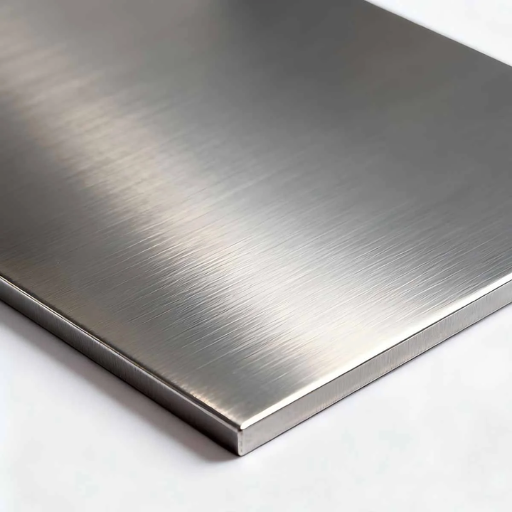
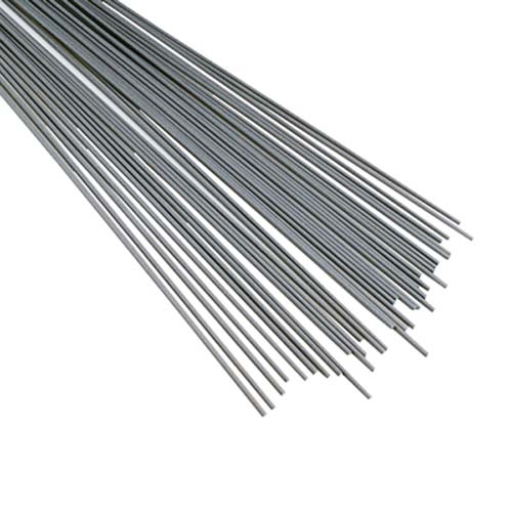
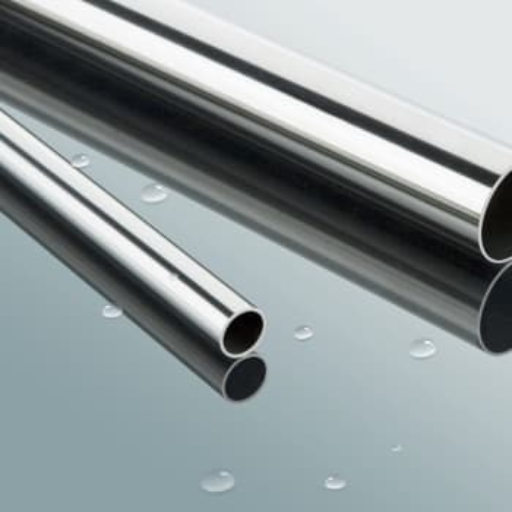
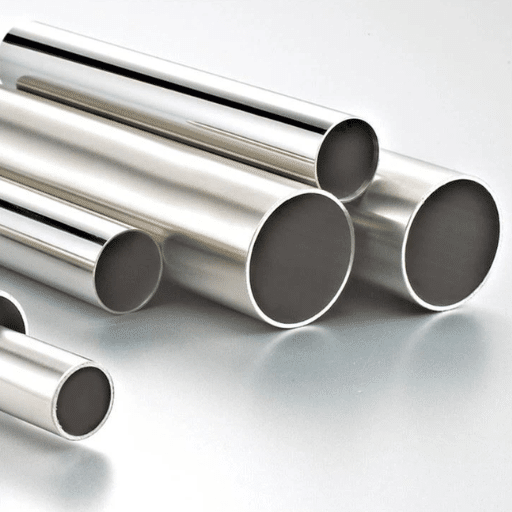
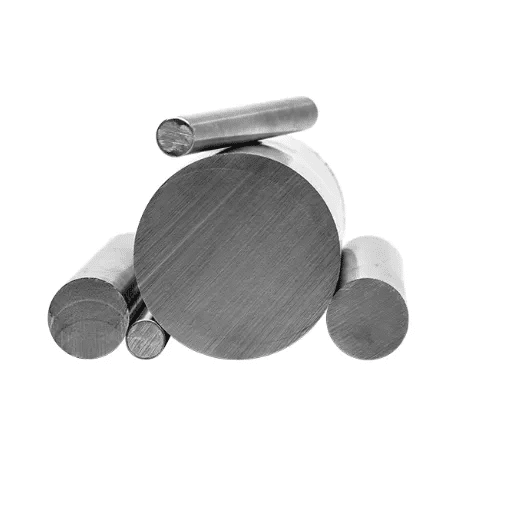
We supply Hastelloy B2 in plate, bar, rod, and pipe, produced or sourced with in-house spectrometers, tensile testing, and ultrasonic NDT. Every batch ships with an MTR and spectral report. If you need B2 rod and bar stock for shafting, fasteners, or machined components, our Hastelloy B2 rod product page lists sizes and forms. For piping systems, our Hastelloy seamless pipe range covers the tube and pipe specifications.
Hastelloy B2 pricing depends on the nickel and molybdenum markets, which move daily. For current 2026 ranges by product form and a certified quotation, contact our team.
Hastelloy B2 Corrosion Resistance FAQ
Is Hastelloy B2 resistant to hydrochloric acid?
Yes. Hastelloy B2 resists HCl at all concentrations and temperatures up to boiling, with typical corrosion rates below 0.1 mm/year in clean reducing service. It fails rapidly if oxidizers enter the stream.
Can Hastelloy B2 handle sulfuric acid?
It offers good resistance to non-oxidizing, medium-concentration sulfuric acid, especially with chlorides present. Hot, concentrated, or aerated sulfuric acid behaves as an oxidizer and is not suitable.
Is Hastelloy B2 resistant to nitric acid?
No. Nitric acid is a strong oxidizer and causes rapid corrosion of B2. Use a chromium-bearing C-family alloy for nitric acid service.
Why does Hastelloy B2 fail in ferric chloride?
Ferric chloride supplies ferric iron, Fe3+, an oxidizer that breaks down the molybdenum-rich protective layer B2 relies on. Even tens of parts per million cause rapid attack.
Is Hastelloy B2 better than zirconium for HCl?
Both excel in hot HCl. B2 usually wins on cost, product forms, and fabrication practicality. Zirconium is preferred for near-boiling fully concentrated acid or when oxidizer traces are a concern.
Does welding affect Hastelloy B2 corrosion resistance?
Yes, if heat input is uncontrolled. The 550-850°C range precipitates brittle phases that destroy corrosion resistance. Use low heat input, interpass at or below 120°C, and solution anneal where required.
What is the Chinese equivalent of Hastelloy B2?
NS322 per GB/T 15007. It maps to the same UNS N10665 composition as Hastelloy B2.
Conclusion
Hastelloy B2 corrosion resistance is exceptional in the right environment and catastrophic in the wrong one. It resists hydrochloric acid at all concentrations to boiling, handles reducing sulfuric, phosphoric, acetic, and hydrofluoric acid service, and offers excellent pitting and stress corrosion cracking resistance in clean reducing media. The two things that destroy it are oxidizers in the stream and uncontrolled fabrication heat.
Before you specify B2, read the stream chemistry. Know what the acid carries, whether iron or copper upstream can contaminate it, and how the vessel will be welded. Then verify the material with an MTR and spectral analysis before it ships. Choosing the right grade is an engineering decision; proving it was delivered is a verification decision. Both are within your control.
If your application is a clean reducing acid, Hastelloy B2 (NS322) is one of the strongest materials you can buy. Submit your RFQ today, and our metallurgical team will respond within 24 hours with material availability, a certified quotation, and full documentation.