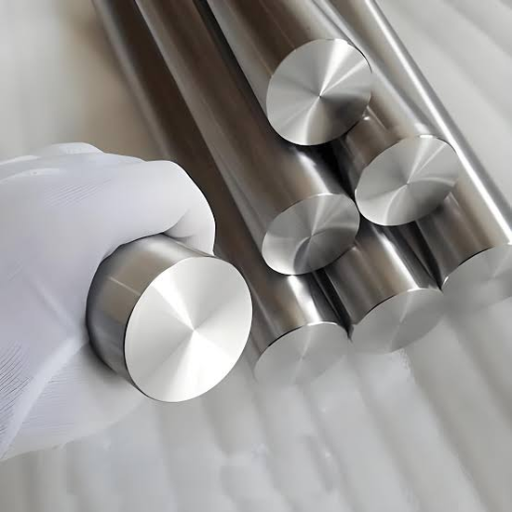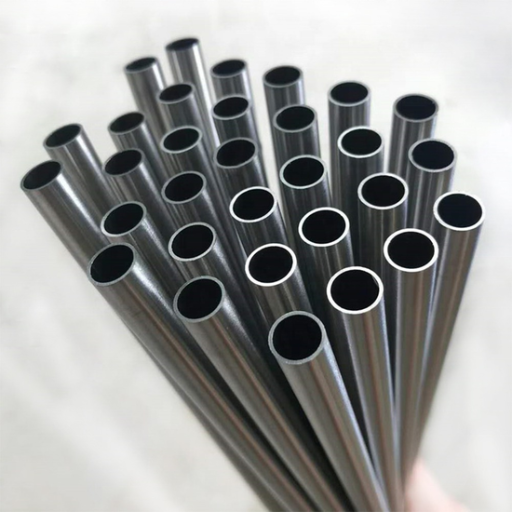
Inconel 600 is the general-purpose 72% nickel, 15% chromium alloy for furnace hardware, thermocouple sheaths and moderate corrosion duty. Inconel 690 is the 58% nickel, 30% chromium alloy built to survive environments that cracked 600, above all the primary water of a pressurized water reactor. The difference is nearly double the chromium, and the consequence is a different alloy class rather than a better version of the same one.
Most comparisons stop at the composition table. That table answers which alloy is richer in chromium. It does not answer why 690 replaced 600 in nuclear steam generators, why a thermal treatment step decides whether 690 performs as intended, or why 690 is not automatically the right upgrade in every corrosive duty. Those three questions decide most real specifications.
Every number below comes from the Special Metals mill bulletins, SMC-027 for alloy 600 and SMC-079 for alloy 690, or from the standards themselves.
Key Takeaways
- Chromium is 14.0 to 17.0% in 600 and 27.0 to 31.0% in 690, while nickel falls from 72.0% minimum to 58.0% minimum, so 690 is a high-chromium alloy first and a high-nickel alloy second.
- Inconel 690 is a solid-solution alloy and is not age-hardenable. Its nuclear condition, 690TT, is a thermal treatment at roughly 715 to 725°C for 10 to 15 hours that precipitates a semi-continuous grain-boundary carbide network. Mill-annealed 690 and 690TT are not interchangeable.
- 690 resists nitric acid below 1 mpy through 70% concentration, while the 600 bulletin describes only “fair” resistance to strongly oxidizing acids. This is the clearest application split between the grades.
- 690 is not universally better. In aerated sodium hydroxide above 30% at 260 to 321°C it cracks, and in a reducing H2S/H2 gas its sulfidation rate is effectively level with 600’s.
- Thermal treatment, PWSCC and the nitric/hydrofluoric split appear on 1 to 3 of the 59 pages ranking for this topic.
The 600 side of this comparison is documented in more detail on the site, starting with the 600 properties reference.
Inconel 600 vs 690 at a Glance
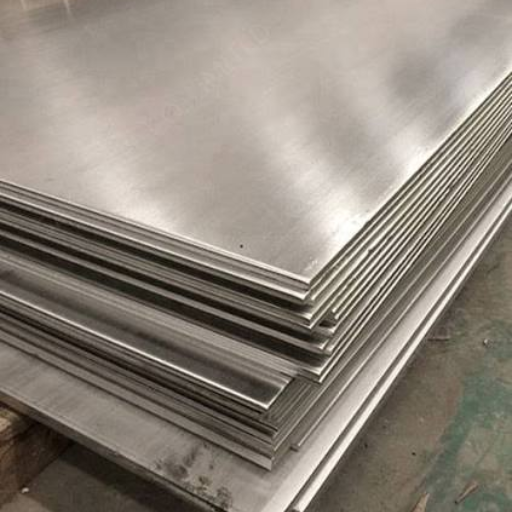
| Property | Inconel 600 | Inconel 690 |
|---|---|---|
| UNS number | N06600 | N06690 |
| Werkstoff number | 2.4816 | 2.4642 |
| Nickel | 72.0 min (plus cobalt) | 58.0 min |
| Chromium | 14.0 to 17.0 | 27.0 to 31.0 |
| Iron | 6.00 to 10.00 | 7.0 to 11.0 |
| Carbon | 0.15 max | 0.05 max |
| Density | 8.47 g/cm³ | 8.19 g/cm³ |
| Melting range | 1,354 to 1,413°C | 1,343 to 1,377°C |
| Annealed yield strength, by form | 172 to 345 MPa nominal | 282 to 461 MPa, forms tested |
| Nitric acid | Fair resistance | Below 1 mpy through 70% |
| Caustic SCC | Requires prior stress relief | Resists to about 50% boiling |
| Sulfidation, 96 h at 727°C in O2-bearing H2S | 1,453 mpy | 91 mpy |
| Standard filler metal | Filler Metal 82 | Filler Metal 52 |
| Chinese designation | GH3600 / NS3102 | NS315, NS3105 or GH690, depending on source |
Two entries surprise people. The melting range of 690 sits lower than 600’s, because the chromium level suppresses the solidus more than the lower nickel raises it. And in the forms the mill tested, annealed 690 is not the weaker alloy: published room-temperature values overlap heavily and depend on form, so neither grade should be selected on tensile strength alone.
What the 30% Chromium Actually Does
Chromium forms the passive film, and doubling it changes which environments the film survives and how the alloy behaves once the film is damaged.
Carbon is 0.15% maximum in 600 and 0.05% maximum in 690, and that difference matters as much as the chromium difference. At the higher limit, 600 has enough carbon to precipitate chromium carbide at the grain boundaries and in the matrix between 540°C and 760°C, which is why its bulletin warns of sensitization in that range. At the lower limit, 690 has low carbon solubility by design, and the carbide that does form is the basis of the thermal treatment rather than an accident of service.
Neither alloy contains a deliberate molybdenum addition, and pages describing molybdenum or cobalt as strengthening additions to 690 are describing a different alloy. Cobalt appears only as a residual, capped at 0.10% under the nuclear amendment, which also narrows chromium to 28 to 31% and carbon to 0.04% maximum.
Melting ranges are 2,470 to 2,575°F (1,354 to 1,413°C) for 600 and 2,450 to 2,510°F (1,343 to 1,377°C) for 690. Both the solidus and the liquidus sit lower in 690, because chromium raises the melting point of nickel only in modest additions. A welding procedure developed for 600 therefore does not transfer to 690 on the strength of a shared high-temperature nickel alloy label: the 690 heat-affected zone liquates sooner, and the filler metal changes too.
A chromium-only pitting resistance equivalent number, Cr + 3.3Mo + 16N, lands near 14 to 17 for 600 and 27 to 31 for 690, because neither alloy contains deliberate molybdenum or nitrogen. More chromium means a thicker, more stable oxide film and a larger reservoir to rebuild it after damage, which is why 690 holds up in oxidizing acids, high-temperature water and oxygen-bearing sulfur gases where 600 does not. It is also why 690 is the wrong answer in strongly reducing acids, where the passive film is not the protection mechanism at all.
Inconel 600 vs 690 Mechanical Properties
Both alloys are austenitic solid solutions, and neither responds to precipitation hardening in the conventional sense. Alloy 600 is strengthened only by cold work, and its bulletin notes that heavily cold-worked material can reach 1,517 MPa ultimate tensile strength. Alloy 690 is normally used annealed, at about 1,040°C, and its bulletin publishes room-temperature tensile results by product form. The spread is wider than the headline numbers suggest.
| Form | Size | Yield, 0.2% | Tensile | Elongation |
|---|---|---|---|---|
| Tube, cold drawn | 12.7 × 1.27 mm | 461 MPa | 758 MPa | 39% |
| Tube, cold drawn | 19.0 × 1.65 mm | 379 MPa | 700 MPa | 46% |
| Tube, cold drawn | 88.9 × 5.49 mm | 282 MPa | 648 MPa | 52% |
| Flat, hot rolled | 13 × 51 mm | 352 MPa | 703 MPa | 46% |
| Rod, hot rolled | 51 mm dia | 334 MPa | 690 MPa | 50% |
| Rod, hot rolled | 16 mm dia | 372 MPa | 738 MPa | 44% |
| Strip, cold rolled | 3.81 mm | 348 MPa | 724 MPa | 41% |
The 600 bulletin gives a nominal annealed yield range of 172 to 345 MPa, with tensile strength in the 550 to 690 MPa band depending on form and condition. The ranges overlap: a 690 tube and a 600 bar can land in the same place on a certificate, and a thin-wall 690 tube can test well above a heavy 600 section. That is the reason to reject the common claim that 600 is the stronger grade when annealed. Form, section size, and mill practice decide the result, so select on corrosion resistance and thermal treatment, not on room-temperature tensile.
At temperature, the 690 bulletin reports creep and rupture curves from 480 to 1,095°C, plus metallurgical stability: no embrittling phases formed, and room-temperature properties were essentially unchanged after 13,428 hours at 595°C and 12,000 hours at 650°C and 760°C. The 600 bulletin makes the same point in one line, stating that alloy 600 does not embrittle after long exposure to high temperatures and that room-temperature properties hold after creep testing. Neither alloy is the fragile one in a long soak.
Thermal Treatment: The Step That Separates Inconel 600 vs 690
Of the 59 pages ranking for Inconel 600 vs 690, one mentions thermal treatment. That omission matters, because thermal treatment is the step that makes 690 the material of record in nuclear service.
Mill anneal versus thermal treatment
The 690 bulletin states that the alloy is normally used annealed at approximately 1,900°F, or 1,040°C. That mill anneal dissolves the carbides and produces a clean, soft structure. Thermal treatment follows the anneal: the material is held at 700 to 750°C for a controlled time, typically 10 to 15 hours, then cooled.
Published values from nuclear procurement practice include an EPRI draft guideline of 716°C with a +22/-0°C tolerance for 10 hours minimum, a Special Metals practice of about 725°C for 10 hours, a Sumitomo minimum of 700°C for 15 hours, and an AREVA minimum of 715°C for 5 hours, as collected in NRC ML082030333. The 690TT material described in NRC ML041680546 was annealed at 1,074°C and treated at 718°C for 10 hours.
No single international specification fixes one number for all tubing. A buyer should take from this that the treatment exists, that its parameters get specified, and that a certificate saying only “solution annealed” is describing a different product.
What the treatment does to the grain boundary
The mill anneal leaves a low-carbon austenite with most carbide in solution. The thermal treatment precipitates chromium-rich M23C6 along the grain boundaries in a semi-continuous network that pins the boundaries, delays intergranular crack initiation, and lets chromium back-diffuse into the narrow depleted zone beside each carbide.
The morphology changes with temperature: a continuous film at 600°C, the desired semi-continuous network at about 715°C, and coarse discrete carbides from 750 to 850°C. At 715°C the carbide appears at about 2 hours and keeps forming until about 10 hours, stable at 15 and 27 hours. The bulletin describes the same structure: an austenitic solid solution with low carbon solubility, M23C6 as the major carbide, titanium nitrides and carbonitrides, and no sigma phase.
One trap sits inside the treatment. A final mill anneal that is too low leaves the carbon unable to form intergranular carbide later, and the resistance gain disappears. Sui and co-workers made that point about a cracked heat with 0.14% aluminum and essentially no intergranular carbide, as recorded in NRC ML041680546.
For nuclear or nuclear-adjacent service, name the thermal treatment condition on the order line, not only the anneal, along with the intergranular corrosion test, the grain size and the applicable code case. For non-nuclear chemical service, the treatment is usually not specified, which is defensible provided the buyer knows the material is then mill-annealed 690, and that the PWSCC record belongs to 690TT, not to every form of the alloy.
Corrosion Resistance: Where Inconel 600 and 690 Diverge
Both bulletins open with a corrosion claim, and they point in different directions. The 690 bulletin credits its chromium with outstanding resistance to oxidizing chemicals and high-temperature oxidizing gases. The 600 bulletin credits its nickel with resistance to many organic and inorganic compounds and near-immunity to chloride stress corrosion cracking.
Nitric and nitric/hydrofluoric acid
This is 690’s home ground. The bulletin reports rates below 1 mpy (0.03 mm/a) in nitric acid through 70% concentration at room temperature and at 80°C. In nitric/hydrofluoric mixtures at 60°C the published rates are 6 mpy (0.15 mm/a) in 10% nitric with 3% hydrofluoric, 10 mpy (0.25 mm/a) in 15% nitric with 3% hydrofluoric, and 6 mpy (0.15 mm/a) in 20% nitric with 2% hydrofluoric. Those are the mixtures used to pickle stainless steel and to reprocess nuclear fuel, which is why 690 appears in pickling lines and dissolver equipment.
The 600 bulletin is far more guarded. It describes fair resistance to strongly oxidizing acid solutions and warns that dissolved air alone does not guarantee passivity in air-saturated mineral acids. In phosphoric acid, 690 holds below 1 mpy through 85% concentration up to 80°C, but at boiling it resists only at lower concentrations: about 30 mpy in 20% acid and above 100 mpy higher up. The acid is the constraint, not the alloy name.
Caustic soda and chloride SCC
Both alloys handle chlorides well, for different reasons: 600 because of its 72% nickel minimum, and 690 according to the bulletin’s U-bend results in boiling 45% magnesium chloride, where stressed specimens survived 30 days without cracking.
Caustic is where the grades separate. The 600 bulletin states plainly that the alloy is subject to stress corrosion cracking in high-temperature, high-strength caustic alkalies, and that material for that service should be fully stress relieved at 900°C for 1 hour or 790°C for 4 hours, with operating stresses kept to a minimum. The 690 bulletin publishes a U-bend matrix in nondeaerated sodium hydroxide that is more encouraging and more conditional than the usual summary.
| Concentration | Temperature | Result |
|---|---|---|
| 10% | 321°C | No cracking in 100 h |
| 20% | 260°C | No cracking in 1,000 h |
| 20% | 321°C | No cracking in 1,000 h |
| 30% | 260°C | Cracking in 1,000 h |
| 40% | 260°C | Cracking in 1,000 h |
| 40% | 321°C | Cracking in 100 h |
| 50% | 260°C | Cracking in 100 h |
| 50% | boiling, 150°C | No cracking in 1,000 h |
| 60% | boiling, 161°C | Cracking in 1,000 h |
Above 30% at 260°C and 321°C the bulletin also reports severe general corrosion, separate from cracking. In deaerated 1% sodium hydroxide at 316°C, U-bend specimens survived 9,400 hours without cracking, and bent-beam specimens stressed to 50, 90 and 100% of yield survived 100 hours in boiling 80% sodium hydroxide. The reading is that 690 extends the caustic envelope but does not remove it: concentration, temperature and aeration all move the limit, and a specification that says “caustic service, use 690” without naming those three is not a specification.
Sulfidation, oxidation and metal dusting
The bulletin publishes a sulfidation comparison that deserves wider circulation. Rod specimens were exposed for 96 hours at 727°C in two atmospheres, with rates calculated from weight loss after descaling.
| Alloy | 1.5% H2S / 3% O2 / 36.5% H2 / 59% Ar | 1.5% H2S / 98.5% H2 |
|---|---|---|
| Inconel 690 | 91 mpy (2.3 mm/a) | 1,366 mpy (34.7 mm/a) |
| Inconel 600 | 1,453 mpy (36.9 mm/a) | 1,413 mpy (35.9 mm/a) |
| Inconel 625 | 228 mpy (5.8 mm/a) | 744 mpy (18.9 mm/a) |
| Inconel 601 | 382 mpy (9.7 mm/a) | 685 mpy (17.4 mm/a) |
| Incoloy 800 | 55 mpy (1.4 mm/a) | 724 mpy (18.4 mm/a) |
| Type 310 stainless | 71 mpy (1.8 mm/a) | 709 mpy (18.0 mm/a) |
In the oxygen-bearing atmosphere, 690 loses 91 mpy against 600’s 1,453 mpy. That factor of 16 is the strongest single argument for 690 where sulfidizing gas still carries free oxygen. In the reducing H2S/H2 atmosphere, the two are effectively tied at 1,366 and 1,413 mpy: with no oxygen available to rebuild a protective scale, both alloys sulfidize at about the same rate and the chromium advantage stops paying.
The table also keeps the comparison honest in the other direction. Incoloy 800 posts 55 mpy and Type 310 stainless 71 mpy in the same oxygen-bearing gas, both below 690’s 91 mpy. Sulfidation rate on its own does not crown a winner; strength, fabrication and the rest of the environment decide.
The bulletin publishes oxidation and metal dusting results as curves rather than single figures: cyclic exposure at 1,095°C with 15-minute heating and 5-minute cooling, a sodium-sulfate-coated cyclic test at 980°C, and maximum pit depth against time in CO with 20% H2 at 621°C compared with 601, 693 and 800. It publishes no carburization weight-gain table for 690, so no carburization claim is made here. Alloy 600 does have published carburization numbers, 2.66 mg/cm² at 925°C and 12.30 mg/cm² at 1,095°C after 100 hours in hydrogen with 2% methane, and its bulletin warns that 600 sulfidizes in high-temperature sulfur-bearing environments.
Nuclear Service: Why 690 Replaced 600
Mill-annealed Alloy 600 steam generator tubing in pressurized water reactors suffered primary water stress corrosion cracking, which the U.S. Nuclear Regulatory Commission documents in operating experience and has analyzed in subsequent rulemaking. The cracking caused tube plugging, forced outages and replacement power costs. Alloy 690 was adopted as the replacement tubing material.
NRC staff documents record the outcome in three ways. ML19241A492 notes Alloy 690 steam generators in service since 1989 and a service-demonstrated improvement factor of about 30 for Alloy 52, 152 and 690 relative to Alloy 600. ML051740486 reports an improvement factor above 26 for thermally treated 690 against mill-annealed 600, and above 13 against thermally treated 600. ML081200235 reports no corrosion degradation in 690TT tubing and laboratory results indicating immunity to PWSCC, and NUREG-2195 is titled around thermally treated Alloy 600 and 690 tubes, reflecting the position that the treatment condition is part of the material definition.
Those are the NRC’s characterizations, not a manufacturer’s, and they are narrower than the slogan: laboratory immunity and a clean service record are not a guarantee for every geometry, stress state, and water chemistry.
Three limits sit behind the record, all matters of condition rather than alloy choice. The improvement factors belong to thermally treated 690, so a mill-annealed part has not been qualified by them. Cold-deformed 690 can show crack growth rates approaching 600s, which is why strain control appears in nuclear specifications. Weld metal follows the same rule, since Alloy 52 and 152 are credited and also recorded as susceptible where residual stress, strain, or weld defects are present.
For a buyer outside the nuclear industry, the takeaway is simpler. High-purity, high-temperature water in a safety-related system means buying to the nuclear specification and the thermal treatment. A nitric acid pickling line or a coal gasification burner does not inherit that reasoning.
Welding and Fabrication
The 690 bulletin describes the alloy as exhibiting excellent weldability and behaving similarly to 600 in most working operations, with somewhat higher forces in cold forming.
The consumables do not cross over, and that is where a 600 procedure copied onto a 690 job goes wrong. Alloy 600 is joined with INCONEL Filler Metal 82 for gas tungsten and gas metal arc, and with Welding Electrode 182 for shielded metal arc. Alloy 690 is joined to itself with Filler Metal 52 and Welding Electrode 152. The bulletin describes those deposits as near-matching to the 690 base metal, which is the point: a 600 filler would dilute chromium at the joint and give away the resistance the base metal was chosen for.
For 690 joined to carbon steel, stainless steel, and most dissimilar nickel-chromium and iron-nickel-chromium alloys, the bulletin permits Filler Metal 82, Welding Electrode 182 or INCO-WELD A. For highly corrosive aqueous service, particularly nitric and hydrofluoric acid mixtures such as alloy pickling lines, it directs the fabricator to Filler Metal 625 and Welding Electrode 112, a higher-molybdenum consumable chosen to protect the weld where the base metal’s chromium film is already working hard. The 600 bulletin adds that welds made with Electrode 182 may lose ductility after extended exposure to 540 to 760°C, the range in which the base metal can sensitize.
Heavy hot forming of 690 runs from 1,040 to 1,230°C, and the bulletin permits light forming down to 870°C. Cold forming behaves like 600 but needs higher forces, and the bulletin’s work-hardening curves show 690 hardening faster.
Machining follows the Group C procedures: sharp tools, positive rake angles, steady feeds. Pickling needs a fused-salt bath pretreatment, and heating atmospheres should be low in sulfur and slightly reducing. The procedure-level detail for the 600 side sits in the Inconel 600 welding guide.
Inconel 600 vs 690: Specifications and Chinese Equivalents
| Form | Inconel 600 | Inconel 690 |
|---|---|---|
| Rod, bar, wire, forging stock | ASTM B166 / ASME SB166 | ASTM B166 / ASME SB166 |
| Forgings | ASTM B564 / ASME SB564 | ASTM B564 / ASME SB564 |
| Seamless pipe and tube | ASTM B167 / ASME SB167 | ASTM B167 / ASME SB167 |
| Condenser and heat-exchanger tube | ASTM B163 / ASME SB163 | ASTM B163 / ASME SB163 |
| Plate, sheet and strip | ASTM B168 / ASME SB168 | ASTM B168 / ASME SB168 |
| General requirements, flat products | ASTM B906 | ASTM B906 |
| General requirements, pipe and tube | ASTM B829 | ASTM B829 |
| Nuclear code cases | ASME Section III, Code Case N-525 | ASME Code Cases N-20, N-525, 2083 |
Both grades appear in the same three product specifications. ASTM B167-23 covers seamless pipe and tube, B168-26 covers plate, sheet and strip, and B163-26a covers seamless condenser and heat-exchanger tube in sizes 3 in outside diameter and under with walls of 0.148 in and under. Each lists N06600 and N06690 in the same scope.
One page in 59 mentions ASTM B906, which carries the dimensional tolerances, flatness, edge requirements and test conventions for flat-rolled nickel alloy products. It is ordered alongside B168, not instead of it, and that is how two quotes can both cite B168 and still differ. When plate has to sit flat on a vessel course or fit a laser-cut profile, the tolerance clause belongs on the order. The same logic makes B829 the general-requirements document for tube.
Buyers sourcing 690 from China meet three designation systems that do not agree cleanly. In GB/T 15007 the grade appears as NS315, with older references giving 0Cr30Ni60Fe10 and H03150. In GB/T 14992 it appears as GH690, alongside GH3600 for alloy 600.
Several suppliers now list NS3105 with H06690 and call NS315 superseded, while reference databases still attribute NS315 to earlier editions of GB/T 15007 and the 2017 edition’s foreword does not confirm a rename. The conflict is unresolved in public sources.
For 600 the corresponding designations are GH3600 in the superalloy system and NS3102 in the corrosion-resistant system, covered in the GH3600 equivalent guide. The procurement rule is the same either way: do not accept a Chinese certificate on a grade name alone. Ask for the standard number and edition, the chemical analysis, the mechanical results and the heat-treatment condition, and compare them with the ASTM or ASME requirement the drawing cites.
Cost and Procurement: How to Quote Both
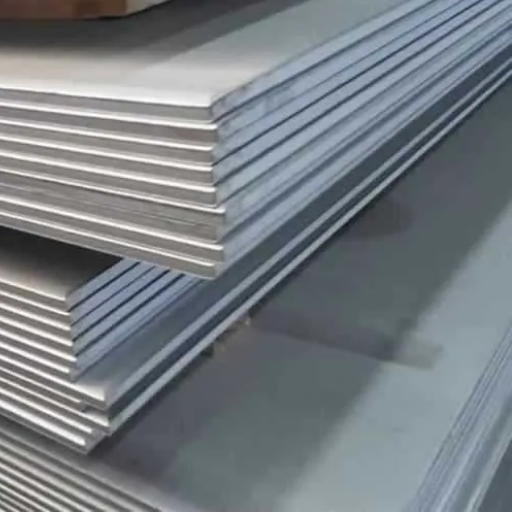
No price is published here for either alloy, because the number depends on form, size, specification, test regime and certificate level, and a figure without those attached is misleading.
Two commercial facts do hold. Metal cost is not the only variable, since 690 carries less nickel than 600 but far more chromium, so raw-material arithmetic does not automatically make it the dearer grade; specification separates them instead, because nuclear-grade 690TT with intergranular corrosion testing, grain size control and full traceability costs more to make and document. And the certificate carries the grade claim, so a 690 certificate saying only “solution annealed” is mill-annealed material, which may suit the application but should be a known choice.
Send the grade, form, size, condition, specification, test requirements and end application, and the technical team can confirm what the mill position allows and what the certificate will show. Request a quotation against your drawing, or review the 600 tube product and the 600 plate guide.
Frequently Asked Questions
Is Inconel 690 better than Inconel 600?
In oxidizing and high-chromium environments, yes. Alloy 690 has roughly double the chromium, resists nitric acid below 1 mpy through 70% concentration, resists caustic SCC to about 50% boiling sodium hydroxide, and is the material of record for nuclear steam generator tubing. In oxygen-bearing sulfidizing gas it is far better, at 91 mpy against 1,453 mpy at 727°C. In a reducing H2S/H2 gas the two are effectively equal, and in strongly reducing acids neither is the right choice.
What is the difference between Inconel 600 and 690?
Chromium and nickel. Alloy 600 is 72.0% nickel minimum with 14.0 to 17.0% chromium. Alloy 690 is 58.0% nickel minimum with 27.0 to 31.0% chromium and a lower carbon limit of 0.05%. The chromium change drives the corrosion behavior, and the carbon change makes the thermal treatment possible.
Does Inconel 690 need heat treatment?
It is normally used annealed at about 1,040°C. For nuclear steam generator and primary-water service it also receives a thermal treatment at roughly 715 to 725°C for 10 to 15 hours, which precipitates a semi-continuous grain-boundary M23C6 network. Name the treatment condition on the purchase order, because mill-annealed and thermally treated 690 are not the same product.
Can Inconel 600 and 690 be welded together?
Yes, with a consumable chosen for the more corrosion-resistant side. The 690 bulletin permits Filler Metal 82, Welding Electrode 182 or INCO-WELD A for joining 690 to dissimilar nickel-chromium and iron-nickel-chromium alloys, and directs nitric/hydrofluoric service to Filler Metal 625 or Welding Electrode 112. Alloy 690 joined to itself uses Filler Metal 52 or Electrode 152.
Is Inconel 690 magnetic?
No. The 690 bulletin gives a permeability of 1.001 at 200 oersteds. Alloy 600 is also effectively non-magnetic in the annealed condition, at 1.010 permeability, with a Curie temperature of -124°C. Cold work can raise permeability slightly in either grade.
Which is better for seawater, Inconel 600 or 690?
Neither. Both rely on chromium and nickel rather than molybdenum, and neither has the pitting and crevice resistance a seawater system needs. A molybdenum-bearing grade such as 625 is the appropriate selection, and the Inconel 600 vs 625 comparison covers that trade-off.
Conclusion
Inconel 600 vs 690 is not a choice between two versions of one alloy. It is a choice between two answers to different corrosion problems, and the chromium level is the line between them.
Choose 600 (UNS N06600) for furnace retorts, muffles, radiant tubes, thermocouple sheaths, nitriding containers, and general high-temperature oxidation duty, and for caustic service only where the material is fully stress-relieved and the operating stress is kept low. Its 72% nickel gives it chloride SCC resistance that 690 does not improve on.
Choose 690 (UNS N06690) for nitric and nitric/hydrofluoric acid service, for nuclear steam generator tubing and primary-water components, for sulfidizing gas that still carries free oxygen, and for any duty where the chromium reservoir must survive cyclic oxidizing attack. Order it thermally treated when the application is nuclear, and name the treatment on the order.
Then check the environment outside the headline. Caustic above 30% at 260 to 321°C, a fully reducing H2S/H2 gas, and strongly reducing acids are the three places where the simple ranking breaks, and where a specification is most likely to be wrong.
A quick screen for the Inconel 600 vs 690 decision:
- Oxidizing acid, high-temperature water or nuclear primary loop: 690, thermally treated.
- Sulfidizing gas that still carries free oxygen: 690.
- Chloride service, furnace hardware or cold-worked strength: 600.
- Fully reducing H2S/H2 gas, caustic above 30% at 260 to 321°C, or strong reducing acid: neither grade as specified; revisit the alloy family.
If the draw call is still open, send the operating temperature, the medium and its concentration, the aeration state, the fabrication method and the governing specification. The 600 properties reference and the 600 corrosion guide cover that side in depth, and the 600 heat treatment guide sets out the anneal and stress-relief cycles.