A single tube failure can shut down an entire production line. In 2023, a chemical processing plant in Southeast Asia learned this the hard way. Their procurement team had selected standard 316L stainless steel tubing for a caustic alkali transfer line to save on upfront costs. Eighteen months later, pitting corrosion caused a leak that halted operations for six days. The replacement? Nickel 201 tubing. It has now been running without issue for over three years.
This is not an isolated story. Engineers and procurement managers face the same decision daily. Standard materials break down under extreme conditions because their standard composition lacks the strength needed to withstand such challenges. A nickel alloy tube creates a system that operates without interruptions while it maintains its essential functions.
The guide explains nickel alloy tubing along with its specific grades for different environments and the suitable materials for your project needs. The complete range of options will be presented, which includes pure nickel tubes and high-performance superalloys that include Inconel and Hastelloy. The practical selection framework provides you with standards that guarantee product excellence and complete product tracking.
What Is a Nickel Alloy Tube?
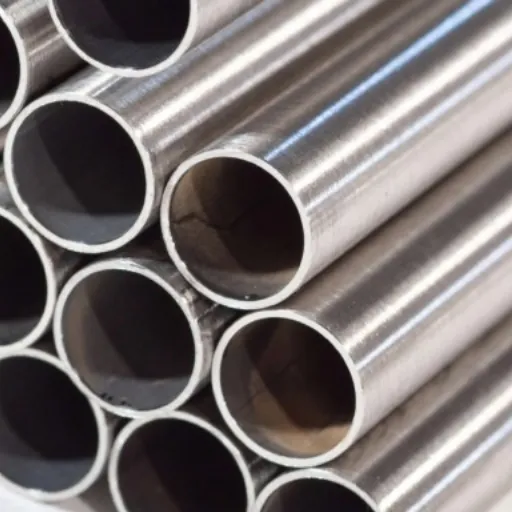
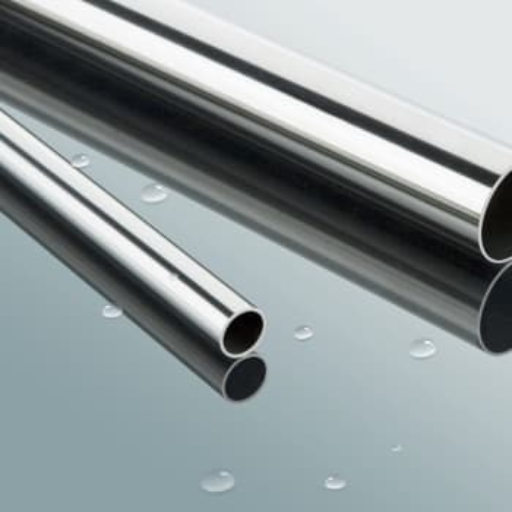
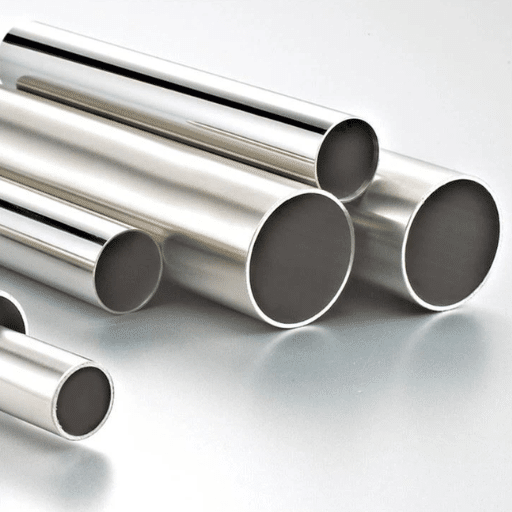
The nickel alloy tube functions as a hollow cylindrical product that nickel-based alloys create. The seamless and welded tubes offer outstanding corrosion protection, high-temperature performance, and cryogenic toughness as their main features.
The distinct advantage of nickel alloy tubing over common stainless steel and carbon steel alternatives lies in its ability to perform in critical environments where any failure would result in severe consequences. The nickel alloy grade required for a particular application maintains structural integrity in three different environments, which include 90°C hydrochloric acid, 3 m/s seawater and turbine exhaust gases that exceed 1,000°C.
Tube vs Pipe
Engineers often use “tube” and “pipe” interchangeably, but the distinction matters for procurement. Tubes are defined by their exact outer diameter (OD) and wall thickness. The selection process requires this material because it needs precise dimensions to handle specific pressure levels and transfer heat efficiently. The industry uses nominal pipe size (NPS) and schedule to define pipes, which focus on their ability to move materials rather than their exact dimensions. Nickel alloy tube specifications serve as the standard choice for heat exchangers, instrumentation equipment and aerospace applications.
Seamless vs Welded Nickel Alloy Tubing
The production process for seamless tubes begins with solid billets, which manufacturers convert to their final form through extrusion or piercing. The product contains no longitudinal weld seam, which enables it to withstand high-pressure environments and extreme temperature conditions with superior structural integrity. Welded tubes are formed from strip or plate and joined along the length. The solution provides better financial advantages for applications that need less pressure and require bigger pipe sizes.
The design process for nuclear steam generators and aerospace engines requires seamless nickel alloy tubing as the standard material. The use of welded tubes provides chemical process piping and marine heat exchangers with a cost-effective solution that meets their operational requirements at moderate pressure levels.
Common Nickel Alloy Tube Grades and Their Properties
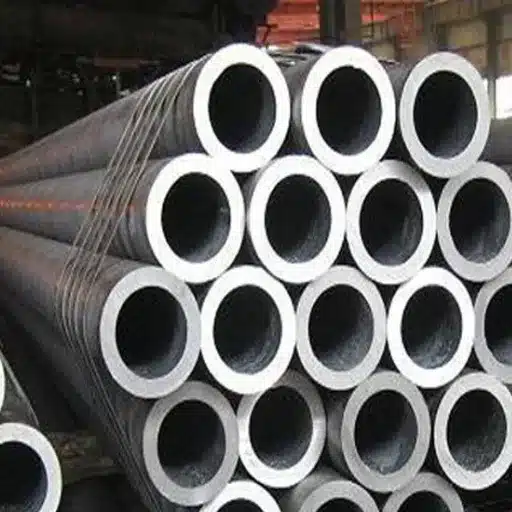
Nickel alloys demonstrate different performance characteristics in their various compositions. The engineers designed each grade to operate under distinct environmental conditions. The wrong selection leads to early equipment breakdown, while the correct choice extends equipment lifetime by ten years or more.
Pure Nickel Tubes: Nickel 200 and 201
Nickel 200 (UNS N02200) and Nickel 201 (UNS N02201) are commercially pure nickel grades with 99.6% minimum nickel content. Nickel 201 serves as the preferred option for applications above 315°C because its low-carbon composition protects against embrittlement, which affects Nickel 200 due to its higher carbon content.
The two grades demonstrate superior performance in environments that contain caustic alkaline substances. Sodium hydroxide and potassium hydroxide, together with other alkalis, will damage stainless steel but they do not significantly affect pure nickel. This property establishes Nickel 201 as the primary selection for equipment used in chemical processing, food production, and caustic material handling.
Nickel-Chromium Superalloys: Inconel 600, 625, 690, and 718
Inconel represents the most well-known group of nickel-based superalloys. The different grades of this material provide solutions for three distinct challenges, which involve temperature, oxidation, and corrosion.
- Inconel 600 offers excellent oxidation resistance up to 1,095°C and good resistance to chloride-ion stress corrosion cracking.
- Inconel 625 provides outstanding strength from cryogenic temperatures up to 980°C. The material protects against pitting, crevice corrosion and oxidation in marine and chemical environments.
- Inconel 690 alloy contains approximately 30% chromium, which enables better protection against high-temperature oxidation and stress corrosion cracking when used in nuclear applications.
- Inconel 718 is a precipitation-hardened grade that aerospace and gas turbine industries use because it provides high strength and fatigue resistance.
For engineers specifying inconel tube products, the choice between 600, 625, 690, and 718 depends primarily on temperature ceiling, corrosion media, and whether high mechanical strength is required.
Nickel-Iron-Chromium Alloys: Incoloy 800, 800H, 800HT, and 825
The Incoloy grades establish a combination of nickel and iron with chromium to create an alloy that delivers both corrosion protection and affordable pricing. The Incoloy 800 system, together with its variants 800H and 800HT, protects carburization and sulfidation at high temperatures, which makes the alloy suitable for use in furnace components and petrochemical processing equipment, and power generation tubing.
The Incoloy 825 alloy system develops improved protection against sulfuric acid and other corrosive substances through its addition of molybdenum and copper. The material finds common usage in chemical processing facilities, oil and gas extraction operations, and pollution control systems.
Nickel-Copper Alloys: Monel 400 and K-500
Monel tube grades represent nickel-copper alloys that exhibit outstanding resistance to seawater corrosion while maintaining high mechanical strength. The marine engineering field and offshore platforms and seawater cooling systems commonly use Monel 400 (UNS N04400) material. The material protects against three specific types of attacks, which include biofouling and impingement attack, and stress corrosion cracking within chloride-rich environments.
Monel K-500 contains aluminum and titanium as additional elements, which allow the material to develop precipitation hardening. The material serves high-strength requirements in applications like pump shafts and valve trim components, which operate in marine environments.
Nickel-Molybdenum-Chromium Alloys: Hastelloy C-276 and C-22
Hastelloy serves as the standard material when environments contain strong oxidizing acids together with chlorides and wet chlorine gas. The Hastelloy C-276 tube products protect against localized corrosion, together with stress corrosion cracking in extremely dangerous chemical environments.
Hastelloy C-22 provides better corrosion protection than C-276 because it outperforms C-276 in mixed oxidizing and reducing environments. The two grades find common usage in chemical reactors together with flue gas desulfurization systems and waste treatment facilities.
Copper-Nickel Alloys: C70600 and C71500
Copper-nickel alloys, which people know as cupronickel, exist because their industrial supply chains classify them as nickel-based materials, which require their identification. The alloys C70600, which contains 90 copper and 10 nickel, and C71500, which contains 70 copper and 30 nickel, bring excellent protection against marine corrosion and antibacterial effects.
The 70/30 grade handles higher flow velocities and more aggressive seawater conditions, making it the preferred choice for desalination plants, ship condensers, and offshore platform heat exchangers.
Grade Comparison at a Glance
| Alloy Grade | Primary Strength | Max Service Temp | Best For |
|---|---|---|---|
| Nickel 201 | Caustic alkali resistance | 315°C+ | Chemical processing, food industry |
| Inconel 625 | High-temp oxidation + corrosion | 980°C | Aerospace, marine, chemical |
| Inconel 690 | Nuclear SCC resistance | 1,095°C | Nuclear steam generators |
| Incoloy 800HT | Carburization resistance | 1,000°C | Furnaces, petrochemical |
| Monel 400 | Seawater corrosion resistance | 480°C | Marine, offshore cooling |
| Hastelloy C-276 | Aggressive acid resistance | 1,040°C | Chemical reactors, FGD systems |
| Cu-Ni 70/30 | Marine biofouling resistance | 300°C | Desalination, ship condensers |
Key Industries and Applications
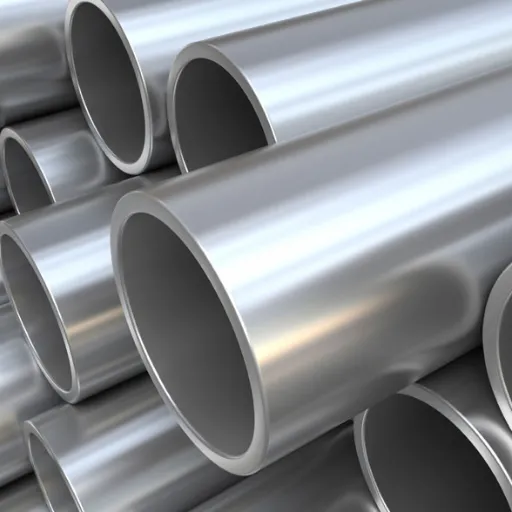
Nickel alloy tubes exist as specialized materials that manufacturers use in extreme conditions that standard materials cannot withstand. The industrial sector requires different grades of materials for its various operational needs.
Chemical and Petrochemical Processing
Chemical plants handle some of the most corrosive substances in industry. The combination of caustic soda, hydrochloric acid, and sulfuric acid, together with chloride salts, will destroy carbon steel while damaging multiple stainless steel grades. Nickel 201 tubing handles caustic alkalis with near-zero corrosion rates. Hastelloy C-276 tubes serve in reactors and distillation columns exposed to strong acids. Inconel 625 serves as a standard material in high-pressure piping systems that experience both thermal conditions and chemical corrosive effects.
The Middle East refinery expansion project, which took place in 2022, used Inconel 625 tubing as their hydrocracker unit material. The system achieved an operating temperature of 430°C while using hydrogen sulfide and ammonium chloride. A similar facility experienced a complete failure of standard 316L tubing after nine months of operation. The Inconel 625 tubes have now been in service for over two years without measurable wall loss.
Oil, Gas, and Power Generation
The oil and gas industry requires materials that can withstand sulfide stress cracking and high-pressure CO2 and saltwater contact. Downhole tubing and seawater injection systems and flare tip assemblies use Monel 400 and Incoloy 825 as their standard materials.
Inconel 690 serves as the primary material for nuclear steam generator tubing in power generation applications. The material serves as a critical component for reactor safety because it protects against chloride-ion stress corrosion cracking and high-temperature oxidation. Inconel 718 and Hastelloy X serve as essential materials for the manufacturing of gas turbine engine combustion cans and transition ducts.
Marine and Offshore Engineering
Seawater serves as a highly corrosive natural environment, which causes severe material degradation. The standard material for shipboard condensers, desalination plants and offshore platform heat exchangers consists of copper-nickel 70/30 tubes. The materials protect against impingement attack when flow velocities remain below 3-4 m/s and they naturally prevent biofouling without using toxic coatings.
Monel 400 tubing functions in underwater applications to secure pump shafts and valve stems and fasten underwater systems that require strength and seawater resistance.
Aerospace and Defense
The requirements of aerospace engineers lead them to select nickel alloy tubing because it delivers essential weight and strength, as well as temperature resistance properties. Inconel 718 tubes function as components for jet engine fuel lines, actuator parts and structural elements. Controlled-expansion alloys like 42% nickel-iron and 52% nickel-iron create hermetic seals that protect sensors and electronic housings, and fiber-optic components from thermal expansion that needs to match glass or ceramic materials.
Medical, Food, and Pharmaceutical
Nickel 201 and Nickel 200 tubes are widely used in pharmaceutical processing and food-handling equipment because they resist caustic clean-in-place (CIP) cycles without pitting. The products also fulfill the cleanliness standards that apply to high-purity chemical transfer operations.
Nitinol (nickel-titanium) capillary tubes have revolutionized the field of minimally invasive medical procedures. The stent delivery systems, catheter shafts and surgical guidewires benefit from the superelasticity and shape-memory effect.
Standards, Specifications, and Quality Control
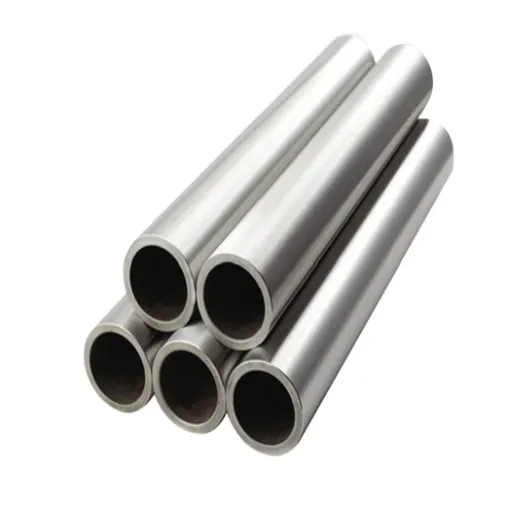
Buying a nickel alloy tube is not just about dimensions and grade. The standards and certifications behind the material are what separate a reliable component from an unverified risk.
ASTM and ASME Standards
The production and testing of nickel alloy tubing are regulated by major international standards, which include:
- The standard ASTM B161 and ASME SB161 specify the requirements for seamless nickel 200 and 201 tubes.
- The standard ASTM B163 and ASME SB163 specify the requirements for condenser and heat exchanger tubes that use Nickel 200 and 201 and other related alloys.
- The standard ASTM B165 and ASME SB165 specify the requirements for seamless Monel 400 tubes.
- The standard ASTM B167 and ASME SB167 specify the requirements for seamless Inconel 600 tubes.
- The standard ASTM B444 and ASME SB444 specify the requirements for seamless Inconel 625 tubes.
- The standard ASTM B407 and ASME SB407 specify the requirements for seamless Incoloy 800/800H/800HT tubes.
- The standard ASTM B423 and ASME SB423 specify the requirements for seamless Incoloy 825 tubes.
- The standard ASTM B622 and ASME SB622 specify the requirements for seamless Hastelloy C-276 tubes.
We develop material specifications that meet your compliance needs according to the ASTM standards, EN standards and JIS standards that your project follows.
Mill Test Certificates and Traceability
The project requires certified nickel alloy tubing to arrive with Mill Test Certificates that must meet the EN 10204 3.1 or 3.2 standard. The 3.1 certificate confirms chemical composition and mechanical properties through manufacturer validation. Nuclear and aerospace, and high-risk industries use the 3.2 certificate because it contains third-party validation of its contents.
The complete material traceability system enables tracking of the tube all the way back to its original raw material heat number and production batch, and inspection documentation.
Inspection and Verification
Reputable suppliers conduct multiple inspection stages:
- PMI (Positive Material Identification): This process examines alloy materials through shop floor verification.
- NDT (Non-Destructive Testing): This testing method includes three techniques, which are ultrasonic testing (UT), eddy current testing (ET), and hydrostatic testing (HT).
- Dimensional inspection: This method measures OD, wall thickness and length and ovality to verify compliance with established tolerance limits.
- Surface finish inspection: The testing process checks annealed and pickled (AP) surfaces and bright annealed (BA) surfaces, mechanically polished (MP) surfaces, and electro-polished (EP) surfaces according to requirements.
The first-time supplier relationships receive extra security through third-party inspections, which SGS and TUV, and Bureau Veritas conduct.
How to Select the Right Nickel Alloy Tube for Your Project
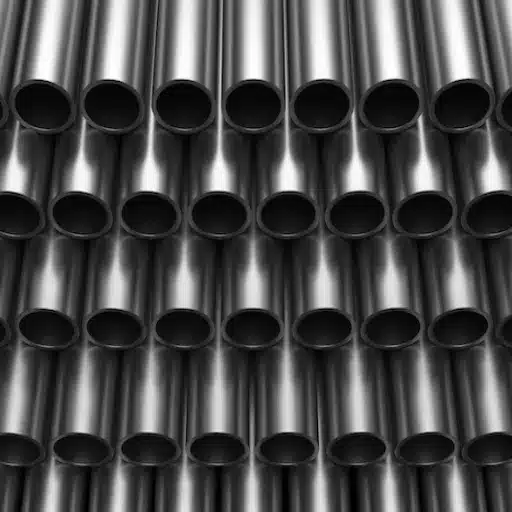
Material selection becomes straightforward when you break it into a structured process. Here is a practical framework to follow.
Step 1: Define Your Operating Temperature Range
Start with the highest and lowest temperatures the tube will experience. The service temperature of 650°C and above requires two material options, which are Inconel and Incoloy grades. Nickel 201 and Inconel 625 remain ductile at cryogenic temperatures, which extend beyond -196°C because most materials become brittle at that temperature.
Step 2: Identify Corrosion Exposure
You need to create a list that includes all chemicals that the tube will come into contact with, together with their respective concentrations and pH values. The presence of caustic alkalis indicates that Nickel 201 should be used. The strong oxidizing acids support the use of either Hastelloy C-276 or C-22 as suitable materials. The combination of seawater with chlorides requires the use of Monel 400 or copper-nickel 70/30. In sour gas environments that contain hydrogen sulfide components, Incoloy 825 and NACE MR0175 compliance materials become necessary.
Step 3: Determine Pressure and Structural Requirements
Seamless tubing becomes the standard requirement for high-pressure systems. Precipitation-hardened grades such as Inconel 718 and Monel K-500 deliver the needed strength for applications that involve cyclic loading, vibration, and fatigue.
Step 4: Match Standards to Project Specifications
The engineers need to establish which standards the project requires between ASTM and ASME and EN and JIS, and DIN. The standards determine material grade requirements together with rules for testing procedures and acceptable surface finish standards.
Step 5: Verify Supplier Certification and Traceability
The supplier must provide MTCs and PMI reports and third-party inspection services if required before any order can be placed. Purchasing from an uncertified supplier who offers low prices becomes your most costly mistake.
One supplier offered a 12% lower bid for a petrochemical heat exchanger project to a European EPC contractor, but the supplier failed to provide EN 10204 3.2 certification requirements. The contractor selected the supplier who had received certification. The tubes passed inspection when they entered the facility. The less expensive option would have resulted in delays, together with possible legal responsibilities.
Sizing, Forms, and Customization
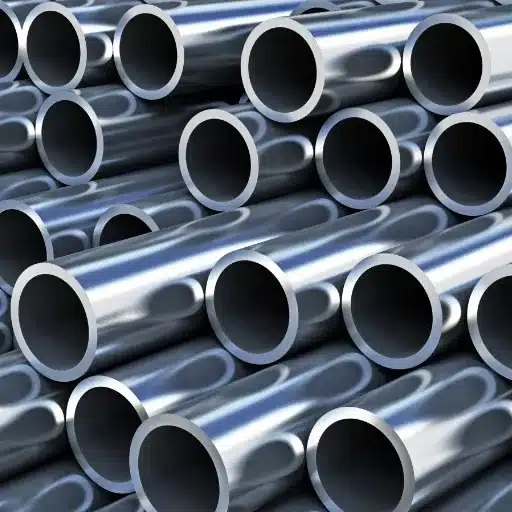
Nickel alloy tubing is available in an exceptionally wide range of sizes and forms. Understanding the typical ranges helps you communicate requirements effectively.
Dimensions and Tolerances
Industrial nickel alloy tubes typically range from 1/8 inch nominal up to 30 inch OD for large fabricated sections. Precision capillary tubes run as small as 0.2 mm OD with wall thicknesses down to 0.05 mm. Heavy-wall industrial tubes can reach wall thicknesses of 120 mm.
Standard lengths range from random lengths (5-7 meters) to fixed lengths up to 12 meters. Coiled tubing is also available for instrumentation and downhole applications, with continuous lengths up to 1,500 meters.
Tube Shapes and Finishes
While round tubing is most common, square, rectangular, oval, and hydraulic profiles are available for structural and fluid power applications. Surface finishes include mill finish, annealed and pickled, bright annealed, mechanically polished, and electro-polished for ultra-high-purity service.
Custom Fabrication
Many projects require more than standard tubing. Common customization options include:
- U-bend tubes for shell-and-tube heat exchangers
- Precision cutting to exact lengths
- Laser marking for traceability
- Beveled or plain ends per welding requirements
- Custom heat treatment for specialized mechanical properties
Conclusion
A nickel alloy tube is not a commodity purchase. It is a performance decision. In high-temperature, corrosive, or high-pressure environments, the grade you choose directly affects safety, uptime, and total lifecycle cost.
Here are the key takeaways:
- Standard stainless steel fails in extreme caustic, acidic, or high-temperature environments. Nickel alloy tubing is engineered for these conditions.
- Each grade solves a specific problem: Nickel 201 for caustic alkalis, Inconel 625 for high heat and oxidation, Monel 400 for seawater, and Hastelloy C-276 for aggressive acids.
- Seamless tubes offer superior pressure and temperature performance. Welded tubes provide cost savings for less demanding applications.
- Standards matter. ASTM/ASME specifications, Mill Test Certificates, and third-party inspection separate reliable suppliers from risky ones.
- Customization options including U-bends, precision cutting, and tight tolerances, make nickel alloy tubing adaptable to complex engineering requirements.
Material selection is often where projects either succeed or fail. When the environment is extreme, assumptions are not acceptable. The right nickel alloy tube matched to the right application will outlast cheaper alternatives and reduce long-term costs.
Ready to secure the right material for your next critical project? Request a quote for nickel alloy tubes with full certification, traceability, and engineering support.