Last March, a mining enterprise situated in Western Australia discovered the bitter truth that cost them dear – material selection. Sourcing and installing a new crusher with high-grade abrasion steel from a low-cost supplier was supposed to suppress challenges. Yet within a period of only six weeks, the liners appropriately contracted from that provider broke up. This unintended breakdown led to a staggering 72 hours of a standstill, a production loss equivalent to $180k, and procurement of the replacement components in an emergency scope of express delivery and correspondingly high costs.
What’s with the material delivered in reality? Regular AR400 without corresponding certification and through-hardness guarantees. What’s with the material that should have been provided, in fact? Manganese steel work material is designed for impact surfaces.
Selecting the best wear resistant steel does not mean searching for the most durable plate on the market. It means selecting the right coating for the type of wear you will encounter, the working conditions, and any manufacturing procedures. If this selection is done incorrectly, even the most expensive steel can become a problematic expense.
The objective of this guide is to enable the reader to select wear-resistant steel that gives the intended performance. Starting from wear-resistant steels with a structure of 300HB right up to 600HB, we shall bring out the various leading manufacturers’ classification systems (Hardox, AR, NM), discuss how work-hardening steels sometimes are the best wear resistant steel, while considering the application of martensitic grades, and present an effective know-how that you can directly implement.
What Is Wear Resistant Steel?
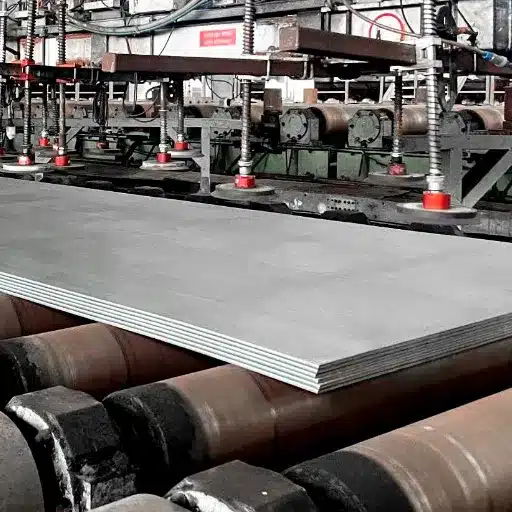
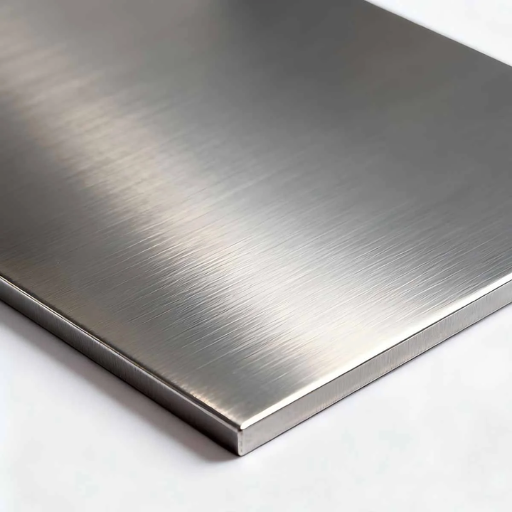
Wear-resistant steel, or abrasion-resistant steel, or wear plate is a special type of steel alloy particularly designed for extreme applications where wear through friction, impact, or material flow can be considered. This is unlike other types of steel used for structures that have been strongly worked. Those can withstand excessive heat when applied in cycles and grow hard surfaces without weakening.
The most common type of hardness measurement of any material is based on Brinell Hardness Numbers (HBW). In the case of Construction Steel, the range is between 120-150 HBW. In the case of such steel, wear-resistant individual grades start from 300 HBW all the way to 600 HBW.
Wear steels and ordinary steel may also be distinguished by means of the alloying elements:
- Carbon (0.15-0.30%) – Necessary for its hardness
- Chromium (0.50-1.50%) – Assists in hardenability and is resistant to corrosion
- Manganese (1.00-1.60%) – related to work-hardening toughness
- Molybdenum (0.10-0.60%) – Promotes resistance to temperature softening
- Boron (trace amounts) – Facilitates thickness through-hardening
Composition is important, but processing is equally important. Best quality wear plates are mostly cast or Q&T cast because of this chemistry. Quenching and tempering (Q&T) involves heating steels to austenitizing temperatures that are in the region of (850-950ºC), water or polymer quenching to form martensite at rapid eans, and tempering in a controlled manner to retain the hardness but impart toughness at the grade specified.
Wear Resistant Steel Grades Explained
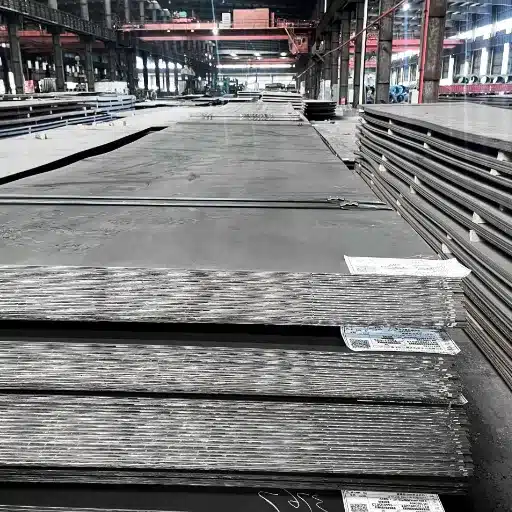
Hardness levels are important because they imply tradeoffs in resistance to wear, impact toughness, and allow for fabrication. An increase in hardness results in better resistance to wear and sliding, but generally means a loss in the ability to be formed and welded.
300HB Grade: NM360, XAR300, JFE-EH360
The entry-level wear resistant grade offers 2-3 times the service life of standard structural steel while maintaining good fabrication characteristics. These plates work well for moderate abrasion applications where welding, bending, or machining remains necessary.
Typical applications:
- Structural components in material handling equipment
- Low-stress chutes and hoppers
- Agricultural implements
- Light-duty mining equipment
The 300HB grade serves as a cost-effective upgrade from mild steel when wear becomes problematic but extreme conditions don’t justify premium grades.
400HB Grade: NM400, AR400, Hardox 400, XAR400
This represents the industry standard and the most commonly specified wear plate grade. With hardness ranging 360-440 HBW, 400-grade steel delivers 4-5 times the wear life of mild steel while retaining reasonable fabrication properties.
Why 400HB dominates the market:
- Excellent balance of wear resistance and toughness
- Weldable with standard preheating (150-200°C)
- Can be cold-formed to moderate radii
- Available from stock at most industrial distributors
- Cost-effective for most applications
When Liu Wei, a procurement manager at a cement plant in Jiangsu province, faced recurring liner failures in their raw mill, switching from 235HB structural plate to NM400 extended replacement intervals from 8 months to 3.5 years. The higher initial material cost (900/tonvs900/tonvs600/ton) delivered 340% lower total lifecycle cost.
Best applications:
- Mining truck bodies and dump truck liners
- Excavator and loader buckets
- Chutes, hoppers, and transfer points
- Construction equipment blades and edges
- Cement mill liner plates
450HB Grade: NM450, AR450, Hardox 450, XAR450
The 450HB class material serves as an intermediate product connected between 400-grade and 500-grade material, which is specifically designed to last 25% more during high-energy multi-slide abrasion compared with 400HB grade while keeping fabrication characteristics the same.
Key specifications:
- Hardness: 420-470 HBW
- Yield strength: ~1250 MPa
- Preheat requirement: 175-225°C for welding.
- Minimum bend radius: about 4x plate thickness
As for this class, 400HB becomes marginal in wear life, while 500HB is too hard for the operating conditions.
500HB Grade: NM500, AR500, Hardox 500, XAR500
The hardness from 470 to 530 HBW defines the premium grade of steel with a 500 level. These plates are resistant to severe wear and gouging, and due to the higher carbon equivalent, higher toughness, and more careful fabrication work is necessary, e.g., joint designs and very tight clearances in parts.
Critical considerations for 500HB:
- Pre-heating is obligatory (200-250 °C) before welding.
- Restricted cold-forming properties – tight bends may lead to cracking.
- Higher residual stresses from the manufacturing process.
- High selling price (typically 30-40% greater than from 400HB grade).
Where 500HB delivers value:
- Crusher liners and grinding mill components.
- Cutting edges for excavators and dozers.
- High-pressure slurry handling equipment
- Shredder and recycling machinery
- Screens and grizzly bars
550HB and 600HB Grades: NM550, NM600, Hardox 600
Maximum hardness grades provide extreme abrasion resistance for specialized applications where impact loads are minimal but sliding wear is severe. At 570-640 HBW, these materials approach the hardness of some tool steels.
Fabrication realities:
- Welding requires strict procedure control and post-weld heat treatment
- Mechanical cutting is extremely difficult—laser or plasma cutting is required
- Forming essentially impossible—parts must be machined from a plate
- Premium pricing (often 2-3x the cost of 400HB grades)
Appropriate applications:
- Primary crusher hopper liners
- Shredder cutter heads
- High-wear screen panels
- Specialized tooling and dies
Important: Using 600HB grades in high-impact applications risks catastrophic brittle fracture. The extreme hardness provides no benefit if the material cracks under impact load.
Hardox vs AR Steel vs NM Steel: Brand and Standard Comparison
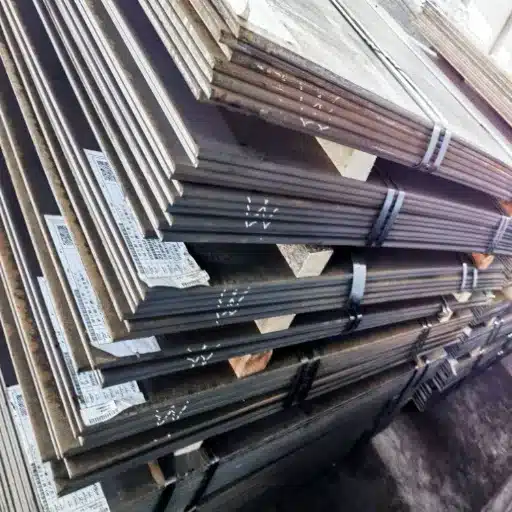
The wear plate market categorizes products by origin and quality level. Understanding these distinctions helps procurement teams balance performance requirements against budget constraints.
Hardox: The Premium Benchmark
Hardox brand of SSAB can be viewed as the overall best representative quality level for wear-resistant steel globally. They are produced in Sweden and the US, with plates from Hardox going through strict quality control, while the mechanical properties of the entire plate are fulfilled.
Hardox advantages:
- Consistency: The hardness tolerance (±20 HBW) is very narrow; equally through-thickness properties are also achieved.
- Toughness: Even at sub-zero temperatures, it offers far better impact toughness.
- Fabrication support: A near-comprehensive range of welding and cutting methods are available through the manufacturer.
- Global availability: Stocked by distributors worldwide
- Brand recognition: Specified by major OEMs like Caterpillar, Volvo, and Komatsu
- Cost position: Price positions of Hardox are quite high at about 30-50% premium over generic AR grades and 15-25% over quality Chinese NM grades.
AR Steel: The Generic Category
“AR” actually stands for “Abrasion Resistant,” and it is not generally known as a trademark brand. The AR400 and AR500 designations refer to the hardness levels, not to specific quality standards. The AR plates that are internationally produced in several mills are of varying qualities.
Quality spectrum:
- Premium AR mills: Nucor, SSAB (non-Hardox lines), Dillinger produce consistent, high-quality AR plate meeting strict tolerances
- Commercial AR mills: Mid-tier producers offering acceptable quality for standard applications
- Budget AR sources: Variable quality, potential issues with hardness uniformity, chemistry control, and documentation
When sourcing AR steel, mill test reports and certification matter. Reputable mills provide detailed chemical analysis, hardness mapping across the plate, and mechanical property verification.
NM Steel: The Chinese Standard
NM stands for ‘Nai Mo,’ a term used to manufacture wear plates in China per the standard GB/T 24186. Top Chinese mills, like Baosteel, Ansteel, and Shougang, produce NM quality grades that meet or even exceed the global criteria of quality.
NM Grades Specifics Are:
- NM360: 320-400 HBW (Comparable to the 300HB International Grades)
- NM400: 370-430 HBW (Comparable to AR400/Hardox 400)
- NM450: 420-480 HBW (Comparable to AR450/Hardox 450)
- NM500: 470-530 HBW (Comparable to AR500/Hardox 500)
- NM550/NM600: 570+ HBW for Extreme Applications
Quality evolution: For a majority of applications, top Chinese-based steel producers from the major state-owned mills match international norms when they adapt NM steel. It is the differentiation made by the quality that is consistent, from batch to batch, and documents that are complete.
Price advantage: This class has more hidden advantages. The NM grades typically cost less–between 20-40% less-when compared with a corresponding Hardox mark. This type of savings brings NM into the limelight. It means that poorly financed projects that require supplier qualifications and documentation for traceability to achieve their target can get an effective alternative.
Critical fabrication note: NM steel grades, from Chinese mills, cannot tolerate any secondary heat treatment after it is delivered at 250-300 degrees Celsius. Connect this with post-weld stress relief and flame straightening in this margin range, which irreversibly softens the crystal structures of this material and induces loss of wear-resistant properties.
Work-Hardening Steel: When Hadfield Manganese Outperforms Martensitic Grades
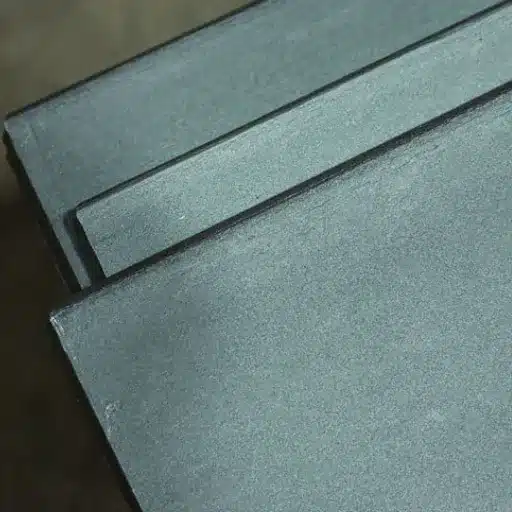
Not all wear problems are solved with harder martensitic steel. In high-impact, gouging, and crushing applications, Hadfield manganese steel (ASTM A128 Grade A/B/C) often delivers superior performance despite lower initial hardness.
The Work-Hardening Mechanism
Hadfield steel contains 11-14% manganese and 1.0-1.4% carbon. In the as-delivered condition, it measures only 180-220 HBW—barely harder than mild steel. However, under impact loading, the surface layer work-hardens to 500-550 HBW while the core remains tough and ductile.
This unique property creates a self-renewing hard surface. As the outer layer wears away, fresh material work-hardens to replace it. The result is exceptional performance in applications involving:
- Heavy impact from falling rocks or materials
- Gouging and tearing forces
- High-stress crushing operations
- Applications with both impact and abrasion
Hadfield vs Hardox: Application Guidelines
| Wear Mechanism | Recommended Material | Rationale |
|---|---|---|
| Sliding abrasion (sand, dust, fine particles) | Hardox 500/600 | Higher initial hardness resists fine particle erosion |
| Impact + abrasion (crushers, hammers) | Hadfield manganese | Work-hardening maintains performance under impact |
| Heavy gouging (large rock, ripping) | Hadfield manganese | Toughness prevents brittle fracture |
| High-pressure grinding | Hardox 500 | Consistent hardness resists uniform wear |
| Primary crushing | Hadfield manganese | Impact resistance critical for large feed material |
An important illustration of that is a limestone quarry in Hebei Province. Their primary Jaw Crusher with hardox 500 liners used to be changed every 4 months because of cracking in the fixed jaw bolting points. However, on changing the liners to Hadfield Manganese (ASTM A128 Grade B), one extension of the entire life is now to be seen; they lasted 14 months with probably lesser initial hardness than Hardox.
Fabrication Warning: Hadfield steel is unique in its fabrication difficulties. It works hardens quickly. As a consequence of this, it becomes difficult to turn and drill. As well, the welding process is a very specialized process that needs special electrodes (usually either stainless or manganese steel grades) and careful control of heat input. Most fabricators will require cutting plasmas, waterjet or grinding to the final dimensions instead of machining of Hadfield.
Selection Framework: How to Choose the Right Wear Steel
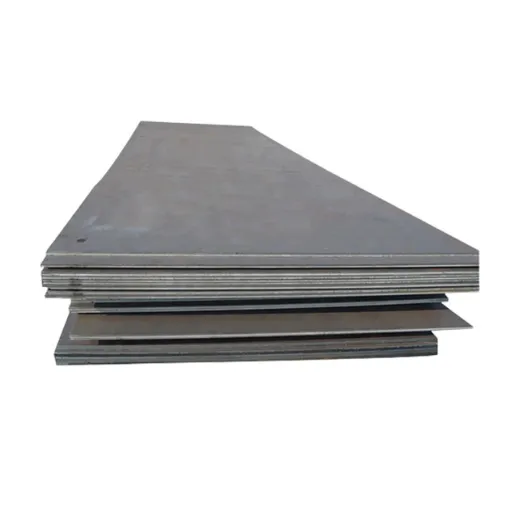
Selecting optimal wear-resistant steel requires a systematic evaluation of operating conditions, wear mechanisms, and practical constraints. Follow this framework to avoid costly mismatches.
Step 1: Identify the Primary Wear Mechanism
To be very specific, various kinds of wear modes require adequate features of the material while selecting it:
Sliding abrasion (fine particles, sand, dust): The most critical consideration is hardness. Use grades more than or equal to 500HB or chromium carbide overlay in very severe conditions.
Impact abrasion (crushing, hammering): The major consideration, in this case, is toughness and work-hardening capability. Use Hadfield manganese or 400HB thick plates for the same.
Gouging and tearing (large rocks, ripping): A tactic of toughness above hardness: For this, we recommend Hadfield manganese to 400HB with some adequate thickness.
Corrosive wear (wet slurry, chemicals): Alternatives available, but less likely with bronze equipment because standard wear steels do not have any resistance to chemicals. In this respect, stainless steels or nickel alloys might be required.
Step 2: Assess Operating Conditions
Document the operational environment:
- Temperature: Mild steels can keep their properties intact at around 250°C, but not further, whereas heat-resistant grades will work for more than this range.
- Corrosive exposure: Acidic or saline environment exposes and accelerates wear; it triggers more material upgrade.
- Load characteristics: Static loading dynamics are completely different from the high-speed impact requirement of such dynamic endurance.
Step 3: Evaluate Fabrication Requirements
The best wear plate provides zero benefit if you cannot install it:
- Welding: Grades above 500HB require preheating, low-hydrogen electrodes, and controlled interpass temperatures
- Cutting: Thickness and hardness determine methods—mechanical cutting works for 400HB; plasma or laser required for 500HB+
- Forming: Cold bending a 400HB plate requires 3-4x thickness minimum radius; 500HB grades have very limited formability
- Machining: Harder grades machine poorly; consider near-net-shape supply or grinding operations
Step 4: Calculate Total Lifecycle Cost
Initial material cost often represents a small fraction of total ownership cost:
Total Cost = Material Cost + Installation Labor + Downtime Cost + Maintenance AccessExample comparison for a mining truck body liner:
| Material | Unit Cost | Service Life | Replacements (10 years) | Total Material Cost | Downtime Cost* | Total Cost |
|---|---|---|---|---|---|---|
| Mild steel (Q235) | $550/ton | 18 months | 6.7 | $3,685 | $670,000 | $673,685 |
| NM400 | $850/ton | 5 years | 2 | $1,700 | $200,000 | $201,700 |
| Hardox 500 | $1,200/ton | 7 years | 1.4 | $1,680 | $140,000 | $141,680 |
Assuming $100,000 per replacement event (labor + lost production)
The premium Hardox 500 actually costs 79% less than mild steel over the equipment lifecycle when downtime costs are included.
Quick Selection Reference
| Application | Recommended Grade | Notes |
|---|---|---|
| Dump truck bodies | NM400/AR400 | Cost-effective for moderate wear |
| Excavator buckets | NM450/Hardox 450 | Balance of wear and impact resistance |
| Loader buckets | NM400/Hardox 400 | High impact requires toughness |
| Crusher liners | Hadfield Mn or NM500 | Depends on the primary wear mode |
| Grizzly screens | NM500/Hardox 500 | High abrasion, minimal impact |
| Cutting edges | NM500/Hardox 500 | Maximum wear resistance |
| Chutes/hoppers | NM400-NM450 | General material handling |
| Cement mill liners | NM400/NM500 | Depends on the grinding media size |
Ready to discuss your specific application requirements? [Contact our engineering team] for personalized material recommendations based on your operating conditions.
Fabrication Best Practices for Wear Resistant Steel
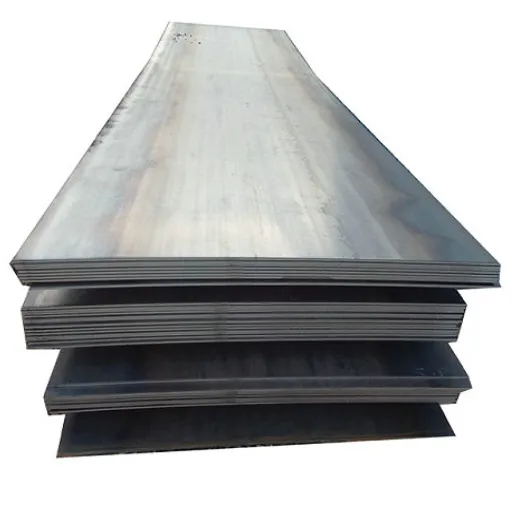
Even a correctly specified wear plate fails prematurely if improperly fabricated. Follow these guidelines to maintain material properties through processing.
Welding Requirements
Preheating: It should be for grades 450HB and above. The preheating temperature depends on both grade and thickness:
- 400HB: Preheat to 100-150°C for sections thicker than 25mm
- 450HB: Preheat to 150-200°C
- 500HB: Preheat to 200-250°C
- 600HB: Preheat to at least 250°C, think about post-weld heat treatment
Electrode selection: Use low-hydrogen electrodes that are E7018, E9018, and equivalent. The risk is in hydrogen cracking when high-hardness steels are to be welded.
Heat input control: Control heat input within (0.5 to 1.5 kJ/mm through this joint). Heat input above this heats the zone directly affected by the heat and decreases wear resistance. Lacking heat input actually gives more brittle microstructures and may lead to cracking.
Interpass Temperature: Check interpass temperature, but let the weldment cool to below the maximum interpass temperature (typically 250°C) before the succeeding passes.
Cutting Methods
Plasma cutting: It is the best way to get good cuts in 500HB+ grades. It is fast, and at the same time very clean, with a minimal heat-affected zone. Modern CNC plasma systems can be employed for thicknesses up to 50mm+.
Laser cutting: Better precision, typically for plates that are thinner than 25mm. It gives very little heat distortion but is limited by thickness and equipment capacity.
Waterjet cutting: Cold cutting is the best process for heat-affected zone issues. It is one of the slowest methods, but perfect for precision or solid pieces that are complicated in shape and cut.
Mechanical cutting: Band saws and cold saws cut across the length for 400HB. Cutting speeds are slow, and the wear of the blade is considered high, so machines don’t really match, especially for materials 500HB+.
Oxy-fuel cutting: It is usually not recommended for higher hard grades, more than 400HB. The heat-affected zone softens so much that it will create a weak boundary prone to rapid wear.
Bending and Forming
Minimum bend radii: Harder grades require larger bend radii to prevent cracking:
- 300HB: 2x thickness minimum
- 400HB: 3-4x thickness minimum
- 450HB: 5-6x thickness minimum
- 500HB: 6-8x thickness minimum (often impractical)
- 600HB: Not recommended for cold forming
Direction matters: Bend perpendicular to the rolling direction when possible. Forming parallel to the rolling direction increases the cracking risk.
Hot forming: Consider heating to 600-800°C for complex forming of 500HB grades. Requires post-forming reheat treatment to restore hardness—adding cost and complexity.
Industrial Applications by Sector
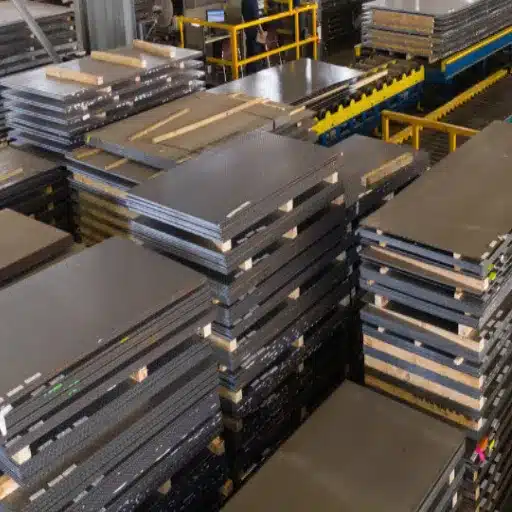
Mining and Quarrying
Wear plate mining seemed to be having the largest share of wear plate applications. Gear is continuously getting in the way of hard rock, metallic ores, and aggregates, which are then supposed to bear severe impacts.
Primary applications:
- Crusher liners: Typically, jaw crushers employ Hadfield manganese; cone crushers use 500HB grade or chrome white iron
- Conveyor systems: The 400-450 HB grade is used for liners fitted under chutes, on skirt boards, and at transfer points
- Loading machine: The 400-500 HB grade liners installed in the excavator and shovel buckets are needed to resist loads and influence accordingly by material hardness
- Haul trucks: The classic locations where wear plates are applied in the most brute environments-body liners, as well as tailgate and sideboards in haul trucks, all use 400-450 HB grade materials.
Construction and Earthmoving
Construction equipment slowly develops machine onto brute soil, aggregates, and demolition debris with moderate impact loads.
Primary applications:
- Dozer blades: Abrasion: 500HB cutting edges; Impact: 400HB moldboard;
- Loader buckets: Base plate and side cutter are 400-450HB grade.
- Grader blades: 400HB: Normal, 500HB for abrasive conditions
- Asphalt paving: Use special 400HB heat-perative gradings on screed plates and auger segments;
Cement and Aggregates
Cement plants may grind highly abrasive limestone, clinker, and raw materials at average temperatures.
Primary applications:
- Raw mills: Just like the 400-500HB grades employed for grinding media, liner plates, lifters, and diaphragms are employed
- Clinker coolers: Heat-resistant 400HB grades are often used in grate plates and side liners
- Kiln inlet: Ni-hard casts or particular heat-resistant alloys can withstand temperature + abrasion
- Conveying: The standard 400HB grades are usually used in the construction of chutes and transfer points
Power Generation and Coal Handling
The most severe reliability demands are for coal-fired power plants, since they need to handle dry abrasive fuel as well as remain defenseless against harmful combustion byproducts.
Primary applications:
- Coal handling: Chutes, Hoppers, and Transfer Houses using 400HB grades and more.
- Ash handling: Some sluice systems and vacuum equipment use 500HB or some other specially made corrosion-resistant grades.
- Mills: The pulvarizer rolls, and tables use either hard-chrome-moly casting or a 500HB overlay.
Special Considerations: High sulfur coal creates very corrosive conditions, which require upgraded materials beyond the normal wear grades.
Cost Analysis: Beyond Price Per Ton
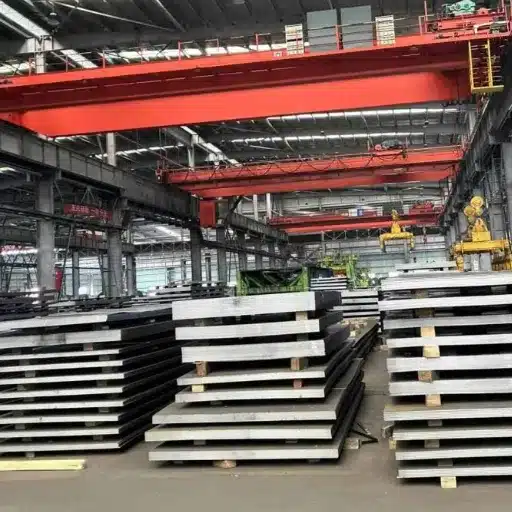
Focusing on material cost per ton leads to poor decisions. Comprehensive cost analysis includes installation labor, equipment downtime, maintenance access difficulty, and replacement frequency.
The Hidden Costs of Cheap Materials
A procurement team at a steel mill in Shandong initially celebrated securing “AR400” plate at 680/ton—680/ton—170 below market rate. Three problems emerged:
- Hardness verification showed only 320 HBW average—below specification
- Thickness tolerance varied +2.5/-0mm instead of standard ±0.5mm, causing fit-up issues
- Service life reached only 16 months versus 42 months for certified NM400
The “savings” of 3,400 on material cost evaporated against 3,400 on material cost, evaporated against 45,000 in additional replacement costs over five years.
Value Engineering Approach
Total lifecycle costs should be optimized, not initial purchasing rates:
- Map actual wear patterns: Don’t simply update all surfaces in the same manner. Areas where wear is heavy should be specified at the highest quality grades, while areas where it is not so heavy may be given ordinary materials.
- Consider thickness optimization: Often, as in the case where a thinner 500HB plate can outperform a thicker 400HB plate at lower weight and with equivalent outlays.
- Evaluate overlay options: Hard surfacing deposits by welding or overlay with chrome carbide plates outperform in cases of extreme local wear than solid premium grade abrasion-resistant alloys.
- Factor fabrication costs: If compared to the 400HB plate, the 500HB plate involves outsourcing of cutting and complex welding, but the same operations can be carried out in-house in the case of 400HB. The effective cost difference becomes less.
Budget Tier Recommendations
| Budget Level | Strategy | Expected Outcome |
|---|---|---|
| Constrained | Quality NM400 for high-wear zones, mild steel elsewhere | 60-70% wear life improvement |
| Standard | NM450 or AR400 throughout | 3-4x service life vs mild steel |
| Performance | Hardox 500 in critical zones, 450 elsewhere | 5-7x service life, predictable performance |
| Premium | Application-specific optimization with 600HB or overlays | Maximum life, minimum unplanned downtime |
Conclusion: Making the Right Wear Steel Decision
When we select the best wear resistant steel that fits our idea, you will need to check the wear mechanisms, the environmental conditions under which the steel is supposed to function, and the total life-cycle economics rather than just making simple hardness comparisons.
Key takeaways:
- Match material to wear mode: However, sliding abrasion favors a high hardness (500-600 HB), whereas impact and gouging will favor a high toughness and work-hardening tolerance of the stuff (Hadfield manganese). To choose this option, one might consider 400 HB grades.
- Consider fabrication reality: Otherwise, the highest hardness grades most likely won’t bring any benefit since you can’t cut, weld, or form them into a usable component.
- Calculate true lifecycle cost: The initial price of the material is often only 20% of the total cost of ownership when downtime and labor for replacement are included.
Quality has to be verified, whatever brand you choose: Regardless of the brand (be it Hardox, AR, or NM grades), demand for mill test reports, hardness verification, and traceability documentation should be met.
As equipment will be creating reliable production assets from maintenance headaches, it becomes crucial to find the right wear-resistant steel. The wrong choice translates into expensive failures and unplanned downtime, irrespective of the price.
Would you like to specify wear-resistant steel for your application? Simply reach out to our metallurgical engineering team so that they can recommend the right material to you and offer all the assistance and quite competitive quotes based on your project requirements.