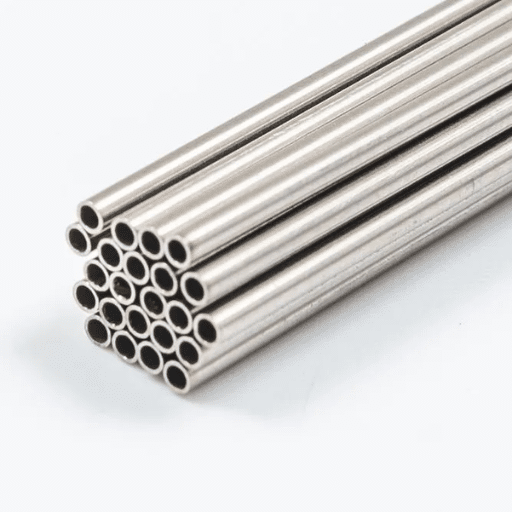
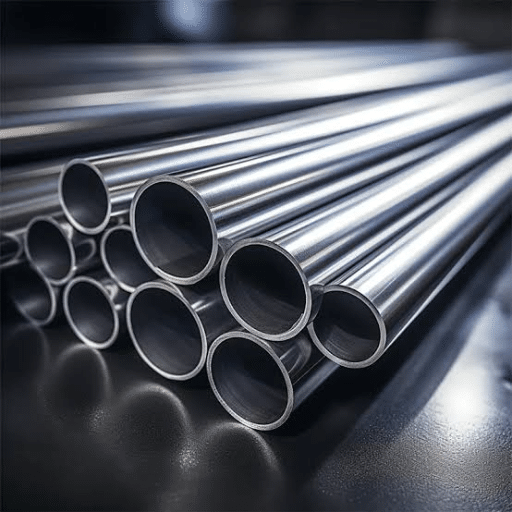
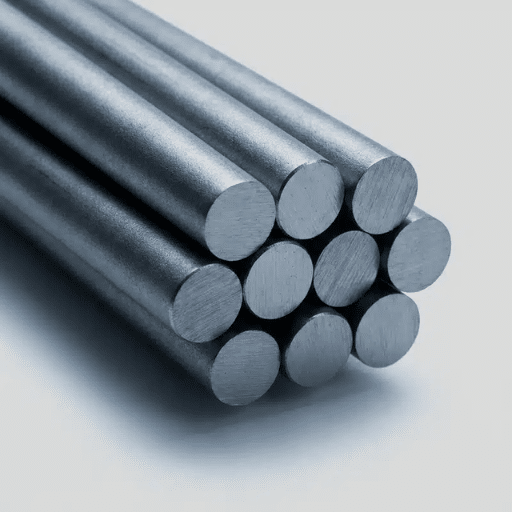
17-4PH is used wherever high strength, heat-treatable hardness, and moderate corrosion resistance must coexist. That means aerospace fasteners and landing gear, oil & gas valve stems, surgical instruments, food processing hardware, marine shafts, and industrial tooling. But the alloy is only half the decision. The same 17-4PH bar aged to H900 and aged to H1150D behaves like two different metals. Choosing the wrong condition is how components fail in service.
Two identical 17-4PH valve stems were installed in the same chemical plant. One was aged to H900 for maximum strength; the other was aged to H1150D. Within a year, the H900 stem stress-corroded while the H1150D stem is still in service. The alloy was right. The condition was wrong.
This guide maps 17-4PH applications industry by industry, tells you exactly which heat treatment condition belongs to each use, and shows you the operating limits engineers rarely get told. If you are a design engineer or procurement manager trying to answer “is 17-4PH right for my part, and which condition do I specify?”, this is the decision framework you need. You can also reference the full 17-4PH stainless steel guide for the complete grade overview.
Key Takeaways
- 17-4PH serves six major sectors: aerospace, oil & gas, medical, food processing, marine, and industrial tooling.
- H900 (peak strength, 40-47 HRC) suits fasteners and wear parts; H1025 balances strength and toughness for cyclic aerospace loads; H1150 and H1150D deliver the best toughness and corrosion resistance.
- For NACE MR0175 sour service, the hardness cap is 33 HRC and H1150D is the only unconditionally accepted condition.
- Service temperature is limited to roughly 300-316°C; H1150 extends subzero use to -80°C and H1150D to -196°C.
- Always specify the condition on your drawing, not just the grade, and request certified Condition A bar or plate with a full mill test report.
Why 17-4PH Is Specified for Demanding Applications

17-4PH (UNS S17400, AISI/SAE 630, EN 1.4542, X5CrNiCuNb16-4) is a precipitation-hardening martensitic stainless steel. Its defining trait is that you machine it soft, then age it to strength. In the solution-annealed Condition A, it is around 28-33 HRC and readily machinable. After aging, it develops tensile strength up to roughly 1,310 MPa (190 ksi) at H900, with hardness ranging from 28 to 47 HRC depending on the heat treatment condition you select.
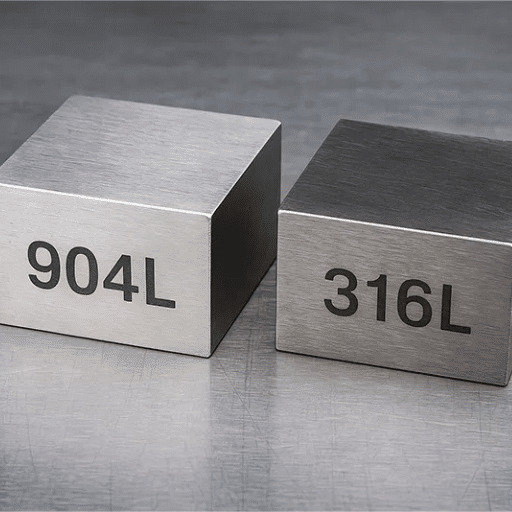
That combination is what austenitic grades cannot offer. 316L tops out near 240 MPa yield strength in annealed form and cannot be hardened by heat treatment. 17-4PH at H900 delivers roughly five times the yield strength of annealed 316, while keeping corrosion resistance comparable to 304 or 430 in atmospheric and diluted-acid media. For a full property comparison, see the 17-4PH properties guide.
Reach for 17-4PH when your part needs all three at once:
- High strength in a light, thin-section component
- Hardness and wear resistance from heat treatment, not just cold work
- Moderate corrosion resistance without the strength penalty of austenitic grades
If you need deeper corrosion resistance in chlorides, a duplex or super-duplex grade may serve better. If you need maximum toughness with slightly lower strength, 15-5PH is the aerospace alternative. But when strength, hardness, and corrosion resistance must coexist in one machined component, 17-4PH is the workhorse. The next sections show you exactly where it earns its keep.
Aerospace & Defense Applications
Aerospace is where 17-4PH built its reputation. The alloy carries the AMS designations your program likely requires: AMS 5643 for bar and rod, AMS 5604 for sheet and plate, and AMS 5622 for forgings.
Typical aerospace components
- Fasteners: bolts, screws, rivets, and high-strength pins
- Landing gear structural parts and actuator pins
- Turbine and engine hardware operating below 300°C
- Structural fittings, brackets, and mounts
- Missile, ordnance, and launch-vehicle components
Condition guidance for aerospace
The condition choice follows the load. For fasteners where maximum tensile strength drives the design, H900 delivers peak strength (around 1,310 MPa tensile, 40-47 HRC). But for landing gear and cyclic-loaded parts, toughness matters as much as strength, and H1025 is the aerospace standard: tensile strength around 1,070-1,200 MPa, yield around 1,000-1,050 MPa, hardness 33-42 HRC, and elongation of 12-15%.
Mini-story: the landing gear pin swap. A mid-size aerospace supplier was qualifying actuator pins in H900 for maximum strength. During impact testing, the H900 pins showed low toughness near the stress raisers and risked fracture on hard landings. The supplier re-specified the pins to H1025. The strength dropped roughly 8%, but toughness and impact resistance climbed enough for the pins to pass full qualification. The design engineer’s rule going forward: never specify H900 for anything that sees impact or cyclic loading without reviewing the toughness data first.
For ultra-critical fatigue applications, some programs spec 15-5PH instead; the 15-5PH vs 17-4PH comparison explains when to make that switch.
Specifying for aerospace? Tell us the AMS spec, condition, and form. Our team will confirm stock, certification, and delivery within 24 hours. Request a 17-4PH quote.
Oil & Gas and Petrochemical Applications
Oil and gas is where condition selection becomes a safety-critical decision. 17-4PH appears throughout the upstream and downstream plant: valve stems, valve bodies and trim, pump shafts, downhole tools, wellhead components, and fasteners.
NACE MR0175 / ISO 15156 sour-service rules
In hydrogen sulfide (H2S) environments, you cannot simply pick the strongest condition. NACE MR0175 / ISO 15156 limits 17-4PH to a maximum hardness of 33 HRC, and it restricts which conditions are acceptable:
- H900, H1025, H1075: not acceptable for sour service. Their hardness and microstructure make them vulnerable to sulfide stress cracking.
- H1150D (double-aged): the only unconditionally accepted condition. The double aging cycle refines the microstructure and holds hardness at or below 33 HRC.
- H1150: acceptable on a case-by-case basis, subject to hardness verification and design stress limits.
This is the single most important application rule in this article. If your valve stem or fastener will see wet H2S, specify H1150D, not H900.
Mini-story: the verification lesson. In a severe sour gas field producing 27% H2S with chloride concentrations up to 80,000 mg/L, nine of 185 NACE-compliant valve stems failed within 15 months. The stems were specified H1150 plus H1150D. When the failed material was measured, hardness came back at C32-C33, above the C22-C30 the certificates reported. The gap between documented and actual hardness is exactly why operators now demand 100% hardness verification per ASTM E18 and full mill test reports on every sour-service order. The material was right, the spec was right, but the verification discipline was not.
Temperature and pressure windows
The practical service window for 17-4PH in oil and gas is roughly -40°C to +315°C. Above that ceiling, strength drops and corrosion resistance degrades; for high-pressure, high-temperature (HPHT) wells, engineers typically move to nickel-based alloys such as Inconel 718. In moderate conditions, 17-4PH H1150D trim and stems give operators a cost-effective, certified alternative to more exotic trim materials.
Medical & Surgical Instrument Applications

17-4PH is a staple of the surgical instrument tray, where its hardness holds cutting edges and its corrosion resistance survives repeated sterilization.
Typical medical components
- Surgical scissors, forceps, and needle holders
- Bone drills and cutting guides
- Dental hand instruments and orthodontic tools
- Orthopedic surgical tooling and medical screwdrivers
- Reusable endoscopic and laparoscopic instruments
ASTM F899 and the implant caveat
Bar and wire for surgical instruments are governed by ASTM F899. 17-4PH is an instrument grade, not an implant material. It does not appear on the standard lists for permanently implanted hardware, which are dominated by titanium alloys and cobalt-chromium. If a supplier offers 17-4PH for an implant, that is a red flag.
For instruments, however, the alloy is ideal. It autoclaves without dimensional drift, holds an edge after age hardening, and machines cleanly in Condition A before final aging.
When a surgeon drops a 17-4PH scissor on the OR floor, the instrument survives; the same cannot be said for many softer blade materials. Sterilization cycles, instrument lifetimes, and edge retention all favor the age-hardened microstructure.
Food Processing & Pharmaceutical Applications
In food and pharma plants, 17-4PH shows up in machinery parts, pump components, valves, fasteners, and mixer hardware where parts need strength plus a cleanable surface.
Why 17-4PH works here
The alloy resists the mild acids and cleaning agents used in food-contact washdowns, and its hardness resists wear from abrasive product streams and rotating components. Valve stems and pump shafts in processing lines benefit from the same strength-toughness balance as their oil and gas counterparts, minus the H2S exposure.
One caveat applies across the sector: keep service below roughly 300°C. Processing lines that run hotter, or that use aggressive chloride-based sanitizers at elevated temperature, should be reviewed against 316L or higher-alloy options. In most CIP (clean-in-place) and washdown environments, though, 17-4PH components give years of service with routine passivation.
Marine & Offshore Applications
17-4PH appears in propeller shafts, couplings, underwater fasteners, offshore foils, helicopter deck platforms, and ocean instrumentation housings.
Seawater corrosion: the honest limits
Here is where 17-4PH demands respect. Its chloride pitting resistance is good when aged near 550°C, and it degrades when aged at 620°C. The alloy is not recommended for prolonged contact with stagnant seawater. Chlorides attack the age-hardened microstructure, and pitting can become a crack initiation site under cyclic load.
The practical rules for marine use:
- Moving water, cathodically protected systems, or coated parts: 17-4PH performs acceptably with proper design.
- Stagnant seawater, crevices, or uncoated immersion: consider duplex or super-duplex grades instead.
- Aging condition matters: for chloride resistance, avoid the highest aging temperatures.
For offshore valve trim and fasteners that do see chlorides, the same H1150D discipline that protects against H2S also improves pitting resistance. When in doubt, the duplex family is the safer seawater choice.
Industrial Manufacturing & Tooling Applications
The tooling shop is where 17-4PH earns quiet money. Gears, shafts, molds, dies, injection mold cores, bushings, robotics frames, and precision hardware all use it.
The moldmaker’s advantage
Mini-story: the injection mold. A precision tooling shop machines 17-4PH injection mold cores in Condition A, when the steel is soft and cutting is fast, then ages the finished cores to H900. Aging at 482°C produces uniform hardness (40-47 HRC) with minimal distortion, because the precipitation strengthening happens throughout the section at low temperature. The alternative, heat-treating first and machining hardened steel, eats carbide tools and tolerances. Machining in Condition A and aging after means tighter tolerances, longer tool life, and parts that hold dimension through the mold’s life. This is the 17-4PH machining workflow in its purest form.
For shafts and gears that need both wear resistance and fatigue strength, the H900-to-H1025 range covers most designs. Robotics frames and precision hardware use 17-4PH where a magnetic, hardenable stainless beats 304 for structural stiffness and thread strength.
Nuclear & Power Generation Applications
Nuclear and power applications use 17-4PH for waste cask hardware, reactor ancillary components, and non-code structural parts.
Documentation is the differentiator
In this sector, the material is only half the battle. Traceability and documentation requirements drive procurement: full mill test reports, heat traceability, hardness verification, and, where required, ultrasonic NDT. Every 17-4PH order from our facility ships with a material test report and spectral analysis so your quality team can close its documentation loop on day one.
One design note: for welded pressure-retaining components, ASME code considerations apply, and 17-4PH is generally not the preferred choice for code-stamped pressure vessels. It shines in hardware, fasteners, cask fittings, and support structures where certified strength and corrosion resistance are the priorities.
How to Select the Right 17-4PH Condition for Your Application
Selecting the condition is selecting the failure mode you are designing against. Identify the dominant risk first, then pick the condition.
Condition-selection decision matrix
| Application type | Dominant design driver | Recommended condition | Key properties |
|---|---|---|---|
| High-strength fasteners, wear parts | Maximum tensile strength | H900 | ~1,310 MPa tensile, 40-47 HRC |
| Landing gear, cyclic-loaded aerospace parts | Strength + toughness | H1025 | ~1,070-1,200 MPa tensile, 33-42 HRC, 12-15% elongation |
| General tooling, gears, bushings | Hardness + dimensional stability | H900 to H1075 | 33-47 HRC depending on aging |
| Chemical and marine hardware | Toughness + corrosion resistance | H1150 | ~930-1,030 MPa tensile, 28-37 HRC |
| Sour-service valve stems, fasteners | Sulfide stress cracking resistance | H1150D | Double-aged, ≤33 HRC, NACE-compliant |
| Maximum toughness, subzero service | Impact toughness | H1150M or H1150D | Lowest strength, best ductility |
Mechanical properties by condition
| Condition | Aging cycle | Tensile (MPa) | Yield (MPa) | Hardness (HRC) | Elongation (%) |
|---|---|---|---|---|---|
| H900 | 482°C / 1h | ~1,310 | ~1,170 | 40-47 | ~10 |
| H1025 | 552°C / 4h | ~1,070-1,200 | ~1,000-1,050 | 33-42 | 12-15 |
| H1075 | 580°C / 4h | ~1,000-1,100 | ~860-960 | 32-38 | 13-16 |
| H1100 | 593°C / 4h | ~965-1,070 | ~790-930 | 31-37 | 14-17 |
| H1150 | 621°C / 4h | ~930-1,030 | ~725-860 | 28-37 | 16-19 |
| H1150D | 621°C double-aged | ~930-1,000 | ~725-860 | 28-37 | 16-19 |
The 17-4PH hardness guide details the hardness ranges across every condition and how they are verified.
Application Limitations & Design Considerations
Being honest about limits is what separates a reliable supplier from a catalog. 17-4PH has real boundaries:
- Maximum service temperature: ~300-316°C (572-600°F). Above this, strength and corrosion resistance decline. For hot sections, a nickel-based or high-temperature alloy is required.
- Subzero service: only in the higher conditions. H1150 extends service to about -80°C; H1150D to about -196°C. Never use H900 in cryogenic service.
- Chloride SCC and pitting depend on aging temperature. Pitting resistance peaks near 550°C aging and degrades at 620°C. For chloride environments, review the condition before committing.
- Hydrogen embrittlement risk above ~35 HRC. Hardness and hydrogen uptake are linked; above 35 HRC the risk rises, which is why sour-service and some hydrogen-exposed applications cap hardness.
- Machinability vs. final condition. Machine in Condition A for speed and tolerance, then age. If you buy bar already aged to H900, expect slower machining. See the 17-4PH machining guide for feeds and speeds.
- Weldability is serviceable but limited. 17-4PH welding requires proper preheat and post-weld aging to restore strength in the heat-affected zone.
Specify the condition, not just the grade. A drawing that reads “17-4PH” alone leaves the heat treater guessing. A drawing that reads “17-4PH H1025 per AMS 5643, 33-42 HRC” leaves nothing to chance.
Emerging Application: Additive Manufacturing
17-4PH is one of the most widely qualified stainless steels for metal additive manufacturing. Powder is available to AMS 7012, and laser powder bed fusion (LPBF) and wire-arc (WAAM) routes both produce parts that meet or approach wrought properties after the right post-weld heat treatment.
The nuance is microstructure. Along the build height, retained austenite and delta ferrite vary, typically around 20-5% austenite and 15.5-2.5% delta ferrite. After a proper solution-and-age cycle, hardness can rise roughly 37% and ultimate tensile strength improves along the build direction.
The practical consequence is simple. AM 17-4PH parts need the same heat treatment discipline as wrought. And they need a finish consideration, because as-built surfaces are rougher than machined bar.
Where is AM 17-4PH already used? Aerospace brackets and fittings, medical instrument prototypes, and complex tooling inserts where the geometric freedom justifies the process. For high-volume, simple geometries, wrought bar is still the economical choice.
Sourcing Certified 17-4PH for Your Application

Once you know the grade, condition, and form, sourcing becomes a documentation question. Here is what a complete 17-4PH order should include.
Available forms
- Bar and rod for shafts, fasteners, and pins
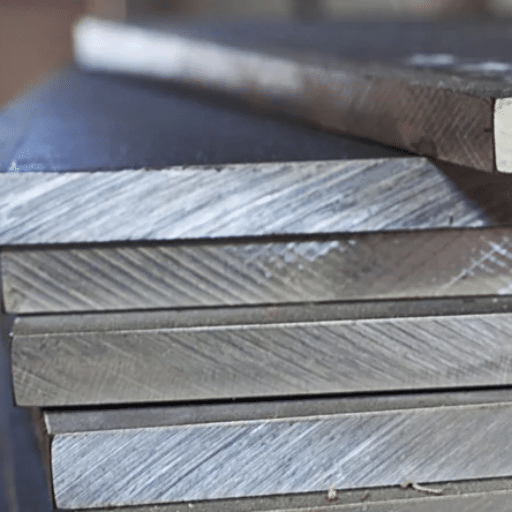
- Plate and sheet for tooling, panels, and structural parts
- Forgings for aerospace and high-integrity components
- Wire and strip for springs and small hardware
Specify Condition A if you will machine and age in-house, or order the final aged condition if your drawing demands it.
Documentation checklist
| Requirement | What to verify |
|---|---|
| Grade and condition | 17-4PH, UNS S17400, AISI 630, plus H-condition on the drawing |
| Governing spec | ASTM A564 (bar), A693 (plate), AMS 5643/5604/5622, ASTM F899 for instruments |
| Material test report | Full chemistry and mechanical properties, heat traceable |
| Hardness verification | 100% hardness testing per ASTM E18 for sour-service parts |
| Optional NDT | Ultrasonic inspection for aerospace and nuclear-critical orders |
| Chinese equivalent | 0Cr17Ni4Cu4Nb / SUS630 per GB/T 1220 |
Chinese equivalents
For cross-border procurement, note that 17-4PH is designated 0Cr17Ni4Cu4Nb (old GB) and SUS630 (JIS), governed in China by GB/T 1220. If you are sourcing through a Chinese partner, quoting the UNS number and GB designation together removes ambiguity.
As a manufacturer and authorized distributor, we supply 17-4PH in bar, plate, sheet, and forgings with full mill test reports, spectral analysis, and EN 10204 3.1/3.2 documentation on request. Explore the full stainless steel range, bar stock, and sheet and plate options. Learn more about our manufacturing and quality facilities.
FAQ: 17-4PH Applications
What is 17-4PH used for?
17-4PH is used in aerospace fasteners and landing gear, oil and gas valve stems and pump shafts, surgical instruments, food processing hardware, marine shafts, and industrial tooling, wherever high strength, heat-treatable hardness, and moderate corrosion resistance must coexist.
Is 17-4PH good for surgical instruments?
Yes, for reusable instruments. ASTM F899 governs bar and wire for surgical instruments, and 17-4PH holds edges, autoclaves without dimensional drift, and resists corrosion. It is not an implant material.
Is 17-4PH magnetic?
Yes. As a martensitic stainless steel, 17-4PH is magnetic in all heat treatment conditions, including the softer Condition A.
Can 17-4PH be used in seawater?
With care. It resists chlorides best when aged near 550°C and is not recommended for prolonged stagnant seawater or uncoated crevice exposure. For demanding seawater service, duplex or super-duplex grades are the safer choice.
What temperature can 17-4PH handle?
Roughly 300-316°C maximum in service. For subzero service, H1150 extends to about -80°C and H1150D to about -196°C.
Is 17-4PH used in jet engines?
In engine hardware that operates below the ~300°C ceiling, such as brackets, fittings, and fasteners, yes. For hot turbine sections, nickel-based superalloys are required.
Which 17-4PH condition is best for sour service?
H1150D is the only unconditionally accepted condition under NACE MR0175 / ISO 15156, with hardness capped at 33 HRC. H900, H1025, and H1075 are not acceptable for H2S service.
Why did my 17-4PH valve stem fail?
Check the condition, not just the grade. If the stem was aged to H900 or H1025 in a chloride or H2S environment, sulfide stress cracking or chloride pitting was likely. Verify hardness against the certificate: failures frequently trace to hardness above the documented value.
Does 17-4PH require heat treatment after welding?
Yes. Welding disrupts the age-hardened microstructure, and a post-weld aging cycle is required to restore strength in the heat-affected zone.
What is the Chinese designation for 17-4PH?
0Cr17Ni4Cu4Nb (old GB) and SUS630 (JIS), governed by GB/T 1220. The UNS number S17400 and AISI 630 are the international references.
Conclusion
17-4PH is the alloy engineers reach for when a single material must deliver high strength, hardenable hardness, and workable corrosion resistance. The sector map is clear: aerospace fasteners and landing gear, oil and gas valve stems, surgical instruments, food processing hardware, marine shafts, and industrial tooling. But the condition map is the part most guides skip: H900 for peak strength, H1025 for the strength-toughness balance, H1150 for toughness and corrosion, and H1150D for sour service.
Apply the rules from this guide: identify the dominant failure mode, cap hardness at 33 HRC for H2S, stay below 300-316°C, avoid stagnant seawater in unaged or high-temperature conditions, and always specify the condition on your drawing. With those constraints respected, 17-4PH is one of the most reliable workhorse alloys in the specialty steel family.
Ready to source certified 17-4PH in the condition your application demands? Submit your material list with the form, condition, and spec you need, and our metallurgical team will respond within 24 hours with availability, certification, and a competitive quotation. Request your 17-4PH quote now.