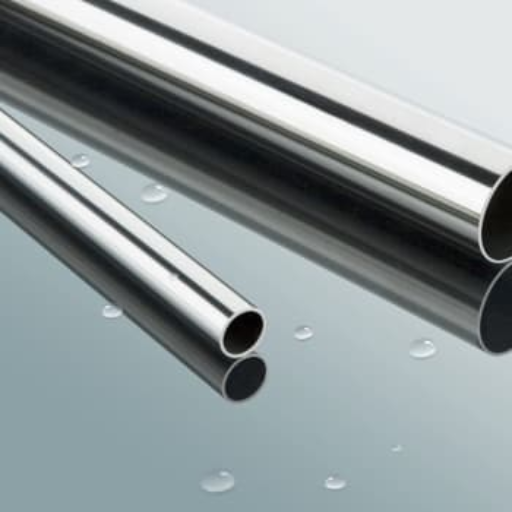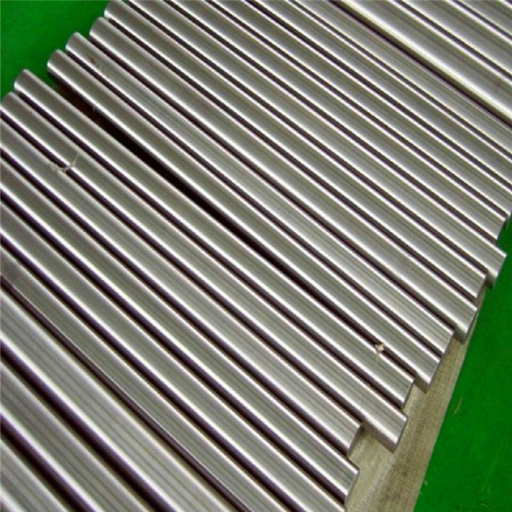
Incoloy 825 (UNS N08825) is a titanium-stabilized austenitic nickel-iron-chromium alloy with a density of 8.14 g/cm³, an annealed tensile strength of 586 MPa minimum, a 0.2% yield strength of 241 MPa minimum, and useful service from cryogenic temperatures to about 540°C. Its molybdenum, copper, and titanium additions are what make it valuable, not its strength.
Here is the uncomfortable truth about Incoloy 825 properties: the grade delivers only about a quarter of the yield strength of a grade like Inconel 718, yet it outsells many stronger alloys in chemical and oil-and-gas service. That is because the properties buyers actually need from 825 are corrosion-driven, not load-driven.
If you are pulling Incoloy 825 properties to size a vessel, qualify a supplier, or check an MTR, you need more than a single datasheet row. You need to know which numbers are specification minimums and which are typical, where the temperature ceiling really sits, and how the numbers shift with product form. This guide gives you all three.
Key Takeaways
- Incoloy 825 (UNS N08825) is a solid-solution, titanium-stabilized alloy. It is not age-hardenable, so its properties come from chemistry, not heat treatment.
- Annealed property minimums are 586 MPa tensile and 241 MPa yield; representative values run higher at roughly 645 MPa and 295 MPa.
- Its PREN of roughly 31–35 sits above 316L but below 904L and well below Inconel 625. The copper content, not the PREN, is what makes 825 strong in sulfuric and phosphoric acid.
- The practical long-term service ceiling is 540–550°C, above which sigma-phase embrittlement becomes a risk; the widely quoted 982°C figure refers to sensitization during annealing, not aqueous service.
- Always request PMI verification on the titanium and copper lines. Those are the elements counterfeit 825 most often falls short on.
What Is Incoloy 825?
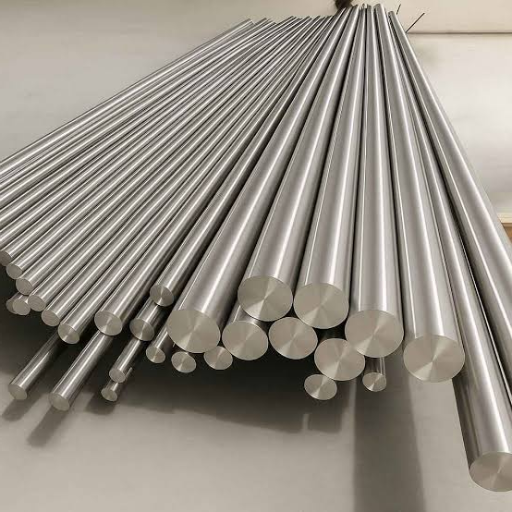
Incoloy 825 is an austenitic nickel-iron-chromium alloy (roughly 38–46% nickel, 19.5–23.5% chromium) with deliberate additions of molybdenum, copper, and titanium. It was developed as a general-purpose answer to both oxidizing and reducing acid environments, a combination that ordinary stainless steels handle poorly. Those five additions are what set the UNS N08825 properties apart from a plain stainless steel.
The grade carries several designations you will see on purchase orders and certificates: UNS N08825, W.Nr. 2.4858, DIN NiCr21Mo, UK NA16, and the Chinese grade NS142. If your incoming MTR uses a different label than your drawing, that is a normal part of importing this alloy, not a red flag. Our guide to Incoloy 825 equivalent grades cross-references every common designation on one page.
Incoloy 825 sits in a specific band of the nickel-alloy spectrum. It costs more than 316L and 904L stainless steel but less than Inconel 625, and it is the cheapest nickel-based alloy that still resists sulfuric and phosphoric acid. That position is why engineers keep asking the same question: “Is 825 enough, or am I under-specifying?” We cover the full grade, applications, corrosion data, and 2026 pricing in the complete Incoloy 825 guide.
Incoloy 825 Chemical Composition
Composition drives every property in this article, so start here. The table below lists the specification limits per ASTM B425 and B424.
Composition Table (Spec Limits, wt%)
| Element | Min | Max | Role |
|---|---|---|---|
| Nickel (Ni) | 38.0 | 46.0 | Chloride-SCC resistance, austenite stability |
| Chromium (Cr) | 19.5 | 23.5 | Resistance to oxidizing media |
| Iron (Fe) | 22.0 | Balance | Base |
| Molybdenum (Mo) | 2.5 | 3.5 | Pitting and crevice resistance |
| Copper (Cu) | 1.5 | 3.0 | Resistance to reducing acids |
| Titanium (Ti) | 0.6 | 1.2 | Stabilization against sensitization |
| Aluminum (Al) | – | 0.2 | Trace control |
| Carbon (C) | – | 0.05 | Trace control |
| Silicon (Si) | – | 0.5 | Trace control |
| Manganese (Mn) | – | 1.0 | Trace control |
| Sulfur (S) | – | 0.03 | Trace control |
What Each Element Does
Nickel is the backbone. At 38–46%, it resists chloride stress-corrosion cracking and keeps the structure austenitic. Chromium handles the oxidizing side of the equation: nitric acid, nitrates, and oxidizing salts. Molybdenum and copper work as a pair on the reducing side, which is where 825 separates itself from Inconel 625. Inconel 625 adds more molybdenum but no copper; 825 adds copper and keeps molybdenum moderate, which is exactly what dilute sulfuric and phosphoric acid service reward.
The titanium addition is the quiet workhorse. It ties up carbon as titanium carbides, which blocks the chromium-carbide precipitation that causes intergranular corrosion after welding. That is why 825 generally does not need a post-weld heat treatment for corrosion resistance, a genuine fabrication advantage.
Here is why the trace elements matter more than they look. A fabricator we work with accepted a lot of 825 plate on a form-only mill certificate. Months later, portable PMI showed titanium below the 0.6% minimum. The plate would have sensitized at the weld line in service. Rejecting and re-sourcing the lot cost two weeks of schedule, a cost that one in-house PMI check on the titanium and copper lines would have avoided entirely.
Incoloy 825 Mechanical Properties
The single most useful thing you can know about Incoloy 825 mechanical properties is the gap between what the specification guarantees and what a mill typically ships.
Room-Temperature Properties: Spec-Min vs Representative
| Property | Spec Minimum | Representative |
|---|---|---|
| Ultimate tensile strength | ≥586 MPa | ~645 MPa |
| Yield strength (0.2% offset) | ≥241 MPa | ~295 MPa |
| Elongation | ≥30% | ~54% |
| Reduction of area | ≥40% | – |
| Hardness (Brinell) | – | HB 135–200 (327 HB max) |
The Spec-Min vs Representative Trap
Design to the minimum, not the typical. A pressure-vessel engineer we advised had used a datasheet’s representative tensile figure of about 645 MPa to calculate wall thickness margin. That is fine for a sanity check, but the code requires design against the 586 MPa minimum. Recalculating against the minimum restored the correct margin and added material. If your acceptance criteria are written against typical values, you have already lost the argument at inspection time.
Hardness
Annealed Incoloy 825 typically measures HB 135–200, with a 327 HB maximum for many service conditions. Hardness rarely governs design for 825, but it matters in two places: cold-worked product, where the value rises, and sour-service qualification, where a hardness ceiling applies. Ask your supplier which condition the hardness was measured in.
Elastic and Impact Properties
The modulus of elasticity is about 196–197 GPa, roughly 25% higher than carbon steel, which is worth noting when a relaxed stiffness assumption would change deflection. The modulus of rigidity is about 76 GPa and Poisson’s ratio about 0.31. Like other austenitic nickel alloys, 825 has no ductile-to-brittle transition and stays tough at low temperature.
Incoloy 825 Physical Properties
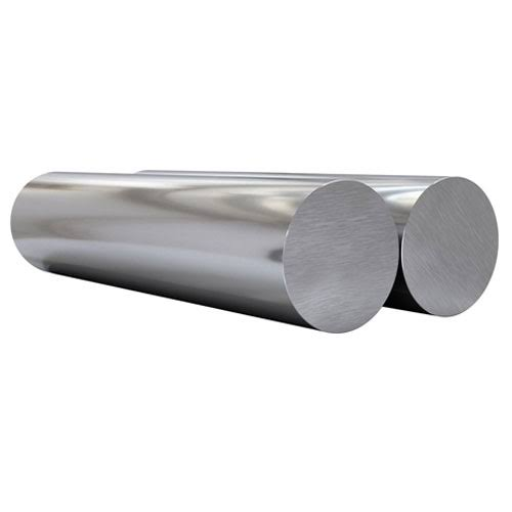
Density, Melting Range, and Magnetic Behaviour
Incoloy 825 density is 8.14 g/cm³ (8140 kg/m³) and its melting range is 1370–1400°C. The alloy is effectively non-magnetic, with a magnetic permeability of approximately 1.005 and a Curie temperature around −196°C. If a magnetic instrument or an eddy-current sort is part of your incoming inspection, that non-magnetic behaviour is a useful screening signal, though only a chemical analysis confirms the grade.
Thermal and Electrical Properties
| Property | Typical Value (20°C) |
|---|---|
| Thermal conductivity | ~10.7–11.1 W/m·°C |
| Specific heat capacity | ~440 J/kg·K |
| Mean coefficient of thermal expansion (20–100°C) | ~14 µm/m·°C |
| Electrical resistivity | ~112–113 µΩ·cm |
These thermal properties are low and slow relative to carbon steel, which affects heat-exchanger design and welding distortion. For a full comparison of 825’s property profile against Inconel 625, 316L, and 904L, see our Incoloy 825 vs Inconel 625 selection guide.
Incoloy 825 PREN and Pitting-Resistance Chemistry
The PREN Calculation, Worked
The pitting resistance equivalent number (PREN) estimates an alloy’s resistance to pitting corrosion from its composition:
PREN = Cr + 3.3(Mo) + 16(N)
Working it through with a mid-range 825 composition, chromium at 21.5% and molybdenum at 3.0% (825 contains essentially no nitrogen):
PREN = 21.5 + 3.3(3.0) + 0 = 31.4
Depending on where the composition sits in its range, the value lands between roughly 31 and 35, and published corrosion studies report a measured value near 30.9. That places Incoloy 825:
- Above 316L (PREN ~24)
- At or just below 904L (~34–36)
- Well below Inconel 625 (~51)
Why 825’s Properties Come From Chemistry, Not Strength
PREN is a pitting metric only, and it understates 825’s real value. The number tells you how 825 behaves in chlorides, but it says nothing about the acid service the copper content is designed for. Our dedicated Incoloy 825 corrosion resistance guide lays out the environment-by-environment data (sulfuric, phosphoric, nitric, and chloride service) if that is what you are specifying against.
The other thing to internalize is that 825 is solid-solution strengthened. It is not age-hardenable. There is no precipitation treatment that raises its strength the way aging does for Inconel 718. That is a feature: it means the properties you verify at the mill are the properties you get after fabrication, with no risk of an aging step being skipped or botched.
Incoloy 825 Maximum Service Temperature & Sigma Phase
Temperature is where the Incoloy 825 properties on the internet contradict each other. You will see the maximum service temperature quoted as 537°C, 538°C, 540°C, 550°C, and even 982°C, often on the same page. Here is the resolution.
The Temperature-Ceiling Framework
| Basis | Limit | What It Means |
|---|---|---|
| ASME design use (pressure vessel) | ~450°C | Code-approved design limit for aqueous service |
| ASTM / pressure-vessel reference | ~538°C (1000°F) | The figure most datasheets quote |
| Practical long-term corrosion ceiling | ≤540–550°C | Where long-term aqueous service should stop |
| Sigma-phase onset | above ~550°C | Embrittlement risk if the alloy is held hot |
| Sensitization discussion (not a service limit) | ~982°C | Refers to carbide precipitation during annealing |
The 982°C figure that gets mixed in is a sensitization and annealing topic, not an aqueous service ceiling. Conflating the two is the single most common error about this grade, and it leads engineers to either over-specify or under-specify with confidence.
Cryogenic Behaviour
At the cold end, Incoloy 825 stays ductile and stable to about −196°C, with no ductile-to-brittle transition. That makes it viable for cryogenic process service where a ferritic steel would embrittle.
One operator learned the ceiling the hard way. He put annealed 825 into 600°C service, reading the “540°C” line as comfortable headroom. Design review flagged sigma-phase embrittlement risk. The part was re-specified to Incoloy 800H, a creep and oxidation grade rather than a corrosion grade, which is the correct answer above the corrosion ceiling. We walk through that grade-versus-grade decision in the Incoloy 825 vs 800H comparison.
Incoloy 825 Heat Treatment
Solution Annealing
Because 825 is not age-hardenable, the only heat treatment that matters is the anneal. The alloy is solution annealed at 900–1150°C (VDM specifies above 1010°C / 1850°F for full dissolution), held one to two hours depending on section, then rapidly air-cooled or water-quenched. The quench rate matters: slow cooling through the sensitization range lets chromium carbides form despite the titanium addition. This is the process behind the 982°C figure that gets quoted as a service temperature. It is a furnace temperature, not a use temperature.
Stabilizing Anneal
For heavy sections cooled slowly, or for hot-worked and welded material headed into media that cause intergranular attack, a stabilizing anneal restores corrosion resistance. It is not routine, but it is required in specific cases, and knowing when to call for it is part of reading your fabrication route.
Hot and Cold Working
Hot working runs at roughly 1150–900°C with about twice the forming pressure of austenitic stainless steel. Cold working is the only way to strengthen 825; cold-drawn and high-strength bar products deliver materially higher yield than the annealed values in the table above, which is why you should never compare a cold-worked product’s properties against annealed minimums.
Incoloy 825 Properties by Product Form
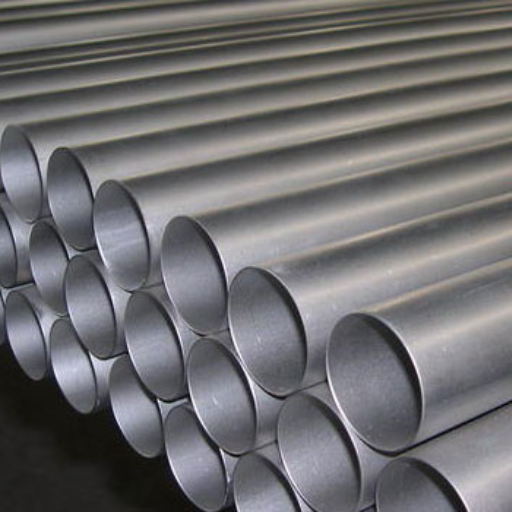
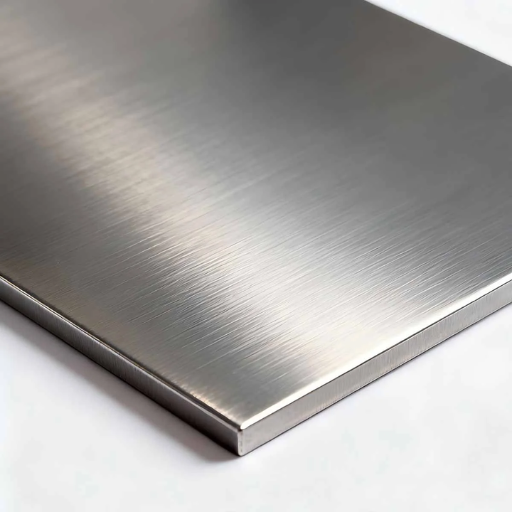
Property values shift with product form and temper, and this is where a single datasheet row fails you. Representative annealed values vary between bar, plate, tube, and cold-drawn product, and the specification that applies varies too. Plate and sheet fall under ASTM B424, bar and rod under B425, and seamless pipe and tube under B423, with heat-exchanger tube under B163.
If you are specifying a form rather than just checking a grade, our product-form guides cover the standards in detail: Incoloy 825 pipe and tube specifications and Incoloy 825 plate and sheet specifications.
Ready to match a form to your specification? Our stock includes Incoloy 825 in bar, plate, and pipe, each shipped with a full MTR.
Incoloy 825 Properties vs Other Alloys
At the property level, three comparisons matter. Incoloy 825 versus 316L and 904L comes down to chemistry: 825 adds copper and titanium, buying reducing-acid resistance and stabilization that the stainless grades lack. Our Incoloy 825 vs 316L and 904L comparison works the chemistry gap through property by property. Incoloy 825 versus Inconel 625 comes down to molybdenum and copper: 625 has more molybdenum for chlorides; 825 has copper for acids. And Incoloy 825 versus 800H is not a comparison at all; 825 is a corrosion grade with molybdenum and copper, while 800H is a creep and oxidation grade with neither. Choose the grade that answers the mechanism that would end your campaign first.
Incoloy 825 Properties to Specify on Your MTR
Which Tests Belong on the Certificate
Every Incoloy 825 order should arrive with a material test report showing room-temperature tensile strength, yield strength, and elongation, plus a chemical analysis. For sour service, add a hardness result. And for composition, insist on PMI or optical emission spectroscopy verification specifically on the titanium and copper lines. These are the elements counterfeit 825 most often mislabels. The full nickel-alloy documentation requirements sit in our nickel-based alloy guide.
Supplier Checklist
Confirm that your supplier can provide EN 10204 3.1 documentation (3.2 for EPC and nuclear work), verify composition in-house on a spectrometer, and run its own tensile and hardness testing rather than forwarding a mill sheet. Most importantly, get a technical contact who will answer a properties question in plain terms.
FAQ: Incoloy 825 Properties
What is the chemical composition of Incoloy 825?
Incoloy 825 contains 38.0–46.0% nickel, 19.5–23.5% chromium, 2.5–3.5% molybdenum, 1.5–3.0% copper, and 0.6–1.2% titanium, with iron as the balance and a maximum carbon of 0.05%.
What is the tensile strength of Incoloy 825?
The annealed minimum tensile strength is 586 MPa, with representative values around 645 MPa. Cold-worked forms deliver higher strengths.
What is the yield strength of Incoloy 825?
The annealed 0.2% yield strength minimum is 241 MPa, with typical values near 295 MPa.
What is the density of Incoloy 825?
Incoloy 825 has a density of 8.14 g/cm³, or 8140 kg/m³.
What is the melting point of Incoloy 825?
Incoloy 825 melts over a range of 1370–1400°C.
What is the PREN of Incoloy 825?
Incoloy 825 has a PREN of roughly 31–35, depending on where its composition sits within the specification range. That is above 316L and below both 904L and Inconel 625.
Is Incoloy 825 magnetic?
No. Incoloy 825 is effectively non-magnetic, with a relative permeability of about 1.005 and a Curie temperature near −196°C.
What is the maximum service temperature of Incoloy 825?
The practical long-term corrosion-service ceiling is 540–550°C, with an ASME design limit near 450°C for pressure vessels. Sigma-phase embrittlement becomes a risk above about 550°C.
Can Incoloy 825 be hardened by heat treatment?
No. Incoloy 825 is solid-solution strengthened and not age-hardenable. Cold working is the only strengthening route.
What is the Chinese equivalent of Incoloy 825?
The Chinese equivalent is NS142 (also written NS1402) under the GB/T system, with the full grade designation 0Cr21Ni42Mo3Cu2Ti.
Conclusion
Incoloy 825 properties are only meaningful when you tie them to condition, product form, and temperature. The headline numbers (density 8.14 g/cm³, tensile 586 MPa minimum, yield 241 MPa minimum, PREN around 31–35) are the starting point. The value of this grade lives in the properties around them: a copper-and-molybdenum chemistry built for reducing acids, titanium stabilization that removes the need for post-weld heat treatment in most cases, and a temperature ceiling that runs to 540–550°C but no further.
Read the minimum, not the typical. Verify the titanium and copper lines on your certificate. And when your application pushes past the ceiling, the answer is a different grade, not a thicker section.
Submit your Incoloy 825 specification (grade, form, dimensions, and required tests) and our metallurgical team will confirm property compliance and deliver your quotation with full MTR and PMI documentation within 24 hours. Request a quote or review the full Incoloy 825 grade overview first.