GH4169 is the Chinese GB/T 14992 designation for the same alloy system as Inconel 718 (UNS N07718 / DIN 2.4668). The two grades share the same base chemistry, the same precipitation-hardening microstructure, and the same niobium-driven strengthening mechanism. For most technical purposes, they are the same metal. But for procurement and certification, they are not automatically interchangeable.
Your drawing calls out Inconel 718 AMS 5663. Your Chinese supplier quotes GH4169. Both names describe a precipitation-hardening nickel-chromium superalloy with roughly 50–55% nickel, 17–21% chromium, and 4.75–5.50% niobium. The difference is not the alloy. The difference is the standard body, the heat-treatment condition, the melt practice, and the documentation chain behind the certificate. A buyer who treats a GB/T certificate as a direct substitute for an AMS test report can fail qualification, delay a project, or worse, put a critical component into service without the metallurgical quality its application demands.
In this guide, we explain exactly how GH4169 equivalent Inconel 718 maps across international standards. You will see the chemistry comparison, the mechanical-property overlap, the certification boundaries, and the sourcing decisions that determine whether a Chinese GH4169 heat can legitimately replace a Western Inconel 718 melt. For a broader technical overview of the alloy family, see our complete Inconel 718 technical guide.
Key Takeaways
- GH4169 equivalent Inconel 718 shares the same UNS N07718 chemistry and γ″ precipitation-hardening mechanism, but the two names belong to different standard systems (GB/T 14992 vs. ASTM/AMS).
- Chemical equivalence is reliable; certification equivalence is not automatic. A GB/T certificate alone does not satisfy an AMS 5662/5663 procurement requirement.
- Aerospace, rotating, and nuclear applications usually require VIM+ESR or VIM+VAR melt practice, not just correct chemistry.
- Heat-treatment condition matters: AMS 5662 is solution-treated (machinable), while AMS 5663 is solution-treated plus aged (full strength).
- A complete RFQ for Chinese GH4169 should specify standard, condition, melt practice, product form, size, finish, quantity, and certification level.
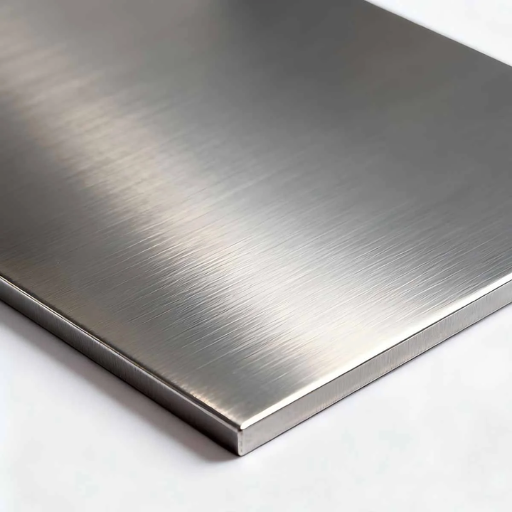
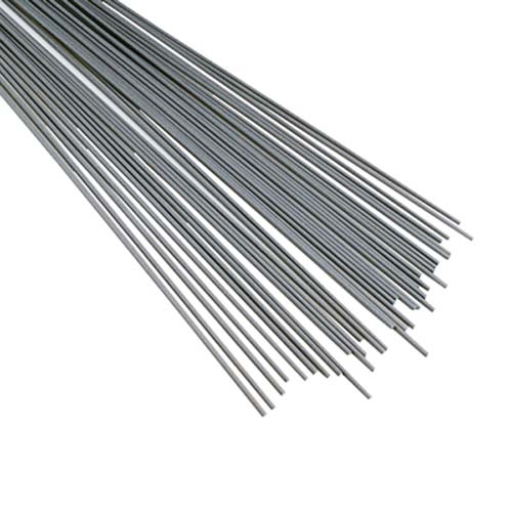
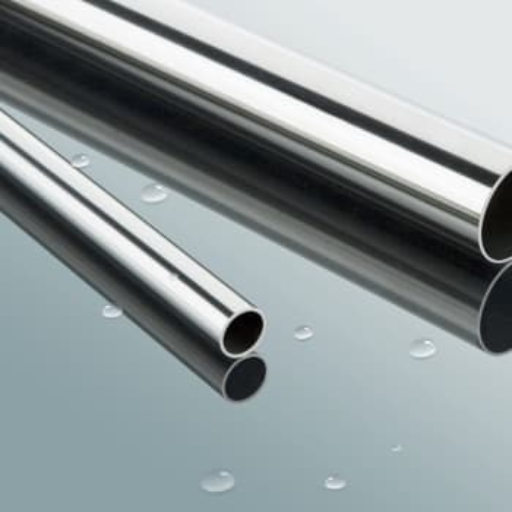
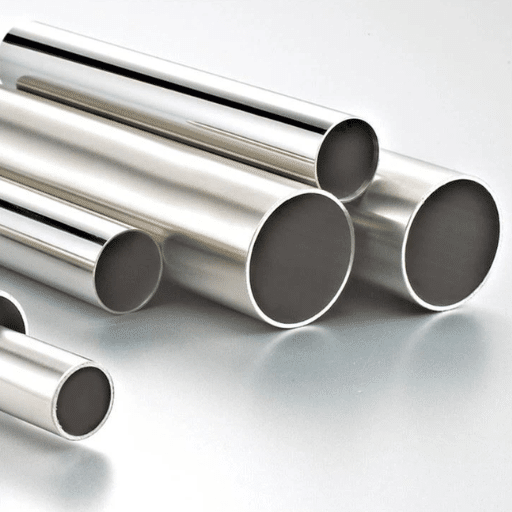
- Zhonggongte supplies certified GH4169 / Inconel 718 bar, plate, pipe, and forgings from Wuxi with full MTRs and optional third-party inspection.
What Is GH4169?

Chinese Designation for Inconel 718
GH4169 is the Chinese national superalloy designation under GB/T 14992. It is also written as GH169 and carries the unified numbering designation ISC H41690. Metallurgically, it is the Chinese equivalent of Inconel 718, a precipitation-hardening nickel-based superalloy developed for high-temperature strength, fatigue resistance, and oxidation resistance.
The alloy hardens through the formation of γ″ (gamma double prime) precipitates, primarily Ni₃Nb, along with γ′ (gamma prime) Ni₃(Al,Ti). This microstructural response is what gives GH4169 and Inconel 718 their exceptional strength up to about 650–700°C. For a deeper look at how these properties translate into component performance, review our Inconel 718 mechanical properties reference.
Global Equivalent Cross-Reference
When you search for GH4169 equivalent Inconel 718, you are really asking how the Chinese grade maps to international standards. The table below shows the most common designations.
| Country / System | Designation | Relevant Standard |
|---|---|---|
| China | GH4169, GH169, ISC H41690 | GB/T 14992, GJB 2611A |
| USA | Inconel 718, Alloy 718 | UNS N07718 |
| USA (aerospace bar) | Inconel 718 | AMS 5662 / AMS 5663 / AMS 5664 |
| USA (sheet/plate) | Inconel 718 | AMS 5596 / AMS 5597 |
| USA (general bar/forging) | Inconel 718 | ASTM B637 |
| Europe | NiCr19NbMo, NiCr19Fe19Nb5Mo3 | DIN EN 10095, W. Nr. 2.4668 |
| UK | NA51, HR 202 | BS 2901 |
| France | NC19FeNb | AFNOR |
| ISO | NW7718 / NiCr19Fe19Nb5Mo3 | ISO 15156 (NACE MR0175) |
| Japan | NCF718 | JIS |
This table is the starting point for any Inconel 718 material grade cross-reference. The chemistry ranges overlap, but each standard adds its own requirements for heat treatment, testing, and documentation.
GH4169 vs Inconel 718: Chemical Composition
Element-by-Element Comparison
The most important point in any GH4169 vs Inconel 718 discussion is chemistry. The two grades are intentionally aligned. The table below compares the GH4169 composition under GB/T 14992 / GJB 2611A with the AMS 5662 composition for Inconel 718 bar.
| Element | GH4169 (GB/T 14992 / GJB 2611A) wt% | AMS 5662 Inconel 718 wt% |
|---|---|---|
| Nickel (Ni) | 50.0 – 55.0 | 50.0 – 55.0 |
| Chromium (Cr) | 17.0 – 21.0 | 17.0 – 21.0 |
| Iron (Fe) | Balance | Balance |
| Niobium + Tantalum (Nb+Ta) | 4.75 – 5.50 | 4.75 – 5.50 |
| Molybdenum (Mo) | 2.80 – 3.30 | 2.80 – 3.30 |
| Titanium (Ti) | 0.65 – 1.15 | 0.65 – 1.15 |
| Aluminum (Al) | 0.20 – 0.80 | 0.20 – 0.80 |
| Carbon (C) | ≤ 0.08 | ≤ 0.08 |
| Silicon (Si) | ≤ 0.35 | ≤ 0.35 |
| Manganese (Mn) | ≤ 0.35 | ≤ 0.35 |
| Phosphorus (P) | ≤ 0.015 | ≤ 0.015 |
| Sulfur (S) | ≤ 0.015 | ≤ 0.015 |
The niobium content is the key differentiator of this alloy family. Niobium combines with nickel to form the coherent γ″ precipitate that produces the large strength increase during aging. Without the correct niobium level and the correct double-aging cycle, the material will not reach the tensile and yield strengths expected of GH4169 equivalent Inconel 718.
Trace Elements and Purity
For industrial applications, the nominal ranges above are usually sufficient. For aerospace rotating components, trace elements become critical. Premium aerospace specifications tighten limits on phosphorus, sulfur, oxygen, nitrogen, and gases. A heat that passes a standard GB/T chemical analysis may still fail an aerospace cleanliness requirement.
At Zhonggongte, every heat of GH4169 / Inconel 718 is verified on a direct-reading optical emission spectrometer (OES). For aerospace orders, we also control melt practice and provide ultrasonic non-destructive testing (NDT) reports. Chemistry is the first gate; cleanliness and traceability are the gates that separate industrial-grade from flight-critical material.
Mechanical Properties: Are They the Same?
Room Temperature Properties
The mechanical properties of GH4169 equivalent Inconel 718 depend more on heat-treatment condition than on country of origin. A properly processed GH4169 bar can meet the same room-temperature tensile, yield, and hardness values as an AMS 5663 Inconel 718 bar.
| Condition | Tensile Strength | Yield Strength | Elongation | Hardness |
|---|---|---|---|---|
| Solution-treated (AMS 5662 / GH4169 solution) | 965–1,200 MPa | 550–850 MPa | 20–30% | 20–30 HRC |
| Aged (AMS 5663 / GH4169 aged) | ≥ 1,240 MPa | ≥ 1,030 MPa | ≥ 12% | 36–44 HRC |
These numbers explain why condition is just as important as grade. A procurement team that orders “GH4169” without specifying solution-treated or aged may receive material that meets chemistry but is in the wrong condition for their process.
Elevated Temperature Performance
The real value of GH4169 equivalent Inconel 718 is strength retention at temperature. Aged material typically retains yield strength above 850 MPa at 650°C. Creep resistance and fatigue life depend on grain size, cleanliness, and the uniformity of the γ″ precipitate distribution.
This is where melt practice becomes decisive. A non-remelted heat may show acceptable room-temperature tensile properties but fail creep or low-cycle fatigue testing at elevated temperature. For turbine discs, combustors, and rocket turbopumps, the specification almost always requires VIM+ESR or VIM+VAR processing.
Standards Compared: AMS 5662 / AMS 5663 vs GH4169

What Each Specification Covers
The question is GH4169 the same as Inconel 718 cannot be answered without naming the standard. Each specification controls a different slice of the supply chain.
- AMS 5662: Solution-annealed bar, forging stock, and rings. This is the softer, more machinable condition. Tensile and hardness limits are lower because the material is expected to be aged by the customer after machining.
- AMS 5663: Solution-annealed and precipitation-hardened (aged) bar, forgings, and rings. This is the full-strength condition used for finished components such as turbine discs, fasteners, and shafts.
- AMS 5664: Similar to AMS 5663 but with higher tensile strength requirements and tighter controls.
- ASTM B637: General specification for precipitation-hardening nickel-alloy bars, forgings, and forging stock. Covers both solution-treated and aged conditions.
- GB/T 14992 / GJB 2611A: Chinese standards that define GH4169 chemistry, heat treatment, and mechanical properties. GJB 2611A is the military aviation grade and is more closely aligned with AMS requirements.
When someone asks for AMS 5662 vs GH4169, the honest answer is that the two specifications describe the same alloy but impose different conditions, sampling rules, and documentation requirements.
Condition and Heat Treatment Mapping
The standard heat treatment for GH4169 equivalent Inconel 718 is a solution treatment followed by a two-step age.
| Step | Temperature | Hold Time | Cooling |
|---|---|---|---|
| Solution treatment | 940–1,050°C | Per spec | Air cool or water quench |
| First aging | 720°C ± 10°C | 8 hours | Furnace cool to second step |
| Second aging | 620°C ± 10°C | 8 hours | Air cool |
This cycle produces the γ″/γ′ precipitate structure responsible for peak strength. GB/GJB and AMS heat treatments are broadly aligned, but the exact solution temperature window may vary depending on grain-size requirements. For a detailed explanation of how these cycles affect final properties, see our Inconel 718 heat treatment cycles guide.
Certification and Documentation Differences
A certificate is not just a piece of paper. It is evidence of a process. The most common documentation levels are:
- Mill Test Report (MTR): Shows heat number, chemical analysis, mechanical test results, and heat treatment. Standard for most industrial orders.
- EN 10204 3.1: Mill certificate confirming compliance, issued by the manufacturer.
- EN 10204 3.2: Independent third-party inspection of the material at the mill. Adds inspector fees and scheduling cost but gives buyers outside the supply chain an extra layer of assurance.
- AMS test report: Includes the specific tests, sampling, and acceptance limits required by the relevant AMS specification.
A GB/T 3.1 certificate for GH4169 does not automatically satisfy an AMS 5662/5663 requirement. The alloy may be identical, but the certification chain is not. For critical applications, buyers should request dual certification or formal customer approval of the substitution.
Are GH4169 and Inconel 718 Interchangeable?
When They Are Interchangeable
GH4169 equivalent Inconel 718 is a valid substitution in many industrial applications. The grades are interchangeable when:
- The application is not governed by a named aerospace or nuclear specification.
- The heat treatment condition matches the design requirement.
- The supplier can demonstrate chemistry and mechanical properties equivalent to ASTM B637 or the relevant AMS spec.
- The buyer accepts the MTR and any required third-party inspection.
- Operating temperature, stress level, and environmental exposure are within the alloy’s proven range.
A European pressure-vessel manufacturer once needed NACE-compliant bar for wellhead components. The drawing referenced Inconel 718, but the buyer’s approved supplier list included qualified Chinese mills. Zhonggongte supplied GH4169 bar certified to ASTM B637 with full MTRs, hardness capped at 40 HRC, and third-party inspection. The material passed customer receiving inspection, the components cleared hydrostatic testing, and the project reduced material cost by roughly 18% without any quality concession.
When They Are Not Interchangeable
There are clear cases where GH4169 vs Inconel 718 is not a simple substitution:
- Aerospace rotating components without OEM or customer approval of the Chinese grade.
- Defense or nuclear projects that name a specific mill source or require AS9100 / NADCAP heat treatment.
- Contracts that explicitly specify AMS 5662/5663 and do not allow alternative standards.
- Applications requiring ultralow inclusion content when the supplier cannot prove VIM+ESR or VIM+VAR melt practice.
- Registrations or qualifications tied to a specific brand name such as Inconel 718 rather than a generic UNS number.
An aerospace MRO learned this lesson the hard way. The buyer sourced GH4169 for a turbine disc repair, assuming the grade was identical to AMS 5663. The certificate showed chemistry within AMS limits, but the melt practice was air-melt plus ESR only, no VAR. The material passed room-temperature tensile testing, but a creep rupture test at 650°C failed well below the required life. The lot was rejected, the repair schedule slipped by months, and the cost of the rejection far exceeded any initial savings.
How to Verify a Substitution
Before substituting GH4169 for Inconel 718, request the following documentation:
- Heat number and full chemical analysis (OES or wet chemistry).
- Mechanical test report for the ordered condition.
- Heat treatment chart showing solution and aging cycles.
- Melt practice statement (air melt, VIM+ESR, VIM+VAR).
- EN 10204 3.1 or 3.2 certificate as required.
- NDT reports (ultrasonic, dye penetrant, radiographic) if specified.
- Customer or OEM approval for the grade substitution, if applicable.
A machine shop in Southeast Asia ordered AMS 5663 aged bar for fastener blanks. The material was correct chemistry, but the aged condition wore tooling prematurely and slowed production. The right choice was AMS 5662 solution-treated bar, machined into finished dimensions, then aged to AMS 5663 properties. After switching to solution-treated stock, machining time dropped and tool life returned to expected levels. The problem was not the grade, it was the condition.
Sourcing GH4169 / Inconel 718 from China

What to Specify in Your RFQ
A vague RFQ produces vague quotes. To get a meaningful price and a compliant delivery, specify:
- Alloy and standard: GH4169 / Inconel 718, plus ASTM B637, AMS 5662, AMS 5663, or GB/GJB.
- Condition: Solution-treated, aged, or solution-treated for machining.
- Melt practice: Air melt, VIM+ESR, or VIM+VAR.
- Product form: Round bar, plate, sheet, pipe, tube, forging, or powder.
- Size and tolerance: Diameter, thickness, width, length, and dimensional standard.
- Surface finish: Black, peeled, turned, polished, or ground.
- Quantity: Weight or number of pieces.
- Certification: MTR, EN 10204 3.1/3.2, third-party inspection, NDT.
- End use or application: Helps the supplier confirm grade selection and certification needs.
- Delivery terms: Incoterm, destination, and required delivery date.
For current pricing context, see our Inconel 718 price per kg guide. For product-specific stock, view our Inconel 718 round bar page.
Supplier Qualification Checklist
Not every Chinese mill produces GH4169 equivalent Inconel 718 to the same level. Use this checklist to qualify a supplier:
- Can the supplier document VIM+ESR or VIM+VAR capability?
- Is in-house OES or XRF spectrometry available for every heat?
- Are tensile, hardness, and metallographic tests performed in-house?
- Does the supplier hold relevant quality-system approvals (ISO 9001, AS9100, NADCAP if required)?
- Can the supplier provide EN 10204 3.1/3.2 certificates and arrange third-party inspection?
- Is there experience exporting to your region with full customs and documentation support?
- Can the supplier trace each heat from melt to final inspection?
Zhonggongte Capability
Jiangsu Zhonggongte Metallurgical Technology Co., Ltd. supplies GH4169 / Inconel 718 bar, plate, pipe, and forgings from Wuxi. Our production routes include vacuum induction melting and electroslag remelting, supported by in-house direct-reading spectrometers, tensile testing, hardness testing, and ultrasonic NDT. Every order ships with a material test report, and we can provide EN 10204 3.1/3.2 certification and third-party inspection on request.
We are not a catalog reseller. Our metallurgical engineers review each RFQ to confirm that the proposed grade, condition, melt practice, and certification match the application. Submit your specification and we will respond within 24 hours with availability, pricing, and a clear certification pathway.
FAQ: GH4169 and Inconel 718
Is GH4169 the same as Inconel 718?
They are the same alloy system. GH4169 is the Chinese GB/T designation, and Inconel 718 is the Western trade name for UNS N07718. They share chemistry and microstructure, but they are governed by different standards.
What is the UNS number for GH4169?
GH4169 corresponds to UNS N07718. It is also equivalent to DIN W. Nr. 2.4668, ISO NW7718, and JIS NCF718.
Can GH4169 replace Inconel 718 in aerospace?
Only with customer or OEM approval. Aerospace rotating components usually require AMS 5662/5663, VIM+ESR or VIM+VAR melt practice, and an approved supplier list. A GB/T certificate alone is not sufficient.
What is the difference between AMS 5662 and AMS 5663?
AMS 5662 is solution-treated and softer, intended for machining before final aging. AMS 5663 is solution-treated plus aged to full strength. The same heat of material can often be supplied in either condition.
Does GH4169 meet ASTM B637?
Yes, when produced and tested to ASTM B637 requirements. Many Chinese mills produce GH4169 that meets the chemistry and mechanical requirements of ASTM B637 Inconel 718. Verification through MTR and third-party inspection is recommended.
What is DIN 2.4668 equivalent to?
DIN 2.4668 is the European designation for Inconel 718 / Alloy 718. It is also equivalent to GH4169 and UNS N07718.
How do I verify a Chinese GH4169 certificate?
Check the heat number, chemical analysis, mechanical properties, heat treatment record, melt practice, and certification level (EN 10204 3.1 or 3.2). Cross-reference the standard and condition against your drawing or purchase specification.
What melt practice is required for aerospace Inconel 718?
Aerospace-grade material typically requires vacuum induction melting (VIM) followed by electroslag remelting (ESR) or vacuum arc remelting (VAR). The most demanding rotating components may require triple-melt (VIM+ESR+VAR).
Is Chinese GH4169 cheaper than Western Inconel 718?
Chinese GH4169 can be 15–20% less expensive than Western-branded Inconel 718 for equivalent specifications. The savings come from integrated manufacturing and lower labor and energy costs, not from lower alloy content.
What documentation should I request when buying GH4169?
Request the MTR, chemical analysis, mechanical test report, heat treatment chart, melt practice statement, and EN 10204 3.1/3.2 certificate. For aerospace or critical applications, add NDT reports and customer-approved qualification documentation.
Conclusion
GH4169 equivalent Inconel 718 is not a yes-or-no question. It is a standards, condition, and documentation question. The alloy itself, the nickel, chromium, niobium, and the γ″ precipitate structure, is the same whether the certificate says GH4169, UNS N07718, or DIN 2.4668. What changes is the standard body, the heat-treatment condition, the melt practice, and the certification chain.
For general industrial applications, Chinese GH4169 can be a fully valid substitute for Inconel 718 when specified and documented correctly. For aerospace, defense, and nuclear applications, the substitution requires customer approval, the right melt practice, and full traceability.
Zhonggongte manufactures and supplies certified GH4169 / Inconel 718 from Wuxi with VIM/ESR capability, in-house spectral verification, and full export documentation. Whether your drawing calls out AMS 5662, AMS 5663, ASTM B637, or GB/T 14992, our metallurgical team will confirm the certification pathway and deliver a quote within 24 hours.