Successful Inconel 718 machining demands sharp carbide tooling, conservative cutting speeds, continuous cuts, and high-pressure coolant. Because the alloy work-hardens almost instantly and holds strength at temperatures that destroy most inserts, profitability depends more on process discipline than on brute machine power.
What does that look like on a real shop floor? One aerospace supplier in Wuxi had to scrap a $20,000 turbine disk after a tap broke in a blind hole. The operator had assumed stainless-steel parameters would transfer over. They do not. Inconel 718 is a precipitation-hardened nickel-chromium superalloy that machines very differently from steel or even austenitic stainless.
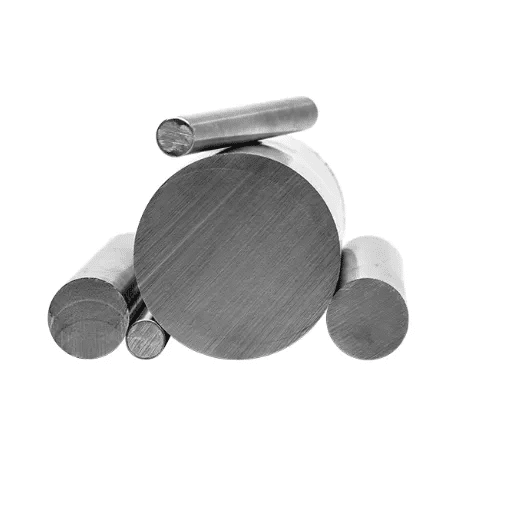
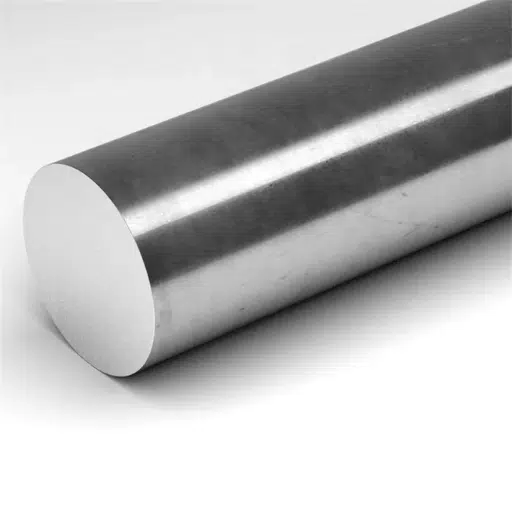
If you are a CNC machinist, manufacturing engineer, or procurement manager sourcing Inconel 718 round bar for machined parts, this guide will show you exactly how to choose the right starting condition, pick tooling, set speeds and feeds, manage heat, and keep tool costs under control. It also explains what to specify on your RFQ so the material you receive behaves predictably on the first cut.
Key Takeaways
- Inconel 718 has a machinability rating of roughly 12% of AISI 1112 steel, so run carbide at 20-40 m/min for turning and never dwell in the cut.
- Machine annealed (AMS 5662) whenever possible; aging after machining is far easier on tooling than cutting aged (AMS 5663) material.
- Use PVD TiAlN or AlTiN-coated carbide with positive rake and a superalloy-specific chipbreaker; flood coolant is the minimum, 500+ PSI through-tool is the production standard.
- Thread milling is strongly preferred over tapping for holes larger than M6; tapping risks broken tools and scrapped parts.
- White layer and tensile residual stress are the real aerospace risks; verify Ra, recast, and stress relief requirements before finishing.
- Buying certified bar stock with full MTRs, correct heat-treatment condition, and ultrasonic testing prevents surprises that cost far more than the material.
Why Inconel 718 Machining Is Difficult

The 12% Machinability Problem
Most machinists remember the day they first ran Inconel 718. The cut sounds different, the insert wears faster, and the chips come off blue-hot. The reason is straightforward: Inconel 718 has a machinability rating of only about 12% of AISI 1112 free-machining steel.
That number is not abstract. It means cutting forces roughly double those of medium-carbon alloy steels, and tool life is measured in minutes, not hours.
Four metallurgical factors drive the difficulty:
- Work hardening. The surface layer hardens to 400+ Brinell almost as soon as the tool rubs against it. Once that hardened skin forms, the next pass cuts insert rather than alloy.
- Low thermal conductivity. Heat does not travel away through the chip or the part. It concentrates at the cutting edge, where temperatures can reach 1,000-1,100°C.
- High hot strength. Inconel 718 keeps most of its room-temperature strength at red heat, so the tool must keep shearing metal long after a steel chip would have softened.
- Abrasive carbides. The gamma-prime and carbide phases are hard enough to micro-chisel the cutting edge, causing flank wear and crater wear simultaneously.
The combined effect is that standard stainless-steel or tool-steel parameters will destroy an edge in seconds. Shops that treat Inconel 718 like a tough stainless usually end up with short tool life, poor surface finish, and out-of-tolerance parts.
How Work Hardening Forms
Work hardening is not a gradual process. It happens the moment the tool rubs instead of shears. If an operator pauses mid-cut to clear a chip, the workpiece surface under the stationary insert hardens. When the cut restarts, the tool hits that hardened zone and the insert fractures or wears dramatically.
“The work-hardened pass story”: An operator in a Suzhou job shop paused a rough-turning pass on a 120 mm Inconel 718 bar to clear a long chip. The delay was less than ten seconds. When he re-engaged, the tool cut into the freshly hardened layer and destroyed a $28 carbide insert in under two revolutions. The lesson: keep the tool moving, or lift it completely clear of the wall.
This is why continuous cutting, rigid setups, and uninterrupted feeds are non-negotiable. Any dwell, any rubbing, any vibration hardens the surface and accelerates wear.
Inconel 718 Machining Starts With Material Condition
Annealed (AMS 5662) vs Aged (AMS 5663)
Before you program a single toolpath, confirm the heat-treatment condition of your bar or forging. The same alloy machines very differently depending on whether it is annealed or aged. Specifications such as AMS 5662 and AMS 5663 are detailed in the Special Metals Inconel 718 technical bulletin.
| Condition | Specification | Typical Hardness | Relative Machinability | Recommended Cutting Speed |
|---|---|---|---|---|
| Annealed | AMS 5662 | 200-250 HB | Baseline (better) | 25-40 m/min turning, 25-35 m/min milling |
| Aged | AMS 5663 | 330-400 HB | 30-50% lower | 15-25 m/min turning, 15-22 m/min milling |
Annealed material is softer, more ductile, and gentler on tools. Aged material is stronger and harder, but it will burn through inserts faster and is more prone to surface tearing. For most parts, you want to machine annealed stock and then apply the age-hardening cycle afterward.
Machine Annealed, Then Age, When Possible
The preferred manufacturing sequence for complex Inconel 718 parts is:
- Receive material in the annealed condition (AMS 5662).
- Machine all features, leaving only finishing stock for final grind if required.
- Apply the standard age-hardening heat treatment (typically 718°C / 8 hours + furnace cool to 621°C / 8 hours).
- Perform final finishing, grinding, or thread milling on aged material only if dimensional tolerances demand it.
This sequence keeps roughing and semi-finishing in the softer condition, which lowers tool consumption and improves throughput. Some aerospace features, such as tight ring-groove tolerances, may require finish machining after aging to avoid distortion during heat treatment. In those cases, reduce speeds and feeds by 30-50% and plan for shorter tool life.
If you need help selecting the right condition for your part, our complete Inconel 718 technical guide covers heat treatment, specifications, and aerospace requirements in detail.
Tool Selection for Inconel 718
Carbide Inserts and Coatings
Carbide is the default tool material for Inconel 718. But not just any carbide. The insert must be designed for heat-resistant superalloys, with geometry and coating matched to the alloy’s behavior.
| Tool Feature | Recommended Choice | Why It Matters |
|---|---|---|
| Substrate | Fine-grain cemented carbide | Withstands high temperature without plastic deformation |
| Coating | PVD TiAlN or AlTiN | Stable aluminum-oxide layer protects the edge at 900°C+ |
| Rake angle | Positive (5°-15°) | Reduces cutting force and work hardening |
| Relief angle | 6°-11° | Reduces rubbing on the finished surface |
| Nose radius | 0.4-0.8 mm for roughing, 0.2-0.4 mm for finishing | Larger radius spreads load; smaller radius reduces chatter |
| Edge prep | Light hone or sharp edge | Sharp edges shear rather than rub, reducing work hardening |
| Chipbreaker | Superalloy-specific | Breaks the tough, continuous chip and improves evacuation |
PVD coatings outperform CVD for Inconel 718 because the thinner PVD layer retains a sharper edge and resists thermal cracking. TiAlN and AlTiN form a protective aluminum-oxide layer at high temperature, which is exactly where Inconel 718 lives during cutting.
“The tool-coating upgrade story”: A valve manufacturer in Ningbo was rough-turning Inconel 718 flanges with generic stainless-steel inserts. Tool life averaged 3-7 minutes per edge and surface finish was inconsistent. After switching to superalloy-specific PVD-coated carbide with a positive rake and optimized chipbreaker, edge life increased to 12-14 minutes per edge and Ra improved from 1.6 µm to below 0.8 µm. The inserts cost more per piece, but cost per part dropped because fewer changeouts and reworks were needed.
Ceramic, CBN, and HSS Options
- Ceramic inserts (SiAlON whisker-reinforced) are useful for high-speed finishing of annealed material or for light roughing where heat can be managed. They tolerate higher cutting temperatures than carbide but are brittle and chatter-sensitive.
- CBN (cubic boron nitride) works for high-volume, stable conditions where tool life economics justify the price. It is not usually the first choice for prototype or low-volume work.
- HSS (high-speed steel) is generally too soft for Inconel 718 turning or milling. The only common HSS application is small-diameter drills or taps under M6, and even then cobalt HSS with heavy coolant is required.
Tool Geometry Rules
For turning and boring:
- Use a positive rake to reduce cutting forces.
- Keep a strong edge with a small hone to prevent chipping.
- Use a small nose radius for finishing to reduce radial forces that cause chatter.
- For grooving and parting, use inserts specifically designed for nickel alloys with reinforced corners.
For milling:
- Choose a high-positive rake cutter with few flutes (3-5) to allow chip evacuation.
- Use corncob-style roughers or variable-pitch cutters to break up harmonic chatter.
- Keep overhang as short as possible and use hydraulic or shrink-fit holders.
Inconel 718 Cutting Parameters by Operation

Turning Parameters
Turning is where most shops start with Inconel 718. The table below gives practical starting points. Adjust downward for aged material, interrupted cuts, or older machines; adjust upward only when tool life and surface finish remain acceptable.
| Operation | Cutting Speed Vc (m/min) | Feed fn (mm/rev) | Depth of Cut ap (mm) | Insert Geometry |
|---|---|---|---|---|
| Roughing, annealed | 30-40 | 0.20-0.35 | 2.0-5.0 | Strong edge, large nose radius |
| Roughing, aged | 18-25 | 0.15-0.25 | 1.5-3.5 | Reinforced corner |
| Semi-finishing | 25-35 | 0.12-0.20 | 0.5-2.0 | Medium nose radius |
| Finishing | 20-30 | 0.05-0.12 | 0.1-0.5 | Sharp edge, small nose radius |
Depth of cut is your friend. A deeper cut keeps the tool below the work-hardened layer formed by the previous pass. Light-skimming passes are actually harder on inserts because they ride on the hardened skin.
Milling Parameters
Milling is more demanding than turning because the tool engages and disengages repeatedly, creating thermal shock. Trochoidal toolpaths and high-feed strategies help maintain constant tool engagement and reduce corner wear.
| Operation | Cutting Speed Vc (m/min) | Feed per Tooth fz (mm) | Axial Depth ap (mm) | Strategy |
|---|---|---|---|---|
| Roughing, annealed | 25-35 | 0.08-0.15 | Up to 1.5x D | Trochoidal or high-feed |
| Roughing, aged | 15-22 | 0.06-0.10 | Up to 1.0x D | Constant engagement |
| Semi-finishing | 20-28 | 0.06-0.10 | 0.5-2.0 | Climb milling preferred |
| Finishing | 18-25 | 0.03-0.08 | 0.1-0.5 | Light depth, high speed within range |
Climb milling is generally preferred because the chip starts thick and thins out, reducing rubbing at exit. Use through-spindle coolant at high pressure to clear chips from the pocket and cool the insert.
Drilling and Boring
Drilling Inconel 718 is where many shops first encounter serious trouble. Standard jobber drills burn up quickly because the thin web cannot carry away heat.
| Drill Diameter | Cutting Speed Vc (m/min) | Feed f (mm/rev) | Notes |
|---|---|---|---|
| 3-6 mm | 12-18 | 0.05-0.10 | Solid carbide, 130-140° point angle |
| 6-12 mm | 10-15 | 0.08-0.14 | Through-spindle coolant mandatory |
| 12-20 mm | 8-12 | 0.10-0.18 | Peck cycle with short steps |
| >20 mm | 8-10 | 0.12-0.20 | Consider indexable drill or trepanning |
Key rules for drilling:
- Use solid carbide or carbide-tipped drills. HSS will not survive in production.
- Apply a 135°-140° point angle to reduce thrust and improve centering.
- Keep peck cycles short; deep pecks let the hole wall work-harden between cuts.
- Use through-tool coolant at the highest pressure your machine allows.
- Boring should follow the same speed/feed logic as finishing turning.
Thread Milling vs Tapping
For threaded holes in Inconel 718, thread milling is almost always the better choice. Tapping creates high torque, traps chips in blind holes, and risks a broken tap buried deep in an expensive part.
| Factor | Thread Milling | Tapping |
|---|---|---|
| Tool breakage risk | Low; broken tool usually falls out | High; broken tap is difficult to remove |
| Chip control | Excellent; chips evacuate with coolant | Poor in blind holes |
| Diameter flexibility | One tool covers a range of diameters/pitches | One tap per diameter/pitch |
| Torque | Lower | High, especially on aged material |
| Surface finish | Better | Variable |
| Preferred for | Holes M6 and larger | Through-holes under M6 only |
A Practical Machinist case study on threading Inconel without breaking taps reported thread-mill parameters around 2,153 RPM and 1.5 IPM, yielding roughly 30 holes per tool in a demanding aerospace application. That life is acceptable because the alternative is often a scrapped part. For deeper guidance on threading strategy, W. C. Chapman’s guide to threading Inconel without breaking taps is a useful reference.
Need certified Inconel 718 bar stock that machines predictably from the first cut? Request a 24-hour quotation from Jiangsu Zhonggongte, we supply AMS 5662/5663 round bar, plate, and forgings with full MTRs.
Grinding and Surface Finish
Grinding Inconel 718 is usually done after aging to hold tight tolerances. Use a soft-grade, open-structure aluminum oxide or CBN wheel with adequate coolant. Do not let the part get too hot; surface burn can create a hard, brittle white layer that reduces fatigue life.
Aerospace surface-finish targets are typically:
- General machined surfaces: Ra 1.6-3.2 µm
- Critical sealing surfaces: Ra 0.4-0.8 µm
- Optimized finishing passes: Ra 0.4-0.5 µm achievable with sharp tooling and stable setup
Coolant, Chip Control, and Thermal Management
High-Pressure Coolant Strategy
Coolant isn’t optional when machining Inconel 718. Because the alloy conducts heat poorly, the cutting zone must be flooded or, preferably, hit with high-pressure through-tool coolant.
| Coolant Type | Pressure | Use Case |
|---|---|---|
| Flood coolant | Low pressure | Minimum for manual lathes and prototypes |
| Through-tool coolant | 70-100 bar (1,000-1,500 PSI) | Production turning, milling, drilling |
| High-pressure delivery | 35-70 bar (500-1,000 PSI) | Standard CNC threshold for Inconel 718 |
Water-soluble cutting fluids with good extreme-pressure additives are standard. Some aerospace shops use advanced synthetic or ester-based fluids, such as those documented in Halocarbon’s case studies on nickel 718, to extend tool life and improve surface finish. Whatever fluid you choose, concentration and cleanliness matter. A tramp-oil-laden coolant loses lubricity and cooling performance.
Chipbreaking and Evacuation
Inconel 718 chips are tough, continuous, and hot. Long chips wrap around the tool, scratch the finished surface, and pose a safety hazard. The right chipbreaker geometry and feed rate are essential.
- Feed rate: If the chip is not breaking, increase feed rather than reducing depth of cut.
- Chipbreaker width: Match the feed rate to the chipbreaker groove. Too narrow a groove causes chip packing; too wide produces long ribbons.
- Evacuation: In milling and drilling, use through-tool coolant and air blast to clear chips before they are re-cut.
Re-cutting chips is one of the fastest ways to destroy an insert. Once a chip is work-hardened, feeding it back through the cut is like feeding gravel through the tool.
Machine Setup and Workholding
Rigidity and Horsepower
Inconel 718 doesn’t require a special machine, but it does punish weakness. Minimum recommendations include:
| Requirement | Minimum | Preferred |
|---|---|---|
| Spindle power | 15 kW (20 HP) | 22+ kW (30+ HP) for heavy roughing |
| Spindle rigidity | High torque at low RPM | High torque at low RPM |
| Coolant pressure | 35 bar (500 PSI) | 70+ bar (1,000+ PSI) |
| Axis stiffness | Tight ballscrews, minimal backlash | Linear motors or direct drives for finishing |
| Tool holder | Hydraulic or shrink-fit | Shrink-fit with shortest possible gauge length |
Excessive tool overhang is a common cause of chatter and premature insert failure. Keep the tool assembly as short and stiff as possible. If you must use a long boring bar or end mill, choose a damped holder.
Fixturing to Reduce Vibration
A vibrating tool rubs more than it cuts, which accelerates work hardening and leaves a poor finish. Secure the workpiece with rigid fixtures, close to the chuck or tombstone. For thin-walled rings or flanges, use compliant or segmented fixtures that support the part without distorting it.
Hydraulic chucks with serrated jaws work well for round bar. For castings or forgings, custom soft jaws that match the as-received contour reduce distortion and improve repeatability.
Surface Integrity and Post-Machining Inspection
Surface Finish and White Layer
Aerospace and power-generation customers care about more than dimensions. They care about surface integrity. A thin white layer, a recast or severely plastically deformed surface layer, can hide micro-cracks and tensile residual stress that reduce fatigue life.
White layer is caused by:
- Excessive cutting speed or feed
- Insufficient coolant
- Dull or chipped inserts
- Grinding burn
To avoid it:
- Keep cutting speeds conservative.
- Use sharp inserts and replace them before they are fully worn.
- Maintain high coolant flow.
- For critical aerospace parts, specify post-machining processes such as low-stress grinding, chemical milling, or vibratory finishing to remove the affected layer.
Residual Stresses
Machining leaves residual stresses in the surface. Rough machining tends to create tensile residual stress, which is undesirable for fatigue-critical parts. Finishing with sharp tools, light depths of cut, and adequate coolant can produce compressive residual stress, which is beneficial.
For aerospace components, verify residual-stress requirements with the customer. Some parts require stress-relief heat treatment or shot peening after machining and before aging.
Our Inconel 718 aerospace applications page explains how surface integrity ties into turbine disk, fastener, and combustion-chamber requirements.
Cost and Outsourcing Considerations
Tool Life Economics
Tool life for Inconel 718 typically falls in the 20-40 minute range for well-set carbide roughing, and much less for aggressive parameters or aged material. The economics only work when you account for cost per part, not cost per insert.
| Metric | Typical Range | Notes |
|---|---|---|
| Turning insert life | 12-30 min/edge | Depends on speed, depth, condition |
| Drilling (solid carbide) | 5-15 holes | Smaller drills wear faster |
| Thread milling | 20-40 holes | Better than tapping for M6+ |
| Cost per hole/thread | Higher than steel | Offset by fewer scrapped parts |
Advanced coatings and through-tool coolant add upfront cost but usually lower the cost per feature because they extend edge life and reduce rework.
When to Outsource Inconel 718 Machining
Outsourcing makes sense when:
- Your shop lacks high-pressure coolant or rigid machines.
- Part complexity exceeds your fixture and programming experience.
- Aerospace customers require NADCAP or AS9100 processes you do not hold.
- Lot sizes are too small to justify special tooling.
- Risk of scrap outweighs the margin on doing the work in-house.
Even if you outsource machining, you still control material cost and quality. Starting with certified, correctly conditioned bar stock from a metallurgical supplier reduces the risk of failures that get blamed on the machine shop.
Sourcing Inconel 718 for Machining

What to Specify on Your RFQ
A material-trader RFQ that simply says “Inconel 718 bar” is a recipe for inconsistency. Machinists need to know exactly what they are cutting. Specify:
| Item | What to Ask For |
|---|---|
| Alloy | Inconel 718 / UNS N07718 / W. Nr. 2.4668 / GH4169 |
| Heat-treatment condition | Annealed AMS 5662 or aged AMS 5663 |
| Certification | Mill Test Report (MTR) with full chemical and mechanical data |
| Melting practice | VIM/ESR or VIM/VAR for critical applications |
| Dimensional tolerance | Specify ISO h9, h11, or custom ground tolerance |
| Surface condition | Black, peeled, or ground; Ra if critical |
| Testing | Ultrasonic testing (ASTM B443), dye-penetrant if required |
| Traceability | Heat number and lot number on material and certificate |
If you are machining in China or sourcing from China for export, GH4169 is the domestic equivalent. Properties and machinability are essentially identical to Inconel 718, but certification must still match the end customer’s specification. For a side-by-side comparison of related alloys, see our Inconel 625 vs 718 guide.
GH4169 as a Machining Alternative
GH4169 is the Chinese designation for the same nickel-iron-chromium-niobium superalloy chemistry. It machines the same way as Inconel 718 and follows the same speed, feed, and tooling rules. The main differences are:
- Cost: GH4169 bar stock is often more cost-competitive for domestic Chinese projects.
- Certification: Export programs usually require AMS, ASTM, or customer-specific certificates rather than GB-only certificates.
- Availability: Domestic mills produce GH4169 in round bar, plate, and forgings in a wide range of sizes.
For full material-property details, refer to our Inconel 718 properties article.
Jiangsu Zhonggongte stocks Inconel 718 and GH4169 round bar, plate, and forgings in annealed and aged conditions as part of our broader nickel alloy materials portfolio. Every heat is verified on-site with spectrometers, and we provide full MTRs with VIM/ESR documentation. Contact us for a 24-hour quotation.
FAQ: Inconel 718 Machining
Why is Inconel 718 so hard to machine?
It work-hardens rapidly, conducts heat poorly, retains strength at high temperatures, and contains abrasive carbides. Those four factors concentrate heat and force at the cutting edge.
What is the machinability rating of Inconel 718?
Roughly 12% of AISI 1112 free-machining steel, with cutting forces about double those of medium-carbon alloy steels.
What speed do you machine Inconel 718?
For turning annealed material, start at 25-40 m/min. For aged material, reduce to 15-25 m/min. Milling and drilling run 20-35 m/min and 8-20 m/min respectively.
Should Inconel 718 be machined, annealed or aged?
Annealed (AMS 5662) whenever possible. Machine to near-final size, then age. Finish the machine after aging only if tolerances require it.
What is the best tool for machining Inconel 718?
PVD TiAlN or AlTiN-coated fine-grain carbide with positive rake and a superalloy chipbreaker. Ceramic and CBN have niche uses.
Can you tap Inconel 718?
Yes, but it is risky, especially in blind holes. Thread milling is preferred for M6 and larger. If tapping, use cobalt HSS, generous coolant, and through-hole geometry.
What coolant is best for Inconel 718?
A water-soluble cutting fluid with EP additives, delivered at high pressure through the tool. Production shops typically run 500-1,500 PSI.
How do you prevent work hardening when machining Inconel?
Keep the tool moving continuously, use positive rake, maintain adequate feed and depth of cut, and never let the insert rub or dwell.
What surface finish can you achieve on Inconel 718?
General surface finishes at Ra 1.6-3.2 µm. With sharp tools and stable setups, Ra 0.4-0.8 µm is achievable for aerospace features.
What is the white layer in Inconel 718 machining?
A thin, hard, recast surface layer formed by excessive heat. It can reduce fatigue life and must be removed or avoided on critical parts.
Conclusion
Inconel 718 machining is challenging, but it isn’t mysterious. The alloy punishes guesswork and rewards process discipline. Start with annealed material when you can. Choose PVD-coated carbide with geometry made for superalloys. Run conservative speeds, keep the tool moving, and flood the cut with high-pressure coolant. For threaded features, thread mill rather than tap. For aerospace parts, manage surface integrity and residual stress as carefully as you manage dimensions.
The material you start with matters just as much as the toolpath. Certified bar stock in the right condition, with full MTRs and proper melting practice, removes one of the biggest variables from the job. If you need Inconel 718 or GH4169 round bar, plate, or forgings for your next CNC machining project, contact Jiangsu Zhonggongte today. We will return your RFQ within 24 hours with material condition, certification, and delivery options that match your machining strategy.