Inconel 718 welding succeeds when you start with solution-annealed base metal, use an ERNiFeCr-2 filler wire certified to AWS A5.14 / AMS 5832, keep interpass temperature below 93°C (200°F), and apply a full solution anneal plus double-aging heat treatment afterward. Skip any one of those steps on a structural aerospace component, and you risk HAZ liquation cracking, Laves-phase embrittlement, or a repair that fails ultrasonic inspection.
In March 2024, a maintenance shop in the U.S. Midwest accepted a $20,000 rush job to repair a gas-turbine disk ring. The operator assumed Inconel 718 behaved like stainless steel. He welded the disk in the aged condition, skipped back purging on the internal bore, and ran the passes hot to save time. Forty-eight hours later, during post-weld heat treatment, circumferential cracks opened in the heat-affected zone. The part was scrapped, the customer missed its engine test window, and the shop learned that Inconel 718 welding requires a different mindset.
If you fabricate or source welded Inconel 718 / GH4169 components, this guide will give you qualified parameters for TIG/GTAW, MIG/GMAW, electron beam, and laser welding. You will learn how to select filler metal, control heat input, run the correct PWHT cycle, and prevent the defects that cause rejections. For a full material overview before you strike an arc, see our Inconel 718 complete technical guide.
Key Takeaways
- Weld Inconel 718 in the solution-annealed condition; never weld aged material without re-solution treatment.
- Use ERNiFeCr-2 filler metal (AWS A5.14 / AMS 5832) for matching 718 joints; switch to ERNiCrMo-3 only for dissimilar joints.
- Keep interpass temperature below 93°C (200°F) and use stringer beads to limit heat input.
- Apply solution anneal (≈980°C) + double aging (720°C/8h + 620°C/8h) to restore strength and ductility.
- Avoid the ~850°C δ-phase danger zone during PWHT; it embrittles grain boundaries.
- Properly heat-treated 718 welds reach 93–95% joint efficiency; advanced pulsed TIG variants have achieved 99.20% in research.
Why Inconel 718 Welding Requires a Different Mindset

Inconel 718 (UNS N07718, Chinese grade GH4169) is a precipitation-hardenable nickel-chromium superalloy strengthened by γ′ (Ni₃Al, Ti) and γ′′ (Ni₃Nb) phases. The alloy’s metallurgical behavior is documented in the Special Metals INCONEL Alloy 718 technical bulletin. That strengthening system is what makes the alloy valuable at 650°C and above. It is also what makes welding it unforgiving.
The Slow-Aging Advantage
Compared with other precipitation-hardenable nickel alloys, Inconel 718 has a relatively slow aging response. After welding, the material does not harden instantly on cooling. This slow response gives fabricators a practical window to complete multi-pass welds and perform repairs before the alloy becomes brittle.
It is one reason 718 is considered more weldable than Waspaloy or Rene 41. The advantage disappears, however, if you start with aged material or allow excessive heat input.
The Cracking Risks
Three cracking modes dominate Inconel 718 weldability discussions:
- HAZ liquation cracking: Carbides and low-melting constituents melt at grain boundaries in the heat-affected zone during the welding thermal cycle. Tensile stresses from thermal contraction then open cracks along those boundaries.
- Solidification cracking: Occurs in the fusion zone when residual liquid films enriched in Nb, S, P, or Pb cannot accommodate shrinkage. Contamination from oil, paint, zinc, or copper dramatically increases susceptibility.
- Strain-age cracking: Develops during PWHT when aged base metal or heavily restrained welds are heated through the 650–760°C range while constrained.
Metallurgical Drivers: Nb Segregation, Laves Phase, and δ-Phase
Niobium is essential for the γ′′ strengthening that makes 718 strong, but it segregates strongly during solidification. In the fusion zone, Nb-rich liquid can form Laves phase [(Ni,Cr,Fe)₂(Nb,Mo,Ti)], a brittle intermetallic that reduces ductility and fatigue life. The best defense is low heat input, fine-grained fusion zones, and the correct PWHT cycle.
δ-phase (Ni₃Nb) forms at roughly 850°C and can embrittle grain boundaries if the joint lingers in that temperature range. For this reason, PWHT cycles must either pass quickly through or avoid that zone entirely.
Base Metal Condition and Pre-Weld Preparation
Solution-Annealed vs. Aged Condition
Always weld Inconel 718 in the solution-annealed condition unless your qualified procedure specifically allows otherwise. Solution annealing dissolves the strengthening phases, homogenizes the microstructure, and restores ductility. Typical solution-anneal parameters are 954–980°C for 1 hour per inch of thickness, followed by rapid air or water quench.
If a component has already been aged, it must be re-solution-annealed before welding. Welding aged 718 raises the risk of strain-age cracking during subsequent heat treatment and produces a heterogeneous fusion zone.
Joint Design and Fit-Up
Use joints that allow good shielding-gas coverage and minimize restraint. Common choices include:
- V-groove butt joints for plate and pipe wall thickness above 3 mm
- J-groove or U-groove joints for thicker sections to reduce filler volume
- Lap and fillet joints only when stress concentration can be controlled
Root openings should be consistent. Poor fit-up forces the welder to add excess heat to bridge gaps, which increases HAZ width and Laves-phase formation.
Cleaning and Contamination Control
Inconel 718 is sensitive to sulfur, phosphorus, lead, zinc, copper, and hydrocarbons. These elements lower solidification temperatures and promote hot cracking. Before welding:
- Remove mill scale, oxides, and tarnish with a dedicated stainless-steel brush reserved for nickel alloys.
- Degrease with acetone or another approved solvent. Do not use shop rags that may contain sulfur.
- Keep abrasive belts free of iron contamination. A belt used on carbon steel will embed particles that rust and create inclusions.
- Isolate nickel-alloy workpieces from galvanized fixtures or lead-containing layout tools.
In 2019, a fabricator in Eastern Europe saw catastrophic hot cracking in a 718 exhaust manifold. Investigators traced the failure to a stainless-steel brush that had been used earlier on galvanized steel. Zinc particles transferred into the joint and produced liquid films during solidification. The shop now color-codes brushes and forbids shared tools between nickel alloys and coated steels.
Filler Metal Selection for Inconel 718

ERNiFeCr-2: The Matching 718 Filler
For most Inconel 718 welding, the correct filler is ERNiFeCr-2, a matching 718-type composition specified by AWS A5.14 and AMS 5832. It provides:
- Composition matched to the base metal for uniform aging response
- Tensile strength of roughly 860 MPa as-welded
- Aged strength of approximately 1,130–1,275 MPa after the standard double-aging cycle
- Good resistance to solidification cracking when contamination is controlled
| Application | Recommended Filler | AWS Specification | Notes |
|---|---|---|---|
| Matching 718 to 718 | ERNiFeCr-2 | AWS A5.14 / AMS 5832 | Standard choice for aerospace and power-generation repairs |
| Dissimilar joints to stainless steel or nickel alloys | ERNiCrMo-3 (Inconel 625 type) | AWS A5.14 ERNiCrMo-3 | Softer, more ductile, lower strength than aged 718 |
| High-temperature oxidation resistance | ERNiCrFe-7 | AWS A5.14 | Selected for specific nuclear or thermal-service requirements |
| Joints requiring high toughness | ERNiCrMo-10 (Hastelloy C-22 type) | AWS A5.14 | Used for aggressive chemical environments |
Wire Diameter, Form, and Certification
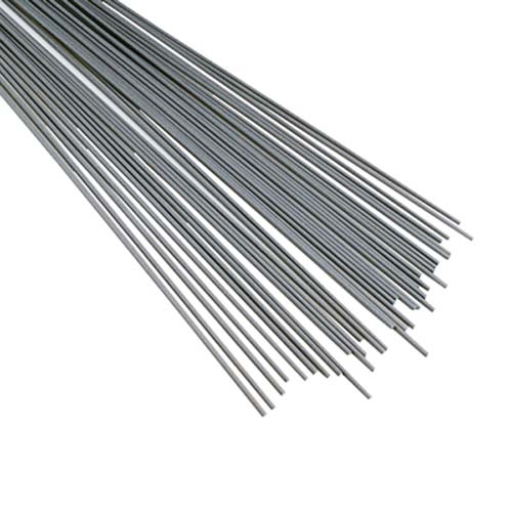
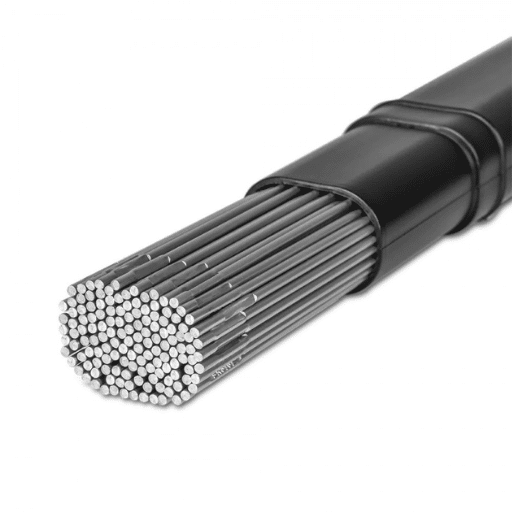
TIG filler is typically supplied in straight lengths of 0.8 mm, 1.0 mm, 1.2 mm, or 1.6 mm diameter. MIG wire is supplied on spools, commonly 0.8 mm or 1.0 mm. For critical aerospace work, request:
- AMS 5832 certification for ERNiFeCr-2 wire
- Mill test reports (MTRs) showing chemistry, tensile properties, and heat number
- Vacuum-induction-melted (VIM) plus electro-slag-remelted (ESR) or vacuum-arc-remelted (VAR) material for cleanliness
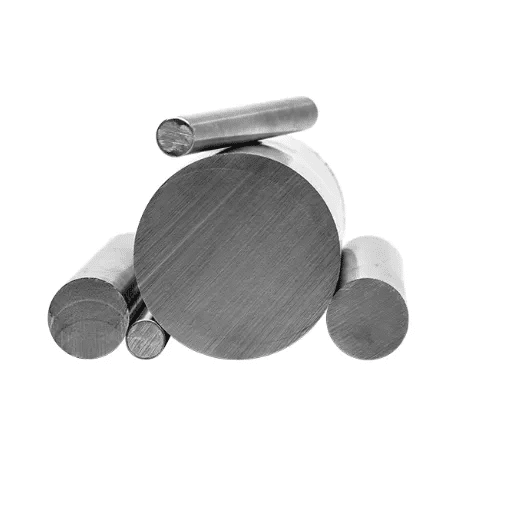
When you source Inconel 718 round bar and matching welding wire from the same qualified supplier, you simplify traceability and reduce chemistry mismatch risk.
TIG/GTAW Welding Parameters
Gas tungsten arc welding is the most common manual process for Inconel 718 because it offers precise heat control and excellent shielding. Use DCEN polarity, a 2% thoriated or lanthanated tungsten electrode, and 100% argon shielding gas. For critical applications, add a trailing shield or gas lens to extend argon coverage behind the weld pool.
Equipment Setup
- Power source: DC, constant-current, high-frequency start
- Electrode: 2.0–3.2 mm lanthanated tungsten, ground to a 30° included angle with a flat tip
- Shielding gas: 99.995% argon at 12–18 L/min; back-purge tubes and pipes at 5–10 L/min
- Gas cup: Large-diameter ceramic or gas lens; trailing shields for oxidation-sensitive surfaces
Parameter Table by Thickness
| Thickness (mm) | Groove | Current (A) | Voltage (V) | Travel Speed (mm/min) | Filler Diameter (mm) | Argon Flow (L/min) |
|---|---|---|---|---|---|---|
| 0.8–1.5 | Butt, no gap | 40–70 | 10–12 | 100–180 | 0.8–1.0 | 10–12 |
| 1.5–3.0 | Butt or lap | 70–110 | 11–13 | 150–250 | 1.0–1.2 | 12–15 |
| 3.0–6.0 | 60° V-groove | 110–160 | 12–14 | 150–250 | 1.2–1.6 | 14–18 |
| 6.0–12.7 | 60° V-groove | 160–220 | 13–15 | 150–250 | 1.6 | 15–20 |
These values are starting points. Always develop and qualify a Welding Procedure Specification (WPS) for your joint geometry, position, and code requirement. MWalloys publishes a practical Inconel welding procedure reference with additional parameter guidance.
Pulsed TIG Settings
Pulsed TIG reduces heat input and refines grain size in the fusion zone. Research studies have reported joint efficiencies up to 99.20% with optimized pulsed-TIG parameters on Inconel 718.
| Parameter | Typical Range |
|---|---|
| Peak current | 180–220 A |
| Base current | 60–90 A |
| Pulse frequency | 2–10 Hz |
| Duty cycle | 40–60% |
| Travel speed | 150–250 mm/min |
Pulsed TIG is especially useful on thin aerospace sheet and tube assemblies where warpage must be minimized.
Back Purging for Tubes and Pipes
Oxidation on the root pass produces chromium-depleted surfaces that reduce corrosion resistance and can nucleate cracks. For tube and pipe welds, seal both ends and purge the bore with argon until the root bead is complete. A common rule is to maintain an oxygen level below 0.1% inside the purged cavity before striking the arc.
MIG/GMAW and High-Deposition Processes
MIG welding increases deposition rate and is attractive for thicker sections or production runs. For Inconel 718, avoid short-circuit transfer because it produces excessive spatter and poor fusion. Use spray transfer or pulsed-spray transfer with argon-based shielding gas.
| Parameter | Spray Transfer | Pulsed Spray |
|---|---|---|
| Wire diameter (mm) | 1.0–1.2 | 1.0–1.2 |
| Current (A) | 180–280 | 140–220 |
| Voltage (V) | 26–32 | 22–28 |
| Travel speed (mm/min) | 300–600 | 250–500 |
| Shielding gas | Ar + 1–2% O₂ or Ar + He | Pure Ar or Ar + He |
| Spray mode | Axial spray | Controlled droplet |
When does MIG make sense over TIG? Use MIG for long, straight seams on thick plate where deposition rate matters more than cosmetic perfection. Use TIG for root passes, thin sections, aerospace quality welds, and repairs.
Electron Beam and Laser Welding for Aerospace
Electron beam welding (EBW) and laser beam welding (LBW) offer the lowest heat input and narrowest heat-affected zones of any fusion process. These attributes make them attractive for aerospace turbine components where minimal distortion and high joint efficiency are required.
| Feature | EBW | LBW | TIG | MIG |
|---|---|---|---|---|
| Heat input | Very low | Very low | Moderate | Moderate to high |
| HAZ width | Very narrow | Very narrow | Wider | Wide |
| Distortion | Minimal | Minimal | Moderate | Higher |
| Joint fit-up tolerance | Tight | Moderate | Moderate | Moderate |
| Atmosphere | Vacuum | Inert gas shield | Inert gas shield | Inert gas shield |
| Joint efficiency (typical) | 95–100% | 95–100% | 90–95% | 90–93% |
| Equipment cost | High | High | Low | Low |
An aerospace supplier in the U.K. switched a turbine disk ring from manual TIG to EBW in 2022. The change eliminated Laves-related rejections, reduced post-machining distortion, and cut inspection rework by roughly 30%. The part still required solution anneal and double aging afterward, but the as-welded microstructure was cleaner.
Limitations of EBW and LBW
High-energy-density processes are not universal solutions. Their limitations include:
- Porosity: Keyhole instability can trap gas, especially if the surface is not perfectly clean.
- HAZ liquation: Although the HAZ is narrow, the rapid thermal cycle can still produce liquation cracking in susceptible microstructures.
- Equipment access: EBW requires a vacuum chamber, limiting part size. LBW requires precise fixturing and beam alignment.
- Post-weld processing: Most aerospace applications still require full solution anneal and aging regardless of the welding process.
Interpass Temperature and Heat Input Control
Why 93°C Is the Practical Ceiling
The recommended maximum interpass temperature for Inconel 718 is 93°C (200°F). Higher temperatures slow cooling, widen the HAZ, increase Nb segregation, and promote Laves-phase formation. In practice, use a contact pyrometer or temperature-indicating crayon to verify the joint is below 93°C before depositing the next pass.
Cooling Between Passes
Allow the weldment to cool naturally between passes. Do not force-cool with water or compressed air; rapid quenching of a hot weld can introduce thermal shock and distortion. For thick sections, allow extra time for heat to dissipate from the root.
Heat Input Calculation and Stringer-Bead Technique
Heat input is calculated as:
Heat input (kJ/mm) = (Voltage × Current × 60) / (Travel speed in mm/min × 1000)
For Inconel 718, aim for the lowest practical heat input that still produces full fusion. Use stringer beads rather than weave beads. Weaving widens the pool, increases heat input, and aggravates grain-boundary liquation. A typical guideline is a maximum weave width of 2.5–3 times the electrode diameter.
Post-Weld Heat Treatment (PWHT)
PWHT is mandatory for most structural Inconel 718 welds. The correct cycle restores strength, relieves residual stresses, and transforms the microstructure into the desired γ′/γ′′ strengthened condition.
Full Solution Anneal + Double Aging
The standard aerospace cycle for Inconel 718 is:
- Solution anneal: 954–980°C for 1 hour per inch of maximum thickness, then air cool or water quench.
- Primary aging: 720°C for 8 hours, furnace cool to 620°C at 55°C/hour.
- Secondary aging: 620°C for 8 hours, then air cool.
This cycle produces tensile strengths of approximately 1,240 MPa, yield strengths around 1,030 MPa, and elongation of 12–20% depending on section size and testing direction.
Direct Aging After Welding Solution-Annealed Material
If the base metal was solution-annealed before welding and the component is lightly stressed, some specifications allow direct double aging without re-solution treatment. This is common for thin sheet assemblies and repair procedures qualified by the customer. Always confirm with the governing specification before skipping the solution anneal.
The δ-Phase Danger Zone
The temperature range around 850°C must be avoided or transited quickly. Prolonged exposure forms δ-phase at grain boundaries, which embrittles the joint and reduces creep and fatigue performance. When programming furnaces, verify that the cooling path from solution temperature to aging temperature does not dwell near 850°C.
When PWHT Can Be Skipped
PWHT can sometimes be omitted for:
- Non-structural, low-stress hardware such as brackets or shields
- Assemblies that will operate at temperatures too low to age the alloy significantly
- Specific customer-approved repair procedures with separate qualification
Even when PWHT is skipped, stress relief or a low-temperature aging cycle may still be required by code.
Common Defects and How to Prevent Them
| Defect | Cause | Prevention |
|---|---|---|
| Laves phase in fusion zone | Nb segregation from high heat input | Low heat input, stringer beads, fine-grained filler, correct PWHT |
| HAZ liquation cracking | Low-melting grain-boundary films + restraint | Solution-annealed base metal, low interpass temp, minimize restraint |
| Solidification cracking | S, P, Pb, Zn, Cu contamination | Dedicated cleaning, contamination-free tools, proper shielding |
| Porosity | Moisture, oil, oxides, inadequate gas coverage | Degrease, clean, back purge, verify gas purity |
| Lack of fusion | Insufficient current, misaligned torch, tight fit-up | Increase heat input, improve access, verify WPS parameters |
| Crater cracks | Rapid termination of weld pool | Fill crater, taper off current, use run-off tabs |
Laves Phase and Nb Segregation
Laves phase appears as light-etching particles in the fusion zone. It is brittle and acts as a crack initiator under fatigue loading. The best prevention is to keep heat input low enough to refine the solidification structure and then apply the standard double-aging cycle to homogenize Nb distribution.
HAZ Liquation Cracking
Liquation cracks form in the partially melted zone just outside the fusion boundary. They are often microscopic but detectable by penetrant testing or metallography. Prevent them by welding solution-annealed material, controlling interpass temperature, and minimizing mechanical restraint.
Porosity and Contamination
Porosity in 718 welds usually comes from moisture, hydrocarbons, or inadequate shielding. Store filler wire in a dry environment, check regulator and hose integrity, and verify argon purity. For root passes, maintain back-purge flow until the bead temperature drops below oxidation range.
Welding Inspection and Acceptance
Visual and Penetrant Testing
All Inconel 718 welds receive 100% visual inspection. Look for cracks, undercut, incomplete penetration, and excessive reinforcement. Liquid penetrant inspection (PT) follows visual inspection to detect surface-breaking cracks that the eye can miss.
Radiographic and Ultrasonic Testing
For structural welds, radiographic testing (RT) or ultrasonic testing (UT) is standard. RT reveals internal porosity, lack of fusion, and cracks. UT is effective on thicker sections and can detect planar defects oriented perpendicular to the sound beam.
Mechanical Testing and Hardness Mapping
Procedure qualification often includes:
- Tensile testing of all-welded metal or transverse specimens
- Bend testing for ductility
- Hardness surveys across the weld, HAZ, and base metal
- Metallographic examination for Laves phase, grain size, and crack indication
Code Requirements
Inconel 718 welding may fall under ASME Section IX, AWS D17.1 for aerospace, AMS specifications, or customer-specific requirements. Seather Technology offers a detailed step-by-step TIG welding guide for Inconel alloys that complements the parameters below. Always align your WPS, welder qualifications, and inspection scope with the applicable code before production welding begins.
Sourcing Inconel 718 for Welding Applications

What to Specify on Your RFQ
When you buy Inconel 718 base metal and matching filler for a welding project, clarity on the purchase order reduces downstream rejections. Specify:
- Alloy designation: Inconel 718, UNS N07718, or GH4169
- Condition: solution-annealed or aged
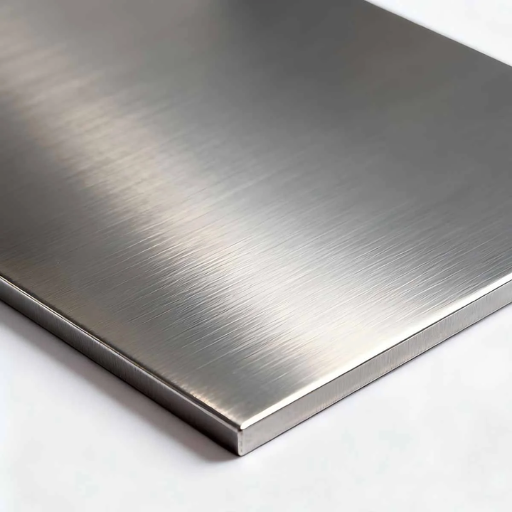
- Product form: round bar, plate, forging, or welding wire
- Certification: ASTM B637, AMS 5662/5663, or equivalent
- Filler metal certification: AWS A5.14 ERNiFeCr-2 / AMS 5832 with MTR
- Melt practice: VIM/ESR or VIM/VAR for critical applications
- Heat number traceability from base metal to filler metal
GH4169 Equivalent for Domestic Chinese Projects
GH4169 is the Chinese national standard equivalent of Inconel 718. The composition, heat treatment, and welding behavior are essentially identical. If your project uses GH4169 drawings and specifications, you can source matching Inconel 718 material and ERNiFeCr-2 filler without procedure changes. This equivalence is particularly useful for Chinese domestic aerospace, power-generation, and petrochemical projects that need certified material with shorter lead times.
Stock Forms and Lead Times
Jiangsu Zhonggongte stocks Inconel 718 / GH4169 in round bar, plate, forgings, and welding wire. For urgent repairs or prototype builds, same-day cutting and 24-hour quotation support are available. Consolidating base metal and filler metal orders with one qualified supplier simplifies documentation and reduces the risk of chemistry mismatches.
Need certified Inconel 718 material or ERNiFeCr-2 welding wire for your next project? Contact us for a 24-hour quotation with full MTR and AMS certification support.
FAQ: Inconel 718 Welding
Can you weld Inconel 718 in the aged condition?
You can, but you should not for structural work. Aged 718 is brittle and prone to strain-age cracking during PWHT. Re-solution-anneal the part before welding, then reapply the full aging cycle afterward.
What filler wire is best for Inconel 718?
ERNiFeCr-2 is the standard matching filler for Inconel 718. It meets AWS A5.14 and AMS 5832 and ages predictably with the base metal. Use ERNiCrMo-3 only for dissimilar joints where lower strength and higher ductility are acceptable.
What is the maximum interpass temperature for Inconel 718?
The practical maximum is 93°C (200°F). Higher interpass temperatures increase HAZ width, Nb segregation, and Laves-phase formation.
Is preheat required for Inconel 718?
Preheat is generally not required for austenitic nickel alloys like Inconel 718. Room-temperature starts are typical. The focus should be on limiting interpass temperature and total heat input.
What PWHT cycle should Inconel 718 welds receive?
For structural applications, use solution anneal at 954–980°C followed by double aging: 720°C/8h, furnace cool to 620°C, then 620°C/8h. Avoid dwelling near 850°C to prevent δ-phase formation.
Can Inconel 718 be welded to stainless steel?
Yes, with the correct filler and procedure. Use ERNiCrMo-3 or another nickel-based dissimilar filler to accommodate thermal expansion differences and prevent martensite formation. Do not use a matching 718 filler for 718-to-stainless joints.
What shielding gas is used for TIG welding Inconel 718?
Use 99.995% argon for both the torch and back purge. For some automated applications, argon-helium blends can increase penetration, but pure argon is the standard choice.
How do you prevent Laves phase in Inconel 718 welds?
Control heat input, use stringer beads, keep interpass temperature low, and apply the standard PWHT cycle. These steps refine the solidification structure and reduce Nb segregation.
Is electron beam welding good for Inconel 718?
EBW is excellent for Inconel 718 in aerospace applications. It produces a narrow HAZ, minimal distortion, and high joint efficiency. The main constraints are equipment cost, vacuum-chamber size, and the need for precise joint fit-up.
What is GH4169, and is it the same as Inconel 718?
GH4169 is the Chinese standard grade equivalent to Inconel 718. The chemistry, mechanical properties, and welding behavior are essentially identical, making the two grades interchangeable for most engineering purposes.
Conclusion
Inconel 718 welding rewards discipline. Start with solution-annealed base metal. Choose the right filler, usually ERNiFeCr-2. Keep interpass temperature below 93°C, use stringer beads, and shield the joint with high-purity argon.
After welding, apply the full solution anneal and double-aging cycle. Steer clear of the 850°C δ-phase danger zone. Whether you use TIG, MIG, EBW, or laser, these principles separate acceptable welds from scrapped repairs.
For procurement teams, the same discipline extends to sourcing. Specify condition, certification, and traceability up front. If your project references GH4169, remember that it welds identically to Inconel 718 and can be sourced from the same qualified stock.
Jiangsu Zhonggongte supplies certified Inconel 718 / GH4169 round bar, plate, forgings, and ERNiFeCr-2 welding wire with full MTR and AMS certification support. Request your 24-hour quotation and let our metallurgical team help you choose the right material and filler combination for your welding application.