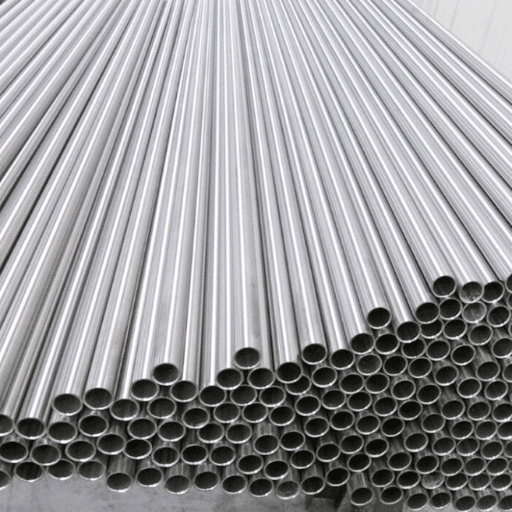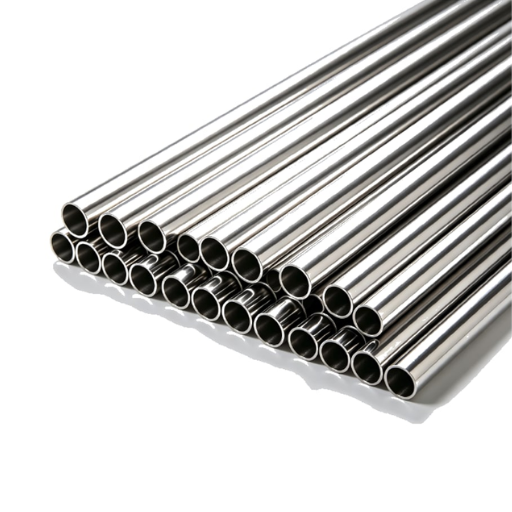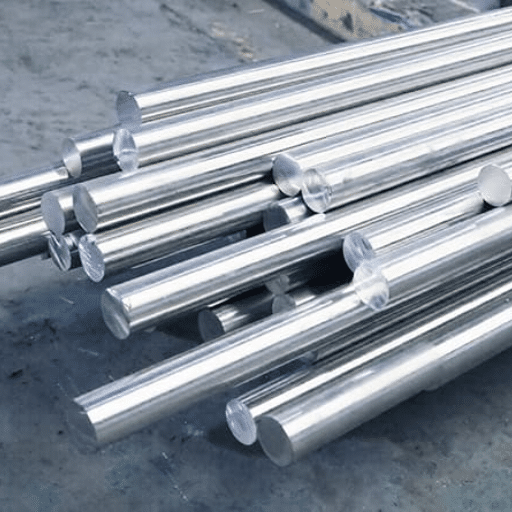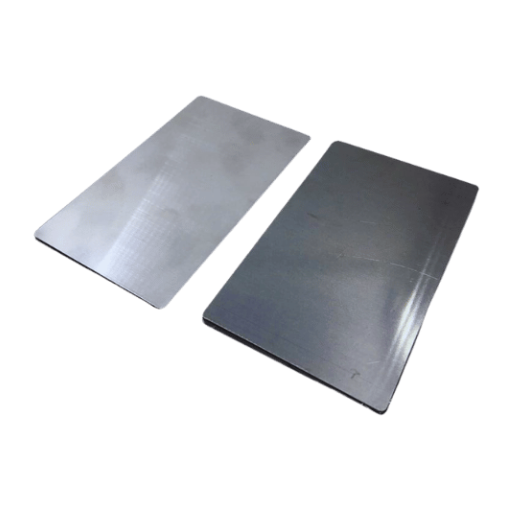
Incoloy 825 is the correct grade when the duty is wet acid, chloride stress corrosion cracking or sour service below about 540°C. Incoloy 800H is the correct grade when the duty is sustained load or oxidation above about 593°C. Comparing Incoloy 825 vs 800H is not a question of which alloy is better. The substitution fails in both directions.
The 800H quote usually lands 15 to 25% below the 825 quote for the same drawing. That isn’t a cheaper way to buy the same part. It’s a different alloy answering a different failure mechanism, and the only question that matters is which mechanism would end the campaign first.
Engineers ask for this comparison because a fabricator has proposed the cheaper grade against a drawing that specifies the dearer one, and somebody has to approve or reject the substitution. That approval is a code decision, not a matter of taste.
Below you get the code boundary by section and product form, the strength inversion that makes room-temperature datasheets misleading, the like-for-like cost gap, and the mixed-duty solution.
Send the medium, the operating temperature, the governing code and the product form, and our metallurgical team will confirm whether 825, 800H or neither is correct within 24 hours. Talk to our engineers.
Key Takeaways
- 825 is a corrosion grade with 2.5 to 3.5% molybdenum and 1.5 to 3.0% copper. 800H is a creep grade with 0.05 to 0.10% carbon, coarse grain, and no molybdenum or copper.
- ASME Sections I and VIII and B31.3 list 825 to 538°C. 800H becomes the code creep grade above 593°C and serves to about 815°C long term.
- At 20°C, 825 is stronger: 586 MPa tensile minimum against roughly 450 MPa for 800H. Above 600°C the ranking reverses.
- 825 costs about 15 to 25% more than 800H in the same form, a gap of roughly 4to4to6/kg, because its raw metal costs more.
- When a unit is hot at one end and wet at the other, split it at the 538 to 593°C boundary and qualify the transition joint as a dissimilar weld.
Incoloy 825 vs 800H: The Direct Answer
Incoloy 825 is a corrosion grade and Incoloy 800H is a creep grade. 825 carries 2.5 to 3.5% molybdenum and 1.5 to 3.0% copper for wet acid service, but it is not approved for sustained load above about 538°C. 800H carries no molybdenum or copper, but its controlled carbon and coarse grain give it creep strength above 593°C.
| Incoloy 825 (UNS N08825) | Incoloy 800H (UNS N08810) | |
|---|---|---|
| Design purpose | Aqueous corrosion | Creep and oxidation |
| Nickel | 38.0-46.0% | 30.0-35.0% |
| Chromium | 19.5-23.5% | 19.0-23.0% |
| Molybdenum | 2.5-3.5% | none |
| Copper | 1.5-3.0% | 0.75% max |
| Carbon | 0.05% max | 0.05-0.10% |
| Aluminum and titanium | Ti 0.6-1.2% | Al + Ti 0.30-1.20% |
| PREN (approx.) | 31-35 | 20-21 |
| Density | 8.14 g/cm³ | 7.94 g/cm³ |
| Tensile and yield, annealed | 586 and 241 MPa min | about 450 and 170 MPa min |
| Code ceiling | 538°C (Section I, VIII, B31.3) | 593°C creep threshold; 760°C Section III |
| Practical ceiling | 540-550°C | 815°C creep; 980°C oxidation |
| Governing standards | ASTM B424, B425, B423 | ASTM B409, B408, B407 |
| Chinese designation | NS142, NS1402, 0Cr21Ni42Mo3Cu2Ti | NS112, NS1102, 0Cr20Ni32AlTi |
Three rows decide the answer. Molybdenum and copper buy reducing-acid and chloride resistance, and 800H has neither. Carbon and grain size buy creep strength, and 825’s carbon is held low because carbides are a corrosion liability in its duty.
The grades also live in different specification universes. 825 runs to ASTM B424, B425 and B423; 800H runs to ASTM B409, B408 and B407. Their mill test reports are not comparable line for line, which is how a substitution slips through goods inspection.
The full grade story sits in the complete Incoloy 825 guide and the Incoloy 800H heat-resistant guide.
Composition and Properties: What the Alloying Buys
Molybdenum and Copper vs Carbon and Al+Ti
Only four lines of that table change the decision.
Molybdenum at 2.5 to 3.5% makes 825 work in reducing acids and against pitting. 800H contains none. Copper at 1.5 to 3.0% is the differentiator in dilute sulfuric and phosphoric acid, and 800H allows only a residual 0.75%.
Carbon at 0.05 to 0.10% is a minimum specification in 800H, not a maximum, because grain-boundary carbides carry load at temperature. In 825, carbon is capped at 0.05% because carbides there are a corrosion liability. Titanium at 0.6 to 1.2% stabilizes 825 against sensitization during welding; in 800H, aluminum and titanium are deliberate precipitation and oxide formers.
The Strength Inversion
| Property | 825 at 20°C | 800H at 20°C | 800H at 650°C | 800H at 760°C |
|---|---|---|---|---|
| Tensile strength | 586 MPa min | about 450 MPa min | about 378 MPa | about 236 MPa |
| Yield strength (0.2%) | 241 MPa min | about 170 MPa min | about 93 MPa | about 90 MPa |
| Design basis | Corrosion and pressure | Pressure | Creep-rupture | Creep-rupture |
At 20°C, 825 is the stronger alloy on paper by roughly 30%. Above 600°C the comparison reverses completely, because 825 is not in the high-temperature allowable-stress tables and 800H is. A room-temperature datasheet makes 825 look like the better structural choice. The design case makes 800H the only one of the two that can carry load at temperature.
The creep numbers explain it. 800H delivers roughly 120 MPa at 700°C for 10,000 hours in stress-rupture testing, with reported ASME allowable stresses near 92 MPa at 580°C and about 26 MPa at 800°C. Verify those against Section II-D before quoting them into a calculation.
825 has no creep-rupture design basis above 538°C at all. The code never qualified it for that duty.
Why Grain Size Matters More Than Chemistry
800H’s creep resistance depends on ASTM No. 5 grain size or coarser, produced by annealing at 1121°C (2050°F) or above. Fine-grain material of identical chemistry can lose most of its rupture life, which is why “UNS N08810” alone is an incomplete purchase specification.
825 has no grain-size requirement. Its critical variables are chemistry and condition: titanium and copper inside range, solution-annealed and rapidly quenched.
Incoloy 825 vs 800H Temperature Limits and Code Approval
| Temperature band | 825 | 800H | What governs |
|---|---|---|---|
| Below 400°C | Corrosion grade, if the medium is acid or chloride | Usually over-specified | Corrosion |
| 400-538°C | Pressure-service design window | Possible; creep is not the design basis | Corrosion and pressure |
| 538-593°C | At or beyond the ceiling; no pressure credit above 538°C | Creep design begins; 800H and 800HT recognized above 593°C | Code and creep |
| 593-815°C | Not approved for sustained load | 800H and 800HT design window | Creep-rupture |
| 815-980°C | Not applicable | Low-stress, high-oxidation service; creep life shortens sharply | Oxidation and creep |
| Above 980°C | Not applicable | Out of range; consider Inconel 600, 601 or 625 | Oxidation |
825’s numbers. ASME Sections I and VIII and B31.3 list 825 to 538°C (1000°F). B31.3 Table A-1 carries allowable stress to about 500°C. Practical long-term aqueous service stops at 540 to 550°C, where sigma phase begins to form and ductility falls.
A tighter limit explains a number that circulates widely. ASME Section III Class 3 restricts 825 to roughly 427°C (800°F), a nuclear-component rule for one construction class. The “450°C ASME limit” on many supplier pages is that figure rounded and relabeled, not the Section VIII pressure-vessel ceiling.
800H’s numbers. 593°C (1100°F) is the threshold above which 800H and 800HT, rather than plain 800, are the code-recognized creep grades. Section III lists 800H to 760°C (1400°F) for covered forms, Section VIII allowable stresses extend to about 899°C (1650°F), and Section I coverage runs to roughly 816°C (1500°F).
Always state the section and the product form. A single “ASME limit” for 800H is meaningless without them, which is why the ASME work on extending 800H allowable stresses is written by section and stress table. These are listing temperatures, not guarantees of long life.
Corrosion and Oxidation: What Each Grade Resists
825: The Acid and Chloride Envelope
825 holds 0.13 mm/yr (5 mpy) across 0 to 100% sulfuric acid to about 65°C, dipping to roughly 50°C in the 40 to 80% concentration band, with best performance between 10 and 30%. It resists phosphoric, sulfurous, nitric and organic acids, and shows no chloride stress corrosion cracking in boiling magnesium chloride U-bend testing at 25% and 35% over 300 hours. It cracks at 42%. The alloy is listed under NACE MR0175 and ISO 15156 for sour service within defined limits.
Our Incoloy 825 corrosion resistance guide carries the full media-by-media envelope, including the media where 825 stops.
800H: Oxidation, Carburization and Steam
800H’s chromium oxide scale protects it in dry oxidizing, carburizing and sulfidizing atmospheres to about 980°C, and its nickel content helps the scale stay adherent under thermal cycling. Mill data from Sandmeyer Steel documents that envelope, which is why the grade is a workhorse for steam methane reformer tubes, ethylene cracking coils, superheater tubing and radiant tubes.
It resists nitric and some organic acids. What it does not have is molybdenum or copper, so it is the wrong material for wet sulfuric or phosphoric acid and for chloride pitting.
The Failure Modes, Named
825 above its ceiling fails by creep and sigma-phase embrittlement. 800H in wet acid fails by general and localized corrosion, often within months. Both are specification errors, not material defects.
Incoloy 800 vs 800H vs 800HT: The Other Decision
Readers comparing 825 against 800H are often also choosing inside the 800 family, where the grades are not interchangeable either.
| 800 (N08800) | 800H (N08810) | 800HT (N08811) | |
|---|---|---|---|
| Carbon | 0.10% max | 0.05-0.10% | 0.06-0.10% |
| Al + Ti | 0.30-1.20% | 0.30-1.20% | 0.85-1.20% |
| Anneal | about 980-1,065°C | 1121°C min | 1149°C min |
| Grain size | unspecified | ASTM 5 or coarser | ASTM 5 or coarser |
| Best for | General heat and corrosion to about 600°C | Creep 600-815°C | Maximum creep life above about 700°C |
The rule: 800H is the default heat grade. 800HT’s tighter Al+Ti range and higher annealing temperature buy roughly 15 to 25% more 100,000-hour rupture strength at 750 to 850°C, worth paying only above about 700°C.
Plain 800 is not a creep grade. Substituting it for 800H above 593°C is the same class of error as substituting 800H for 825, and harder to catch.
Cost: Incoloy 825 vs 800H in 2026
| Form | 800H (USD/kg) | 825 (USD/kg) | Absolute gap |
|---|---|---|---|
| Round bar | 20-24 | 24-29 | plus 4 to 5 |
| Plate and sheet | 22-26 | 26-32 | plus 4 to 6 |
| Pipe and tube | 26-30 | 30-36 | plus 4 to 6 |
Indicative 2026 export reference: a band, not a quotation, with no stated trade basis or certification level.
Why the percentage looks small. At October 2026 metal prices, the raw material in a kilogram of 825 costs about 10.1. Nickelat4210.1. Nickelat4216/kg contributes 6.72,molybdenumat36.72,molybdenumat390/kg adds 2.70,andchromiumpluscopperaddabout2.70,andchromiumpluscopperaddabout0.74. The same arithmetic puts 800H near $5.7/kg, mostly nickel at 32.5%.
The metal-cost gap is therefore about 4.4/kg, and the observed finished-price gap is about 4.4/kg, and the observed finished–price gap is about 4 to $6/kg. The absolute difference passes through almost unchanged, while the percentage shrinks to 15 to 25% because both grades carry similar conversion costs. “825 carries nearly twice the metal cost but sells for only 20% more” is not a contradiction.
Our 2026 Incoloy 825 price per kg guide breaks the 825 figures down by form.
Mixed Duty: When One Unit Needs Both Grades
Where the Overlap Occurs
The mixed-duty problem shows up in sulfuric acid waste-heat boilers, FGD reheaters, chemical furnace quench sections, syngas coolers, and petrochemical units with a hot dry zone and a cooler wet zone. In all of them the metal temperature crosses the 538 to 593°C boundary along the gas path, and the corrosive duty changes with it.
A sulfuric acid plant’s waste-heat boiler is the classic case. Picture the original specification calling for 825 throughout, because the gas is wet and acidic. The hot end, where metal temperature sat near 650°C, failed by creep inside two campaigns.
Re-splitting the unit at the 538 to 593°C boundary, with 800H above it and 825 below, ended the failures. That’s an illustrative case, not a customer reference.
How to Split the Unit
Split at the boundary, not at a round number. Use 825 on the wet side while the metal temperature stays below about 538°C. Use 800H on the dry side above 593°C. Allow a transition length between them.
Do not ask either grade to cover the crossover. If the crossover is unavoidably both hot and wet, neither grade is correct. Move to a higher alloy such as 625, or change the design so the zones separate. Our Incoloy 825 vs Inconel 625 comparison covers what that step costs.
The Transition Joint
The two alloys are metallurgically compatible. Both are austenitic nickel-iron-chromium, and their mean coefficients of thermal expansion are closely matched at about 14 µm/m·°C. The joint is therefore not a classic expansion-mismatch problem, which is the opposite of what many procedures assume for a dissimilar weld.
The real risks are dilution and corrosion.
- Filler choice. ERNiCr-3 is the conventional 800H-family filler, but it carries no molybdenum or copper, so it gives up 825’s resistance on the corrosive side. Where the joint sees wet acid, ERNiCrMo-3 (625-type) is safer. Where it stays dry and hot, ERNiCr-3 is adequate and cheaper.
- Procedure discipline. Low heat input, interpass at or below 150°C, stringer beads, argon root protection, and one procedure qualification on the actual dissimilar joint rather than two single-metal ones.
Qualify the joint as a dissimilar joint even though both base metals come from the same family. The inspector who assumes family equivalence is the one who signs off the corrosion failure.
When Each Grade Is the Wrong Choice
Six named cases, stated without hedging.
- 825 above 550°C under sustained load. Not code-approved for the duty, prone to sigma phase, and creep-governed. Use 800H or 800HT.
- 825 in dry high-temperature oxidation or carburization. Molybdenum and copper buy nothing, and 800H is both cheaper and better.
- 800H in wet sulfuric or phosphoric acid. No molybdenum, no copper, rapid attack. Use 825.
- 800H in chloride-bearing aqueous or sour service. Pitting and SCC risk, and NACE MR0175 does not list it for sour service. Use 825 or a higher alloy.
- 825 in nitric acid. Molybdenum and copper are largely wasted in a strongly oxidizing acid, so 800H, plain 800 or a 300-series stainless is often the economical answer.
- 800HT below 700°C. Over-specified, harder to source, and no meaningful creep benefit over 800H.
The third case is the one that catches projects. Picture a fabricator substituting 800H for 825 on a phosphoric acid line because the quote came in 20% lower. The line failed by general corrosion at the weld and heat-affected zone within months.
Without molybdenum or copper the base metal had nothing to resist the acid, and the weld diluted what little resistance it had. That’s an illustrative case, not a customer reference.
The right question is never which alloy is better. It is which failure mechanism the design has to survive.
Sourcing and Documentation: NS142 vs NS112
Three points that belong on a purchase order.
Chinese designations. 825 is NS142 under the older GB/T 15007 designation, NS1402 under the newer one, and 0Cr21Ni42Mo3Cu2Ti in composition form. 800H is NS112, NS1102, or 0Cr20Ni32AlTi. An MTR that says only “Incoloy 800H equivalent” does not prove the grade.
What to demand on the certificate. For 800H, the grain-size result and the annealing temperature, because chemistry alone does not prove ASTM No. 5 grain. For 825, PMI specifically on the titanium and copper lines; the two elements counterfeit 825 most often mislabeled.
Documentation. EN 10204 3.1 as standard, 3.2 for EPC and nuclear work, and NACE MR0175 or ISO 15156 evidence for 825 in sour service. Because the two grades run to different ASTM families, do not accept one certificate as proof of the other grade.
Incoloy 825 vs 800H FAQ
What is the difference between Incoloy 825 and 800H?
825 is a corrosion grade built around molybdenum and copper for wet acid service, rated to 538°C. 800H is a creep grade built around controlled carbon and coarse grain for sustained load above 593°C. They are not substitutes in either direction.
Is Incoloy 825 better than 800H?
Neither is better. 825 wins in sulfuric and phosphoric acid, in chloride SCC, and in sour service. 800H wins above 593°C under sustained load, and it costs 15 to 25% less. The duty decides.
Can Incoloy 825 be used at 800°C?
No. 825 is code-listed to 538°C in ASME Sections I and VIII and B31.3, and practical aqueous service stops near 550°C where sigma phase forms. At 800°C under load, use 800H or a higher alloy.
Can Incoloy 800H be used in sulfuric acid?
Not in wet sulfuric acid. 800H contains no molybdenum or copper, so it corrodes rapidly in reducing acid conditions. It resists nitric and some organic acids, which is a different duty. Use 825 for wet sulfuric acid.
Which is stronger, Incoloy 825 or 800H?
At 20°C, 825: 586 MPa tensile minimum against roughly 450 MPa. At 600°C and above, 800H, because 825 is not in the high-temperature allowable-stress tables. Strength is not a single number, and temperature is part of the question.
Is 825 or 800H more expensive?
825, by roughly 15 to 25% in the same product form, or about 4to4to6/kg. The gap tracks nickel, molybdenum and copper content. Similar conversion cost in both grades keeps the percentage narrower than the metal-cost ratio suggests.
Can you weld Incoloy 825 to 800H?
Yes, and the joint is routinely made. Use ERNiCr-3 where the joint stays dry and hot, and ERNiCrMo-3 where it sees wet acid. Expansion is closely matched at about 14 µm/m·°C, so dilution and weld-metal corrosion are the risks, not cracking.
Conclusion
The Incoloy 825 vs 800H decision is a code and mechanism question, not a price question. Get the mechanism wrong, and the cheaper alloy can fail in months. Get it wrong the other way, and you pay a 15 to 25% premium for corrosion resistance that buys nothing.
Four numbers carry it: 538°C for the 825 ceiling, 593°C for the 800H creep threshold, 586 against 450 MPa at room temperature, and 4to4to6/kg for the real cost gap.
Check any substitution proposal against two things. Does it name the failure mechanism, and does it name the product form and the code section? A proposal that answers neither is a guess with a price attached.
Send your medium, temperature, governing code and product form to our technical team, and we will confirm whether 825, 800H or neither is correct within 24 hours.