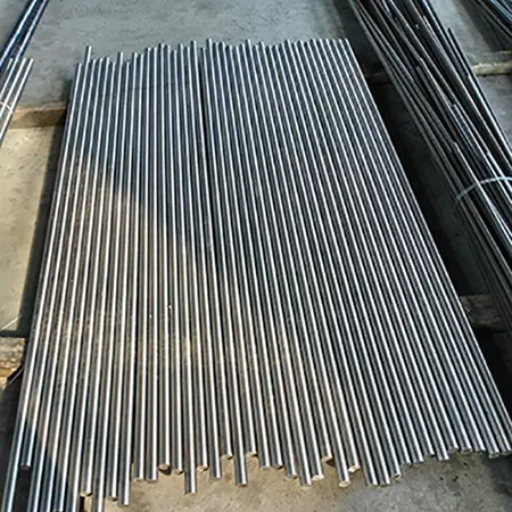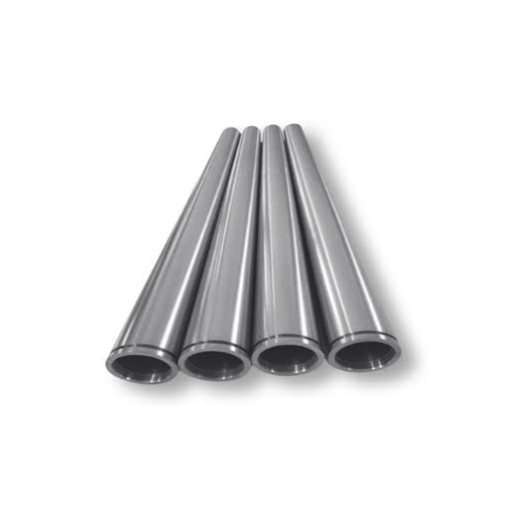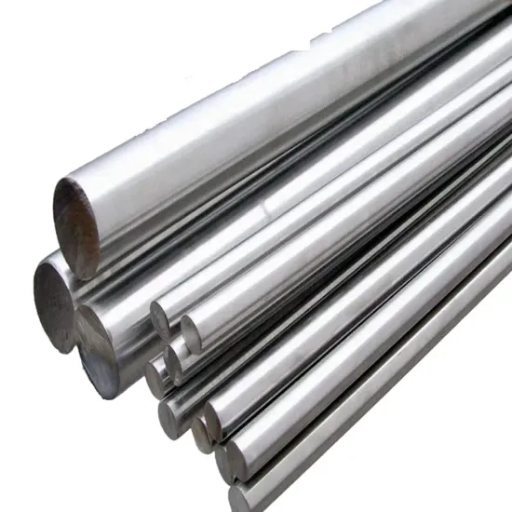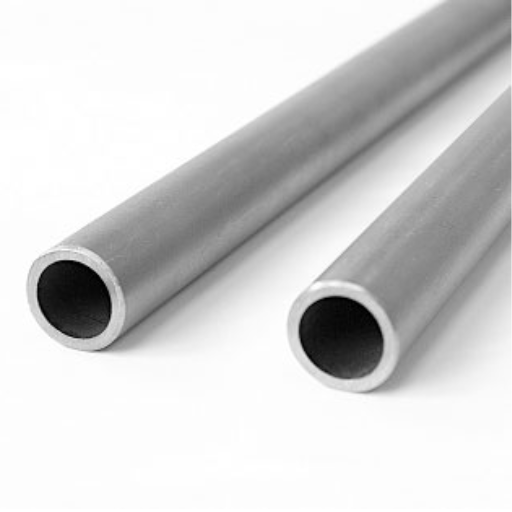
Incoloy 825 pipe is specified to ASTM B423 for seamless pipe and tube, ASTM B163 for heat-exchanger and condenser tube, and ASTM B704 or B705 for welded tube and pipe. ASTM B407, which appears on a lot of supplier pages next to B163, doesn’t cover the grade at all.
Every stockist page will tell you that 825 pipe is ASTM B423. That answer is right for one of four product standards, and incomplete for the other three.
You’ve probably been quoted B423 and already know the chemistry. What usually goes wrong isn’t the alloy. It’s the standard line on the purchase order, and whether it matches the form you actually need.
This guide assigns the standards to the forms, sets out what each one fixes and leaves to the mill, covers the testing regime that matters for heat-exchanger tube, and explains what a Chinese mill certificate will say instead. If your enquiry is already drafted, send us the form, the size and the standard, and we’ll tell you within 24 hours whether the specification will certify. Our metallurgical team reads these documents daily.
Key Takeaways
- Four standards cover 825 in tubular form, and they are not interchangeable. B423 for seamless pipe and tube, B163 for heat-exchanger and condenser tube, B704 for welded tube, B705 for welded pipe.
- ASTM B407 is not an 825 standard. Its scope is six nickel-iron-chromium grades (N08120, N08800, N08801, N08810, N08811, N08890). A certificate citing B407 against N08825 is a specification error.
- B423 covers both pipe and tube. The difference between them is dimensional convention, not alloy, which is why the same heat can ship as either.
- The standard fixes size tables and tests, not mill capability. Published ranges disagree by an order of magnitude between suppliers.
- On the Chinese side, GB/T 30059-2013 is the heat-exchanger tube standard, and it is being rewritten. No English-language competitor covers this.
What Standard Covers Incoloy 825 Pipe?
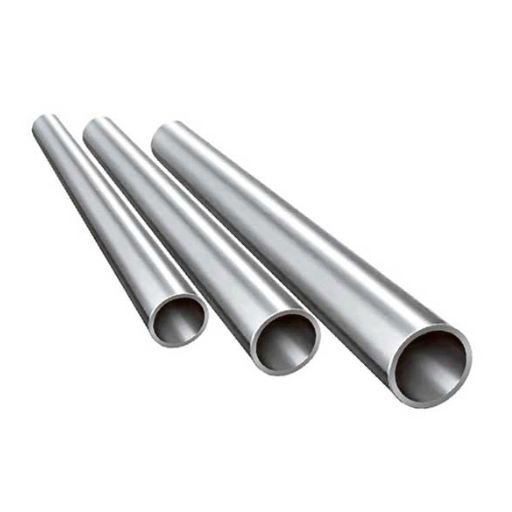
Four ASTM product standards apply to Incoloy 825 (UNS N08825) in tubular form, and which one you quote depends on the product: seamless pipe and tube, heat-exchanger tube, welded tube, or welded pipe. The standard decides what the mill must test, not what size it can make.
| Product form | ASTM standard | ASME equivalent | What it covers |
|---|---|---|---|
| Seamless pipe and tube | B423 | SB423 | N08825, N08221, N06845; general corrosion service |
| Heat-exchanger and condenser tube | B163 | SB163 | Seamless tube, including N08825, for heat transfer |
| Welded tube | B704 | SB704 | Welded tube in N06625, N06219 and N08825 |
| Welded pipe | B705 | SB705 | Welded pipe in the same three alloys |
Three further standards are referenced constantly but are not product specifications. B829 holds general requirements for seamless pipe and tube, B775 for welded pipe, and B751 for welded tube. They govern tolerances, marking and test methods that the product standards invoke. Quoting B829 alone tells a mill nothing about what to make.
Does ASTM B407 Cover Incoloy 825?
No. ASTM B407 covers six nickel-iron-chromium grades: N08120, N08800, N08801, N08810, N08811 and N08890. That is the Incoloy 800 family and its high-temperature relatives, and N08825 is not among them. The title, nickel-iron-chromium alloy seamless pipe and tube, sounds close enough to 825 that it gets copied from one supplier table to the next.
Incoloy 825 is N08825, a nickel-iron-chromium alloy with molybdenum and copper added. Those two additions are the whole point of the grade, and they put it in a different standard. B423’s title names the alloy family explicitly: nickel-iron-chromium-molybdenum-copper.
Picture a project engineer named Wei, writing a tube specification for a phosphoric acid heat exchanger and checking 825’s corrosion resistance against the duty. The supplier’s data sheet lists “B163 / B407” for heat-exchanger tube, so both go onto the purchase order. The mill comes back and says it can certify B163 for N08825 but not B407. Nothing is wrong with the material. One line on the drawing has to change, and the order sits for a week while it does.
If a mill certificate cites B407 against an N08825 order, treat it as a documentation fault, not a material one, and ask for a corrected certificate before release.
Pipe or Tube? The Distinction That Decides Your Specification
Pipe and tube are both round and hollow, and buyers use the words interchangeably. The difference is how the size is expressed, and it changes which standard applies.
Pipe is specified by nominal bore and schedule. A 2-inch Schedule 40 pipe has a nominal bore of 2 inches and a wall thickness set by the schedule table, not by the buyer. Tube is specified by outside diameter and wall thickness as actual dimensions. A 25.4 mm OD by 2.0 mm wall tube is exactly that.
That distinction matters because B423 covers both. The standard addresses seamless pipe and tube together, and the dimensional requirements come from the general-requirements standard the order invokes.
When B163 Is the Right Call
B163 is the condenser and heat-exchanger tube standard. It exists because heat-transfer tube carries requirements that general pipe does not: tighter wall tolerance for a given gauge, and a testing regime built around tube inspection rather than pipe pressure integrity.
If the tube goes inside a shell-and-tube exchanger, B163 is the specification the thermal design was probably written against. If it is a transfer line, B423 is the right call.
| ASTM B423 | ASTM B163 | |
|---|---|---|
| Testing focus | Pressure integrity | Eddy current, hydrostatic, tube inspection |
| Typical use | Transfer lines, headers, nozzles | Shell-and-tube exchangers, condensers, feedwater heaters |
The Practical Overlap
Some Incoloy 825 tube can be certified to either standard, and mills will ask which you want. The answer comes from the equipment, not the alloy: a bundle designed to B163 and delivered to B423 will pass dimensional inspection and still fail documentation review.
Welded Incoloy 825 Pipe and Tube: B704 and B705
Welded product is the cheaper route for larger diameters and shorter lead times, and it is legitimate where the service allows it. Two standards cover it, split the same way pipe and tube are split.
B704 covers welded tube. B705 covers welded pipe. Both are scoped to the same three alloys: N06625, N06219 and N08825, which means 825 shares a welded standard with Inconel 625.
When Welded Beats Seamless
Welded 825 is normally supplied solution-annealed and pickled, with the weld seam post-weld heat treated as B704 and B705 require. It is the sensible choice for:
- Large-diameter lines where a seamless mill run is not available
- Applications below the temperature where seam properties become critical
- Projects where schedule pressure outweighs the small cost difference
Seamless remains the default for heat-exchanger tube, high-pressure service and any duty where the seam is a credible failure path. If the line runs hot acid under pressure, specify seamless and accept the lead time.
What the Welded Standards Add
The welded standards add requirements the seamless standards do not: weld quality, radiography where specified, and the heat treatment that restores corrosion resistance in the weld zone. Those are the clauses to read when comparing two quotations that look identical on price. Our Incoloy 825 welding and fabrication guide covers the procedure side.
Incoloy 825 Pipe Sizes, Schedules and Ends
Here is where published data gets unreliable. Supplier size charts for 825 pipe disagree by a wide margin, because the standard fixes the size tables and tolerances it covers, not what a mill can roll. Capability is a commercial fact about that mill.
Treat any size chart, weight per meter included, as a capability statement, not a specification.
| Form | Typical mill capability | Confirm against |
|---|---|---|
| Seamless pipe | 1/2 in to 8 in nominal bore, Schedule 5S to 80S | Mill size list |
| Seamless tube | 6 mm to 114 mm OD, 0.5 mm to 12 mm wall | Mill size list |
| Welded pipe | 6 in to 48 in nominal bore | Mill size list |
| Heat-exchanger tube | 6.35 mm to 25.4 mm OD, 0.5 mm to 2.5 mm wall, BWG gauges | B163 plus mill list |
| Lengths | 6 m or 12 m random, cut to length on request | Purchase order |
| Ends | Plain, bevelled, threaded | Purchase order |
Two requirements belong on the purchase order and usually aren’t. Length tolerance is separate from length: a 6 m random length isn’t a 6 m cut. End finish decides whether the pipe welds directly or needs re-preparation on site.
Heat-Exchanger Tube: Testing and the Chinese Counterpart
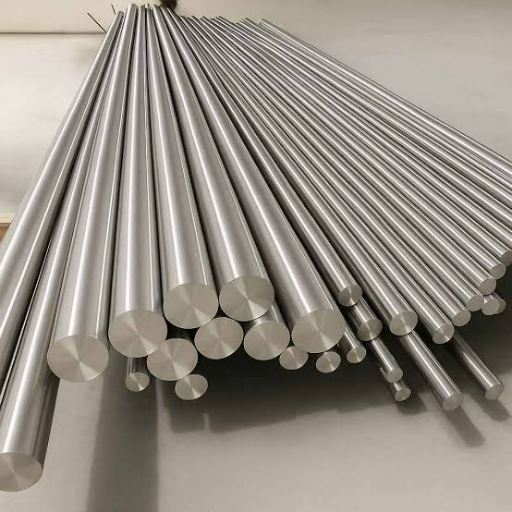
Heat-exchanger tube is where 825 earns most of its money, and where the testing regime differs most from general pipe.
Eddy Current and Hydrostatic Testing
B163 tube is normally supplied with an eddy-current test, a hydrostatic test, or both, depending on what the purchase order specifies. The two find different defects. Eddy current finds wall and surface discontinuities along the length. Hydrostatic testing proves the tube holds pressure.
Ask for both when the tube goes into a critical exchanger, and ask for the test report to travel with the mill certificate. A certificate that says “tested in accordance with B163” without naming the method isn’t the same document.
U-Bend Tube
U-bend tube adds a forming step after the final heat treatment, and the bend is where residual stress concentrates. Specify the bend radius and the heat treatment condition after bending, not just the straight length. This is a clause buyers most often leave to the fabricator and then discover at commissioning.
GB/T 30059-2013 and the Standard Being Rewritten
A Chinese mill will often certify heat-exchanger tube to GB/T 30059-2013, Corrosion-resistant alloy seamless tubes for heat exchangers, the national standard for seamless corrosion-resistant alloy tubes for heat exchangers. It’s the direct Chinese counterpart to B163, and it’s the number to ask for if you’re buying tube in China and want a domestic certificate alongside the ASTM one.
That standard is moving. A replacement, Corrosion-resistant alloy seamless tubes for industrial furnaces and heat exchangers, is in the national standards plan under project number 20251188-T-605 and has been circulated for comment. It extends the scope to industrial furnace applications.
It isn’t published yet. If a supplier tells you their tube meets the new standard, ask for the number and the year, because there isn’t one to quote.
Two related standards matter beyond exchanger tube. GB/T 37614-2019 covers corrosion-resistant alloy seamless tube and pipe generally; GB/T 37610-2019 covers small-diameter precision seamless tube. The older GB/T 15011-1994, for cold-rolled and drawn tube, is listed as withdrawn, so don’t accept it on a current certificate.
Sour Service: NACE MR0175 for 825 Tube
Incoloy 825 is a standard material for moderate sour service and appears in NACE MR0175 / ISO 15156-3 for downhole tubing, wellhead components, sand-screen base pipe and sour-service heat-exchanger tube.
The important point is that 825 doesn’t have a single hardness cap. ISO 15156-3 sets limits by environment: partial pressure of H2S, temperature, chloride concentration and pH, together with condition-of-supply requirements. The qualification is specific to your duty, not to the grade in the abstract.
“NACE MR0175 compliant” on its own isn’t a specification. State the environment and ask the mill to confirm the heat falls inside the ISO 15156-3 limits for it. Our Incoloy 825 sour service guide sets out the framework in full.
The Chinese Sour-Service Standard
For Chinese-sourced tube, YB/T 6205-2024 covers stainless and corrosion-resistant alloy seamless tube for oil and gas fields in hydrogen-sulfide-containing service. It is a metallurgy industry standard rather than a national standard, and it is the document a Chinese mill is most likely to certify sour-service tube against.
If your project requires both NACE and a Chinese certificate, name both on the enquiry. Mills will certify to either but rarely volunteer the second.
What the Certificate Must Show
Three documents matter on an inbound 825 delivery, and they answer different questions.
- The mill test report (MTR) proves the heat chemistry and mechanical properties. Check nickel, chromium, molybdenum, copper and titanium against the B423 or B163 range. The alloy’s developer publishes the same ranges in its nickel alloy handbook.
- The product standard and its year prove the tube was made to a current specification. This is the line most often wrong.
- The test reports prove the tube passed the inspection the standard requires: eddy current, hydrostatic, ultrasonic, or whichever the order named.
Picture the same order six months on: the tube arrives with a B163 certificate citing an edition two revisions old. The buyer’s specification names the current one, so the mill re-certifies from retained test data or takes the bundle back.
PMI on the Copper and Titanium Lines
If you run one verification step, run it on copper and titanium. Those two elements separate 825 from every grade it gets confused with. The Incoloy 800 family carries neither copper nor molybdenum. 904L carries copper but no titanium. Inconel 625 carries molybdenum and niobium but no copper.
A positive material identification check takes minutes and catches a substituted heat before it enters the plant. Ask for it on the tube ends as well as the body, because that is where a mixed bundle shows up.
When the MTR Carries a Chinese Designation
An inbound Chinese certificate will often show NS1402 rather than N08825, and a GB/T product standard rather than an ASTM one. That isn’t a discrepancy. NS1402 is the current Chinese designation for the same alloy, superseding NS142.
Match the designation, then match the standard to the form. Our Incoloy 825 equivalent grades guide carries the full cross-reference, including the H08825 digital code that appears on some certificates and almost no English page explains.
Sourcing Incoloy 825 Pipe from China
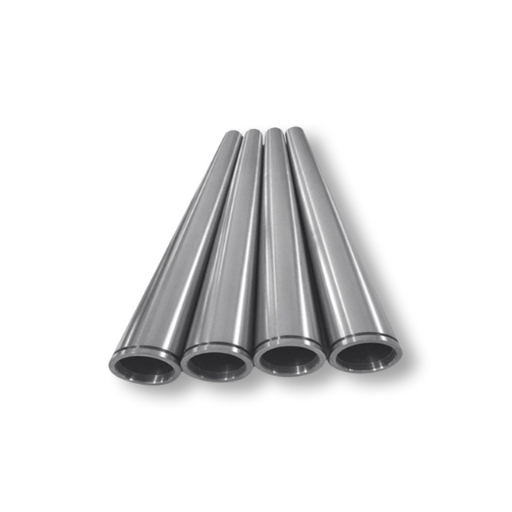
Chinese manufacturers supply Incoloy 825 pipe and tube to ASTM and GB/T specifications, and the documentation decides whether the order is usable.
Price by Form
Seamless 825 pipe runs roughly 28to28to55 per kg FOB China, with domestic pricing around ¥200 to 380 per kg. Tube sits at the upper end of that band because of the additional inspection. Imported brand material carries a 15 to 30% premium.
Those are ranges, not quotes. Nickel drives 40 to 60% of the cost, and the alloy surcharge moves with it. Our 2026 Incoloy 825 price guide breaks the cost down by form.
Writing the Enquiry
Four lines prevent most of the problems in this article before they start:
- Form and standard: “Seamless tube to ASTM B163, UNS N08825”
- Size: outside diameter, wall thickness, length, and length tolerance
- Testing: eddy current and hydrostatic, with reports
- Documentation: EN 10204 3.1 as standard, 3.2 where a third party must witness
Add the sour-service environment if it applies, and the GB/T number if you need a domestic certificate too.
If you are choosing between forms rather than specifying one, our Incoloy 825 plate and sheet guide covers the flat-product side, and the nickel alloy pipe selection guide compares 825 against 625, C-276 and Monel 400 if the grade itself is still open.
Incoloy 825 Pipe FAQ
What ASTM standard is Incoloy 825 pipe?
ASTM B423 for seamless pipe and tube, ASTM B163 for heat-exchanger and condenser tube, and ASTM B704 or B705 for welded tube and pipe. All four cover N08825 pipe and tube.
What is the difference between ASTM B423 and B163?
B423 covers seamless pipe and tube for general corrosion service. B163 covers seamless condenser and heat-exchanger tube, with tighter dimensional requirements and a testing regime built around heat-transfer service. Same alloy, different product.
Is Incoloy 825 pipe seamless or welded?
Both are made. Seamless is the default for heat-exchanger and pressure service, covered by B423 or B163. Welded is covered by B705 for pipe and B704 for tube, normally solution-annealed and pickled.
What sizes does Incoloy 825 pipe come in?
The standard fixes size tables and tolerances, not mill capability. Typical mill range runs from about 1/2 inch to 8 inch nominal bore in seamless pipe, and 6 mm to 114 mm outside diameter in tube. Confirm against your supplier’s size list.
Is Incoloy 825 pipe suitable for sour service?
Yes, within the limits of NACE MR0175 / ISO 15156-3, which are set by H2S partial pressure, temperature, chloride level and pH rather than by a single hardness cap. Specify the environment, not just “NACE compliant”.
How much does Incoloy 825 pipe cost?
Roughly 28to28to55 per kg FOB China for seamless pipe, with domestic Chinese pricing around ¥200 to 380 per kg. Tube sits at the upper end because of the additional inspection, and imported brand material carries a 15 to 30% premium.
Conclusion
The Incoloy 825 pipe specifications question has a short answer and a long one. The short answer is ASTM B423. The long answer is that four standards cover 825 in tubular form, one commonly quoted standard does not cover it at all, and the difference between them is the difference between a certificate that clears inspection and one that does not.
Three things decide it: the form (pipe, tube, welded), the standard that matches the form (B423, B163, B704 or B705), and the tests the order names. A purchase order that gets those three right will certify anywhere. One that copies a supplier table will eventually meet a quality department that reads it properly.
If the tube goes into an exchanger, treat B163 and the test reports as the specification, not the alloy. If it is a transfer line, B423 is enough.
Send us the form, the size, the standard, and the service environment, and our technical team will confirm whether the specification is certified and return a quotation within 24 hours. The complete Incoloy 825 guide covers the grade itself.