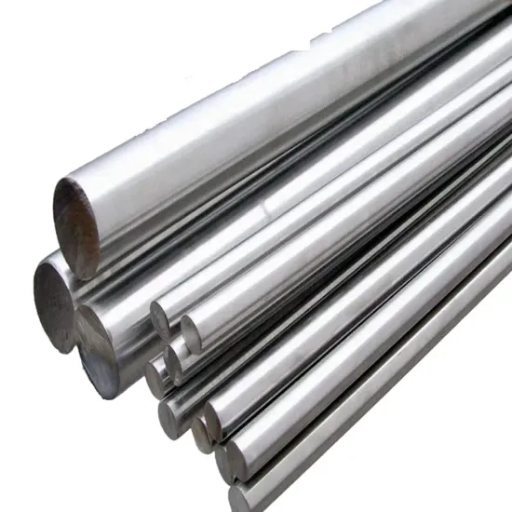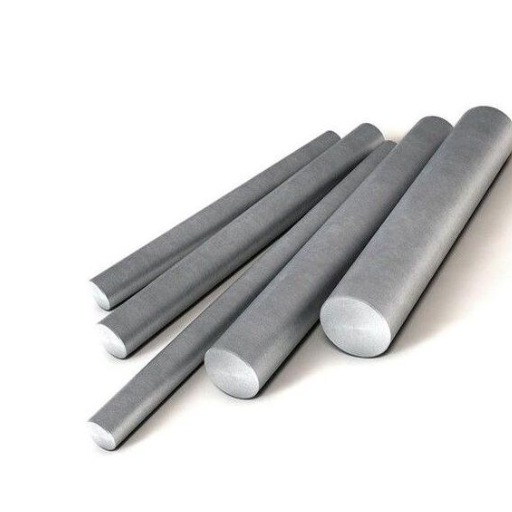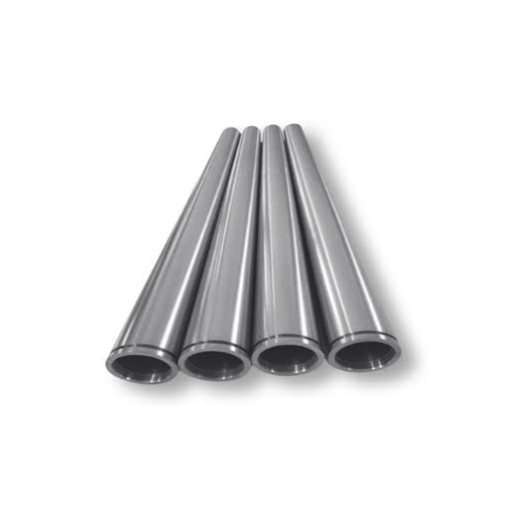
Incoloy 825 vs 316L is decided by the failure mechanism, not by the price. 825 is the correct upgrade when the duty is sulfuric or phosphoric acid above roughly 50 to 65 °C, chloride stress corrosion cracking near boiling, or sour service under NACE MR0175. Everywhere else 316L is cheaper and often sufficient, and on pure pitting resistance 904L beats both at less than half of 825’s price.
Most comparison pages will tell you Incoloy 825 sits one step above 316L and costs three to four times as much. Both halves are wrong. The multiple is five to eight times depending on form, and the grade directly above 316L on the pitting ladder is 904L, which costs less.
You already know the upgrade isn’t free. This guide gives you the two corrosion results that settle it, the cost multiple broken out by product form, and the four duties where 825 is the wrong buy.
If you want the ladder worked out for your duty, send the medium, the concentration and the temperature. Our metallurgical team will tell you whether 316L, 904L or 825 is the correct specification within 24 hours.
Key Takeaways
- 825 runs about 5-8x 316L by product form, not the 2-3x or 3-4x most pages quote. Bar sits at the bottom of that range, and thin cold-rolled sheet pushes toward 10x.
- PREN runs about 24 for 316L, 31 to 35 for 825 and 36 for 904L. On pitting resistance 825 isn’t the top of the ladder, and 904L costs roughly half as much.
- 825 holds 0.13 mm/yr across 0-100% sulfuric acid to about 65 °C. 316L’s usable window is dilute acid at ambient temperature. That gap, not the composition table, is what you’re buying.
- 825 is titanium-stabilized and about 1.4x stronger in yield, so a thinner wall and a simpler weld procedure can claw back part of the premium. Part, not all.
- Upgrading to 825 for nitric acid, or for pitting duty where 904L would do, is the most common and most expensive error in this comparison.
Incoloy 825 vs 316L: The Direct Comparison
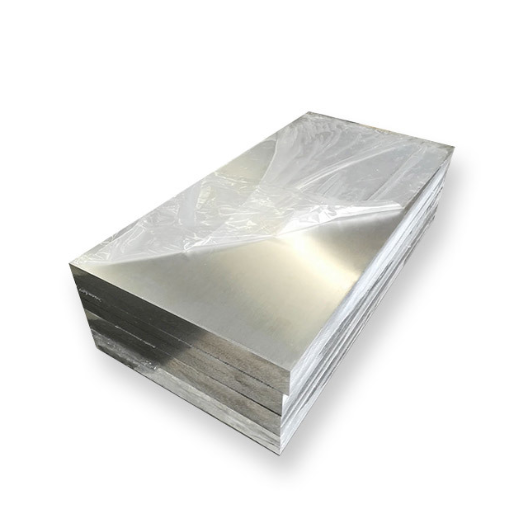
Both grades are austenitic. They aren’t adjacent, and the table below shows where the divergence actually sits. Nor is this an Incoloy 825 versus stainless steel question in the abstract: 316L is the specific grade most buyers are trying to replace.
| 316L (UNS S31603) | Incoloy 825 (UNS N08825) | |
|---|---|---|
| Nickel | 10-14% | 38-46% |
| Chromium | 16-18% | 19.5-23.5% |
| Molybdenum | 2-3% | 2.5-3.5% |
| Copper | none | 1.5-3.0% |
| Titanium | none | 0.6-1.2% |
| PREN (approx.) | ~24-26 | ~31-35 |
| Yield strength, annealed | ~170 MPa min | 241 MPa min |
| Density | 8.0 g/cm³ | 8.14 g/cm³ |
| Service ceiling | ~400 °C | ~540-550 °C |
| NACE MR0175 | narrow limits | listed, defined limits |
| Governing standards | ASTM A240 / A312 / A276 | ASTM B424 / B423 / B425 |
| Chinese designation | 022Cr17Ni12Mo2 | NS142 / NS1402 / 0Cr21Ni42Mo3Cu2Ti |
The move from 316L to 825 takes PREN from about 24 to somewhere between 31 and 35, and price from roughly ¥25-32/kg to ¥160-240/kg. It is a 5-8x upgrade, not a 2-3x one.
Three rows decide most of the answer. Nickel buys resistance to chloride stress corrosion cracking. Copper buys the reducing-acid performance, and 316L has no equivalent lever at all. PREN, meanwhile, is the row where 825’s advantage is weakest, which is the part almost nobody says out loud.
The two grades share no governing specification. 825 runs to ASTM B424, B425 or B423. 316L runs to ASTM A240, A312 or A276. The two certificates aren’t comparable line for line, and a buyer who treats them as if they were will misread both.
Why Incoloy 825 Costs 5-8x More Than 316L
The multiple circulates in at least four versions. You will see 2-3x, 3-4x, 5-6x and 6-10x for the same pair of grades, often on the same website. All four compress a number that isn’t single-valued.
The Metal Cost Behind the Multiple
At October 2026 metal prices, the raw material in one kilogram of 825 costs about **10.1∗∗.Nickelat4210.1∗∗.Nickelat4216.0/kg contributes 6.72,molybdenumat3.06.72,molybdenumat3.090/kg adds 2.70,andchromiumandcopperadd2.70,andchromiumandcopperadd0.74 between them. The nickel figure tracks the LME reference price.
That single figure explains most of the gap. 825’s raw metal costs roughly twice what a finished 316L product sells for. Nothing downstream can close a gap that starts there.
Everything above the metal line is conversion, yield loss and margin. The full breakdown sits in our 2026 price per kg guide.
Why the Multiple Moves With Form
Here is the part that resolves the contradiction. The multiple escalates with processing difficulty, not with alloy content.
Both grades lose metal to the same rolling, drawing and piercing steps, in different proportions. Bar is the least processed form in both, so the multiple is smallest there. Thin cold-rolled sheet is the most punishing, and the multiple is largest.
| Form | Incoloy 825 (¥/kg, domestic) | Where the multiple sits |
|---|---|---|
| Round bar | 160-180 | Lowest, around 5-6x |
| Welded tube | 180-260 | Around 5.5-8x |
| Plate and sheet, 6-50 mm | 170-240 | Around 6.5-9x |
| Seamless tube | 220-320 | Around 5-8x |
| Thin cold-rolled sheet, 0.5-3 mm | top of the plate band | Highest, near 10x |
Read the table as a range, not a quote. Say “5-8x” when someone asks, and say which form you mean.
You can check the arithmetic a second way. 825 runs roughly 2 to 2.5 times the price of 904L, and 904L runs 1.8 to 3 times 316L depending on form, as our 904L versus 316L comparison sets out. Multiply the two and you land between roughly 4 and 8, the same neighbourhood as the direct per-form comparison.
The Two Offsets Nobody Counts
Two properties cut against the naive per-kilo number, and neither appears on a supplier page.
The first makes it worse. 825 is 1.75% denser than 316L, at 8.14 against 8.0 g/cm³. Buy by the metre or by the piece and the real cost gap is slightly wider than the per-kg multiple suggests.
The second makes it better. 825’s annealed yield strength is 241 MPa minimum against roughly 170 MPa for 316L, about 1.4 times higher. In pressure service, yield governs wall thickness. A vessel designed in 825 can sometimes run a thinner wall than the same vessel in 316L, which means less metal per square metre.
Picture a pressure-vessel engineer, Daniel, sizing a sulfuric acid storage tank. He runs both calculations before the specification is frozen, and the 825 option comes out about 12% thinner at the same design pressure. That recovers a meaningful slice of the premium, though nowhere near all of it.
Run the wall calculation before you reject the upgrade on price alone. Then run it again before you assume it pays for itself.
Where 316L Fails and 825 Holds
Two test results carry this decision. Everything else is commentary.
Sulfuric Acid: The Envelope, Not the Headline
Incoloy 825 stays inside the producer’s 5 mpy contour, about 0.13 mm/yr, across the full 0 to 100% concentration range up to roughly 65 °C. In the 40 to 80% band the contour dips to about 50 °C. Performance is best between 10 and 30%, where reducing conditions dominate and the copper earns its keep.
Those contours come from the alloy’s developer, and the Special Metals nickel alloy handbook draws them in Fahrenheit.
That detail matters. The 150 °C figure you will see on supplier pages is 150 °F converted wrongly. The real limit is 65 °C, less than half of it. A vessel specified to the wrong number is designed 85 °C beyond its envelope.
Type 316L has no comparable envelope. Its window is dilute acid at ambient temperature, and it narrows fast as temperature climbs. Outside that window, 316L isn’t a candidate, and the question stops being about cost.
The Nickel Institute’s sulfuric acid reference records 825 rates as low as nil in dilute acid and plant pickling conditions. The full media-by-media envelope, including the media where 825 stops, sits in our Incoloy 825 corrosion resistance guide.
Chloride Stress Corrosion Cracking
This is where the two grades separate most sharply, and the evidence is a test rather than a rate.
In boiling magnesium chloride U-bend testing over 300 hours, 825 showed no cracking at 25% or 35% concentration. It cracked at 42%. Type 316L cracked at both 25% and 35%.
Read that carefully. 825 is not immune, only far more resistant, and it has a ceiling that 316L doesn’t reach. U-bend results are also producer data, run at one concentration and stress. Ask for a test report against your own chloride level rather than quoting this in a design file.
Sour Service: Where 316L Is Not on the Table
If the duty is sour, the comparison changes character entirely.
Type 316L appears in NACE MR0175 / ISO 15156 only inside narrow pH₂S, temperature and chloride limits. Incoloy 825 is listed with defined limits and a hardness ceiling, which is why it became the default moderate-sour-service material in this grade family.
That means 316L often isn’t a candidate at all, and the question isn’t a cost question. Check ISO 15156-3 against your actual partial pressure, temperature and chloride level before you compare prices. A cost comparison between a qualified material and an unqualified one isn’t a comparison.
Incoloy 825 vs 904L: Where 825 Loses on Pitting
Now the part that most comparison pages leave out.
904L Has the Higher PREN
PREN is calculated as chromium plus 3.3 times molybdenum plus 16 times nitrogen. Run it for all three grades.
316L comes out around 24 to 26. 825 comes out around 31 to 35. 904L comes out around 36.
So 825 beats 316L on pitting resistance, and then loses to a grade that costs less than half as much. That is not a ladder. It’s a fork, and the two branches lead to different duties.
Anyone who upgrades from 316L specifically to stop chloride pitting has taken the wrong branch. Our Incoloy 825 properties guide shows how PREN is derived from the composition range.
Three Duties Where 904L Wins
- Chloride pitting and crevice attack in oxidizing conditions. Higher PREN, lower price, same austenitic fabrication route.
- Mixed acid-chloride duty with low SCC risk. 904L carries 4 to 5% molybdenum against 825’s 2.5 to 3.5%, and molybdenum is the lever that buys chloride resistance.
- Any duty where the mechanism is general thinning rather than cracking. 904L buys most of the performance for a fraction of the money.
Three Duties Where 825 Wins Anyway
- Reducing-acid service in the 10 to 30% sulfuric band. Copper at 1.5 to 3.0% is the decisive addition, and 904L carries none.
- Wet-process phosphoric acid. Residual sulfuric acid, fluorides, chlorides and silica make this far more aggressive than the pure acid a datasheet describes, and it’s 825’s signature application.
- Sour service. 825’s NACE position is stronger than 904L’s, and in a sour duty that outweighs a PREN difference.
The 904L stainless steel grade guide covers the other branch in full. For the rung above both, our Incoloy 825 vs Inconel 625 comparison explains when 625 earns its 75-100% premium over 825.
Choosing Between 316L, 904L and 825
Organise the choice by failure mechanism, not by grade hierarchy. That is how the problem actually arrives.
| If the failure mechanism is | 316L | 904L | 825 | Specify |
|---|---|---|---|---|
| General atmospheric or mild chloride | Yes | Overkill | Overkill | Stay 316L |
| Pitting or crevice attack in chloride | No | Yes | Partial | 904L |
| Sulfuric acid, dilute, ambient | Partial | Yes | Yes | 904L on cost |
| Sulfuric acid, 10-30%, warm | No | Partial | Yes | 825 |
| Sulfuric acid 40-80%, above 50 °C | No | No | No | Alloy 20, 254 SMO, C-276 |
| Wet-process phosphoric acid | No | Partial | Yes | 825 |
| Nitric acid | Yes | No | No | Stay 316L; 310L if hot |
| Chloride SCC near boiling | No | Partial | Yes | 825, then 625 |
| Sour service under NACE MR0175 | Narrow limits | Weaker | Yes | 825, then 625 |
Four readings of that table matter more than the rest.
- Pitting: 904L. Cheaper and better at the job, and 825 is the wrong purchase.
- Sulfuric acid, 10 to 30%: 825. Copper is the reason, and no stainless grade has it.
- Nitric acid: stay on 316L, or go to 310L for hot concentrated duty. Both 825 and 904L are the wrong direction, and 825 is the expensive one.
- Sour service: 825 or above, because 316L isn’t qualified for the duty.
Fabrication and Documentation Differences
Four differences move a project budget, and none appear in a composition table.
Titanium stabilization. 825 resists sensitization in the heat-affected zone across multi-pass welding, and generally needs no post-weld heat treatment. Type 316L relies on its low carbon content instead.
Filler for 825 is ERNiCrMo-3, which is viscous and shrinks hard. It needs a 1 to 3 mm root gap, a 60 to 70 degree included angle, pure argon root protection, and interpass at or below 150 °C. A welder qualified on 316L isn’t automatically qualified for that.
Forming pressure. 825 needs roughly twice the forming pressure of austenitic stainless steel, and it work-hardens rapidly. Machine it in the annealed temper, at low speed, with cuts deep enough to get under the worked layer.
Documentation. Ask for PMI specifically on the titanium and copper lines. Those are the elements counterfeit 825 most often mislabels.
Lead time. 316L is a commodity available from stock almost anywhere. 825 is a mill schedule. That difference alone has killed more projects than any corrosion result.
When Not to Upgrade
825 isn’t a default upgrade, and four cases prove it.
Nitric acid. Hot concentrated HNO₃ needs more chromium than 825 carries, and its molybdenum and copper work against it. Picture a plant that replaced 316L internals with 825 after a corrosion failure, assuming the dearer alloy must be better; the rate did not improve, because neither grade is qualified for that duty. Moving from 316L to 825 buys nothing and costs 5-8x.
Pitting duty. 904L has the higher PREN and the lower price. 825 is paying more for less.
A 316L failure with a design cause. If the failure is crevice geometry, stagnant flow or a weld defect, a more expensive alloy fails the same way.
Dilute sulfuric acid at ambient temperature. That is 316L’s actual window. Over-specification has a cost that shows up on the project board.
Incoloy 825 vs 316L FAQ
Is Incoloy 825 better than 316L?
Better in sulfuric and phosphoric acid, in chloride stress corrosion cracking near boiling, and in sour service under NACE MR0175. Not better in nitric acid, not better on cost, and not better at pitting than 904L, which has a higher PREN at roughly half the price.
How much more does Incoloy 825 cost than 316L?
Roughly 5 to 8 times for most product forms, up to about 10 times for thin cold-rolled sheet. Bar sits near the bottom at 5-6x. A single number compresses a range that is genuinely wide.
Can Incoloy 825 replace 316L?
In acid and chloride service, yes. In general service, nitric acid or a pitting duty, no. A substitution without a mechanism check is how projects buy 5-8x the material for no gain.
Which is better for sulfuric acid, 825 or 316L?
825, by a wide margin. It holds about 0.13 mm/yr across the full 0 to 100% concentration range to roughly 65 °C, dipping to about 50 °C in the 40 to 80% band. 316L’s window is dilute acid at ambient temperature.
Is Incoloy 825 or 904L the better upgrade from 316L?
It depends on the mechanism. For pitting and crevice attack in chlorides, 904L, because it has the higher PREN and costs less. For reducing acids, wet-process phosphoric acid or sour service, 825. The two grades are siblings, not rungs.
Does Incoloy 825 work in nitric acid?
No, and this is a common and costly error. Hot concentrated nitric acid needs more chromium than 825 carries, and 825’s molybdenum and copper are neutral to harmful in it. Stay on 316L, and move to 310L or Inconel 690 if the duty runs hot and concentrated.
Is 316L acceptable for sour service under NACE MR0175?
Only inside narrow pH₂S, temperature and chloride limits. Incoloy 825 is listed with defined limits and a hardness ceiling, which is why it’s the default moderate-sour-service material here. Check ISO 15156-3 against your actual duty before comparing prices.
Conclusion
The Incoloy 825 vs 316L decision isn’t a price question. It’s a mechanism question, and the mechanism tells you which grade to buy before you ever see a quotation.
Three numbers carry it: PREN near 24, 31 and 36; the sulfuric acid envelope, 0.13 mm/yr to about 65 °C; and a 5-8x multiple that moves with form.
Check any upgrade proposal against two things. Does it name the failure mechanism, and does it name the product form? A proposal that answers neither is a guess with a price attached.
Where the duty is sulfuric or phosphoric acid, chloride SCC at temperature, or sour service, 825 is the right specification and the premium is defensible. Where it’s pitting, the honest answer is 904L. Where it’s nitric acid, it’s 316L or 310L. We’ll tell you so either way.
Send your medium, concentration, temperature and product form to our technical team, and we’ll confirm the grade and return a certified quotation within 24 hours. The complete Incoloy 825 guide covers the grade in full.