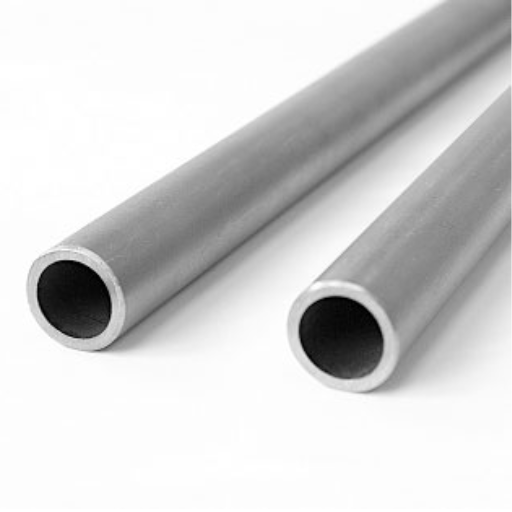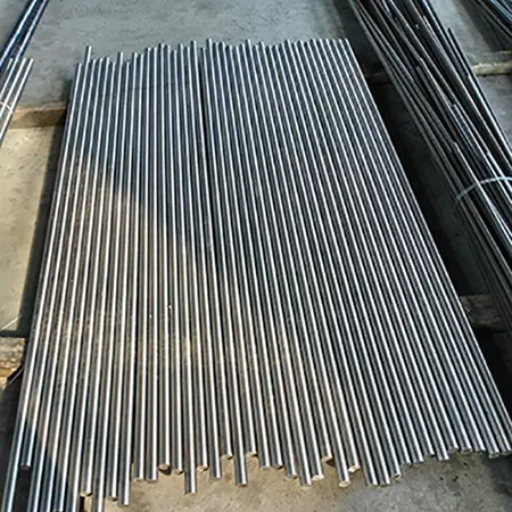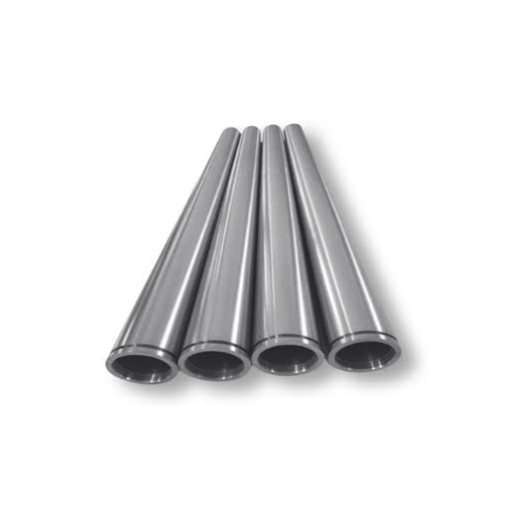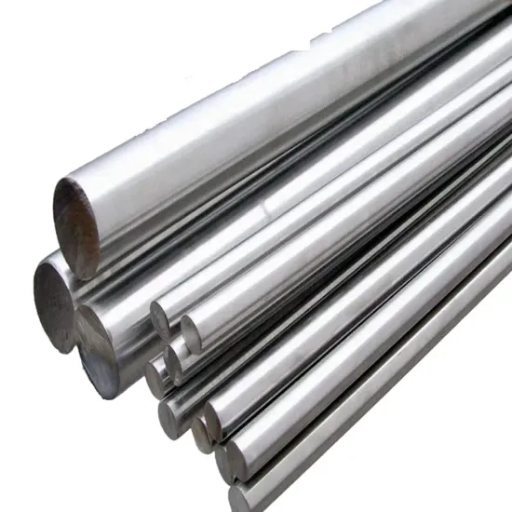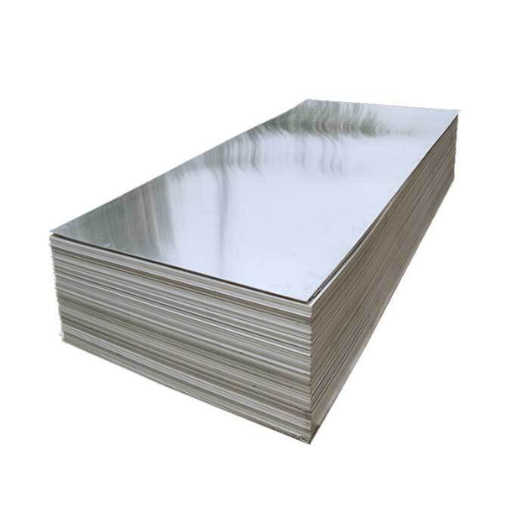
Incoloy 825 plate and sheet are specified to ASTM B424, which covers plate, sheet and strip in UNS N08825, N08221, and N06845 and is supplied in the annealed condition. The tolerance requirements that B424 invokes sit in ASTM B906, and a purchase order that names only B424 leaves them unstated.
The word on your drawing matters more than most buyers expect. A vessel shop that orders “6 mm Incoloy 825 sheet” and receives plate has not been treated badly. It has met two vocabularies that use the same three words to mean different things, and the standard is the only one of them that counts.
If you already have a thickness and a standard number, you know more than most of the pages Incoloy 825 plate suppliers publish. What usually goes wrong is not the alloy or the mill. It is whether the form named on the drawing is the form the certificate will describe.
This guide covers which standard governs flat product, where plate ends and sheet begins, what the material weighs, how Chinese standards split the same thickness range three ways, and what the order must say for the mill to certify the condition you asked for. Send us the thickness, the form and the standard, and our metallurgical team will confirm what certifies within 24 hours.
Key Takeaways
- B424 covers plate, sheet and strip in one document. Which of the three you are buying is decided by thickness and width, not by the word the stockist used.
- B906 carries the tolerances B424 invokes. An order quoting B424 alone specifies the alloy and the form, not the dimensional limits.
- Chinese flat product splits across three GB/T standards that overlap between 3.0 and 5.0 mm. A 4 mm order is covered by all three, and the buyer has to name the number.
- 825 weighs 8.14 kg per square meter per millimeter of thickness. Weight is arithmetic from density, not a mill table.
- “Annealed and pickled” is not a specification until it names the finish. Heat tint left on the surface is where corrosion starts.
What Standard Covers Incoloy 825 Plate?
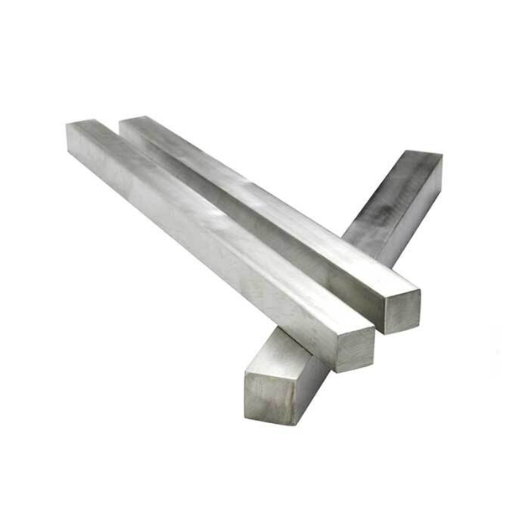
ASTM B424 covers rolled nickel-iron-chromium-molybdenum-copper plate, sheet and strip in three alloys: UNS N08825, UNS N08221 and UNS N06845. Only N08825 is Incoloy 825. The product is hot-rolled or cold-rolled and supplied annealed.
| Product form | ASTM standard | ASME equivalent | What it covers |
|---|---|---|---|
| Plate, sheet, strip | B424 | SB424 | N08825, N08221, N06845 |
| General requirements | B906 | SB906 | Tolerances, workmanship, inspection, marking |
| Rod and bar | B425 | SB425 | The same three alloys |
| Forgings | B564 | SB564 | Forged components in N08825 |
The second row is the one that gets dropped. B906 is the general-requirements specification for flat-rolled nickel and nickel alloy plate, sheet and strip, and it is invoked by the product specifications for those alloys, B127, B162, B168, B409, B424, B434, B435, B443, B463, B536 and B575 among them. It holds the thickness, width, camber and flatness tolerances, the workmanship clauses, the inspection rules and the marking requirements.
That structure is deliberate. The product specification says what the material is. The general-requirements specification says how closely it has to be made.
Quoting “ASTM B424” tells a mill the alloy and the form. It does not tell the mill what tolerance to certify, because that answer lives one document over.
For the grade itself, composition and mechanical properties, the complete Incoloy 825 guide covers ground this article assumes. Here the subject is flat product and how to specify it.
Plate, Sheet or Strip? The Boundary That Decides Your Order
ASTM’s flat-rolled convention puts plate at 3/16 in (4.76 mm) and thicker, then splits everything thinner by width: sheet at 24 in (610 mm) and wider, strip narrower than that. B424 covers all three in one document, so the form named on your drawing decides which tolerance table the mill works to.
That 3/16 in threshold is the convention across ASTM flat-rolled product specifications rather than a quirk of B424, and the definitions carrying it come from the general-requirements document, not from B424 itself. Confirm them against the edition your order cites, because the words on the drawing and the words on the certificate have to agree.
Here is where it bites. Picture a vessel shop in Southeast Asia issuing a drawing for “6 mm Incoloy 825 sheet” for an absorber wall. Six millimeters is plate by any flat-rolled convention, so the mill quotes plate, certifies plate, and ships plate.
The material is correct, the thickness is correct, and the documentation package still fails the shop’s own incoming inspection, because the drawing and the mill certificate describe two different product forms. The fix is one word on the drawing and a week of correspondence.
Why Stockists Use the Words Differently
A distributor page offering “Incoloy 825 plate from 0.5 mm to 50 mm” is telling you what it stocks, not what the standard says. In commercial usage “plate” often means “flat product, cut to size”, and “sheet” often means “flat product, thinner than whatever we had in the rack”.
Neither usage is dishonest. Both are useless as a specification. A purchase order needs the form, the thickness, the width and the standard, in that order, and it needs the form to be the one the standard recognises at those dimensions.
The Practical Rule
If the thickness is 4.76 mm or more, call it plate and expect a plate certificate. Below that, call it sheet if it is 24 in (610 mm) wide or wider and strip if it is narrower. If your drawing says something else, change the drawing before the order goes out, not after the material lands.
Incoloy 825 Plate Sizes and Weight
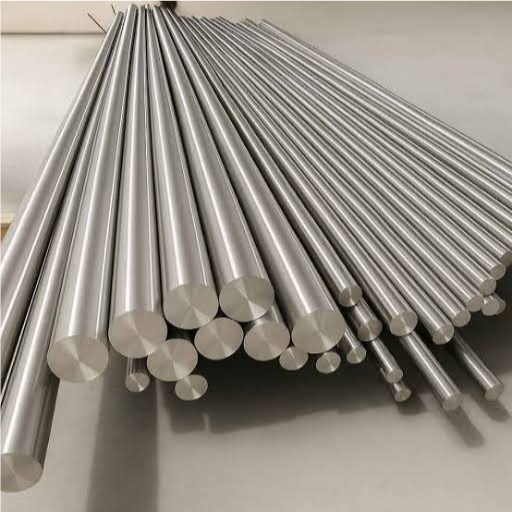
Weight is the easiest thing on this page to get right, because it is fixed by density and nothing else. The physical properties of Incoloy 825 fix the density at 8.14 g/cm³, so one square meter of 1 mm material weighs 8.14 kg. Every other thickness follows by multiplication, and the answer is the same for every mill on Earth.
| Thickness (mm) | Weight (kg/m²) | Thickness (mm) | Weight (kg/m²) |
|---|---|---|---|
| 1 mm | 8.14 | 12 mm | 97.68 |
| 2 mm | 16.28 | 16 mm | 130.24 |
| 3 mm | 24.42 | 20 mm | 162.80 |
| 4 mm | 32.56 | 25 mm | 203.50 |
| 5 mm | 40.70 | 30 mm | 244.20 |
| 6 mm | 48.84 | 40 mm | 325.60 |
| 8 mm | 65.12 | 50 mm | 407.00 |
| 10 mm | 81.40 | 100 mm | 814.00 |
Use this to sanity-check a quotation. A 2 m by 6 m sheet of 10 mm plate should weigh about 977 kg. If the freight or the quote implies something far from that, the conversation is about something other than 825.
Commercial Incoloy 825 plate thickness ranges are wider than any single mill’s capability, and published ranges disagree. Typical supply runs from around 0.5 mm in cold-rolled sheet to 50 or 60 mm in hot-rolled plate, with the exact ceiling set by the mill rather than the standard. Widths commonly run to 2000 mm and lengths to 6000 mm, cut to order.
The Chinese Standard Split: Three Numbers, One Thickness
Chinese flat product is governed by three GB/T standards, and their thickness ranges overlap. This is the part of the article that no English-language page covers, and it is the part most likely to cost a buyer money.
| Standard | Product | Nominal thickness | Nominal width |
|---|---|---|---|
| GB/T 38688-2020 | Hot-rolled thick plate | 3.0 to 200 mm | up to 3000 mm |
| GB/T 38690-2020 | Hot-rolled sheet and strip | 2.5 to 8.0 mm | up to 1500 mm |
| GB/T 38689-2020 | Cold-rolled sheet and strip | 0.1 to 5.0 mm | 1500 mm and wider |
Read the ranges together and the problem appears. A 4 mm order sits inside all three. Between 3.0 and 5.0 mm, a Chinese mill has three defensible answers to “which GB/T standard?” and will generally quote whichever matches the stock it already has.
Nothing about that is improper. All three standards are current, all three cover the alloy, and the mill can certify any of them. But the three carry different dimensional tolerances and different surface requirements, and the buyer who wrote “to GB/T” on the enquiry has given away the choice.
Picture the same absorber order placed with a Chinese mill: 4 mm, 1500 mm wide, 3000 mm long, “to GB/T”. The quotation comes back marked GB/T 38690, hot-rolled sheet. The drawing assumed a cold-rolled surface. Both are legitimate 825, both will certify, and the shop discovers the difference when it starts welding and the fit-up gaps are not what the procedure assumed.
Name the number. If you need cold-rolled surface and tighter gauge, write GB/T 38689-2020. If you need heavy plate, write GB/T 38688-2020. If hot-rolled sheet is what the job wants, write GB/T 38690-2020.
On the certificate, the alloy will often appear as NS1402 rather than N08825. That is not a discrepancy; NS1402 is the current Chinese designation, superseding the older NS142. Our Incoloy 825 equivalent grades guide carries the full cross-reference.
Condition of Supply: HRAP and Why It Matters
Incoloy 825 plate is normally supplied hot-rolled, annealed and pickled, often abbreviated HRAP. The annealing softens the rolled structure and restores corrosion resistance. The pickling removes the oxide scale the anneal leaves behind.
That second step is not cosmetic, and on 825 it is not about appearance either. The oxide that forms during annealing is chromium-depleted relative to the underlying metal, so a heat-tinted surface is chemically the weakest part of the plate. In an alloy chosen precisely because it will sit in sulfuric or phosphoric acid, that surface is where pitting corrosion begins. Pickling removes it and leaves a passive, chemically uniform skin.
Two more things travel with the finish. Iron contamination from tooling, rollers or handling shows up as rust spots on a pickled surface within days, and it is the most common complaint on inbound 825. Edge condition matters too, because a sheared or plasma-cut edge carries the same oxide problem as an unpickled face.
What “Annealed and Pickled” Has to Say on the Order
Four clauses turn a wish into a specification:
- Condition: annealed and pickled to ASTM B424, free of heat tint and iron contamination
- Standard pair: B424 for the product, B906 for the tolerances
- Test: MTR to EN 10204 3.1, with 3.2 where a third party must witness
- Verification: PMI on the copper and titanium lines, which is what separates 825 from the grades it gets confused with
For plate that will be hot-formed or welded into a vessel, the fabrication sequence matters as much as the delivery condition. The Incoloy 825 welding and fabrication guide covers the heat-treatment questions that follow.
Cut-to-Size: What Each Process Does to the Edge
Most 825 plate is not bought in mill sizes. It is bought cut, and the cutting process decides what the edge is worth.
| Process | Edge quality | Typical tolerance | Heat effect |
|---|---|---|---|
| Waterjet | Smooth, square, no heat-affected zone | About ±0.2 mm | None |
| Plasma | Rougher, slight taper | About ±1 mm | Oxide and nitride layer on the cut face |
| Shear | Straight, burr on one side | Mill sheet tolerance | Cold work at the edge |
| Saw | Straight, machined finish | About ±0.5 mm | None |
For 825 in acid service, plasma is the process that needs a follow-up. The cut face carries a resolidified oxide layer that is not the alloy, and on a wetted surface it is a pitting site. Either specify that plasma-cut edges are dressed and pickled, or specify waterjet and avoid the question.
Waterjet is the default for vessel and absorber work because it leaves an edge that needs no further treatment, holds a square face, and does not alter the metallurgy. It is slower and dearer per meter, which is the trade a fabricator is making.
What to Put on the Drawing
- Dimensions and tolerance, per piece, not “to suit”
- Edge condition, whether mill edge, sheared, machined or waterjet
- Flatness, particularly for absorber panels where fit-up is measured in millimeters
- Whether cut edges need pickling after cutting
- Marking and traceability, so each cut piece can be tied back to its heat number
What the Certificate Must Show
Three lines on the mill test report carry the weight.
The product standard and its year. B424 without an edition is an incomplete citation. This is the line most often wrong on inbound Chinese material, where a GB/T number may appear instead.
The alloy designation. N08825 plate or NS1402 plate; either is correct, but the certificate should name the standard it is drawn from.
The condition. Annealed and pickled, with the finish named. A certificate that says only “annealed” has not told you what the surface is.
The Incoloy 825 pipe guide sets out the full MTR and PMI check sequence for the same alloy in tubular form, and the logic transfers directly.
Incoloy 825 Plate FAQ
What ASTM standard covers Incoloy 825 plate?
ASTM B424 covers plate, sheet and strip in UNS N08825, alongside N08221 and N06845. The dimensional tolerances come from ASTM B906, which B424 invokes, so a complete specification names both.
What is the difference between Incoloy 825 plate and sheet?
Thickness. ASTM’s flat-rolled convention puts plate at 3/16 in (4.76 mm) and above, with sheet thinner and supplied cut to length. B424 covers both in one document, so the form on your drawing decides which tolerance table applies.
How much does Incoloy 825 plate weigh per square meter?
Incoloy 825 plate weighs 8.14 kg per square meter for every millimeter of thickness, based on a density of 8.14 g/cm³. A 10 mm plate weighs 81.4 kg/m², a 20 mm plate weighs 162.8 kg/m², and a 2 m by 6 m sheet of 10 mm material comes to about 977 kg.
What thicknesses does Incoloy 825 plate come in?
Commercial supply runs from roughly 0.5 mm in cold-rolled sheet to 50 or 60 mm in hot-rolled plate. On the Chinese side, GB/T 38688-2020 covers 3.0 to 200 mm, GB/T 38690-2020 covers 2.5 to 8.0 mm, and GB/T 38689-2020 covers 0.1 to 5.0 mm.
Is Incoloy 825 plate supplied annealed and pickled?
Yes, hot-rolled plate is normally supplied annealed and pickled. Specify the finish on the order, because an unpickled surface carries a chromium-depleted oxide layer that becomes the first site for pitting in acid service.
How much does Incoloy 825 plate cost?
Plate runs roughly ¥170 to 240 per kg on the Chinese domestic market, or about $23 to 32 per kg FOB, with thin cold-rolled sheet at the top of the range. The 2026 price guide breaks down why.
Conclusion
The Incoloy 825 plate question has one answer and three ways to get it wrong. The answer is ASTM B424. The three ways are quoting it without B906, calling 6 mm material sheet when the standard calls it plate, and writing “to GB/T” on a Chinese enquiry that three standards could answer.
Two things decide whether the order is certified. The form has to match the thickness, because that is what the standard checks. The condition has to be named, because annealed and pickled is a specification and annealed is not.
If you are ordering plate for a vessel or an absorber, waterjet and a pickled finish are the safe defaults and the ones worth paying for. If you are ordering sheet for a liner, confirm the thickness sits below the plate boundary before the drawing is issued. Either way, put the standard pair and the finish on the purchase order, not in an email.
Send us the thickness, the form, the standard, and the finish, and our technical team will confirm what is certified and return a quotation within 24 hours. Our nickel alloy plate range covers the wider family if the grade is still open.