The right nickel alloy pipe for your project is the one that matches your corrosion environment, temperature, pressure, and certification requirements, not just the brand name on the inquiry. Specify only “Inconel pipe” and you may end up with a grade that survives the temperature but fails the acid.
Last year, a procurement team at a chemical plant in Southeast Asia sent us an RFQ for “Inconel pipe” to carry hot hydrochloric acid vapor. They had no UNS number, no ASTM standard, and no wall thickness. When we asked about the medium, we recommended Hastelloy C-276 pipe instead of Inconel 625. The molybdenum content in C-276 handles that acid concentration; Inconel 625 would have required a thicker wall and still carried higher corrosion risk. The switch kept the project on schedule and avoided a six-figure replacement.
That is why this guide exists. Whether you are buying nickel alloy pipe for chemical processing, oil and gas, marine service, or power generation, you will learn how to choose the correct grade, standard, form, and certification. By the end, you will know what to specify and what documents to demand before the material ships.
Key Takeaways
- Nickel alloy pipe is specified by UNS number and ASTM standard, not just a trade name. Inconel 625, Hastelloy C-276, Monel 400, and Incoloy 825 each serve different corrosion and temperature regimes.
- ASTM B444 covers Inconel 625 pipe, ASTM B622 covers Hastelloy C-276 pipe, ASTM B423 covers Incoloy 825 pipe, and ASTM B165 covers Monel 400 pipe.
- Seamless pipe is preferred for high pressure and critical service; welded pipe costs 20-40% less and suits lower-pressure, larger-diameter systems.
- NACE MR0175/ISO 15156 compliance is mandatory for sour-service oil and gas piping; always request hardness values on the MTR.
- A complete procurement package includes MTR, PMI report, hydrostatic test certificate, and NDT report, especially when sourcing from China.
What Is Nickel Alloy Pipe?

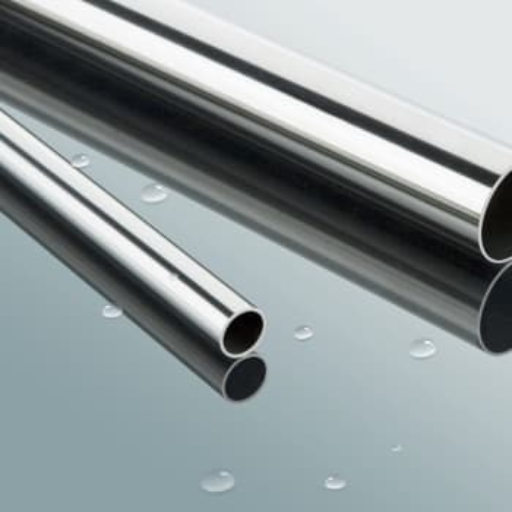
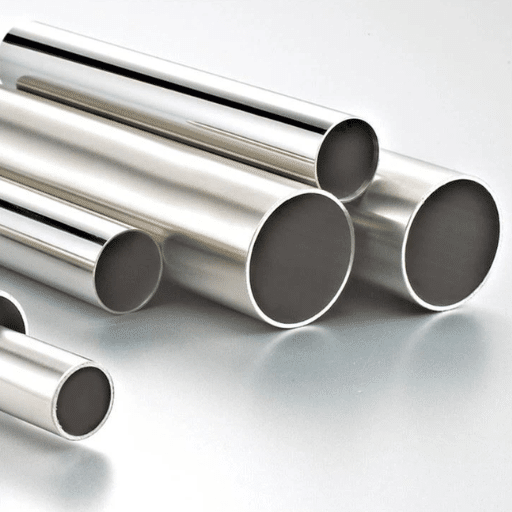
Nickel alloy pipe is a tubular product made from alloys in which nickel is the principal element. These pipes combine high corrosion resistance with strength across a wide temperature range, from cryogenic service to above 1,000 degrees C in some grades. Unlike commodity carbon steel or standard austenitic stainless steel, nickel alloy pipe is engineered for environments where pitting, crevice corrosion, stress corrosion cracking, or oxidation would destroy lesser materials.
The nickel-based alloy family includes trade names such as Inconel, Incoloy, Monel, and Hastelloy. Each name covers multiple UNS grades with different chemistries, mechanical properties, and ASTM specifications. A pipe buyer who understands this distinction avoids the most common specification mistake in the industry: ordering by trade name alone.
Soft CTA: If you already know your operating medium and temperature, send us your specification. Our metallurgical team will confirm the right nickel alloy pipe grade and ASTM standard within 24 hours.
Common Nickel Alloy Pipe Grades
The table below maps the most frequently specified grades to their UNS numbers, dominant ASTM pipe standards, and best applications. Use it as a first filter; always confirm the final selection against your project specification.
| Grade | UNS | Common Pipe Standards | Key Characteristics | Typical Applications |
|---|---|---|---|---|
| Inconel 625 | N06625 | ASTM B444 (seamless/tube), ASTM B705 (welded) | High Mo/Nb, solid-solution strengthened, excellent weldability | Chemical processing, marine, aerospace ducting, sour service |
| Inconel 718 | N07718 | AMS 5589/5590, often bar/rod rather than pipe | Precipitation-hardened, very high strength | High-pressure aerospace and downhole components |
| Incoloy 825 | N08825 | ASTM B423 (seamless), ASTM B704 (welded) | Ni-Fe-Cr-Mo-Cu, Ti-stabilized, NACE qualified | Oil and gas production tubing, heat exchangers, sour service |
| Monel 400 | N04400 | ASTM B165 (seamless/tube), ASTM B725 (welded) | Ni-Cu alloy, outstanding seawater and HF resistance | Seawater piping, desalination, valves, hydrofluoric acid |
| Hastelloy C-276 | N10276 | ASTM B622 (seamless), ASTM B619 (welded) | Extreme corrosion resistance, low C, PREN ~72 | Aggressive acids, FGD scrubbers, reactor vessels |
| Inconel 600/601 | N06600 / N06601 | ASTM B167 | High Ni, oxidation resistant | Furnace components, heat-treat fixtures |
| Nickel 200/201 | N02200 / N02201 | ASTM B161 | High purity nickel, excellent caustic resistance | Caustic processing, electronics |
For a more detailed grade cross-reference, the KAYSUNS grade comparison table of nickel alloys is a useful external reference.
ASTM Standards You Need to Know
ASTM and ASME standards define the chemistry, mechanical properties, dimensions, and testing requirements for nickel alloy pipe. Specifying the right standard is as important as specifying the right grade.
ASTM B444, Inconel 625 Pipe
ASTM B444 covers seamless and welded nickel-chromium-molybdenum-columbium alloy pipe and tube. It is the standard you will see on most Inconel 625 pipe orders for heat exchangers, aerospace ducting, and chemical service.
ASTM B622, Hastelloy C-276 Pipe
ASTM B622 covers seamless nickel and nickel-cobalt alloy pipe. It is the controlling specification for Hastelloy C276 pipe in severe acid service. The welded equivalent is ASTM B619.
ASTM B423, Incoloy 825 Pipe
ASTM B423 covers seamless nickel-iron-chromium-molybdenum-copper alloy pipe. It is the standard for Incoloy 825 pipe used in oil and gas production tubing and sour service.
ASTM B165, Monel 400 Pipe
ASTM B165 covers seamless nickel-copper alloy pipe and tube. It is the standard for Monel 400 pipe in seawater and hydrofluoric acid service.
Other Important Standards
- ASTM B161: Nickel 200 and 201 seamless pipe
- ASTM B167: Inconel 600, 601 seamless pipe
- ASTM B407: Incoloy 800H/HT seamless pipe
- ASME B36.19M: Pipe dimensions and wall thickness schedules
- NACE MR0175 / ISO 15156: Sour service hardness limits
The MW Alloys guide to ASTM standards for nickel alloys provides additional detail on these specifications.
Seamless vs Welded Nickel Alloy Pipe

The choice between seamless and welded construction affects pressure rating, corrosion performance, cost, and lead time. Do not treat nickel alloy seamless pipe and welded pipe as interchangeable.
Seamless Pipe
Seamless nickel alloy pipe is produced from solid billets by hot extrusion or piercing, followed by rolling and sizing. Because there is no longitudinal weld seam, the full wall thickness carries pressure. There is also no heat-affected zone to act as a corrosion path.
- Best for: high pressure, cyclic loading, sour service, and critical applications
- Typical size range: 1/8 inch to 24 inch OD, depending on grade and method
- Cost: 20-40% higher than welded pipe
- Lead time: longer, especially for non-standard sizes
Welded Pipe
Welded nickel alloy pipe is produced from coiled strip or plate that is formed and joined by TIG, ERW, EFW, or laser welding. It is economical and available in larger diameters and longer lengths.
- Best for: lower-pressure process piping, large-diameter lines, and cost-sensitive projects
- Typical size range: very flexible, up to 48 inch OD and above
- Cost: lower than seamless
- Limitations: weld joint factor reduces pressure rating; weld zone needs additional inspection
A Middle Eastern desalination plant once accepted welded 316L pipe for seawater intake because of price. After 18 months, the heat-affected zones showed crevice attack and the line required replacement. Switching to seamless Monel 400 pipe raised the initial cost but eliminated two maintenance shutdowns and extended service life beyond six years.
For a deeper explanation of manufacturing differences, see the TSM Ni-Alloy comparison of seamless and welded nickel alloy tubes.
Sizing, Schedules and Pressure Ratings
Nickel alloy pipe is ordered by nominal pipe size (NPS), outside diameter (OD), wall thickness (schedule), and length. ASME B36.19M governs dimensions for stainless steel and nickel alloy pipe, with schedules from SCH 5S through XXS.
| Schedule | Typical Use Case |
|---|---|
| SCH 5S / 10S | Low-pressure, large-diameter process lines |
| SCH 40S | General process piping |
| SCH 80S | Higher pressure, mechanical strength |
| SCH 160 / XXS | High-pressure, heavy-wall applications |
Pressure rating depends on both schedule and allowable stress at operating temperature. For nickel alloys, allowable stress values are listed in ASME Section II Part D. At elevated temperature, the allowable stress drops, so a pipe sized for room-temperature pressure may be inadequate for hot service. Always size for the maximum operating temperature, not ambient.
Standard random lengths are 5.8 to 6.1 meters. Cut-to-length and custom end finishes, such as plain ends or beveled ends, are available from manufacturers with in-house processing capability.
Industry Applications
Different industries use nickel alloy pipe for different failure modes. A gas turbine worries about oxidation and thermal fatigue; a subsea flow line worries about chloride stress corrosion cracking and H2S.
Chemical and Petrochemical Processing
In chemical plants, Hastelloy C276 pipe handles hydrochloric acid, sulfuric acid, and mixed oxidizing-reducing streams. Hastelloy C276 pipe is also specified for reactor vessels and flue gas desulfurization scrubbers where sulfuric acid condenses at high temperature. Inconel 625 pipe is common for chloride-rich cooling water, heat exchangers, and reactor piping.
Oil and Gas / Sour Service
Incoloy 825 pipe is widely used for production tubing, casing, and flow lines in sour gas wells containing H2S, CO2, and chlorides. Inconel 625 pipe is also qualified for sour service and offers higher strength. Both grades of nickel alloy pipe must meet NACE MR0175 hardness limits.
Marine and Seawater
Monel 400 pipe remains the benchmark for seawater service. Its nickel-copper composition resists pitting, crevice corrosion, and biofouling in saltwater cooling, firewater, and ballast systems.
Power Generation and FGD
Inconel 625 and Incoloy 825 pipe appear in flue gas desulfurization scrubbers and heat-recovery steam generators where sulfur compounds and chlorides combine at elevated temperature.
Aerospace
Thin-wall Inconel 625 pipe and tube are used for aircraft ducting and engine components where oxidation resistance and weldability matter more than peak strength.
Inspection, Testing and Certification
Nickel alloy pipe is expensive and often safety-critical. The procurement package must prove the material is what the certificate says it is.
Incoming and In-Process PMI
Positive Material Identification (PMI) should be performed on raw material, during processing, and on finished pipe. XRF and OES methods verify that the chemistry matches the UNS grade. PMI prevents the costly mix-up of similar-looking nickel alloys with very different corrosion resistance.
Ultrasonic Testing
Ultrasonic testing of nickel alloy pipe uses lower frequencies, typically 1.0 to 1.5 MHz, because the coarse grain structure of some nickel alloys scatters higher-frequency sound. Longitudinal waves are generally preferred over shear waves for weld inspection. Representative reference blocks made from the same grade are mandatory for reliable calibration.
Hydrostatic Testing
Hydrostatic testing verifies leak tightness. Test pressure may be agreed up to 1.5 times the allowable fiber stress for some specifications.
Other NDT Methods
- Eddy current testing for thin-wall tubing
- Radiographic testing for welded pipe
- Dye penetrant testing for surface defects
- Dimensional inspection per ASME B36.19M
Documentation
Every order should include:
- Mill Test Report (MTR) with full chemical analysis and mechanical properties
- Heat number and traceability
- Heat treatment certificate
- NACE MR0175 certificate when sour service is required
- NDT reports (UT, RT, ET as applicable)
- EN 10204 3.1 or 3.2 certificate when third-party verification is required
At Jiangsu Zhonggongte, every nickel alloy pipe heat is melted by vacuum induction melting plus electroslag remelting. It is then tested on direct-reading spectrometers and inspected by ultrasonic NDT before shipment. MTRs and PMI reports are issued with every order.
Cost Drivers and 2026 Price Ranges
Nickel alloy pipe is priced by alloy content, form, size, quantity, and certification. Raw material surcharges track LME nickel and molybdenum prices, which can move weekly.
| Grade / Form | Approximate 2026 Price Range (USD/kg) |
|---|---|
| Nickel 200 / 201 pipe | 25-45 |
| Monel 400 pipe | 35-60 |
| Inconel 625 seamless pipe | 55-99 |
| Inconel 625 welded pipe | 28-65 |
| Incoloy 825 pipe | 40-75 |
| Hastelloy C-276 pipe | 70-120 |
In 2026, nickel prices are fluctuating around $17,000-20,000 per metric ton, and a molybdenum supply deficit is putting upward pressure on grades such as Inconel 625 and Hastelloy C276 pipe. Certification premiums for aerospace AMS, NACE MR0175, or EN 10204 3.2 can add 10-30% to the base price.
Medium CTA: Need a competitive quotation for your next nickel alloy pipe order? Send us the grade, standard, size, quantity, and certification requirements. We reply within 24 hours with pricing and delivery schedule.
Sourcing Nickel Alloy Pipe from China

China is a major source of nickel alloy pipe, but not every supplier offers the same quality assurance. Buyers who focus only on price per kilogram often discover hidden costs in rejected inspections, delayed projects, and replacement material.
Three Documents to Verify on Every Heat
- Mill Test Report (MTR) showing full chemical analysis, mechanical properties, heat number, and applicable ASTM/ASME standard.
- PMI report from incoming material through final inspection, using XRF or OES.
- Heat treatment certificate proving solution annealing, aging, or stress relieving was performed to specification.
Red Flags
- Vague standard references such as “per customer requirement” without an ASTM or ASME number
- Missing UNS number or trade name only
- No spectral data or only a photocopied certificate
- No hardness values when NACE MR0175 is required
- Lead times that seem too short for the claimed manufacturing route
A European EPC learned this the hard way. They accepted a shipment of Incoloy 825 pipe based on a one-page mill certificate with no hardness data. During commissioning, the third-party inspector required NACE MR0175 compliance documentation. The material could not be proven compliant, and the line had to be replaced. The delay cost more than the original pipe order.
Jiangsu Zhonggongte combines in-house manufacturing with authorized global mill representation. We produce nickel alloy pipe by VIM+ESR, perform tensile and ultrasonic testing in-house, and can supply EN 10204 3.1 or 3.2 certification on request. Our 24-hour logistics center ships stocked grades quickly and tracks every heat by number.
Nickel Alloy Pipe Selection Decision Framework
Use this checklist to move from a vague requirement to a clear specification.
- Define the medium. Is it oxidizing acid, reducing acid, seawater, sour gas, caustic, or high-temperature steam?
- Set the operating temperature and pressure. These determine allowable stress and oxidation requirements.
- Choose seamless or welded. Seamless for critical, high-pressure, cyclic service; welded for larger diameters and lower pressure.
- Select the grade and UNS number. Match corrosion resistance to the medium and strength to the stress.
- Specify the ASTM/ASME standard. B444 for Inconel 625, B622 for Hastelloy C-276, B423 for Incoloy 825, B165 for Monel 400.
- Add certification requirements. NACE MR0175, EN 10204 3.2, ABS/DNV, or aerospace AMS as applicable.
- Request samples or mill test reports before placing a large order. Verify chemistry and mechanical properties match your design basis.
FAQ: Nickel Alloy Pipe
What is the difference between Inconel 625 pipe and Hastelloy C-276 pipe?
Inconel 625 pipe offers excellent general corrosion resistance, high strength, and good weldability across a wide temperature range. Hastelloy C-276 pipe provides superior resistance to aggressive acids such as hydrochloric acid and mixed oxidizing-reducing media. For most chemical service, either may work; for the most severe acids, C-276 is the safer choice.
Is Monel 400 pipe good for seawater?
Yes. Monel 400 pipe has exceptional resistance to seawater corrosion, including immunity to chloride-induced stress corrosion cracking. It is widely used for seawater cooling, firewater, ballast systems, and desalination plant piping.
What does ASTM B444 mean for pipe?
ASTM B444 is the standard specification for nickel-chromium-molybdenum-columbium alloy pipe and tube, primarily Inconel 625 (UNS N06625). It defines chemical composition, mechanical properties, dimensions, and testing requirements.
Should I choose seamless or welded nickel alloy pipe?
Choose seamless for high pressure, cyclic loading, sour service, and applications where weld defects cannot be tolerated. Choose welded for larger diameters, lower pressures, and when cost is the primary driver, provided the weld receives proper inspection.
What certifications do I need for sour service pipe?
Sour service pipe should comply with NACE MR0175/ISO 15156. The MTR must show hardness values within the standard’s limits for the specific grade and condition. Incoloy 825 and Inconel 625 are common sour-service grades.
How do I verify a Chinese supplier’s nickel alloy pipe?
Request the MTR with full chemistry and mechanical properties, a PMI report at incoming and final stages, the heat treatment certificate, and any required NACE or third-party inspection documents. Compare the UNS number and ASTM standard on the certificate against your purchase order.
Why does nickel alloy pipe price change so often?
Nickel alloy pipe price is tied to LME nickel and alloy surcharges, especially molybdenum for grades such as Inconel 625 and Hastelloy C-276. Certification, form, and order quantity also affect the final price.
Conclusion
Nickel alloy pipe selection is a specification discipline. The grade, UNS number, ASTM standard, form, and certification must match the application. Inconel 625 pipe handles a wide range of corrosive and high-temperature service. Hastelloy C-276 pipe is reserved for the most aggressive acids. Monel 400 pipe dominates seawater and hydrofluoric acid. Incoloy 825 pipe is the workhorse for sour oil and gas production.
Seamless pipe offers the highest reliability for critical service, while welded pipe provides economy for less demanding lines. Regardless of the construction, demand full documentation: MTR, PMI, heat treatment certificate, and NDT reports. Those documents are what separate a safe, traceable order from a costly mistake.
If you are ready to source nickel alloy pipe, send us your specification. Our metallurgical team will confirm the grade, standard, and certification you need and return a competitive quotation within 24 hours.