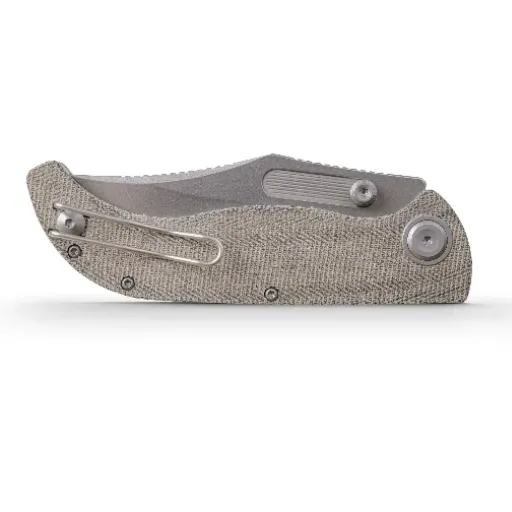
When Jake’s custom EDC knife chipped during a weekend camping trip in the Rockies, he understood it was much more about the steel choice than the geometry of the blade. He had opted for S35VN, exactly a “premium” material, but the microchipping along the edge told a different story when exposed to the specific case of his own use. After six months of changing it for a blade of NITRO-V, Jake could bash wood while cutting through rope, but there wasn’t one single chip for the effort-he was able to sharpen it, albeit with more frequency.
From this point, one can see that not all knife enthusiasts do justice to the idea that there is no best steel but the right steel for your particular use.
Choosing between Nitro V Steel vs S35VN is not just an uncomplicated comparison between specifications in a datasheet. More to how the metallurgical properties translate into real-life work performance—be it an EDC-carrier, outdoor enthusiast, or industrial end-use material procurement. This guide intends to shed some light on the technical differences between these two infamous knife steels and help you judge the pros and cons based on actual output performance, rather than marketing gimmicks.
What Is NITRO-V Steel?
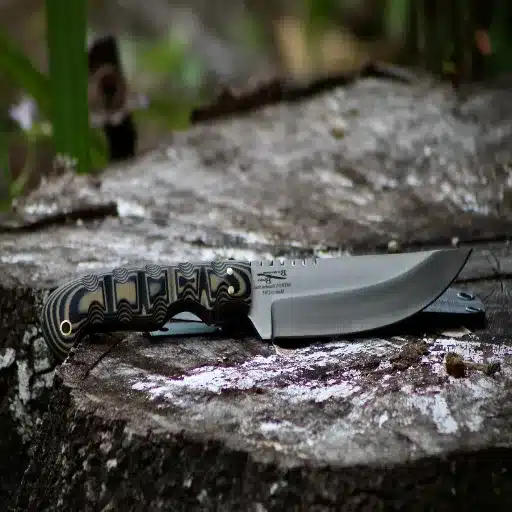
NITRO-V is a high-performance blade material of martensitic stainless steel developed in 2017 by a swordsmith in New Jersey, derived from AEB-L, engineered for edge retention in surgical stainless steel that was originally supposed to be used as a razor blade material. The name reveals why metals work well: they are nitride-bearing, with the vanadium increasing their edge.
Chemical Composition
| Element | Content | Purpose |
|---|---|---|
| Carbon (C) | 0.66–0.72% | Hardness and edge stability |
| Chromium (Cr) | 12.0–13.3% | Corrosion resistance |
| Nitrogen (N) | 0.08–0.12% | Enhanced corrosion resistance, toughness |
| Vanadium (V) | 0.05–0.10% | Fine carbide formation, wear resistance |
| Molybdenum (Mo) | 0.30–0.50% | Strength at elevated temperatures |
Nitrogen content forms an important part of the chemistry. Traditional stainless steel alloys have always relied on chromium to provide corrosion resistance. Unlike the addition of nitrogen in NITRO-V, it is very stable and passive. It is extremely resistant to pitting corrosion, particularly in marine or humid settings, to which conventional stainless grades are highly susceptible.
Manufacturing Process
NITRO-V is a traditional ingot metalworking process rather than PM (powder metallurgy). Cast molten steel into ingots, then roll and process them into blade blanks. Carbide refinement or uniformity in terms of powder metallurgy steels can be achieved with NITRO-V, despite this. Because of a lower carbide volume, traditional processes suit it well enough. The fine-grain structure of the AEB-L lineage provides consistency in its performance.
Hardness and Heat Treatment
Optimal hardness properties of NITRO-V relate to the best performance between 59 and 62 HRC, and some manufacturers work up to 63 HRC for maximum edge retention. The simple heat-treatment sequence is done as follows:
- Austenitize at 1900–2000°F (1038–1093°C)
- Plate quench or oil quench for minimal distortion
- Optional cryogenic treatment for increased hardness
- Temper at 300–400°F (149–204°C) for 2 hours, repeated twice
This simple heat treatment has made NITRO-V very popular with custom knife builders because it is easy to use without specialized equipment. It behaves as it should, without surprises, keeps boiling the bejesus out of it, and predictably delivers.
What Is CPM S35VN Steel?
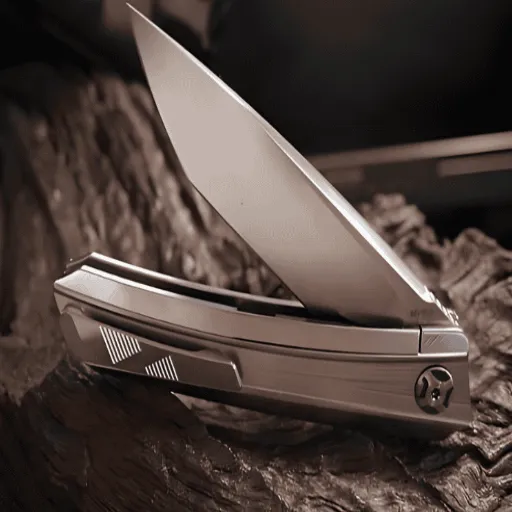
CPM S35VN is a powder metallurgy stainless steel developed by Crucible Industries in 2009 as an evolution of their earlier S30V formulation. The “CPM” designation stands for Crucible Particle Metallurgy—a proprietary process that revolutionized high-performance blade steels by solving the carbide segregation problems inherent in conventional ingot steels.
Chemical Composition
| Element | Content | Purpose |
|---|---|---|
| Carbon (C) | 1.38–1.40% | High hardness potential, carbide formation |
| Chromium (Cr) | 14.00% | Stainless behavior, corrosion resistance |
| Vanadium (V) | 3.00% | Hard vanadium carbides for wear resistance |
| Niobium (Nb) | 0.50% | Grain refinement, toughness improvement |
| Molybdenum (Mo) | 2.00% | Corrosion resistance, high-temperature strength |
The standout addition is niobium. When Crucible developed S35VN, they specifically addressed S30V’s tendency toward micro-chipping. The 0.5% niobium addition refines carbide size and improves toughness by 15–20% compared to S30V, while maintaining excellent wear resistance.
The CPM Manufacturing Advantage
Powder metallurgy changes the behavior of high-alloy steels. The process is as follows:
- Atomization: Spraying molten steel through a nozzle, creating very fine droplets that rapidly solidify to become powder particles
- Screening: Sorting as per the particle size needs to be screened
- Consolidation: The powder gets filled in a holder, evacuated, and pressed mechanically at a high temperature, hot isostatically pressing (HIP), to form solid blocks or OST.
- Rolling/Forging: Hot-forged or rolled into bar, sheet, or another form of the given geometry/cross-section or shape
Eliminating segregation of carbides found in conventional steels, that is, the clustering of carbides creates points of weakness. This results in a homogeneous microstructure composed of well-distributed fine vanadium and niobium carbides that prevent pullout during grinding and cutting.
Hardness and Heat Treatment
A standard S35VN hardness range is between 58-61 HRC, allowing most applications to be of a quality of 59-60 HRC. The treatment procedures are more specific in comparison to NITRO-V:
- Austenitize at 1950–2025°F (1066–1107°C) for 15–20 minutes
- Plate quench to minimize distortion (oil quench allowed)
- Cryogenic treatment at -320°F (-196°C) in liquid nitrogen brings out the maximum hardness
- Double tempering at 300–400°F (149–204°C) for 2 h each
The higher vanadium makes it somewhat touchier: too little or too much austenitizing temperature, and you may not dissolve the carbides properly or may get overheated, so the grain growth reduces toughness.
Head-to-Head Performance Comparison
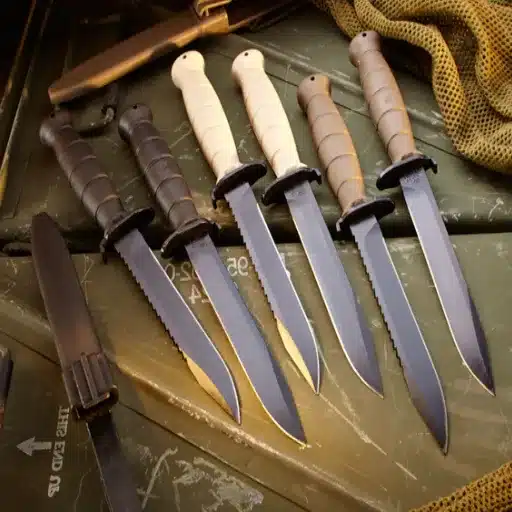
Now we get to what matters: how these steels actually perform when you put an edge to work. The differences are significant enough that choosing the wrong steel for your application leads to frustration, even if both are technically “good” steels.
Edge Retention: S35VN Takes the Lead
If edge retention is your top priority, S35VN outperforms NITRO-V. The 3% vanadium content creates extremely hard vanadium carbides (approximately 2800 HV) that resist abrasive wear far better than NITRO-V’s softer matrix.
In standardized CATRA (Cutlery and Allied Trades Research Association) testing, S35VN demonstrates approximately 25% better edge retention than NITRO-V when cutting abrasive materials like cardboard and rope. For extended cutting sessions—say, processing several yards of fibrous material—this difference becomes noticeable.
However, NITRO-V offers what some users call “stable working sharpness.” Rather than holding a razor edge that suddenly fails, NITRO-V gradually dulls predictably. For everyday carry tasks—opening packages, cutting tape, slicing food—this translates to consistent performance between sharpenings.
Marcus, a warehouse supervisor in Portland, tested both steels over six months. “With S35VN, I’d go two weeks without touching up the edge,” he noted. “But when it dulled, it dulled suddenly. NITRO-V needed attention every week, but the edge never surprised me by failing mid-task.”
Toughness and Chip Resistance: NITRO-V Excels
Here’s where NITRO-V flips the comparison. The nitrogen-enhanced microstructure provides exceptional ductility and impact resistance. When subjected to lateral forces, prying, or batoning, NITRO-V resists chipping far better than S35VN.
The metallurgical reason is straightforward: NITRO-V has lower overall carbide volume. While S35VN’s abundant vanadium carbides provide wear resistance, they also create stress concentration points. Under impact or twisting loads, these hard particles can fracture or separate from the matrix, causing micro-chips.
NITRO-V’s fine, evenly dispersed carbides in a ductile matrix absorb energy more effectively. The steel deforms rather than fractures under stress. For users who occasionally abuse their knives—prying staples, twisting in cuts, or dropping onto hard surfaces—this toughness advantage is significant.
In Charpy impact testing (a standardized toughness measurement), NITRO-V consistently outperforms S35VN by approximately 15–20% at equivalent hardness levels. In practical terms, this means NITRO-V can handle thin edge geometries (0.010″ or less behind the edge) without chipping, while S35VN benefits from slightly thicker edge angles for heavy use.
Corrosion Resistance: NITRO-V Wins in Harsh Environments
In preconditions, they are both “stainless,” though the advantage is with NITRO-V in aggressive environments (especially marine or food applications).
The nitrogen content in NITRO-V, which falls within 0.08–0.12%, significantly enhances the resistance to pitting. This is why nitrogen functions in a much greater capacity to increase PREN (Pitting Resistance Equivalent Number) to more than what is possible by chromium alone. NITRO-V’s expected PREN of about 17–18s surpasses the estimate of the PREN for S35VN, which is about 15–16s, yet has higher chromium.
Much less pitting and crevice-corrosion damage was found in NITRO-V than in S35VN when salt spray testing was performed. For those living on the coast, fishers, or those who tend to leave blades in chlorides, less maintenance and longer life can be expected for them.
S35VN Austenitic steel has approximately 14% chromium, creating extreme stain resistance for the common EDC and kitchen jobs. Extended exposure to salt water, acidic edibles or damp atmosphere without maintenance would show significant differences. The poor NITRO-V forgives neglect more than S35VN in several aspects.
Sharpening Ease: NITRO-V Is Significantly Easier
A lot of users, this constitutes something startling- especially since this steel is considered better than any other. It is, after all, slightly more difficult to remove than NITRO-V.
The customer must sharpen S35VN, which has 3 % vanadium that creates wear-resistant vanadium carbides with normal aluminum oxide stones under typical conditions when sharpened with:
- Diamond abrasives (DMT plates, diamond stones)
- Silicon carbide stone
- Another time and effort are significantly
While NITRO-V is a steel that is more tightly grained, it carries a relatively lower volume of carbide; its matrix is soft and easy to sharpen with rudimentary equipment. Arkansas stones, aluminum oxide, or even ceramic rods will bring an edge without any issues. This is a great practical advantage, especially for sharpening for the field or simply for users who do not have extensive sharpening systems.
Sarah, a fishing guide in Florida, has a solution: “I will keep it full by touching up NITRO-V fillet knives on a cheap ceramic rod between catches. An S35VN blade will need diamond stones and skillful technique. That is everything in the water.
There is a big difference in time spent, but because a NITRO-V requires less than 50-40 percent of the time S35VN does in generating a hair-splitting edge, this is the experience of all experienced sharpeners. This all continues to sound great for anybody sharpening his/her own blade.
Hardness and Edge Stability
Both steels perform in similar hardness ranges, but the relationship between hardness and performance differs:
| Steel | Optimal HRC | Maximum HRC | Notes |
|---|---|---|---|
| NITRO-V | 59–62 | 63 | Higher HRC improves retention, maintains toughness |
| S35VN | 58–61 | 62 | Best balance at 59–60 HRC; higher risks of brittleness |
NITRO-V maintains better toughness at higher hardness levels. At 62 HRC, NITRO-V remains reasonably tough, while S35VN at 61+ HRC becomes increasingly prone to chipping under hard use.
Best Use Cases: Choosing the Right Steel
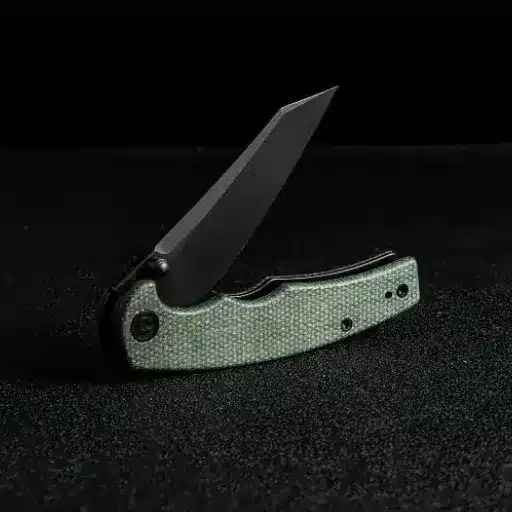
The “better” steel depends entirely on your priorities and use case. Here’s how to decide:
Choose NITRO-V If You:
- Prioritize toughness and chip resistance: Outdoor use, occasional prying, or thin edge geometries favor NITRO-V’s ductility
- Work in wet or marine environments: Superior corrosion resistance reduces maintenance
- Value easy maintenance: Quick touch-ups on basic stones save time and equipment costs
- Prefer predictable edge degradation: Gradual dulling beats sudden edge failure for many users
- Want premium performance at moderate cost: NITRO-V typically costs 15–30% less than S35VN in finished knives
Ideal applications: Marine knives, kitchen cutlery, outdoor/field knives, EDC for users who maintain their own edges, thin-blade designs
Choose S35VN If You:
- Prioritize maximum edge retention: Less frequent sharpening justifies the trade-offs
- Want powder metallurgy consistency: Uniform carbide distribution provides predictable performance
- Accept higher maintenance requirements: You have diamond abrasives and sharpening skills
- Value brand recognition: S35VN carries a premium perception in the knife market
- Need proven track record: Over 15 years of documented performance across countless knives
Ideal applications: Heavy-duty EDC, professional kitchen work, industrial cutting tasks, users with comprehensive sharpening systems, and knives receiving professional maintenance
When Neither Is Ideal
It should be noted that both knives have their limits. Unfortunately, they did not make the grade where extreme corrosion environments were concerned for salt water immersion, as neither outperforms LC200N nor Vanax SuperClean. As far as they could be run through impact tests, they were not as tough as CPM-3V or Cru-Wear. Conversely, for the best edge retention of them all, steels like M390, 20CV, or S90V basically kick S35VN in the head.
Leaning more towards Nitro-V and S35VN, the comparison is all about premium performance at the most reasonable price for most conditions, trying to balance all key elements rather than chasing after the highest value for any single one.
Price and Value Analysis
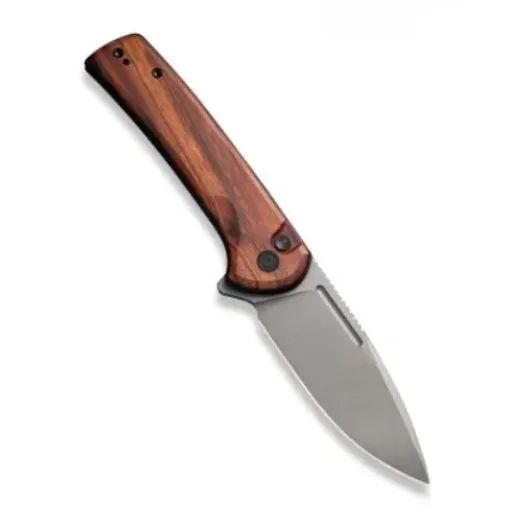
Steel cost affects knife pricing, though heat treatment, handle materials, and maker reputation often dominate final price tags.
Raw Material Costs
- NITRO-V: Moderate-cost steel; pricing comparable to 154CM or D2
- S35VN: Premium pricing due to powder metallurgy process and brand recognition
In finished knives from the same manufacturer, expect S35VN blades to command a 20–40% price premium over NITRO-V equivalents. For budget-conscious buyers, this difference is meaningful. For those viewing knives as long-term tools, the cost per year of service often equals.
Total Cost of Ownership
Consider the full ownership experience:
| Factor | NITRO-V | S35VN |
|---|---|---|
| Initial knife cost | Lower | Higher |
| Sharpening equipment needed | Basic stones adequate | Diamond abrasives recommended |
| Sharpening time investment | Less | More |
| Edge maintenance frequency | More frequent | Less frequent |
| Risk of chipping (replacement cost) | Lower | Higher |
For users who pay for professional sharpening, S35VN’s longer edge life may justify the upfront cost. For DIY maintainers, NITRO-V’s ease of sharpening and lower chip risk provide ongoing value.
2025 Market Context and Alternatives
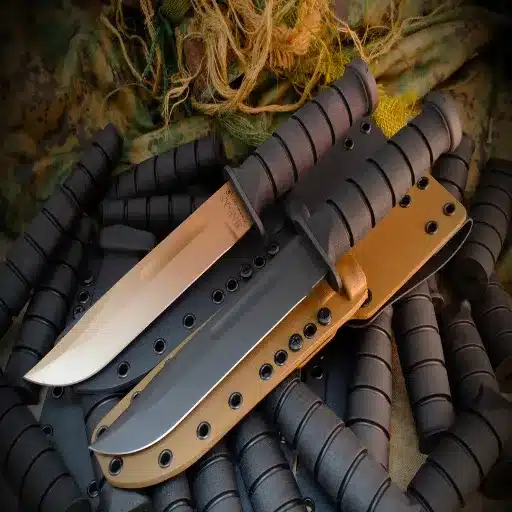
The knife steel landscape continues evolving. Understanding where NITRO-V and S35VN fit among newer options helps contextualize this comparison.
S35VN’s Position Today
The S45VN, relatively new to the market in 2020, pushed S35VN down the pecking order somewhat. In addition, it offers Celt’s improved edge retention and better corrosion resistance. MagnaCut (developed by Dr. Larrin Thomas, produced by Crucible) provides superior corrosion resistance with comparable toughness and edge retention.
But let’s not forget that S35VN has been established for more than 15 years, which means that this particular steel has seen its day in the field. It makes the claim of the value of S35VN more powerful than cutting-edge specs perspectives among buyers who appreciate real-world performance.
NITRO-V’s Rising Popularity
NITRO-V has been gaining significant momentum since 2017, all through municipal mid-priced knife producers who desire superior performance but scrap the premium for that. Value offerings, like those from the likes of CJRB, QSP, and various custom makers, have put hold of NITRO-V.
The steel is located in a sweet spot, with better corrosion resistance than most mid-range candidates in the knife tool category, easier maintenance than powder metallurgy type steels, and toughness forgiving real-world abuse.
Emerging Competitors
The same space is contested by quite a few of the newer steels:
- AR-RPM9: This is basically a Chinese-developed spray-form steel, low in cost but with as good a performance as PM.
- 14C28N: The product of Sandvik, it has been developed and is nitrogen-enhanced, with excellent oxidation resistance and is as simply sharpenable.
- MagnaCut: This provides the edge apart from the simplicity, as well as on the part of someone paying a premium for combining the best attributes of stainless and tool steels
As decisions are made by the buyers of 2025, NITRO-V and S35VN represent usual technologies for solid things. Both are proven with long enough standing to project results will be okay.
From Knife Steels to Industrial Alloys: The Bigger Picture
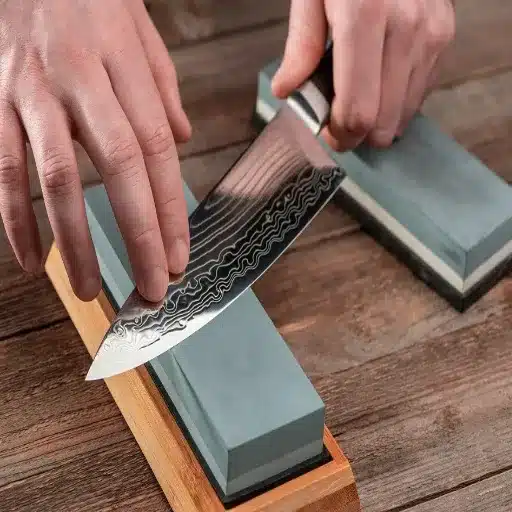
The principles that govern the performance of a knife, such as NITRO-V and S35VN, range way further than just the related carbide formation and the nitrogen-enhancement of this. Corrosion resistance mechanisms are found in mechanisms that are similar to those used within pocket knives. These principles of metallurgy are as applicable in the high-materially stressed processes which fail catastrophically.
N ratio-based enhanced stainless steels, such as NITRO-V, are good examples of how focused alloy additions resolve very specific challenges in performance. Such nitrogen contained enhances resistance to corrosion in industrial-grade materials for processing chemicals and marine equipment, as well as medical devices. The fine carbide structure and zero solute content in the alloy make NITRO-V tough while allowing ease in sharpening; these features in fine carbides translate to significantly better fatigue strength in aerospace parts or pressure vessels.
Powder metallurgy is known for its process uniformity, which S35VN implies, which has highly impacted high-performing alloys throughout many industries, as high-powered PM superalloys drive jet engines and PM tool steels enable precision manufacture. The elimination of segregation defects important to knife edges is crucial to making this kind of property uniformity possible within turbine blades and surgical instruments.
Understanding these material science basics helps engineers and purchasing teams beyond cutlery to guide possible pressure in decision-making in different industries. Choose an alloy for evaluation in chemical processing equipment, and use the same ideas, such as whether on resistance sensitivity compared to the toughness, corrosion resistance compared to final costs, or durability combined with ultimate performance.
Conclusion: Making Your Decision
The NITRO-V vs S35VN choice ultimately comes down to your priorities and maintenance habits.
Choose NITRO-V and prioritize durability, resistance to corrosion, and easy care over maximum edge retention. It’s also an interesting option for those who enjoy sharpening their own cutters, cutters that work in rather moist environments and are sometimes mistreated. Its low price and resilience make it suitable for those who have the mindset that knives should be used rather than displayed.
Choose S35VN only if the longer tool life obtained is worth the added need for frequent servicing and more care. In the event you have a good quality sharpener, and you are not averse to optimal edger holding rather than using time way past whenever it should have been done, then S35VN will be up to the task. Professional participants always appreciate materials made with the steady quality of powder metallurgy and the comfort of using proven quality.
Neither steel is objectively superior. Both represent excellent engineering—NITRO-V through clever modification of proven chemistry, S35VN through advanced manufacturing processes. Your specific use case determines which metallurgical approach serves you better.
Key Takeaways:
- S35VN holds edges ~25% longer but requires diamond abrasives for sharpening
- NITRO-V offers superior toughness and corrosion resistance at a lower cost
- NITRO-V sharpens easily on basic equipment; S35VN demands more effort and skill
- For marine/wet environments, NITRO-V’s nitrogen enhancement provides a meaningful advantage
- Both steels work best at 59–61 HRC for balanced performance
The right choice isn’t about specifications—it’s about matching material properties to your real-world requirements. Whether you prioritize edge retention, toughness, corrosion resistance, or ease of maintenance, understanding these trade-offs ensures you select a blade that performs when you need it.
Ready to source high-performance alloy materials for your next project? Get a customized quote with full certification →