The standard Inconel 718 heat treatment cycle is solution annealing at 954–980°C followed by double aging at 720°C for 8 hours and 620°C for 8 hours. This precipitation-hardening sequence transforms soft, solution-annealed bar stock into the high-strength condition used in turbine disks, fasteners, and pressure vessels.
But choosing the right starting condition matters as much as the cycle itself. Last year, a Southeast U.S. machine shop ordered fully aged AMS 5663 round bar for a batch of complex gas-turbine fasteners. Carbide inserts that normally lasted four hours were dulling in 45 minutes.
Tool life collapsed, surface finish degraded, and the six-week delivery window slipped to twelve. The buyer had specified the wrong supply condition. For parts requiring extensive machining, AMS 5662 solution-annealed bar should have been ordered, with aging performed after machining.
If you source or specify Inconel 718, this guide will show you exactly how the cycle works, when to use AMS 5662 versus AMS 5663 versus AMS 5664, and how to verify that your supplier’s heat treatment documentation matches your requirements. We will also cover the GH4169 domestic equivalent, additive manufacturing variants, and the most common defects heat treaters encounter.
Key Takeaways
- Standard aerospace cycle: solution anneal 954–980°C, then age 720°C/8h + 620°C/8h
- AMS 5662 = solution-annealed only; AMS 5663 = solution-annealed + aged
- γ″ (Ni₃Nb) is the dominant strengthening phase; γ′ (Ni₃(Al,Ti)) provides secondary strengthening
- Solution temperature selection trades strength versus transverse ductility and creep resistance
- GH4169 follows the same heat treatment cycle as Inconel 718
- Fully aged 718 reaches ~1,240 MPa UTS, ~1,030 MPa yield, and 36–44 HRC
Why Inconel 718 Requires Heat Treatment

Inconel 718 is a precipitation-hardenable nickel-chromium superalloy. In the as-forged or solution-annealed condition, it is relatively soft and machinable. Its full strength only develops when controlled thermal cycles precipitate nanoscale γ″ and γ′ phases throughout the nickel matrix.
Without heat treatment, the alloy lacks the tensile strength, fatigue resistance, and creep performance that make it suitable for gas turbines, rocket engines, and nuclear applications. The heat treatment also dissolves unwanted phases such as Laves and excessive δ-phase, which would otherwise embrittle the material and reduce creep life.
This is why procurement specifications almost always reference an AMS condition rather than simply ordering “Inconel 718 bar.” The condition tells the heat treater, the machine shop, and the quality auditor exactly what microstructure and properties to expect.
Inconel 718 Heat Treatment Cycle Step by Step
Solution Annealing (Solution Treatment)
Solution annealing is the first and most critical step in the Inconel 718 heat treatment cycle. The alloy is heated above the solvus temperature of the strengthening phases so that niobium, titanium, and aluminum dissolve back into the nickel matrix. This homogenizes the chemistry, dissolves brittle Laves phase, and recrystallizes the grain structure.
The standard aerospace solution range is 954–980°C per AMS 5662 and AMS 5663. Hold time is typically one hour per inch of thickness, with a minimum hold sufficient to guarantee uniform temperature. Cooling must be rapid, either by air or water quench, to prevent premature precipitation of δ-phase or coarse γ″ during cooldown.
For applications requiring improved transverse ductility and creep resistance, a high-temperature solution treatment in the 1035–1065°C range is used. This is the basis of AMS 5664. The higher temperature produces a coarser grain structure, which improves creep and low-cycle fatigue life but slightly reduces tensile strength.
First Aging Step (720°C)
After solution treatment, the part is reheated to 720°C and held for 8 hours. During this hold, the dominant strengthening phase γ″ (Ni₃Nb) begins to precipitate uniformly throughout the matrix. The furnace then cools the load to 620°C at a controlled rate of approximately 55°C per hour.
The slow cool is not optional. Rapid cooling from 720°C would suppress secondary precipitation and leave strength on the table. The controlled transition to 620°C allows fine γ″ particles to continue forming while avoiding the coarsening that would occur at a higher hold temperature.
Second Aging Step (620°C)
The final aging hold is 620°C for 8 hours, followed by air cooling. This step completes the precipitation of γ″ and promotes the formation of γ′ (Ni₃(Al,Ti)), which provides secondary strengthening and improves thermal stability.
After the second aging step, the material reaches its peak aged condition. Hardness typically rises from 18–22 HRC in the solution-annealed state to 36–44 HRC, depending on section size and exact chemistry.
Standard Inconel 718 Heat Treatment Cycle Summary
| Step | Temperature | Hold Time | Cooling | Purpose |
|---|---|---|---|---|
| Solution anneal | 954–980°C | 1 h/inch of thickness | Air or water quench | Dissolve Laves/δ-phase, homogenize matrix |
| First aging | 720°C | 8 hours | Furnace cool to 620°C at ~55°C/h | Precipitate fine γ″ phase |
| Second aging | 620°C | 8 hours | Air cool | Complete γ″ + precipitate γ′ |
This table is the specification most buyers are looking for when they search for the Inconel 718 heat treatment cycle. If you are placing an RFQ, copying this cycle into your technical requirements will eliminate ambiguity.
AMS 5662 vs. AMS 5663 vs. AMS 5664
AMS specifications define not only chemistry but also the thermal condition of the material. The three most common conditions for bar, forging, and ring stock are compared below.
| Specification | Condition | Solution Temperature | Aging Cycle | Typical Hardness | Best Use Case |
|---|---|---|---|---|---|
| AMS 5662 | Solution-annealed only | 954–980°C | None | 18–22 HRC | Parts requiring machining before aging |
| AMS 5663 | Solution-annealed + aged | 954–980°C | 720°C/8h → 620°C/8h | 36–44 HRC | Finished fasteners, springs, pressure hardware |
| AMS 5664 | High-temp solution + aged | 1035–1065°C | 720°C/8h → 620°C/8h | 34–40 HRC | Rotating disks, high-ductility applications |
When should you specify each?
- AMS 5662 is the right choice when you need to machine complex geometries before final aging. The softer condition reduces tool wear and improves dimensional control.
- AMS 5663 is the default for parts that arrive ready for service. Fasteners, retaining rings, and pressure-vessel components are typically ordered in this condition.
- AMS 5664 is specified when transverse ductility, creep resistance, or low-cycle fatigue life is more important than peak tensile strength. It is common in turbine disks and rotating hardware.
If you are unsure which condition your drawing requires, our technical team can review your application and recommend the correct AMS callout. You can also explore our Inconel 718 complete technical guide for a broader overview of grades, forms, and specifications.
How Solution Temperature Affects Properties
The choice between 954–980°C and 1035–1065°C solution treatment is one of the most misunderstood decisions in Inconel 718 heat treatment. It is not simply a matter of following the specification; it directly changes the grain size, strength, and damage tolerance of the part.
A design engineer at a European turbine OEM faced this exact trade-off two years ago. Her team was qualifying a new disk forging and had to choose between AMS 5663 and AMS 5664. Initial tensile data showed AMS 5663 produced 80 MPa higher ultimate strength, which looked attractive on paper.
But low-cycle fatigue testing revealed that AMS 5664 delivered a 35% longer crack-initiation life because of its coarser grain structure and cleaner grain boundaries. The team accepted the modest strength reduction and specified AMS 5664 for production.
| Solution Range | Grain Structure | Tensile Strength | Transverse Ductility | Creep Resistance | Notch Sensitivity |
|---|---|---|---|---|---|
| 954–980°C | Fine | Higher | Standard | Standard | Lower |
| 1035–1065°C | Coarse | Slightly lower | Improved | Improved | Higher risk if not controlled |
The high-temperature solution dissolves more δ-phase and allows grain growth, which improves creep and transverse properties. However, if the cooling rate is too slow or the chemistry is near the upper niobium limit, notch sensitivity can increase. That is why AMS 5664 material is usually accompanied by more extensive mechanical testing, including notch tensile and stress-rupture verification.
Mechanical Properties After Heat Treatment

The property jump from solution-annealed to aged Inconel 718 is substantial. The table below summarizes typical room-temperature mechanical properties by condition.
| Condition | UTS (MPa) | Yield Strength (MPa) | Elongation (%) | Hardness (HRC) |
|---|---|---|---|---|
| Solution-annealed (AMS 5662) | 750–950 | 350–550 | 35–55 | 18–22 |
| Standard aged (AMS 5663) | 1,240–1,380 | 1,030–1,270 | 12–21 | 36–44 |
| High-temp solution + aged (AMS 5664) | 1,100–1,240 | 930–1,100 | 15–25 | 34–40 |
| Cold-worked + aged | 1,300–1,500 | 1,100–1,300 | 8–15 | 40–48 |
These ranges are consistent with ASTM B637 and AMS specification minimums. Actual values depend on section size, chemistry balance, and heat treatment furnace uniformity. For a deeper breakdown of tensile, creep, and thermal properties, see our dedicated article on Inconel 718 mechanical properties.
Hardness is often the first property buyers check on a material test report. Aged 718 in the AMS 5663 condition typically tests between 36 and 44 HRC. Values below 35 HRC may indicate under-aging, incomplete solution, or a chemistry issue. Values above 45 HRC can signal over-aging or excessive cold work and may reduce ductility.
Microstructural Phases Explained
Understanding the phases in Inconel 718 helps explain why the heat treatment cycle is so specific.
- γ matrix: The face-centered-cubic nickel-chromium-iron matrix that forms the bulk of the alloy.
- γ″ (Ni₃Nb): The primary strengthening phase. It has a body-centered-tetragonal structure and precipitates as coherent disks during aging. Fine, uniform γ″ gives aged 718 its high strength.
- γ′ (Ni₃(Al,Ti)): The secondary strengthening phase with an L1₂ structure. It forms during the 620°C aging step and stabilizes strength at elevated temperature.
- δ-phase (Ni₃Nb): An orthorhombic intermetallic that forms at temperatures around 850–950°C. Small amounts can pin grain boundaries and control grain size. Excessive δ-phase embrittles the alloy and must be dissolved during solution treatment.
- Laves phase ((Ni,Cr,Fe)₂(Nb,Ti,Mo)): A brittle, niobium-rich intermetallic that forms during solidification or improper heat treatment. It must be dissolved during solution treatment because it consumes niobium that would otherwise form strengthening γ″.
The goal of the Inconel 718 heat treatment cycle is to maximize fine γ″ and γ′ while minimizing δ and Laves. That is why solution temperature, hold time, and cooling rate are tightly controlled.
Common Heat Treatment Defects and How to Avoid Them
Even with the correct cycle, defects can occur if furnace control, load placement, or quenching is inadequate.
| Defect | Cause | Effect | Prevention |
|---|---|---|---|
| Over-aging / coarse γ″ | Excessive time or temperature above 720°C | Reduced strength and hardness | Verify thermocouple calibration; do not exceed specified hold |
| δ-phase embrittlement | Slow cooling through 850–950°C range | Low ductility, notch sensitivity | Use rapid air or water quench from solution |
| Surface oxidation / decarburization | Air atmosphere without protective coating | Surface cracking and reduced fatigue life | Use vacuum, inert atmosphere, or protective wrap |
| Distortion from rapid quench | Uneven cooling of thin sections | Dimensional rejection | Select air cool versus water quench based on geometry |
| Inadequate soak time for heavy sections | Insufficient hold at solution temperature | Incomplete dissolution of Laves/δ | Use 1 hour per inch minimum; verify core temperature |
A major North American aerospace subcontractor learned this lesson during a 2023 lot acceptance. A batch of AMS 5663 forgings failed Charpy impact testing. Metallography revealed a continuous δ-phase film along grain boundaries caused by a furnace cooldown that was too slow after solution treatment.
The lot was scrapped, delaying a satellite propulsion component by ten weeks. The root cause was a failed circulation fan that created a cold zone during quench transfer.
If you are machining Inconel 718 before aging, be aware that residual stresses from roughing can distort parts during the 720°C aging step. For best results, perform a stress-relief or rough-machine, stress-relieve, finish-machine, then age. Our Inconel 718 machining guide covers this workflow in detail.
Heat Treatment for Additive Manufacturing
Additive manufacturing of Inconel 718 introduces different microstructural challenges. Laser powder bed fusion (LPBF) and directed energy deposition (DED) parts typically contain fine dendritic structures, residual stresses, and some porosity. The standard wrought heat treatment cycle is often modified for these parts.
A typical AM heat treatment sequence includes:
- Homogenization at 1,100–1,200°C to dissolve Laves phase and homogenize segregated niobium.
- Optional hot isostatic pressing (HIP) at ~1,160°C and 100 MPa to close internal porosity.
- Solution treatment at 954–980°C or 1,065°C depending on property targets.
- Aging using the standard 720°C/8h + 620°C/8h cycle, or a simplified single-step aging such as 650°C/4h in research settings.
Research on LPBF Inconel 718 has shown that a simplified aging treatment at 650°C for 4 hours can achieve approximately 1,368 MPa UTS and 21.7% elongation, compared to roughly 960 MPa UTS in the as-built condition. That represents a strength improvement of about 38% with retained ductility.
However, AM heat treatment parameters are still process-specific. Buyers should not assume that the standard AMS 5663 cycle will optimize every additively manufactured part. Qualification testing on representative samples is essential.
Specifying Inconel 718 Heat Treatment on Your RFQ

Vague RFQs lead to wrong conditions, rejected lots, and production delays. When you request Inconel 718 bar, forging, or custom parts, include the following on your purchase order:
- Alloy grade: Inconel 718 / UNS N07718 / GH4169
- Supply condition: AMS 5662, AMS 5663, AMS 5664, or custom cycle
- Form and size: Round bar diameter, plate thickness, forging envelope
- Certification level: Material test report, heat number, mechanical test results, hardness
- Specification compliance: AMS, ASTM B637, or customer-specific
- Traceability: Heat number linkage from raw material through finished part
For Chinese domestic projects, specify GH4169 heat treatment requirements using the same temperature cycle. The alloy composition and microstructural response are equivalent to Inconel 718, but documentation may reference GB/T standards rather than AMS.
Your material test report should clearly state the solution temperature, aging temperatures and hold times, cooling method, and the resulting hardness and mechanical properties. If the MTR is missing the aging cycle, ask for it before accepting the material.
Sourcing Inconel 718 from Zhonggongte
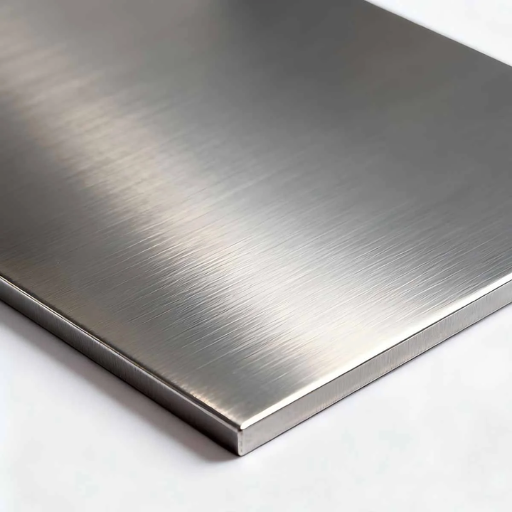
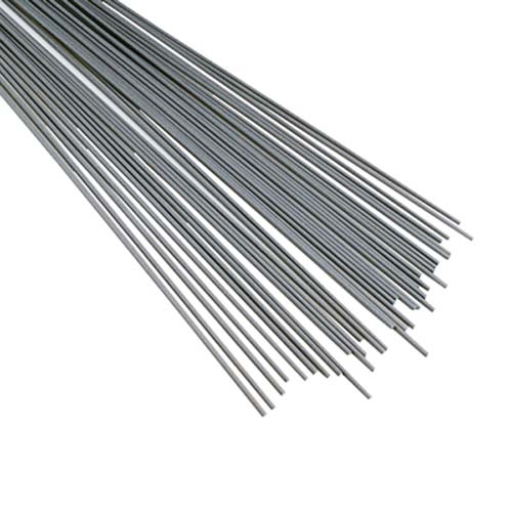
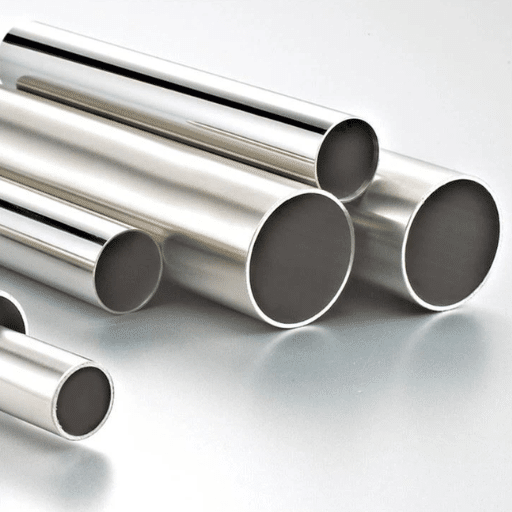
Jiangsu Zhonggongte Metallurgical Technology supplies Inconel 718 round bar, plate, forgings, and wire in AMS 5662, AMS 5663, and AMS 5664 conditions. Our Wuxi facility holds stock in solution-annealed and fully aged conditions, with custom heat treatment cycles available for aerospace, power generation, and oil and gas applications.
What we provide:
- Certified material with full MTR, spectral analysis, and AMS/ASTM compliance documentation
- Multiple conditions from one supplier, reducing qualification time and logistics complexity
- GH4169 equivalent supply for domestic Chinese projects with GB/T certification
- Custom heat treatment including high-temperature solution, HIP coordination, and stress relief
- 24-hour quotation and technical review for critical alloys
Whether you need AMS 5662 bar for machining or AMS 5663 bar ready for final assembly, we can help you specify the correct condition and verify it on delivery. For a fast technical review and quotation, contact our team.
FAQ
What is the standard heat treatment cycle for Inconel 718?
The standard cycle is solution anneal at 954–980°C, followed by double aging at 720°C for 8 hours and 620°C for 8 hours.
What is the difference between AMS 5662 and AMS 5663?
AMS 5662 is solution-annealed only and is used when parts will be machined before aging. AMS 5663 is solution-annealed plus aged and is supplied in the high-strength service condition.
What hardness does Inconel 718 reach after aging?
Fully aged AMS 5663 Inconel 718 typically reaches 36–44 HRC. Solution-annealed AMS 5662 is much softer at 18–22 HRC.
Can Inconel 718 be heat treated after machining?
Yes. Many complex parts are machined in the AMS 5662 condition and then aged to AMS 5663. This reduces tool wear and improves dimensional accuracy.
Is GH4169 heat treatment the same as Inconel 718?
Yes. GH4169 is the Chinese equivalent of Inconel 718 and follows the same solution and aging cycle.
What happens if you over-age Inconel 718?
Over-aging causes γ″ particles to coarsen, which reduces hardness, tensile strength, and fatigue life.
What is the best solution temperature for Inconel 718?
For maximum strength, use 954–980°C. For improved transverse ductility and creep resistance, use 1035–1065°C per AMS 5664.
How does heat treatment affect Inconel 718 machinability?
Solution-annealed material machines much more easily than aged material. Aged 718 at 36–44 HRC is abrasive and requires rigid setups, slow speeds, and coated carbide or ceramic tooling.
Does Inconel 718 need stress relief?
Stress relief is recommended after heavy machining or welding to prevent distortion during subsequent aging or service. For welding-specific guidance, see our Inconel 718 welding article.
Can additively manufactured Inconel 718 use the same heat treatment?
Not always. AM parts often require homogenization above 1,065°C and may benefit from HIP before following a modified aging cycle.
Conclusion
Mastering Inconel 718 heat treatment means more than memorizing temperatures. It means choosing the right AMS condition for your manufacturing route, understanding how solution temperature affects final properties, and verifying that your supplier’s documentation matches the specification.
The standard cycle of solution anneal 954–980°C plus double aging 720°C/8h + 620°C/8h delivers the 36–44 HRC, 1,240 MPa UTS performance that aerospace and power-generation applications demand. But if your part requires extensive machining, start with AMS 5662 and age after machining. If creep and transverse ductility dominate, consider AMS 5664 with its higher solution temperature.
For GH4169 domestic projects, the same cycle applies. For additive manufacturing, qualify a cycle tailored to your build process.
When you are ready to source certified Inconel 718 or GH4169 in the correct condition, Jiangsu Zhonggongte can provide AMS 5662, AMS 5663, and AMS 5664 material with full traceability and a 24-hour quotation. Request your quote today and let our metallurgical team confirm the right heat treatment path for your application.