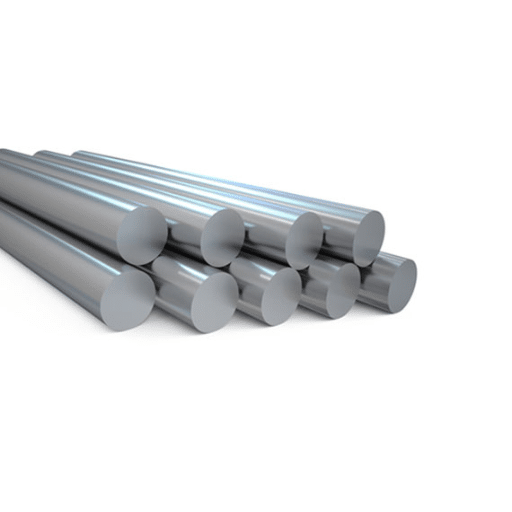
Yes, 17-4PH stainless steel welds reliably with GTAW (TIG), GMAW (MIG), and SMAW (stick) processes using matching ER630 or E630 filler metal, provided you weld in the solution-annealed Condition A and apply post-weld solution treatment and aging to restore full strength and corrosion resistance. This 17-4PH welding guide covers filler selection, preheat and interpass limits, PWHT schedules, defect prevention, and how to source certified 17-4PH base metal and matching consumables.
Introduction
A repair weld on a $40,000 aircraft fitting failed during final heat treatment last year. The shop had welded a 17-4PH component in the H900 (aged) condition, skipped re-solution annealing, and run the standard 482°C aging cycle afterward. During aging, the weld strained and cracked along the heat-affected zone. The part was scrapped, the delivery schedule slipped by three weeks, and the fabricator ate the cost of a replacement forging.
That failure was preventable. 17-4PH (UNS S17400, AISI 630, EN 1.4542, Chinese equivalent 0Cr17Ni4Cu4Nb / SUS630) is a precipitation-hardening martensitic stainless steel with excellent weldability when the right rules are followed. In this guide, you will learn exactly how to weld 17-4PH: which filler metal to use for matching and dissimilar joints, what preheat and interpass limits protect the weld, which post-weld heat treatment restores your target condition, and how to prevent the cracking failures that scrap parts.
Key Takeaways
- Weld 17-4PH in Condition A with matching ER630 wire or E630 electrode; welding aged material invites strain-age cracking.
- Preheat is generally not required for sections under ~100 mm; keep interpass temperature as low as practical (150–177°C ceiling, some datasheets limit 80°C).
- Post-weld heat treatment = solution anneal ~1,040°C / 1 h then age 480–621°C / 4 h, selected by target condition (H900 through H1150).
- Dissimilar joints: 309/309Cb for carbon steel, 309L or nickel fillers for 304/316.
- Full re-solution + aging restores ~1,130 MPa UTS; as-welded deposits reach only ~980 MPa.
If you are weighing 17-4PH against other grades first, our 17-4PH vs 316 comparison covers strength and corrosion trade-offs before you commit to a welding procedure.
Is 17-4PH Weldable? Weldability Overview

Yes. 17-4PH has excellent weldability and is generally not crack-sensitive because its maximum carbon content of 0.07% keeps the weld metal and heat-affected zone from forming brittle untempered martensite under normal procedures.
The alloy derives its strength from precipitation hardening, not carbon. Copper-rich precipitates form during aging and dissolve back into solution when the metal is heated above the solution temperature. A weld deposit cools fast enough that precipitation essentially does not occur in the as-welded condition, so the weld metal behaves like solution-annealed base material. That is why welding is done in Condition A rather than in an aged condition.
You can join 17-4PH with virtually every arc process, including:
- GTAW (TIG): The most common and most controllable process for 17-4PH, run DC electrode negative with 100% argon shielding.
- GMAW (MIG): Productive for thicker sections, run DC electrode positive with spray transfer.
- SMAW (stick): Simple and portable, using an E630 basic-coated electrode on DC+.
- Resistance, laser, and electron beam processes: Viable, with weld current and heat input tightly controlled.
One limitation to note: do not use oxyacetylene welding on 17-4PH. The process delivers excessive heat input and poor atmosphere control for a precipitation-hardening grade.
17-4PH Welding Metallurgy: Why Condition Matters
Understanding why condition matters prevents the most expensive welding mistakes. 17-4PH transforms to martensite at Ms ≈ 132°C and Mf ≈ 32°C on cooling. The practical consequences for welding are:
- HAZ softening: The heat of welding dissolves the fine copper precipitates that gave the base metal its strength. An HAZ on aged material becomes softer and weaker than the surrounding metal.
- Martensite formation: High interpass temperatures allow the entire weld to transform to fresh martensite on cooling. The accompanying volume change under restraint can drive quench cracking.
- Strain-age cracking: If you age a weld made on aged or heavily cold-worked material without re-solution treatment, the precipitation of copper during aging can crack the weld and HAZ under residual stress.
This is why every credible 17-4PH heat treatment guide tells you to solution-treat before welding and to re-solution and age after welding.
17-4PH Filler Metal Selection
The right filler metal depends on whether the weld must match base-metal strength, whether the joint is dissimilar, and how the weldment will be heat treated.
Matching Fillers: ER630 and E630
The only precipitation-hardening stainless filler metal in AWS specifications is the 630 family. Use:
- ER630 bare wire (AWS A5.9, UNS S17480, AMS 5825) for GTAW and GMAW.
- E630 covered electrode (AWS A5.4) for SMAW.
ER630 weld deposits respond to aging just like 17-4PH base metal, which is what makes full property restoration possible. The AWS A5.9 classification requires this chemistry:
| Element | ER630 Composition (AWS A5.9, wt%) |
|---|---|
| Carbon | 0.05 max |
| Chromium | 16.00–16.75 |
| Nickel | 4.50–5.00 |
| Copper | 3.25–4.00 |
| Manganese | 0.25–0.75 |
| Silicon | 0.75 max |
| Molybdenum | 0.75 max |
| Niobium + Tantalum | 0.15–0.30 |
| Phosphorus / Sulfur | 0.03 max each |
In the as-welded condition, ER630 deposits run roughly 135–150 ksi (930–1,035 MPa) tensile strength. After a full solution-and-age cycle they exceed 160 ksi (1,100 MPa), so matching fillers are the correct choice whenever the weld must carry base-metal loads.
Non-Matching Fillers
When weld strength does not need to match the base metal, austenitic fillers simplify heat treatment:
- 308L (ER308 / E308): Acceptable for lower-strength, non-critical welds and general fabrication. No aging response, so no PWHT is required if the design allows the softer deposit.
Dissimilar Joint Fillers
For mixed-metal joints, match the filler to the more demanding side of the joint:
| Joint | Recommended Filler | Notes |
|---|---|---|
| 17-4PH to 17-4PH | ER630 / E630 | Matching strength and aging response |
| 17-4PH to carbon / low-alloy steel | 309, 309Cb (E/ER309) | High ferrite resists dilution cracks |
| 17-4PH to 304L / 316L | 309L, ENiCrFe-2, ERNiCr-3 | 309L preferred for most combinations |
| 17-4PH to 15-5PH | ER630 (or 15-5PH equivalent) | Same PH family, similar aging |
When joining 17-4PH to carbon steel, keep dilution low. Avoid weaving, use a short arc, and consider a buttering pass with 309 on the carbon-steel side before completing the joint. The higher ferrite content of 309 maintains an austenitic weld structure even after significant carbon-steel dilution, which prevents hot cracking.
Welding Processes for 17-4PH

Every successful 17-4PH welding project starts with choosing the right process for the section thickness and service condition.
GTAW (TIG)
GTAW is the preferred process for 17-4PH because it gives precise heat-input control and the cleanest atmosphere protection.
- Polarity: DC electrode negative.
- Shielding gas: 100% argon. Back-purge the root on pipes and tubes to prevent root cracking.
- Tungsten: 2% thoriated or lanthanated.
- Technique: Stringer beads, not weaves. Low amperage keeps dilution into the parent metal minimal. A short arc minimizes oxidation, chromium loss, and nitrogen pickup.
GMAW (MIG)
GMAW is efficient for thicker sections. Run DC electrode positive with spray transfer and an argon-based shielding mix. Because GMAW deposits more heat, watch interpass temperature carefully and use stringer beads.
SMAW (Stick)
SMAW with an E630 basic-coated electrode (DC+) is the field-repair workhorse. Keep the electrode dry (re-dry per the manufacturer’s data sheet, typically 250–350°C for 1–2 hours) to avoid hydrogen pickup, use short arcs, and keep amperage at the low end of the range.
Other Processes
Laser beam and electron beam welding produce narrow, low-heat welds with minimal HAZ. For thin-gauge resistance spot welding, research on 0.3–0.66 mm 17-4PH shows that weld current is the dominant variable: roughly 5 kA at 300 ms produces a sound ~4.65 mm nugget, while current above 6 kA causes cracking and expulsion and below 4 kA leaves incomplete fusion.
17-4PH Welding: Preheat and Interpass Temperature
The most conflicting guidance in the industry comes from preheat and interpass settings, so here is the consensus that qualified procedures actually support:
| Situation | Preheat | Interpass Limit |
|---|---|---|
| Sections under ~100 mm, low restraint | None required | Keep as low as practical |
| Thick sections (>25 mm), high restraint | ~100°C recommended | ≤150–177°C (300–350°F) |
| Severe restraint/repair of aged parts | 100–150°C, up to ~200°F in some procedures | Keep as low as possible |
| Some consumable data sheets | None | Max 80°C (176°F) |
The rule to remember: preheat is rarely required, and interpass temperature must stay low. If the entire weld transforms to martensite during cooling, the volume change under restraint can cause quench cracking. When a qualified WPS specifies a preheat, follow it; when it does not, adding 100°C for a thick, heavily restrained joint is a reasonable safeguard, and 150–200°C preheat appears in some consumable data sheets specifically to avoid weld cracking.
17-4PH Post-Weld Heat Treatment (PWHT)
PWHT is what restores 17-4PH welds to specification. Without it, the HAZ stays soft, and the joint will not meet tensile or hardness requirements.
The Two-Stage Sequence
| Stage | Temperature | Time | Cooling |
|---|---|---|---|
| Solution anneal | ~1,020–1,070°C (typically 1,040 ± 10°C) | 1 hour | Air cool |
| Aging (precipitation hardening) | 480–621°C by target condition | 4 hours | Air cool |
Choosing the Aging Temperature
| Aging Temp | Resulting Condition | Approx. Hardness | Character |
|---|---|---|---|
| ~482°C | H900-type | 40–47 HRC / ~440 HV5 | Maximum strength |
| ~550°C | Between H900 and H1100 | ~360–380 HV | Best strength-toughness balance, fine uniform precipitates |
| ~621°C | H1150-type | 28–37 HRC / ~330–340 HV | Overaged, maximum toughness |
Aging at ~550°C is a notable sweet spot: research on laser-welded 17-4PH shows it promotes fine, uniform copper precipitation that suppresses localized HAZ softening and yields excellent tensile properties. Aging at ~621°C produces the overaged H1150 condition favored where toughness matters more than peak hardness. See our 17-4PH hardness by condition article for the full HRC range by heat treatment.
Full Re-Solution vs. Direct Aging
For critical welds, always re-solution anneal before aging. Direct aging after welding is sometimes acceptable for non-critical repairs on material welded in Condition A, but it will not homogenize the microstructure across the weld and HAZ. The Bhaduri et al. study on optimized PWHT for 17-4PH weldments concluded that welding in Condition A or H1150 followed by post-weld heat treatment to the desired H-condition gives the most reliable results.
NACE MR0175 and Sour Service
For oil and gas components in sour service, the default is the H1150D double-aged condition (two cycles of 4 hours at 621°C, maximum ~33 HRC) per NACE MR0175 / ISO 15156. Correct post-weld heat treatment restores the weldment’s sulfide stress corrosion resistance to base-metal levels, which is essential when the weld is going into H₂S service.
Welding 17-4PH to Dissimilar Metals
Dissimilar joints with 17-4PH are common in fabricated assemblies: a 17-4PH shaft mated to a carbon-steel coupling, or a PH valve body welded to a 316L piping spool.
17-4PH to carbon or low-alloy steel: Use 309 or 309Cb filler. The weld becomes diluted with carbon-steel material, and 309’s high chromium and nickel maintain an austenitic structure that resists hot cracking. Grind back at least 12 mm from the joint and clean with solvent before welding; phosphorus and sulfur contamination is the classic cause of hot cracks on this joint.
17-4PH to 304L or 316L: Use 309L, ENiCrFe-2, or ERNiCr-3. 309L is generally preferred for 17-4PH-to-304L combinations. Matching 630 filler is a poor choice here because its low ferrite in a highly diluted austenitic joint can form a brittle microstructure.
17-4PH to 15-5PH: Both are precipitation-hardening grades with compatible aging response, so matching 630-class filler and a standard solution-and-age cycle work well. Compare the two grades in our 15-5PH vs 17-4PH comparison article before specifying the joint.
Watch thermal expansion mismatch on every dissimilar joint. Stainless steel expands more and conducts heat roughly half as well as carbon steel, which causes warping, misalignment, and cracking under restraint. Use modest heat input, avoid highly restrained configurations, and control cooling.
Cracking, Defects & How to Prevent Them
17-4PH is one of the easier stainless steels to weld, but real repair failures still occur. The main defect modes:
| Defect | Cause | Prevention |
|---|---|---|
| Hot cracking along fusion line | High restraint, sulfur/trace contamination, excessive dilution | Reduce restraint, clean surfaces, avoid weaving, use 309 for dissimilar joints |
| Delayed cold cracking | Brittle untempered martensite in weld/HAZ | Weld Condition A, control heat input, keep interpass low |
| Strain-age cracking during PWHT | Aging aged or cold-worked material without re-solution | Re-solution anneal before aging; avoid restraint |
| Porosity | Contamination, moisture in electrode | Clean joint, dry E630 electrodes, back-purge roots |
| Root cracking | Poor penetration, oxidation | Back purge, proper root gap, stringer beads |
| Quench cracking | High interpass, full martensite transformation | Keep interpass ≤150–177°C, cool between passes |
Contamination is the silent killer. One documented failure involved a fitter who cleaned a 17-4PH joint with a wire brush previously used on galvanized steel. The residual zinc and sulfur created low-melting-point intermetallics in the weld pool and produced a hot crack along the fusion line. Use dedicated stainless-steel tools and brushes, and clean with acetone or another suitable solvent immediately before welding.
Repair Welding 17-4PH
Repair welding an aged or service-exposed part is a different situation from welding fresh Condition A stock, and it needs its own procedure.
A documented procedure for a forged 17-4PH component (32–35 HRC, in service about 10 years) went like this:
- Machine a clean groove at the defect, fully removing the crack.
- Preheat to ~200°F (~93°C).
- Weld with ER630 filler, keeping amperage low and using stringer beads with minimal parent-metal dissolution.
- Post-weld heat treat at ~1,150°F (~621°C) for 4 hours, air cool, which is the H1150 aging cycle.
The part returned to service without rejection. The two rules that make repairs like this work: remove every trace of the defect before welding, and back-purge the weld to prevent root cracking. Experienced welders also warn that 17-4PH does not tolerate sustained heat, so keep the heat input and amperage down and add filler rather than fusing parent metal.
For critical aerospace or nuclear repairs, involve a qualified welding engineer and follow the applicable WPS. The general stainless steel welding guide covers the process fundamentals every stainless weld relies on.
Sourcing 17-4PH for Welding Applications

Your welding procedure is only as good as the material you feed it. Two things have to be certified: the base metal and the filler metal.
Base metal: Buy 17-4PH in Condition A (solution annealed) unless your procedure calls for pre-aged stock. Specify the UNS number (S17400), the product standard (ASTM A564 for bar, ASTM A693 for plate), and the required H-condition you will age to after welding. Every shipment should carry a material test report with full elemental chemistry and mechanical verification. As a specialized alloy manufacturer, Zhonggongte supplies 17-4PH stainless steel bar, plate, and forgings with mill test reports, spectral analysis, and EN 10204 3.1/3.2 certification.
Filler metal: ER630 wire must meet AWS A5.9 / ASME SFA 5.9 and, for aerospace, AMS 5825. Request the mill certificate and confirm the lot chemistry against the classification limits. The Chinese wire standard YB/T 5092 (H0Cr17Ni4Cu4Nb) covers the same grade for domestic projects.
RFQ checklist for a welding project:
- Base metal: 17-4PH (UNS S17400), Condition A, bar/plate/forging form, ASTM A564/A693
- Target H-condition after PWHT (H900, H1025, H1075, H1100, H1150, or H1150D)
- Filler: ER630 (AWS A5.9 / AMS 5825) or E630 (AWS A5.4), with mill certificate
- Documentation: MTR, spectral report, EN 10204 3.1/3.2, NDT where required
- Delivery: confirmed lead time and 24-hour logistics support
One code caveat worth flagging: welded 17-4PH is generally not accepted by ASME code for pressure-vessel service. If your component is code-stamped, verify the applicable code requirements before you design a welded joint in this grade.
FAQ: 17-4PH Welding
Can 17-4PH be welded?
Yes. 17-4PH has excellent weldability using GTAW, GMAW, and SMAW. Its low carbon content (0.07% max) makes it one of the easier stainless steels to weld, with no preheat required for most sections.
Does 17-4PH need post-weld heat treatment?
For critical welds, yes. Solution anneal at ~1,040°C for 1 hour, then age at 480–621°C for 4 hours to restore strength and corrosion resistance. As-welded deposits reach only about 980 MPa UTS; full re-solution and aging restores roughly 1,130 MPa.
What filler metal do you use for 17-4PH?
Use matching ER630 wire (AWS A5.9 / AMS 5825) for TIG and MIG, or E630 electrode (AWS A5.4) for stick welding. For dissimilar joints use 309/309Cb to carbon steel and 309L or nickel fillers to 304/316.
What is the preheat for 17-4PH?
No preheat is generally required for sections under about 100 mm. For thick, highly restrained joints, 100°C preheat reduces cracking risk. Some consumable data sheets specify 150–200°C for crack avoidance.
What is the maximum interpass temperature for 17-4PH?
Keep interpass as low as practical. A commonly qualified limit is 177°C (350°F), while some consumable data sheets restrict it to 80°C (176°F). High interpass temperatures can transform the whole weld to martensite and cause quench cracking.
Can you weld 17-4PH in the H1150 condition?
Yes, and H1150 is the recommended condition for welding overaged material because it is the softest and toughest standard condition. Full re-solution and re-aging is still preferred for critical welds, and H1150D double-aging is the default for NACE MR0175 sour service.
Is 17-4PH difficult to weld to carbon steel?
It requires care. Use 309 or 309Cb filler to resist dilution cracking, minimize heat input, avoid weaving, and clean both surfaces thoroughly. Thermal expansion mismatch between stainless and carbon steel makes restraint control important.
Conclusion
17-4PH welding does not have to be risky. The failures that scrap parts come from predictable causes: welding aged material, contaminating the joint, running interpass temperatures too high, or skipping post-weld heat treatment.
Here is a proven 17-4PH welding procedure that works:
- Weld in Condition A with matching ER630/E630 filler, or use 309-class filler for dissimilar joints.
- Keep heat input low with stringer beads and a short arc. No preheat for thin sections; ~100°C only for thick, restrained joints.
- Limit interpass temperature to 150–177°C (or 80°C per some datasheets).
- Solution anneal and age after welding to your target H-condition, and use H1150D for NACE MR0175 sour service.
- Verify your material. Condition A base metal and ER630 wire with MTRs, AMS 5825 certification, and full traceability are the foundation of a qualified weld.
Need certified 17-4PH base metal, matching ER630 welding wire, or help specifying a condition for your weldment? Our metallurgical engineers can confirm the right grade, form, and documentation for your project. Submit your RFQ today, and receive a competitive, certified quotation within 24 hours.
For more on the grade behind the weld, start with our 17-4PH stainless steel guide, and see the 17-4PH machining guide as your project moves through fabrication.