17-4PH and 304 stainless steel serve fundamentally different jobs: 17-4PH (UNS S17400) is a precipitation-hardening martensitic grade that reaches up to 1,310 MPa tensile strength in the H900 condition, while 304 (UNS S30400) is an austenitic grade that delivers roughly 515 MPa but wins on corrosion resistance, weldability, and cost. Choose 17-4PH when you need high strength and hardness in a load-bearing part; choose 304 when corrosion resistance, formability, and budget matter more than raw strength.
Most “which stainless steel” specification mistakes trace back to one misunderstanding: treating every grade that resists rust as interchangeable. A fastener that worked at 70 HRB in one application will fail fast at 40 HRC demand in another. This guide compares 17-4PH vs 304 across composition, mechanical properties, corrosion behavior, fabrication, magnetism, cost, and real applications, then gives you a decision matrix and a sourcing checklist so you can specify the right grade with confidence.
Key Takeaways
- 17-4PH (UNS S17400 / AISI 630) delivers 2.5x the tensile strength of 304, reaching ~1,310 MPa in the H900 condition vs ~515 MPa for annealed 304.
- 304 is the better all-round choice for corrosion resistance, weldability, and formability; 17-4PH is the choice when strength and hardness drive the design.
- 17-4PH’s properties depend entirely on heat treatment condition (H900, H1025, H1150); 304 cannot be hardened by heat treatment at all.
- 17-4PH is magnetic; 304 is essentially non-magnetic in the annealed condition.
- 17-4PH typically costs 1.5x to 3x more per kilogram than 304, so it is only economical where the strength premium justifies the price.
- Chinese equivalents: 17-4PH = 0Cr17Ni4Cu4Nb / 05Cr17Ni4Cu4Nb (SUS630); 304 = 0Cr18Ni9 / 06Cr19Ni10 (SUS304).
What Is 17-4PH Stainless Steel?

17-4PH is a precipitation-hardening martensitic stainless steel. The “17” refers to roughly 17% chromium, and the “4” to roughly 4% nickel, with copper and niobium added to enable the precipitation-hardening mechanism. It is known by several designations: AISI 630, UNS S17400, DIN 1.4542 (X5CrNiCuNb16-4), JIS SUS630, and the Chinese GB/T 1220 grades 0Cr17Ni4Cu4Nb (older designation) or 05Cr17Ni4Cu4Nb (current designation).
Unlike austenitic grades, 17-4PH starts as a soft, machinable martensitic structure in the solution-annealed Condition A, then reaches full strength through a simple aging heat treatment. Aging at roughly 480°C (H900) precipitates copper-rich phases that harden the matrix to 40-47 HRC. This combination of high strength and moderate corrosion resistance is why 17-4PH dominates aerospace fasteners, valve stems, pump shafts, and turbine components. Our complete 17-4PH stainless steel guide covers the grade’s full background, and our 17-4PH properties guide provides the complete property tables.
What Is 304 Stainless Steel?
304 is the most widely used stainless steel in the world. It is an austenitic grade containing 18-20% chromium and 8-10.5% nickel, designated UNS S30400, AISI 304, EN 1.4301, JIS SUS304, and GB/T 0Cr18Ni9 (older) or 06Cr19Ni10 (current). Its austenitic microstructure gives it excellent toughness, formability, and weldability, plus good general-purpose corrosion resistance.
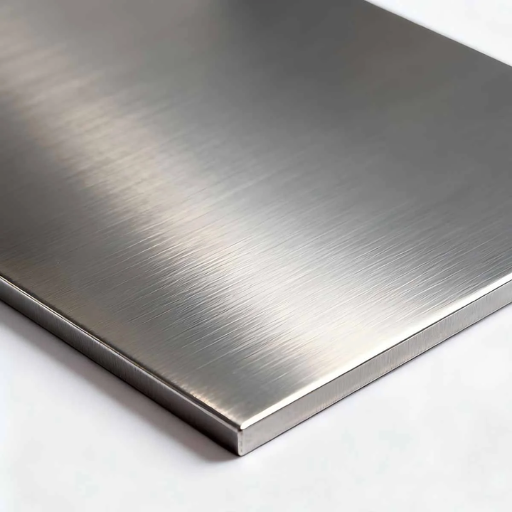
304 cannot be hardened by heat treatment. Its strength comes only from cold working, and any strength gained through cold work is lost when the material is welded or heated above the recrystallization temperature. In the annealed condition, 304 offers roughly 515 MPa tensile and 205 MPa yield, with elongation of 40% or more, which makes it forgiving to form, bend, and weld. For sheet and plate applications, see our 304 stainless steel sheet and 304 stainless steel bar product pages for the available forms and dimensions.
17-4PH vs 304: Chemical Composition
The composition of the two grades explains nearly every performance difference. Where 304 uses higher chromium and nickel for corrosion resistance and austenitic stability, 17-4PH trades some chromium and nickel for copper and niobium, the elements that make precipitation hardening possible.
| Element | 17-4PH (UNS S17400) | 304 (UNS S30400) |
|---|---|---|
| Chromium (Cr) | 15.0-17.5% | 18.0-20.0% |
| Nickel (Ni) | 3.0-5.0% | 8.0-10.5% |
| Copper (Cu) | 3.0-5.0% | None (max 0.75% residual) |
| Niobium (Nb) | 0.15-0.45% | None |
| Carbon (C) | 0.07% max | 0.08% max |
| Manganese (Mn) | 1.00% max | 2.00% max |
| Silicon (Si) | 1.00% max | 0.75% max |
| Molybdenum (Mo) | None | None |
| Phosphorus / Sulfur | 0.04% / 0.03% max | 0.045% / 0.030% max |
Three points matter here. First, 304 carries roughly twice the nickel of 17-4PH, which is a large part of its material cost and its corrosion performance. Second, 17-4PH adds 3-5% copper and 0.15-0.45% niobium, which are absent from 304 and are the enablers of precipitation hardening. Third, neither grade contains molybdenum, which is why both have modest resistance to chloride pitting compared to molybdenum-bearing grades like 316L. If you are evaluating the wider family, our 17-4PH vs 316 comparison explains how the molybdenum-free PH grade stacks up against a molybdenum-bearing austenitic.
17-4PH vs 304: Mechanical Properties
This is where the two grades diverge most sharply. In the peak-aged H900 condition, 17-4PH offers more than double the tensile strength and roughly five times the yield strength of annealed 304. The trade-off is ductility: 304 stretches 40% before breaking, while H900 17-4PH gives you roughly 10-14%.
| Property | 17-4PH H900 | 17-4PH H1025 | 17-4PH H1150 | 304 (Annealed) |
|---|---|---|---|---|
| Tensile Strength | ~1,310 MPa | ~1,060 MPa | ~930 MPa | ~515 MPa |
| Yield Strength (0.2%) | ~1,170 MPa | ~1,000 MPa | ~725 MPa | ~205 MPa |
| Elongation | ~10-14% | ~12% | ~16% | ~40% min |
| Hardness | 40-45 HRC | 33-38 HRC | 28-34 HRC | 70-90 HRB (~20 HRC) |
| Density | ~7.78 g/cm³ | ~7.78 g/cm³ | ~7.78 g/cm³ | ~7.93 g/cm³ |
The three 17-4PH columns show why condition matters. Aging at a lower temperature (H900) maximizes strength and hardness but reduces ductility and toughness. Aging at a higher temperature (H1150) trades some strength for better toughness and stress corrosion resistance. When engineers compare 17-4PH vs 304, they almost always mean the peak-aged material, but the specification on the drawing should name the condition explicitly, or the delivered hardness may vary by 15 points. That is why a 17-4PH vs 304 hardness comparison must name the condition, not just the grade.
304’s value is different: you know exactly what you’re getting in the annealed condition, and you can weld and form it without worrying about heat treatment. When a food plant shaft needs repeated torque resistance or an aerospace fastener needs 190+ ksi, 304 simply cannot get there. When a welded tank needs predictable ductility, 17-4PH is overkill and adds cost.
17-4PH vs 304: Corrosion Resistance

When engineers weigh 17-4PH vs 304 corrosion resistance, 304 offers better all-round performance in most environments. The reasons are compositional: 304’s higher chromium and nickel maintain a more protective passive film, and its fully austenitic structure resists the local anodic paths that PH martensitic grades can develop.
For general atmospheric, freshwater, food, and mild chemical exposure, both grades perform well. The gap appears in chloride service. Neither grade contains molybdenum, so both are susceptible to chloride pitting and stress corrosion cracking (SCC) in hot chloride environments. 304 generally holds up better because of its higher chromium and nickel, while hardened 17-4PH is more prone to SCC, particularly in the high-strength H900 condition. Over-aging 17-4PH to H1150 improves its resistance to stress corrosion, which is why sour-service specifications (NACE MR0175 / ISO 15156) frequently require the H1150 condition for 17-4PH in H₂S environments.
A peer-reviewed study in the Journal of Mining and Metallurgy compared the passive-film corrosion behavior of 304, 15-5PH, and 17-4PH in acid solutions and confirmed that the austenitic grade maintains a more stable passive film than the PH grades under the test conditions. The practical rule for the designer: if the part faces chlorides, humidity, or chemical exposure and does not need extreme strength, choose 304 or a molybdenum-bearing grade. If you must use 17-4PH for strength, specify the appropriate aging condition, account for the corrosion environment, and add protection where needed.
17-4PH vs 304: Heat Treatment & Fabrication
Heat Treatment
The single biggest fabrication difference is heat treatability. 17-4PH is supplied in Condition A and reaches its specified properties through aging, typically 480°C (H900), 550°C (H1025), or 620°C (H1150) for several hours, then air cooling. 304 cannot be strengthened by heat treatment; annealing at 1,010-1,120°C followed by rapid cooling is used only to restore ductility after cold working.
This has practical consequences for the buyer. A 17-4PH bar ordered without a condition specification may arrive at 33-38 HRC when the drawing called for 40+ HRC, or the reverse. Our 17-4PH heat treatment guide details the full aging schedule and the properties each condition produces.
Weldability
304 is one of the easiest stainless steels to weld, form, and fabricate. It needs no preheat, no post-weld heat treatment, and accepts all common processes (GTAW, GMAW, SMAW) with matching 308L or 347 filler. 17-4PH is also weldable and is considered the most weldable of the precipitation-hardening grades, but weld joints in the aged condition lose strength, so the typical procedure is to weld in Condition A and age the assembly afterward. If the part cannot be aged after welding, the weld zone will not reach full strength.
Machinability
304 has a reputation for gummy machining and work hardening, though it is entirely manageable with sharp tools and steady feeds. 17-4PH machines best in the soft Condition A, before aging, which is why most shops order it annealed, machine to finish, then age to the final condition. Aging after machining leaves the part at 40+ HRC and dimensionally stable, with minimal distortion compared to conventional hardened steels.
Formability
There is no contest here. 304 bends, draws, and forms readily in the annealed condition. 17-4PH in Condition A is formable but its higher yield strength and limited ductility make severe forming more difficult, and forming in the aged condition is impractical. When a design needs deep drawing or complex geometry, 304 is the natural choice.
17-4PH vs 304: Magnetic Properties
Magnetism is a simple but frequently decisive difference. 17-4PH is magnetic in all conditions, because its martensitic structure is ferromagnetic. 304 is essentially non-magnetic in the annealed condition, although cold working or welding can induce slight magnetism from deformation martensite.
This matters in applications that are sensitive to magnetic response. If you are building solenoid housings, sensor components, or medical equipment that must not disturb magnetic fields, 304 is the safer default. If you need a stainless component that can be lifted with a magnet or must hold magnetic properties for a specific function, 17-4PH provides them. A surprising number of specification errors trace back to this single property, so confirm it against the drawing before you order.
17-4PH vs 304: Cost Comparison
17-4PH typically costs 1.5x to 3x more per kilogram than 304, depending on form, market, and heat treatment. The premium comes from two sources: the copper and niobium alloy additions, and the aging heat treatment that 304 never requires. One Indian distributor benchmark put 17-4PH at roughly ₹450-700 per kg versus ₹280-400 for SS 304, a gap that widens with smaller diameters and bar forms that carry more processing cost.
The right way to evaluate the cost difference is lifecycle cost, not price per kilogram. A 17-4PH pump shaft that resists deflection and wear can outlast a 304 shaft by several times in the same service, which can make the premium look cheap. Conversely, a welded 304 vessel that performs for decades at a fraction of the material cost makes 17-4PH look expensive. When the strength requirement genuinely exists, 17-4PH often lets you reduce section size and weight, partially offsetting the per-kilogram premium. When it does not, you’re paying for a capability you’ll never use.
17-4PH vs 304: Applications by Industry

Aerospace & Defense
17-4PH is the standard choice for aerospace fasteners, actuator components, landing gear parts, and structural fittings that need high strength with stainless corrosion resistance, usually specified to AMS 5643 or ASTM A564. 304 appears in non-structural ducting, brackets, and hardware where strength demands are modest.
Food Processing & Beverage
304 is the default food-contact grade: corrosion resistant, easy to clean, formable, and non-toxic. 17-4PH enters food plants only in high-wear, high-load parts such as mixing screws, shafts, and valve components where a 304 part would deflect or gall.
Oil & Gas / Offshore
Both grades appear in wellhead and subsea hardware, but 17-4PH is chosen for valve stems, pump shafts, and fasteners that must hold high loads. In sour (H₂S) service, NACE MR0175 requires the H1150 condition. 304 is used for instrumentation, tubing, and general hardware in less demanding service.
Chemical & Petrochemical
304 handles general chemical exposure and is widely used in tanks, piping, and process equipment. 17-4PH appears in pump and valve internals where strength is the limiting factor, with attention to the chloride and acid environment.
Pharmaceutical & Medical
304/304L dominate equipment and instrument housings where cleanliness and corrosion resistance matter. 17-4PH is used in surgical instruments and implantable-device tooling where hardness and edge retention are required.
Marine
Neither grade is ideal for continuous seawater immersion without molybdenum. 304 is acceptable for light coastal and freshwater service; 17-4PH H900 can pit in chloride service, so over-aging or a molybdenum-bearing alternative is preferred for demanding marine parts. For deeper context on the applications, our 17-4PH applications guide breaks down the grade’s use by industry.
How to Choose: Decision Matrix
Use this matrix to shortcut the decision. Match your top priority to the recommended grade, then confirm the environment and fabrication method before specifying.
| If Your Priority Is… | Choose… | Why |
|---|---|---|
| High strength/hardness for load-bearing parts | 17-4PH (specify H900-H1150) | Up to 1,310 MPa tensile, 40+ HRC |
| Corrosion resistance in chloride or chemical service | 304 (or 316L for tougher service) | Higher Cr/Ni passive film, no SCC sensitivity from hardening |
| Weldability and formability | 304 | No preheat, no post-weld aging, easy forming |
| Non-magnetic component | 304 | Non-magnetic in annealed condition |
| Magnetic component | 17-4PH | Martensitic structure is magnetic |
| Lowest material cost | 304 | 1.5x-3x cheaper per kg |
| Edge retention/wear resistance | 17-4PH | 40+ HRC after aging |
| High-temperature continuous service | 304 | Retains usefulness to ~870°C intermittent; 17-4PH loses strength above ~300-400°C |
When in doubt, work backward from the operating environment before you pick the grade. If you share your application, temperature, media, and fabrication method, our metallurgical engineers will confirm the right grade and condition within 24 hours, at no charge.
Sourcing 17-4PH and 304 from China
Buying either grade from a Chinese manufacturer comes down to one word: verification. The two grades look similar in a stockyard photo, but the delivered hardness, composition, and documentation decide whether the part passes inspection.
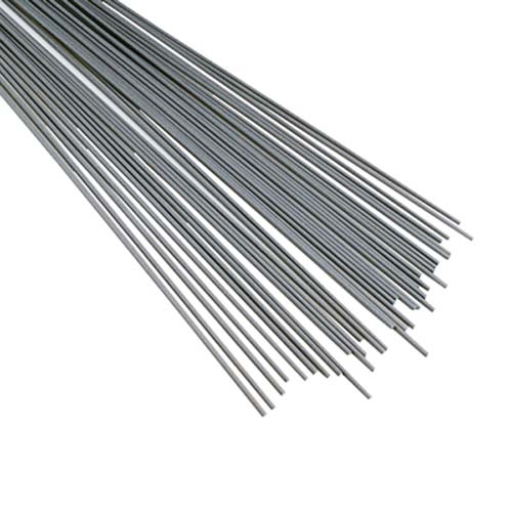
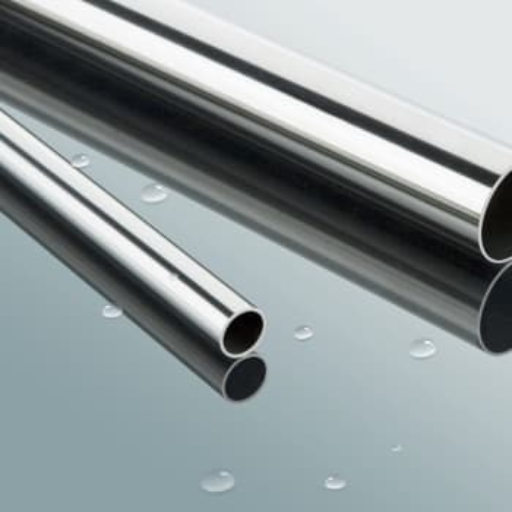
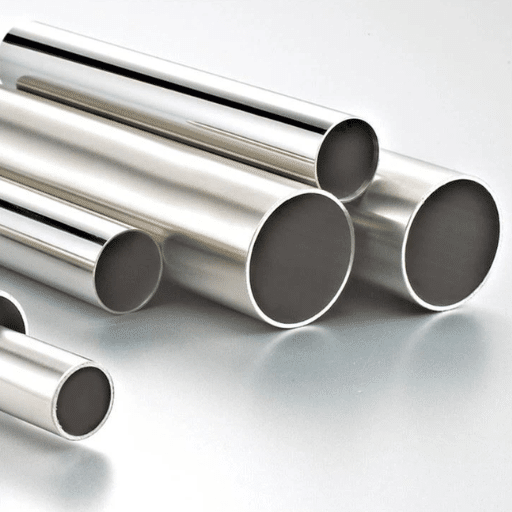
When you send an RFQ, specify all four elements: the grade (17-4PH, also designated AISI 630, per ASTM A564 / GB/T 1220, or 304 per ASTM A240/A276 / GB/T 1220), the condition (Condition A, H900, H1025, or H1150 for 17-4PH; annealed for 304), the form and dimension (plate, sheet, bar, rod, pipe), and the testing required (MTR, spectral analysis, hardness, ultrasonic NDT). Then verify what arrives:
- Confirm the mill test report (MTR) lists the full chemical composition and mechanical properties, with the heat number traceable to the material.
- Verify 17-4PH hardness against the specified condition; a bar labeled H900 that measures 32 HRC is not H900.
- Request EN 10204 3.1 or 3.2 certification for critical orders, which guarantees the material was tested by an independent body.
- Ask for spectral analysis (PMI) to confirm the copper and niobium are actually present in 17-4PH; cheaper substitutes without the hardening elements are the most common counterfeit risk.
At Jiangsu Zhonggongte Metallurgical Technology Co., Ltd., every 17-4PH and 304 order ships with a material test report from our in-house direct-reading spectrometer, plus hardness and mechanical verification from our testing laboratory. We supply both grades in plate, sheet, bar, rod, pipe, and forged forms, with in-house heat treatment for 17-4PH conditions and ASTM/GB/JIS compliance. Our stainless steel product range covers the full family, and our about page details our manufacturing and testing capabilities. If your RFQ is ready, request a quotation, and our engineers will confirm availability, pricing, and delivery within 24 hours.
17-4PH vs 304 FAQ
Is 17-4PH stronger than 304?
Yes. In the H900 condition, 17-4PH reaches roughly 1,310 MPa tensile strength versus about 515 MPa for annealed 304, and its yield strength is roughly five times higher. 17-4PH is the stronger grade in every aged condition.
Is 17-4PH magnetic?
Yes. 17-4PH is magnetic in all conditions because of its martensitic microstructure. 304 is essentially non-magnetic in the annealed condition.
Which is better for corrosion resistance, 17-4PH or 304?
304 has better all-round corrosion resistance due to its higher chromium and nickel content. 17-4PH is more prone to chloride pitting and stress corrosion cracking, particularly in the peak-aged H900 condition.
Can 17-4PH be hardened by heat treatment?
Yes. 17-4PH is precipitation hardened by aging at temperatures from roughly 480°C (H900) to 620°C (H1150). 304 cannot be hardened by heat treatment; only cold working increases its strength.
What is the Chinese equivalent of 17-4PH?
The Chinese equivalent is 0Cr17Ni4Cu4Nb (older GB/T 1220 designation) or 05Cr17Ni4Cu4Nb (current), which matches JIS SUS630 and AISI 630. The Chinese equivalent of 304 is 0Cr18Ni9 or 06Cr19Ni10 (SUS304).
Is 17-4PH weldable?
Yes. 17-4PH is the most weldable precipitation-hardening stainless steel, but the assembly is typically welded in Condition A and aged afterward to restore strength. 304 welds easily with no post-weld heat treatment.
How much more does 17-4PH cost than 304?
17-4PH typically costs 1.5x to 3x more per kilogram than 304, driven by copper and niobium alloy additions and the required aging heat treatment.
Which grade should I use for a shaft?
For a high-torque, high-wear shaft, 17-4PH H900 or H1025 is the better choice. For a light-service shaft in a corrosive or food environment, 304 is sufficient and more economical.
Does 17-4PH work for marine applications?
17-4PH can be used for marine hardware, but in continuous chloride service it should be over-aged (H1150) and its SCC risk assessed. For seawater immersion, molybdenum-bearing grades such as 316L or duplex 2205 are usually preferred.
Can I order both grades from the same supplier?
Yes. At Jiangsu Zhonggongte, we stock and supply both 17-4PH and 304 in multiple forms, so a mixed RFQ is handled as a single order with one set of certified documentation.
Conclusion
The 17-4PH vs 304 decision is really a decision about the primary failure mode of your component. If the part will fail by bending, wearing, or yielding under load, 17-4PH in the right aging condition is the answer, and the cost premium pays for itself. If the part will fail by corrosion, and strength is secondary, 304 is the reliable, economical choice that fabricates without fuss. Name the condition, verify the certificate, and match the grade to the environment, and you will rarely go wrong with either.
If your drawing names a grade but you are unsure it is right for the service, or you need certified 17-4PH or 304 with full material test reports and competitive lead times, submit your RFQ to our technical team and we will respond within 24 hours with availability, pricing, and a delivery schedule. Our engineers are an extension of your engineering department, and they will help you confirm the grade, condition, and form before you commit a single order to production.
This article is part of our stainless steel comparison series. For related reading, see our 17-4PH vs 316 stainless steel guide, our 15-5PH vs 17-4PH comparison, and the broader stainless steel product family.