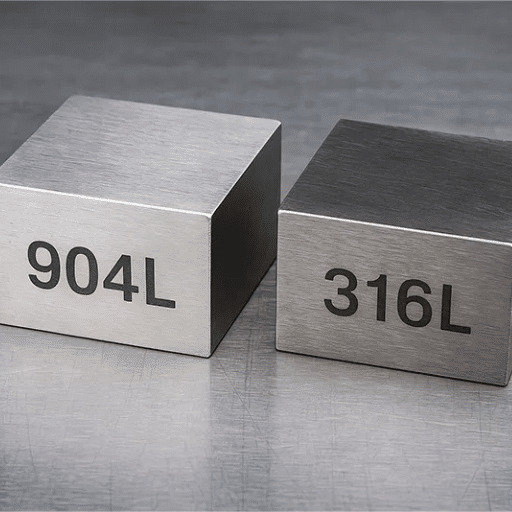
904L (UNS N08904) resists more corrosive environments than 316L (UNS S31603) and costs roughly 1.8 to 5 times as much, depending on product form. It’s the better choice only where the duty falls outside 316L’s corrosion envelope. Where 316L still works, 904L is over-specification, not insurance.
The specification includes a 316L line and the quotation includes a 904L line, and the gap between them is roughly the cost of the rest of the fabrication. The engineer who wrote the spec now has to justify, in writing, whether that upgrade is necessary or a premium paid for nothing.
The answer isn’t “904L is better.” It’s a boundary: a combination of acid concentration, temperature, chloride level and stress above which 316L stops working, and below which 904L is money you didn’t need to spend. The industry association BSSA records 904L as developed for sulfuric acid service. This guide draws that boundary and prices the upgrade by product form. For the full profile, see our complete 904L stainless steel guide.
Key Takeaways
- 904L vs 316L is a boundary question, not a ranking. PREN is about 35 against 316L’s roughly 24, and in mid-concentration sulfuric acid the two sit on opposite sides of the 0.1 mm/yr design threshold.
- In 20% sulfuric acid at 60 °C, 316L corrodes at more than 1.2 mm/yr while 904L stays under 0.1 mm/yr. That’s a cliff, not a gradient.
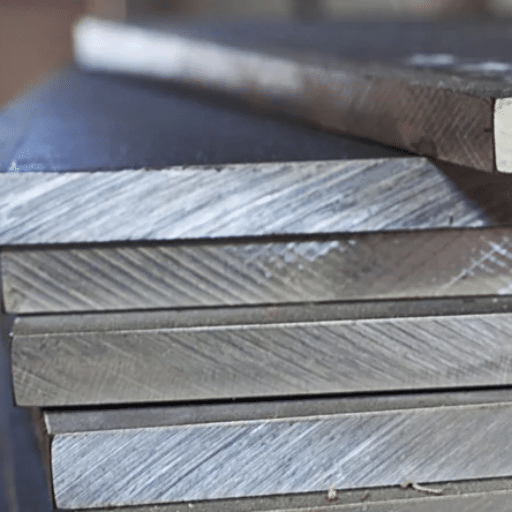
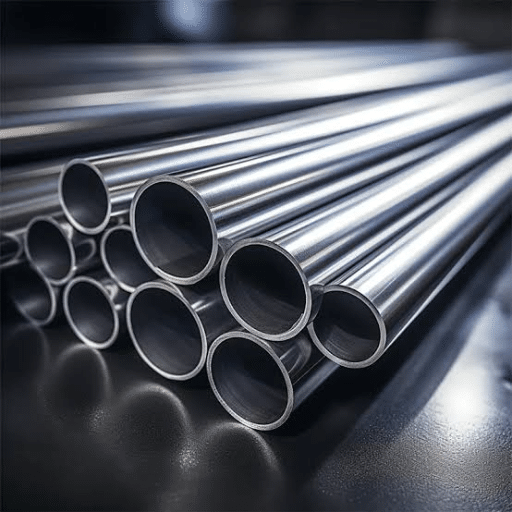
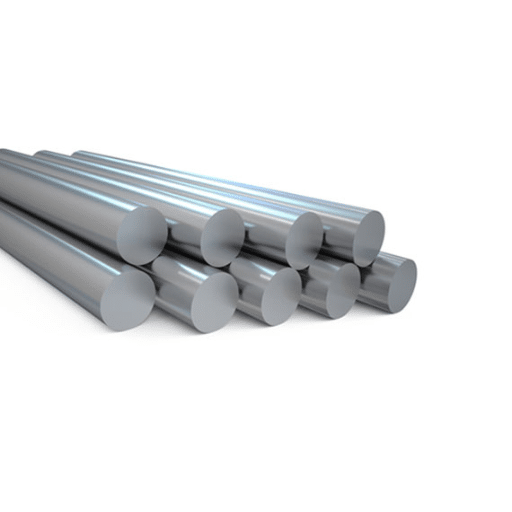
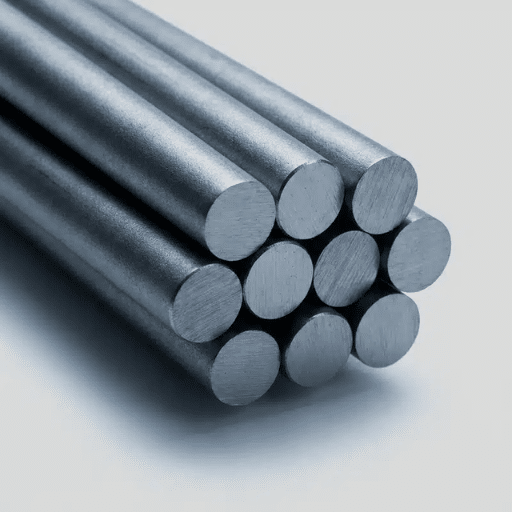
- The cost multiple is form-dependent: roughly 1.8–2.2× for plate and sheet, 2.3–2.4× for bar, 2.5–3× for pipe, and 3–5× for finished parts.
- 904L is not a seawater grade: PREN ~35 sits below the ≥40 threshold for ambient seawater service. Warm or stagnant seawater needs super duplex 2507 or a 6Mo grade.
- Where 316L’s envelope covers the worst credible operating condition with margin, 904L is over-specification. We sell both grades and will say so.
Direct Answer: Is 904L Better Than 316L?

904L resists more corrosive environments than 316L and costs roughly two to three times as much as a starting point. It’s only “better” where the duty falls outside 316L’s envelope: mid-concentration sulfuric acid, warm chlorides, higher stress corrosion cracking risk. Inside that envelope, it’s over-specification, not insurance.
| Property | 316L (S31603) | 904L (N08904) |
|---|---|---|
| EN designation | 1.4404 | 1.4539 |
| Chromium | 16.0–18.0% | 19.0–23.0% |
| Nickel | 10.0–14.0% | 23.0–28.0% |
| Molybdenum | 2.0–3.0% | 4.0–5.0% |
| Copper | Not specified | 1.0–2.0% |
| Carbon, max | 0.030% | 0.020% |
| PREN, typical | ~24 | ~35 |
| Yield strength, min | ≥170 MPa | ≥220 MPa |
| Tensile strength, min | ≥485 MPa | ≥490 MPa |
| Relative material cost | 1.0× | 1.8–5× by product form |
| Best-fit environment | General chemical, food, pharma, architectural, cryogenic | Sulfuric and phosphoric acid, organic acids, warm chloride, acid-contaminated cooling water |
Picture a project engineer, Daniel, at a specialty chemical plant in Rotterdam. A 316L tank holding 20% sulfuric acid at 60 °C came out of its first inspection with wall loss above 1.2 mm per year. The replacement was 904L, and the rate fell below 0.1 mm per year in the same duty. The environment had been sitting outside the envelope 316L was quoted against.
Not sure which side of the boundary your duty sits on? Send your concentration, temperature and chloride level, and our metallurgical team will reply with a grade recommendation rather than a catalogue. Send your operating conditions
904L vs 316L Chemical Composition
| Element | 316L (S31603) | 904L (N08904) | What the difference buys |
|---|---|---|---|
| Chromium (Cr) | 16.0–18.0% | 19.0–23.0% | Passive film stability; contributes to PREN |
| Nickel (Ni) | 10.0–14.0% | 23.0–28.0% | Austenite stability and chloride SCC resistance, the largest single lever |
| Molybdenum (Mo) | 2.0–3.0% | 4.0–5.0% | Pitting and crevice resistance; strongly weighted in PREN |
| Copper (Cu) | Not specified | 1.0–2.0% | Reducing-acid resistance in sulfuric acid, which 316L cannot substitute |
| Carbon (C) | ≤0.030% | ≤0.020% | Both low-carbon grades; neither sensitises in normal welding |
| Manganese (Mn) | ≤2.00% | ≤2.00% | Comparable |
| Silicon (Si) | ≤0.75% | ≤1.00% | Comparable |
Copper is the line to circle. Nickel and molybdenum raise PREN, but they improve performance in directions 316L already handles. Copper is what 904L deploys against reducing acids such as sulfuric and phosphoric, and 316L’s chemistry cannot reach that behaviour, which is why the sulfuric-acid gap is categorically wider than the PREN gap suggests.
PREN: 316L Around 24, 904L Around 35
PREN = Cr + 3.3(Mo) + 16(N)A screening index rather than a guarantee.
On mid-spec 316L (Cr 17.0, Mo 2.5, N 0.05): 17.0 + 3.3 × 2.5 + 16 × 0.05 = 26.1. On minimum-spec 316L (Cr 16.0, Mo 2.0, N 0.03): 16.0 + 3.3 × 2.0 + 16 × 0.03 = 23.1. Convention publishes 316L at about 24, with a legitimate range of roughly 23 to 26 across chemistries that meet the specification. On 904L (Cr 20, Mo 4.5, N 0.05): 20 + 3.3 × 4.5 + 16 × 0.05 = 35.7.
Read that gap carefully: PREN ranks pitting resistance in chlorides, weighting molybdenum and nitrogen heavily, and says nothing directly about reducing acids, which is where these two grades diverge most. Use it to shortlist; use environment-specific data to decide.
On a Chinese MTR the designations are 316L = 022Cr17Ni12Mo2 (S31603) and 904L = 015Cr21Ni26Mo5Cu2 (S31782) under GB/T 20878.
904L vs 316L Mechanical and Physical Properties
| Property | 316L (S31603) | 904L (N08904) |
|---|---|---|
| Tensile strength, min | ≥485 MPa | ≥490 MPa (typical 490–690 MPa) |
| Yield strength (Rp0.2), min | ≥170 MPa (typical 200–205 MPa) | ≥220 MPa |
| Elongation, min | ≥40% | ≥35% |
| Hardness, max | ≤95 HRB | ≤90 HRB |
| Density | ~7.99 g/cm³ | 7.95–8.00 g/cm³ |
| Elastic modulus | ~193 GPa | ~190–195 GPa |
| Thermal conductivity at 100 °C | ~16.3 W/m·K | ~13 W/m·K |
| Melting range | ~1370–1400 °C | ~1300–1390 °C |
| Magnetic response, annealed | Non-magnetic | Non-magnetic |
The Honest Read: This Is Not a Strength Decision
904L’s minimum yield is about 30% higher, which sounds meaningful until you consider what 220 MPa is. Both grades are low-strength austenitics.
To reduce wall thickness or carry a structural load, the answer is duplex 2205 at roughly 450 MPa yield for less money than 904L. Nobody should pay a 904L premium for mechanical properties; this is a corrosion decision. The substitution is dimensionally easy, since density and strength are close and re-rating is usually unnecessary.
Corrosion Resistance: Where 316L Stops and 904L Starts
Sulfuric Acid: A Boundary, Not a Gradient
Supplier pages say “904L is better in sulfuric acid” and stop. What you need is the concentration and temperature at which 316L crosses the 0.1 mm/yr line that most specifications use to separate acceptable from unacceptable general corrosion. The figures below come from the 316L isocorrosion envelope published in the Sandvik material datasheets.
| Medium | Temperature at which 316L reaches 0.1 mm/yr | Verdict |
|---|---|---|
| 10% H₂SO₄ | ~50 °C | Usable below this, with margin |
| 10% H₂SO₄ + 2,000 ppm Cl⁻ | ~25 °C | Chloride cuts the limit dramatically |
| 60% H₂SO₄ | ~12 °C | Effectively unusable at any real temperature |
| 96% H₂SO₄ | ~45 °C | Usable again at high concentration, a counterintuitive result |
| 30–40% H₂SO₄ | Corrosion peak at 60–70 °C | The worst band, and the one 904L exists to cover |
The peak is the point. 316L’s corrosion in sulfuric acid isn’t worst at the highest concentration; it peaks in the mid-concentration band around 30–40% at 60–70 °C. Peer-reviewed work published in Corrosion Science in 2024 examines temperature, concentration, and flow interaction in exactly that region, which is why it belongs in a design basis as its own case.
And the decision really is binary: in 20% sulfuric acid at 60 °C, 316L exceeds 1.2 mm/yr while 904L stays below 0.1 mm/yr, with no overlap and no interpolation. At 40% sulfuric acid and 80 °C, the widely reproduced comparison reads: 316L fails, 904L performs well, and Alloy 20 performs very well. 904L is also excellent across roughly 0–85% phosphoric acid, including wet-process acid carrying impurities, and where 316L is temperature-limited in acetic and formic acid.
Chlorides: Pitting, Crevice and Stress Corrosion Cracking
| Threshold | 316L | 904L |
|---|---|---|
| Critical pitting temperature (CPT) | ~5–15 °C | ~30–40 °C |
| Critical crevice temperature (CCT) | Below 0 °C | ~10–25 °C |
| Chloride SCC susceptibility | Above roughly 60 °C | Substantially higher threshold |
| Chloride concentration limit | Not published as a single figure | ~2,000 ppm at 25 °C; ~100 ppm at 100 °C |
Nickel drives SCC resistance, which is why 904L’s 23–28% nickel raises the threshold far above 316L’s 10–14%; molybdenum drives pitting, which is why the CPT and CCT gaps run the same direction. The practical rule: 316L becomes susceptible to chloride stress corrosion cracking above roughly 60 °C. If your duty runs chlorides at temperature, that number is your constraint, and 904L is a legitimate answer. Note also how the 904L chloride limit shrinks as temperature climbs, from about 2,000 ppm at 25 °C to only about 100 ppm at 100 °C.
The Correction Most Buyers Need: 904L Is Not a Seawater Grade
Many people searching this comparison are trying to solve a seawater problem, and upgrading to 904L is usually the wrong answer. Its PREN of roughly 35 sits below the ≥40 threshold that NORSOK M-001 and M-630 use for ambient seawater service, and duplex 2205 tolerates roughly 20% more chloride than 904L at 60 °C. Warm, stagnant or aerated seawater needs super duplex 2507 or a 6Mo grade such as 254 SMO or AL-6XN. Acid-contaminated or chlorinated cooling water is a different duty, and there 904L is often exactly right, which we compare in 904L vs 254 SMO.
Where 904L Is the Wrong Choice
- Hydrochloric acid above about 1–2%: outside its envelope. One documented 904L HCl vapour condenser perforated after 14 months and was replaced with Hastelloy C276.
- Nitric acid: 904L performs worse than 304L or 310L, because its copper content is unhelpful in strongly oxidizing acid.
- Warm or stagnant seawater: 2507 or a 6Mo grade, as above.
- Strength- or weight-driven design: duplex 2205, at lower cost.
- Above roughly 400 °C: 316H, 310S or a high-temperature alloy.
For the medium-by-medium rate data behind these limits, our 904L corrosion resistance guide carries the tables.
904L vs 316L Price: 2026 Cost Data and the Real Multiple
Here is what the 2026 market quotes, with the basis stated, because mixing FOB China, domestic Chinese and European surcharge figures is how the “2× versus 4×” confusion starts.
| Product form | Basis | 316L | 904L |
|---|---|---|---|
| Cold-rolled 2B sheet or coil | FOB China | $3.80–4.80/kg | $8.50–10.50/kg |
| Hot-rolled plate, 3–6 mm | FOB China | $3.30–4.10/kg | $8.20–9.20/kg |
| Hot-rolled plate, 25–30 mm | FOB China | $3.30–4.10/kg | $6.80–7.70/kg |
| Seamless pipe | FOB Tianjin or Shanghai | Not quoted | $10.20–11.90/kg |
| Bar and rod | Domestic China, Sept 2026 | ¥27,800–28,000/ton | ¥65,000–69,000/ton |
| Welded pipe | Domestic China, 4 Sep 2026 | ¥31,100–31,600/ton | ¥90,000/ton |
| Alloy surcharge, seamless tube | EU, 1 Sep 2026 (Dockweiler) | 1.4404: €6.45/kg | 1.4539: €11.89/kg |
Prices move with nickel and molybdenum, so treat any published figure as a screening number; a firm quotation holds roughly 7 to 14 days given LME movement. Our 2026 904L pricing by product form carries the fuller table by thickness and diameter.
Why the Multiple Is Quoted as 2×, 3× and 4×
All three numbers appear for the same pair, and all three are defensible, because they describe different product forms. The multiple escalates with processing difficulty, not with alloy content.
| Product form | Typical 904L/316L multiple | Why the multiple sits there |
|---|---|---|
| Plate and sheet | 1.8–2.2× | Highest mill tonnage, simplest processing, most competitive quoting |
| Bar and rod | 2.3–2.4× | Mid-volume, less global mill capacity than plate |
| Pipe and tube | 2.5–3× | Extrusion and weld yield losses, tighter dimensional tolerances |
| Finished fittings, flanges, fasteners | 3–5× | Small-batch machining of a gummy, rapidly work-hardening grade |
| Regional effects | India retail near 3×; EU surcharge near 1.8×; US domestic $9–13/kg | Duty, distributor margin and alloy-surcharge mechanics |
The alloy-content ratio itself is closer to 2×. Nickel runs 23–28% in 904L against 10–14% in 316L, molybdenum 4–5% against 2–3%, plus 1–2% copper that 316L does not carry. Nickel and molybdenum together account for roughly 60–70% of alloy cost, so molybdenum volatility widens the 904L premium faster than it moves 316L.
The Payback Condition
The premium is recovered when there is a failure to avoid. Where 316L fails by general acid attack or chloride SCC, 904L’s extra cost returns inside a single avoided maintenance cycle, because the comparison is replacement and downtime against a higher purchase price, not amortised capital against saving. The reverse is where money gets wasted.
Picture a procurement lead, Priya, at an industrial cleaning contractor who specified 904L across a line of 5% sulfuric acid tanks at ambient temperature. That duty sits well inside 316L’s envelope, and moving the non-critical tanks back to 316L released roughly half the material budget on that line without changing service life. The specification had been copied from a hotter section of the plant. Call it the over-specification trap.
Need today’s numbers rather than ranges? Our full 904L price per kg breakdown carries the current form-by-form table. For a firm quotation on your quantities, send your material list through the contact page.
Fabrication, Welding and Machinability: The Cost Nobody Prices
| Factor | 316L | 904L |
|---|---|---|
| Filler metal | ER316L / ER316LSi | ER385 (AWS A5.9 / ISO 14343-A W 20 25 5 Cu L) |
| Solidification behaviour | Ferrite-austenite, forgiving | Fully austenitic, hot-cracking prone |
| Heat input | Standard austenitic procedure | Capped near 1.5 kJ/mm, stringer beads, no weaving |
| Interpass temperature | Standard | ≤100–150 °C |
| Post-weld heat treatment | Not required | Not required for service; solution anneal 1090–1175 °C with water quench where specified |
| Machinability | Acceptable for an austenitic | Gummy, rapidly work-hardening, low sulfur |
| Availability and lead time | Wide, often ex-stock | Narrower, tied to mill rolling schedules |
On a large tonnage order the material delta dominates and the fabrication premium is noise. On a sub-tonne assembly it inverts: the welding procedure qualification, the ER385 filler premium and the heat-input-controlled labour can together exceed the metal-cost difference between the grades, before counting the extra machining time on a grade that work-hardens as you cut it. Component geometry changes the calculation again, which is why thin-section and mesh or powder-metal components such as filtration elements behave differently from plate and pipe; the mesh specialists at Haver & Boecker have written usefully on that.
If strength is the driver rather than corrosion, duplex 2205 carries the opposite penalty: its welding labour runs roughly 20% high because of phase balance control, but the yield strength halves the wall thickness and usually wins the total-cost argument. We work through that trade-off in 904L vs 2205 duplex.
904L vs 316L Temperature Limits and Design Envelope
| Limit | 316L | 904L |
|---|---|---|
| ASME Section II-D design values published to | 427 °C (800 °F) | 371 °C (700 °F) |
| Practical continuous service | Strength falls above roughly 450 °C | Capped near 400 °C |
| Sensitisation band | 425–870 °C, avoided by the low-carbon grade | Not applicable at ≤0.020% C |
| Sigma-phase onset | Long-term exposure from roughly 550 °C | From roughly 550 °C |
| Cryogenic ductility | To about −196 °C | To about −196 °C |
The first line is counterintuitive: 316L’s ASME allowable stresses extend to a higher temperature than 904L’s. Higher alloy content doesn’t mean a wider temperature range, because the limiter is metallurgical stability, and 904L’s molybdenum and nickel make sigma-phase formation the controlling concern at temperature. Both grades are ductile to cryogenic temperatures and non-magnetic as annealed, so liquid gas and instrument service are open to either. Above roughly 450 °C, neither is the right answer: that’s 316H, 310S or high-temperature alloy territory.
When to Choose 316L vs 904L: Decision Framework

Choose 316L When
- The sulfuric acid concentration and temperature sit inside the 0.1 mm/yr envelope above.
- Chlorides are moderate, temperature is controlled below the roughly 60 °C SCC threshold, and crevices are designed out.
- The duty is food, dairy, pharmaceutical, general chemical, architectural or cryogenic.
- Fabrication is complex, the lead time is short, or the budget is fixed.
The governing rule: if 316L’s envelope covers the worst credible operating condition with margin, specifying 904L is over-specification, not insurance.
Choose 904L When
- The duty is mid-concentration sulfuric acid, roughly 20–85%, at any practical temperature.
- The medium is wet-process phosphoric acid, an organic acid, or an acid-contaminated hydrocarbon stream.
- Chlorides push past 316L’s pitting and SCC thresholds while staying below the 6Mo and seawater threshold.
- The application needs a non-magnetic or cryogenic corrosion-resistant material.
- The medium is chlorinated or acid-contaminated cooling water, as distinct from clean seawater.
That last distinction between cooling water and seawater is the most common error we see on this query.
Choose Neither Grade When
- Clean, warm or stagnant seawater: super duplex 2507, 254 SMO or AL-6XN, all PREN ≥40. Independent comparison work on AZoM establishes that duplex 2205 matches or beats 904L on localized corrosion at lower cost, with the important exception of strongly acidic mixed-salt media where the high-nickel austenitics win. That exception is precisely why 904L exists.
- Strength or wall thickness drives the design: duplex 2205 at roughly 450 MPa yield.
- Hot concentrated sulfuric acid above roughly 40%: Alloy 20, which outperforms 904L in that band.
- Hydrochloric acid above about 1–2%: Hastelloy B3 or C276.
- Service above roughly 450 °C: 316H, 310S or a high-temperature alloy.
Picture a maintenance engineer, Tomas, at a coastal power plant who tried to solve pitting in a warm seawater heat exchanger by upgrading 316L to 904L. The pitting continued, because the duty needed a PREN above 40. The correct fix was a super duplex or 6Mo grade, and the 904L tubes had to come out anyway. 904L was answering a question nobody had asked.
A Note on 317L
317L sits between the two grades on PREN, at roughly 30 to 33, and rarely changes the answer. If 316L is insufficient, 317L usually is too, because the increment is too small to cross a corrosion boundary; if 904L is genuinely justified, 317L does not replace it.
Master Decision Table
| Operating condition | Recommended grade | Why |
|---|---|---|
| 10% H₂SO₄ below 50 °C | 316L | Inside the 0.1 mm/yr envelope |
| 20–85% H₂SO₄ at any practical temperature | 904L | 316L exceeds 1.2 mm/yr at 60 °C; 904L stays below 0.1 mm/yr |
| 40% H₂SO₄ at 80 °C | Alloy 20, 904L acceptable | Alloy 20 outperforms 904L in hot concentrated acid |
| Wet-process phosphoric acid | 904L | Tolerates impurities and chlorides 316L cannot |
| Chlorides above 60 °C at moderate concentration | 904L | Raises the SCC and pitting thresholds substantially |
| Clean or warm seawater | 2507 or 254 SMO | PREN ≥40 required; 904L at ~35 falls short |
| Structural load or reduced wall thickness | 2205 duplex | ~450 MPa yield at lower cost than 904L |
| HCl above 1–2%, or service above 450 °C | Hastelloy B3 or C276; 316H or 310S | Outside either grade’s envelope |
| General chemical, food or pharma below 60 °C | 316L | 904L is over-specification here |
Sourcing 904L and 316L from China

Both grades are readily available from Jiangsu and Wuxi, and importers commonly source a mixed order from one supplier rather than splitting it across two. 316L is covered by ASTM A240, A312, A182 and A276/A479; 904L by ASTM B625, B677, B673/B674, and also A240, A312, A182 and A358. Confirm which specification your design basis names, because the same grade name delivered against a different standard carries different tolerances.
The verification step that prevents most counterfeit problems is PMI on the copper and molybdenum lines specifically, since those are the elements substituted material falls short on, and a reading of the certifier’s report is not a reading of your delivered heat. Ask for EN 10204 3.1 documentation as standard, with 3.2 for EPC and nuclear work, and add ASTM A262 Practice E testing for acid service. Confirm the delivery condition is solution annealed and that the quench method appears on the certificate.
904L vs 316L FAQ
Is 904L better than 316L?
904L resists more environments and costs roughly two to three times as much. It is only better where the duty falls outside 316L’s envelope: mid-concentration sulfuric acid, warm chlorides, higher SCC risk. Inside that envelope it is over-specification.
How much more expensive is 904L than 316L?
By product form in 2026: plate and sheet roughly 1.8–2.2×, bar 2.3–2.4×, pipe 2.5–3×, finished fittings and fasteners 3–5×. The escalation is processing-driven, not alloy-driven.
Is 904L worth the extra cost?
Yes where 316L fails by general acid attack or chloride SCC: the premium returns inside one avoided maintenance cycle. No where the duty sits inside 316L’s 0.1 mm/yr envelope, because there is no failure to avoid.
Can 904L replace 316L?
Yes where the environment requires it. The substitution is dimensionally straightforward because density and strength are close, so re-rating is usually unnecessary. If the driver is strength, chloride or cost rather than acid resistance, check duplex 2205 first.
Which is better for seawater, 316L or 904L?
Neither, for continuous or warm seawater. 904L’s PREN of about 34–36 sits below the ≥40 threshold used for ambient seawater. Super duplex 2507, 254 SMO or AL-6XN are the correct grades. 904L suits acid-contaminated or chlorinated cooling water.
Is 904L harder to weld than 316L?
Yes. 904L is fully austenitic and prone to hot cracking. It needs ER385 filler, heat input capped near 1.5 kJ/mm, stringer beads, interpass below 100–150 °C, and solution annealing at 1090–1175 °C where specified. 316L needs no post-weld heat treatment.
Is 904L stronger than 316L?
Marginally. Minimum yield is 220 MPa against 170 MPa, about 30% higher, but both are low-strength austenitics. For strength or wall-thickness reduction, duplex 2205 at roughly 450 MPa yield is the correct comparison and costs less.
Can 316L handle sulfuric acid?
Only inside a narrow envelope: roughly 10% sulfuric acid to about 50 °C, 96% to about 45 °C, and only about 12 °C at 60% concentration. Corrosion peaks at 30–40% concentration and 60–70 °C, the band 904L exists to cover.
What is 904L equivalent to, and what is 316L equivalent to?
904L is UNS N08904, EN 1.4539, X1NiCrMoCu25-20-5 and GB 015Cr21Ni26Mo5Cu2 (S31782). 316L is UNS S31603, EN 1.4404 and GB 022Cr17Ni12Mo2. The full cross-reference sits on our 904L guide.
Conclusion
316L is the default for a reason. It covers general chemical, food, pharmaceutical, architectural, and cryogenic service at the lowest cost of any grade with real corrosion resistance. 904L is a targeted upgrade with a definable boundary, not a general improvement, and treating it as a ranking rather than a boundary map is how plants end up over-specifying or failing.
Three numbers carry the decision. PREN, roughly 24 for 316L against 35 for 904L. The 316L sulfuric-acid envelope is 0.1 mm/yr, which closes at about 50 °C at 10% concentration and about 12 °C at 60%. And the cost multiplier by product form is 1.8–2.2× for plate, rising to 3–5× for finished parts.
Tell us your concentration, temperature, chloride level, and fabrication method, and we will confirm whether your duty sits inside 316L’s envelope, inside 904L’s, or outside both. We supply both grades as stocked plate, sheet, bar, pipe, and forgings, with MTR and EN 10204 3.1 documentation and PMI on the copper and molybdenum lines. Quotation within 24 hours.