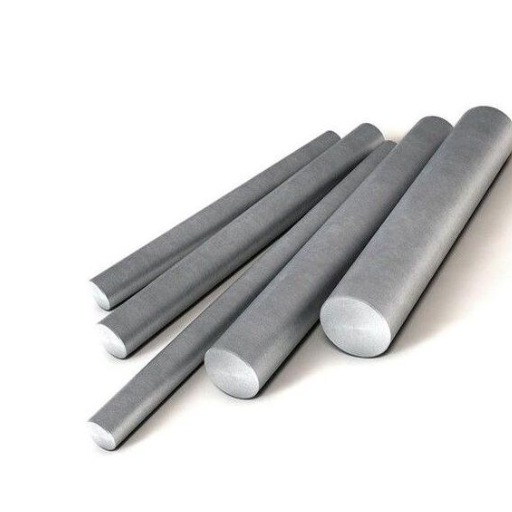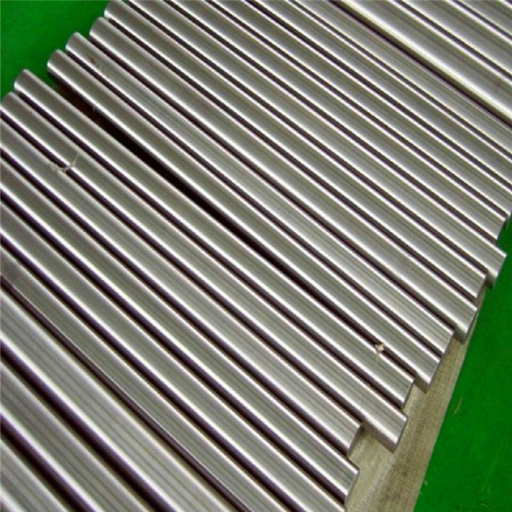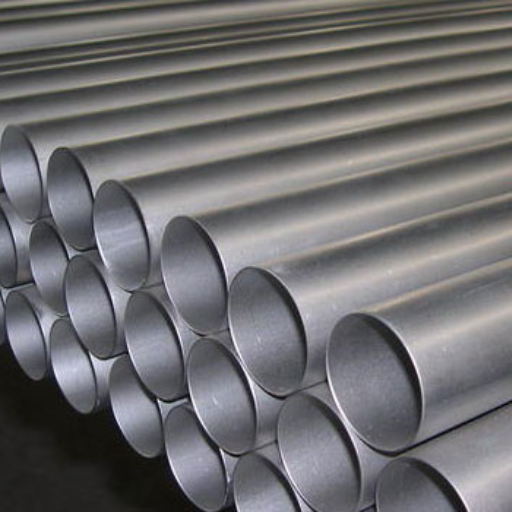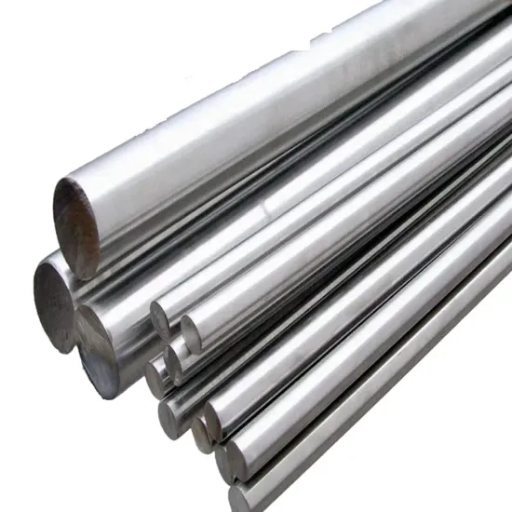
Incoloy 825 price per kg in 2026 sits at roughly ¥152-180/kg on the Chinese domestic market, or about $21-24/kg FOB once the 13% VAT is removed. Plate runs ¥170-240/kg, seamless tube ¥220-320/kg, and forging stock starts near ¥600/kg.
The same grade is also on sale right now at ¥59/kg. Both listings name UNS N08825. Neither explains the gap.
You’ve seen this before. Search for a price and you get numbers that can’t all be true, from ¥15/kg on a marketplace aggregator to $60/kg on a European distributor page. The English results are thinner, and most of them began life as Chinese domestic quotes that someone relabelled as export prices without converting the currency.
This guide separates the RMB market from the FOB market and states the exchange rate it used. It derives the metal cost from the composition and dated metal prices. And it hands you the eleven lines that make two quotes comparable.
We supply 825 bar, plate and tube from Wuxi with mill-direct pricing and full MTRs. Send a specification, and we confirm availability and a certified quotation within 24 hours.
Key Takeaways
- Incoloy 825 traded at roughly ¥152-180/kg (about $21-24/kg FOB ex-VAT) in China in 2026 for bar, plate and seamless tube.
- The $18/kg figures circulating in English sit below the domestic Chinese spot price and cannot be honoured. Treat sub-¥100/kg listings as artifacts.
- Raw metal is about 38-42% of the finished price, and nickel alone is roughly 27%. A 1,000/t nickel move adds about 1,000/t nickel move adds about 0.42/kg.
- Inconel 625 costs 75-100% more than 825, not 20-25%. 825 runs roughly 6-10x 316L, not 2-3x.
- Quotations carry 7-14 day validity because of that three-metal exposure. A firm number needs a specification.
How Much Does Incoloy 825 Cost Per Kg in 2026?
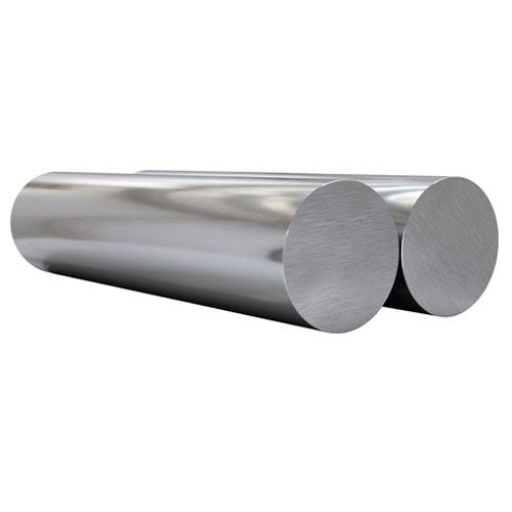
Incoloy 825 costs about ¥152-180/kg (roughly $21-24/kg FOB) in China in 2026 for bar, plate, and seamless tube, with thin cold-rolled sheet and large-diameter tube at the top of the range. Imported-brand material and orders requiring EN 10204 3.2 or NACE documentation add 15-30%.
| Form | Domestic China (RMB/kg, VAT incl.) | FOB China (USD/kg, ex-VAT) | Basis |
|---|---|---|---|
| Round bar, Φ10-200 mm | 160-180 | 21-24 | Observed Wuxi spot; wider band to ¥230 → $31 |
| Plate/sheet, 6-50 mm | 170-240 | 23-32 | Thin 0.5-3 mm at the top |
| Seamless tube, OD 19-114 mm | 220-320 | 29-42 | Highest per-kg form |
| Welded tube | 180-260 | 24-34 | Cheaper than seamless |
| Forging stock / finished forgings | 600-1,000 | 79-132 | Forging and heat treatment on top |
| Imported brand (VDM/ATI/Sandvik) or 3.2 / NACE | +15-30% | +15-30% | Applies to any row above |
Two footnotes govern that table. The rate is 6.68 CNY/USD, October 2026. The VAT basis matters just as much: Chinese domestic quotes include 13% VAT, and FOB export prices do not. The USD column is the RMB column divided by 1.13, then by 6.68.
To convert, multiply the per-kg figure by 1,000 for tonnes and by 2.205 for pounds.
Incoloy 825 Price by Product Form
Form moves the number more than grade does, because each form loses a different amount of metal to processing.
Bar and Rod
Round bar is the cheapest form per kilo. Observed Wuxi spot sits at ¥160-180/kg in 2026. The published volume tiers are explicit: ¥180/kg at 10-999 kg, ¥179/kg at 1,000-1,999 kg, ¥175/kg at 2,000 kg and above.
Size drives the spread inside that band. Small diameters carry a drawing and peeling premium, and peeled bar costs more than black bar because the finished diameter is cut from larger stock.
Plate and Sheet
Plate runs ¥170-240/kg, with the thin end at the top. Cold-rolled sheet at 0.5-3 mm carries the highest per-kg price in the form, because mill yield falls as gauge drops.
The thickness premium is not about metal content. A sheet and a heavy plate contain the same alloy. The difference is how much of the starting slab survives the rolling schedule.
Seamless Tube and Pipe
Seamless tube is the most expensive mill product at ¥220-320/kg, and the reason is yield. Piercing and rolling a hollow section wastes more material than rolling flat product. The waste is 825.
Welded tube sits below it at ¥180-260/kg. Where the duty allows a seam, it is the cheaper route to the same corrosion resistance.
Forgings, Flanges and Fittings
These are priced by the piece more often than by the kilo, and the per-kg equivalent is the highest in the family. Finished 825 forgings run RMB 600-1,000/kg, reflecting forging, heat treatment and machining on top of the metal. Four to five times the bar price. Same alloy.
A flange quoted at ¥120 is almost certainly a piece price, not a kilo price. That confusion accounts for most of the impossible numbers in marketplace listings.
What Drives the Price of Incoloy 825
Three separately traded metals set the floor under every quote. You can calculate it yourself.
The Metal Cost Arithmetic
Incoloy 825 contains 38-46% nickel, 19.5-23.5% chromium, 2.5-3.5% molybdenum, 1.5-3.0% copper, 0.6-1.2% titanium, with iron making up the balance. Working from the midpoints and October 2026 metal prices:
| Element | Content | Price basis | Cost per kg of 825 |
|---|---|---|---|
| Nickel | 42% | ~16.0/kg(LME16.0/kg(LME15,500-16,300/t) | $6.72 |
| Molybdenum | 3.0% | ¥603.50/kg (~$90/kg) | $2.70 |
| Chromium | 21.5% | ~$2.5/kg | $0.54 |
| Copper | 2.25% | ~$9/kg | $0.20 |
| Metal cost | ~$10.1/kg |
Against a $24-27/kg selling price, raw metal is 38-42% of the finished cost. Everything else is conversion, from melting and rolling through annealing and pickling to energy, yield loss and margin.
This is our own indicative derivation, not a mill cost model. It excludes melt loss, yield and conversion. Run the same arithmetic yourself, and you will land in the same place.
Why Nickel Is 27% of the Price, Not 40-60%
You will read that nickel drives “40-60% of unit cost” on most supplier pages. That figure is defensible as a share of the alloy cost, where nickel is about 66% of the $10.1/kg metal total. It isn’t true of the finished price, where nickel is roughly 27%.
Both numbers are useful. Mixing them is why some buyers expect a nickel crash to halve the price of 825. It won’t.
The sensitivity is easy to state. A 1,000/t move in LME nickel adds 1,000/t move in LME nickel adds 420/t, or about 0.42/kg. Ona0.42/kg.Ona25/kg base that is a 1.7% swing from one metal move, and nickel routinely moves more than that in a month. That’s why quotes expire.
Molybdenum deserves attention too. It sat at ¥603.50/kg on 23 October 2026, down 2.74% on the month but up 18.9% year-on-year, and Chinese ferro-molybdenum averaged above RMB 243,800/t in 2025. On 3% content, that move alone explains a meaningful share of the 2026 price rise, and almost no supplier page mentions it.
Why the Same Incoloy 825 Is Quoted Three Times Apart
One Wuxi listing shows ¥59/kg against a market at ¥160-180/kg. A marketplace aggregator will show you ¥15/kg to ¥450/kg without a word of explanation. In English, the same grade appears at 18/kg and at 18/kg and at 60/kg.
None of those numbers is invented. They are answering different questions.
The FX Test That Disqualifies Most of Them
A Chinese FOB export price cannot sit materially below the domestic Chinese price for the same form, because the material has to be bought domestically first.
At 6.68 CNY/USD and 13% VAT, a $18/kg FOB price equals ¥120/kg, or ¥136/kg on a VAT-equivalent basis. That’s still below the ¥142/kg ex-VAT floor implied by every observed domestic quote. The figure is not achievable.
Apply the same test to a ¥59/kg listing against a ¥160-180/kg market and the gap is 3x. No mill undercuts its own domestic market by two-thirds.
The Five Variables Behind Every Quote
Real quotes differ for five legitimate reasons, and a quote that states none of them is not a price. It is a number.
- Market tier. Domestic spot, mill-direct FOB, or distributor stock. The distributor tier alone can double the figure, and it is the tier most English-language pages are actually quoting.
- Form and processing. Bar, plate, seamless tube, forging. Yield loss differs sharply between them.
- Specification and finish. Black, pickled, peeled, ground. Every step costs, and none of them change the alloy underneath.
- Volume basis. Published tiers step about 3%, not the 10-25% often claimed. The larger discounts are negotiated annual contracts, not list prices.
- Documentation. EN 10204 3.1 is standard. 3.2 with third-party witness, NACE documentation, and PED are not, and on a small order the paperwork can approach the material cost.
A comparable quote names the standard, the form, the dimensions, the condition, the finish, the quantity, the certification, and the Incoterms. If one of your two quotes omits half of those, they aren’t telling you different prices. They’re telling you different products.
Incoloy 825 vs Inconel 625 vs 316L: The Cost Multiples
The comparison figures in circulation are wrong by a wide margin. They move project budgets when they are.
| Grade | Position | Multiple vs 316L (same form) |
|---|---|---|
| 316L | Baseline stainless | 1x |
| 904L | Super austenitic | ~2-2.5x |
| Incoloy 825 | Nickel-iron-chromium | ~6-10x |
| Inconel 625 | Nickel-based | 825 plus 75-100% |
| Hastelloy C276 | Nickel-molybdenum | Above 625 |
Inconel 625 costs 75-100% more than 825, not 20-25%. The composition settles it. 625 carries at least 58% nickel against 825’s 38-46%, plus 8-10% molybdenum against 2.5-3.5%, and 3.15-4.15% niobium. Run the same arithmetic. It gives a 625 metal cost near 19.7/kg against 19.7/kg against 10.1/kg for 825, a ratio of about 1.9x.
825 runs roughly 6-10x 316L, depending on form. The anchor is 316L domestic welded pipe at ¥31,300-31,800/t, or ¥31.3-31.8/kg, against 825 seamless tube at ¥220-320/kg. On bar the multiple sits lower, near 6-7x.
One caveat on that top figure. The 316L anchor is welded pipe and the 825 figure is seamless tube, so the welded-to-seamless step inflates it. Treat 6-7x as the working multiple. Compare like with like.
For the full selection framework and total cost of ownership, see our Incoloy 825 vs Inconel 625 comparison.
China, India, Europe and the US: Regional Bands
The regional spread is wider than the form spread, and most of it is tier rather than geography.
| Market | 825 bar (USD/kg) | What sits behind it |
|---|---|---|
| China, mill-direct FOB | 21-24 | Domestic spot less 13% VAT |
| China, distributor/export trader | 30-45 | Stockholding, small lots, export margin |
| India, distributor | 35-50 | Import duty and stockist margin |
| Europe / US, distributor | 45-65 | Freight, duty, alloy surcharge, local stock |
Imported brands carry a further 15-30% premium. VDM, ATI and Sandvik appear on brand-approved vendor lists, and projects that require a named mill pay for it.
European and US quotes usually run on base price plus alloy surcharge, recalculated monthly from nickel, molybdenum and chromium averages. A quote that rose 8% between two months may not have moved at all in base terms. You can audit it.
Track both inputs yourself at the LME nickel reference price and the published molybdenum price. The domestic Chinese ferro-molybdenum market behind the RMB numbers is reported by CMOC, and the product standards that decide which MTR you receive are set out in ASTM B424 for plate and B425 for bar.
Certification, Volume and Processing: What Adds to the Price
Some documentation is included. Some genuinely costs extra.
Included at no charge: MTR to EN 10204 3.1, PMI verification, and ultrasonic inspection on plate. These are standard on a certified order.
Genuinely additive: EN 10204 3.2 with third-party witness, PED certification, NACE MR0175 documentation for sour service, third-party inspection by SGS, BV or TÜV, and forging or heat treatment beyond the mill condition.
Volume works differently than most buyers expect. The published tier is a ~3% step across three quantity breaks, not the 10-25% often quoted. The larger discounts come from annual contract tonnage negotiated against a forecast.
2026 Price Trend and How to Buy
The 2026 domestic series has been flat and slightly firm. Q1 held at ¥152-156/kg, with fluctuation under 3% as capacity recovered after Spring Festival. Q2 through April moved to ¥155-158/kg, with round bar spot around ¥157/kg. Six months, 3%.
The input backdrop explains the floor, and it is not pointing down. LME nickel held between 15,500and15,500and16,300/t through October 2026. Molybdenum is up 18.9% year on year.
Buying guidance follows from that exposure. Quote validity of 7-14 days is normal, and it is a feature rather than a stall. Surcharge-linked contracts transfer raw-material risk in exchange for transparency, and staged procurement smooths your entry price across a volatile quarter.
A fixed price held for six months is not a win. It is a risk the seller has priced in, and you are carrying it.
How to Request an Accurate Incoloy 825 Price
A procurement engineer sent “2 tonnes of Incoloy 825 plate, as soon as possible” to three suppliers in September 2026. Quotes came back at ¥165, ¥210 and ¥290/kg.
None of the three was dishonest. One quote was black plate in a standard thickness, one was pickled with MTR and PMI, and one was ex-stock small-lot with third-party inspection.
The difference was entirely in what the enquiry had left out.
Eleven lines close that gap:
- Designation: UNS N08825 / W. Nr. 2.4858 / NS142, since the Chinese certificate carries the GB grade
- Product standard: ASTM B425 bar, B424 plate, B423 seamless tube, B163/B407 heat exchanger tube, B564 forgings
- Form and dimensions: diameter, or thickness, or OD × wall
- Condition: solution annealed and pickled
- Finish
- Quantity: kg, tonnes or pieces
- Certification: EN 10204 3.1 or 3.2
- Inspection: PMI on titanium and copper, ultrasonic, third party
- Incoterms and port
- Required delivery date
We ship every certified order with mill-direct pricing, a full MTR and spectral analysis. Send your specification and we confirm availability and a certified quotation within 24 hours.
When Incoloy 825 Is the Wrong Buy
Incoloy 825 is not a default upgrade. Against a 316L that survives the duty, it is simply 6-10x the price.
Where the duty exceeds 825, the honest answer is a different grade.
Inconel 625 handles chlorides, seawater and severe sour service at a 75-100% premium. Hastelloy C276 covers hydrochloric acid and severe chloride attack. Super duplex 2507 brings strength plus chloride tolerance at a lower cost, and 904L suits acid duty on a tighter budget.
Our Incoloy 825 corrosion resistance guide sets out which media the grade holds and where it stops. Read it before you specify, and check the Hastelloy price per kg guide if the duty points upward.
Incoloy 825 Price FAQ
How much does Incoloy 825 cost per kg in 2026?
About ¥152-180/kg domestically, or $21-24/kg FOB ex-VAT. Plate runs ¥170-240/kg. Seamless tube is the outlier at ¥220-320/kg, because piercing a hollow section wastes more alloy than rolling flat product.
Why is Incoloy 825 so expensive?
Nickel, mostly. The grade carries 38-46% nickel plus molybdenum and copper, and at October 2026 metal prices the raw material alone costs about $10/kg. That is 38-42% of the finished price before a single rolling pass.
Is Inconel 625 more expensive than Incoloy 825?
Yes, by 75-100%. The widely repeated 20-25% figure is simply wrong, and the composition shows why: 625 carries at least 58% nickel against 825’s 38-46%, plus 8-10% molybdenum against 2.5-3.5%. Run the metal cost, and you get a ratio near 1.9x.
How much does Incoloy 825 cost per ton or per pound?
Roughly 21,000−24,000pertonne, or 9.50-24,000pertonne,or9.50-11.00 per pound.
Why do Incoloy 825 quotes vary so much?
Five variables: market tier, form and processing, specification and finish, volume basis, and documentation scope. A quote that states none of them is not a price. It is a number.
Does the price include a mill test certificate?
Yes. MTR to EN 10204 3.1, PMI verification, and ultrasonic inspection on plate come as standard on a certified order. EN 10204 3.2 with third-party witness, PED and NACE documentation are genuinely additive, and on a small order the paperwork can approach the material cost.
Can I get a fixed Incoloy 825 price for a long project?
You can negotiate one, but the seller will price the metal risk into it, and you will pay for certainty whether or not you need it. Surcharge-linked or staged procurement usually serves a long project better than a fixed number does.
Conclusion
The Incoloy 825 price per kg is set by three metals, filtered through form, market tier and documentation. Bar is cheapest and tube is dearest, and the 3% volume step between quantity breaks is smaller than most buyers assume.
Check any quote against two things: whether it states its FX and VAT basis, and whether it clears the metal cost floor of about $10/kg. A number that fails either test isn’t a bargain. It is a different product with the same name.
825 pays back in acid service, not in every service. Specify it where the duty demands it. Put the eleven lines on the enquiry, and the quotes you compare will actually be comparable.
Send your specification, and we will respond within 24 hours with a certified quotation, full MTR, and delivery schedule. The Incoloy 825 bar stock and the complete Incoloy 825 guide cover the grade in full, and the composition and property data sit behind every figure.