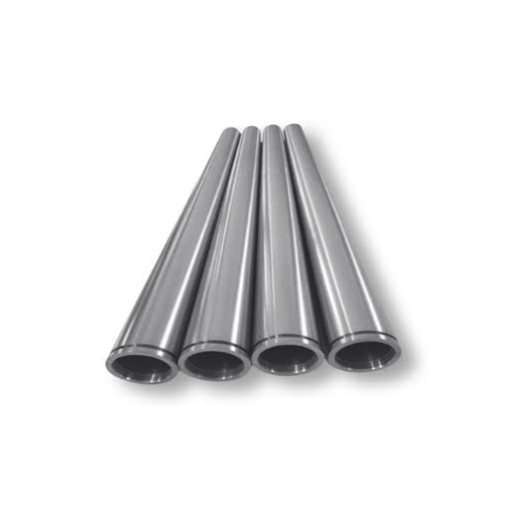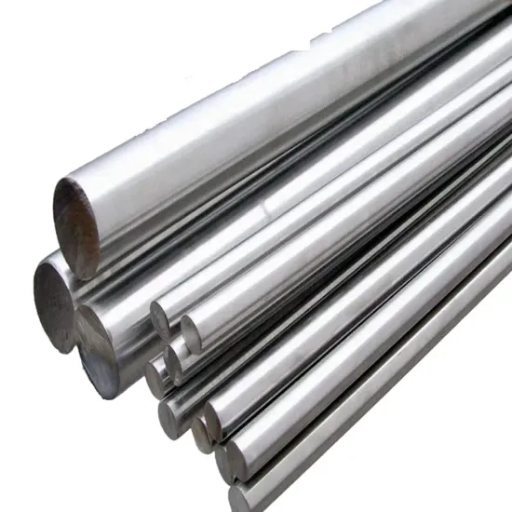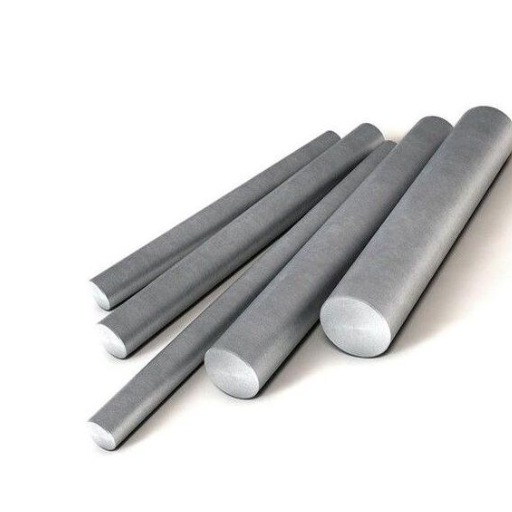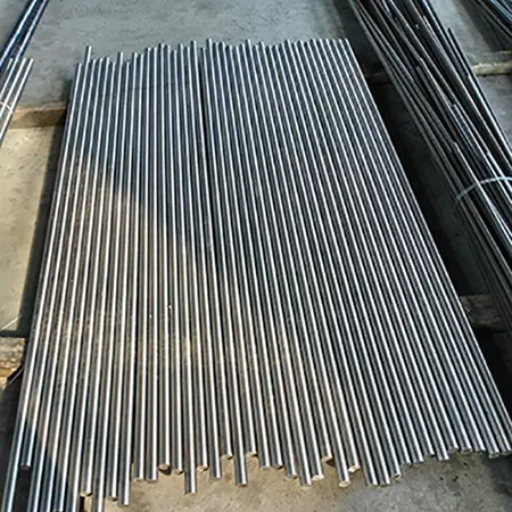
The Incoloy 825 equivalent grades are UNS N08825, W. Nr. 2.4858, DIN NiCr21Mo, BS NA16, JIS NCF825, AFNOR NC21FeDu, and in the Chinese system NS1402, NS142, H08825 and 0Cr21Ni42Mo3Cu2Ti. All of them refer to the same titanium-stabilized nickel-iron-chromium alloy. Four of those names are Chinese, and one of them has been superseded.
A buyer’s drawing says NS142. The mill certificate says NS1402. The purchase order says UNS N08825. Three names, one alloy, and a quality department holding the shipment until somebody proves it.
The certificate isn’t wrong. It’s current, and the drawing isn’t. NS142 comes from the 1994 edition of the Chinese standard. The 2017 edition renamed the grade NS1402, and a mill shipping 825 today will print the newer number.
You already know these grades are equivalent. What most pages leave out is which of the four Chinese identifiers your certificate should carry in 2026, and what to do when it carries a different one. This guide gives you the full cross-reference, the standard history behind the renaming, and a three-line test you can run on an inbound mill test report (MTR) in five minutes.
Holding a certificate right now and need it read? Send us the designation and the chemistry. Our metallurgical team will confirm whether the material is 825 and whether the paperwork will survive an audit, usually the same day.
Key Takeaways
- NS142 and NS1402 are the same alloy. NS142 is the superseded three-digit designation; NS1402 is the current four-digit one under GB/T 15007-2017. Both mean Incoloy 825, UNS N08825.
- H08825 is the Chinese unified digital code, the counterpart to a UNS number. It appears on certificates and almost no English page mentions it.
- The form standards moved. Cold-rolled sheet is no longer bought to GB/T 15010-1994, and bar is now GB/T 15008-2025. The list “15007, 15008, 15009, 15010” that the web repeats is dated.
- The chemistry agrees between ASTM and GB/T. The substitution risk in 825 is documentary, not metallurgical, which is why it gets missed.
- Copper and titanium are the two lines that identify the grade. 800H carries neither copper nor molybdenum, and 904L has copper but no titanium.
What Is NS142?
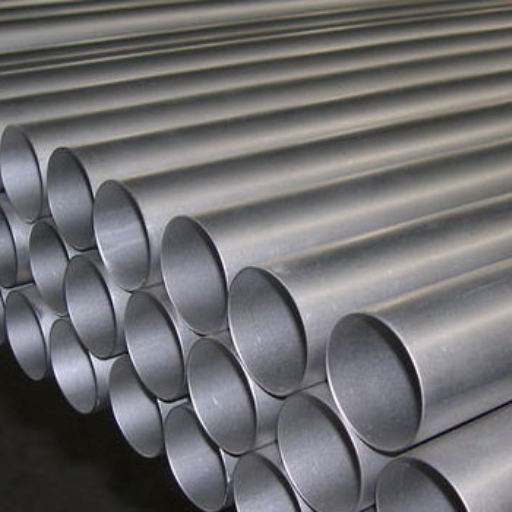
NS142 is the Chinese designation for Incoloy 825 under the 1994 edition of GB/T 15007. It has been superseded by NS1402 in the 2017 edition of the same standard. Both describe the same alloy as UNS N08825, W. Nr. 2.4858 and 0Cr21Ni42Mo3Cu2Ti.
The translation chain a buyer actually needs runs in one line:
NS142 → NS1402 → H08825 → UNS N08825 → Incoloy 825
Read it left to right and you move from the oldest name to the one a US purchase order will recognise.
One warning before the table: every one of those names is designation-equivalent, and none is a promise about the certificate in your hand.
The Complete Incoloy 825 Equivalent Grade Table
No English page in the top results publishes this table with the Chinese rows complete. Completing them means reading the GB standard and taking a position on the current edition.
| System | Designation | Notes |
|---|---|---|
| Commercial | Incoloy 825, Alloy 825 | Special Metals trade name, in universal use |
| UNS (US) | N08825 | The number to quote in North America |
| W. Nr. (Germany) | 2.4858 | The number European buyers specify |
| DIN/EN material name | NiCr21Mo | German element-ordered name |
| ISO | NiFe30Cr21Mo3 | Reported ISO form; verify before quoting it on a PO |
| BS (UK) | NA16 | BS equivalent; covers BS 3072, 3073, 3074, 3076 |
| JIS (Japan) | NCF825 | JIS equivalent; on Japanese/Korean certificates |
| AFNOR (France) | NC21FeDu | French designation, often mislabelled as German |
| GB designation, current | NS1402 | GB/T 15007-2017 |
| GB designation, superseded | NS142 | 1994 edition; still on legacy drawings |
| GB chemical designation | 0Cr21Ni42Mo3Cu2Ti | Element-ordered form |
| GB unified digital code | H08825 | 统一数字代号; the Chinese counterpart to a UNS number |
On the German and French names. Published charts routinely print “2.4858 (NC21FeDu)” as a single line, which merges two systems. 2.4858 is the German Werkstoff number, NiCr21Mo is its German material name, and NC21FeDu is the separate French AFNOR designation.
On the ISO name. NiFe30Cr21Mo3 is reported by Chinese sources as the ISO designation. We have not confirmed it against an ISO text, so treat it as a cross-reference rather than something to put on a purchase order unchecked.
Form-specific ASTM B423, B424 and B425 availability is covered in the complete Incoloy 825 guide.
NS142 vs NS1402: One Alloy, Two Chinese Names
The two designations aren’t rivals and they aren’t different alloys. They’re two editions of one naming system, and understanding why the number changed is what lets you read a certificate with confidence.
Why the Number Changed
GB/T 15007 assigns designations to corrosion-resistant alloys. The 1994 edition used a three-digit suffix, which produced NS142. The 2017 edition moved to four digits, which produced NS1402.
The extra digit isn’t decoration. Under the 2017 scheme, the NS prefix marks a corrosion-resistant alloy and the first digit carries the family. NS1xxx covers solid-solution-strengthened iron-nickel alloys, which is what 825 is. A nickel-base grade such as C-276 sits in a different family, NS3xxx, and the digit alone tells you so.
That structure lets you sanity-check a certificate at a glance. If a document shows an 825 chemistry under a designation from another family, the document has a problem.
The Third Identifier: H08825
Chinese standards carry two identifiers in parallel: the Grade, an alphanumeric designation, and the Uniform Numerical Designation, a numeric code. The code for 825 is H08825.
Its construction is transparent once you see it. The H marks the corrosion-resistant alloy series and the digits mirror the UNS number N08825. A certificate carrying H08825 says the same thing as one carrying NS1402, in the format a Chinese quality system is more likely to key on.
This is the identifier English pages miss entirely. Search for it and you find Chinese technical articles and nothing else. If your incoming documents use it and your drawing does not, that is a translation problem, not a material problem.
Why Both Still Appear
Chinese mills didn’t stop printing NS142 in 2017. Legacy drawings still specify it, older quality systems still recognise it, and some certificates list both designations to satisfy customers on either side of the change. That’s good practice, not a red flag.
The problem case is different. A 2026 certificate showing NS142 alone, with no NS1402 and no H08825, is either from a mill working to a superseded standard or from one that copied an old template. Either way it earns a question before you release the material.
The Chinese Form Standards Have Been Rewritten
Designations tell you what the alloy is. Product-form standards tell you what the mill is required to deliver. Those have moved more recently than the designations, and the web has not caught up.
The Standard Your Drawing Quotes May Be Dead
Nearly every published list of Incoloy 825 standards quotes the same set: GB/T 15007, 15008, 15009, 15010. It reads like a stable family. It isn’t.
GB/T 15010-1994, the cold-rolled sheet standard, has been replaced by GB/T 38689-2020. If your drawing specifies 15010 and you’re buying in 2026, you’re specifying a standard that no longer exists. The mill ships to the current one, the paperwork doesn’t match the drawing, and neither party is at fault.
Bar has moved too: GB/T 15008 was revised in 2025, consolidating separate bar and wire standards into one document.
What to Quote for Bar, Plate and Sheet in 2026
| Form | Chinese standard | Status |
|---|---|---|
| Designations and chemistry | GB/T 15007-2017 | Current |
| Bar | GB/T 15008-2025 | Current; superseded the 2020 edition and GB/T 38589-2020 |
| Hot-rolled heavy plate, 3.0 to 200 mm | GB/T 38688-2020 | Current |
| Cold-rolled sheet and strip, 0.1 to 5.0 mm | GB/T 38689-2020 | Current; replaced GB/T 15010-1994 |
Two things follow. A Chinese 825 purchase order written in 2026 should cite the right-hand column, not the set inherited from a 2010-era template. And if your drawing cites an older number, the fix is to update the drawing rather than argue with the mill.
We are deliberately not quoting a current version number for GB/T 15009, the 1994 hot-rolled plate standard. That edition has been superseded, but the replacement numbering is not consistent across published sources, and we would rather leave a gap than publish a number a buyer cannot verify.
“Equivalent” Is Not “Identical”
Here is where 825 differs from most grade pairs, and the difference runs against expectation.
Where the Chemistry Actually Agrees
For many alloys an equivalent designation hides real chemistry differences. EN 1.4539 imposes tighter sulfur and phosphorus limits than ASTM N08904, which is why a 904L substitution needs checking line by line.
Incoloy 825 is not that case. ASTM B424 and GB/T 15007-2017 specify the same ranges for all six alloying elements: nickel 38.0 to 46.0%, chromium 19.5 to 23.5%, molybdenum 2.5 to 3.5%, copper 1.5 to 3.0%, titanium 0.6 to 1.2%, and carbon at 0.05% maximum. The Special Metals handbook publishes the same figures.
That sounds reassuring. It’s the trap. Because the chemistry matches so closely, buyers assume everything else does too. Then they get caught by the standard version, the designation, or the documentation scope. The substitution risk in 825 is documentary, not metallurgical. That’s precisely why it gets missed.
The Two Certificate Lines to Check
If the chemistry is harmonised, the useful question is not whether the alloy is 825. It is whether the specific heat in front of you is 825.
Two lines answer that faster than a full spectrographic report:
- Copper, 1.5 to 3.0%. The element that separates 825 from the Incoloy 800 family, which carries none.
- Titanium, 0.6 to 1.2%. The element that separates 825 from 904L, which carries copper but no titanium.
Those are also the two elements a mislabelled heat most often gets wrong, because both sit at levels no visual check can confirm. Ask for PMI on those lines specifically. The full composition data sits in our Incoloy 825 properties guide.
Grades 825 Is Confused With
The grades below are not the same alloy, and each gets mistaken for 825 for a different reason.
800, 800H and 800HT
These share 825’s nickel-iron-chromium base and look close on a composition table. They carry no copper and no molybdenum, which is the whole of 825’s reducing-acid performance. 800H is a heat-resistant grade, engineered for creep strength above roughly 600 °C rather than acid service.
A fabricator substituting 800H for 825 on a phosphoric acid duty makes a reasonable-looking trade on the wrong axis. The corrosion rate diverges immediately.
904L and Inconel 625
Both are genuine upgrades in specific directions, and neither is interchangeable with 825. 904L carries copper but no titanium, and its higher molybdenum gives it better pitting resistance. Inconel 625 carries molybdenum and niobium but no copper, and costs 75 to 100% more.
The Incoloy 825 vs Inconel 625 comparison works through that premium. For the stainless side, the 825 vs 316L comparison sets out where 825 stops earning its price.
Alloy 925 (N09925)
Alloy 925 is 825 with titanium and aluminium added for age hardening. The base chemistry is close enough that the two get treated as siblings, and they are. But 925 is specified for strength in sour service, and it’s supplied aged, which 825 never is.
Hastelloy C-276 and the NS3304 Mix-Up
At least one widely circulated Chinese explainer states that NS142 corresponds to Hastelloy C-276. It doesn’t.
C-276 is a nickel-molybdenum-chromium alloy with roughly 57% nickel and 15 to 17% molybdenum, and its Chinese designations are NS3304 and NS334. 825 is a nickel-iron-chromium alloy with 2.5 to 3.5% molybdenum and 1.5 to 3.0% copper.
The mix-up is a digit transposition, and it matters. A buyer who accepts it will specify a grade that costs several times more and behaves differently in service. Our Hastelloy C-276 Chinese designation guide sets out the C-276 side in full.
How to Verify an Inbound 825 Delivery
The procedure is short enough to run before the material leaves the receiving bay.
Step one: match the designation to the alloy. NS142, NS1402, H08825 and 0Cr21Ni42Mo3Cu2Ti all mean UNS N08825. Any other NS number means a different alloy, and the first digit usually tells you which.
Step two: match the standard to the form. Bar to GB/T 15008-2025, cold-rolled sheet to GB/T 38689-2020, hot-rolled heavy plate to GB/T 38688-2020. A certificate citing GB/T 15010 for cold-rolled sheet is citing a superseded standard.
Step three: PMI the copper and titanium lines. Not the nickel, not the chromium. Copper and titanium identify this grade against its neighbours, and they are the two a substituted heat gets wrong.
A sequence like this plays out on plate orders where the certificate reads NS142 and the drawing reads UNS N08825. The quality team raises a nonconformance, correspondence runs for weeks, and the answer is that the alloy was correct and the drawing was fourteen years old. The material gets released, the schedule has slipped, and the only thing that failed was the documentation review.
Update the drawing. It costs an afternoon and saves a month.
Sourcing Incoloy 825 Against an NS142 Specification
If you’re writing the enquiry rather than reading the certificate, four lines prevent most of these problems before they start.
- Designation: state UNS N08825 and the Chinese designation you expect, for example “UNS N08825, equivalent to NS1402 / NS142”
- Product standard: name the current one, by form, with its year
- Chemistry check: ask for PMI results on the copper and titanium lines with the MTR
- Documentation: EN 10204 3.1 as standard, 3.2 where a third party must witness
Domestic Chinese mill product and imported brand material meet the same ASTM specifications. The imported tier carries a 15 to 30% premium and appears on projects with brand-approved vendor lists. The 2026 Incoloy 825 price per kg guide breaks down where that premium lands by form.
Incoloy 825 Equivalent Grades FAQ
Is NS142 the same as Incoloy 825?
Yes. NS142 material is the Chinese designation for Incoloy 825 under GB/T 15007-1994, superseded by NS1402 in 2017. Both describe UNS N08825 with 38 to 46% nickel, 1.5 to 3.0% copper and 0.6 to 1.2% titanium.
What is the difference between NS142 and NS1402?
Only the standard edition. NS142 is the three-digit designation from GB/T 15007-1994; NS1402 is the four-digit designation from the 2017 edition. The chemical composition, mechanical properties and product forms match. In the 2017 scheme the first digit after NS signals the alloy family, with NS1 indicating an iron-nickel base alloy.
What is the Chinese equivalent of Incoloy 825?
The Chinese grade equivalents are NS1402 (current designation), NS142 (superseded designation), H08825 (unified digital code) and 0Cr21Ni42Mo3Cu2Ti (chemical designation). All four appear on Chinese certificates and refer to UNS N08825.
Is 2.4858 the same as Incoloy 825?
Yes. 2.4858 is the German Werkstoff number for Incoloy 825, and its German material name is NiCr21Mo. Do not confuse it with NC21FeDu, which is the separate French AFNOR designation for the same alloy. Published charts frequently merge the two.
Can I substitute 800H for 825?
No, not where corrosion resistance matters. 800H carries no copper and no molybdenum, the two additions that give 825 its performance in reducing acids and wet-process phosphoric acid. 800H is a heat-resistant grade. The Incoloy 825 corrosion resistance guide shows where the two diverge by medium.
Is NS142 the same as Hastelloy C-276?
No. That claim appears in some circulated Chinese explainers and is wrong. C-276 is a nickel-molybdenum-chromium alloy carrying the Chinese designations NS3304 and NS334, while NS142 is Incoloy 825, a nickel-iron-chromium alloy. The two share no meaningful chemistry.
How do I verify an NS142 certificate?
Three checks. Confirm the designation maps to UNS N08825. Confirm the product standard matches the form and is a current edition. Then run PMI on the copper and titanium lines, the two elements that identify 825 against its nearest neighbours.
Conclusion
The Incoloy 825 equivalent question has one short answer and three long ones. The short answer is that NS142, NS1402, H08825 and 0Cr21Ni42Mo3Cu2Ti are all UNS N08825.
The long answers decide whether a shipment clears. NS142 is the superseded name, and a 2026 certificate should carry NS1402. The Chinese form standards were rewritten between 2020 and 2025, so the set most published lists quote is out of date. And because the chemistry harmonises between ASTM and GB/T, the risk in an 825 substitution is documentary rather than metallurgical.
Check any 825 certificate against two things. Does the designation map to N08825, and does the product standard match the form and the current edition?
Send your drawing designation, the certificate designation and the product form to our technical team, and we will confirm the match and return a certified quotation within 24 hours. Keep this chart beside the receiving bay.