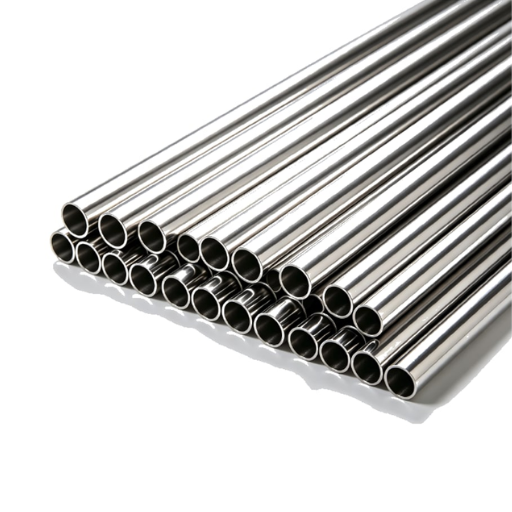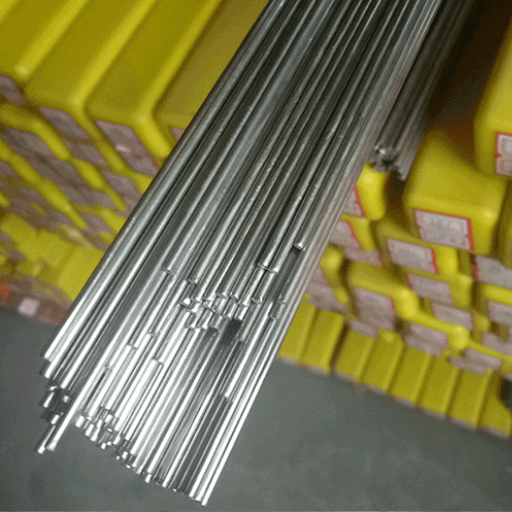
Incoloy 825 (UNS N08825) welds with ERNiFeCr-1 when you want a chemistry match, or with ERNiCrMo-3, the over-alloyed 625-type filler most fabricators actually specify. No preheat is required, and post-weld heat treatment is normally unnecessary. The joint stays sound when you hold heat input near 1.0 kJ/mm, run stringer beads, and cap interpass temperature at 150°C (302°F), or 100°C (212°F) for acid service.
The mistake that costs the most is not a bad weld. It is a bad number copied into a procedure. A Wuxi fabricator, call him Chen, wrote a 300°C (572°F) interpass limit into a WPS for an 825 acid tank because a supplier page said it.
The mill datasheet caps arc energy far lower, and the project’s acid-service clause wanted 100°C. The procedure qualified. The weld looked fine. The cap passed, then failed intergranular corrosion acceptance.
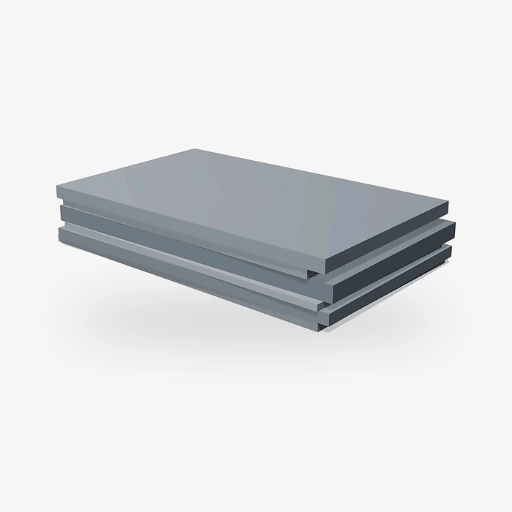
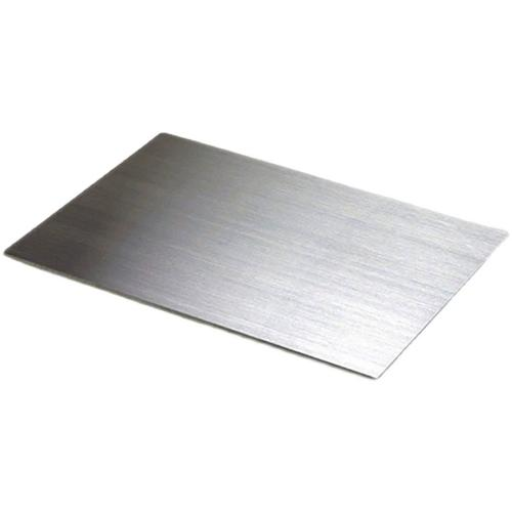
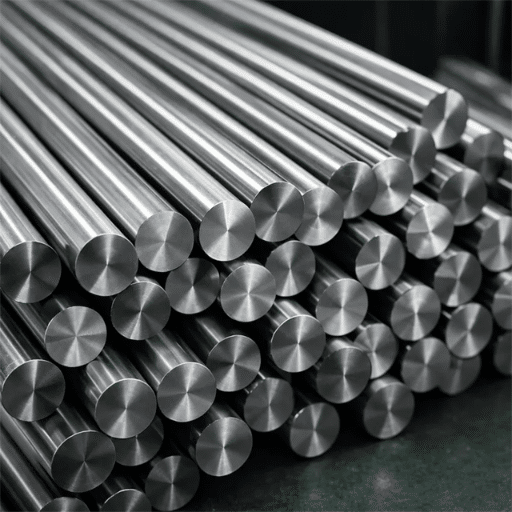
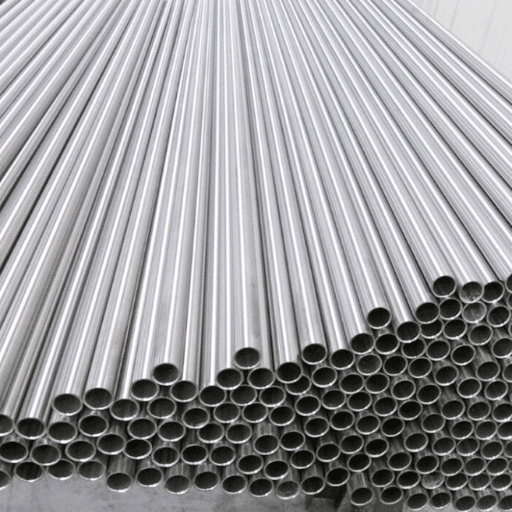
Incoloy 825 welding is routine in sulfuric acid plants, phosphoric acid circuits, and seawater-cooled heat exchangers. It is unforgiving when the procedure is written from memory instead of from a datasheet and a code. This guide gives you the filler decision, the published parameters, the PWHT rules, and the qualification traps. It is the welding article in our complete Incoloy 825 guide, and we supply 825 plate, bar, and pipe with matching consumables so one purchase order covers both.
Key Takeaways
- ERNiFeCr-1 (AWS A5.14, UNS N08065) matches 825 chemistry. ERNiCrMo-3 (UNS N06625) is over-alloyed, not matching, and is chosen for corrosion margin and dilution tolerance.
- No preheat and normally no post-weld heat treatment. Avoid soaking the assembly in the 400 to 815°C (752 to 1,499°F) range.
- Cap arc energy at 1.0 to 1.5 kJ/mm and interpass at 150°C (302°F). Acid service and most Chinese pressure-vessel specs tighten that to 100°C (212°F).
- The interpass temperature published online ranges from 93°C to 300°C. The 300°C figure contradicts every mill datasheet and does not belong in a WPS.
- 825 is ASME IX P-No. 45. An 825-to-825 qualification does not extend to 825-to-316L work, and QW-423.1 substitutions cover performance qualification only.
Incoloy 825 Welding: Weldability Overview
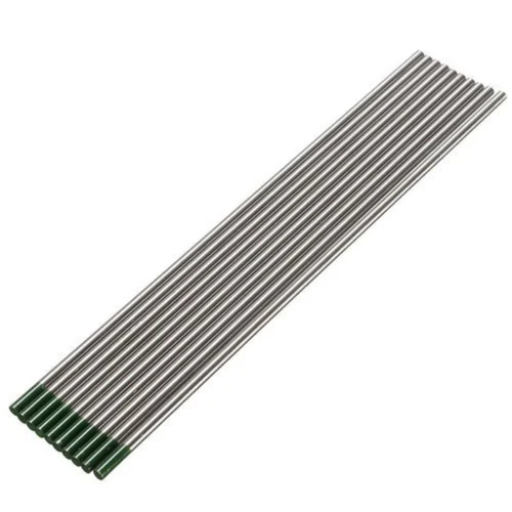
825 welds with every conventional arc process: GTAW, GMAW, SMAW, SAW, and plasma. Oxyacetylene is not suitable. What makes the alloy interesting is where it sits between ordinary stainless steel and a nickel superalloy.
The weld pool is fully austenitic, so there is no delta ferrite to dissolve sulfur and phosphorus. Those elements segregate to the last liquid to freeze and form low-melting films along grain boundaries. Under restraint, the films tear. That is solidification cracking, and 825 is more prone to it than 316L.
The puddle is also sluggish. Nickel-iron weld metal is viscous compared with stainless, which makes lack of fusion and oxide entrapment more likely at the root and along the sidewalls. For that reason, weld it in the solution-annealed, pickled, scale-free condition, and grind joint faces rather than relying on a wire brush.
The titanium addition shapes the procedure. Titanium ties up carbon as TiC and keeps 825 out of the sensitization trouble plain austenitic stainless falls into, which is why the grade tolerates slow cooling better than 304. It also forms stubborn oxides at temperature, which is why the alloy punishes poor interpass cleaning harder.
Need a welding procedure reviewed? Our metallurgical engineers review 825 WPS and PQR packages, plus consumable selections, at no charge. Send us your procedure and drawing
Filler Metal Selection: ERNiFeCr-1 vs ERNiCrMo-3
The filler question gets answered wrong across most of the internet, including some of our own earlier pages. Start with the classification rather than the trade name.
The matching filler: ERNiFeCr-1
ERNiFeCr-1 is the AWS A5.14 wire classified to match 825, UNS N08065, ISO 18274 S Ni 8065, ASME IX F-No. 45. It carries 38 to 46% Ni, 19.5 to 23.5% Cr, 2.5 to 3.5% Mo, 1.5 to 3.0% Cu, 0.6 to 1.2% Ti, and at least 22% Fe, with a 552 MPa (80 ksi) minimum tensile strength. The legacy names are INCOLOY Filler Metal 65 for wire and INCOLOY electrode 135 for covered electrodes. Choose it when the weld only has to match the parent, because iron is cheap and nickel is not.
The over-alloyed filler: ERNiCrMo-3 and ENiCrMo-3
ERNiCrMo-3 is the 625-type wire: 58% Ni minimum, 20 to 23% Cr, 8 to 10% Mo, 3.15 to 4.15% Nb plus Ta, and 5% Fe maximum. ENiCrMo-3 to AWS A5.11 is the coated version, sold most commonly as INCONEL 112. In ASME IX it is F-No. 43, not F-No. 45.
This is the filler Special Metals recommends for most 825 fabrication, and the reason is quantitative. The pitting resistance equivalent number (PREN) of 825 base metal runs about 31 to 35. ERNiCrMo-3 runs about 45 to 48. An over-alloyed deposit can therefore outperform the parent in pitting service, which a matching deposit cannot.
The trade-offs are real. ERNiCrMo-3 costs more, and it is not a drop-in for high-temperature work: service is generally limited to about 540°C (1,004°F), with Ni₃Nb embrittlement risk in the 650 to 850°C (1,202 to 1,562°F) band. For severe hydrochloric or mixed acid duty, INCO-WELD 686CPT and the NiCrMo-10 family add a further reserve at a further cost.
So ERNiCrMo-3 is not the matching filler for 825. It is an over-alloyed choice, correct for acid and chloride service and for dilution-heavy joints, and wrong to describe as a chemistry match.
Filler selection matrix
| Joint | Filler | Why this choice | What to watch |
|---|---|---|---|
| 825 to 825, general service | ERNiFeCr-1 wire, or ENiCrFe-2 electrode | Matches parent chemistry at the lowest cost | Weld metal resistance equals the parent, not more |
| 825 to 825, acid or chloride | ERNiCrMo-3, or ENiCrMo-3 electrode | PREN 45 to 48 against 31 to 35 in the parent | Cost; not a substitute above about 540°C |
| 825 to 825, severe acid | INCO-WELD 686CPT, ENiCrMo-10 | Maximum corrosion reserve | Highest cost; qualify the procedure |
| 825 to 304 or 316L | ERNiCrMo-3 or ENiCrMo-3 | Tolerates iron dilution from the stainless side | Never 308, 309, or 316 filler in acid service |
| 825 to carbon or low-alloy steel | ENiCrMo-3, or ENiCrFe-2 and ENiCrFe-3 | Controls iron and carbon pickup | Restraint and hard HAZ on the steel side |
| 825 to duplex or super duplex | ERNiCrMo-3 | Protects both sides of the joint | Heat input must still suit the duplex side |
Composition and PREN comparison
| Item | ERNiFeCr-1 | ERNiCrMo-3 |
|---|---|---|
| AWS classification | A5.14 ERNiFeCr-1 | A5.14 ERNiCrMo-3 |
| UNS number | N08065 | N06625 |
| ASME IX F-No. | 45 | 43 |
| Ni (wt%) | 38.0 to 46.0 | 58.0 min |
| Cr (wt%) | 19.5 to 23.5 | 20.0 to 23.0 |
| Mo (wt%) | 2.5 to 3.5 | 8.0 to 10.0 |
| Cu (wt%) | 1.5 to 3.0 | 0.5 max |
| Ti (wt%) | 0.6 to 1.2 | 0.4 max |
| Nb plus Ta (wt%) | Not specified | 3.15 to 4.15 |
| Fe (wt%) | 22.0 min | 5.0 max |
| PREN, typical | About 31 to 35 | About 45 to 48 |
Incoloy 825 Welding Parameters by Process
One caution before the numbers. A published parameter row is mill guidance, not a qualified welding procedure. It tells you where to start a procedure qualification test, and nothing more. Every WPS still needs its own PQR on your thickness, joint, and position.
GTAW
Gas tungsten arc is the default for root passes, thin sheet, and pipe. VDM’s published rows for 825 are the most useful starting point in the industry.
| Thickness | Filler diameter | Root current (A) | Fill current (A) | Notes |
|---|---|---|---|---|
| 3 mm sheet | 2.0 mm | 90 | 110 to 120 | 10 V root, 11 V fill, 10 to 15 cm/min (3.9 to 5.9 in/min) |
| 6 mm plate | 2.0 to 2.4 mm | 100 to 110 | 120 to 140 | Multi-pass, stringer beads |
| 3 mm, automatic | 1.2 mm wire | 150 | 150 | 11 V at 25 cm/min (9.8 in/min) |
Shielding gas is argon at 8 to 10 L/min (17 to 21 CFH), with a separate pure-argon root purge. Root gap of 1 to 3 mm (0.04 to 0.12 in) is standard, rising to 1.5 to 2.5 mm (0.06 to 0.10 in) where access allows, with an included angle of 60 to 70°.
GMAW and SAW
Spray transfer only. Short-circuiting transfer on 825 produces lack of fusion and a puddled, cold-looking bead. A published procedure for UNS N08825 on 1/16 in ERNiFeCr-1 runs direct current reverse polarity at 275 to 325 A and 26 to 30 V, a 60° groove, 100% argon at 35 to 40 CFH, and stringer beads. Avoid CO₂-bearing mixes: the extra oxygen feeds the oxide problem on the next pass.
Submerged arc works on thick sections when the flux is dry, basic, and low in silicon and manganese. Silicon pickup from a neutral or active flux pushes the weld metal toward solidification cracking.
SMAW
Use ENiCrMo-3 where over-alloying is wanted, or ENiCrFe-2 and ENiCrFe-3 for general and carbon-steel joints. Nickel electrodes are hygroscopic. Bake them at 250 to 350°C (482 to 662°F) for one hour, hold them in a heated quiver, and discard any exposed overnight.
Reading arc energy from a procedure
Heat input is calculated, not measured:
kJ/mm = volts × amps × 60 ÷ (travel speed in mm/min × 1000)
At 12 V, 100 A, and 100 mm/min, that is 0.72 kJ/mm. That number is a unit demonstration, not a recommended setting. If your WPS shows 1.8 kJ/mm at 26 V and 300 A, travel speed is the variable you change.
Heat Input and Interpass Temperature in Incoloy 825 Welding
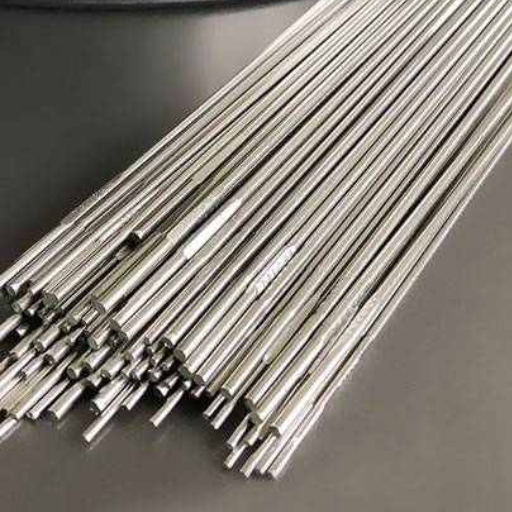
Heat input controls two things at once: the thermal cycle in the HAZ and the amount of parent metal that melts into the deposit. Both get worse as energy goes up.
The practical band is 1.0 to 1.5 kJ/mm. VDM caps arc energy at 10 kJ/cm (1.0 kJ/mm) for TIG and 11 kJ/cm (1.1 kJ/mm) for MIG/MAG, and Avesta Welding and Welmet publish 1.5 kJ/mm as a maximum. Supplier guides offering 0.8 to 1.6 kJ/mm all agree that above 2.0 kJ/mm is the danger zone. Below the band, lack of fusion becomes the failure mode instead of cracking.
Interpass temperature is where the published numbers scatter. They are not equally reliable, and a fabricator who copies the highest one writes a procedure that cannot meet acid-service acceptance.
| Source | Limit stated | Applies to |
|---|---|---|
| VDM Alloy 825 datasheet | 150°C (302°F) max | General fabrication |
| VDM FM 825 CTP consumable data | 120°C (248°F) max | That consumable |
| DGJ32/J43-2006 and acid-service specs | 100°C (212°F) max | Multi-pass nickel welds, acid service |
| Chinese 825 PQR, 64 mm plate | <175°C (347°F) | That qualified procedure |
| NRC HAZ sensitization guidance | ≤177°C (351°F), heat input <23.6 kJ/cm | Sensitization control |
| Published GMAW WPS, UNS N08825 | 200°F (93°C) | That WPS |
| Supplier web page (Sino Special Metal) | “below 300°C” | No mill datasheet supports it |
Read the table this way. 150°C is the datasheet ceiling for general work. 100°C is what acid service and most Chinese pressure-vessel practice actually require. Anything above 177°C is outside every published source except the one page that says 300°C, and that page is wrong. A 300°C limit is 573°F, above the boiling point of water and well into the range where 825 loses corrosion resistance.
Preheat is not required. There is no martensite to form and no hydrogen cracking mechanism to arrest. Warm the joint to 15 to 20°C (59 to 68°F) only when ambient is below about 5°C (41°F), and do it to drive off condensation rather than for metallurgical reasons.
Some shops apply an optional 100 to 150°C on sections over 25 mm to reduce thermal stress between passes. That is a comfort measure, not a specification requirement.
Post-Weld Heat Treatment: When None, When a Stabilizing Anneal
Post-weld heat treatment is not routinely required on 825, and the reason is the titanium. Titanium combines with carbon at high temperature so that chromium stays in solution and keeps forming the passive film. Effective Ti/C stabilization removes the driver that forces PWHT on unstabilized austenitic stainless. The 825 properties data shows the Ti and C levels that make it work.
That does not make every joint safe as-welded, however. Three situations need a decision.
Service in the 400 to 815°C range. Avoid it. Chromium carbides and sigma phase form here. If the design cannot avoid the range, a solution anneal above 1,010°C (1,850°F) with a rapid quench restores the structure, and the quench must be fast enough that the part does not re-enter the range on cooling.
Repair welding on material previously exposed to 600 to 650°C (1,112 to 1,202°F). A stabilizing anneal at 920 to 980°C (1,688 to 1,796°F), commonly specified as 940 ±10°C, re-ties the carbon to titanium. It’s not a solution anneal: it redistributes precipitation rather than dissolving everything. The 940°C route is also what mitigates knife-line attack in higher-carbon heats.
Dimensional stability only. If a machined face must not move after welding, a stress relief at or below 400°C (752°F) is legitimate. Keep it below the sensitization window rather than inside it.
Sensitization testing explains why those are the temperatures to avoid. In ASTM A262 Practice C and D work, 700°C (1,292°F) is the worst sensitization temperature, while 15 hours at 600°C produced no measurable effect. A short excursion near 600°C is survivable. A soak at 700°C is not.
| Condition | Treatment | Temperature | Consequence if skipped |
|---|---|---|---|
| General fabrication, as-welded | None | Not applicable | Normal service; no measurable loss |
| Dimensional stability needed | Stress relief | ≤400°C (752°F) | Machined faces may move |
| Repair after 600 to 650°C exposure | Stabilizing anneal | 920 to 980°C, typically 940 ±10°C | Carbides stay; knife-line risk remains |
| Failed A262 acceptance | Solution anneal | >1,010°C then rapid quench | Rejection at final inspection |
| Design requires 400 to 815°C service | Redesign or solution anneal | Per design code | Sigma and carbide formation |
Weld Defects and How to Prevent Them
Four failure modes account for almost every 825 weld rejection. Each has a cause in chemistry or technique, and each has a control.
Solidification cracking. Sulfur, phosphorus, and silicon concentrate in the last liquid to freeze and form films along solidification boundaries. A concave or deep-narrow bead puts the strain exactly where those films are weakest, and dilution makes it worse by pulling more parent chemistry into the pool. Grind joint faces, brush only with dedicated stainless tools, use stringer beads with a slightly convex profile, and over-alloy where the joint is heavily restrained. The evidence is reasonably direct: in a 2018 Varestraint study of 825 welded to AISI 321, ERNiCrMo-3 gave the highest solidification-cracking resistance of the fillers tested, ERNiFeCr-1 came next, and ER347 was worst.
Crater cracks. The arc stops, the crater shrinks, and the last liquid tears. Taper the current, fill the crater before breaking the arc, and grind any crater before the next strike. A welder at a pump fabricator in Nantong lost an afternoon to a starburst crack he had restruck straight over. The radiograph showed eleven of them in a row.
Oxide entrapment. This is the 825-specific one. The alloy’s aluminium, titanium, and chromium oxides are tenacious and re-form quickly at temperature. Between passes, a wire brush polishes the layer rather than removing it.
Oak Ridge fabrication guidance is explicit: grind it. Skips show up on radiography as fine non-fusion stringers, and they are the classic 825 repair call.
Porosity and lack of fusion. Porosity comes from moisture on the filler, a lost gas shield, or a leaking purge. Lack of fusion comes from the sluggish puddle: excessive travel speed, a steep torch angle, or too narrow an included angle for the metal to wet the sidewall. A copper backing bar helps by pulling heat out of the root.
| Defect | Root cause | Remedy |
|---|---|---|
| Centreline hot crack | S, P, Si segregation; concave bead | Clean joint, stringer beads, lower heat input, over-alloyed filler |
| Crater crack | Arc broken before crater filled | Taper current, fill crater, grind before restrike |
| Oxide stringers | Brushed instead of ground between passes | Grind each pass; no CO₂ in the shielding mix |
| Porosity | Damp electrodes, lost shielding, wet purge | Bake electrodes, check flow, purge until dew point is low |
| Lack of fusion | Viscous puddle, low current, narrow groove | Widen angle to 60 to 70°, raise current, copper backing |
Weld-Metal Corrosion and Acceptance Testing
Welding 825 does not just risk a crack. It risks a weld zone that looks sound and corrodes early.
The susceptible region is not the weld metal. In practice, it is the heat-affected zone immediately adjacent to the fusion line, where coarse grains meet fine grain-boundary carbides. A 2015 comparison of TIG and plasma-arc welded 825 joints tested to ASTM A262 Practice E measured corrosion rates of 0.2293 and 0.1566 g·m⁻²·h⁻¹, respectively, with the fusion-line HAZ identified as the most attack-prone band in both.
Practice E is the acceptance test most acid-service specifications invoke. The coupon boils 15 to 16 hours in copper-copper sulfate plus 16% sulfuric acid, then bends 180°. It is qualitative: you look for grain-boundary fissures on the bend, not a weight-loss number.
Two limits follow. Practice E cannot detect sigma attack, which needs Practices B or C. And passing it does not prove the chemistry is unchanged.
That second limit is not theoretical. An X65 linepipe clad with UNS N08825 was repair-welded four times with ERNiCrMo-3 and ENiCrMo-3, and every repair passed the Practice E bend. Energy-dispersive spectroscopy at one repair found local nickel down about 33 wt% and iron up about 32 wt%. The test passed, while the deposit was no longer the alloy that was designed.
For sour service, add hardness. ANSI/NACE MR0175 / ISO 15156-3 caps solution-annealed 825 at HRC 35 (about 200 HBW), and the limit applies to weld metal and HAZ, verified by a hardness survey across the joint rather than a single spot check. Those limits are covered in our NACE guidance for 825.
Welding Incoloy 825 to Other Metals
In a dissimilar joint, filler choice stops being a preference and becomes a requirement. The governing principle in Kobelco’s nonferrous guide is that dilution raises iron, carbon, silicon, sulfur, and phosphorus in the pool, degrading crack resistance and corrosion resistance at the same time.
825 to 304 or 316L. ERNiCrMo-3 or ENiCrMo-3. Never 308, 309, or 316 filler. It will weld, and it will corrode at the joint in acid service because the deposit cannot tolerate the dilution.
825 to carbon or low-alloy steel. ENiCrMo-3 handles most cases; ENiCrFe-2 and ENiCrFe-3 are the alternatives. Restraint is the second problem, since the steel side has a much lower thermal expansion coefficient. Balance shrinkage with pass sequencing and consider buttering.
825 to duplex or super duplex. ERNiCrMo-3 protects both sides, but heat input has to satisfy the duplex side’s ferrite-austenite balance at the same time. That usually means the lower end of the 825 band.
Two questions decide every dissimilar procedure. What is on each side of the joint, and which surfaces see the process medium? A joint can be correct on one face and wrong on the other, and the failure appears where nobody specified it.
Qualifying the Incoloy 825 Welding Procedure: ASME IX, P-No. 45 and NB/T 47014
An Incoloy 825 welding procedure is three documents, and they are not interchangeable. A welding procedure specification (WPS) is a document. A procedure qualification record (PQR) is the evidence behind it. A welder performance qualification (WPQ) tests the person. Confusing the three is the most common documentation error on an 825 project, and it is expensive to fix after the coupon is cut.
825 is P-No. 45 under ASME IX, and this is where projects go wrong. A PQR qualified 825 to 825 does not extend to 825 welded to 316L, because that introduces P-No. 8 into the combination. Neither does it extend to P-No. 45 joined to P-No. 1.
QW-423.1 allows certain substitutions, but only for performance qualification. Check the P-number combination before the test coupon is designed, not after.
A project engineer in Zhejiang learned this on a seawater heat exchanger. The shop had an 825-to-825 PQR, assumed it covered the 825-to-316L tube-to-tubesheet welds, and discovered the gap during the client’s document review. Re-cutting the coupon cost three weeks on a project that was already late.
QW-483 is the standard PQR form. For 825, the variables that matter are the filler classification and F-number, the preheat and interpass limits, heat input where it is an essential variable, the joint design, and the interpass cleaning method. Record the interpass maximum as a number. “As required” doesn’t qualify anything.
On the Chinese route, procedure qualification runs to NB/T 47014, which added nickel-base alloy coverage in the 2011 edition. The Chinese PQR form records minimum preheat and maximum interpass explicitly, which is one reason the 100°C figure keeps appearing in Chinese 825 specifications. The designations you will meet are NS142, NS1402, and 0Cr21Ni42Mo3Cu2Ti, with wire to GB/T 15620 as SNi8065 for the matching grade and SNi6625 for the 625 type. Our 825 equivalent grade guide maps these against the UNS and EN systems.
Sourcing Base Metal and Consumables with the Right Documents
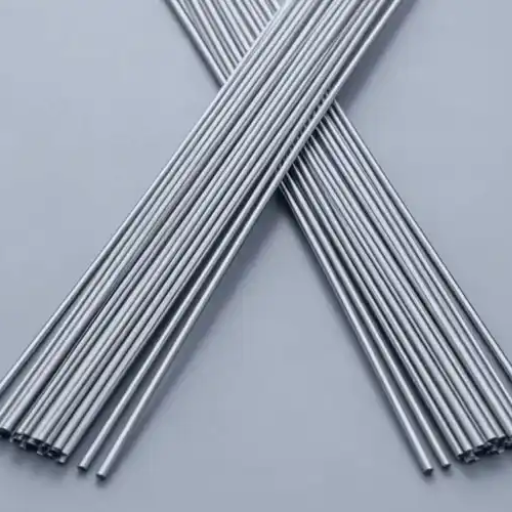
A qualified procedure is only as good as the material it runs on. Base metal arrives to ASTM B424 for plate and sheet, B423 for pipe, or B425 for rod and bar, in the solution-annealed and pickled condition. Filler arrives to AWS A5.14 or A5.11 with its own certificate. We stock Incoloy 825 bar alongside plate and pipe if the fabrication needs more than one form.
Buy both on one order and insist on three things:
- Mill test reports for base metal and filler, with heat numbers that trace to the pieces shipped
- EN 10204 3.1 or 3.2 inspection documents where an EPC specification calls for them
- Positive material identification on titanium and copper, because those two elements separate 825 from a substituted grade and they are the two a handheld X-ray gun reads least reliably
The filler certificate matters more than most buyers expect. A drum of ERNiCrMo-3 without a heat number cannot be tied to the lot that was qualified, and a substituted ENiCrFe-2 that looks identical on the shop floor changes the F-number and invalidates the PQR. Our material certificate guide covers the document set in detail.
Ordering 825 with matched consumables? Send the base-metal standard, form, size, filler classification, and quantity. Our team quotes certified material and matching filler together within 24 hours. Request a quotation
FAQ: Incoloy 825 Welding
Can Incoloy 825 be welded?
Yes. 825 welds with GTAW, GMAW, SMAW, SAW, and plasma arc using ERNiFeCr-1 for a chemistry match or ERNiCrMo-3 for corrosion margin. No preheat and normally no post-weld heat treatment are required.
What is the best filler for Incoloy 825?
ERNiCrMo-3 for acid, chloride, and dilution-heavy service, where the extra PREN of 45 to 48 protects the joint. ERNiFeCr-1, where the weld only needs to match the parent and cost matters. ERNiCrMo-3 is over-alloyed, not matching, and that distinction belongs in the WPS.
Does Incoloy 825 need post-weld heat treatment?
No, for most joints. Titanium stabilization suppresses sensitization, so no PWHT is needed. A stabilizing anneal at 920 to 980°C applies to repair welds on previously hot-exposed material, and a solution anneal above 1,010°C applies when acceptance testing fails.
What interpass temperature should I use for 825?
150°C (302°F) maximum as the datasheet ceiling for general work, and 100°C (212°F) for acid service and most Chinese pressure-vessel specifications. The 300°C figure on some supplier pages is wrong and should not appear in a WPS.
Can I weld 825 to 316L with 316L filler?
No. Use ERNiCrMo-3 or ENiCrMo-3. Stainless filler in an 825-to-stainless joint loses corrosion resistance through dilution, which is exactly where an acid plant will find it.
What P-number is Incoloy 825?
P-No. 45 under ASME IX, with F-No. 45 for ERNiFeCr-1 and F-No. 43 for ERNiCrMo-3. An 825-to-825 PQR does not cover 825 welded to stainless or to carbon steel.
Conclusion
Four rules carry most of the risk in Incoloy 825 welding. Match or deliberately over-alloy the filler and say which you did. Hold heat input at 1.0 to 1.5 kJ/mm with stringer beads. Cap interpass at 150°C, and at 100°C for acid service. Grind the oxide off between passes instead of brushing it.
Then qualify properly. Check the P-number combination before the coupon is cut, record interpass as a number, and test the welded joint to ASTM A262 Practice E if the service asks for it. A procedure that passes a bend test and a procedure that leaves the alloy unchanged aren’t the same document.
We supply Incoloy 825 plate, sheet, bar, and pipe to ASTM B424, B423, and B425 in the solution-annealed and pickled condition, with matching ERNiFeCr-1 and ERNiCrMo-3 welding consumables, mill test reports, and EN 10204 3.1 or 3.2 documentation on request. Send your grade, form, size, and filler classification for the Incoloy 825 welding job, and our metallurgical team will confirm availability and pricing within 24 hours. Request a quote