Picking the wrong grade of stainless steel can cost you a fortune in maintenance or, even worse, millions in a catastrophic failure.
A company in the Midwest was specifying Type 304 for a new brine processing line in 2023. The price was attractive, the stock was carried by the supplier, and it was stainless steel-or so they thought. By eight months, pitting corrosion had perforated three storage tanks, and the shutdown had cost $2.4 million. The fix was simple in hindsight: Type 316L, using its 2–3% molybdenum, would have resisted the chlorides that busted out the 304.
Stories like this one are so common. Hundreds of stainless steel grades fall under a multitude of standards (ASTM, EN, JIS, GB), creating, for the industrial buyer or engineer, a labyrinth of numbers, families, and claims. This guide clears it up. It will teach you how stainless steel grades are classified, what grades are for which types of application, and how to pair your construction requirements with your project’s desired specifications.
What Are Stainless Steel Grades?
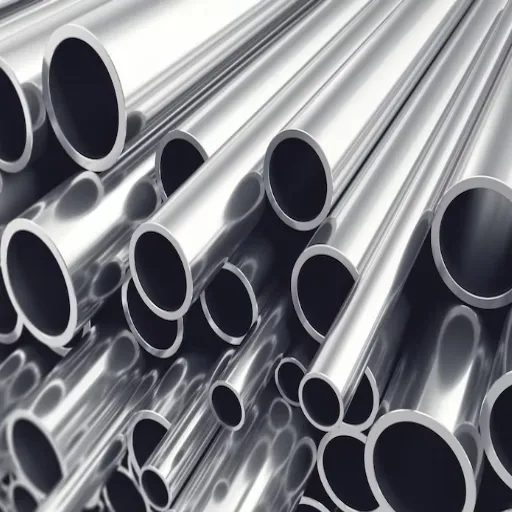
The chemical composition, microstructure, and intended use of stainless steel grades determine their classifications. They are grouped into families based on the AISI/ASTM numbering system: austenitic (300 series), ferritic (400 series), martensitic (400 series), duplex, and precipitation hardening. Every stainless steel grade offers specific combinations of corrosion resistance, strength, weldability, and cost.
How Grades Are Classified
It was the American Iron and Steel Institute (AISI) that devised today’s easily recognized system of three-digit numbering, which informed buyers in the following manner:
- 200 and 300 series = austenitic
- 400 series = ferritic and martensitic
- Duplex = numbered separately (2205, 2507)
- Precipitation hardening (PH) = numbered separately (17-4PH, 15-5PH)
Most stainless steel grades have chromium at their core. For this steel to constitute stainless, it must contain at least 10.5% chromium. However, the performance depends on what else has been added to the alloy.
- Nickel usually keeps the austenitic structure stabilized, improves workability, and enhances resistance levels to corrosion.
- Molybdenum greatly enhances resistance against chloride and pit-tax attack
- Carbon does affect strength and hardness, although it is detrimental to weldability if found in too large an amount.
- Titanium or niobium makes the structure much more stable from carbide formation at higher temperatures.
The Five Metallurgical Families
You can easily determine your grade search by understanding the five families of stainless steel.
Austenitic steel grades are by far the most SUS, non-magnetic in a condition that has been annealed, and weldable. The grades 300 form the backbone of the industrial applications. Approximately half of the global steel is attributable to grade 304 stainless steel. The austenitic series has an extensive range where the material can be used, but not easily hardened by heat treatment.
2. Ferritic Stainless Steel
Ferrous and presented with magnetic properties, per se, that is more moderate as they contain either very little or no nickel and provide only moderate corrosion resistance. It is typically 10-400 numbers used when referring to a grade in the 400 series, such as 430 and 441. It is within doors and in mild atmospheric conditions that ferritic steel grades do quite well, but it would not fare well if exposed to saltwater or aggressive chemicals.
3. Martensitic Stainless Steel
It is a heat-treatable, magnetic type of steel, which is capable of becoming very hard and very strong. Included in this category are grades like 410, 420, and 440C. They can be used to replace some harsh chemical resistance for improved discriminating resistance with application in cutlery, tools, and turbine components, etc.
4. Duplex Stainless Steel
Generally, duplex stainless steels deliver an increase in yield strength that is 2 times higher than the increase produced by standard austenitic grades. For such chloride-bearing environments together with high-stress applications like offshore platforms and pressure vessels, duplex 2205 and super duplex 2507 are often preferred.
5. Precipitation hardening (PH) Stainless Steel
It provides high strength and good corrosion resistance that is good, similar to that of 304. The heat-treated varieties, such as 17-4PH, are flight-characterized, carpenter-stainless 630; such an alloy is needed for making pump shafts and valves, as well as aerospace fasteners, which must provide strength-to-weight characteristics.
The Most Common Stainless Steel Grades
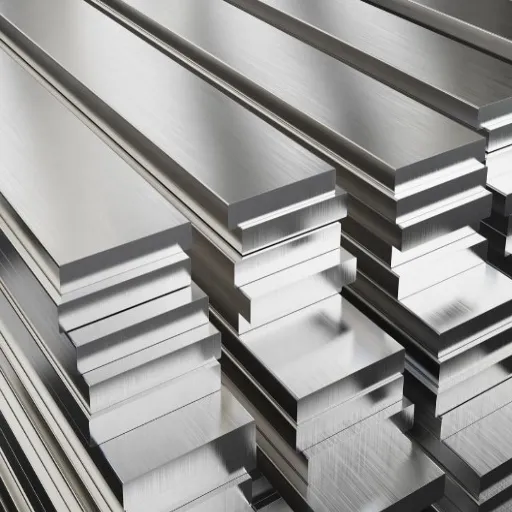
Not all stainless steel grades appear in procurement catalogs with equal frequency. These are the workhorses you will encounter most often.
Grade 304 / 304L (Austenitic)
Type 304, the universally accepted stainless steel standard, has a chrome content ranging from 18-20 percent and 8 to 10.5 percent nickel, meaning it is extremely corrosion resistant in detail, handy in forming, and easy to weld.
- Best applications: Can generally be declared in equipment for food and beverage, architectural panels, chemical containers, sanitary piping, and general industrial machinery.
- Limitations: 304 is low-resistant to pitting and crevice corrosion in chloride environments, as 304 is without molybdenum. Salt water, brine, and certain very aggressive chemical sanitizers are the commonly known attack media on 304.
- 304L variant: This is the ‘L’-low carbon (maximum 0.03%). It is used to minimize the risk of carbide precipitation in welded areas with sensitization, rendering it well-suited for 304L as a low-carbon choice incorporated in welded tanks and process piping locations where the corrosion resistance of the heat-affected zone is substantially needed.
Grade 316 / 316L (Austenitic)
304 is rather the generalist and 316 the specialist, even for severe environments. Adding 2–3% molybdenum will work towards improving resistance to corrosion caused by chlorides, in particular.
- Why it matters: In a saline environment, 316 offers much longer resistance to pitting and crevice corrosion than 304. In chemical plants, it resists high-concentration sulfuric acid and other aggressive process streams that might etch or perforate substandard grades for much longer.
- Best applications: Marine hardware, boat fittings, coastal architecture, pharma equipment, biotech tanks, and chemical reactors.
- 316L variant: Just like the 304L, it is 316L with low carbon, designed to eliminate potential sensitization as a result of welding. For welded chemical and pharmaceutical equipment, 316L will virtually always be the safer specification.
Grade 430 (Ferritic)
430 Grade has Chromium content that ranges between sixteen and eighteen percent and under 0.75% nickel. This absence of nickel makes it significantly cheaper and magnetic compared with austenitic grades, typically around 30% cheaper than the 304 grade.
- Best applications: Panels for appliances, automotive hardware, kitchen backsplashes, indoor architectural features, and industrial applications in dry conditions.
- Limitations: As an attraction, 430 does not perform very well in saltwater, coastal humid climates, or any other aggressive chemicals. If chlorides come near it, the metal will rust.
- Processing note: 430 is easily machinable compared to austenitic grades, thus being less prompt in hardening. It is naturally magnetic and may, thus, provide potential benefits for certain applications of fastening or electronic shielding.
Grade 410 (Martensitic)
410 grade contains chromium in an amount between 11.5 and 13.5 percent. Alloy 410 is heat-treatable and may be tempered after quenching for high Rockwell memorials, and is expected to have high hardness.
- Best applications: Knives, swords, surgical instruments, oil and gas valves, pump shafts, gas turbine blades requiring a moderate high-temperature strength, and wear resistance.
- Limitations: Corrosion resistance is moderate to good, and it does not function well in marine or chloride services.
Duplex 2205
Duplex 2205 is essentially half and half with 50% austenitic and 50% ferritic. An estimated doubled yield strength as compared to 316L is possible using this double structure, without losing its superior stress corrosion cracking resistance properties.
- Best applications: Offshore oil platforms, subsea pipelines, chemical tankers, heat exchangers, desalination plants, and pulp-and-paper mills.
- Cost position: More costly than 316L products at initial costs, but thinner sections can carry the same structural loads, promoting cost competitiveness throughout the product’s lifecycle.
Last year, the project team located in Singapore produced a cooling seawater system for petrochemical expansion, remembering that they came prepared with 316L pipes. Then, after calculating pressure loads and reviewing chloride exposure data, they found an alternative in the form of duplex 2205. The introduction costs were very high, highlighted only by the fact that the thinner-walled pipes were used, reducing the quantity of welding by 18% and reducing the total installation weight. The project has again come in below budget, and the client has made it clear that the current specification work is to mandatorily include duplex on all new marine lines.
Stainless Steel Grade Comparison by Application
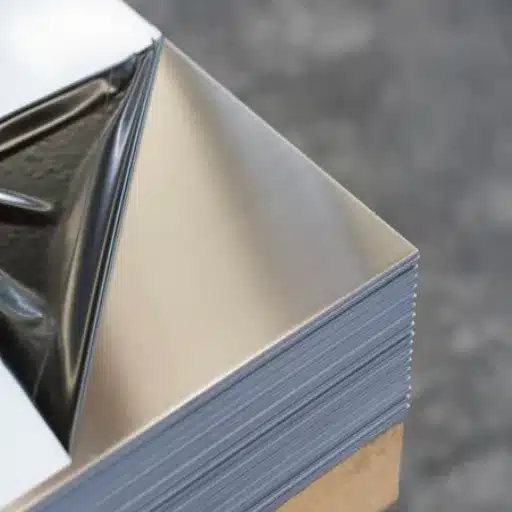
Matching the grade to the environment is where selection mistakes are made—or avoided.
Marine and Coastal Environments
The metals break down from the effect of saltwater and the supposed coastline air, penetrating chloride ions through the apparently passive oxide layers that produce pit corrosion.
- Recommended grades: 316/316L for standard marine hardware and coastal architecture; 2205 duplex or 2507 super duplex for offshore platforms, subsea equipment, and high-salt process streams.
- Grades to avoid: 430 (will rust), 410 (has a low coastal-salt resistance), and 304 (suitable only for inland sites or confined buildings with no direct salt spray).
Food Processing and Pharmaceuticals
None of us can run away from the fact that hygiene is everything in such operations. The surfaces have to be corrosion and microbiologically inactive, yet easy to clean and non-leaching.
- Recommended grades: 304/L for general food equipment like tanks, conveyors, and dairy machinery; 316/L for equipment that is exposed to chlorinated sanitizers, saline components, or harsh cleaning cycles.
- Compliance note: Both 304 and 316 grades comply with the requirements of both NSF and FDA after proper finishing procedures. However, the selection of these grades is dependent on the chemical exposure to which the plant is exposed.
High-Temperature Applications
When you prefer sustained high-temperature operation, then the grades of stabilized and/or high-alloy steel would be recommended.
- Recommended grades: 321, with titanium stabilization that is good up to ~870ºC, 309 with its high capacity for oxidation resistance, and 310S, with 25% chromium and 20% nickel that provides extreme oxidation resistance at temperatures above 1000ºC.
- Best uses: Aerospace exhaust systems, furnace parts, kiln linings, and process equipment for heat treatment.
Cost-Sensitive Industrial Projects
It is not paramount for every project to have premium corrosion resistance. When the environmental conditions are hot, mild, and non-corrosive, low-cost ferritic grades are just fine as well.
- Recommended grades: The 430 and 441 families are usually incorporated on interiors of appliances as well as on the inside of a car and architectural fronts away from the sea.
- Key insight: 316 in a dry environment indoors is something of overkill; 304 is a problem waiting to happen in terms of failure.
Global Standards and Grade Equivalents
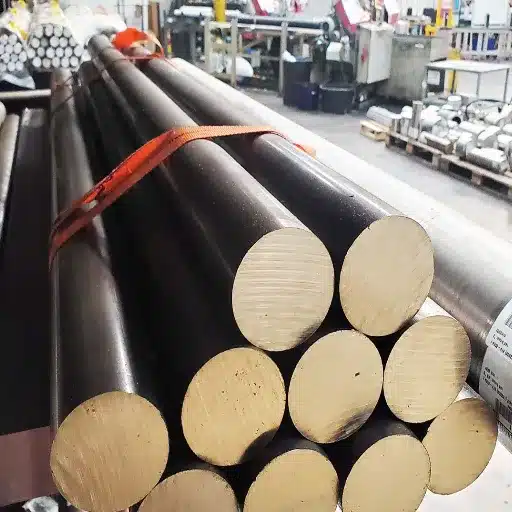
Most engineering projects span multiple countries, so engineers will find themselves needing to equate a grade defined in one standard to its twin in the other. Here is how the major systems match up with each other.
ASTM / UNS Designations
American Society for Testing and Materials (ASTM) has so far provided specifications concerning North America. The unified numbering system (UNS) would provide alphanumeric identities.
- 304 = UNS S30400, ASTM A240 (plate/sheet/strip), ASTM A276 (bars/shapes)
- 316 = UNS S31600, ASTM A240, ASTM A312 (seamless and welded pipe)
- 430 = UNS S43000, ASTM A240
- 2205 = UNS S32205, ASTM A240
European EN Numbers
While Europe employs EN 10088 for stainless steels, a certain numerical designation, from a number commencing with 1, is given to each grade.
- 304 = EN 1.4301 (X5CrNi18-10)
- 316 = EN 1.4401 (X5CrNiMo17-12-2)
- 430 = EN 1.4016 (X6Cr17)
- 2205 = EN 1.4462 (X2CrNiMoN22-5-3)
Japanese JIS and Chinese GB Equivalents
Japanese standards use the prefix “SUS” to indicate stainless steel in the G4304 for hot rolling and G4305 for cold rolling. The Chinese had it as GB/T 4237 for hot rolling and GB/T 3280 for cold rolling.
- 304 = JIS SUS304, GB 06Cr19Ni10
- 316 = JIS SUS316, GB 06Cr17Ni12Mo2
- 430 = JIS SUS430, GB 10Cr17
- 2205 = JIS SUS329J3L, GB 022Cr23Ni5Mo3N
Cross-Reference Table
| Grade | ASTM / UNS | EN | JIS | GB |
|---|---|---|---|---|
| 304 | S30400 | 1.4301 | SUS304 | 06Cr19Ni10 |
| 316 | S31600 | 1.4401 | SUS316 | 06Cr17Ni12Mo2 |
| 430 | S43000 | 1.4016 | SUS430 | 10Cr17 |
| 2205 | S32205 | 1.4462 | SUS329J3L | 022Cr23Ni5Mo3N |
Whether your project follows ASTM, EN, or JIS standards, we align material specifications to meet your compliance requirements. Explore our [material certification and traceability services] for full documentation support.
How to Select the Right Stainless Steel Grade
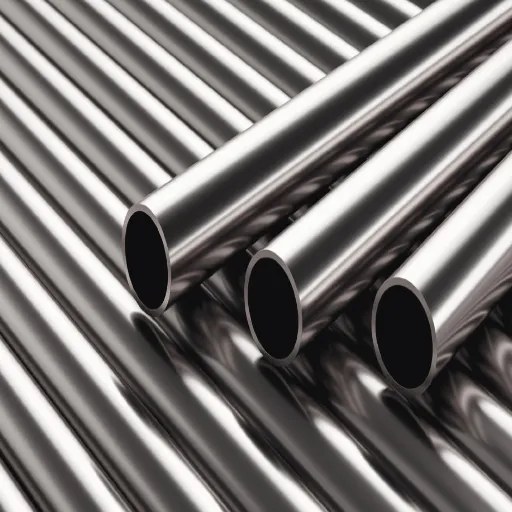
Grade selection should follow a logical sequence. Skip a step, and you risk specifying the wrong material.
Step 1: Define Your Operating Environment
Enumerate the actual operating conditions that the material is going to face:
- Temperature range: Is there likely to be extended extreme hot conditions that the material would have to endure? Basically, 304 can hardly stand up under such extreme conditions.
- Chemical exposure: Will chlorine, acid, or alkali be present? The presence of salts or aggressive chemicals will give a preference to 316, 2205, or higher alloys.
- Mechanical stress: Does the component sustain cyclic loading, high-pressure loading, or structural weight? Duplex grades have a superior strength-to-weight ratio.
Step 2: Match Properties to Requirements
Put into the form of a scale, understand the environment, then map it to grade properties.
- Corrosion resistance hierarchy: 430 < 304 < 316 < 2205 < 2507 / 904L
- Strength and hardness: Here come the Martensitic and PH grades with their leading stage, followed by duplex, and lastly austenitic.
- Weldability and formability: Most forgiving to austenitic grades (304, 316), Duplex always requires more careful heat-input control. Martensitic grades almost always need post-weld heat treatment.
Step 3: Consider Lifecycle Cost
It can be generalized that cheapness in grade is rarely the solution to cheapness.
- A procurement manager who gains 20% savings on choosing 430 for a coastal facade will certainly incur much higher costs in replacement, repair, and reputation damage within two years.
- In contrast, 316 is classified as wasteful when used for a dry indoor appliance. Zero gain in function and a real increase in cost.
The most appropriate question is not “Which is the cheapest grade?” but “Which grade is the most economical for a very specific major process?”
Certification, Quality Verification, and Procurement
For critical projects, material certification is non-negotiable. Assumptions about grade compliance have caused structural failures, rejected shipments, and project delays.
Essential Certifications
- Mill Test Report (MTR): A Mill Certificate refers to a document attributable to the manufacturing mill that guarantees the chemical composition and mechanical properties of the specific heat or batch.
- Certificate of Inspection 3.1: This indicates the test results are in accordance with the orders of the manufacturer signed.
- Certificate of Inspection 3.2: Where applicable, a certificate of compliance from an independent inspector may be required, especially if the application is considered high-risk.
- Material Traceability: Full documentation linking the delivered product back to the original melt heat ensures accountability.
What to Verify Before Ordering
Before taking delivery, three things must be checked:
- With the chemical composition within tolerance, the mechanical properties will be comparable.
- Dynamic tensile strength, limit force, elongation, and hardness should fulfill one’s project needs.
- Dimensional tolerance for production or assembly is what one should be concerned about.
A quality control director of a German EPC firm informed me that there is an annual rejection rate of around 3% for stainless steel on delivery by material, all stuff that is perfectly fine at its core, but for perhaps misleading documentation or, in some cases, dimensionality exceeding permissible tolerance bands. The three percent has an opportunity cost of some hundreds or thousands of euros, delayed in fabrication schedules.
Working with a Global Supplier
When sourcing stainless steel grades internationally, look for suppliers who can:
- Align material specifications to ASTM, EN, JIS, or GB requirements
- Provide fast delivery timelines and stable inventory
- Offer custom processing such as [precision cutting, heat treatment, and finishing services]
- Deliver every batch with full certification and traceability
Ready to source certified stainless steel grades for your project? [Request a quote] tailored to your exact specifications, standards, and delivery requirements.
Conclusion
Stainless steel grades aren’t any good if they cannot be changed like a thing. They are solutions built for certain environments, stresses, and prices. So, the right kind with the right choice of environment, put them in touch with the correct metallurgical family, and make sure every batch comes with the necessary certification.
The world stainless steel market today is worth over6#135 billion, with over a thousand grades to choose from. One cannot have the selection process being more complex or more important than it is. But the framework is so easy: define the environment, match the properties, verify the standards, and ask for full traceability.
There is a standard 304 for use in the processing of foods, 316L against marine environments, or potentially duplex 2205 for chloride services: The right stainless steel grade will last the full life of the project in reliable performance.
Need expert guidance on stainless steel grades for your next build? [Contact our team] for technical support, custom specifications, and certified material delivery anywhere in the world.