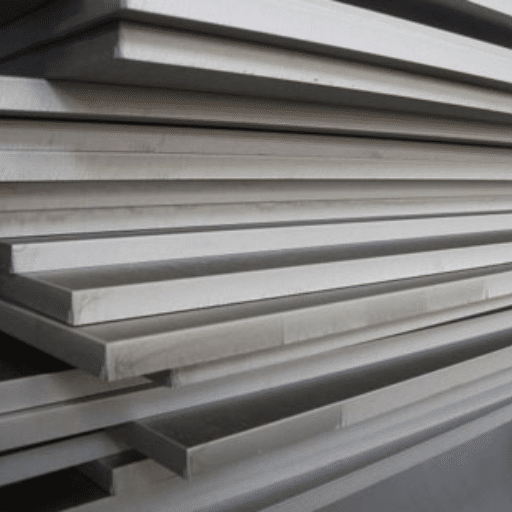
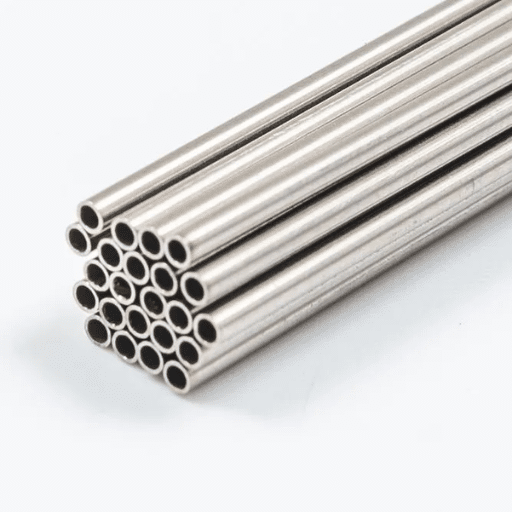
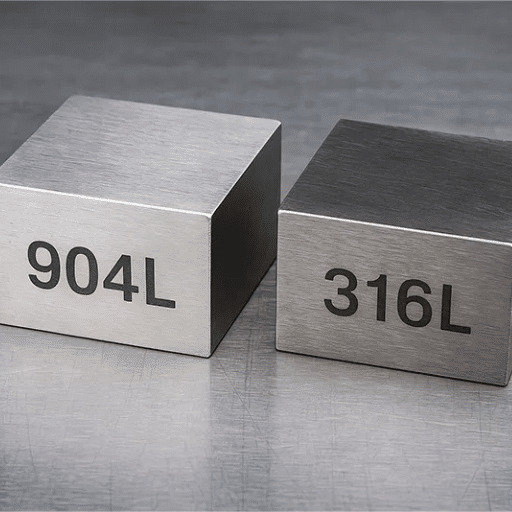
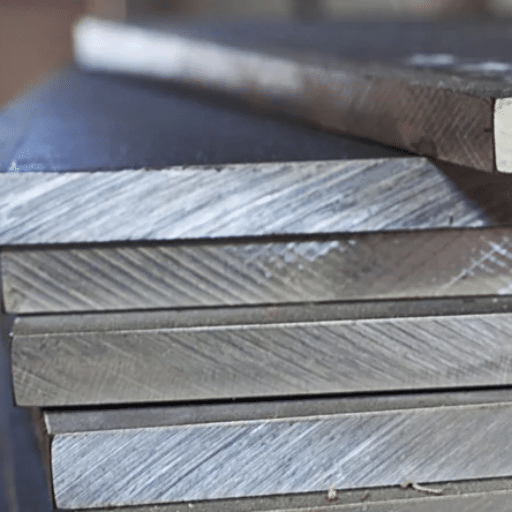
The 304L stainless steel sheet (UNS S30403) serves as the low-carbon version of standard 304, which manufacturers choose for welding applications. The carbon content of the material must not exceed 0.03% since this value establishes the maximum threshold, while standard 304 permits 0.08% carbon content. The material is safer and more cost-effective throughout the entire duration of the project, which makes it a better option for pressure vessels and welded tanks, and structural fabrications.
A food processing equipment fabricator in Southeast Asia once specified standard 304 stainless steel sheet for a welded storage tank to save roughly 8% on material costs. The tank passed a hydrotest, was shipped to the client, and went into service without issue. Brown stains developed after six months throughout all welding connections because of intergranular corrosion, which occurred due to sensitization in the heat-affected zone. The total repair expenses reached four times the cost of using 304L from the beginning, when the project required tank drainage and re-welding work with 304L filler and re-passivation activities.
Buyers know that 304L is “better for welding.” Procurement teams need to establish a proper framework that shows them when the 5-10 percent material premium creates a return on investment, and how dual certification simplifies their inventory operations, and which documents they should request to confirm receipt of authentic low-carbon material. This guide covers the exact ASTM A240 requirements for Grade 304L, the science behind sensitization, welding best practices, and the verification steps that protect your procurement process.
Key Takeaways
- 304L limits carbon to ≤0.03%, preventing chromium carbide precipitation and weld decay in the heat-affected zone
- ASTM A240 specifies minimum tensile strength of 485 MPa (70 ksi) and yield strength of 170 MPa (25 ksi) for annealed 304L sheet
- Dual-certified 304/304L material meets the low-carbon chemistry of 304L while satisfying the higher strength minimums of standard 304
- For welded structures, 304L typically eliminates the need for post-weld heat treatment — saving more than the material premium costs
- Every 304L order should ship with a Mill Test Report showing actual carbon content, not just a grade designation
What Is 304L? The 0.03% Carbon Difference

The carbon content of 304L (UNS S30403) austenitic chromium-nickel stainless steel must remain below 0.03% by weight. The standard for 304 (UNS S30400) permits a carbon content of up to 0.08%. All other elements, including chromium, nickel, manganese and silicon, exist within the same element range. The existence of 304L exists because of the 0.05% carbon difference.
Under ASTM A240 / A240M, the composition limits for 304L sheet and plate are:
| Element | Requirement (% by weight) |
|---|---|
| Chromium (Cr) | 17.5 – 19.5 |
| Nickel (Ni) | 8.0 – 12.0 |
| Carbon (C) | ≤ 0.03 |
| Manganese (Mn) | ≤ 2.00 |
| Silicon (Si) | ≤ 0.75 |
| Phosphorus (P) | ≤ 0.045 |
| Sulfur (S) | ≤ 0.030 |
| Nitrogen (N) | ≤ 0.10 |
| Iron (Fe) | Balance |
The lower carbon limit does not make 304L chemically exotic. The material becomes predictable because standard 304L only exhibits one condition of unpredictability, which occurs in its welded state. At our Wuxi facility, every heat of 304L is analyzed on direct-reading spectrometers before release. The spectral report must confirm carbon at or below 0.03% — not approximate, not “within grade,” but verified. If your supplier cannot provide this, you are buying a grade claim rather than a certified composition.
For the full specification context, see our guide to ASTM A240 304 stainless steel sheet.
Sensitization and Weld Decay: The Problem 304L Solves
The standard 304 material reaches carbon mobility when it is heated between 425°C and 860°C, which represents the temperature range found in welding heat-affected zones. Carbon moves to grain boundaries where it reacts with chromium to produce chromium carbides (Cr₂₃C₆). The process is known as sensitization.
The problem exists because the carbides themselves do not create issues. The chromium consumption problem exists as a result of their activity. The areas that border grain boundaries lose chromium until their levels drop below the ~12% threshold, which is necessary for maintaining the passive oxide film. The chromium-depleted areas have lost their ability to prevent corrosion. Intergranular corrosion, which people commonly refer to as “weld decay,” occurs during service at the grain boundaries that are adjacent to the weld.
The design of 304L creates a protective barrier against this situation. The welding process generates heat cycles that prevent the required carbon amount from reaching 0.03%, thus creating chromium carbides, which cause operational damage. The heat-affected zone preserves its complete chromium content along with its corrosion resistance because no post-weld procedures were applied.
The only solution for standard 304 after welding requires post-weld heat treatment, which involves solution annealing for about 1,050°C followed by rapid quenching. This process removes carbides while restoring the chromium distribution. The treatment becomes expensive and difficult to execute in practical situations when it comes to treating large welded tanks or pressure vessels. The 304L premium, which usually costs 5 to 10 percent more than standard 304 products, ends up being more affordable than the post-weld anneal process, which it substitutes.
For detailed welding parameters, filler selection, and passivation guidance, see our article on welding 304 stainless steel sheet.
Mechanical Properties: What ASTM A240 Requires for 304L

ASTM A240 specifies slightly lower mechanical property minimums for 304L than for standard 304. The difference is modest and rarely drives design decisions, but it matters for structural and pressure applications where every MPa feeds into safety margins.
| Property | 304L Minimum (Imperial) | 304L Minimum (Metric) | 304 Minimum (Metric) |
|---|---|---|---|
| Tensile Strength | 70 ksi | 485 MPa | 515 MPa |
| Yield Strength (0.2% offset) | 25 ksi | 170 MPa | 205 MPa |
| Elongation (in 50 mm / 2 in.) | 40% | 40% | 40% |
| Hardness (Rockwell B) | ≤ 92 HRB | — | ≤ 92 HRB |
The tensile strength minimum of 485 MPa is 30 MPa below the 304 requirement. The yield strength of 170 MPa is 35 MPa lower. The actual differences between these elements are less significant than the batch-to-batch variation, which occurs between different mills’ heats. The two grades maintain their exceptional ductility because they require a minimum of 40 percent elongation, which enables deep drawing, bending, and stretching work.
The modern mills produce dual-certified 304/304L material, which meets the low-carbon requirements of 304L but maintains the mechanical standards of standard 304. This process involves adding nitrogen in controlled amounts and executing exact processing methods. The dual-certified stock serves as the best inventory solution for most buyers because it enables customers to meet both specifications with a single product.
Dual-Certified 304/304L: What It Means and When to Request It
Many mills today produce material that is dual-certified to both UNS S30400 (304) and UNS S30403 (304L). This is not a compromise grade. It is material that meets the strictest requirements of both designations simultaneously.
To carry dual certification, a heat must satisfy:
- Carbon ≤ 0.03% (the 304L limit, stricter than 304’s ≤0.08%)
- Nickel within the 304 range (8.0–10.5%, since 304L permits up to 12.0% but 304 does not)
- Mechanical properties meeting 304 minimums (tensile ≥515 MPa, yield ≥205 MPa)
Modern mills achieve this through controlled nitrogen micro-addition and optimized rolling practices. The material provides weldability and corrosion resistance of 304L while maintaining the strength properties of 304. Dual certification helps procurement teams handle mixed inventories by making it easier to manage stock and decreasing the chance of sending incorrect materials to work sites.
When to request dual-cert:
- Your project requires both welded and non-welded components from the same stock
- You want to reduce inventory SKUs while covering multiple specification requirements
- Your client specification permits dual-certified material
When pure 304L is required:
- The specification explicitly calls for UNS S30403 only
- The nickel content must fall within the broader 304L range (8.0–12.0%)
- The project involves nuclear or ASME code applications with strict grade separation
When to Specify 304L vs. Standard 304: A Decision Framework

The choice between 304 and 304L is not about quality hierarchy. It is about matching the material to the fabrication method and service environment. Here is how engineering teams at our facility recommend thinking about it.
| Application | Recommended Grade | Reason |
|---|---|---|
| Welded tanks, vessels, piping | 304L or dual 304/304L | Prevents sensitization; no post-weld anneal |
| Heavy plate, multi-pass welds | 304L | Extended time in sensitization range makes 304 risky |
| Pressure vessels under ASME code | 304L / SA-240 304L | Code compliance for welded pressure boundaries |
| Machined, non-welded structural parts | 304 | Slightly higher strength; perfectly adequate |
| General fabrication (no welding) | 304 | Cost-effective; identical corrosion resistance |
| Food/pharmaceutical equipment (welded) | 304L | Hygiene-critical; cannot tolerate weld decay |
| High-temperature service (>500°C) | 304H | Higher carbon (≥0.04%) provides creep resistance |
| Coastal or chemical environments | 316L | Molybdenum addition needed; 304L is not sufficient |
A pressure vessel contractor in the Middle East recently faced exactly this decision. Their specification required a standard 304 plate for the non-welded support structure and 304L for the welded pressure boundary. The customer requested dual-certified 304/304L material because they wanted to handle their entire order as one stock item. The third-party inspector accepted the material on its first day. The procurement team achieved two goals by reducing potential mix-up risks and simplifying their warehouse operations while maintaining both essential components.
For chloride-rich environments where pitting resistance is critical, see our 304 vs 316 stainless steel comparison.
Welding 304L Sheet: Best Practices
304L welds readily with standard austenitic stainless steel procedures, but the details matter. Poor shielding gas coverage, carbon steel contamination, or excessive heat input can compromise the very corrosion resistance you paid the 304L premium to protect.
Filler Metal Selection
You should use ER308L for TIG and MIG welding and use E308L for stick welding. The “L” designation ensures the filler metal itself carries the same low-carbon chemistry. Some fabricators use 308L filler even when welding standard 304 base metal — the practice simplifies inventory and adds a margin of safety against sensitization.
Shielding and Purging
The standard shielding gas used in welding applications is pure argon, which has a purity level of 99.999%. The process of back purging requires argon back purging for all root passes on pipe or tube. The weld backside undergoes oxidation when this element is absent which results in sugaring a condition that destroys the passive film and establishes a site for corrosion to start. The purge gas flow rates should be confirmed through testing while monitoring the weld color because straw or light gold indicates protection and dark gray or black shows contamination.
Heat Input Control
The interpass temperature must remain under 175°C (350°F) limit, which requires special attention for thicker materials. The 304L alloy does not experience re-sensitization through excessive heat input but this process creates distortion and damages the microstructure of the heat-affected zone. The pulsed TIG settings deliver optimal performance for thin sheet applications because they enable accurate temperature management while minimizing material distortion.
Tool Contamination
Never use grinding wheels, wire brushes, or files that have contacted carbon steel on stainless steel. Carbon steel particles embedded in the surface will rust, which creates a false impression of stainless steel failure that can potentially lead to pitting. Maintain dedicated stainless-only tools and mark them clearly.
Post-Weld Passivation
Even a properly welded 304L joint benefits from passivation — typically a nitric acid or citric acid treatment that restores and strengthens the chromium oxide film. For food-grade and pharmaceutical equipment, passivation is typically specified as a standard fabrication step.
Product Forms, Sizes, and Surface Finishes
304L stainless steel is available in the same product forms as standard 304, with identical dimensional standards. Industry practice distinguishes:
- Sheet: Typically 0.3 mm to 6.0 mm thick
- Plate: Typically > 6.0 mm thick, commonly up to 100 mm or more
- Strip: Narrow widths, typically < 600 mm, in coil form
Standard Dimensions
| Parameter | Typical Range |
|---|---|
| Thickness | 0.3 mm – 100 mm |
| Width | 1,000 / 1,219 / 1,500 / 2,000 mm |
| Length | 2,000 / 2,440 / 3,000 / 6,000 mm |
Custom dimensions and cut-to-size services are available for projects requiring non-standard sizes. When specifying tolerances, reference ASTM A480 / A480M for thickness, width, length, and flatness requirements.
For a complete gauge-to-millimeter reference, see our 304 stainless steel sheet thickness chart.
Common Surface Finishes
| Finish | Process | Appearance | Typical Applications |
|---|---|---|---|
| No. 1 | Hot rolled, annealed, pickled | Rough, dull | Industrial tanks, structural plate, and subsequent fabrication |
| 2B | Cold rolled, annealed, pickled, skin passed | Smooth, semi-reflective | Forming, drawing, and general fabrication |
| BA (Bright Annealed) | Cold rolled, bright annealed | Highly reflective | Decorative, pharmaceutical, and food equipment |
| No. 4 | Brushed / satin | Uniform directional grain | Architectural panels, kitchen equipment |
| HL (Hairline) | Long continuous polishing lines | Fine directional grain | Decorative trim, appliance fronts |
The most common starting point for welded fabrications requires a 2B finish. The finish provides a smooth surface, which enables welding and polishing work while reducing surface imperfections that would capture dirt particles. The BA and No. 4 finishes work as cleanability standards for food-contact and pharmaceutical equipment because they need to meet hygiene requirements.
How to Verify 304L Compliance When Sourcing

Knowing the specification is useful. Knowing how to verify that your supplier has delivered compliant 304L is essential. This is where procurement risk actually begins.
The Documentation Checklist
Every order of 304L stainless steel sheet should arrive with:
1. Mill Test Report (MTR) / Mill Test Certificate (MTC)
- Heat number with full traceability
- Actual chemical composition, not just a grade claim — pay special attention to carbon content
- Mechanical test results: tensile strength, yield strength, elongation, hardness
- Heat treatment condition (annealed, cold-rolled, etc.)
- Specification reference: ASTM A240, ASME SA-240, or equivalent
2. Spectral Analysis Documentation
- Elemental composition verified by direct-reading spectrometer or OES
- Must confirm carbon ≤0.03%, chromium 17.5–19.5%, nickel 8.0–12.0%
3. Third-Party Inspection Certificate (for critical applications)
- SGS, Bureau Veritas (BV), or TUV certification
- Confirms dimensional tolerances, surface quality, and specification compliance
4. EN 10204 Certificate (for European projects)
- 3.1: Manufacturer’s own test results, confirmed by independent inspector
- 3.2: Manufacturer’s test results verified by an independent third party
Red Flags Specific to 304L
A chemical plant in Southeast Asia once ordered 20 tons of 304L sheet for a tank farm expansion. The MTR showed a grade designation of “304L,” but the actual chemistry column was blank — only the ranges were listed with no heat-specific values. The procurement team used independent laboratories to test samples, which showed carbon content of 0.055% that exceeded the 0.03% limit, so the material qualified as standard 304 instead of 304L. The entire batch was rejected. Three weeks were lost.
The supplier they ultimately chose delivered 304L sheet with full MTRs, in-house spectral reports confirming carbon at 0.022%, and third-party inspection by SGS. The material was accepted on day one. The difference between the two items existed at the delivery point because of different documentation standards that applied to the items.
At our Wuxi facility, every heat of 304L sheet is analyzed on direct-reading spectrometers before release. We ship with full MTR documentation, spectral analysis reports, and can arrange third-party inspection by SGS, BV, or TUV on request. Whether you need standard stock or custom-cut dimensions, the documentation package remains the same — because low-carbon certification is not optional.
International Standards and Grade Equivalents
Global projects often require materials certified to multiple national standards. ASTM A240 304L has direct equivalents across major industrial standards:
| Region / Standard | Grade Designation | Notes |
|---|---|---|
| USA — ASTM A240 / ASME SA-240 | 304L (UNS S30403) | Base standard for North American pressure vessels |
| Europe — EN 10088-2 | 1.4307 (304L) / 1.4306 | Widely specified for EU construction and chemical plants |
| Japan — JIS G4305 | SUS 304L | Common in Asian manufacturing and export contracts |
| China — GB/T 24511 | 022Cr19Ni10 (304L) | Chinese national standard for pressure vessel stainless steel |
| Germany — DIN / Werkstoff | 1.4307 | Referenced in legacy European machinery standards |
The dual-certified material, which includes ASTM A240 and EN 10088-2 1.4307 certification, enables EPC contractors and global manufacturers to use one inventory item for multiple project requirements. The order process requires you to provide all necessary standards at the beginning of your request. The supplier who possesses both in-house testing capabilities and multi-standard knowledge can provide certification for ASTM, ASME, GB, and JIS standards.
Frequently Asked Questions
What does the L in 304L stand for?
The “L” represents low carbon throughout the 304L grade. ASTM A240 limits carbon in 304L to 0.03% maximum, compared to 0.08% in standard 304. The welding process of this material does not create chromium carbide precipitation because of its low carbon content.
Is dual-certified 304/304L the same as 304L?
The material that has dual certification fulfills the criteria for both grade standards. The material contains 304L low-carbon chemistry which has carbon content below 0.03% but it meets the strength requirements of standard 304. The dual-certification system permits complete use for welded projects while making inventory management easier.
When should I specify 304L instead of 304?
The welding process between 304L and 304 applications must be used for pressure vessels, tanks, piping, and thick-section assemblies. The lower carbon content prevents weld decay that occurs in the heat-affected zone during welding. Standard 304 provides better strength than non-welded general fabrication work for a lower price.
What filler metal should I use for welding 304L?
The best filler metal for welding 304L base metal is ER308L which suits TIG and MIG welding processes while E308L functions as the appropriate filler material for stick welding. The “L” filler matches the low-carbon chemistry of the base metal. Use pure argon shielding together with back-purge root passes to stop oxidation from happening.
How can I confirm that my 304L sheet contains low carbon content?
Request the MTR which contains actual heat analysis data proving that carbon content remains at or below 0.03%. The MTR needs specific values which I will verify through independent spectral analysis. Offers which show significant discounts from market prices or fail to provide heat numbers create warning indicators that the grade has been misrepresented.
Is 304L more expensive than 304?
The price of 304L material costs 5 to 10 percent more than standard 304 because of its stricter refining requirements. The material cost which exceeds the price of welded applications eliminates the requirement for post-weld heat treatment.
Is 304L magnetic?
The fully annealed state of 304L shows no magnetic properties. The process of cold working, which includes bending and rolling, and forming, results in the formation of small amounts of martensite which creates minor magnetic properties. The presence of strong magnetism in a material indicates that engineers have substituted ferritic stainless steel for the original grade.
Conclusion
304L stainless steel sheet does not qualify as a “premium” grade because it does not provide better performance than all other materials. The material serves a specific purpose as a targeted grade because it was designed to solve one particular issue, which standard 304 material cannot solve: chromium carbide precipitation during welding.
Standard 304 material provides better economic value for general fabrication work that does not require welding. The 304L premium becomes cost-effective after welding begins because it eliminates post-weld heat treatment and decreases inspection chances while stopping field failures that would result in expenses exceeding the initial material savings.
Three principles protect your 304L procurement:
- Match the grade to the fabrication method — 304 for machined parts, 304L or dual-cert for welded assemblies, 316L for chloride service
- Demand verified chemistry — MTR with actual carbon content ≤0.03%, backed by spectral analysis and third-party inspection for critical orders
- Verify on receipt — cross-check the heat analysis against ASTM A240 limits and inspect surface quality and dimensional tolerances
Jiangsu Zhonggongte Metallurgical Technology Co., Ltd. supplies ASTM A240 / ASME SA-240 304L and dual-certified 304/304L stainless steel sheet with full material certification, in-house spectrometric verification, and 24-hour logistics support. From standard 2B finish coils to custom-cut plate with third-party inspection, we deliver documented low-carbon compliance on every order.
Submit your material specifications today — our metallurgical engineers will confirm grade selection, review your dimensional and finish requirements, and deliver a certified quotation within 24 hours.