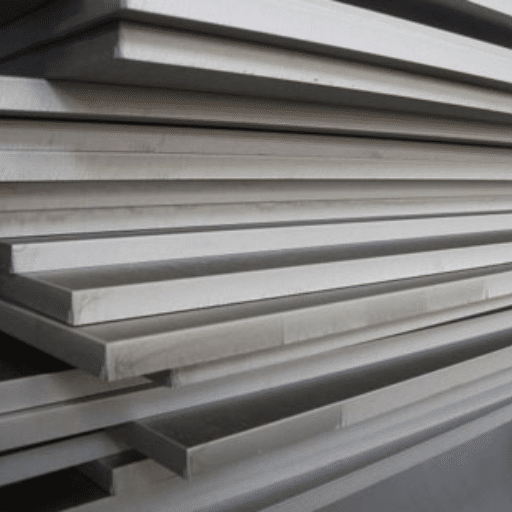
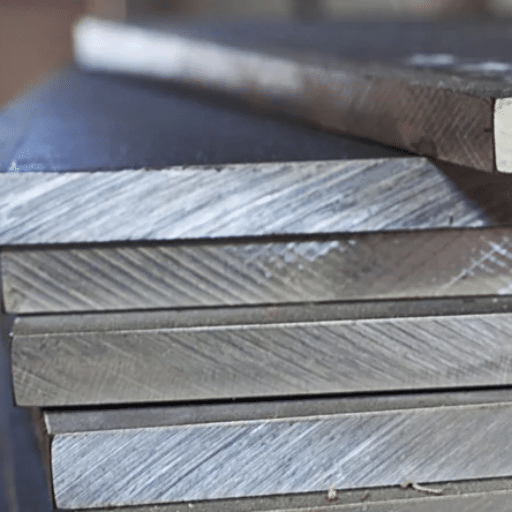
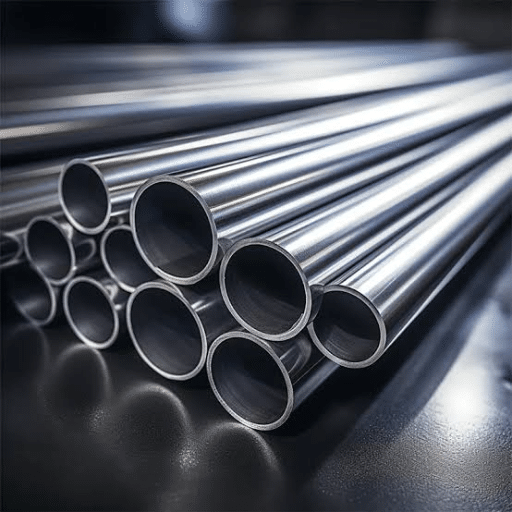
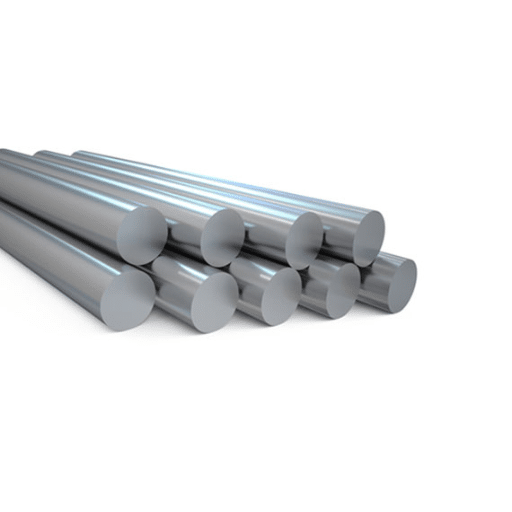
Cold-rolled 304 stainless steel sheet provides enhanced performance through its improved precision, its 2B surface finish, and its increased yield strength which applies to materials that measure less than 6.0 millimeters. Hot-rolled 304 stainless steel plate provides customers with a more affordable solution because it enables them to select from material thicknesses that range between 6.0 millimeters and 50 millimeters or greater and it features a standard No. 1 pickled finish. The 6.0 mm boundary is where most buyers face their most expensive specification mistake.
Elena, who worked as a project engineer in Rotterdam, specified 8.0 mm thick 304 with a 2B finish for a chemical tank, but her supplier quoted hot-rolled No. 1 plate. She insisted on cold-rolled 2B at the same thickness. The supplier explained that 8.0 mm cold-rolled 304 is not standard mill stock and would require a special rolling schedule at nearly double the standard price.
Elena accepted the No. 1 finish and allocated budget for surface grinding. The tank would be hidden after installation anyway.
You already know that cold-rolled and hot-rolled are different processes. You need to establish a precise procedure that will enable you to determine the appropriate form for your drawing and which tolerances your project will require, and which aspects will influence your production process and material expenses. The guide teaches you about process differences between cold-rolled 304 sheet and hot-rolled 304 plate, mechanical property differences, surface finish differences and procurement factors.
Key Takeaways
- Cold-rolled 304 sheet spans 0.3-6.0 mm with 2B/BA/No.4 finishes; hot-rolled 304 plate spans 6.0-50+ mm with No. 1 finish
- Cold rolling increases 304 yield strength by ~15-20% through strain hardening, while hot rolling maintains annealed properties
- ASTM A480 cold-rolled tolerances run ±0.04 to ±0.22 mm; hot-rolled plate tolerances run +0.4/-0.3 to +1.0/-0.3 mm
- Cold-rolled 304 costs 20-40% more than hot-rolled due to additional annealing, pickling, and cold reduction steps
- Specify cold-rolled for fabrication under 6.0 mm where surface and tolerance matter; specify hot-rolled for structural work above 6.0 mm
What Is Hot Rolling? The 304 Plate Process

Process Overview
The evaluation process for cold-rolled and hot-rolled stainless steel requires buyers to understand the hot rolling method. The hot rolling process for 304 stainless steel requires temperatures above 1,050°C, which exceeds its recrystallization temperature. The austenitic grains undergo continuous recrystallization throughout the heating process, which creates a soft ductile microstructure that prevents work hardening.
The process starts with semi-finished slabs, which have a thickness of 150-250 mm and originate from continuous casting. The slabs undergo reheating inside a walking-beam furnace, which achieves a consistent temperature before they proceed through multiple roughing and finishing mill stages.
The process uses continuous passes to decrease material thickness until the substance reaches its recrystallization point. The hot band emerges at 2.0-6.0 mm thickness for coil products, or is cut to plate dimensions for thicker material.
The hot-rolled 304 plate requires both annealing and pickling processes to achieve the standard No. 1 finish for plates exceeding 6.0 mm. The process of annealing removes all chromium carbides that developed during the rolling process, resulting in restored corrosion resistance. The pickling process uses a nitric-hydrofluoric acid bath to eliminate the mill scale that develops on surfaces during high-temperature rolling operations.
Want to understand the full thickness and size landscape for 304? See our 304 stainless steel sheet thickness chart and standard size guide for detailed gauge-to-millimeter conversions and stock dimensions.
Key Characteristics of Hot-Rolled 304
Hot-rolled 304 plate exhibits several distinctive characteristics that buyers must understand before specification:
- No. 1 finish: Dull, slightly rough, gray surface with Ra values typically between 3 and 6 μm
- Thickness range: 6.0 mm to 50 mm as standard mill plate; thicker plate available on special order
- Microstructure: Fully recrystallized austenite with equiaxed grain structure
- Mechanical properties: Annealed condition per ASTM A240 — minimum yield strength 205 MPa, minimum tensile strength 515 MPa
- Dimensional tolerances: Governed by ASTM A480 Table A2, with asymmetric plus-minus bands that widen with thickness and width
The soft, ductile condition of hot-rolled 304 makes it excellent for welding and structural fabrication. The rough No. 1 surface is acceptable for tanks, pressure vessels, and structural supports where appearance is not critical.
What Is Cold Rolling? The 304 Sheet Process
Process Overview
The cold rolling process creates accurate results with high-quality surface treatment, which serves as the foundation for any cold-rolled versus hot-rolled stainless steel assessment.
The cold rolling process starts with 304 stainless steel after the hot rolling procedure concludes. The hot-rolled annealed coil starts with hot band material, which has a thickness range of 2.0 to 4.0 millimeters. The hot band proceeds through the tandem cold rolling mill process after it gets uncoiled at room temperature, which stays below the temperature needed for recrystallization.
The cold rolling method creates extreme plastic deformation. The tandem mill operation at each stand accomplishes a thickness reduction range of 20 to 40 percent.
The final gauge from hot band material requires a total reduction, which usually falls between 50 percent and 80 percent. The material undergoes massive deformation, which results in austenitic grain elongation together with an increase in dislocation density that creates strong strain hardening effects.
The 304 steel material requires intermediate cold rolling passes to undergo annealing between processing. The coil undergoes heating to 1,050-1,100°C in a continuous furnace operation, which maintains the temperature for a short time to achieve microstructure recrystallization before immediate cooling. The oxide layer gets removed from the material through pickling after the annealing process.
The final step in manufacturing skin-pass rolling, which is known as temper rolling, produces a light 0.5-2% reduction. Skin-pass treatment enhances flatness while it stops the yield point phenomenon which produces stretcher strain marks (Lüders bands) and establishes the 2B surface finish.
Key Characteristics of Cold-Rolled 304
Cold-rolled 304 sheet offers properties that make it the default choice for precision fabrication:
- 2B finish: Smooth, moderately reflective surface with Ra values of 0.2-0.4 μm
- BA finish: Bright annealed in a hydrogen atmosphere for a mirror-like surface with Ra <0.1 μm
- Thickness range: 0.3 mm to 6.0 mm as standard mill stock
- Microstructure: Elongated grains with moderate work hardening from the final skin-pass
- Mechanical properties: Higher yield strength than hot-rolled — minimum 310 MPa typical for lightly skin-passed material
- Dimensional tolerances: Governed by ASTM A480 Table A1, with tight symmetric bands
The superior surface quality and dimensional precision of cold-rolled 304 make it essential for food equipment, medical devices, architectural panels, and any application where appearance and tight tolerances matter.
Cold Rolled vs Hot Rolled 304: Side-by-Side Comparison

Property Comparison Table
The table below summarizes the key differences between cold-rolled 304 sheet and hot-rolled 304 plate as they affect specification and fabrication decisions.
| Property | Cold-Rolled 304 | Hot-Rolled 304 |
|---|---|---|
| Thickness range | 0.3-6.0 mm | 6.0-50+ mm |
| Standard finish | 2B, BA, No.4 | No. 1 (pickled) |
| Surface roughness (Ra) | 0.2-0.4 μm (2B) | 3-6 μm (No. 1) |
| Yield strength (typical) | ≥310 MPa | ≥205 MPa |
| Tensile strength | ≥620 MPa | ≥515 MPa |
| Elongation | ≥40% | ≥40% |
| Hardness (HV) | 180-220 | 150-180 |
| ASTM tolerance | ±0.04-0.22 mm | +0.4/-0.3 to +1.0/-0.3 mm |
| Flatness | Excellent | Moderate |
| Weldability | Excellent | Excellent |
| Relative cost | 100% (baseline) | 60-80% |
Mechanical Property Explanation
Your data training extends until the month of October in the year 2023. The yield strength difference between cold-rolled and hot-rolled 304 is the most consequential mechanical distinction for fabricators. Cold rolling produces a yield strength increase of roughly 15-20 percent because the process creates strain hardening.
The press brake requires greater tonnage because cold-rolled 304 needs more force to reach its desired shape. Cold-rolled sheet experiences reduced springback following bending because of its material properties.
Tensile strength follows the same trend. Cold-rolled 304 typically achieves 620 MPa or higher, compared to the 515 MPa minimum for hot-rolled annealed plate. The two materials show similar elongation results because the intermediate annealing cycles during cold rolling restore ductility.
The hardness increase affects tooling. To work with cold-rolled 304, workers need to use sharper tools, which they must replace more often than they do with hot-rolled material. Some fabricators choose hot-rolled plate for their heavy machining operations, which enables the machining process to create localized work-hardened surfaces.
Surface Finish: Why 2B Only Comes From Cold Rolling
2B Finish vs No 1 Finish: The Visual and Functional Difference
The 2B finish vs. No. 1 finish distinction is the most visible difference buyers notice when comparing cold-rolled and hot-rolled 304 side by side. The most frequent specification mistake to occur in our work happens when customers demand a 2B finish for hot-rolled 304 plate. The process requires complete cold reduction because it needs to eliminate all frozen liquid elements from the system. The 2B finish exists because the cold rolling process reaches its endpoint through the skin-pass rolling that happens during the last stage of operation.
The cold rolling process of hot-rolled No 1 plate begins when operators use hard work rolls to compress the surface asperities of the material. The skin-pass uses a specific amount of pressure which produces the smooth reflective 2B surface but does not increase the material’s hardness beyond normal limits. The process needs no additional steps for secondary polishing work or grinding work to be completed.
Available Finishes by Process
Cold-rolled 304 finishes:
- 2B: Smooth, moderately reflective, mill finish. Most common for general fabrication. Ra 0.2-0.4 μm.
- BA: Bright annealed in hydrogen atmosphere. Highly reflective, almost mirror-like. Ra <0.1 μm.
- No. 4: Brushed finish created by mechanical polishing. Architectural and food equipment. Ra 0.4-1.0 μm.
- No. 8 / Mirror: Polished to a mirror surface. Premium decorative applications.
Hot-rolled 304 finish:
- No. 1: Annealed and pickled. Dull, gray, slightly rough. Ra 3-6 μm. The only standard finish for hot-rolled plate.
Selection Guidance
The procurement manager in Bangkok, named Chen, received a hot-rolled No. 1 plate when he ordered 1.5 mm 304 sheet for a food processing line because his drawing only specified “304 stainless steel sheet, 1.5 mm” without mentioning the process or finish. The hygiene inspection failed to pass the rough No. 1 surface. The fabricator needed to send all sheets through the costly polishing process because equipment approval required this step.
The lesson is simple: always specify both the process and the finish. For cold-rolled 304, state “cold-rolled 2B finish.” For a hot-rolled plate, state “hot-rolled No. 1 finish.” The specification for cold-rolled sheet, which will undergo mechanical polishing to No. 4 should read “cold-rolled 2B, polished to No. 4 finish.”
For a deeper understanding of how each finish is produced, what Ra values to specify, and when No. 4 or mirror finishes are justified, see our guide to 304 stainless steel surface finishes.
ASTM A480 Tolerances: Cold Rolled vs Hot Rolled in Practice
Why Tolerance Matters
Thickness tolerance defines how much the actual material can deviate from the nominal value you specify. For 304 stainless steel, ASTM A480/A480M sets different tolerance tables for cold-rolled sheet and hot-rolled plate. The understanding of these bands prevents expensive manufacturing errors during the production process.
For the official standard text, see ASTM A480/A480M. For background on rolling processes, see the Wikipedia metal rolling reference.
ASTM A480 Cold Rolled Tolerance: Table A1 Standards
The ASTM A480 cold-rolled tolerance bands establish maximum permissible thickness variations, which are essential for accurate fabrication work. The cold-rolled 304 sheet maintains precise and symmetrical tolerances. The table below shows representative values for standard widths.
| Nominal Thickness | Width ≤1219 mm | Width >1219-1500 mm | Width >1500 mm |
|---|---|---|---|
| 0.30-0.40 mm | ±0.04 mm | ±0.05 mm | ±0.06 mm |
| 0.40-0.60 mm | ±0.05 mm | ±0.06 mm | ±0.07 mm |
| 0.80-1.00 mm | ±0.07 mm | ±0.08 mm | ±0.09 mm |
| 1.00-1.25 mm | ±0.08 mm | ±0.09 mm | ±0.10 mm |
| 1.60-2.00 mm | ±0.10 mm | ±0.11 mm | ±0.12 mm |
| 2.00-2.50 mm | ±0.11 mm | ±0.12 mm | ±0.14 mm |
| 3.15-4.00 mm | ±0.15 mm | ±0.16 mm | ±0.18 mm |
| 5.00-6.00 mm | ±0.19 mm | ±0.20 mm | ±0.22 mm |
Hot-Rolled Plate Tolerances (ASTM A480 Table A2)
Hot-rolled 304 plate tolerances are wider and asymmetric. The plus tolerance exceeds the minus tolerance, which matters when calculating minimum wall thickness for pressure-containing structures.
| Nominal Thickness | Width ≤1500 mm | Width >1500 mm |
|---|---|---|
| 6.0-8.0 mm | +0.4 / -0.3 mm | +0.5 / -0.3 mm |
| 8.0-15.0 mm | +0.5 / -0.3 mm | +0.6 / -0.3 mm |
| 15.0-25.0 mm | +0.6 / -0.3 mm | +0.8 / -0.3 mm |
| 25.0-40.0 mm | +0.8 / -0.3 mm | +1.0 / -0.3 mm |
Practical Implications for Fabrication
A laser cutting shop that uses 2.0 mm cold-rolled 304 sheet at 1219 mm width can expect the actual thickness to stay within the range of ±0.10 mm. The software expects to achieve a part tolerance of ±0.1 mm because it can predictably handle the nesting work.
A pressure vessel designer who specifies 12.0 mm hot-rolled 304 plate needs to consider the actual thickness, which extends from 11.7 mm to 12.6 mm. Weld joint designs and nozzle reinforcement calculations should use the minimum expected thickness, not the nominal value.
For a complete breakdown of how thickness affects laser cutting, press brake forming, and welding parameters, see our 304 stainless steel sheet thickness and fabrication guide.
When to Specify Cold Rolled vs Hot Rolled 304

Specify Cold-Rolled 304 Sheet When:
- Thickness is under 6.0 mm. Cold rolling dominates this range because it delivers superior surface quality and tighter tolerances.
- Surface appearance matters. Food processing equipment, medical devices, architectural panels, and consumer-facing products need the smooth 2B or BA finish.
- Tight dimensional tolerances are required. Precision components, laser-cut parts, and press-brake-formed enclosures need the ±0.04-0.22 mm control that cold rolling provides.
- Deep drawing or complex forming is involved. Cold-rolled 304 in the annealed temper offers excellent formability. Specify the correct temper — full hard for maximum strength, annealed for maximum ductility.
- Corrosion resistance is critical. The smoother 2B surface has fewer crevices and defects where chloride attack can initiate. For aggressive environments, the surface quality advantage of cold-rolled material is meaningful. If your application involves chlorides, seawater, or chemical exposure, see our 304 vs 316 stainless steel comparison to determine whether 304 is sufficient or whether the molybdenum in 316 is justified.
Specify Hot-Rolled 304 Plate When:
- Thickness exceeds 6.0 mm. Hot rolling is the standard and most economical process for plate.
- Structural load-bearing capacity is required. Tanks, pressure vessels, platforms, and structural supports typically need the thicker sections that only hot rolling can produce efficiently.
- Surface finish is not critical. If the component will be hidden, insulated, or painted after installation, the No. 1 finish is perfectly acceptable.
- Cost is a primary consideration. Hot-rolled 304 plate costs 20-40% less than cold-rolled sheet of equivalent nominal thickness.
- Welding thick sections. The soft, fully annealed condition of hot-rolled plate requires less welding heat input and shows lower residual stress than welding work-hardened cold-rolled material.
The 6.0 mm Boundary
The practical dividing line that separates cold-rolled sheet from hot-rolled plate in 304 grade materials exists at a thickness of 6.0 mm. Manufacturers prefer cold rolling for materials below 6.0 mm because it produces superior surface quality and maintains precise dimensional control at an affordable price.
The cold-rolling method becomes unfeasible at thicknesses exceeding 6.0 mm which makes hot rolling the more cost-effective option. The two methods become accessible at a thickness of 6.0 mm.
The 6.0 mm 2B sheet, which has been cold-rolled, delivers superior surface quality and precise dimensional control but it comes at a much higher price. The No. 1 plate, which has been hot-rolled at 6.0 mm thickness, provides lower expenses but it demands acceptance of broader dimensional limits and more uneven surfaces. The hot-rolled plate serves as a practical solution for most structural needs that require 6.0 mm thickness.
Cost Factors: Why Cold-Rolled 304 Commands a Premium
Cold Rolled Stainless Steel Sheet Price: Why the Premium Exists
The cold-rolled stainless steel sheet price premium of 20-40% over hot-rolled plate demonstrates the extra processing steps and energy usage and scrap production. Cold-rolled 304 costs more because it includes every step of hot rolling plus additional processing:
- Hot rolling: Same as hot-rolled plate — slab heating, roughing, finishing
- Annealing and pickling: Removes scale, softens material for cold reduction
- Cold rolling: Multiple passes through tandem mills with intermediate annealing
- Final annealing and pickling: Restores ductility after heavy reduction
- Skin-pass rolling: Establishes flatness and 2B surface finish
Each additional step consumes energy, roll life, and floor time. Cold rolling also generates more scrap because edge cracking is more likely at room temperature. The cumulative effect is a 20-40% price premium over hot-rolled plate of equivalent nominal thickness.
Volume and Mill Scheduling
Tandem mills need extended operating periods for cost-effective production, which results in high-volume production of cold-rolled 304 sheet. Major Chinese mills maintain their stock inventory of standard gauges, which include 1.0 mm, 1.5 mm, 2.0 mm, and 3.0 mm dimensions. The production process will experience delays between two to four weeks when customers request custom widths that use non-standard gauges.
Hot-rolled 304 plate provides operators with greater options for scheduling their work. Plate mills can process both smaller production runs and different thicknesses because they do not require the specialized coil handling equipment that cold rolling needs.
Sourcing Cold-Rolled and Hot-Rolled 304 from China
Mill Capabilities and Stock Availability
Buyers evaluating cold-rolled vs. hot-rolled stainless steel sourced from China should understand that major Chinese producers maintain different standard stock portfolios for cold-rolled sheet and hot-rolled plate:
Cold-rolled 304 sheet standard stock (TISCO, BAOSTEEL, ZPSS):
- Gauges: 0.3 mm to 3.0 mm in all standard widths (1000 mm, 1219 mm, 1500 mm)
- Gauges 3.0-6.0 mm: commonly available but may have longer lead times
- Standard finishes: 2B (most common), BA (bright annealed)
- Coil weights: typically 8-20 metric tons
Hot-rolled 304 plate standard stock:
- Thicknesses: 6.0 mm to 50 mm in standard dimensions
- Formats: 1500 × 6000 mm, 2000 × 6000 mm, 2000 × 8000 mm
- Finish: No. 1 only
- Wider thickness and format availability than cold-rolled sheet
How to Specify on Your RFQ
Include these exact lines on your technical drawing or material list:
- Cold-rolled: “304 stainless steel sheet, cold-rolled, 2B finish, ASTM A240/ASTM A480, thickness [value] mm, tolerance per Table A1”
- Hot-rolled: “304 stainless steel plate, hot-rolled, No. 1 finish, ASTM A240/ASTM A480, thickness [value] mm, tolerance per Table A2”
If your application requires custom dimensions beyond standard mill stock, see our guide on 304 stainless steel cut to size for laser cutting, shearing, and slitting tolerances.
Frequently Asked Questions
In a cold rolled vs hot rolled stainless steel comparison, is the cold-rolled form stronger?
The stronger material in a cold-rolled versus hot-rolled stainless steel comparison is cold-rolled stainless steel. The yield strength of 304 stainless steel increases from 205 MPa, which hot-rolled stainless steel reaches through annealing, to 310 MPa, which cold-rolled and skin-passed stainless steel achieves. The minimum tensile strength rises from 515 MPa to 620 MPa, which represents the standard value.
Strain hardening produces strength increases through dislocations, which arise from cold deformation and create resistance against further plastic flow.
Is it possible to weld hot-rolled 304 plate?
Yes. The welding process for hot-rolled 304 plate in its annealed state requires standard TIG or MIG procedures with 308L filler wire.
The soft, fully recrystallized microstructure demands lower heat input for welding than cold-rolled material requires. The material requires interpass temperature control together with multi-pass procedures, which apply to both hot-rolled and cold-rolled materials.
Is it possible to change hot-rolled 304 into a 2B finish through the No 1 finish standard?
The process demands complete cold reduction. The 2B finish, which differs from No 1 finish gets produced through the last skin-pass rolling stage of the cold rolling procedure.
The process requires cold rolling the plate to a thinner gauge, which becomes unfeasible and unprofitable to achieve a 2B-like surface from hot-rolled No. 1 plate. To achieve a smooth surface on thick materials, you should request a hot-rolled No. 1 plate while allocating funds for mechanical polishing or surface grinding.
Which type of 304 steel shows better resistance to corrosion between cold-rolled and hot-rolled forms?
Both materials contain the same chemicals, which result in their identical capacity to withstand corrosion. The cold-rolled 2B material provides practical benefits through its smoother surface.
The smoother surface of the material contains fewer areas that allow chloride ions to build up and start pitting. The cold-rolled 2B and electropolished surfaces provide superior performance against intense environmental conditions when compared to rough No. 1 surfaces.
What makes my cold-rolled 304 steel exhibit weak magnetic properties?
Cold rolling process creates a minor phase change from austenite to martensite in the 304 microstructure. Here the cold-rolled 304 steel displays weak magnetic properties because deformation-induced martensite accumulates at sharp bend radii and sheared edges.
The 304 hot-rolled annealed material maintains a total austenite structure, which makes it practically impossible to magnetize. The magnetism that results from the cold working process does not create a quality issue because it occurs as expected.
Can I purchase a 304 stainless steel plate with 2B finish through my selection of cold-rolled or hot-rolled options?
The 2B finish becomes accessible for cold-rolled plate when its nominal thickness reaches 6.0 mm or less because this thickness range includes sheet material. The 6.0 mm thickness material requires a No. 1 finish because cold-rolling mills lack the capacity to process plate material beyond that thickness. Specify No. 1 finish for plate over 6.0 mm, or consider mechanical polishing if surface appearance is required.
Conclusion
Three essential factors determine the correct specification of stainless steel between cold-rolled and hot-rolled methods. The 304 cold-rolled sheet provides precise measurements of thickness, which produces smooth 2B surfaces and meets ASTM A480 Table A1 tolerances for materials with thickness under 6.0 mm. The 304 hot rolled plate provides materials above 6.0 mm with thickness and economic benefits while delivering a No. 1 finish and ASTM A480 Table A2 tolerances.
The most costly error in selecting between cold-rolled and hot-rolled stainless steel lies in picking the correct method when the actual requirement should be assessed. The cold-rolled 2B finish requires special mill orders for products that become available after extended lead times and result in higher prices than standard premiums for cold-rolled stainless steel sheet.
Hot-rolled No. 1 plate below 6.0 mm may fail surface quality inspections for food, medical, or architectural applications. Before you submit your next RFQ, confirm the thickness your design requires, verify whether the surface will be visible or hidden, and check that your specified tolerance aligns with what your fabricator can hold. Use your drawing to specify the process and finish as “cold-rolled, 2B finish” or “hot-rolled, No. 1 finish.”
Send your material list to our technical team if you want 304 stainless steel for cold-rolled sheet or hot-rolled plate. Our inventory includes cold-rolled 304 sheet ranging from 0.3 mm to 6.0 mm and hot-rolled 304 plate up to 50 mm, which comes with complete ASTM certification and spectral testing and cut-to-size processing options. You will get a competitive quotation within 24 hours.
For a broader view of 304 sheet specifications, grades, and sourcing guidance, see our complete 304 stainless steel sheet guide.