Inconel 625 and Inconel 718 are the two most specified nickel-based superalloys in industrial engineering, but they solve fundamentally different problems. Choose the wrong one, and you get corrosion failures in chemical plants or strength collapses in turbine engines. This guide breaks down the Inconel 625 vs 718 decision across composition, properties, corrosion, temperature, fabrication, and cost, so you can specify with confidence.
An engineer at a sulfuric acid plant once specified Inconel 718 for a heat exchanger based on its superior tensile strength. The logic seemed sound. Stronger alloy, better safety margins.
Within 18 months, the tubes corroded through. Inconel 625, with its higher molybdenum content, would have lasted a decade in the same service. The replacement cost exceeded the original material savings by a factor of twelve.
That kind of mistake happens more often than most procurement teams admit. On paper, these two alloys look similar. Both are nickel-chromium-based, both carry UNS designations and ASTM specifications, and both are available from Chinese mills as GH3625 and GH4169.
But their strengthening mechanisms, corrosion behavior, and temperature limits differ in ways that directly impact whether your component survives its design life.
This guide covers everything you need to make the right call: chemical composition, mechanical properties, corrosion data, temperature performance, fabrication requirements, ASTM specifications, cost factors, and China sourcing considerations.
Key Takeaways
- Inconel 625 is a solid-solution alloy optimized for corrosion resistance; Inconel 718 is a precipitation-hardened alloy optimized for high-temperature strength.
- At 650°C, Inconel 718 retains approximately 925 MPa yield strength versus 625’s approximately 380 MPa, making 718 the clear choice for load-bearing high-temperature applications below 700°C.
- Inconel 625’s PREN of approximately 51.5 dwarfs 718’s approximately 28.5, making 625 the superior choice for chloride, acid, and seawater environments.
- Both alloys are available from Chinese mills as GH3625 (625) and GH4169 (718), with VIM/ESR remelting required for aerospace and critical chemical processing applications.
- The wrong grade selection costs more than the right one: specify based on primary failure mode (corrosion vs. strength loss), not just room-temperature properties.
Inconel 625 vs 718 at a Glance

The fastest way to understand the Inconel 625 vs 718 distinction is a side-by-side comparison of their core characteristics.
| Property | Inconel 625 (UNS N06625 / GH3625) | Inconel 718 (UNS N07718 / GH4169) |
|---|---|---|
| Strengthening Mechanism | Solid-solution (Mo + Nb) | Precipitation-hardened (γ” Ni₃Nb + γ’) |
| Nickel Content | 58-71% | 50-55% |
| Key Alloying Elements | Mo 8-10%, Cr 20-23% | Nb 4.75-5.5%, Ti, Al |
| UTS (Room Temp) | 827-1,103 MPa | 1,240-1,450 MPa |
| Yield Strength (Room Temp) | 414-758 MPa | 1,034-1,172 MPa |
| Max Service Temperature | ~982°C (oxidation) / ~816°C (structural) | ~704°C (load-bearing) |
| Corrosion Resistance | Excellent (PREN ~51.5) | Good (PREN ~28.5) |
| Weldability | Excellent, no PWHT required | Good, requires post-weld aging |
| Relative Cost | Moderate | Higher (due to heat treatment) |
Choose Inconel 625 when corrosion is the primary threat: chemical processing, seawater, acid environments, and applications where pitting or crevice corrosion drives failure.
Choose Inconel 718 when high-temperature strength is the primary requirement: turbine components, aerospace structural parts, downhole tools, and applications where creep or fatigue drives failure.
Chemical Composition: What Sets Them Apart
The metallurgical difference between Inconel 625 and 718 starts at the atomic level. Their compositions create two distinct strengthening strategies, and understanding this difference explains every performance gap between them.
Inconel 625 Composition (UNS N06625 / GH3625)
Inconel 625 contains 58-71% nickel, 20-23% chromium, 8-10% molybdenum, 3.15-4.15% niobium, and a maximum of 5% iron. The high molybdenum content is the key to its corrosion resistance. Molybdenum stabilizes the passive oxide film against chloride attack and provides resistance to reducing acids like hydrochloric and sulfuric acid.
The alloy relies on solid-solution strengthening. Molybdenum and niobium atoms dissolve into the nickel-chromium matrix, creating lattice strain that impedes dislocation movement. This mechanism provides moderate strength without the brittleness that can accompany precipitation hardening. The result is an alloy that maintains ductility and toughness across a wide temperature range while resisting corrosion in aggressive media.
Inconel 718 Composition (UNS N07718 / GH4169)
Inconel 718 contains 50-55% nickel, 17-21% chromium, 2.8-3.3% molybdenum, 4.75-5.5% niobium, 0.65-1.15% titanium, 0.20-0.80% aluminum, with iron as the balance element. The lower nickel and molybdenum content compared to 625 directly reduces its corrosion resistance.
The critical difference is the presence of titanium and aluminum, combined with higher niobium. These elements enable precipitation hardening through two phases: γ” (Ni₃Nb) provides the primary strengthening, while γ’ (Ni₃(Al,Ti)) contributes secondary hardening. During aging heat treatment (typically 720°C for 8 hours, furnace cool to 620°C, hold 8 hours), these precipitates form coherent particles within the matrix that dramatically increase strength.
Why Composition Matters for Your Application
The compositional differences create a direct trade-off. Higher molybdenum in 625 means better corrosion resistance but lower achievable strength. Higher niobium plus titanium and aluminum in 718 mean superior high-temperature strength but reduced resistance to acids and chlorides.
This is not a marginal difference. The molybdenum gap (8-10% in 625 vs. 2.8-3.3% in 718) translates to a PREN difference of approximately 23 points, a massive gap in pitting resistance. Conversely, the precipitation hardening in 718 produces yield strengths two to three times higher than 625 at room temperature, and the gap widens at elevated temperatures up to approximately 700°C.
Inconel 625 vs 718 Mechanical Properties
Inconel 625 Properties at Room Temperature
| Property | Inconel 625 | Inconel 718 |
|---|---|---|
| Ultimate Tensile Strength | 827-1,103 MPa | 1,240-1,450 MPa |
| Yield Strength (0.2% offset) | 414-758 MPa | 1,034-1,172 MPa |
| Elongation | 30-50% | 12-18% |
| Hardness | 20-30 HRC | 36-44 HRC |
| Density | 8.44 g/cm³ | 8.19 g/cm³ |
Inconel 718 delivers roughly double the yield strength of 625 at room temperature. This strength advantage comes at the cost of ductility: 625 elongates 30-50% before fracture, while 718 elongates 12-18%. For applications requiring forming, bending, or significant plastic deformation, 625’s ductility is an advantage.
Inconel 718 Properties at Elevated Temperature
The mechanical property comparison changes dramatically with temperature, and this is where the Inconel 625 vs 718 decision becomes critical.
At 200°C, both alloys retain most of their room-temperature strength. By 400°C, 718’s advantage begins to narrow. At 600°C, the gap remains significant: 718 maintains approximately 1,000 MPa yield strength while 625 drops to approximately 450 MPa.
At 650°C, the numbers tell the story clearly:
- Inconel 718: ~925 MPa yield strength
- Inconel 625: ~380 MPa yield strength
This 2.4:1 ratio at 650°C makes 718 the default choice for load-bearing applications in the 500-700°C range. Gas turbine disks, compressor blades, and high-temperature fasteners all rely on 718’s ability to maintain structural integrity under sustained loads at these temperatures.
Above 700°C, 718’s advantage erodes rapidly. The δ phase (Ni₃Nb) begins to precipitate at grain boundaries, reducing both strength and ductility. By 750°C, 718’s yield strength drops below 625’s useful range, and 625’s superior oxidation resistance becomes the dominant factor.
Inconel 625 vs 718 Corrosion Resistance: Where 625 Dominates
The Inconel 625 vs 718 corrosion resistance comparison is the most important factor for applications involving acids, chlorides, seawater, or any reducing environment.
Pitting and Crevice Corrosion
The Pitting Resistance Equivalent Number (PREN) quantifies an alloy’s resistance to pitting corrosion in chloride environments. The formula is:
PREN = %Cr + 3.3(%Mo) + 16(%N)
For these alloys:
- Inconel 625: PREN approximately 51.5 (21% Cr + 3.3 x 9% Mo)
- Inconel 718: PREN approximately 28.5 (19% Cr + 3.3 x 3% Mo)
A PREN above 40 is generally considered “pitting resistant.” Inconel 625 exceeds this threshold comfortably. Inconel 718 falls below it. In practical terms, 625 resists pitting in seawater and chloride-containing process streams where 718 will pit and eventually fail.
Acid Resistance
Inconel 625 shows excellent resistance to a broad range of acids:
- Hydrochloric acid: Corrosion rate below 0.5 mm/year in boiling 10% HCl
- Sulfuric acid: Resistant up to moderate concentrations and temperatures
- Nitric acid: Excellent resistance due to chromium content
- Phosphoric acid: Outstanding performance
Inconel 718 performs acceptably in mild acid environments but shows significantly higher corrosion rates in hydrochloric and sulfuric acids compared to 625. For chemical processing applications involving strong reducing acids, 625 is the clear specification.
Seawater and Chloride Environments
Inconel 625 is the standard choice for subsea and marine applications: umbilical tubing, seawater heat exchangers, offshore manifold systems, and desalination equipment. Its combination of high PREN, resistance to crevice corrosion, and immunity to chloride stress corrosion cracking makes it the benchmark alloy for seawater service.
Inconel 718 can function in seawater but offers no margin against pitting in warm or stagnant chloride conditions. It is acceptable for marine structural components above the waterline or in splash zones with cathodic protection, but not for continuous immersion.
When 718 Corrosion Resistance Is Sufficient
Inconel 718’s corrosion resistance is adequate for:
- Aerospace environments: Air, combustion gases, and jet fuel exposure do not challenge 718’s passive film
- Downhole oil and gas: Specific conditions where chloride levels and temperatures fall within 718’s capability envelope
- Dry industrial atmospheres: Non-aggressive environments where corrosion is not the primary failure mode
The key is understanding that 718’s corrosion resistance is “good” in absolute terms but “poor” relative to 625. If your application pushes into aggressive chemical territory, the margin matters.
Need help evaluating corrosion resistance for your specific application? Contact our metallurgical team with your operating temperature, media composition, and chloride levels, and we will recommend the optimal grade within 24 hours.
Inconel 625 vs 718 Temperature Performance: Where 718 Excels

Strength at Temperature
The temperature-strength relationship defines the Inconel 625 vs 718 decision for high-temperature applications. Inconel 718’s precipitation-hardened microstructure maintains its yield strength far longer as temperature increases.
| Temperature | Inconel 625 Yield (MPa) | Inconel 718 Yield (MPa) | 718 Advantage |
|---|---|---|---|
| 20°C | 414-758 | 1,034-1,172 | 1.5-2.5x |
| 200°C | ~380 | ~1,050 | 2.8x |
| 400°C | ~350 | ~1,020 | 2.9x |
| 600°C | ~300 | ~1,000 | 3.3x |
| 650°C | ~280 | ~925 | 3.3x |
| 700°C | ~250 | ~700 | 2.8x |
The 718 advantage peaks around 600-650°C, where the γ” precipitates remain stable and effective. Above 700°C, the δ phase precipitation begins to degrade 718’s properties rapidly.
Creep Resistance
Creep, the slow deformation of metal under sustained load at elevated temperature, is the life-limiting mechanism for many high-temperature components. At 650°C under sustained loading:
- Inconel 718: Creep rupture at approximately 580 MPa after 1,000 hours
- Inconel 625: Creep rupture at approximately 380 MPa after 1,000 hours
For components like turbine disks that must resist creep for thousands of operating hours, 718’s 50% advantage in creep strength is decisive.
Oxidation Resistance
Above 700°C, the temperature performance comparison shifts in 625’s favor. Inconel 625’s higher chromium content (20-23% vs. 17-21%) provides better oxidation resistance at very high temperatures. While 625 cannot bear significant structural loads above 816°C, it resists oxidation attack up to approximately 982°C, making it suitable for furnace components, heat treatment fixtures, and exhaust systems where strength requirements are moderate.
Inconel 718’s oxidation resistance is adequate to approximately 700°C for structural applications. Above this temperature, the combination of δ phase precipitation and increasing oxidation rates makes 718 unsuitable for sustained service.
The 700°C Threshold
The 700°C mark is the practical upper limit for Inconel 718 in load-bearing applications. Above this temperature, consider:
- Inconel 625 if corrosion resistance and oxidation resistance matter more than strength
- Waspaloy or René 41 if strength at 700-850°C is required
- Single-crystal superalloys (CMSX-4, PWA 1484) for turbine blade applications above 850°C
Applications: Industry-by-Industry Comparison
Aerospace: 718’s Domain
Inconel 718 is the most widely used superalloy in aerospace, accounting for approximately 50% of all superalloy tonnage in jet engines. Its applications include:
- Turbine disks and shafts
- Compressor blades and vanes
- Structural fasteners and bolts
- Afterburner components
- Rocket engine thrust chambers
These components require AMS 5662 (bars, forgings, rings) or AMS 5663 (bars, forgings) specifications. The aerospace supply chain demands VIM+ESR or VIM+VAR melted material with full traceability and mechanical testing per AMS specifications.
A maintenance, repair, and overhaul (MRO) facility once sourced GH4169 from a Chinese mill that used air-melt production instead of VIM/ESR. The material passed room-temperature tensile testing and chemical analysis. At 650°C creep rupture testing, it failed at 60% of the expected life. The rejected turbine disks cost over $500,000 in rework and schedule delays. The mill had the right chemistry but the wrong melting process, and only high-temperature testing revealed the difference.
Chemical Processing: 625’s Territory
Inconel 625 dominates chemical processing applications where corrosion drives material selection:
- Heat exchangers for acid recovery systems
- Reactor vessels for sulfuric and phosphoric acid production
- Flue gas desulfurization (FGD) systems
- Chlor-alkali cell components
- Pickling line equipment
Relevant specifications include ASTM B443 (plate, sheet, strip), ASTM B444 (pipe), and ASTM B446 (bar and forgings). Chemical processing applications typically require solution-annealed material with corrosion testing per ASTM G48 or equivalent.
Oil and Gas: Both Grades, Different Applications
The oil and gas industry uses both alloys, but in different service conditions:
Inconel 718 for downhole tools:
- Downhole drilling motors and MWD/LWD tools
- High-strength fasteners for subsea wellheads
- Gas lift valves operating at elevated temperatures
- NACE MR0175/ISO 15156 compliant for sour service at specified hardness limits
Inconel 625 for surface and subsea systems:
- Subsea manifolds and flowlines
- Umbilical tubing for chemical injection
- Seawater cooling and fire-water systems
- Flexible riser pressure armor
Marine and Offshore
For marine applications, the choice is straightforward: 625 for seawater immersion, 718 for structural components above the waterline. Inconel 625’s resistance to crevice corrosion and pitting in chloride environments makes it the standard for subsea Christmas trees, seawater lift pumps, and offshore heat exchangers.
Power Generation
Both alloys serve the power sector:
- 718: Gas turbine hot-section components (turbine disks, blades, combustion hardware)
- 625: Nuclear steam generator tubing, flue gas ducting, boiler components in waste-to-energy plants
Welding and Fabrication Differences
Weldability Comparison
The fabrication characteristics of Inconel 625 vs 718 differ significantly, and these differences directly impact manufacturing cost and quality risk.
Inconel 625 is one of the most weldable superalloys available. It does not require post-weld heat treatment (PWHT), resists hot cracking, and maintains corrosion resistance in the as-welded condition. The solid-solution strengthening mechanism means no precipitates to dissolve or re-form during welding.
Inconel 718 welds well but requires careful process control. The alloy is susceptible to strain-age cracking in the heat-affected zone (HAZ) if welded in the aged condition. Best practice is to weld in the solution-annealed condition and perform full aging treatment after welding.
A fabrication shop once welded 718 components without post-weld aging, treating it like 625. The HAZ developed strain-age cracking during the first thermal cycle in service. The component failed under load at 550°C. Post-weld aging would have restored the precipitation-hardened microstructure and prevented the failure.
Filler Wire Selection
- Inconel 625: ERNiCrMo-3 (AWS A5.14) is the standard filler wire. The matching composition provides corrosion resistance equivalent to the base metal.
- Inconel 718: ERNiCrMo-3 is commonly used for general fabrication. For critical aerospace welds, matching 718 filler wire may be specified to ensure aged weld metal properties match the base metal.
Post-Weld Heat Treatment
- Inconel 625: Usually none required. Solution annealing (1,038-1,149°C) may be performed for maximum corrosion resistance in severe environments.
- Inconel 718: Solution anneal (954-982°C) followed by the standard two-step aging cycle (720°C/8h + 620°C/8h) to restore precipitation-hardened properties in the weld and HAZ.
Machinability
Both alloys are difficult to machine compared to standard stainless steels. Inconel 625 is slightly more forgiving due to its lower work-hardening rate and absence of hard precipitates. Inconel 718’s aged condition produces a harder, more abrasive microstructure that accelerates tool wear.
Recommended machining parameters for both grades:
- Carbide or ceramic tooling required
- Low cutting speeds (15-30 m/min for carbide)
- High feed rates to avoid rubbing and work hardening
- Rigid setups with minimal overhang
- Flood coolant application
ASTM Specifications and Standards
Selecting the correct specification is as important as selecting the correct alloy. The table below maps specifications by product form.
| Product Form | Inconel 625 | Inconel 718 |
|---|---|---|
| Bar and Rod | ASTM B446 | ASTM B637 |
| Plate, Sheet, Strip | ASTM B443 | ASTM B670 |
| Seamless Pipe | ASTM B444 | ASTM B637 |
| Forgings | ASTM B564 | ASTM B637 |
| Welded Pipe | ASTM B705 | — |
| Aerospace (Bars/Forgings) | AMS 5666 | AMS 5662, AMS 5663 |
| Aerospace (Sheet/Plate) | AMS 5599 | AMS 5596 |
For chemical processing applications, ASTM B443 (625 plate) and ASTM B637 (718 bar) are the most commonly specified standards. For aerospace, AMS specifications take precedence and include mandatory mechanical testing, microstructure evaluation, and traceability requirements.
NACE MR0175/ISO 15156 compliance is required for sour gas service. Both alloys are listed in the standard, with hardness limits of 35 HRC maximum for 625 and 40 HRC maximum for 718 in sour service conditions.
Inconel 625 vs 718 Cost Comparison

Raw Material Cost Factors
Inconel 718 typically costs more than 625 in equivalent product forms, but the gap varies by market conditions and order size. Key cost drivers include:
- Nickel content: 625 has higher nickel (58-71% vs. 50-55%), which increases raw material cost when nickel prices are high
- Heat treatment: 718 requires a multi-step aging cycle that adds processing time and energy cost
- Niobium: Both alloys contain significant niobium, but 718’s tighter composition control adds melting cost
- Testing requirements: Aerospace-grade 718 requires more extensive mechanical testing (creep, stress rupture) than general-industrial 625
Lifecycle Cost Analysis
Raw material cost is only part of the equation. Consider total lifecycle cost:
- When 625 justifies a premium: In corrosive service, 625’s longer life (10+ years vs. 2-3 years for 718 in acid service) makes any initial price premium irrelevant
- When 718 justifies a premium: In high-temperature structural applications, 718’s higher strength allows thinner cross-sections, reducing material weight and total component cost
- When neither justifies a premium: If both alloys meet the application requirements, the lower-cost option wins. For moderate-temperature, non-corrosive service, standard stainless steel may be more appropriate than either
China Sourcing Pricing
GH3625 (equivalent to 625) and GH4169 (equivalent to 718) are both produced by multiple Chinese mills. China FOB pricing per kg typically runs 20-40% below Western mill pricing for equivalent quality, but the gap depends on:
- Melt practice (air melt vs. VIM/ESR)
- Product form (bar vs. plate vs. forging)
- Order volume and specification requirements
- Certification level (EN 10204 3.1 vs. 3.2)
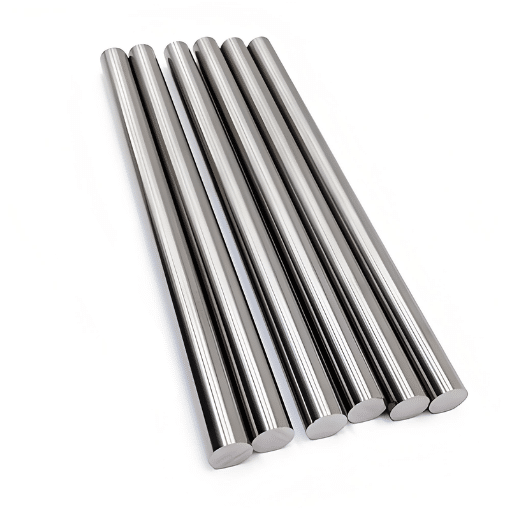
For accurate, current pricing on Inconel 625 round bar or Inconel 718 round bar, submit your specifications and our team will respond with availability and pricing within 24 hours.
Sourcing Inconel 625 and 718 from China
Chinese Grade Equivalents
Chinese national standards designate these alloys as:
- GH3625 = Inconel 625 (UNS N06625) per GB/T 15007
- GH4169 = Inconel 718 (UNS N07718) per GB/T 14992
When properly produced with equivalent melt practice and heat treatment, GH3625 and GH4169 meet the same mechanical property requirements as their Western equivalents. The chemistry ranges in GB/T standards align closely with UNS specifications.
Melt Quality Requirements
The melting process determines the cleanliness, segregation, and mechanical properties of the final product. Three quality tiers exist:
Air melt (general industrial): Suitable for non-critical chemical processing, marine, and general industrial applications. Lower cost but higher inclusion content and potential segregation.
VIM/ESR (vacuum induction melting + electroslag remelting): Required for aerospace, critical chemical processing, and oil and gas applications. VIM provides precise chemistry control and low gas content. ESR refines the microstructure and reduces segregation. This is the minimum melt practice for most demanding applications.
Triple melt (VIM+ESR+VAR): Reserved for rotating aerospace components (turbine disks, compressor wheels) where fatigue life is critical. VAR (vacuum arc remelting) provides the finest microstructure and lowest inclusion content.
Supplier Qualification
When sourcing GH3625 or GH4169 from Chinese mills, verify:
- In-house spectrometer capability for real-time chemistry verification
- Compliance with ASTM B637 (718) or B446 (625) specifications
- Material Test Reports (MTR) with actual heat chemistry and mechanical test results
- EN 10204 3.1 certificates minimum; 3.2 for critical applications
- Third-party inspection capability (SGS, BV, Lloyd’s)
Lead Time and Availability
Common stock sizes for both grades include:
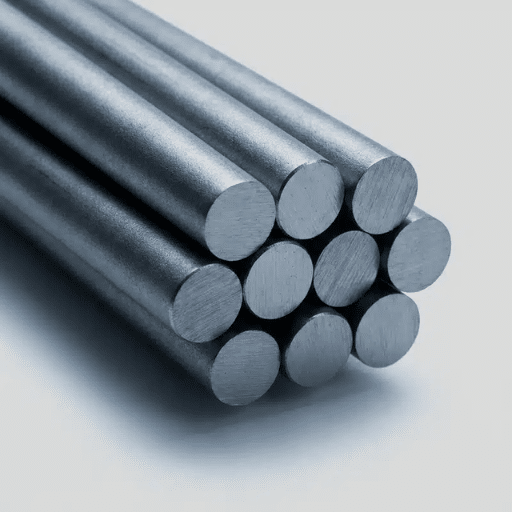
- Bar: 10-300 mm diameter, round and hexagonal
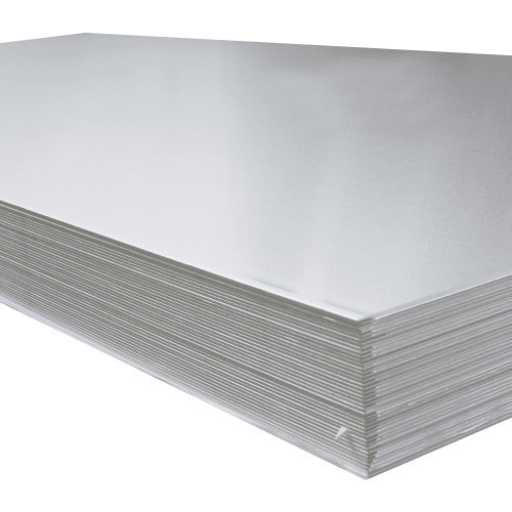
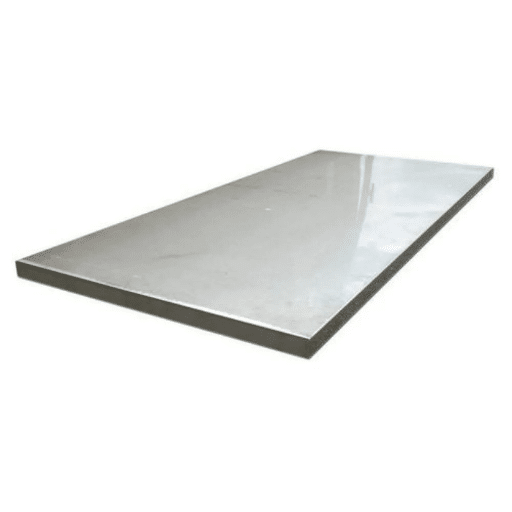
- Plate: 3-80 mm thickness, standard widths
- Pipe: Schedule 10S through 160, seamless and welded
Custom orders for non-standard dimensions, forgings, or aerospace-spec material require 8-16 weeks depending on product form and melt practice.
Decision Matrix: When to Choose 625 vs 718
| Decision Factor | Choose Inconel 625 | Choose Inconel 718 |
|---|---|---|
| Primary failure mode | Corrosion, pitting, crevice attack | Creep, fatigue, strength loss |
| Operating temperature | Below 600°C or above 750°C (oxidation) | 400-700°C (load-bearing) |
| Environment | Acids, chlorides, seawater, reducing media | Air, combustion gases, mild industrial |
| Required strength | Moderate (414-758 MPa yield) | High (1,034-1,172 MPa yield) |
| Fabrication complexity | Simple welding, no PWHT | Controlled welding + aging cycle |
| Budget priority | Lower material cost, no heat treatment | Higher cost justified by performance |
| Industry | Chemical processing, marine, offshore | Aerospace, gas turbines, downhole tools |
When both corrosion and strength are critical, consider whether the application can tolerate 625’s lower strength or 718’s lower corrosion resistance. In some cases, neither alloy is optimal, and alternatives like Hastelloy C-276 (for extreme corrosion) or Waspaloy (for extreme temperature) may be more appropriate.
For a detailed comparison with other corrosion-resistant alloys, see our nickel-based alloy guide.
Frequently Asked Questions
What is the difference between Inconel 625 and 718?
Inconel 625 is a solid-solution strengthened alloy optimized for corrosion resistance, with 8-10% molybdenum and a PREN of approximately 51.5. Inconel 718 is a precipitation-hardened alloy optimized for high-temperature strength, delivering yield strengths above 1,000 MPa up to 700°C. Choose 625 for chemical processing, seawater, and acid environments. Choose 718 for aerospace, gas turbines, and high-temperature structural applications.
Which is stronger, Inconel 625 or 718?
Inconel 718 is significantly stronger. At room temperature, 718 achieves 1,034-1,172 MPa yield strength versus 625’s 414-758 MPa. At 650°C, the gap widens further: 718 maintains approximately 925 MPa versus 625’s approximately 380 MPa. However, 625 offers superior ductility (30-50% elongation vs. 12-18%) and far better corrosion resistance.
Can I use Inconel 625 instead of 718?
Only if corrosion resistance is the priority and your strength requirements fall within 625’s capability (414-758 MPa yield at room temperature). If your application involves sustained loads above 500°C, 625 does not provide adequate creep resistance. Always verify against your design stress requirements at the actual operating temperature.
Which is more expensive, Inconel 625 or 718?
Inconel 718 typically costs 15-30% more than 625 in equivalent product forms due to its more complex heat treatment cycle (solution anneal + two-step aging). However, raw material cost depends on nickel prices, order volume, and melt practice. For accurate pricing, request a quotation with your specific dimensions and specifications.
What is the Chinese equivalent of Inconel 625?
GH3625 per GB/T 15007. When produced with VIM/ESR melting and proper heat treatment, GH3625 meets the same mechanical and chemical specifications as UNS N06625.
What is the Chinese equivalent of Inconel 718?
GH4169 per GB/T 14992. GH4169 from qualified mills with VIM/ESR capability meets the same specifications as UNS N07718, including the critical high-temperature mechanical properties required for aerospace applications.
Can Inconel 718 be used in seawater?
Inconel 718 is acceptable for marine applications with limited or intermittent seawater exposure, particularly above the waterline or with cathodic protection. For continuous immersion in seawater, Inconel 625 is the superior choice due to its higher PREN and resistance to crevice corrosion.
Which is better for high-temperature applications?
For load-bearing applications between 400-700°C, Inconel 718 is the clear choice. Its precipitation-hardened microstructure maintains approximately 925 MPa yield strength at 650°C compared to 625’s approximately 380 MPa. For oxidation resistance above 700°C where structural loads are moderate, Inconel 625 performs better.
What filler wire for Inconel 625 vs 718 welding?
ERNiCrMo-3 (AWS A5.14) is the standard filler for both alloys. For 625, this provides a matching corrosion-resistant weld deposit. For 718, matching 718 filler wire may be specified for critical aerospace welds where post-weld aging is required to restore full mechanical properties.
Conclusion
The Inconel 625 vs 718 decision comes down to a single question: what kills your component first, corrosion or heat?
Inconel 625 is the corrosion fighter. Its high molybdenum content, solid-solution microstructure, and excellent weldability make it the standard for chemical processing, seawater, and acid environments. It does not require post-weld heat treatment, and its PREN of approximately 51.5 places it among the most pitting-resistant alloys available.
Inconel 718 is the strength champion. Its precipitation-hardened microstructure delivers yield strengths above 1,000 MPa at temperatures up to 700°C, making it the most widely used superalloy in aerospace and gas turbine applications. Above 700°C, the δ phase limits its usefulness, but below that threshold, no other common alloy matches its strength-to-cost ratio.
For engineers and procurement teams sourcing these alloys from China, GH3625 and GH4169 offer equivalent performance when produced with proper VIM/ESR melting and certified to ASTM specifications. The key is verifying melt practice and mechanical testing, not just chemical composition.
Need help specifying the right grade for your application? Contact our metallurgical team with your operating conditions, and we will recommend the optimal alloy and form factor within 24 hours.