The choice between Hastelloy B2 and Hastelloy C276 comes down to one question: is your process stream purely reducing, or does it contain oxidizers? Hastelloy B2 (UNS N10665) wins for clean reducing acids, especially hydrochloric acid, while Hastelloy C276 (UNS N10276) is the safer choice for everything else: mixed acids, chlorides, wet chlorine, and any environment where process conditions might fluctuate. Pick the wrong one and you risk catastrophic corrosion failure. This guide gives you the decision framework, composition data, welding truth, cost context, and sourcing advice you need to specify the right grade.
Every alloy has a weakness. B2 is nearly invincible in boiling hydrochloric acid, yet a trace of ferric ion can destroy it in weeks. C276 is called the “universal alloy,” yet it costs more and underperforms B2 in clean reducing-acid service. Understanding which grade your application demands is the difference between 18 months and 7 years of service life.
By the end of this article, you’ll know exactly which grade to specify, how to verify it, what it costs, and where to source it certified.
Key Takeaways
- B2 (UNS N10665) is a nickel-molybdenum alloy (Mo 26-30%, Cr ≤1%) engineered for reducing acids. It delivers the best available resistance to hydrochloric acid at all concentrations and temperatures up to boiling.
- C276 (UNS N10276) is a nickel-chromium-molybdenum-tungsten alloy (Cr 14.5-16.5%, Mo 15-17%, W 3-4.5%) that resists both oxidizing and reducing media, plus chlorides, wet chlorine, and seawater.
- Choose B2 only when the environment is strictly reducing and free of oxidizing contaminants. Even ~50 ppm of ferric or cupric ions causes rapid attack.
- Choose C276 when oxidizers, mixed acids, chlorides, or uncertain conditions are present. It is the safer default and welds in the as-welded condition without post-weld heat treatment.
- B2 costs less per kg (plate ~25−38/kgvsC276 25−38/kgvsC276 30-45/kg), but total cost includes fabrication. B2’s strict welding controls can offset the material savings.
- Both grades ship with full material traceability. Ask your supplier for MTR, spectral analysis, and PMI verification on every order.
What Are Hastelloy B2 and C276?

Hastelloy B2 and Hastelloy C276 are both nickel-based corrosion-resistant alloys from the Hastelloy family, but they belong to different alloy families with opposite design philosophies.
Hastelloy B2 (UNS N10665, W. Nr. 2.4617, NS322) is a nickel-molybdenum alloy with roughly 65-69% nickel and 26-30% molybdenum. It contains essentially no chromium (≤1%). The high molybdenum content gives it extreme resistance to reducing acids, particularly hydrochloric acid at all concentrations and temperatures up to boiling point.
Hastelloy C276 (UNS N10276, W. Nr. 2.4819, NS334/NS3304) is a nickel-chromium-molybdenum-tungsten alloy with approximately 57% nickel, 14.5-16.5% chromium, 15-17% molybdenum, and 3-4.5% tungsten. The chromium forms a protective passive oxide film that handles oxidizing media, while the molybdenum and tungsten provide localized corrosion resistance.
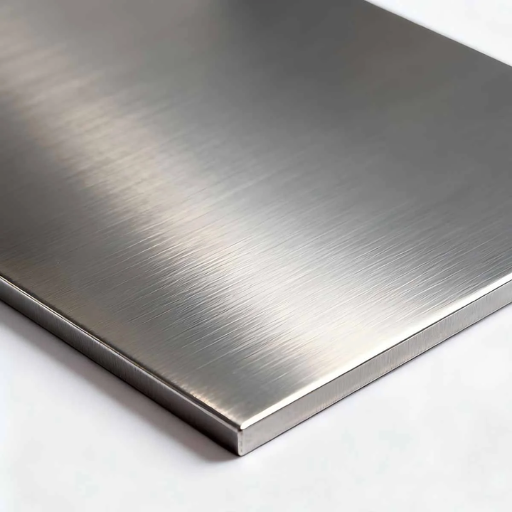
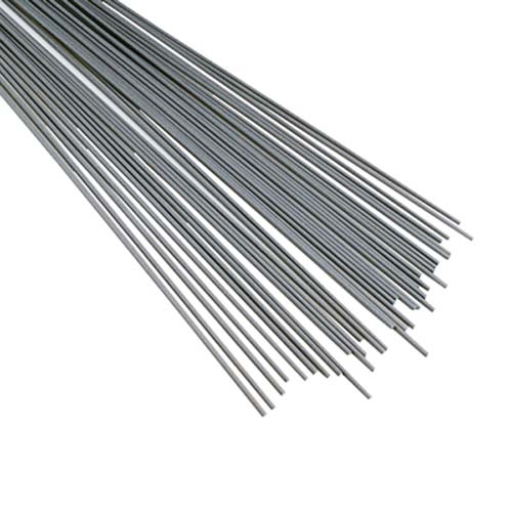
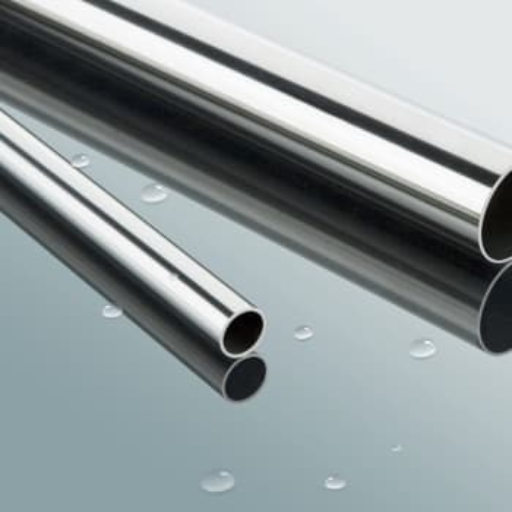
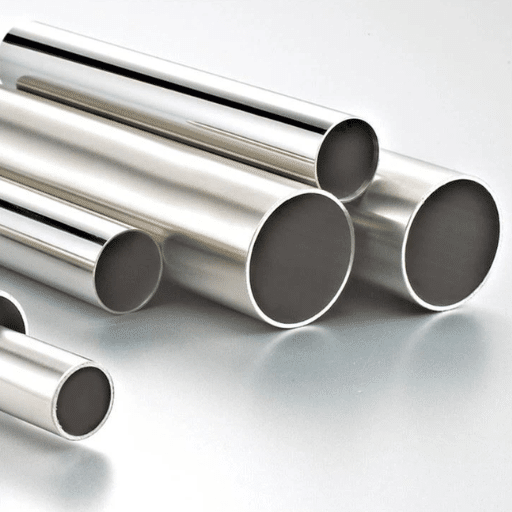
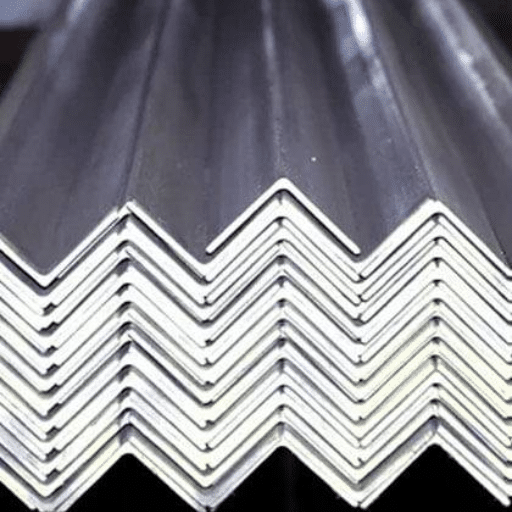
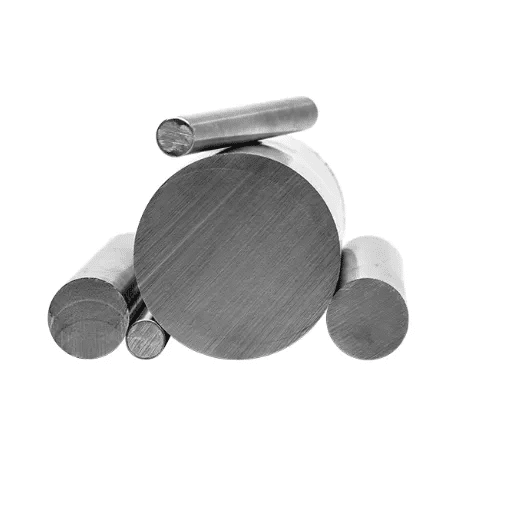
Both are available in plate, sheet, bar, rod, pipe, and tube forms. At Jiangsu Zhonggongte, we stock and manufacture both grades. Our Hastelloy B2 rod, Hastelloy C276 plate, and Hastelloy pipe product lines cover the full range of forms these grades ship in.
Chemical Composition Comparison
The composition table below tells the story. The single most important difference is the chromium gap: B2 has essentially none, C276 carries 14.5-16.5%.
| Element | Hastelloy B2 (UNS N10665) | Hastelloy C276 (UNS N10276) |
|---|---|---|
| Nickel (Ni) | 65-69% (balance) | ~57% (balance) |
| Molybdenum (Mo) | 26-30% | 15-17% |
| Chromium (Cr) | ≤1.0% | 14.5-16.5% |
| Tungsten (W) | None | 3.0-4.5% |
| Iron (Fe) | ≤2.0% | 4.0-7.0% |
| Cobalt (Co) | ≤1.0% | ≤2.5% |
| Carbon (C) | ≤0.02% | ≤0.01% |
| Silicon (Si) | ≤0.10% | ≤0.08% |
That chromium is what allows C276 to form a passive oxide film in oxidizing environments. B2’s composition deliberately excludes it, which is what makes B2 so effective in pure reducing acids where chromium offers no benefit and can even hurt corrosion performance. The trade-off is severe: without chromium, B2 fails catastrophically in the presence of oxidizers.
In Chinese GB/T 15007 notation, these grades are designated NS322 (B2) and NS334 or NS3304 (C276). If your project drawings reference NS-grade designations, the composition mapping is identical to the UNS system.
Corrosion Resistance: The Reducing vs Oxidizing Divide
This is where the two alloys diverge completely. Understanding your process stream chemistry is the single most important factor in grade selection.
Hastelloy B2: The Reducing-Acid Specialist
B2 delivers outstanding resistance to reducing media across the full concentration and temperature range:
- Hydrochloric acid at all concentrations and temperatures up to boiling
- Sulfuric acid under reducing conditions (dilute and intermediate concentrations)
- Phosphoric acid in reducing environments
- Hydrofluoric acid and HF alkylation service
- Acetic acid and other organic acids
The mechanism is the high molybdenum content, which works directly against the corrosive attack of reducing acid ions. In service conditions where B2 is applied correctly, its corrosion rates are remarkably low.
Here is a real example from chemical processing. A pharmaceutical processor was running hydrochloric acid distillation columns in C276 and replacing internals every 18 months due to corrosion. After switching to B2, the same columns ran for more than 7 years before the next replacement. That’s the difference the right grade makes when the environment is genuinely reducing.
Hastelloy C276: The Broad-Spectrum Workhorse
C276 handles a far wider range of corrosive media because its chromium provides resistance in oxidizing conditions:
- Mixed acids that are primarily reducing but contain oxidizing impurities
- Wet chlorine gas, hypochlorite, and chlorine dioxide
- Ferric and cupric chlorides (these destroy B2)
- Seawater and chloride-rich environments with excellent pitting and crevice corrosion resistance
- Sour gas service (H₂S environments) in the annealed condition
- Oxidizing acids such as nitric acid, where B2 is completely unsuitable
C276’s pitting resistance equivalent number (PREN) is roughly 69 versus about 65 for B2. Both are excellent, but C276 performs better in chloride-rich, stagnant, or crevice-prone zones.
Which Contaminants Kill B2?
If your stream can contain any of the following, B2 is the wrong choice:
| Contaminant | Threshold | Consequence for B2 |
|---|---|---|
| Ferric ions (Fe³⁺) | ~50 ppm | Rapid, catastrophic attack |
| Cupric ions (Cu²⁺) | ~50 ppm | Rapid, catastrophic attack |
| Dissolved oxygen | ~50 ppm | Localized pitting and general corrosion |
| Nitric acid | Any | Unacceptable corrosion rates |
| Wet chlorine / hypochlorite | Any | Not rated for these services |
The practical warning is important: iron and copper can enter a process stream from upstream piping, valves, or pumps. If there’s any realistic chance of ferric or cupric ion contamination, engineers should choose C276 even if the primary chemistry looks reducing. Trace oxidizers turn a “B2 application” into a failure within weeks.
Mechanical & Physical Properties
Both grades are strong and fully austenitic. C276 generally offers higher strength and better ductility, which makes it easier to cold-form into complex shapes.
| Property | Hastelloy B2 (UNS N10665) | Hastelloy C276 (UNS N10276) |
|---|---|---|
| Tensile strength (min) | ~690-825 MPa | ~690 MPa (min) |
| Yield strength 0.2% offset | ~275-400 MPa | ~283 MPa (min) |
| Elongation | ~35-40% | ~40-50% |
| Density | ~9.2 g/cm³ | ~8.89 g/cm³ |
| Melting range | ~1330-1380°C | ~1325-1370°C |
| Modulus of elasticity | ~217 GPa | ~205 GPa |
| Magnetism | Essentially non-magnetic | Essentially non-magnetic |
B2 is denser because of its high molybdenum content. For weight-sensitive designs, that density difference matters, but for chemical processing equipment it’s rarely the deciding factor.
Welding & Fabrication: Why B2 Is Harder to Work With

This is the section most comparison guides skip, and it is often where projects go wrong.
Hastelloy B2 Welding Challenges
B2 is thermally sensitive. When heated into the roughly 550-850°C range, it precipitates brittle intermetallic phases, most notably the ordered Ni₄Mo (β-phase). These precipitates severely reduce ductility and can cause cracking during welding or in service at moderately elevated temperatures. B2 has essentially zero incubation time for this precipitation at about 750°C, which makes heat control critical.
Practical consequences for fabrication:
- Low heat input is mandatory. Use GTAW (TIG) with controlled parameters.
- Interpass temperature must stay at or below 120°C. Exceeding it risks sensitization.
- Filler metal is AWS ERNiMo-7 (W. Nr. 2.4615).
- Post-weld solution annealing is often required to restore ductility, which adds cost and schedule time.
- Machining B2 work-hardens quickly and requires rigid setups and sharp tooling.
One fabricator we know learned this the hard way. Their shop accepted a B2 vessel order but let welders use standard nickel-alloy heat inputs. When the welds were inspected, the heat-affected zones showed the classic embrittlement cracking. The components were scrapped and remade with strict low-heat-input procedures and interpass control. The lesson: B2 is unforgiving in the weld shop.
Hastelloy C276 Welding Advantages
C276 is far more forgiving:
- Usable in the as-welded condition in most applications, no post-weld heat treatment required
- Resists grain boundary precipitation due to its low carbon content (≤0.01%)
- Standard welding procedures (GTAW, GMAW, SMAW) work without special heat-input gymnastics
- Filler metal is AWS ERNiCrMo-4
For fabrication shops, the weldability difference is often the decisive factor in total cost of ownership. C276’s forgiving weld behavior translates directly into fewer rejects, less rework, and faster delivery. If you need details on nickel-alloy welding procedures, our team can advise on the right filler and parameters for your joint configuration.
Hastelloy B2 vs C276 Cost Comparison
Price claims about these two grades are contradictory across the market, so let’s settle it with form-by-form data. The 2026 export pricing below is indicative and volatile, driven primarily by nickel and molybdenum markets.
| Product Form | Hastelloy B2 (USD/kg) | Hastelloy C276 (USD/kg) |
|---|---|---|
| Plate / Sheet | $25-38 | $30-45 |
| Pipe / Tube | $28-45 | $35-55 |
| Round Bar | $26-42 | $32-50 |
| Forged Fittings | $40-60 | $50-75 |
| Flanges | $45-70 | $55-85 |
Chinese bulk pricing for B2 runs roughly ¥165-260/kg (~$23-36), while certified small-lot orders from international suppliers can run 2-4x higher depending on documentation and inspection requirements.
Hastelloy price per kg varies by product form, certification level, and lot size. The table above is indicative 2026 export pricing that moves with the nickel and molybdenum markets.
Why B2 is cheaper per kg: its composition is simpler. It contains no chromium or tungsten, and while its molybdenum content is higher, the overall alloying package costs less than C276’s chromium-plus-tungsten combination.
But material price is not total cost. B2’s strict welding controls and frequent post-weld solution annealing can erase its material advantage in fabricated equipment. If your project involves extensive welded structures, C276’s as-welded behavior often makes it the lower total-cost option despite the higher per-kg price.
For the same reason, lifecycle cost matters more than unit price. In the HCl distillation example above, the B2 columns delivered roughly 5x the service life of C276 at a lower material cost. The grade that costs more per kg can be the cheaper alloy over a plant’s life, and the reverse is equally true when fabrication is considered.
Pricing changes with nickel and molybdenum markets. For current ex-works pricing on B2 or C276 plate, bar, or pipe, request a live quotation and we will respond within 24 hours.
Selection Decision Matrix
Use this table to narrow the choice quickly. Match your process conditions, then verify the recommendation with your supplier.
| Environment Condition | Recommended Grade | Why |
|---|---|---|
| Pure / concentrated HCl, all concentrations and temps to boiling | B2 | Best-in-class reducing-acid resistance, lowest corrosion rate |
| Dilute reducing H₂SO₄ or H₃PO₄, no oxidizers | B2 | High Mo content excels in reducing media |
| HF alkylation service | B2 | Preferred for hydrofluoric acid service |
| Mixed acids with possible oxidizing impurities | C276 | Chromium passive film handles oxidizing components |
| Chlorides, seawater, stagnant chloride zones | C276 | Higher PREN, better pitting and crevice resistance |
| Wet chlorine, hypochlorite, chlorine dioxide | C276 | One of the few materials rated for these services |
| Sour gas / H₂S service | C276 (annealed) | NACE MR0175 compliant; B2 generally excluded |
| Unknown, fluctuating, or mixed environment | C276 | Safe, versatile default |
| Any risk of Fe³⁺ / Cu²⁺ contamination | C276 | B2 fails catastrophically with trace oxidizers |
The simple rule: B2 for strictly reducing service, C276 for everything else. When in doubt, choose C276.
One more nuance that most selection guides omit: C276 in the annealed condition is NACE MR0175 / ISO 15156 compliant for sour gas service, while B2 is generally not permitted in H₂S environments. If your application is in oil and gas with hydrogen sulfide present, that alone rules out B2.
Applications by Industry

Where Hastelloy B2 Is Specified
- Chemical processing: HCl evaporators, storage tanks, distillation columns, and acid recovery systems
- Pharmaceutical production: reactors and vessels handling strictly reducing chemistries
- Petrochemical: HF alkylation units
- Hydrometallurgy: wet metallurgy and acid leaching equipment
- Acid production: acetic, phosphoric, and reducing sulfuric acid service
Where Hastelloy C276 Is Specified
- Flue gas desulfurization (FGD): scrubber internals, ducting, and reheater components
- Pollution control: wet chlorine and hypochlorite handling systems
- Oil and gas: sour gas wellhead components, pipeline cladding, offshore platforms
- Marine: seawater-exposed components and subsea equipment
- Pulp and paper: digesters and bleach plant equipment
- Chemical processing: reactors, heat exchangers, and piping for mixed-acid environments
If you are deciding between these grades for a specific plant application, tell us your operating temperature, media composition, and fabrication method. Our metallurgical engineers will confirm the right grade for your system. That is the partnership we bring as a specialty alloy manufacturer in China.
Sourcing Certified B2 and C276 from China
Procurement managers evaluating Chinese suppliers have two legitimate concerns: composition accuracy and documentation completeness. Here is how to verify both.
Standards and Delivery Specifications
Both grades are available under international and Chinese delivery standards:
- Hastelloy B2: ASTM B333 (plate/strip), ASTM B335 (rod/bar), ASTM B622 (seamless tube); GB/T 15007 designation NS322 with GB/T 15008 (plate), 15010 (bar), and 15011 (tube) delivery standards
- Hastelloy C276: ASTM B575 (plate), ASTM B574 (rod/bar), ASTM B622 (seamless tube); GB/T 15007 designation NS334/NS3304
What to Request on Every Order
- Mill test report (MTR) with full elemental composition, mechanical properties, and heat number
- Spectral analysis / PMI verification confirming the composition at the shipping stage
- EN 10204 3.1 or 3.2 certification where your project requires it
- Third-party inspection (SGS, TUV, or similar) for critical applications
- NDT documentation (ultrasonic testing) for pressure-rated components
The counterfeit risk with B2 deserves a specific warning. Because B2’s value comes almost entirely from its molybdenum content (26-30%), an unscrupulous supplier can substitute a lower-molybdenum nickel alloy and pocket the difference. The material may look identical, but it will corrode rapidly in HCl service. PMI spectral verification at receipt is the only reliable safeguard. This is why every Hastelloy product we ship is verified with in-house direct-reading spectrometry and supplied with a full MTR.
At Jiangsu Zhonggongte, we operate vacuum induction furnaces and electroslag remelting furnaces, plus an in-house laboratory with spectrometers, tensile testers, hardness testers, metallographic analysis, and ultrasonic NDT. We certify to ASTM, ASME, GB, and JIS standards, and we ship globally with 24-hour logistics support.
Hastelloy B2 vs C276 FAQ
Which is better, Hastelloy B2 or C276?
Neither is universally better. B2 is superior in clean reducing acids, especially hydrochloric acid. C276 is superior in oxidizing, mixed, or chloride-containing environments. The correct choice depends entirely on your process chemistry.
Can Hastelloy B2 be used with nitric acid?
No. B2 contains no chromium and fails catastrophically in oxidizing media like nitric acid. C276 is the grade to consider for nitric acid service.
Is Hastelloy B2 resistant to hydrochloric acid?
Yes, it is the premier alloy for hydrochloric acid at all concentrations and temperatures up to boiling, provided the environment stays reducing and free of ferric, cupric, or oxygen contamination.
Does Hastelloy B2 need post-weld heat treatment?
Often yes. B2 can precipitate brittle Ni₄Mo phases when held in the 550-850°C range, so welded components frequently require post-weld solution annealing. C276 is usable in the as-welded condition in most applications.
What filler wire is used for Hastelloy B2 welding?
AWS ERNiMo-7 (W. Nr. 2.4615). C276 uses AWS ERNiCrMo-4.
Is Hastelloy B2 magnetic?
No, it is essentially non-magnetic in the solution-annealed condition, as is C276.
What is Hastelloy B2 vs B3?
B3 (UNS N10675) is the thermally stable successor to B2 with improved weldability and resistance to embrittlement, at a higher price. B2 remains the cost-effective choice for strictly reducing service.
Why is Hastelloy so expensive?
The cost is driven by nickel and molybdenum content, both of which are premium alloying elements. C276 adds chromium and tungsten, which raises its price above B2.
Conclusion
Choosing between Hastelloy B2 and Hastelloy C276 is a chemistry decision, not a brand preference. B2 delivers the best available performance in clean reducing acids, particularly hydrochloric acid, at a lower material cost. C276 delivers broad-spectrum resistance across oxidizing, reducing, mixed, and chloride environments, and it welds far more forgivingly.
The five takeaways:
- B2 (UNS N10665, NS322) for strictly reducing acid service, especially HCl
- C276 (UNS N10276, NS3304) for everything else, including chlorides, oxidizers, and sour gas
- B2 costs less per kg but demands strict welding control; consider total lifecycle cost
- Verify composition with MTR and PMI spectral analysis, especially for B2’s molybdenum content
- Choose C276 as the safe default when process conditions are uncertain
Every project deserves a material decision made on engineering data, not guesswork. Submit your operating conditions and material list, and our technical team will respond within 24 hours with certified B2 or C276 pricing, availability, and delivery. Request a quote with full MTR documentation and get certainty on your next project.