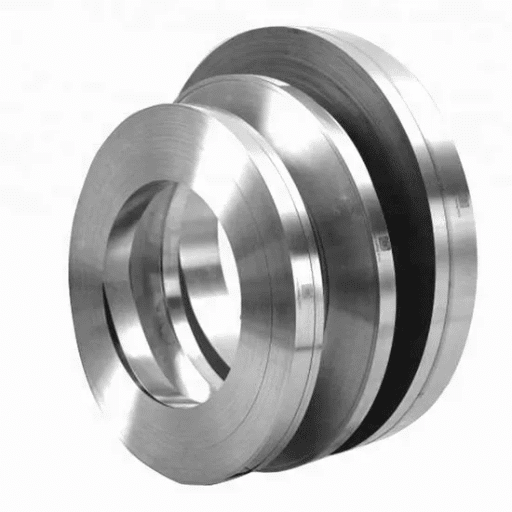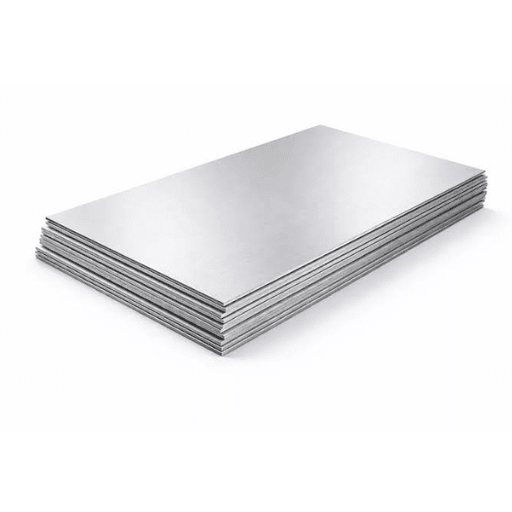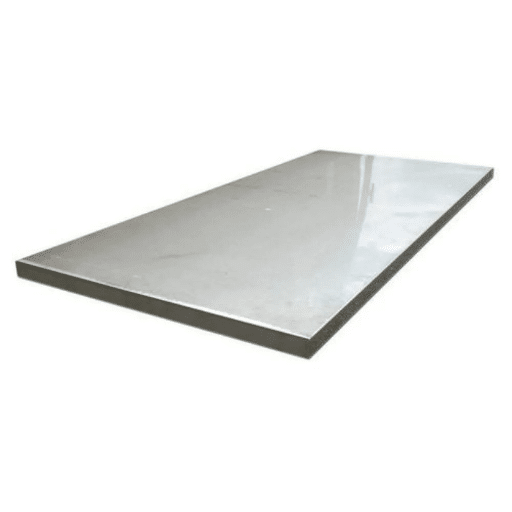
Hastelloy B2 plate is the buy form engineers reach for when an HCl reactor or chemical vessel must survive boiling hydrochloric acid, and it ships to ASTM B333 (ASME SB333) in solution-annealed condition, from thin cold-rolled sheet to hot-rolled plate over 100 mm thick. The plate is a nickel-molybdenum alloy, UNS N10665 in the US, W. Nr. 2.4617 in Europe, and NS322 in China per GB/T 15007, carrying 26-30% molybdenum that holds corrosion rates below 0.1 mm/year in clean reducing-acid service.
But here is the tension. Search “Hastelloy B2 plate” and you will find supplier pages quoting thickness ranges from 0.3 mm to 1,200 mm for the same ASTM B333 product. Same standard, wildly different numbers. That gap is exactly why the plate specification is the contract, and most buyers never write one.
A procurement engineer once compared three “Hastelloy B2 plate” listings and found three incompatible thickness ranges: 0.3-20 mm, 0.3-1,200 mm, and 0.1-12 mm, all labeled ASTM B333. He ordered on price and got a plate that failed dimensional inspection on arrival. The mistake was not the supplier. It was the order, which specified no tolerance class, delivery condition, or certification package.
The performance of B2 plate is decided on the purchase order, not in the reactor. The form, the thickness, the tolerance class, the annealing condition, and the certification you specify all matter. Leave those fields blank, and a supplier will fill them with whatever interpretation is cheapest to ship.
This guide turns that into a checklist. You get the complete Hastelloy B2 plate buyer’s toolkit: the ASTM B333 and GB/T 15008 specifications, size ranges by form with real tolerance detail, the solution-annealing delivery-condition truth, the NDT and certification that prove quality, a B2 vs C276 vs B3 plate decision summary, 2026 pricing reality, and an order-specification checklist you can send to any mill. If you are comparing grades first, start with our Hastelloy B2 vs C276 comparison.
Key Takeaways
- Hastelloy B2 plate (UNS N10665 / NS322) ships to ASTM B333 / ASME SB333 in solution-annealed condition; rod, seamless tube, and welded pipe use B335, B622, and B619/B626 respectively.
- Indicative sizes: cold-rolled sheet roughly 0.1-10 mm, hot-rolled plate roughly 3-100 mm (to 150-200 mm on order), widths to 2,500 mm, with stock plates like 1000×2000, 1220×2440, 1500×3000, and 2000×4000 mm. Confirm the tolerance class per ASTM B906.
- Delivery condition is solution annealing at 1060-1150°C with a rapid water quench, not a casual “annealed” stamp. Rapid cooling keeps molybdenum in solid solution and prevents β-phase/μ-phase embrittlement.
- Verify molybdenum at or above 26% with PMI spectral analysis plus a mill test report. “Certified B2” is not proof of B2 until the delivered metal confirms it.
- B2 plate wins clean reducing-acid service; choose C276 plate for streams that can see oxidizers, and B3 plate when the fabricator needs as-welded stability without post-weld heat treatment.
What Is Hastelloy B2 Plate?

Hastelloy B2 plate is a nickel-molybdenum plate (UNS N10665, NS322) with 26-30% molybdenum and virtually no chromium, engineered to resist hydrochloric acid at all concentrations and temperatures up to boiling, with typical corrosion rates below 0.1 mm/year in clean reducing service.
The grade is Haynes International’s low-carbon, low-silicon successor to the original Hastelloy B (UNS N10001). The tight control on carbon and silicon keeps molybdenum locked in solid solution, which protects the alloy against the second-phase precipitation that plagued the original grade in welded fabrications.
Designations That Describe the Same Plate
Buy internationally and you will see the same metal under four names:
| Designation System | Name | Notes |
|---|---|---|
| UNS (USA) | N10665 | ASTM B333 / ASME SB333 |
| Werkstoff (Germany) | W. Nr. 2.4617 | DIN NiMo28 |
| GB/T 15007 (China) | NS322 | Ni = nickel, S = corrosion-resistant, 322 = alloy series |
| Brand name | HASTELLOY B-2 | Haynes International trademark |
The Chinese identity matters more than most international buyers realize. When a Chinese mill quotes “NS322 plate,” it is the same metal as Hastelloy B2, but the delivery standard is often GB/T 15008 rather than ASTM B333. Understanding both sides of that cross-reference is a genuine sourcing advantage, and our NS322 equivalents guide maps the full Chinese designation system.
Sheet vs Plate: The Distinction That Changes Your Order
The engineering boundary between “sheet” and “plate” is thickness-based. In the nickel-alloy world, product thinner than about 4.8 mm (3/16 inch) is generally sold as sheet, and 4.8 mm and above as plate. Commercial suppliers blur the line constantly, and the same material can be called sheet at 4 mm by one mill and plate at 3 mm by another.
That matters for three reasons. First, pricing differs: thin cold-rolled sheet costs more per kilogram than thick hot-rolled plate. Second, tolerances differ: cold-rolled sheet holds far tighter thickness than hot-rolled plate. Third, the mill test report must state which form you ordered, and ASTM B333 covers plate, sheet, and strip together.
When in doubt, write “Hastelloy B2 plate, UNS N10665, 10 mm thick, 1500 x 3000 mm, solution-annealed” and leave no room for a supplier to reclassify it as sheet.
ASTM B333 & ASME SB333: The Standards That Define B2 Plate
ASTM B333 is the Standard Specification for Nickel-Molybdenum Alloy Plate, Sheet, and Strip. It covers hot-rolled and cold-rolled product in solution-annealed and descaled condition for UNS N10665. ASME SB333 is the identical specification adopted into the ASME Boiler and Pressure Vessel Code, which is what a chemical plant needs when the plate goes into a code-stamped vessel.
If you are building pressure vessels, heat exchangers, or piping for a licensed plant, write ASME SB333 into your spec and reference ASME Section II, Part B. Many fabricators also reference ASTM B906, the flat-product dimensional tolerance standard for nickel and nickel alloys, to lock down thickness and flatness tolerances. It is the authoritative source for the tolerance classes in the size section below.
For the full mechanical and physical profile across every form, our Hastelloy B2 properties guide has the complete datasheet.
Chemical Composition (UNS N10665 / NS322)
| Element | Spec (wt%) |
|---|---|
| Nickel (Ni) | 65.0 min (balance) |
| Molybdenum (Mo) | 26.0-30.0 |
| Iron (Fe) | 2.0 max |
| Chromium (Cr) | 1.0 max |
| Carbon (C) | 0.02 max |
| Silicon (Si) | 0.10 max |
| Manganese (Mn) | 1.0 max |
| Cobalt (Co) | 1.0 max |
| Phosphorus (P) | 0.04 max |
| Sulfur (S) | 0.03 max |
Molybdenum is the corrosion engine. At 26-30%, it drives the outstanding performance in hydrochloric and other reducing acids. Chromium is held below 1% on purpose, because chromium in a molybdenum-rich matrix creates second phases that hurt corrosion resistance. If a certificate shows chromium creeping above 1%, or molybdenum sitting at 24%, that plate is not B2, no matter what the header says.
Distributors publish the same composition limits and the same boiling-HCl performance claim, so cross-checking is easy: see the Rolled Alloys Hastelloy B-2 datasheet for the manufacturer’s numbers.
Mechanical & Physical Properties (Solution-Annealed Minimums)
| Property | Minimum / Typical |
|---|---|
| Tensile strength | 760 MPa (110 ksi) min |
| 0.2% yield strength | 340 MPa (49-51 ksi) min |
| Elongation | 40% (50 mm gauge) min |
| Hardness | 230 HBW / 100 HRB max |
| Density | ~9.2 g/cm³ |
| Melting range | 1330-1380°C |
| Thermal conductivity | ~10.8 W/(m·K) at 20°C |
The corrosion data is the reason you buy the plate, and our Hastelloy B2 corrosion resistance guide maps the environment-by-environment performance, including the oxidizer contamination limits most catalogs omit. For a compact reference, the AZoM Hastelloy B-2 datasheet collects the same physical and mechanical data in one place.
Hastelloy B2 Plate Sizes, Dimensions & Tolerances
The size table below is compiled from supplier data and ASTM B906 practice. Treat it as indicative, not a single mill’s guarantee. Different suppliers genuinely ship different ranges, and the tolerance class is what you confirm with the mill before you order.
| Form | Thickness (mm) | Width (mm) | Length (mm) | Typical Condition / Finish |
|---|---|---|---|---|
| Cold-rolled sheet | 0.1-10 (to 20 on order) | 1000-1500 | 2000-3000 | Solution-annealed, 2B/2D, or pickled |
| Hot-rolled plate | 3-100 (to 150-200 on order) | 1000-2500 (to 3500) | 2000-12000 | Solution-annealed, descaled/pickled |
| Strip | 0.3-10 | 50-500 | Coil | Cold-rolled, annealed |
| Coil | 2.5-10 | 1000-1500 | Coil | Hot- or cold-rolled |
Standard Stock Sizes
Most mills keep B2 plate in a handful of standard footprints: 1000×2000 mm, 1220×2440 mm, 1500×3000 mm, 2000×2000 mm, and 2000×4000 mm. If your drawing calls for a standard size, you buy faster and cheaper. If it calls for a special footprint, expect a cutting or rolling lead time.
Thickness Tolerances: Hot-Rolled vs Cold-Rolled
Here is where the “spec is the contract” idea bites. Hot-rolled plate tolerances are generous, typically around ±0.5% of nominal thickness or about ±0.3 mm, while cold-rolled sheet holds far tighter, on the order of ±0.03 mm. ASTM B906 defines the tolerance classes, and your order should name one. If you buy “10 mm plate” without a tolerance class and the fabricator machines to a 9.5 mm minimum wall, the supplier’s interpretation becomes your inspection problem.
Cut-to-Size, Circles, Rings & Special Dimensions
Most B2 plate buyers do not need full mill plate. They need circles for tank heads, rings for flanges, or rectangles cut to a drawing. In-house cutting, plasma and waterjet, plus edge preparation, are standard services at a manufacturer-supplier, and cutting a 1500×3000 mm plate into a weld-ready circle saves machining hours. For stocked B2 plate and sheet cut to size, see our Hastelloy B2 plate and sheet stock.
Delivery Condition: Solution Annealing & Surface Finish

Hastelloy B2 plate is delivered solution-annealed. That is not a formality; it is the heat treatment that makes the metal corrosion-resistant.
The mill heats the plate to 1060-1150°C, holds it long enough to dissolve carbides and second phases, then quenches it rapidly in water. The quench freezes molybdenum in solid solution. Slow cooling, or annealing at the wrong temperature, lets the plate drop through the 550-850°C window where β-phase (Ni₄Mo) and μ-phase precipitate along grain boundaries. Those phases destroy the corrosion resistance that justifies buying B2 in the first place.
The annealing shortcut story is real. A fabricator once took delivery of cold-worked B2 plate that carried an “annealed” stamp but had never seen a proper solution treatment and fast quench. The vessel sections were welded, and the heat-affected zones developed cracking and localized corrosion during post-weld heat treatment. The sections were scrapped.
The plate had saved the supplier one processing step and cost the buyer an entire vessel.
A reputable supplier states the heat-treatment cycle on the mill test report and can produce the thermal records. Make solution-annealed condition, rapid water quench, and descaled or pickled finish written requirements of your order.
Surface Finishes
- Hot-rolled and descaled: the standard mill finish for thick plate, ready for fabricators.
- Cold-rolled 2B: smoother, for thinner sheet and cleaner surfaces.
- 2D: dull finish, cold-rolled, annealed, and pickled.
- Polished or brushed: specified when surface finish matters for the process fluid.
NDT, Testing & Certification for B2 Plate
The NDT and documentation package is the procurement section most buyers skip, and the section most likely to catch a bad shipment. A complete package for Hastelloy B2 plate includes:
- PMI / direct-reading spectrometer analysis to verify molybdenum at or above 26% on the delivered plate.
- Chemical analysis from the mill, confirming the full composition against the heat number.
- Tensile and hardness testing to confirm the mechanical minimums.
- Ultrasonic testing (UT) per ASTM A435 (thin product) or A578 (plate) to confirm internal soundness.
- Dimensional and thickness checks against the ordered size and tolerance class.
- Marking and identification, with the heat number stamped on every plate.
- Mill test report (MTR) with heat number, composition, mechanicals, and the delivery standard.
Then there is the counterfeit story. A buyer ordered “certified Hastelloy B2 plate” from a trader at an aggressive price. The certificate looked perfect: heat number, signature, the works. A PMI sweep on the dock read molybdenum at 24%, two points below the 26% minimum, with chromium elevated above 1%.
The plate was a cheaper Ni-Mo substitute that would have failed in boiling HCl within months. PMI verification caught it before it entered the plant.
That is why we treat PMI and the MTR as one system. Every plate shipment from our mill leaves with a direct-reading spectrometer report and a mill test report, and third-party inspection per EN 10204 3.1 or 3.2 is available on request. Our nickel alloy material certificate guide explains the documentation in depth.
Hastelloy B2 Plate vs C276 Plate vs B3 Plate: Which Do You Specify?
Three plates solve three different problems. The decision is about the stream, not the price.
- B2 plate for clean reducing-acid service: HCl, H₂SO₄, H₃PO₄, acetic, HF. Corrosion rates below 0.1 mm/year, and the lowest-cost plate of the three.
- C276 plate when the stream can see oxidizers: ferric or cupric ions, dissolved oxygen above about 50 ppm, nitric acid, wet chlorine, hypochlorite. C276 trades a little reducing-acid performance for an enormous service envelope.
- B3 plate (UNS N10675) when the fabricator needs as-welded stability. B3’s controlled chromium plus aluminum and titanium make it tolerant of slower cooling, so it does not demand the same rapid quench as B2.
The vessel decision story: a chemical plant specified C276 plate for an HCl distillation column “to be safe,” and got about 18 months of life before localized attack. A metallurgist reviewed the stream, confirmed it was clean reducing HCl with no oxidizer contamination, and re-specified B2 plate. The B2 column went past seven years in service. The plant paid less per plate and got a longer life, because the grade matched the environment.
For the full decision framework, including the oxidizer contamination table, our Hastelloy B2 vs C276 decision framework is the deep dive. When the welding procedure is the deciding factor, the B2 vs B3 decision covers the as-welded successor in detail.
Fabrication & Welding Implications for B2 Plate Buyers
The plate buyer decides the material; the fabricator decides the weld. Understanding B2’s fabrication sensitivity helps you write a better order and a better welding specification.
B2 is welded with ERNiMo-7 filler (W. Nr. 2.4615), GTAW preferred, with interpass temperature held at or below 120°C and low heat input. The 550-850°C embrittlement window is the enemy. If the fabricator lets the weld or the heat-affected zone dwell in that range, β-phase precipitates and the joint becomes a corrosion and cracking site.
That is also why the annealing story above matters on both sides. B2 plate that arrives properly solution-annealed welds predictably; plate that arrived cold-worked under an “annealed” stamp embrittles in the heat-affected zone.
Hot forming, cold forming, and machining notes:
- Hot forming requires re-solution-annealing after forming, because the forming operation drops the metal through the precipitation window.
- Cold forming is preferred where design allows.
- B2 work-hardens quickly, so machining needs sharp tools, rigid setups, and consistent feed rates.
For clad vessels, roll-bonded B2 plate (B2 on a cheaper carbon steel or stainless backing) is a cost-optimization option when only the process side needs B2. Ask the mill whether clad plate is available for your thickness. Full welding procedures, including joint design and heat-input control, get their own dedicated guide later in this series.
Hastelloy B2 Plate Applications by Equipment Type
Hastelloy B2 plate shows up wherever reducing acids are processed at high temperature:
- HCl reactors, absorbers, and distillation columns, where boiling hydrochloric acid would eat 316L in weeks.
- Storage tanks for hydrochloric and other reducing acids, where B2’s low corrosion rate means decades of service.
- Heat exchangers and evaporators handling hot HCl, H₂SO₄, or H₃PO₄ streams.
- Pickling tanks in steel mills and metal finishing lines, where hot acid is the working fluid.
- Pressure vessels in chemical and pharmaceutical plants, specified to ASME SB333.
- Pharmaceutical API reactors and solvent recovery systems, where material purity and documented traceability are regulatory requirements.
For a process-by-process equipment map that ties each unit operation to the right grade, the dedicated chemical-processing guide in this series covers it in depth.
Hastelloy B2 Plate Price Context (2026)
Prices move with nickel and molybdenum markets, so treat every range as indicative and always request a live quote. For export Hastelloy B2 plate in 2026, the working range is roughly $25-45 per kg, driven by these factors:
- Thickness: thin cold-rolled sheet costs more per kilogram than thick hot-rolled plate, because cold rolling is a slower, higher-tolerance process.
- Quantity: bulk orders (5 tonnes and up) get tiered discounts; small test orders under 100 kg carry a surcharge.
- Certification: PMI, full MTR, EN 10204 3.1/3.2, and third-party inspection add cost. Certified small-lot orders can run several times the bulk price.
- Form and tolerance: a cut-to-size circle with tight tolerance costs more per kg than a standard full plate.
The total-cost view matters more than the per-kg number. A plate that costs 15% more but arrives with verified composition, correct annealing, and full documentation is cheaper than a “bargain” plate that fails inspection, needs rework, or fails in service. For the full B2 vs C276 price comparison by form, see our Hastelloy price per kg guide.
Sourcing Certified Hastelloy B2 (NS322) Plate from China

China produces much of the world’s B2 plate, and Wuxi in Jiangsu Province is a specialty-alloy manufacturing hub. Understanding the Chinese side of the specification is a genuine advantage for international buyers.
NS322 is the Chinese designation for Hastelloy B2 per GB/T 15007. The plate delivery standard is GB/T 15008, and it maps to the same metal as ASTM B333, though the two standards differ in some inspection clauses and mechanical detail. A Chinese mill that exports internationally can certify to ASTM B333, ASME SB333, or GB/T 15008, whichever your project code requires. Ask for both the ASTM B333 and the GB/T 15008 reference on the MTR.
Manufacturing capability matters more than geography. Look for a supplier with vacuum induction melting (VIM) and electroslag remelting (ESR) for clean, homogeneous metal; hot and cold rolling lines for the plate forms; and an in-house laboratory with a direct-reading spectrometer, tensile and hardness testing, and ultrasonic NDT. That combination is how a mill verifies its own product before it ships.
How to Verify a B2 Plate Supplier
- Ask for a reference shipment MTR and confirm the composition matches UNS N10665, with molybdenum at or above 26%.
- Require PMI (spectrometer) verification on the delivered plates, not just on the certificate.
- Specify third-party inspection (SGS, TUV, or Bureau Veritas) at the mill if your project code requires it.
- Confirm the delivery condition in writing: solution-annealed, rapid water quench.
- Check whether the supplier is a manufacturer with its own rolling and testing lines, or a trader reselling certificates.
The “certified B2 that isn’t B2” warning applies hardest here. A low-Mo substitute with a plausible certificate is the classic failure mode in this market, and it is why the PMI step is non-negotiable. Every plate we ship leaves with the spectrometer report and MTR together, and third-party inspection is available on request.
How to Specify a Hastelloy B2 Plate Order (Checklist)
Send this checklist to any supplier and you will get a comparable quotation:
- Grade: Hastelloy B2, UNS N10665 / NS322
- Standard: ASTM B333 / ASME SB333 (or GB/T 15008 for Chinese-spec projects)
- Form: plate (or sheet, or strip, if that is what you need)
- Thickness: nominal mm, plus tolerance class per ASTM B906
- Width x Length: mm, or full stock size (1000×2000, 1220×2440, 1500×3000, 2000×4000)
- Condition: solution-annealed, rapid water quench, descaled or pickled
- Surface finish: 2B, 2D, hot-rolled descaled, or polished
- Cutting: cut-to-size, circles, rings, or edge preparation
- Quantity: pieces and total tonnage
- Certification: MTR with heat number, EN 10204 3.1/3.2, third-party inspection
- NDT: PMI, UT per ASTM A435/A578, dimensional inspection
- Marking: heat number and grade stamped per plate
- Packing: plywood crates, protective wrapping, export packaging
- Delivery: Incoterm, destination port, required date
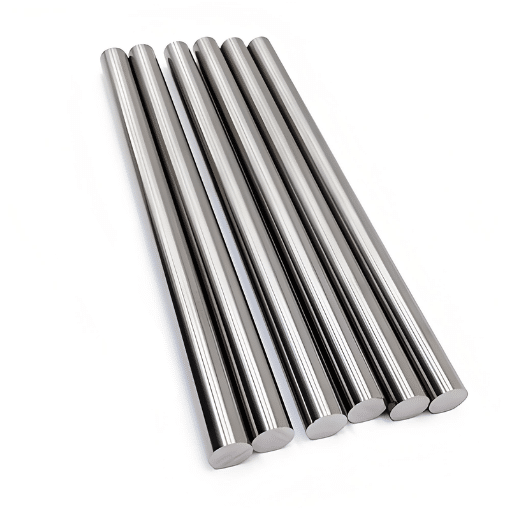
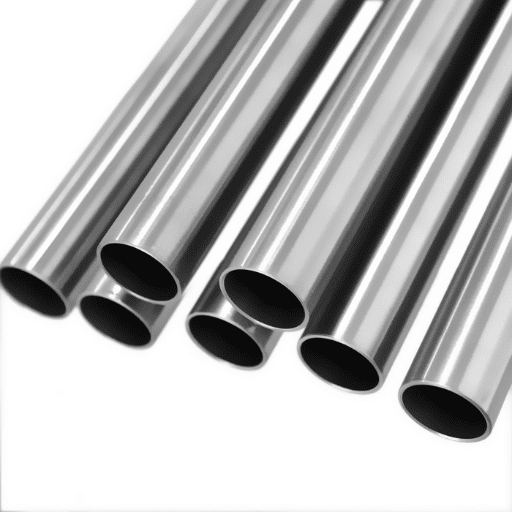
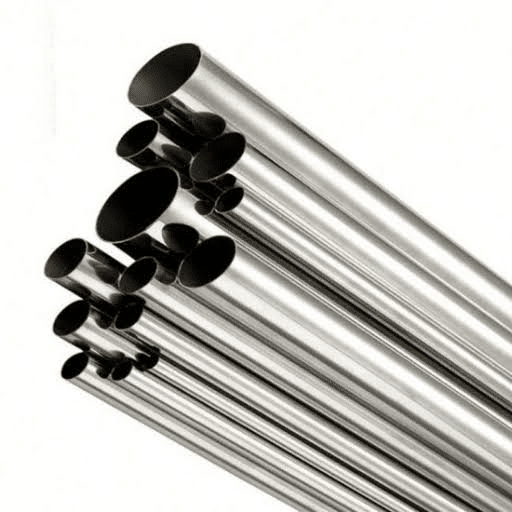
Related forms: if your project also needs bar, our Hastelloy B2 rod stock covers round bar and flats, and seamless Hastelloy pipe covers tube for HCl transfer lines.
Hastelloy B2 Plate FAQ
What is Hastelloy B2 plate used for?
Hastelloy B2 plate is used for equipment that handles reducing acids, primarily hydrochloric acid at all concentrations up to boiling, plus sulfuric, phosphoric, and acetic acid service. Typical equipment includes HCl reactors, distillation columns, storage tanks, heat exchangers, and pickling tanks.
What thickness does Hastelloy B2 plate come in?
Cold-rolled B2 sheet typically runs 0.1-10 mm (to 20 mm on order), and hot-rolled B2 plate typically runs 3-100 mm (to 150-200 mm on special order). Ranges vary by supplier, so confirm the tolerance class per ASTM B906 with the mill.
What is the difference between Hastelloy B2 sheet and plate?
The distinction is thickness. Product under roughly 4.8 mm is usually sold as sheet, and 4.8 mm and above as plate. Sheet is cold-rolled with tighter tolerances and a higher price per kilogram; plate is hot-rolled, thicker, and lower cost per kilogram.
Is Hastelloy B2 plate expensive?
B2 plate is a nickel-molybdenum alloy, and molybdenum is the cost driver. Export plate in 2026 runs roughly $25-45 per kg depending on thickness, quantity, and certification. It is cheaper than C276 plate for the same form, but always request a live quotation because markets move.
Can Hastelloy B2 plate be welded?
Yes, with ERNiMo-7 filler, GTAW preferred, interpass temperature at or below 120°C, and low heat input. The 550-850°C embrittlement window means hot forming and post-weld heat treatment must be handled carefully, which is why B3 is often specified for as-welded fabrications.
What is the Chinese equivalent of Hastelloy B2 plate?
NS322 per GB/T 15007, delivered to GB/T 15008 for plate. It is the same metal as Hastelloy B2 (UNS N10665), and Chinese mills can certify to ASTM B333, ASME SB333, or GB/T 15008 depending on your project requirements.
How do I verify the quality of Hastelloy B2 plate from a Chinese supplier?
Require a mill test report with the heat number, verify molybdenum is at or above 26% with PMI spectral analysis on the delivered plates, confirm the solution-annealed condition in writing, and consider third-party inspection at the mill.
Is Hastelloy B2 plate resistant to hydrochloric acid?
Yes. It is the leading alloy for HCl service, with corrosion rates typically below 0.1 mm/year in clean reducing conditions at all concentrations up to boiling. It fails rapidly if the stream contains oxidizers such as ferric ions, cupric ions, or dissolved oxygen above roughly 50 ppm.
Conclusion
Hastelloy B2 plate is the right buy when your stream is clean and reducing, and the wrong buy when oxidizers can enter. The plate specification is the contract, and every field on it, the standard, the size, the tolerance class, the annealing condition, and the certification- is a decision a supplier can honor or quietly reinterpret.
Write the checklist, verify the molybdenum, and confirm the heat treatment before you compare prices. Get those three things right and B2 plate outlasts stainless steel in HCl service by a decade. Get them wrong and the corrosion rate jumps by orders of magnitude.
Ready to specify? Send us your plate size, tolerance, quantity, and application media. Our metallurgists will confirm the right grade, B2, B3, or C276, and return a certified Hastelloy B2 (NS322) plate quotation with full MTR, spectral analysis, and optional third-party inspection within 24 hours. Request a certified B2 plate quotation.