Yes, Hastelloy B2 can be welded. GTAW/TIG with matching ERNiMo-7 filler is the preferred process, but the alloy demands strict cleanliness, low heat input at or below 1.2 kJ/mm, interpass temperature capped at 100-120°C, and mandatory argon back purge, because its heat-affected zone embrittles within minutes at welding temperatures.
Hastelloy B2 carries the best hydrochloric-acid resistance of any nickel-molybdenum alloy on the market. That resistance lives and dies in the weld joint. The filler metal you choose, the heat input you allow, and the interpass temperature you enforce decide whether a welded B2 vessel serves fifteen years or fails at the knife-line in fifteen months. Here is the uncomfortable metallurgical fact most fabricators learn too late: between roughly 550°C and 900°C, the exact range a weld heat-affected zone passes through, B2 begins precipitating brittle Ni₄Mo phases within minutes.
Most shops apply stainless-steel or C276 habits to B2 and get hot cracks, HAZ sensitization, and premature corrosion failure. The English-language web offers academic papers, Chinese-only procedure notes, and generic exotic-metal tips, but no complete B2 welding guide. This one is built to fill that gap. You get filler selection, process choice, verified parameters, defect prevention, the post-weld truth, NDT reality, and the B2-versus-B3 weld-economics decision, grounded in the metallurgical why. If you are still choosing between grades, start with our Hastelloy B2 vs C276 comparison.
Key Takeaways
- Hastelloy B2 (UNS N10665 / NS322) is weldable, but GTAW/TIG with matching ERNiMo-7 filler (W. Nr. 2.4615) is the only process that preserves its corrosion resistance.
- Heat input must stay at or below 1.2 kJ/mm and interpass temperature at or below 100-120°C, because Ni₄Mo β-phase and μ-phase precipitate in the 550-900°C HAZ range within minutes.
- Argon back purge is mandatory on every root pass, held until the joint cools below about 200°C; an unprotected root oxidizes into a corrosion path.
- Post-weld heat treatment is generally not required. If it is, only full solution annealing at 1060-1080°C plus a rapid water quench is safe; stress relief in the 700-900°C range is forbidden.
- Verify both base metal (Mo at or above 26%) and filler (low C and Si) with PMI; “certified B2” and “matching filler” are only trustworthy after the chemistry is confirmed.
Can Hastelloy B2 Be Welded?

Yes. Hastelloy B2 is weldable by conventional methods, and GTAW/TIG with matching ERNiMo-7 filler gives the best corrosion resistance. The weldability is real. The demand for process discipline is equally real.
What “weldable” means for B2 is different from what it means for stainless steel. The alloy is thermally unstable. Its heat-affected zone precipitates Ni₄Mo β-phase and μ-phase at roughly 550-900°C, fastest at 650-750°C, and the exposure happens in minutes, not hours. A weld bead deposits heat at exactly the wrong temperature for exactly the wrong duration unless you control it. The alloy also has a sluggish puddle, low thermal conductivity, and shallow penetration, so heat accumulates in the joint and resists being moved along.
The practical reading: B2 is easy to ruin and straightforward to weld well when you follow the rules. Every rule in this guide exists because breaking it produces a specific, predictable failure. For the full composition and property profile behind these limits, our Hastelloy B2 properties guide has the datasheet.
Why Hastelloy B2 Welding Is Different
B2 is a solid-solution-strengthened nickel-molybdenum alloy with 26-30% molybdenum and chromium held below 1%. That chemistry is why it loves reducing acids and hates oxidizing conditions. It is also why welding demands different thinking.
The thermal-instability trap is the core issue. During welding, the HAZ heats into the 550-900°C range and dwells there. Short-range ordering begins, then Ni₄Mo β-phase and μ-phase precipitate along grain boundaries. Molybdenum depletes from those boundaries through M₁₂C carbides and NiMo intermetallics. The result is a knife-line and HAZ microstructure that corrodes intergranularly in dilute acids, and that can suffer stress-corrosion cracking even when the ordering is only partial. This is the mechanism that pushed Haynes International to develop Hastelloy B3 (N10675), and our B2 vs B3 comparison covers the successor in full.
Peer-reviewed work on pulsed-current GTAW of B-2 confirms the stakes: pulse frequency controls dendrite size, HAZ grain growth, and Mo carbide reduction in the weld metal. Lower heat input and finer solidification structure translate directly into better corrosion resistance. The ScienceDirect study on pulsed-current GTAW of Hastelloy B-2 documents the microstructure link, and the OSTI simulated-HAZ study of alloy B-2 established the sensitization mechanism decades ago.
What this means in service: a B2 weld made with proper heat control goes to work in boiling HCl and stays there for years. A B2 weld that dwelled in the precipitation window becomes a corrosion site, and the failure shows up at the knife-line, months after the vessel was commissioned.
Recommended Welding Processes for Hastelloy B2
Choose the process by corrosion risk and access:
- GTAW/TIG (preferred). DCEN, pulsed current recommended. Best corrosion resistance, precise heat control, and the cleanest deposit. This is the default for B2.
- GMAW/MIG. Acceptable in specific production cases where access and deposition rate matter, but only with matching ERNiMo-7 wire and tight heat-input control.
- SMAW/stick. Possible with ENiMo-7 electrodes, but discouraged for critical service. Flux residue risks silicon and carbon pickup, which undermines the low-C/low-Si requirement.
- Plasma Arc Welding (PAW). Usable for specific applications where keyhole welding and deep penetration are an advantage.
- Avoid: SAW, oxy-fuel, electroslag. Submerged arc puts heat into the joint and risks contamination; oxy-fuel is prohibited outright because it adds carbon and oxidizes the weld zone.
For the cross-family context on nickel alloy processes, filler, and joint prep, our general nickel alloy welding guide covers Inconel, C276, and Monel alongside B2.
Filler Metals for Hastelloy B2: ERNiMo-7 & Alternatives
The filler rule for B2 is simple: match the molybdenum, and keep carbon and silicon at or below the base-metal level. Silicon and sulfur-bearing fillers cause hot cracking in nickel-molybdenum alloys. The table below is the reference list for B2 welding.
| Process | AWS Class | Designation | W. Nr. | Trade Names / Notes |
|---|---|---|---|---|
| GTAW / GMAW | ERNiMo-7 (AWS A5.14) | Nimofer S 6928 | 2.4615 | BS 2901 NA44; ~69% Ni, ~28% Mo, C ≤0.02%, Si ≤0.10% |
| SMAW | ENiMo-7 (AWS A5.11) | EL-NiMo29 | 2.4616 | Coated electrode for stick welding; use only when GTAW is impractical |
| Dissimilar / B3 joints | ERNiMo-10 | Haynes RTW | Haynes 233 | Repair/overlay filler for B-3 and dissimilar Ni-Mo joints, not a formal AWS A5.14 class |
Wire diameters commonly run 1.0, 1.2, 1.6, 2.0, 2.4, and 3.2 mm for TIG, with rods in 1.6-6.4 mm diameters at 1,000 mm length. Coated electrodes come in 3.2, 4.0, and 5.0 mm at 350 mm.
Buyers should request the AWS A5.14 test report and the heat number with every spool of filler, and verify the chemistry against the certificate. A filler that reads “ERNiMo-7” on the label but carries silicon above 0.10% or molybdenum below spec will hot-crack and corrode in service. When you need a matching filler, buy it from the same source as the base metal so heat numbers and chemistry are traceable together. The Washington Alloy B-2 (ERNiMo-7) datasheet is a useful independent reference for the claimed limits.
Pre-Weld Preparation & Joint Design

B2 prep is where most contamination enters the weld, and it is fully preventable.
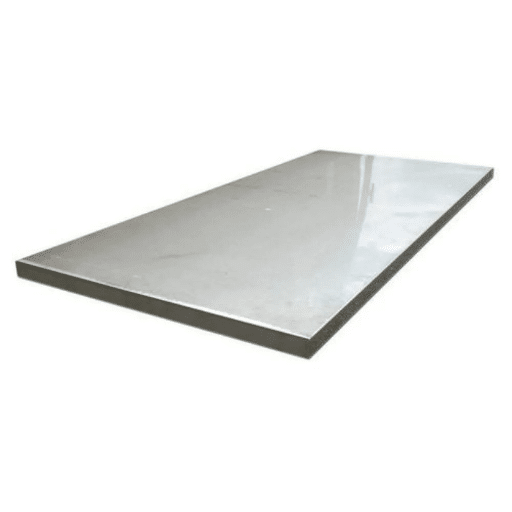
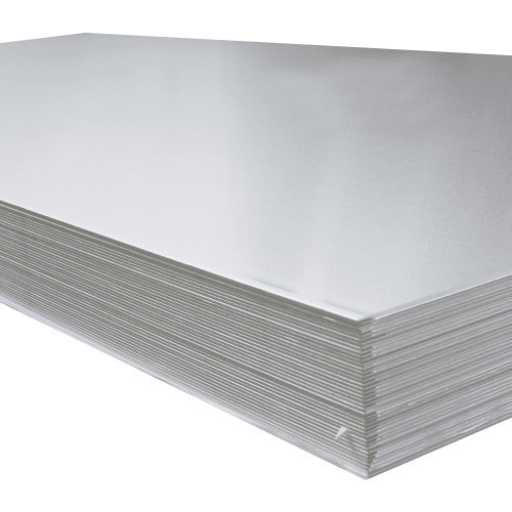
Base material condition. Start from solution-annealed stock. If the plate, bar, or pipe has more than about 15% cold work, solution-anneal it before welding, because cold-worked B2 embrittles faster in the HAZ. For stock and plate context, see our Hastelloy B2 plate guide and Hastelloy B2 sheet stock.
Cleanliness. Degrease the joint, then grind a bright-metal zone about 25 mm on both sides of the groove. Use dedicated stainless-steel brushes and tools that have never touched carbon steel. Iron pickup at the weld is a pitting starter. Wear clean nitrile gloves; skin oils and moisture are contamination sources.
Joint design. Because B2 has poor fluidity and low thermal conductivity, use a wide groove. The standard is a 70° single-V with a root face of 0.5-1.0 mm and a gap of 1-2.5 mm. Pipe joints often specify 75°±5°. No flame cutting on B2. Cut mechanically, or plasma-cut and grind off more than 3 mm of the thermally affected layer.
Tack welding. Tack with the same care as the final weld: matching filler, purge in place, and heat control. A contaminated or cracked tack is a defect you weld over.
Hastelloy B2 Welding Parameters: Heat Input, Interpass & Technique
These values are a starting point for WPS qualification, not a substitute for one. Qualify your procedure per ASME Section IX before production.
| Plate Thickness (mm) | Wire Ø (mm) | Current DCEN (A) | Voltage (V) | Heat Input Cap | Interpass Cap |
|---|---|---|---|---|---|
| 1.6-3.0 | 1.6 | 50-90 | 10-13 | ≤1.2 kJ/mm | ≤100-120°C |
| 3.0-6.0 | 2.4 | 80-130 | 10-14 | ≤1.2 kJ/mm | ≤100-120°C |
| 6.0-12.0 | 3.2 | 100-160 | 10-15 | ≤1.2 kJ/mm | ≤100-120°C |
Heat input is A × V × 60 ÷ travel speed (mm/min) ÷ 1000, in kJ/mm. Cap it at about 1.2 kJ/mm for GTAW (roughly 10 kJ/cm). MIG runs to roughly 11 kJ/cm and SMAW to about 7 kJ/cm as process-specific caps. The heat-input limit exists because the HAZ dwell time in the precipitation window is what creates β-phase.
Interpass temperature caps at 100-120°C. Some manufacturer data permits up to 150°C, but lower is always safer for minimizing sensitization, and conservative references call for 93°C or below. Measure with a contact thermometer, not by eye, and force-cool between passes with water when the joint is multi-pass. Never preheat B2 unless the ambient temperature is below 0°C or moisture is present, and then only to about 30°C.
Technique. Run stringer beads with no weave, or minimal weave. Keep each bead to 2-3 times the wire diameter. Aim for a slightly convex profile, because a flat or concave weld can crack. Use current decay or upslope control at the crater, and fill craters before stopping. Pulsed GTAW gives better pool control and finer dendrites, which improves corrosion resistance.
For a fabrication drawing, WPS, or joint geometry you need qualified, our metallurgists will review it and advise on procedure development. Contact our technical team with your thickness and service conditions.
Shielding Gas & Back Purging
Front shielding uses high-purity argon at 99.99% minimum, preferably 99.999%, at 10-25 L/min through a large gas lens. For multi-pass welds on thick section, add a trailing shield to protect the cooling weld.
Back purge is mandatory, not optional. Unprotected, the root oxidizes into the “sugar” layer, and that oxide is a corrosion path in HCl service. Purge with argon, or argon plus up to 5% hydrogen, at 10-20 L/min, and keep purging until the joint cools below about 200°C. Target an oxygen level below 50 ppm before striking the arc on the root pass.
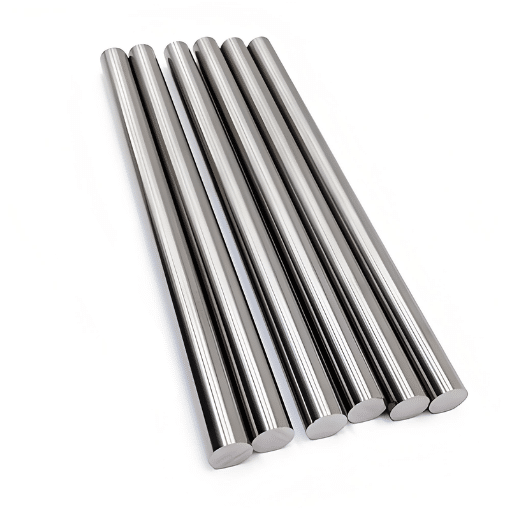
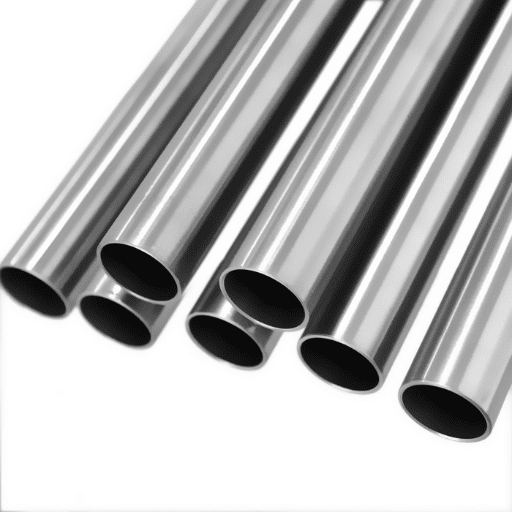
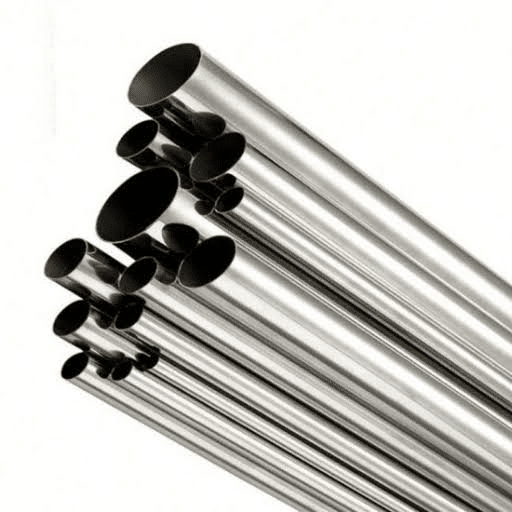
For pipe root passes, this means sealing both ends of the run, purging the line, and verifying the oxygen reading before you weld. Our Hastelloy seamless pipe stock and Hastelloy B2 rod stock cover the product forms that arrive at the purge station.
Common Hastelloy B2 Welding Defects & Prevention
Four defect families dominate B2 welding, and each has a specific cause.
HAZ sensitization and intergranular corrosion. Caused by Ni₄Mo β-phase and μ-phase precipitation and molybdenum-depleted grain boundaries. The fix is heat-input and interpass control plus fast cooling, exactly the rules above. The consequence of getting it wrong is documented in our Hastelloy B2 corrosion resistance guide.
Hot, solidification, and crater cracking. Triggered by silicon and sulfur contamination in the filler or the base metal, by weave beads, and by unfilled craters. Use the correct filler, run stringer beads, and fill craters.
Contamination defects. Iron pickup from shared tools, sulfur and phosphorus from oils, lead, zinc, and moisture from dirty gloves or storage. Every one of these makes the weld porous or crack-sensitive.
Knife-line attack. Intergranular corrosion in the solution-treated zone adjacent to the weld, caused by precipitation during welding or an incorrect heat treatment. It shows up months after commissioning, which is what makes it dangerous.
A carbon-steel wire brush tells the story. A fabricator used the shop’s shared stainless brush on a B2 nozzle, picked up iron that had been embedded from previous carbon-steel work, and within weeks rust-colored pits appeared along the weld line in a humid plant environment. The fix was not metallurgy. It was a dedicated brush and a clean glove policy. The pitted nozzle was cut out and rewelded.
Prevention checklist: annealed base, clean and dry joint, dedicated tools, correct low-C/low-Si filler, heat input at or below 1.2 kJ/mm, interpass at or below 100-120°C, back purge to completion, stringer beads, filled craters.
Post-Weld Heat Treatment: The B2 Truth

The short answer: post-weld heat treatment is generally not required for Hastelloy B2, and most B2 fabrications go to service in the as-welded condition with correct process control.
When heat treatment is required, there is exactly one safe option: full solution annealing at 1060-1080°C followed by a rapid water quench. The quench is what keeps molybdenum in solid solution and dissolves any precipitated phases. Slow cooling, or any stress relief in the 700-900°C range, is forbidden, because it drops the alloy back through the precipitation window and guarantees embrittlement. Brush oxidation off while the weld is still hot, and remove spatter and oxide with a stainless brush or a carefully controlled pickling paste.
Here is the practical problem. Annealing a small B2 part is straightforward. Annealing a large fabricated vessel at 1060°C and then water-quenching the whole assembly is difficult, distortion-prone, and expensive. When that cost shows up, the weld-economics argument appears: post-weld solution annealing can make welded B2 fabrication 25-30% costlier overall, which is why Hastelloy B3 was developed to go to service as-welded. For the full economic comparison, see our Hastelloy B2 vs B3 decision guide.
NDT & Inspection of Hastelloy B2 Welds
The inspection plan for B2 welds is different from steel, and most supplier content never mentions it.
Suitable methods are penetrant testing (PT) for surface defects and radiographic testing (RT) for internal soundness. Visual and dimensional inspection are standard, and remove oxide and discoloration with a stainless brush or pickling paste before final inspection.
| NDT Method | Suitability for B2 Welds | Notes |
|---|---|---|
| Penetrant testing (PT) | Suitable | Primary surface-defect check |
| Radiographic testing (RT) | Suitable | Primary internal-soundness check |
| Magnetic particle (MT) | Not usable | B2 is non-magnetic |
| Ultrasonic (UT) | Problematic | Coarse austenitic grain defeats conventional UT |
Magnetic particle testing will not work because B2 is non-magnetic, and the conventional UT approach used on steel welds does not transfer cleanly to coarse austenitic grain. Plan your NDT around PT and RT. For the MTR and EN 10204 documentation that should accompany every certified weld and weld consumable, our nickel alloy material certificate guide explains the package.
Hastelloy B2 Fabrication Notes: Machining & Forming
B2 work-hardens faster than austenitic stainless steel, which changes how you machine it. Machine in the annealed condition, use sharp carbide tooling, run low cutting speeds with heavy feeds to stay beneath the cold-worked layer, and keep the setup rigid. Avoid rubbing cuts that work-harden the surface.
Hot working runs at 900-1160°C and must be followed by a water quench or full anneal, because the forming temperature sits inside the precipitation window. Cold work above about 15% reduction requires solution annealing afterward. And throughout processing and service, avoid the 538-816°C range, the zone where B2 loses ductility and begins to embrittle.
These are the same boundaries that govern welding, which is why we keep repeating them: B2 is a metal that must be heated through the danger window quickly, never held in it.
Welding Procedure Qualification (WPS/PQR)
Before any production welding, qualify the procedure. ASME Section IX groups nickel alloys in P-numbers 41 through 49 and filler metals in F-numbers 41 through 46, so your WPS will carry the appropriate P-number and F-number for B2 and ERNiMo-7.
A B2 WPS must specify, in writing: the filler classification and heat number, the heat-input cap of 1.2 kJ/mm, the interpass cap of 100-120°C, the back-purge requirement and oxygen target, the stringer-bead technique, and the post-weld heat treatment position (typically none). Buyers should request the WPS, the PQR, and welder qualifications from any fabricator before work starts, and confirm the welder is qualified on the exact filler and process.
Hastelloy B2 Welding FAQ
Can Hastelloy B2 be welded?
Yes. GTAW/TIG with matching ERNiMo-7 filler is the preferred process. It’s weldable, but it demands low heat input (≤1.2 kJ/mm), interpass temperature at or below 100-120°C, strict cleanliness, and mandatory argon back purge.
What filler metal do you use for Hastelloy B2?
ERNiMo-7 (AWS A5.14, W. Nr. 2.4615) for GTAW and GMAW, and ENiMo-7 (AWS A5.11, W. Nr. 2.4616) for SMAW. Filler carbon and silicon must stay at or below the base-metal level, because silicon and sulfur-bearing fillers cause hot cracking.
Does Hastelloy B2 need post-weld heat treatment?
Generally no. B2 goes to service as-welded with correct process control. If heat treatment is required, only full solution annealing at 1060-1080°C plus a rapid water quench is safe. Stress relief in the 700-900°C range is forbidden.
Why does Hastelloy B2 become brittle after welding?
Its heat-affected zone precipitates Ni₄Mo β-phase and μ-phase at 550-900°C, fastest at 650-750°C, within minutes of exposure. The phases and molybdenum-depleted grain boundaries cause embrittlement and intergranular corrosion.
What is the interpass temperature for Hastelloy B2?
Cap interpass temperature at 100-120°C, and use 93°C or below if you want the most conservative control. Some manufacturer data allows 150°C, but lower is always safer. Force-cool between passes for multi-pass welds.
Can Hastelloy B2 be welded to stainless steel or carbon steel?
It can be joined to dissimilar metals, but the joint and filler selection need a qualified procedure and usually a buttering or transition design. This is a consultative case, not a standard weld, and it’s a scenario where B3 and ERNiMo-10 are often the better answer.
Is Hastelloy B2 easier to weld than C276? Than B3?
B2 and C276 are comparable in practical difficulty, but C276 tolerates a wider service envelope. B3 is the easier fabrication choice because it resists the precipitation that forces B2 into tight heat control and possible post-weld annealing.
Can Hastelloy B2 be used in the as-welded condition?
Yes, when the procedure controls heat input, interpass temperature, and purging correctly. The as-welded condition is standard for B2. B3 simply removes the sensitivity to process slips that B2 requires you to eliminate.
Sourcing Hastelloy B2 (NS322) & ERNiMo-7 from China
Hastelloy B2 is NS322 per GB/T 15007, delivered under GB/T 15008, 15010, and 15011 for plate, bar, and pipe, with the international equivalents being ASTM B333/B335/B622. A Chinese manufacturer that exports can certify to ASTM, ASME, or GB/T depending on your project code.
Wuxi in Jiangsu Province is a specialty-alloy manufacturing hub, and a real manufacturer differs from a trader. Look for vacuum induction melting plus electroslag remelting for clean, homogeneous metal, an in-house laboratory with direct-reading spectrometers and tensile testing, and the ability to supply matching filler wire with the base metal. That combination is how a mill verifies its own product before it ships, and it is how you get base and filler heat numbers on the same certificate.
The counterfeit lesson applies hardest here. A shop once welded a “B2” vessel with a lower-spec filler that read silicon above 0.10% and molybdenum off-spec on inspection. The weld deposit hot-cracked and corroded within months, and the certificate had looked fine. PMI verification of both base metal, molybdenum at or above 26%, and filler, carbon and silicon within limits, is the only reliable check. Every B2 and ERNiMo-7 shipment from our mill leaves with the spectrometer report and MTR together, and third-party inspection is available on request. For the Chinese designation system, our NS322 and NS3304 equivalents guide maps the full cross-reference.
Conclusion
Correct Hastelloy B2 welding is not a nice-to-have. It is the entire job. Use ERNiMo-7 filler with low carbon and silicon, hold heat input at or below 1.2 kJ/mm, cap interpass at 100-120°C, purge every root pass, and skip post-weld heat treatment unless you’re prepared to solution-anneal the full assembly. When that annealing bill appears, remember that B3 exists, and our Hastelloy B2 vs B3 guide walks through the economics.
The alloy is weldable. The discipline is non-negotiable. Nail the process and B2 outlasts stainless steel in HCl service by a decade; slip and the knife-line failure shows up in months.
Ready to spec it? Send us your vessel geometry, wall thickness, service acid, and fabrication method. Our metallurgists will confirm the right grade, B2, B3, or C276, match the ERNiMo-7 or ENiMo-7 filler, and return a certified quotation for base metal and consumables within 24 hours, with WPS-qualification advice included. Request a certified B2 and filler quotation.