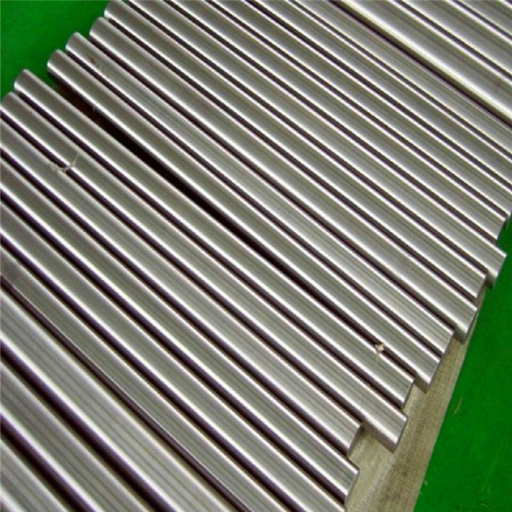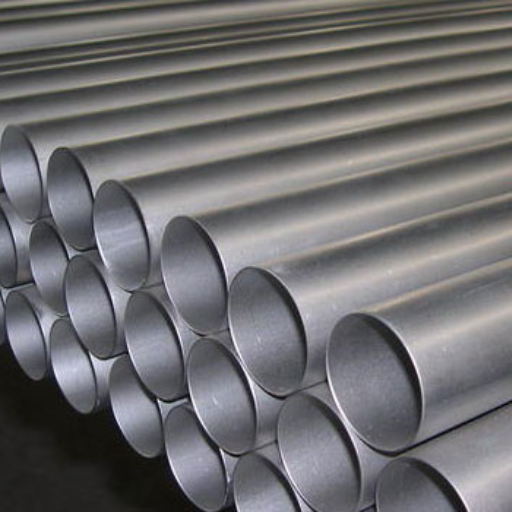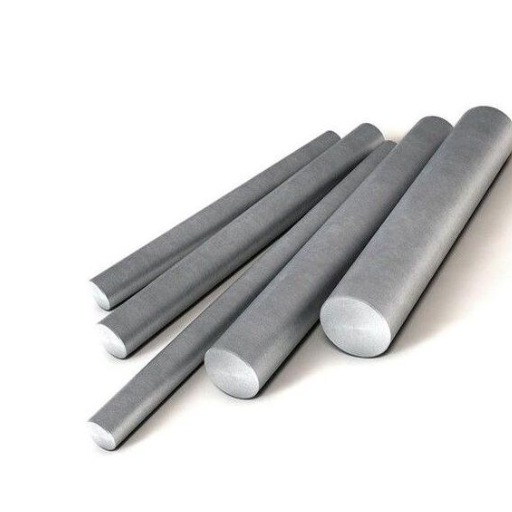
Incoloy 825 welding is possible with conventional processes, but filler selection must reflect the joint, service environment, material condition and qualified procedure. A plate certificate isn’t a welding procedure. You still need to define how to make and accept the joint.
The difficulty starts when two technically plausible quotations specify different fillers. One lists matching 825 wire; the other lists 625-type wire. Which recommendation belongs in your fabrication package? An Incoloy 825 welding decision requires more than a trade name.
This guide connects consumable selection with material history, shop controls and qualification records. For the wider grade-selection context, start with our Incoloy 825 grade overview. The discussion here concerns standard UNS N08825, rather than modified grades or a universal welding recipe.
Key Takeaways
- Matching 825 chemistry and selecting a corrosion-suitable weld deposit are separate decisions.
- Confirm the delivered condition and subsequent forming or service history before welding.
- Record interpass temperature and energy calculations with their measurement basis and units.
- Keep material certificates, procedure qualification and welder qualification distinct.
For a material inquiry, send the grade, product form, dimensions and documented fabrication condition. Include the joint and service requirements so the material request describes what you actually intend to fabricate.
Incoloy 825 Welding Filler Selection
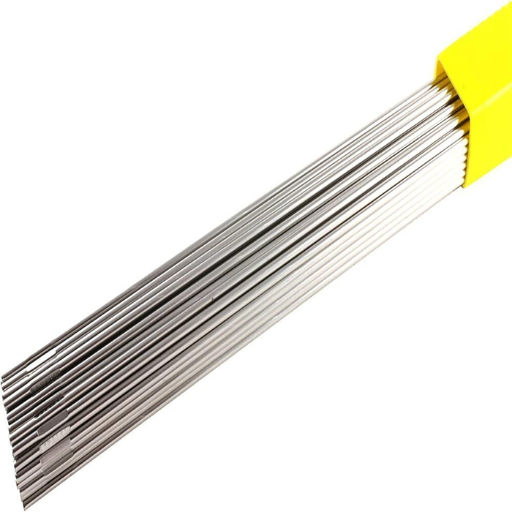
A filler recommended for alloy 825 does not have to reproduce alloy 825 chemistry. The class identifies a consumable family. It doesn’t settle the choice: check the process, mixing with the base metal (dilution) and service exposure. Do not compare quotations using the alloy number alone.
Matching filler for Incoloy 825 welding
DAIKO identifies its DAIKOWM 825 wire as AWS A5.14 ERNiFeCr-1, a matching-type option. Special Metals also identifies INCOLOY Filler Metal 65 for alloy 825 joining in its welding product literature. These product names should remain separate from generic classifications: a trade designation is not a substitute for the consumable certificate.
For Incoloy 825 welding, matching chemistry is a useful starting point when the approved design and procedure call for that deposit. It does not prove corrosion suitability after dilution or cover every dissimilar joint. Ask the welding engineer to identify the selected class, product, process and service basis together.
For an Incoloy 825 welding purchase, request the consumable batch identity and its certificate. Compare the class on the packaging with the approved selection before release to the shop. If a proposed substitute changes the consumable, refer it for review; a similar product name alone is not approval.
Why 625-type consumables appear in Incoloy 825 welding recommendations
The Special Metals alloy 825 bulletin recommends INCONEL Filler Metal 625 for gas-shielded processes and Welding Electrode 112 for shielded metal-arc welding in most applications. These correspond to the ERNiCrMo-3 wire and ENiCrMo-3 covered-electrode families in its welding catalog. They provide a different, over-alloyed deposit rather than a composition match to 825.
VDM likewise recommends FM 625, AWS A5.14 ERNiCrMo-3, in its standard Alloy 825 data sheet. Agreement on that option does not eliminate the need to check the actual joint. A dissimilar assembly introduces another base metal and changes dilution, so a recommendation for 825-to-825 cannot simply be copied across.
| Consumable route | Relationship to 825 | Question before approval |
|---|---|---|
| ERNiFeCr-1 matching-type wire | Intended to approximate the 825 alloy family | Does the specified process and service accept this deposit? |
| ERNiCrMo-3 wire / ENiCrMo-3 electrode | 625-type, over-alloyed route | Does the procedure cover the selected process, joint and dilution? |
| Special Metals 686CPT products | Producer-recommended alternative for demanding corrosion applications | What service evidence supports this particular choice? |
Corrosion-driven alternatives for Incoloy 825 welding
Special Metals identifies 686CPT filler and electrodes for applications requiring its highest corrosion-resistance recommendation. That wording is a producer recommendation, not a guarantee for every acid, chloride concentration or temperature. The service specification must establish what the joint needs to resist and how suitability will be assessed.
Illustrative scenario: Two quotations for an 825 spool specify different wire families. The buyer requests the AWS classification, joining process, second base metal and proposed qualification basis from each bidder. That creates a meaningful technical comparison without assuming either quotation is wrong or assigning an invented performance advantage.
Use our 825 versus 625 base-alloy comparison for the broader material distinction. Choosing a 625-type filler does not turn the entire component into alloy 625. For Incoloy 825 welding procurement, keep the base-material grade and consumable class on separate lines.
Confirm the Fabrication Condition Before Welding
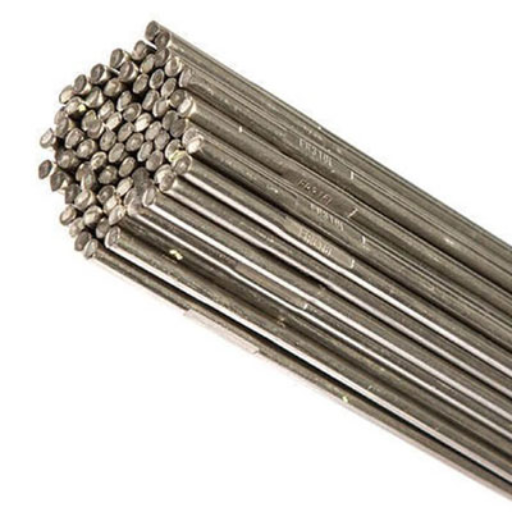
The same UNS number can arrive with different fabrication histories. Incoloy 825 welding planning should distinguish new annealed stock, formed material and a service-exposed repair. A grade certificate identifies the supplied material, but later operations may need separate records.
Start Incoloy 825 welding with documented mill condition
Special Metals describes mill heat treatment as establishing stabilization, corrosion resistance, mechanical properties and formability. Check the delivered condition on the material documents rather than assuming every plate, bar and tube has followed an identical cycle. Our 825 composition and properties reference provides grade context; use the relevant producer’s fabrication instructions for heat treatment.
In its November 2020 data sheet, VDM specifies soft or stabilizing annealing at 920-980°C, preferably 940 ±10°C, with cooling instructions tied to section and product. Special Metals gives 930-980°C for subsequent anneals, followed by rapid air cooling or water quenching. Keep those recommendations separate. Don’t combine them into a universal cycle.
Separate forming treatment from routine PWHT
VDM advises soft annealing after cold deformation exceeding 15%. That recommendation concerns the effects of forming; it is not a threshold proving that every welded component requires post-weld heat treatment. Record what was formed and how much it changed. The responsible engineer can then assess the next step.
VDM states that pre- and post-weld heat treatment are not required in its standard welding guidance, and that preheating is generally unnecessary. Read that guidance with its material-condition assumptions. Neither a blanket stress-relief cycle nor a blanket exemption should replace the project’s approved procedure.
Treat repair history as an Incoloy 825 welding input
VDM separately recommends stabilizing annealing for semi-finished products previously used at 600-650°C before reuse in that range after repair welding. This is a specific thermal-history caveat, not a declaration that all 825 service in that range is acceptable. The VDM Alloy 825 data sheet is the source for these condition-dependent recommendations.
For example, an undocumented repair spool cannot automatically follow the assumptions used for new annealed stock. Identify the prior operating range, forming and repair history, then refer missing information to the responsible engineer. For Incoloy 825 welding repairs, that decision belongs before the production schedule is fixed.
Prepare the Joint and Protect the Root
Cleanliness and access are linked. An operator needs enough room to place filler and achieve fusion without trapping surface films. More current cannot substitute for removing contamination or making an inaccessible joint weldable.
Reach clean metal before each Incoloy 825 welding pass
TWI describes contamination, oxide inclusions and cracking risks in nickel-alloy welding. Its guidance explains that tenacious oxides and sluggish weld-pool behavior require attention to joint preparation and cleaning. A surface that looks bright is not proof that all harmful films or residues are absent.
For Incoloy 825 welding, include the base metal, filler and cleaning tools in the preparation plan. Remove oil, grease, marking residues and oxides using the approved method. Keep prepared material from being recontaminated, and specify interpass cleaning so the next bead does not bury the previous pass’s surface deposits.
| Shop observation | Control to investigate |
|---|---|
| Persistent surface deposits between passes | Preparation method and interpass oxide removal |
| Difficulty reaching the sidewall | Joint access, fit-up and approved bead placement |
| Suspected root oxidation | Root protection arrangement and gas coverage |
| Unexpected porosity | Cleanliness, filler condition and shielding continuity |
These are investigation prompts rather than diagnoses. TWI’s nickel-alloy weldability guidance explains the mechanisms; inspection and procedure review must establish the cause in a particular weld.
Protect the root in Incoloy 825 welding
VDM calls for sufficient root protection for inert-gas welding processes. The actual shielding and backing arrangements must suit the qualified procedure and production geometry. Avoid copying a flow rate from a different pipe size or assuming that the cylinder label proves coverage at the root.
Our nickel alloy welding process guide gives family-level context. For this joint, agree on access, process sequence, cleaning and root inspection hold points before closing the assembly.
The following video is identified by its creator as Incoloy 825 Roll Weld, covering root, hot-pass and fill work. It supplies visual context, not verified parameters, inspection results or procedure approval.
Control Heat Input and Interpass Temperature in Incoloy 825 Welding
Incoloy 825 welding needs a documented thermal-control basis. VDM recommends deliberately selected low heat input, stringer beads and an interpass temperature no higher than 150°C (302°F). Its example parameter table is guidance; it does not qualify a production weld.
State the energy calculation and speed units
Arc energy calculated from voltage, current and travel speed is not automatically the same as net heat input to the workpiece. If the applicable method uses a process-efficiency factor, state it explicitly. Otherwise two reports can show different values while describing the same electrical conditions.
For a steady example using travel speed in millimetres per minute:
Arc energy (kJ/mm) = voltage (V) × current (A) × 60 / [travel speed (mm/min) × 1000]
Illustrative calculation: At 12 V, 100 A and 100 mm/min, the result is 0.72 kJ/mm before any efficiency factor. Expressing the same speed as 10 cm/min gives 7.2 kJ/cm. These numbers demonstrate units only; they are not recommended settings for Incoloy 825 welding.
A transcription that changes the speed unit but leaves the value unchanged creates a tenfold error. Record the formula, units and measurement method alongside the result. For pulsed or otherwise varying output, establish an appropriate measurement method rather than treating a display snapshot as the entire pass record.
Make the Incoloy 825 welding interpass limit measurable
Record where and when temperature is checked, the measuring method and the action taken when the work is too hot. Compare the result with the approved WPS and project limits. A general manufacturer recommendation cannot authorize exceeding a tighter project requirement.
The weld sequence also matters: short intervals between passes can leave the next start hotter than expected. Give the operator a clear pause-and-recheck instruction rather than only a maximum number on a drawing. Track temperature separately from energy per unit length; one does not establish the other.
For Incoloy 825 welding records, retain the actual production observations required by the inspection plan. A calculated value copied from a data sheet describes that example, not the completed joint.
Qualify the Procedure and Define Service Acceptance

A sound-looking weld and a material certificate answer different questions. Incoloy 825 welding documentation should show what material was supplied, how the production weld is to be made, what qualification supports that procedure and who is qualified to perform it.
Keep WPS, PQR and WPQ roles separate
The welding procedure specification (WPS) gives the instructions and permitted production variables under the applicable qualification route. The procedure qualification record (PQR) records what was actually used on the test coupon and the resulting examinations or tests. Welder performance qualification (WPQ) addresses the welder’s demonstrated ability within the applicable rules.
ASME’s official QW-483 PQR form illustrates the separation of recorded welding variables and test results. It does not, by itself, determine the qualification route for your assembly. The governing code, edition and project specification supply the rules.
Before approving the fabrication package, ask:
- Does the proposed WPS identify the applicable base materials, process and filler?
- Which qualification records support it, and do their permitted ranges cover production?
- Are the welders qualified for the work under the applicable requirements?
- Who reviews deviations, repairs and additional testing requested by the owner?
Do not infer material groupings, qualified thickness ranges or exemptions from a consumable brochure. Establish those points from the governing requirements with the responsible welding engineer. Buying the right wire cannot fill a gap in the qualification record.
Incoloy 825 welding: mechanical and corrosion acceptance
The official PQR form includes fields for tests such as tensile and guided-bend results. Those fields help explain what a qualification record contains; they do not create a universal test list. Required tests, acceptance criteria and any impact, hardness or additional examinations depend on the applicable rules and project.
Corrosion service creates another question: does the selected material, deposited weld metal and fabrication condition suit the duty? A bend test can’t prove resistance to every process stream. If corrosion testing is specified, agree on the method, specimen condition and acceptance criterion before qualification. Don’t wait until fabrication is finished to define the test.
For Incoloy 825 welding in dissimilar assemblies, identify both sides of the joint and the surfaces exposed to service. Describe the medium, concentration, temperature and relevant contaminants. These inputs help the responsible engineer assess dilution and whether a proposed consumable recommendation applies.
Build a comparable inquiry package
Illustrative scenario: A drawing calls for an 825-to-steel connection, while a quotation lists only material and welding labour. The buyer asks who supplies the WPS, qualification support and inspection scope. This reveals missing scope without inventing a code exemption, test result or cost saving.
Use this Incoloy 825 welding inquiry checklist:
- Material: grade, product form, dimensions and quantity.
- Condition: delivered state, forming and documented repair history.
- Joint: sketch, both base metals and access restrictions.
- Duty: medium, concentration, temperature and relevant contaminants.
- Documents: each requested certificate, procedure record and inspection item.
Avoid a vague request for “fully certified” material. Keep the material order traceable to the 825 grade specification, while retaining the separate welding requirements.
For an Incoloy 825 welding material request, send that package through our inquiry page. State which fabrication documents are required so they can be addressed explicitly in the quotation.
FAQ and Next Step for an 825 Fabrication Package
Which filler is used for Incoloy 825 welding?
Matching-type ERNiFeCr-1 wire and 625-type consumables both appear in producer literature. Special Metals recommends 625 filler or Electrode 112 for most applications and identifies 686CPT alternatives for demanding corrosion requirements. Select the actual product by process, joint, service and qualification basis, rather than alloy name alone.
Is 625 filler a matching filler for 825?
It is a recommended joining option in the cited producer guidance, but it does not match 825 chemistry. ERNiCrMo-3 belongs to the 625-type consumable family. Describe it as an over-alloyed option, then assess the deposited joint and dilution against the service requirements and approved procedure.
Does alloy 825 need preheat?
VDM states that preheating is generally unnecessary in its standard Alloy 825 welding guidance. That is not permission to ignore the delivered condition, environment or project instructions. Confirm the assumptions and follow the approved WPS, especially where a repair or a dissimilar joint changes the fabrication context.
Is post-weld heat treatment always required?
No. VDM’s standard welding guidance does not require routine post-weld heat treatment. It separately identifies forming-related annealing and a repair-history stabilization case. Distinguish those situations before specifying a cycle; a recommendation addressing prior deformation or service cannot be converted into mandatory PWHT for every joint.
What interpass limit applies to Incoloy 825 welding?
VDM recommends a maximum interpass temperature of 150°C (302°F) in its Alloy 825 data sheet. Use that as attributed manufacturer guidance and check the governing WPS and project requirements. Document the measurement location, timing and method so a recorded temperature can be interpreted and compared consistently.
Does a PQR prove corrosion suitability?
A PQR records qualification variables and test results under a defined route. It does not demonstrate resistance to every service environment. Where corrosion performance is consequential, the responsible engineer must define the service basis and any additional acceptance testing. Keep that decision distinct from material identification and welder performance qualification.
Start your next Incoloy 825 welding inquiry with a complete material list and the documented fabrication requirements. Submit the grade, form, dimensions, condition and project requirements so the quotation can address the intended assembly.