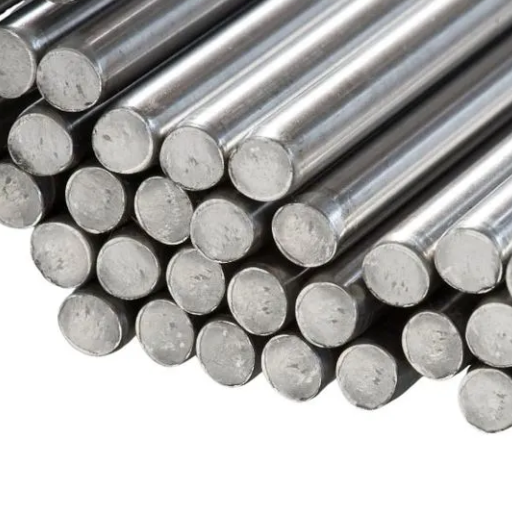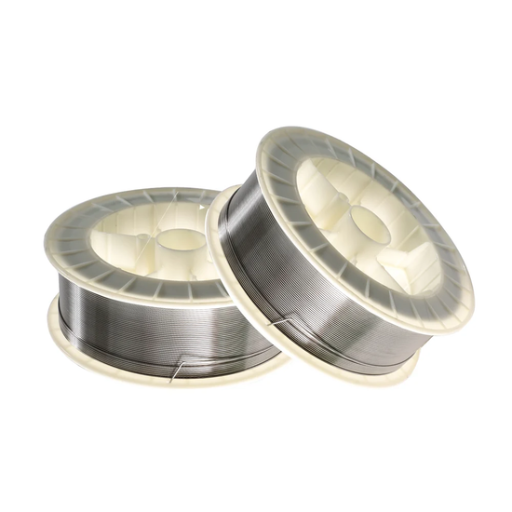
Inconel 600 welds with ERNiCr-3 (filler metal 82) for GTAW, GMAW and SAW, and with ENiCrFe-3 (electrode 182) for SMAW. It needs no preheat, and in normal corrosion service it needs no post-weld heat treatment.
The base metal is rarely the problem. Contamination before the arc starts, heat input during the pass, and one narrow temperature band after welding decide whether the joint lasts.
Special Metals states in its alloy 600 bulletin, SMC-027, that the alloy is readily joined by conventional welding processes. That is a statement about the alloy, not a procedure. It doesn’t tell you which electrode to run, how hot the joint may get between passes, or what to do when a drawing asks for stress relief.
Between 540°C and 760°C (1,000°F and 1,400°F), alloy 600 precipitates chromium carbides at grain boundaries and becomes sensitive to intergranular attack in aggressive media. The same bulletin notes that 182 weld metal can lose ductility after extended exposure in that band. A fabricator told to “stress relieve at 620°C” is being pointed into the middle of it.
This guide covers filler selection, joint preparation, parameter bands, the heat-treatment decision, dissimilar joints, defects, inspection and service life. Base-metal and weld-metal numbers come from SMC-027, fillers are named by AWS classification, and parameter bands are marked as starting points that a qualified procedure must confirm.
If you are specifying 600 for a welded assembly, send the product form, thickness and service temperature, and our metallurgists will confirm the filler and the heat-treatment position for your case.
Key Takeaways
- Inconel 600 is a solid-solution nickel-chromium-iron alloy with no ferrite and no precipitation hardening, so welds do not harden or need re-aging.
- ERNiCr-3 and ENiCrFe-3 are both ASME F-No. 43 against P-No. 43 base metal, and ERNiCr-3 is deliberately over-alloyed with chromium, niobium and manganese to tolerate dilution.
- Preheat is not required. Interpass is the control that matters: 175°C (350°F) is widely used, and at least one producer recommends holding to 95°C (200°F).
- The 540-760°C (1,000-1,400°F) window causes chromium carbide precipitation and reduces 182 deposit ductility; a generic 620°C stress relief sits inside it.
- For 600 in high-temperature, high-strength caustic-alkali service, the mill-aligned guidance is 900°C (1,650°F) for 1 hour or 790°C (1,450°F) for 4 hours with a slow cool, not a low-temperature stress relief.
Is Inconel 600 Weldable? What “Readily Welded” Means
Alloy 600 (UNS N06600, 2.4816) is an austenitic nickel-chromium-iron alloy with about 72% nickel plus cobalt, 14 to 17% chromium, and 6 to 10% iron. The full composition and mechanical data sit on our Inconel 600 properties page.
The structure is a single austenitic phase, with no ferrite to balance, no martensite to temper, and no gamma double prime to precipitate. Welding therefore creates no hard zone that needs a follow-up heat treatment, and the alloy avoids the strain-age cracking a precipitation-hardened grade such as 718 can show when welded in the aged condition. Our Inconel 718 welding guide covers that different set of rules.
“Readily welded” describes the alloy, not the job. Four behaviors make the work slower than carbon steel or 304 stainless steel.
The pool is viscous and shallow. Nickel-rich melts don’t flow like steel, and penetration is lower for the same current. A groove that works on stainless steel will leave a lack of fusion at the root on 600.
Heat stays in the part. Nickel alloys conduct heat poorly compared with carbon steel, so arc energy concentrates near the joint, and the part distorts. Low heat input is a distortion control as much as a metallurgical one.
Contamination is punished. Sulfur, lead, zinc, copper and phosphorus at trace levels cause weld and heat-affected-zone cracking. Most contamination that causes a failure was applied before the welder struck an arc.
The window after welding is narrow. The alloy that welds without hardening will still precipitate carbides if held in the wrong band, and the consequences show up months later as intergranular attack.
| Process | Typical use on 600 | Notes |
|---|---|---|
| GTAW | Root passes, thin sheet, tube and pipe, repair | Best control of heat input and pool; slow deposition |
| GMAW | Thicker sections, fill passes, overlay | Use spray or pulsed transfer; a cold, fast-freezing pool promotes lack of fusion |
| SMAW | Site work, repairs, restricted access | Electrode 182; slag must be removed fully between passes |
| SAW | Flat position, thick plate, high deposition | Filler 82 with a matched flux; high heat input needs control |
| FCAW | Limited; confirm consumable availability and qualification | Not a default choice for 600 |
| Resistance | Sheet assemblies, spot and seam | High electrical resistance heats quickly; electrode force differs from stainless practice |
The rules that apply across nickel alloys are collected in our nickel alloy welding guide. What follows is specific to Inconel 600 welding.
Inconel 600 Filler Metal: ERNiCr-3, ENiCrFe-3 and ENiCrFe-2
Three consumables cover almost all 600 welding: two standard choices and one high-temperature option.
ERNiCr-3 (Alloy 82) for GTAW, GMAW and SAW
ERNiCr-3 is a bare solid wire under AWS A5.14, UNS N06082, assigned F-No. 43 by ASME, the same group as the 600 base metal’s P-No. 43. It runs on direct current electrode negative for GTAW and with a matched flux for submerged arc.
| Element | ERNiCr-3, wt% |
|---|---|
| Nickel | 67.0 min |
| Chromium | 18.0-22.0 |
| Niobium plus tantalum | 2.0-3.0 |
| Manganese | 2.5-3.5 |
| Iron | 3.0 max |
| Carbon | 0.10 max |
| Silicon | 0.50 max |
| Titanium | 0.75 max |
| Copper | 0.50 max |
| Phosphorus | 0.03 max |
| Sulfur | 0.015 max |
The composition is not a copy of the wrought alloy. Three differences do the work.
Chromium runs 18 to 22%, above the 14 to 17% of the base metal, and iron is capped at 3% instead of 6 to 10%. That leaves room for the pool to pick up iron from the 600 side without falling below the corrosion resistance the joint needs.
Niobium at 2 to 3% combines with carbon in the interdendritic spaces, reducing the chromium carbide that would otherwise form there and improving resistance to solidification cracking. That is why the filler tolerates a dirtier pool than a plain nickel-chromium wire would.
Manganese at 2.5 to 3.5% ties up sulfur as manganese sulfide and improves pool fluidity. Sulfur is the element most likely to crack a nickel weld, and manganese is the standard countermeasure.
Typical all-weld-metal properties for 82 sit around 550 to 620 MPa tensile, 345 to 448 MPa yield, and 35 to 45% elongation. SMC-027 reports a specific test result of 663.3 MPa tensile, 393.7 MPa yield and 45% elongation. Neither is a guaranteed minimum; the qualified procedure and its test record govern.
ENiCrFe-3 (Alloy 182) for SMAW
ENiCrFe-3 is a covered electrode under AWS A5.11, UNS W86182, also F-No. 43. It is the field and repair electrode, tolerant of position work and uneven fit-up.
Its slag must come off completely between passes. Slag trapped under a fill pass becomes lack of fusion on the radiograph, and on a nickel weld that defect is easy to miss because the bead surface looks sound.
Keep the electrodes dry in the condition the manufacturer specifies, because moisture drives porosity. And do not leave a 182 deposit in long service between 540°C and 760°C if a 82 deposit can do the job, because SMC-027 states that 182 weld metal may lose ductility after extended exposure in that range.
ENiCrFe-2 (INCO-WELD A) for High-Temperature Stress Rupture
SMC-027 adds one footnote to its filler list: above 1,200°F (650°C), where maximum stress-rupture strength matters, the covered electrode INCO-WELD A (ENiCrFe-2) is the specified option. It is not a general substitute for 182.
Filler Selection by Process and Service
| Condition | Process | Filler | Why |
|---|---|---|---|
| General corrosion service, all positions | GTAW, GMAW, SAW | ERNiCr-3 (82) | Standard matching filler; best ductility and dilution tolerance |
| Field work, repair, restricted access | SMAW | ENiCrFe-3 (182) | Positional capability; slag system suits site conditions |
| Long service above 650°C, stress-rupture limited | SMAW | ENiCrFe-2 (INCO-WELD A) | Mill recommendation for that service |
| Dissimilar joint to carbon or stainless steel | GTAW, SMAW | ERNiCr-3 or ENiCrFe-3 | Nickel filler accommodates dilution from both sides |
| More aggressive corrosive duty in a dissimilar joint | GTAW | ERNiCrMo-3 (625-type) | Higher molybdenum for pitting and crevice resistance |
The last row is a deliberate over-alloying decision, not a default. It costs more and changes weld-metal strength, so it belongs in the procedure with the reason written next to it.
Joint Preparation and Cleaning for Inconel 600
Inconel 600 welding starts with fit-up. A single-V groove with a 60 to 75 degree included angle is normal for plate up to about 10 mm. Above that, a U-groove reduces fill volume and total heat input. Do not leave a tight root land or a zero gap; the pool won’t penetrate it, and the welder will compensate by raising the current, which is the wrong fix.
Cleaning is where most failures begin. Degrease with a residue-free solvent, then grind or machine the joint faces and 25 mm of adjacent surface to bright metal. Oxide, heat tint and shop dirt all sit between the arc and clean metal.
Use dedicated stainless steel brushes, grinding wheels and files that have never touched carbon steel. A contaminated brush transfers iron and can carry sulfur-bearing compounds into the joint.
The Nickel Institute’s guidelines for welded fabrication of nickel alloys, publication 11012, lists the elements and the damage each causes.
| Element | Effect |
|---|---|
| Sulfur and carbon | Reduced corrosion resistance |
| Sulfur and phosphorus | Weld and heat-affected-zone cracking |
| Lead, zinc, copper | Weld and heat-affected-zone cracking |
The sources are ordinary shop items: cutting fluids, grease, oil, waxes, primers, marking crayons, paint, temperature-indicating markers, lead hammers, copper hold-down bars, zinc-rich paint and galvanized steel nearby. A temperature marker used to check interpass is a contamination source if it crosses the groove.
For an open root, purge the back side with argon and confirm the purge before the first pass. A root that comes out gray or black has oxidized and will not have the corrosion resistance of the surrounding metal. Measure the purge rather than judging by sound.
Tack welds belong in the procedure. Use the same filler and preheat condition as the root, keep them small, and grind them out if they sit in the path of the finished weld. Remove arc strikes outside the joint and inspect the area, because on a corrosion-resistant alloy they are stress raisers.
Inconel 600 Welding Parameters
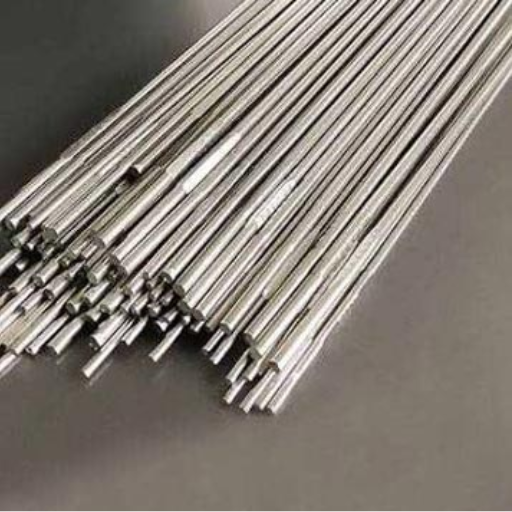
The bands below are starting points for Inconel 600 welding, drawn from published guidance. They are not a qualified procedure and do not override a WPS supported by its own procedure qualification record.
| Process | Current | Voltage | Polarity | Travel speed | Shielding |
|---|---|---|---|---|---|
| GTAW | 60-175 A, by filler diameter | 12-20 V | DCEN | 60-100 mm/min | Argon, 10-20 L/min (20-40 cfh) |
| SMAW | 100-150 A | 20-23 V | DCEP | 170-210 mm/min | Slag system, no external gas |
| GMAW | 120-220 A | 24-30 V | DCEP | 200-350 mm/min | Argon or argon-helium mix |
| SAW | 250-450 A | 26-32 V | DCEP | 250-450 mm/min | Flux blanket |
Two numbers control the outcome more than the rest.
Heat input. A working ceiling of about 1 kJ/mm (25 kJ/in) is common for nickel-alloy welding, and lower where cracking risk is high. Heat input is voltage times current divided by travel speed, so a slow pass at high current is the fastest way to exceed it. Stringer beads beat a wide weave.
Interpass temperature. Measure it with a contact thermometer or a temperature crayon applied outside the groove, not by looking at the color.
The bands also interact with joint geometry. A U-groove run at 120 A needs more passes than a V-groove at 150 A, and more passes means more chances to exceed interpass. Choose preparation and current together.
Inconel 600 Welding Preheat, Interpass and PWHT
Three separate decisions get bundled into one sentence on most drawings. They should not be.
Preheat: Normally None
Preheat is not required for these alloys except to bring the joint to room or shop temperature and drive off condensation, according to the Nickel Institute guidance. A cold, damp part can hold moisture in the groove, and moisture means porosity.
So the preheat number is a floor, not a process. If the plate has been outside on a cold day, warm it to shop temperature. If it is dry and at ambient, do nothing.
Interpass: The Limit That Actually Matters
A 175°C (350°F) maximum interpass temperature is widely used for 600. At least one producer recommends holding to 95°C (200°F) where the service is aggressive or the section is thick. The qualified procedure sets the binding number.
The reason is the carbide window. Time between 540°C and 760°C lets chromium carbides form at grain boundaries, and the chromium depleted beside them is no longer available to form a passive film. A joint that never exceeds 175°C spends very little time in that band.
Thick sections and high-deposition processes make the limit hard to hold. That is an argument for a different groove design or process, not for raising the limit.
PWHT: The 540-760°C Conflict
For most Inconel 600 welding in corrosion service, no post-weld heat treatment is required. The weld and heat-affected zone are austenitic and have not hardened, so there is no hardening mechanism a low-temperature treatment must relieve.
Where a heat treatment is specified, it must be the right one. The mill-aligned guidance for alloy 600 in high-temperature, high-strength caustic-alkali service is a high-temperature anneal: 900°C (1,650°F) for 1 hour, or 790°C (1,450°F) for 4 hours, followed by a slow cool.
That isn’t a stress relief. It is a carbide-dissolving and re-precipitation treatment that puts the microstructure back where it started. A 620°C soak doesn’t do that. It sits inside the 540-760°C precipitation window, holds the part there for hours, and can leave the weldment more sensitive than it was before the furnace.
| Service condition | PWHT position | Basis |
|---|---|---|
| Normal corrosion service, aqueous or atmospheric | Not required | Nickel Institute 11012; SMC-027 |
| High-temperature, high-strength caustic-alkali service | 900°C for 1 h, or 790°C for 4 h, slow cool | Nickel Institute 11012 |
| Code-governed pressure service | Follow the code and the service specification | The construction code governs; do not substitute a generic cycle |
| Dissimilar joint with a carbon steel side that requires PWHT | Butter the steel side, treat it, then complete the nickel weld | Avoids exposing the 600 weld to the steel-side cycle |
| Full anneal of cold-worked or formed parts | 1,010°C (1,850°F) for about 15 minutes | SMC-027 |
| Solution treatment to dissolve carbides | 1,090-1,150°C | Mill data; a mill treatment, not a field weld cycle |
The 1,010°C anneal is a soft-annealing treatment for the wrought product, not a recipe for a finished fabrication unless distortion has been evaluated. The 1,090-1,150°C solution treatment is a mill operation, and a shop that applies it to a welded assembly should expect to re-straighten and re-pickle afterward.
Welding Inconel 600 to Carbon Steel and Stainless Steel
Dissimilar joints are common because 600 is often the corrosion-resistant side of a pressure boundary. The rules change at the interface.
Use nickel filler on both sides. ERNiCr-3 or ENiCrFe-3, never a carbon steel or stainless steel filler. A 308L or 309L deposit against 600 produces a brittle, crack-prone interface and gives up the corrosion resistance the 600 was specified for.
Preheat the carbon steel side to its own requirement. The 600 side needs nothing, but the steel side still needs what its carbon equivalent and thickness call for, and the joint takes the higher of the two.
Butter when the steel side needs PWHT. Weld a layer of nickel filler onto the prepared steel face, heat treat the steel part to its required cycle, then complete the joint to the 600 side. This keeps the 600 weld metal out of the steel-side treatment and is the standard answer when the two requirements conflict.
Control dilution in the first pass. The root pass against carbon steel picks up iron and carbon. Keep the current at the low end, use a stringer bead, and avoid a deep, hot first pass that stirs the steel into the nickel deposit.
On the stainless side, ERNiCr-3 is usually enough. Where the joint sees chlorides or more aggressive chemistry, ERNiCrMo-3 raises the molybdenum content and the pitting resistance.
Qualification follows the base-metal combination. P-No. 43 to P-No. 1 and P-No. 43 to P-No. 8 are separate cases, and a procedure qualified on one does not cover the other without further testing and a new PQR.
Common Inconel 600 Welding Defects and Fixes
| Defect | Mechanism | Prevention |
|---|---|---|
| Solidification cracking | Low-melting films at dendrite boundaries, aggravated by sulfur and phosphorus | Clean joint, ERNiCr-3 with its niobium and manganese, controlled heat input, concave bead |
| Liquation cracking in the HAZ | Grain-boundary films melting just outside the fusion line | Lower heat input, avoid a heavy weave, correct filler |
| Porosity | Moisture, grease, paint, or a poor root purge | Dry consumables, solvent cleaning, confirmed purge |
| Lack of fusion | Viscous pool, low current, fast travel, tight root gap | Wider groove, adequate current, stringer technique, root gap in the procedure |
| Heat tint and oxidation | Inadequate shielding or purge | Gas coverage, trailing shield on thick sections, purge measurement |
| Sensitization | Time in the 540-760°C band | Interpass control, correct PWHT choice, avoid unnecessary reheating |
| Distortion | High thermal expansion and low conductivity | Balanced sequence, back-step welding, low heat input, fixturing |
| 182 deposit embrittlement | Extended exposure at 540-760°C | Use 82 where possible; do not leave 182 in that service band |
Heat tint deserves a separate note. The colored oxide that forms when shielding is lost is chromium-depleted at its base, and in corrosive service that thin layer is where pitting starts. Pickling after welding removes it. Pickling doesn’t fix lack of fusion, undercut or a crack.
Inspection, Qualification and Consumable Documentation
Inspection of Inconel 600 welding uses the methods that work on a non-ferromagnetic austenitic alloy.
Penetrant testing finds surface-breaking defects and is the first check on every accessible weld. Radiography finds volumetric defects, including lack of fusion that penetrant cannot see. Ultrasonic testing covers thick sections and embedded defects where radiography geometry is poor.
Magnetic particle testing does not apply. The alloy is austenitic and non-ferromagnetic, so there is no magnetic flux to leak from a defect. A specification that calls for MT on 600 was written for steel.
Positive material identification belongs on the consumables and on the finished weld. A 600 joint welded with 308L wire looks plausible and fails in service. PMI confirms that the deposit is nickel-based and that chromium and niobium are in range. Ferrite measurement, standard on duplex and austenitic stainless work, has no meaning here.
For corrosive service, ASTM G28 is the standard intergranular corrosion test, with Practice A (ferric sulfate-sulfuric acid) and Practice B (copper sulfate-sulfuric acid) applied according to the specification. A welded coupon that passes G28 in the as-welded condition is evidence that the heat input and interpass controls did their job.
Procedure qualification follows ASME Section IX: a WPS supported by a PQR, with P-No. 43 base metal and F-No. 43 filler as essential variables. The WPS should state the interpass limit, cleaning method, purge requirement and PWHT position explicitly, because those decide whether the joint performs.
Consumables should arrive with the AWS classification, lot number and a certificate traceable to the heat. Electrodes go into a dry storage oven at the manufacturer’s temperature and come out by the amount used in a shift. Our guide to nickel alloy material certificates explains what an EN 10204 3.1 or 3.2 certificate should contain.
Service Life: Sensitization, PWSCC and the 182 Question
The first service-life issue is sensitization, already covered. A weldment that spends time in the 540-760°C band has chromium-depleted grain boundaries, and in an oxidizing or nitric-acid environment those boundaries corrode preferentially. The fix is thermal, not chemical: control interpass, choose the right PWHT, and avoid unnecessary stress relief.
The second is primary water stress corrosion cracking. Alloy 600 and its 82 and 182 weldments have cracked in pressurized water reactor primary water, a chemistry and temperature combination outside normal industrial service. The Nuclear Regulatory Commission has documented the phenomenon, and new construction replaced 600 with alloy 690 and fillers 52 and 52M.
That history doesn’t condemn Inconel 600 welding for chemical, heat-treat or marine duty. It does mean two things. In nuclear primary-loop service, follow the plant’s own specification and don’t extrapolate from general welding guidance. In repair work on existing 600 components, understand why the original filler was selected before changing it, because weld-metal chemistry can change the cracking resistance of the whole joint.
Product Forms and What to Specify
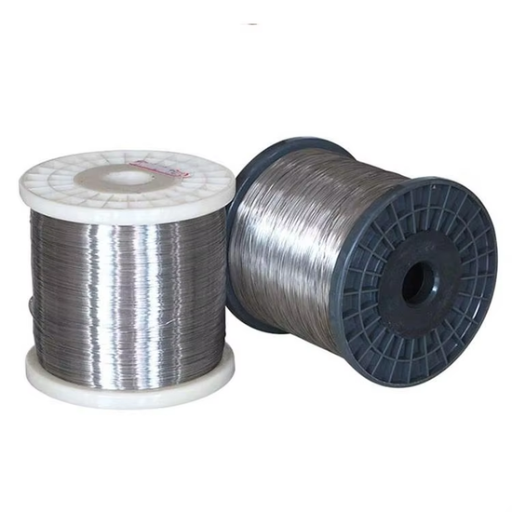
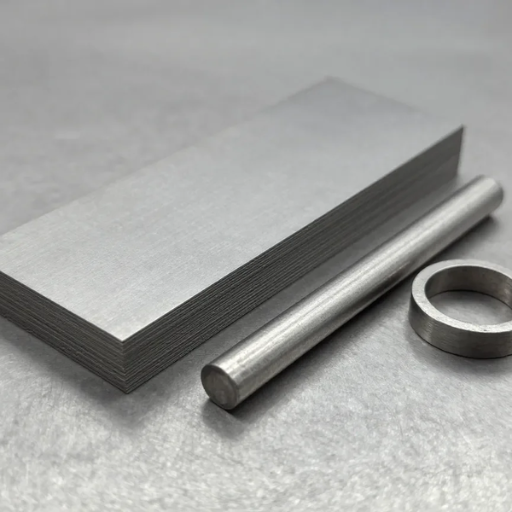
Inconel 600 is supplied as plate, sheet, strip, bar, rod, pipe, tube and forgings. The form changes the welding procedure more than the grade does.
Plate and sheet are covered by ASTM B168, and bar, rod, and wire by ASTM B166. Pipe and tube have their own specifications, and a welded tube already has a longitudinal seam that the procedure must account for.
For a welded fabrication, the RFQ should state the form, thickness or wall, service environment, design temperature, construction code, and whether the assembly will be stress relieved. Those six items determine the filler, joint design, interpass limit, and PWHT position.
Our Inconel 600 tube page covers the tube form, and the nickel alloy pipe hub lists the related grades. Every order ships with a mill test report, and spectral verification is available on request.
If you are weighing 600 against a higher-molybdenum grade, the Inconel 600 vs 625 comparison sets out where the extra alloy content earns its cost.
Frequently Asked Questions
Can Inconel 600 be welded?
Yes. Inconel 600 welding is routine in conventional processes, and Special Metals describes the alloy as readily joined, and GTAW, GMAW, SMAW, SAW and resistance welding are all used in production. The alloy has no ferrite and no precipitation hardening, so the weld does not harden or need re-aging.
What filler rod should I use for Inconel 600?
ERNiCr-3 (alloy 82) for GTAW, GMAW and SAW, and ENiCrFe-3 (alloy 182) for SMAW. Both are ASME F-No. 43. Above 650°C, where stress-rupture strength governs, SMC-027 points to the ENiCrFe-2 electrode INCO-WELD A.
Does Inconel 600 need preheat or post-weld heat treatment?
Preheat is not required beyond warming the joint to shop temperature to prevent condensation. Post-weld heat treatment is not required for most corrosion service. High-temperature, high-strength caustic-alkali service is the documented exception, at 900°C for 1 hour or 790°C for 4 hours with a slow cool.
Why is Inconel 600 harder to weld than stainless steel?
The pool is more viscous and penetrates less, so the same current and groove produce less fusion. Heat stays in the part because the alloy conducts it poorly, which drives distortion. And the alloy is far less tolerant of sulfur, lead, zinc and copper contamination.
What is the maximum interpass temperature for Inconel 600?
175°C (350°F) is widely used, and at least one producer recommends 95°C (200°F) for aggressive service or heavy sections. The qualified WPS sets the binding value, and the limit exists to keep the weldment out of the 540-760°C carbide window.
Can Inconel 600 be welded to carbon steel?
Yes, with a nickel filler such as ERNiCr-3 or ENiCrFe-3. Preheat the carbon steel side to its own requirement, control dilution in the first pass, and butter the steel side before heat treatment when the steel requires PWHT.
Is ERNiCr-3 the same as Inconel 82?
Yes. ERNiCr-3 is the AWS A5.14 classification and Inconel 82 is the trade name for the same filler; UNS N06082 identifies the alloy. It is not chemically identical to wrought 600, because it carries more chromium, niobium and manganese and less iron.
Conclusion
Inconel 600 welding comes down to four decisions. Choose the filler by process and service: 82 for GTAW, GMAW and SAW, 182 for SMAW, ENiCrFe-2 where stress rupture governs. Clean the joint to bright metal and keep sulfur, lead, zinc and copper away from it. Hold interpass at or below the WPS limit so the weldment stays out of the 540-760°C window. Then make the heat-treatment call deliberately, because a generic 620°C stress relief is not the treatment the mill guidance describes for caustic-alkali service.
Send your product form, thickness, service environment and construction code to our technical team, and we will confirm the filler, the interpass limit and the PWHT position for your next Inconel 600 welding job, with the documentation your project requires.