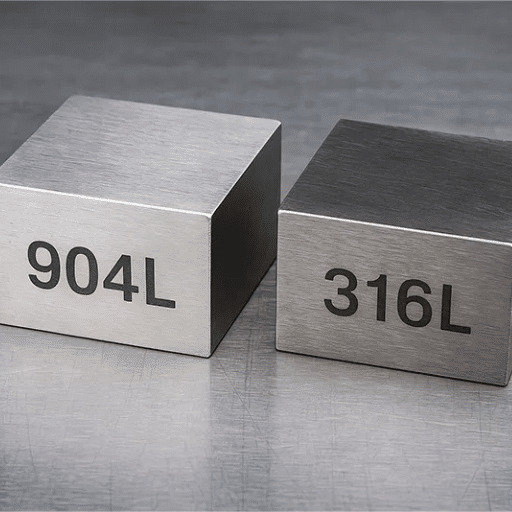
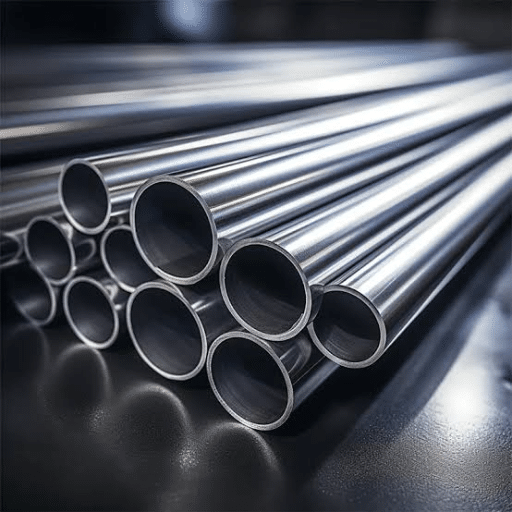
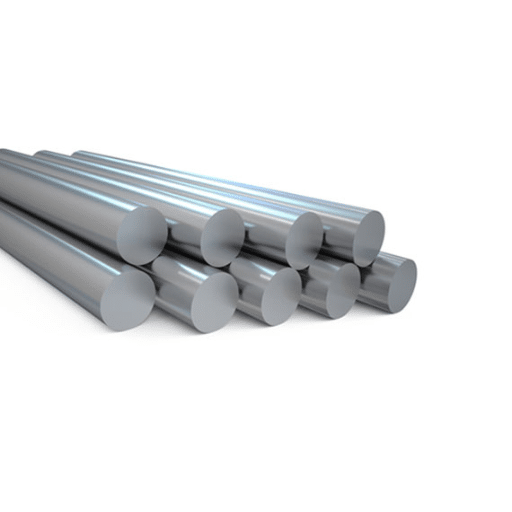
Incoloy 825 is the better choice for sulfuric acid, phosphoric acid, and cost-sensitive moderate service. Inconel 625 wins in chloride-rich seawater, high temperatures above 540°C, and severe sour-gas environments. Both are nickel-based corrosion-resistant alloys, but their chemistry and certification limits make them suited to very different applications.
A valve specified with the wrong alloy can fail in 18 months. The replacement often costs three times the original material savings. Engineers and procurement teams compare Incoloy 825 and Inconel 625 because the datasheets look similar, both contain nickel, chromium, and molybdenum, yet the performance gap in chloride, acid, and sour-gas service is substantial.
In this guide, you will learn exactly how the compositions differ, which environments favor each alloy, what NACE MR0175 limits apply, and how to avoid the two most common specification mistakes. We will also cover 2026 pricing, Chinese equivalent grades, and the certification documentation you should demand from any supplier.
Key Takeaways
- Incoloy 825 (UNS N08825 / NS142) delivers superior resistance to sulfuric and phosphoric acids at temperatures below 540°C.
- Inconel 625 (UNS N06625 / GH3625) provides a PREN of ~51 versus ~32 for 825, making it the clear choice for seawater and chloride service.
- Inconel 625 is qualified for all H₂S partial pressures under NACE MR0175/ISO 15156-3; Incoloy 825 is limited to moderate sour service with a 35 HRC hardness cap.
- Inconel 625 typically costs 75–100% more than Incoloy 825; over-specification wastes budget without improving reliability.
- Demand EN 10204 3.1/3.2 MTRs, hardness reports, and NACE compliance statements when sourcing either alloy from any supplier.
What Incoloy 825 and Inconel 625 Have in Common

Both alloys belong to the nickel-based corrosion-resistant family. Both rely on chromium for oxidation resistance and molybdenum for pitting resistance.
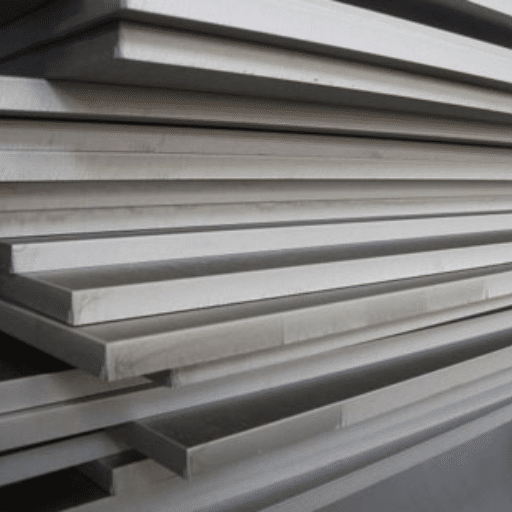
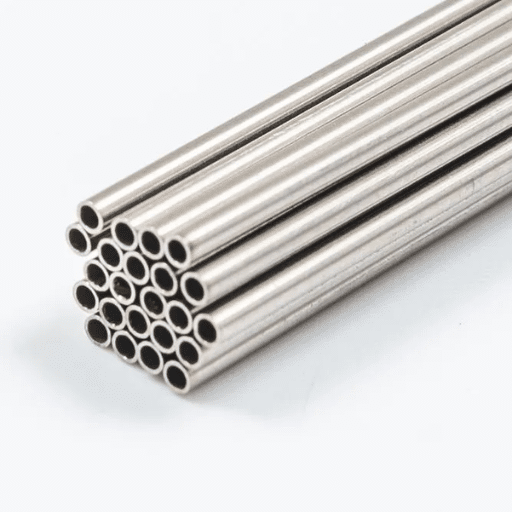
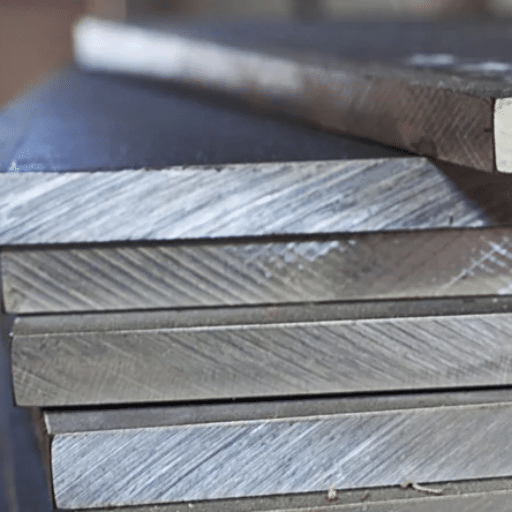
Both are fully weldable with matching nickel-based filler metals, and both resist stress corrosion cracking in many aqueous environments. For buyers, the common ground matters because it means either alloy can be sourced as bar, plate, sheet, pipe, or forging from a qualified manufacturer.
At Jiangsu Zhonggongte, we stock both Incoloy 825 bar and Inconel 625 round bar with full MTR documentation.
The similarities end when you look at the details. Nickel content, molybdenum level, and the presence of copper or niobium create very different corrosion maps.
Chemical Composition: Why the Performance Diverges
The elemental balance is the root cause of every performance difference between these alloys.
| Element | Incoloy 825 (UNS N08825) | Inconel 625 (UNS N06625) |
|---|---|---|
| Nickel | 38.0–46.0% | ≥58.0% |
| Chromium | 19.5–23.5% | 20.0–23.0% |
| Molybdenum | 2.5–3.5% | 8.0–10.0% |
| Copper | 1.5–3.0% | — |
| Niobium | — | 3.15–4.15% |
| Titanium | 0.6–1.2% | — |
| Iron | ≥22.0% (balance) | ≤5.0% |
Each element plays a specific role. Molybdenum drives resistance to chloride pitting and crevice corrosion. This explains why Inconel 625, with roughly three times the molybdenum, dominates seawater service.
Copper improves performance in sulfuric acid and other reducing acids, giving Incoloy 825 its cost advantage in chemical plants. Niobium stabilizes Inconel 625 against sensitization and contributes to high-temperature strength. Titanium performs the same stabilization role in Incoloy 825.
For the definitive composition tables, refer to the Special Metals Alloy 825 datasheet and the Haynes Inconel 625 datasheet.
Mechanical Properties and Temperature Limits
Mechanical strength and temperature ceiling often decide the alloy before corrosion data is even reviewed.
| Property | Incoloy 825 | Inconel 625 |
|---|---|---|
| Tensile Strength (annealed) | ≥586 MPa | ≥827 MPa |
| Yield Strength (0.2%) | ≥241 MPa | ≥414 MPa |
| Elongation | ≥30% | ≥30% |
| Density | 8.14 g/cm³ | 8.44 g/cm³ |
| Max Continuous Service Temp | 540°C | 815°C |
| Oxidation Resistance Limit | 540°C | ~980°C |
Inconel 625 is roughly 41% stronger in tensile and 72% stronger in yield. That margin allows thinner wall designs in pressure vessels and heat exchangers. It also retains useful strength and oxidation resistance well beyond Incoloy 825’s 540°C ceiling.
Incoloy 825 is not a high-temperature alloy. Above 540°C, its oxidation resistance and creep strength drop sharply. For components that see sustained temperatures above this limit, Inconel 625 is effectively mandatory.
Corrosion Resistance: The Deciding Factor
PREN and Chloride Performance
The Pitting Resistance Equivalent Number (PREN) is a quick way to compare chloride performance. A higher PREN means better resistance to pitting and crevice corrosion.
| Alloy | PREN | Critical Pitting Temp (1M NaCl) | Seawater Service Limit |
|---|---|---|---|
| Incoloy 825 | ~30–33 | 40–50°C | ~30°C |
| Inconel 625 | ~51 | >80°C | ~80°C |
Inconel 625’s higher molybdenum and nickel content push its PREN above 50. It resists pitting in seawater up to approximately 80°C. Incoloy 825 begins to pit in warm seawater above 30°C. For subsea flowlines, desalination plants, and marine splash zones, Inconel 625 is the standard specification.
Acid Environments
Acid service flips the recommendation. Incoloy 825’s copper addition gives it a clear advantage in reducing acids.
| Environment | Incoloy 825 | Inconel 625 |
|---|---|---|
| Dilute sulfuric acid (20–50%) | Excellent | Good, concentration-dependent |
| Concentrated sulfuric acid (>70%) | Limited | Good |
| Hydrochloric acid | Limited | Better |
| Pure phosphoric acid | Excellent | Moderate |
| Wet-process phosphoric acid (with fluorides) | Limited | Better |
| Nitric acid | Good | Good |
For sulfuric acid plants, flue gas desulfurization scrubbers, and phosphoric acid evaporators, Incoloy 825 is usually the economical and technically correct choice. For mixed acids or environments containing chlorides and fluorides, Inconel 625 is safer.
Sour Gas (H₂S) Service
NACE MR0175/ISO 15156-3 qualification is critical for oil and gas applications. The two alloys are not equally qualified.
| Parameter | Incoloy 825 | Inconel 625 |
|---|---|---|
| H₂S Partial Pressure | Moderate limits | All partial pressures |
| Chloride Concentration | Defined limits | Unlimited |
| Hardness Limit | ≤35 HRC | ≤241 HBW (annealed) |
| PWHT Requirement | Sometimes required | Generally not required |
Inconel 625 is one of the most broadly qualified alloys in NACE MR0175/ISO 15156-3. It is approved for all H₂S partial pressures and unlimited chlorides within the standard’s scope. Incoloy 825 is approved for moderate sour service with a 35 HRC hardness limit.
This makes Inconel 625 the default choice for HPHT sour wells, Christmas trees, and subsea production systems. Incoloy 825 remains suitable for wellhead components and moderate sour pipelines where conditions are less severe.
Industry Applications Compared

Chemical Processing
Incoloy 825 dominates sulfuric and phosphoric acid service. Typical components include acid heat exchangers, FGD scrubbers, chemical tanks, and pollution control equipment. Its lower cost also makes it attractive for large static components where chlorides are not present.
Inconel 625 appears in high-temperature reactors, catalyst regenerators, and mixed-acid service. Its higher strength allows thinner pressure vessel walls, partially offsetting the material premium.
Oil & Gas
Incoloy 825 is widely used for wellhead components, acid gas scrubbers, and moderate sour pipelines. It offers a cost-effective path to NACE compliance when conditions are within its qualification envelope.
Inconel 625 is specified for subsea risers, umbilicals, HPHT completions, and severe sour service. The combination of chloride immunity, high strength, and broad NACE qualification makes it hard to replace in deepwater production.
Marine & Seawater
Incoloy 825 has limited use in marine environments. It can handle clean cooling water at low temperatures, but it is not a seawater alloy.
Inconel 625 is the established choice for offshore structures, subsea flowlines, desalination equipment, and marine fasteners. Its resistance to pitting and crevice corrosion in warm chlorides is the reason it commands a premium.
Power Generation
Incoloy 825 appears in FGD systems and pollution control equipment. Inconel 625 is used in gas turbine transition ducts and other high-temperature exhaust components where oxidation resistance above 540°C is required.
Cost Analysis: Price per kg vs. Total Cost of Ownership
2026 Price Ranges
| Product Form | Incoloy 825 | Inconel 625 | Premium for 625 |
|---|---|---|---|
| Bar / Rod | $25–40/kg | $50–80/kg | ~75–100% |
| Sheet / Plate | $28–45/kg | $55–90/kg | ~75–100% |
| Seamless Pipe | $35–55/kg | $65–110/kg | ~80–100% |
The price difference is driven by raw material content. Inconel 625 contains at least 58% nickel, 8–10% molybdenum, and 3–4% niobium. Incoloy 825 substitutes iron for much of the nickel and contains far less molybdenum.
Total Cost of Ownership
Material cost per kilogram is only one line item. Procurement teams should also consider:
- Machinability: Both alloys work-harden rapidly and require carbide tooling. Inconel 625 is more demanding due to higher strength and niobium content.
- Welding consumables: Both use ERNiCrMo-3 filler in most cases. Incoloy 825 may require post-weld stabilization heat treatment.
- Inspection and NDT: Critical service orders require ultrasonic inspection, hardness testing, and NACE compliance certificates.
- Risk of unplanned shutdown: Chemical plant shutdowns average 180,000–180,000–340,000 per event. Specifying the wrong alloy to save 30% on material can cost far more in downtime and replacement.
When corrosion data is borderline, Inconel 625 is the safer choice. When conditions clearly favor Incoloy 825, over-specifying to 625 wastes budget without adding reliability.
Selection Decision Framework
Choose Incoloy 825 When:
- The primary corrosive is sulfuric acid or phosphoric acid.
- Operating temperature stays below 540°C.
- Sour service is mild to moderate.
- The project is budget-constrained and conditions are not severe.
- The application is static and not exposed to high chlorides or seawater.
Choose Inconel 625 When:
- Chlorides, seawater, or brine are present.
- Operating temperature exceeds 540°C.
- Severe sour service or high H₂S partial pressure is expected.
- The component is subsea, offshore, or fatigue-loaded.
- The cost of failure justifies the higher material premium.
Mini-Story: The Seawater Heat Exchanger
In 2022, a Southeast Asian refinery specified Incoloy 825 tubes for a seawater-cooled heat exchanger. The procurement team chose 825 to reduce material cost by 40% against the Inconel 625 alternative.
Within 14 months, pitting at the 45°C inlet temperature caused tube leaks and unplanned shutdown. After switching to Inconel 625, the exchanger ran without corrosion-related failure. The 60% material premium was recovered in the first avoided shutdown.
Mini-Story: The Over-Specified Sulfuric Acid Tank
A Latin American chemical distributor specified Inconel 625 for a 30% sulfuric acid storage tank at ambient temperature. The engineering team wanted maximum corrosion margin. A metallurgical review showed that Incoloy 825 would deliver equivalent corrosion performance at 45% lower material cost. The project saved approximately $120,000 by switching to 825, with no increase in risk.
Weldability, Fabrication, and Certification
Welding Comparison
Both alloys weld well with matching nickel-based filler metals. ERNiCrMo-3 is the common choice for both. Incoloy 825 may require a stabilization anneal at 940–980°C after welding in some codes to restore corrosion resistance. Inconel 625 generally does not require post-weld heat treatment in the annealed condition, which is a significant fabrication advantage for large pressure vessels and subsea components.
Machining
Both alloys work-harden rapidly. Carbide or ceramic inserts, rigid setups, and slow cutting speeds are essential. Inconel 625 is more challenging to machine than Incoloy 825 due to its higher strength and niobium content.
Certification Checklist
Every critical-service order should ship with:
- EN 10204 3.1 or 3.2 material test report
- Full chemical analysis by optical emission spectrometry
- Mechanical test report (tensile, yield, elongation)
- Hardness test report
- NACE MR0175/ISO 15156 compliance statement for sour service
- Ultrasonic NDT report for bar, plate, or forging
Zhonggongte supplies all of this documentation as standard for certified orders. Our in-house direct-reading spectrometers, tensile testers, hardness testers, and ultrasonic NDT systems verify every batch before shipment.
Chinese Equivalent Grades and Sourcing

Equivalent Designations
| Alloy | UNS | W. Nr. | Chinese GB | Common Trade Name |
|---|---|---|---|---|
| Incoloy 825 | N08825 | 2.4858 | NS142 | Alloy 825 |
| Inconel 625 | N06625 | 2.4856 | GH3625 | Alloy 625 |
NS142 and GH3625 are chemically interchangeable with Incoloy 825 and Inconel 625, respectively, when produced by a qualified manufacturer with full spectral verification.
Sourcing from China
Global buyers can source both alloys cost-effectively from Chinese manufacturers, but verification matters. Before placing an order, confirm:
- VIM/ESR or VIM/VAR melt practice for critical applications
- In-house direct-reading spectrometer and tensile testing equipment
- Experience supplying to oil & gas or chemical majors with a documented history
- Willingness to provide EN 10204 3.2 certificates with third-party inspection
- Lead time and stock availability for your specific form and size
At Jiangsu Zhonggongte, we produce Incoloy 825 and Inconel 625 bar, plate, pipe, and forging stock with full traceability. Every certified order ships with mill test reports, spectral analysis, and NACE compliance documentation where required.
FAQ: Incoloy 825 vs Inconel 625
Q: Can Incoloy 825 replace Inconel 625 in seawater?
A: Only in low-temperature, low-chloride cooling water. For seawater above 30°C or subsea service, Inconel 625 is required.
Q: Is Inconel 625 better than Incoloy 825 for sulfuric acid?
A: Not necessarily. Incoloy 825’s copper content gives it superior performance in dilute to moderate sulfuric acid. Inconel 625 is preferred for mixed acids or oxidizing conditions.
Q: What is the price difference between Incoloy 825 and Inconel 625?
A: Inconel 625 typically costs 75–100% more than Incoloy 825 for standard mill products, driven by higher nickel, molybdenum, and niobium content.
Q: Are both alloys NACE MR0175 compliant?
A: Yes, but with different limits. Inconel 625 is qualified for all H₂S partial pressures and unlimited chlorides. Incoloy 825 is qualified for moderate sour service with a 35 HRC hardness limit.
Q: Which alloy is easier to weld?
A: Both weld well with matching nickel-based filler metals. Incoloy 825 may require post-weld stabilization heat treatment in some codes; Inconel 625 generally does not.
Q: What Chinese grade is equivalent to Incoloy 825?
A: NS142 (GB/T standard) is the Chinese equivalent of UNS N08825 / Incoloy 825.
Q: What Chinese grade is equivalent to Inconel 625?
A: GH3625 (GB/T standard) is the Chinese equivalent of UNS N06625 / Inconel 625.
Q: Which alloy has better high-temperature strength?
A: Inconel 625. It retains strength and oxidation resistance to 815°C continuous service, while Incoloy 825 is limited to 540°C.
Q: Can I use Incoloy 825 for sour gas wellhead components?
A: Yes, for mild to moderate sour service within NACE MR0175 limits. For severe sour or HPHT conditions, specify Inconel 625.
Q: What documentation should I demand when sourcing these alloys?
A: Minimum documentation includes EN 10204 3.1/3.2 MTR, full chemical analysis, mechanical test report, hardness report, and NACE compliance statement for sour service.
Conclusion
The Incoloy 825 vs Inconel 625 decision is a technical one, not a brand preference. Incoloy 825 wins in sulfuric acid, phosphoric acid, FGD service, and any moderate-temperature application where budget matters. Inconel 625 wins in chloride-rich seawater, high temperatures above 540°C, and severe sour-gas environments where NACE qualification is critical.
Mis-specification is expensive in both directions. Using 825 where 625 is required invites pitting, crevice corrosion, and unplanned shutdown. Using 625 where 825 would suffice wastes material budget without improving reliability.
Submit your application details: operating temperature, media composition, chloride and H₂S levels, and mechanical requirements. Our metallurgical team will recommend the right alloy with full MTR and certification documentation within 24 hours.