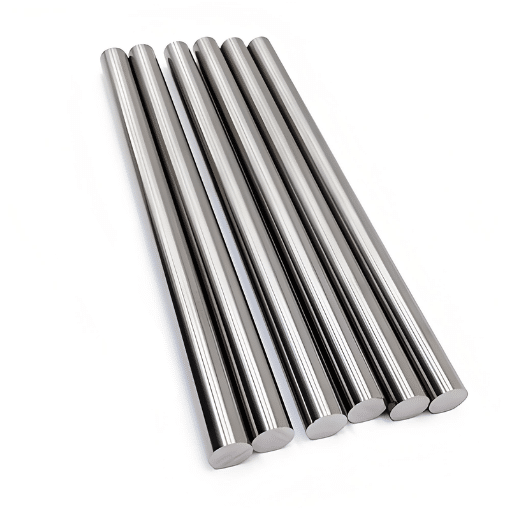
Hastelloy C276 (UNS N10276) is a nickel-molybdenum-chromium superalloy with exceptional resistance to both oxidizing and reducing corrosive environments, making it the benchmark material for chemical processing, flue gas desulfurization, and sour gas service. This guide covers everything engineers and procurement teams need: Hastelloy C276 properties across composition, mechanical performance, corrosion rate data in real acids, welding with ERNiCrMo-4, C276 vs C22 selection, and China sourcing with NS3304 equivalents.
A chemical plant engineer in Louisiana once specified 316L stainless steel for a sulfuric acid heat exchanger handling 15% H2SO4 at 80C. The logic seemed reasonable. 316L resists mild acids, and it cost one-third of Hastelloy C276 plate.
Within eight months, pitting corrosion perforated the tube sheet. The unplanned shutdown cost $340,000 in lost production, emergency procurement, and re-fabrication. That “savings” exceeded the original C276 specification by a factor of eight.
That mistake repeats more often than procurement teams admit. Engineers specify based on catalog data, not corrosion rate tables. They overlook the molybdenum and tungsten content that makes C276 survive where stainless steel fails. This guide prevents that error.
Key Takeaways
- Hastelloy C276 (UNS N10276) contains 15-17% molybdenum and 3-4.5% tungsten, delivering a PREN of approximately 67 and resistance to over 99% of corrosive chemical environments.
- At room temperature, C276 delivers 690-790 MPa tensile strength, 283-380 MPa yield strength, and 40%+ elongation per ASTM B575.
- Corrosion rates in boiling 20% HCl measure just 0.25 mm/year, versus catastrophic failure for 316L in the same conditions.
- Most welded C276 fabrications require no post-weld heat treatment due to the alloy’s intentionally low carbon (<=0.01%) and silicon (<=0.08%) content.
- The Chinese equivalent NS3304 matches UNS N10276 chemistry when sourced from VIM/ESR mills with verified MTR documentation.
- C276 outperforms C22 in reducing acids (HCl, H2SO4) and chloride environments, but C22 wins in strongly oxidizing conditions with higher chromium.
Hastelloy C276 Chemical Composition & Metallurgical Design
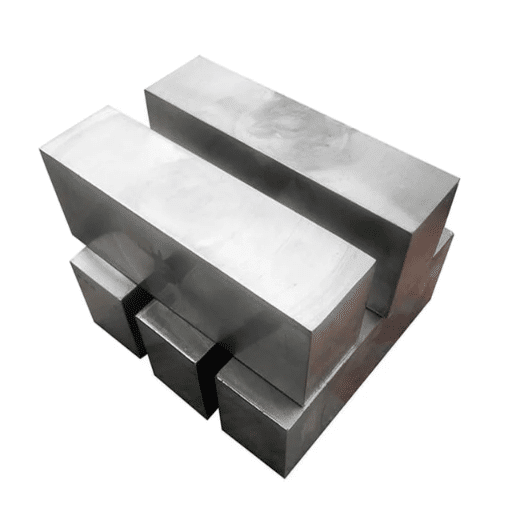
UNS N10276 / W. Nr. 2.4819 / NS3304 Composition
Hastelloy C276 was the first wrought nickel-chromium-molybdenum alloy engineered with extremely low carbon and silicon contents specifically to eliminate welding concerns. Its composition is tightly controlled:
| Element | Weight % | Role in Performance |
|---|---|---|
| Nickel (Ni) | 57.0 (balance) | Matrix stability, chloride SCC resistance |
| Molybdenum (Mo) | 15.0 – 17.0 | Primary reducing acid resistance, pitting prevention |
| Chromium (Cr) | 14.5 – 16.5 | Oxidizing environment protection, passivation |
| Iron (Fe) | 4.0 – 7.0 | Cost reduction, structural matrix |
| Tungsten (W) | 3.0 – 4.5 | Synergistic corrosion resistance with Mo |
| Cobalt (Co) | <= 2.5 | Trace control, magnetic properties |
| Carbon (C) | <= 0.010 | Sensitization prevention |
| Silicon (Si) | <= 0.080 | Weld HAZ corrosion prevention |
| Manganese (Mn) | <= 1.0 | Deoxidation, sulfur control |
| Vanadium (V) | <= 0.35 | Grain refinement |
The Chinese equivalent NS3304 (GB/T 15007) matches this composition within the same tolerance bands. For international procurement teams, NS3304-certified material from qualified Chinese mills performs identically to UNS N10276 when the mill test report confirms elemental compliance.
Why Low Carbon and Silicon Matter
The <=0.01% carbon maximum is not incidental. It is the defining metallurgical decision behind C276’s weldability. In conventional stainless steels, carbon combines with chromium during welding heat cycles to form chromium carbides at grain boundaries. This depletes chromium near the boundary and creates a sensitization zone vulnerable to intergranular corrosion.
C276’s carbon content is too low to form significant carbides. Combined with silicon held below 0.08%, the heat-affected zone retains full corrosion resistance in the as-welded condition. Most C276 fabrications do not require post-weld solution annealing. That saves time, energy, and distortion risk.
The Role of Molybdenum, Tungsten, and Chromium
The 15-17% molybdenum content is what separates C276 from lesser alloys. Molybdenum forms stable protective films in reducing acids, particularly hydrochloric and sulfuric acid. Tungsten acts synergistically with molybdenum, enhancing pitting and crevice corrosion resistance in chloride-bearing environments.
Chromium at 14.5-16.5% provides the oxidizing acid resistance that pure nickel-molybdenum alloys like Hastelloy B2 lack. The three-element balance, Cr for oxidation, Mo+W for reduction, is why C276 performs in mixed acid environments where single-mechanism alloys fail.
Hastelloy C276 Mechanical Properties
Understanding UNS N10276 properties by temperature and product form is critical for pressure vessel design, piping specification, and material qualification.
Room Temperature Properties (ASTM B575 Minimums)
| Property | ASTM B575 Minimum | Typical Value |
|---|---|---|
| Tensile Strength | >= 690 MPa (100 ksi) | 720-790 MPa |
| Yield Strength (0.2% offset) | >= 283 MPa (41 ksi) | 310-380 MPa |
| Elongation (2 inch) | >= 40% | 45-55% |
| Hardness | <= 100 HRB | 85-95 HRB |
These values place C276 in a similar strength range to austenitic stainless steels but with dramatically superior corrosion resistance. The 40%+ elongation indicates excellent formability. Complex bends, deep draws, and roll-formed sections are all achievable in the annealed condition.
Mechanical Properties by Product Form
Different product forms exhibit slight property variations based on processing history:
| Product Form | ASTM Spec | Tensile (MPa) | Yield (MPa) | Elongation |
|---|---|---|---|---|
| Sheet/Strip | B575 | 760-790 | 350-380 | ~50% |
| Plate | B575 | 720-760 | 310-350 | ~45% |
| Bar/Rod | B574 | 740-780 | 330-370 | ~45% |
| Seamless Tube | B622 | 690-740 | 280-330 | ~40% |
| Welded Tube | B619 | 690-720 | 280-320 | ~35% |
Cold-worked spring temper strip can achieve 200-240 ksi (1,380-1,655 MPa) tensile strength for precision spring and diaphragm applications. Operating range for spring temper is -184C to 400C.
Elevated Temperature Performance
C276 retains useful strength to approximately 400C. Beyond this temperature, the alloy remains oxidation-resistant but load-bearing capacity drops:
| Temperature (C) | Tensile (MPa) | Yield (MPa) |
|---|---|---|
| 21 (RT) | 760 | 350 |
| 200 | 690 | 280 |
| 400 | 620 | 240 |
| 600 | 550 | 210 |
| 800 | 480 | 190 |
For continuous structural loads above 400C, engineers typically specify Inconel 625 or Incoloy 800H. C276’s sweet spot is corrosive environments below 400C where its combined oxidation and reduction resistance is unmatched.
Cryogenic Properties
At -196C (liquid nitrogen temperature), C276 retains excellent ductility with tensile strength increasing to approximately 1,050 MPa and yield strength to 480 MPa. Elongation remains above 35%. This makes C276 suitable for cryogenic valves, LNG handling equipment, and low-temperature chemical processes.
Hastelloy C276 Physical Properties
| Property | Value (Metric) | Value (Imperial) |
|---|---|---|
| Density | 8.89 g/cm3 | 0.321 lb/in3 |
| Melting Point | 1,325 – 1,370C | 2,415 – 2,500F |
| Thermal Conductivity @ 100C | 9.8 – 11.2 W/m. K | 67 – 77 BTU.in/hr.ft2. F |
| CTE (20-100C) | 11.2 um/m. C | 6.2 x 10⁻⁶ in/in. F |
| CTE (20-400C) | 13.1 um/m. C | 7.3 x 10⁻⁶ in/in. F |
| Specific Heat | 427 J/kg. C | 0.102 BTU/lb. F |
| Elastic Modulus | 205 GPa | 29.8 x 10³ ksi |
| Electrical Resistivity | 1.23 uOhm.m | 51 uOhm.in |
| Magnetic Permeability | ~1.0002 | Non-magnetic (annealed) |
The coefficient of thermal expansion closely matches that of austenitic stainless steels. This simplifies mixed-metal designs; C276 and 316L can be joined without excessive thermal stress during temperature cycling. Density at 8.89 g/cm3 makes C276 approximately 11% heavier than 316L stainless (7.99 g/cm3) and roughly twice as heavy as titanium (4.51 g/cm3).
Hastelloy C276 Corrosion Resistance

Pitting and Crevice Corrosion Resistance
The Pitting Resistance Equivalent Number (PREN) for Hastelloy C276 is approximately 67, calculated as:
PREN = %Cr + 3.3(%Mo) + 16(%N)
Using nominal composition: 15 + 3.3(16) + 16(0) = 67.8
For context, 316L stainless steel has a PREN of approximately 25. Alloy 625 sits around 51. Only super duplex 2507 (PREN ~43) and a few specialty grades approach C276’s pitting resistance.
| Test Method | Result |
|---|---|
| Critical Pitting Temperature (CPT), 6% FeCl3 | > 150C |
| Critical Crevice Temperature (CCT), 6% FeCl3 | 55C |
The CPT exceeds the boiling point of the test solution, meaning C276 does not pit under standard ASTM G48 test conditions. The CCT of 55C is lower than C22’s 102C but still far above 316L’s <10C.
Hydrochloric Acid Resistance
This is where C276 dominates virtually every other wrought alloy. Corrosion rates remain low across wide concentration and temperature ranges:
| HCl Concentration | Temperature | Corrosion Rate (mm/year) |
|---|---|---|
| 1% | Boiling | 0.08 |
| 5% | 80C | 0.12 |
| 10% | 80C | 0.18 |
| 20% | 80C | 0.25 |
| 20% | Boiling | 0.76 |
| 37% (conc.) | 60C | 1.2 |
For comparison, 316L stainless steel suffers catastrophic corrosion (>25 mm/year) in boiling 20% HCl. Even Alloy 625 shows rates 3-5x higher than C276 in concentrated HCl.
A process engineer in Texas learned this the hard way. His team specified 904L for a hydrochloric acid vapor condenser, reasoning that the higher nickel and molybdenum content versus 316L would provide adequate service life. The 904L tubes lasted 14 months before perforation. Replacement with C276 extended the service interval to over 12 years with corrosion rates below 0.1 mm/year.
Sulfuric Acid and Phosphoric Acid Performance
| Acid | Concentration | Temperature | Corrosion Rate (mm/year) |
|---|---|---|---|
| H2SO4 | 10% | Boiling | 0.15 |
| H2SO4 | 50% | 80C | 0.62 |
| H2SO4 | 75% | 80C | 0.45 |
| H3PO4 | 50% | Boiling | 0.20 |
| H3PO4 | 85% | 100C | 0.19 |
C276 performs exceptionally across the full sulfuric acid concentration spectrum. In phosphoric acid, particularly the wet-process acid containing chloride and fluoride impurities, C276 outlasts 316L by factors of 20x or more.
Seawater and Chloride Environment Resistance
In flowing natural seawater at ambient temperature, C276 exhibits essentially zero corrosion. The alloy resists:
- Chloride stress corrosion cracking (SCC) at temperatures where 316L and 304 fail
- Crevice corrosion in salt-laden crevices and under deposits
- Pitting in chlorinated seawater and brine systems
For marine heat exchangers, C276 tube bundles operate for decades without significant wall loss. The limiting factor is typically biofouling or erosion at inlet ends, not alloy corrosion.
Wet Chlorine and Hypochlorite Resistance
C276 is one of only a handful of alloys resistant to wet chlorine gas, chlorine dioxide, and hypochlorite solutions. This makes it essential for:
- Chlor-alkali plant cell components
- Pulp bleaching equipment
- Wastewater disinfection systems
- Chemical processing with chlorine-bearing streams
Stress Corrosion Cracking Resistance
C276 demonstrates outstanding resistance to chloride-induced stress corrosion cracking. Testing per ASTM G36 (boiling 45% MgCl2) shows no cracking after 1,000+ hours at stresses above yield strength. This is a critical advantage over 300-series stainless steels and even some duplex grades in high-chloride, high-temperature service.
Intergranular Corrosion in Welded Condition
ASTM G28 Method A testing on welded C276 specimens shows corrosion rates of <1 mm/year in the as-welded condition. No post-weld solution annealing is required for most applications. This single characteristic eliminates an entire fabrication step, reducing both cost and distortion risk.
Hastelloy C276 vs C22: Which Corrosion-Resistant Alloy?
Chemical Composition Differences
| Element | Hastelloy C276 | Hastelloy C22 |
|---|---|---|
| Chromium | 14.5 – 16.5% | 20.0 – 22.5% |
| Molybdenum | 15.0 – 17.0% | 12.5 – 14.5% |
| Tungsten | 3.0 – 4.5% | 2.5 – 3.5% |
| Iron | 4.0 – 7.0% | 2.0 – 6.0% |
| PREN | ~67 | ~65 |
| CCT | 55C | 102C |
Environment-by-Environment Selection Guide
| Environment | Better Choice | Reason |
|---|---|---|
| Strong reducing acids (HCl, H2SO4) | C276 | Higher Mo + W content |
| Strong oxidizing acids (HNO3, FeCl3) | C22 | Higher Cr content |
| Mixed oxidizing/reducing cycles | C22 | Broader versatility |
| Chloride-rich seawater (oxidizing) | C22 | Better crevice resistance (CCT 102C) |
| Chloride SCC risk | C276 | Proven field history, slightly better SCC resistance |
| Welded fabrication critical | C22 | Superior HAZ corrosion resistance |
| Cost-sensitive reducing acid service | C276 | Lower cost, wider availability |
| Maximum pitting/crevice resistance | C22 | Higher CPT and CCT |
When C22 Outperforms C276
C22’s 20-22.5% chromium content provides superior passivation in oxidizing chloride environments. For flue gas desulfurization absorbers with oxidizing chloride levels, C22 offers longer service life. For welded structures where heat-affected zone corrosion is a concern, C22’s optimized chemistry provides additional margin.
When C276 Is the Better Value
For purely reducing acid service, hydrochloric acid, sulfuric acid, phosphoric acid, C276 matches or exceeds C22 performance at typically 10-15% lower material cost. C276’s wider availability and larger installed base also mean faster procurement and more competitive pricing from Hastelloy C276 suppliers.
ASTM Specifications and Product Forms
Hastelloy C276 ASTM B575 and related specifications define the chemical, mechanical, and dimensional requirements for each product form.
ASTM Coverage by Product Form
| Product Form | ASTM Specification | ASME Equivalent |
|---|---|---|
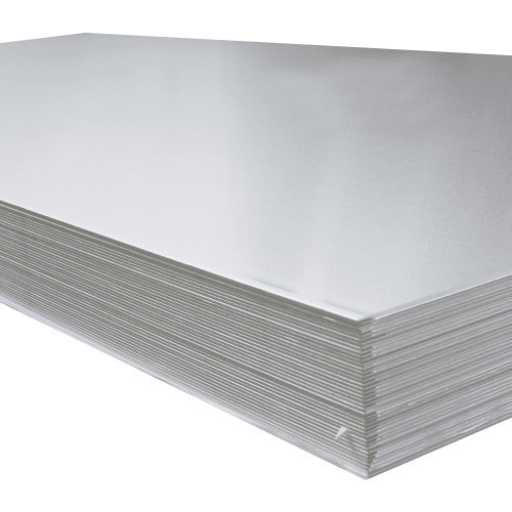
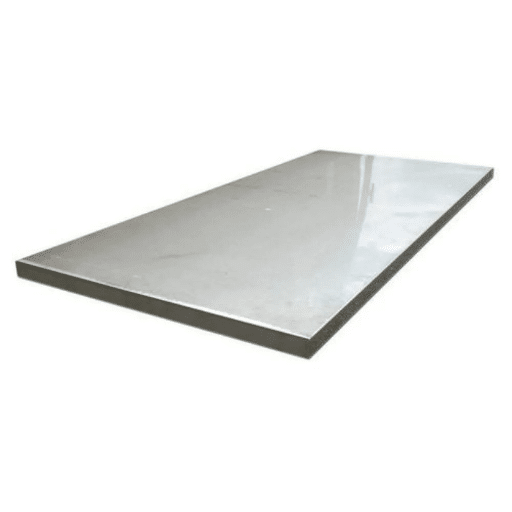
| Plate, Sheet, Strip | B575 | SB575 |
| Seamless Pipe & Tube | B622 | SB622 |
| Welded Pipe & Tube | B619 | SB619 |
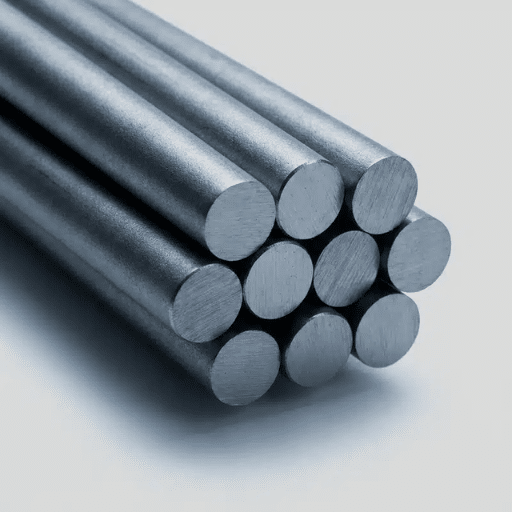
| Rod & Bar | B574 | SB574 |
| Forgings | B564 | SB564 |
| Fittings | B366 | SB366 |
| Welding Filler Metal | A5.14 (ERNiCrMo-4) | , |
Product Form Selection Guide
| Application Need | Recommended Form | Typical Sizes |
|---|---|---|
| Pressure vessels, tank linings | Plate | 3-50 mm thick, up to 2,500 mm wide |
| Heat exchanger tubes | Seamless tube (B622) | 6-114 mm OD, 0.5-5 mm wall |
| Process piping | Seamless/welded pipe | 15-300 mm NB, Sched 10S-80S |
| Pump shafts, valves | Bar/rod (B574) | 6-200 mm diameter |
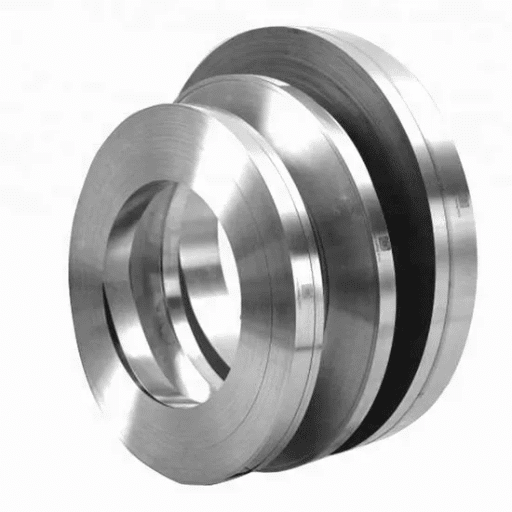
| Gaskets, diaphragms | Strip/foil | 0.05-3 mm thick |
| Flanges, nozzles | Forgings (B564) | Custom per drawing |
For ASME Boiler and Pressure Vessel Code applications, C276 plate is approved under Section VIII Division 1 for temperatures from -198C to 427C. Design stress values are published in Section II Part D.
Welding and Fabrication of Hastelloy C276

Filler Wire Selection: ERNiCrMo-4 vs ERNiCrMo-10
For welding C276 to C276, the matching filler wire is ERNiCrMo-4 (AWS A5.14). This wire matches the base metal chemistry and delivers corrosion resistance equivalent to the parent material. For dissimilar welds between C276 and stainless steels or nickel alloys, ERNiCrMo-10 (higher chromium) provides better dilution tolerance.
| Filler Wire | AWS Class | Best Application |
|---|---|---|
| ERNiCrMo-4 | A5.14 | C276 to C276, most common |
| ERNiCrMo-10 | A5.14 | Dissimilar joints, higher Cr for dilution |
| ENiCrMo-4 | A5.11 | SMAW stick electrodes |
WPS Parameters and Heat Input Control
C276 requires controlled heat input to avoid solidification cracking. Recommended parameters:
- Process: GTAW (TIG) preferred for root passes; GMAW (MIG) acceptable for fill passes
- Heat input: 0.5 – 1.5 kJ/mm maximum
- Interpass temperature: <= 93C
- Shielding gas: Pure argon or argon + 2% helium; backup gas mandatory on root side
- Joint preparation: 60-70 degree included angle, 1.5-2.5 mm root gap
Stringer beads are preferred over weave passes. Each pass should be fully cleaned (stainless wire brush or carbide burr) before the next deposition.
Why No Post-Weld Heat Treatment Is Needed
This is one of C276’s most commercially significant properties. Because carbon and silicon are held to trace levels, chromium carbides and intermetallic phases do not form during welding thermal cycles. The weld metal and heat-affected zone retain the same corrosion resistance as the base metal in the as-welded condition.
Eliminating post-weld solution annealing saves:
- Furnace time and energy cost
- Distortion from thermal cycling
- Potential oxidation damage during heat treatment
- One to two weeks of fabrication schedule
Machinability and Forming Considerations
C276 work-hardens rapidly during machining. Best practices include:
- Sharp carbide or ceramic cutting tools with positive rake angles
- Rigid machine setup to minimize chatter-induced work hardening
- Copious high-pressure coolant
- Surface speeds 30-50% lower than austenitic stainless steels
- Deep, continuous cuts preferred over light skimming passes
For forming, the 40%+ elongation permits cold bending to radii of 1.5-2x thickness. Warm forming at 200-300C reduces springback for complex shapes. Spinning, hydroforming, and explosive forming have all been successfully applied to C276.
Hastelloy C276 Applications by Industry
Chemical Processing and Acid Service
Reactors, heat exchangers, columns, and piping for:
- Hydrochloric acid production and handling
- Sulfuric acid alkylation units
- Organic acid processing (acetic, formic, citric)
- Chlorinated solvent recovery
Flue Gas Desulfurization (FGD) Systems
Coal-fired power plants rely on C276 for:
- Absorber tower internals and spray headers
- Reheaters and ducting
- Dampers and stack liners
- Slurry piping handling chloride-rich limestone slurry
Oil & Gas Sour Gas Service
C276 is listed in NACE MR0175/ISO 15156 for sour gas service (H2S-containing environments). Applications include:
- Downhole tubing and safety valves
- Surface flowlines and manifolds
- Subsea Christmas tree components
- Heat exchangers handling sour hydrocarbons
Marine and Seawater Equipment
- Seawater-cooled heat exchanger tube bundles
- Desalination plant multi-stage flash chambers
- Offshore platform firewater and utility piping
- Marine exhaust risers and scrubber systems
Pharmaceutical and Food Processing
C276’s non-reactive surface and full corrosion immunity make it suitable for:
- Active pharmaceutical ingredient (API) reactors
- High-purity process piping
- Clean-in-place (CIP) systems with aggressive cleaners
Pulp and Paper Bleaching Equipment
Chlorine dioxide bleaching generates some of the most aggressive process streams in industry. C276 dominates:
- Bleach tower internals
- Washer drum components
- Chlorine dioxide generator piping
Sourcing Hastelloy C276 from China
NS3304: The Chinese Equivalent Grade
NS3304 alloy properties match UNS N10276 under the Chinese national standard GB/T 15007. Reputable Chinese mills produce NS3304 plate, bar, and pipe to GB/T 2054 and GB/T 21833 specifications with chemical composition ranges matching ASTM B575.
For international buyers, the key qualification criteria are:
- Molybdenum content verified at 15-17% by OES spectrometer
- Carbon <= 0.01% and silicon <= 0.08% confirmed
- Tensile and elongation meeting ASTM B575 minimums
- Full EN 10204 3.1 or 3.2 material certificate
VIM and ESR Remelting for Critical Applications
Not all C276 is created equal. Standard air-melt + AOD-refined material is adequate for most chemical processing. For critical applications, aerospace, nuclear, high-pressure sour gas, specify material produced by:
- Vacuum Induction Melting (VIM): Removes dissolved gases and volatile tramp elements
- Electroslag Remelting (ESR): Further refines cleanliness and reduces sulfur, non-metallic inclusions
VIM/ESR remelted C276 shows improved fatigue life, better ultrasonic inspectability, and more consistent mechanical properties batch-to-batch. Our Wuxi facility offers both melt qualities with full remelting documentation.
Mill Test Report Verification and Spectral Analysis
Counterfeit or mis-graded material is a real risk in global alloy procurement. Every C276 shipment from our facility includes:
- Full material test report with chemical composition by direct-reading spectrometer
- Mechanical test results (tensile, hardness) from certified lab equipment
- Ultrasonic NDT report for plate and bar
- Heat number traceability to melt log
Buyers should independently verify critical elements, particularly molybdenum, chromium, and tungsten, by portable PMI (Positive Material Identification) on receipt. Discrepancies outside ASTM tolerance bands warrant rejection.
Price Factors and Lead Time Expectations
As of mid-2026, Hastelloy C276 price per kg typically ranges:
| Product Form | Price Range (USD/kg) | Lead Time |
|---|---|---|
| Plate/Sheet | 55−55−85 | 2-4 weeks (stock), 6-10 weeks (mill) |
| Bar/Rod | 60−60−95 | 2-4 weeks (stock), 6-10 weeks (mill) |
| Seamless Pipe | 70−70−110 | 4-8 weeks |
| Custom Forgings | 80−80−130 | 8-14 weeks |
Pricing varies with nickel and molybdenum London Metal Exchange prices, order quantity, dimensional tolerances, and certification requirements. VIM/ESR remelted material commands a 15-25% premium over standard AOD-refined product.
For current pricing and availability on Hastelloy C276 plate, bar, or pipe, submit your specifications. Our metallurgical team responds within 24 hours with material availability, pricing, and delivery schedule.
Hastelloy C276 Properties FAQ
What is the difference between Hastelloy C276 and C22?
C276 contains higher molybdenum and tungsten (15-17% Mo, 3-4.5% W) for superior resistance to reducing acids like HCl and H2SO4. C22 contains higher chromium (20-22.5% Cr) for better performance in oxidizing environments and welded heat-affected zones. For mixed or unknown conditions, C22 offers broader versatility. For clearly reducing acid service, C276 delivers equal or better performance at lower cost.
Can Hastelloy C276 be welded without post-weld heat treatment?
Yes. The intentionally low carbon (<=0.01%) and silicon (<=0.08%) content prevents sensitization during welding. The weld metal and heat-affected zone retain full corrosion resistance in the as-welded condition for most applications. This eliminates the solution annealing step required for many stainless steels.
What is the corrosion rate of C276 in 20% HCl at boiling?
Approximately 0.76 mm/year (30 mpy). At 80C, the rate drops to approximately 0.25 mm/year. For comparison, 316L stainless steel suffers catastrophic corrosion exceeding 25 mm/year in boiling 20% HCl.
Is Hastelloy C276 magnetic?
No. In the annealed condition, C276 is essentially non-magnetic with a relative permeability of approximately 1.0002. Cold working can induce minor magnetic response, but the alloy remains suitable for applications where magnetic interference must be avoided.
What is the Chinese equivalent of Hastelloy C276?
NS3304 per GB/T 15007. Material certified to NS3304 from qualified Chinese mills matches UNS N10276 chemistry and properties when the mill test report confirms compliance with ASTM B575 tolerance bands.
What filler wire is used for welding Hastelloy C276?
ERNiCrMo-4 (AWS A5.14) is the matching filler wire for C276-to-C276 joints. For dissimilar welds to stainless steels, ERNiCrMo-10 provides better chromium dilution tolerance. Stick electrode equivalent is ENiCrMo-4 (AWS A5.11).
How does Hastelloy C276 compare to 316L stainless steel?
C276 outperforms 316L in every aggressive environment: HCl resistance is 100x better, seawater pitting resistance is essentially infinite versus finite for 316L, and chloride SCC immunity is total where 316L fails predictably. The trade-off is cost. C276 is typically 8-12x more expensive than 316L. Specify C276 only when 316L’s corrosion limits are exceeded.
What is the maximum service temperature of Hastelloy C276?
For continuous structural load-bearing service, 400C is the practical limit. For oxidation resistance without structural load, C276 remains stable to approximately 1,040C. The melting range is 1,325-1,370C.
Is Hastelloy C276 NACE MR0175 compliant?
Yes. UNS N10276 is listed in NACE MR0175/ISO 15156 Part 3 as acceptable for sour gas service (H2S-containing environments) up to specified hardness limits. The material is widely used in oil and gas downhole and surface equipment where H2S is present.
Conclusion
Hastelloy C276 properties make it the benchmark corrosion-resistant alloy for chemical processing, flue gas desulfurization, marine service, and sour gas applications. Its unique combination of 15-17% molybdenum, 3-4.5% tungsten, and trace-level carbon and silicon delivers resistance to over 99% of industrial corrosive media while maintaining weldability without post-weld heat treatment.
The key specification decisions are:
- Choose C276 over C22 for reducing acid service (HCl, H2SO4) where cost matters
- Choose C22 over C276 for oxidizing chloride environments requiring maximum crevice resistance
- Specify VIM/ESR remelting for critical applications where inclusion cleanliness affects fatigue life
- Verify NS3304 chemistry by OES when sourcing from Chinese mills
Every batch we ship includes full MTR documentation, spectral analysis, and ultrasonic NDT reports. Whether you need Hastelloy C276 plate for a pressure vessel, bar stock for pump shafts, or seamless pipe for process piping, tell us your operating temperature, media composition, and fabrication requirements. Our metallurgical engineers confirm the right grade and form factor within 24 hours.
For further context on how C276 fits within the broader corrosion-resistant alloy landscape, see our complete nickel-based alloy technical guide. If you’re evaluating whether your application needs a nickel alloy at all, our guide on when to upgrade from stainless steel provides a decision framework based on temperature, chloride concentration, and acid exposure.