Inconel 718 is the most widely used nickel-based superalloy in modern aerospace, accounting for roughly half the weight of every jet engine’s hot section. Engineers specify it because it retains tensile strength above 965 MPa at 650°C and resists creep, fatigue, and oxidation in turbine discs, compressor blades, rocket turbopumps, and structural fasteners.
That single turbine disc costs more than a luxury sedan. Yet most aerospace OEMs consider it a bargain compared to the alternative.
If you are specifying materials for jet engines or rocket propulsion, you already know that standard titanium and stainless steel do not survive the hot section. In this guide, you will learn exactly which components use Inconel 718, why engineers specify it over titanium, and what certifications to demand when sourcing. From CFM LEAP blisks to SpaceX Merlin turbopumps, we cover the applications, the AMS 5662/5663 specifications, and the procurement checklist.
Key Takeaways
- Inconel 718 dominates aerospace because it maintains 965 MPa tensile strength at 650°C with exceptional creep and fatigue resistance.
- Critical applications include turbine discs, compressor blades, rocket turbopumps, landing gear fasteners, and 3D-printed fuel nozzles.
- AMS 5662 specifies the solution-treated and aged condition for most aerospace components; AMS 5663 uses a different aging cycle for higher strength.
- The Chinese equivalent GH4169 meets GB/T standards and is chemically interchangeable with Inconel 718 when properly certified.
- Aerospace buyers should demand VIM/VAR or VIM/ESR melt practice, full MTR documentation, and ultrasonic NDT on every order.
What Makes Inconel 718 the Default Aerospace Superalloy

Composition and Metallurgical Design
Inconel 718 (UNS N07718) is a precipitation-hardened nickel-chromium-iron alloy strengthened by niobium, molybdenum, and titanium. Its matrix contains gamma prime (gamma’) and gamma double prime (gamma”) precipitates. These intermetallic phases lock dislocations and maintain strength at temperatures where most alloys soften. For the definitive composition table, refer to the Special Metals Inconel 718 datasheet.
The niobium content is particularly important. Unlike many superalloys that rely heavily on aluminum and titanium for precipitation hardening, Inconel 718’s niobium-driven gamma” phase provides weldability that comparable grades cannot match. Fabricators can weld critical joints without pre-heating or post-weld heat treatment in many cases. This is a decisive advantage for complex engine assemblies.
| Element | AMS 5662 Range (%) | Role |
|---|---|---|
| Nickel | 50.0–55.0 | Matrix; corrosion resistance |
| Chromium | 17.0–21.0 | Oxidation resistance |
| Iron | Balance | Matrix diluent |
| Niobium + Tantalum | 4.75–5.50 | Primary strengthening (gamma”) |
| Molybdenum | 2.80–3.30 | Solid-solution strengthening |
| Titanium | 0.65–1.15 | Secondary strengthening (gamma’) |
| Aluminum | 0.20–0.80 | Oxidation + gamma’ formation |
| Carbon | 0.08 max | Controlled for carbide stability |
Mechanical Properties at Temperature
Aerospace engineers do not specify alloys for room-temperature performance. They specify for the worst-case operating envelope.
At 21°C, solution-treated and aged Inconel 718 delivers approximately 965 MPa tensile strength and 550 MPa yield strength. At 650°C, the continuous operating limit for most turbine discs, it retains roughly 80% of that strength. Short-term excursions to 700°C are possible without catastrophic degradation.
Creep resistance is equally critical. Under constant load at 650°C, Inconel 718 resists plastic deformation far longer than Inconel 625 or stainless steel alternatives. Fatigue life also exceeds 50,000 cycles in low-cycle fatigue testing under typical turbine disc loading. This margin explains why OEMs trust it for safety-critical rotating hardware.
| Property | Inconel 718 | Inconel 625 | Ti-6Al-4V | 316L SS |
|---|---|---|---|---|
| Tensile Strength (RT) | 965 MPa | 930 MPa | 950 MPa | 515 MPa |
| Yield Strength (RT) | 550 MPa | 517 MPa | 880 MPa | 205 MPa |
| Max Continuous Temp | 650°C | 980°C | 315°C | 870°C |
| Creep Resistance (650°C) | Excellent | Moderate | N/A | Poor |
| Weldability | Excellent | Excellent | Fair | Excellent |
The table above reveals a key truth. Inconel 625 tolerates higher temperatures, but it lacks the specific strength-to-creep balance that Inconel 718 delivers between 500°C and 700°C. Titanium alloys are lighter, yet they cannot survive the hot section. For the temperature band where jet engines operate, Inconel 718 sits in the sweet spot. For a full side-by-side comparison, see our Inconel 625 vs 718 selection guide.
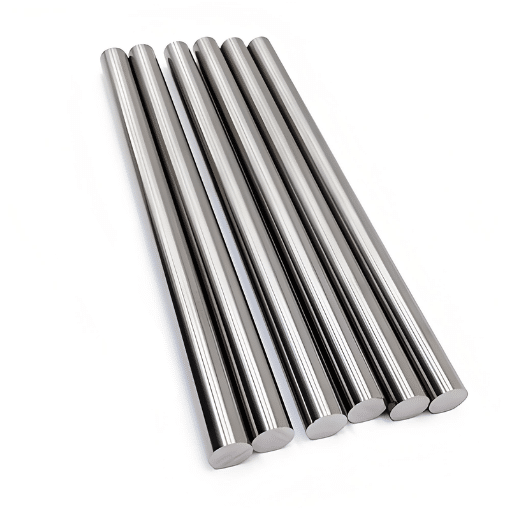
Need AMS-certified Inconel 718 bar or forging with full traceability? View our Inconel 718 round bar specifications and submit your material requirements.
Why Engineers Choose It Over Titanium in the Hot Section
Titanium alloys like Ti-6Al-4V offer exceptional strength-to-weight ratios. Front-stage compressor blades often use titanium to save weight. But once temperatures exceed 315°C, titanium loses strength rapidly and becomes susceptible to oxidation. Inconel 718 does not. Engineers accept the density penalty because flight safety depends on material stability at red heat.
Inconel 718 in Jet Engines: Component-by-Component Breakdown
Turbine Section
The turbine section is where Inconel 718 earns its reputation. Turbine discs operate at 650°C under centrifugal stresses exceeding 690 MPa. Bladed discs, or “blisks,” in modern engines like the CFM LEAP series integrate blades and discs into a single forged component.
This cuts weight by up to 50% compared to traditional bolted assemblies. Inconel 718 is the default material for these blisks because it combines the fatigue resistance of a forging with the creep stability of a superalloy.
Turbine blades, seals, and casings also rely on Inconel 718. While some first-stage blades now use directionally solidified or single-crystal superalloys for temperatures above 1,000°C, Inconel 718 remains the workhorse for second-stage discs, low-pressure turbines, and seal rings. Temperatures in these locations sit in the 550–700°C range.
When the engineering team at a European powerplant OEM specified Inconel 625 for a prototype turbine disc in 2019, they expected adequate performance. During low-cycle fatigue validation, the disc failed at 12,000 cycles. That was well below the 50,000-cycle minimum. The root cause was insufficient creep resistance at 650°C. Switching to Inconel 718 and specifying AMS 5662 with double aging brought the component to 62,000 cycles without failure. That specification change is now standard in their procurement manual.
Compressor Section
Rear-stage compressor discs and blades encounter temperatures up to 600°C from compression heating. Inconel 718 handles these conditions while maintaining tighter dimensional stability than titanium alternatives. Diffuser cases, which channel compressed air into the combustor, also use Inconel 718 to manage thermal gradients during rapid throttle changes.
Combustor and Afterburner
Combustor liner segments, fuel nozzles, and flame holders must survive direct flame impingement and thermal cycling. Inconel 718’s oxidation resistance, driven by its 17–21% chromium content, forms a stable oxide scale that protects the base metal. Many fuel nozzle assemblies now use 3D-printed Inconel 718.
Inconel 718 Rocket Engines and Space Applications

Liquid rocket engines impose a unique challenge for Inconel 718 aerospace applications. The same material must tolerate cryogenic propellant temperatures on one side and combustion-chamber heat on the other. Inconel 718 handles this thermal shock because its ductility remains high at -196°C while its hot-section strength persists above 700°C.
SpaceX uses Inconel 718 for turbopump housings in the Merlin engine, making these some of the most demanding Inconel 718 rocket engine components in production. The turbopump spins at over 30,000 RPM, driving liquid oxygen and kerosene into the combustion chamber. The housing material must resist cavitation erosion, thermal fatigue, and high-cycle vibration. Inconel 718 meets all three requirements. NASA has also demonstrated Inconel 718 injector plates in regeneratively cooled thrust chambers, confirming compatibility with long-duration burns.
For spacecraft structures, Inconel 718 appears in heat shield supports, satellite housings, and reusable launch vehicle joints. Its coefficient of thermal expansion matches many carbon-fiber composites. This reduces stress at material interfaces during orbital thermal cycling.
Inconel 718 Landing Gear, Fasteners, and Airframe
Not every Inconel 718 aerospace application involves extreme heat. Landing gear dampers and actuators use the alloy for its high yield strength and resistance to stress corrosion cracking in high-humidity environments. Engine mount brackets and exhaust nozzle flaps rely on it for stiffness at elevated temperatures without the weight of steel.
High-temperature fasteners are a particularly demanding application. A single jet engine may contain thousands of fasteners. Those near the core must maintain clamping force at 600°C without relaxing. Inconel 718 landing gear fasteners and engine-mount hardware, specified to AMS 5662 or NAS standards, deliver this performance. Standard nickel or stainless steel fasteners would creep loose within hours.
Inconel 718 Additive Manufacturing: The 2026 Game Changer
Direct metal laser sintering and selective laser melting have transformed how engineers think about Inconel 718 aerospace components. Additive manufacturing builds complex geometries, internal cooling channels, lattice structures, and topology-optimized brackets, that subtractive machining cannot produce.
GE Aviation pioneered the field. By 2025, GE had printed over 30,000 fuel nozzles in Inconel 718 for the LEAP engine. Each printed nozzle integrates 20 formerly separate parts into one component. This reduces weight by 25% and improves durability fivefold. The FAA certified these nozzles as flight-critical, establishing a regulatory pathway for other 3D-printed Inconel 718 parts.
However, powder-bed fusion introduces challenges. Porosity, anisotropic grain structures, and residual stresses require hot isostatic pressing and controlled heat treatment to match wrought properties. Buyers sourcing additively manufactured Inconel 718 should demand HIP processing and mechanical property testing in three orientations. This ensures compliance with AMS 5662 or customer-specific specifications.
Specifications and Certifications for Aerospace
AMS 5662 vs AMS 5663 vs ASTM B637
Aerospace buyers cannot simply order “Inconel 718.” The specification determines the heat treatment, mechanical properties, and inspection requirements.
| Specification | Heat Treatment | Tensile (MPa) | Yield (MPa) | Typical Use |
|---|---|---|---|---|
| AMS 5662 | Solution + double aging | >=1,240 | >=1,035 | Turbine discs, blisks, structural forgings |
| AMS 5663 | Solution + direct aging | >=1,380 | >=1,100 | High-strength fasteners, bolts |
| ASTM B637 | Annealed or aged (varies) | >=965 | >=550 | General bar and forging stock |
AMS 5662 is the most common aerospace specification. It requires solution treatment at 954–980°C, rapid cooling, then a double aging cycle at 718°C and 621°C. This produces the optimal balance of strength, toughness, and stress-rupture resistance.
AMS 5663 uses a single aging step after solution treatment to achieve higher strength. The trade-off is slightly reduced ductility. Engineers specify AMS 5663 when the design is constrained by fastener size or when maximum clamp load is critical.
ASTM B637 covers a broader range of conditions. It is frequently used for commercial applications where the full AMS aerospace pedigree is not required. Many Chinese suppliers stock ASTM B637 bar as standard and can upgrade to AMS processing on request.
Melt Practice and NDT Requirements
For rotating aerospace components, melt quality is non-negotiable. Vacuum induction melting followed by vacuum arc remelting or electroslag remelting removes inclusions and gas pockets that could initiate fatigue cracks. Every aerospace-grade order should specify VIM+VAR or VIM+ESR on the material test report.
Ultrasonic non-destructive testing must verify internal soundness. Acceptable bar stock for turbine shafts typically requires ultrasonic inspection per AMS-STD-2175 or equivalent. Surface inspection by dye penetrant or eddy current catches near-surface defects that machining might expose.
Chinese Equivalent GH4169
GH4169 is the Chinese GB/T designation for the same alloy chemistry as Inconel 718. It complies with GB/T 14992 and GB/T 15062, specifying identical nickel, chromium, and niobium ranges. When produced by a qualified manufacturer with VIM/ESR capability and full spectral verification, GH4169 is chemically and mechanically interchangeable with Inconel 718.
The critical factor is documentation. Western aerospace programs typically require EN 10204 3.1 or 3.2 material certificates, full chemical analysis by optical emission spectrometry, and mechanical test reports aligned with AMS 5662 or ASTM B637. Chinese suppliers who can provide this documentation offer a viable second-source option for non-flight-critical or subcontractor-tier components.
At Jiangsu Zhonggongte, we produce Inconel 718 and GH4169 bar, forging billet, and round stock with VIM/ESR melt practice. Every batch ships with full material test reports, mill certificates, and spectral analysis documentation. This gives your procurement and quality teams the traceability they require on day one. Learn more about our nickel-based alloy capabilities.
Cost Analysis: Inconel 718 vs Alternatives
Material selection is never purely technical. Procurement teams must justify the cost per kilogram against total cost of ownership.
Aerospace-grade Inconel 718 bar typically trades between 35and35and55 per kilogram. The final price depends on specification, form, and order quantity. Ti-6Al-4V aerospace bar ranges from 28to28to45 per kilogram. It is cheaper on paper, but often more expensive per component because titanium requires specialized machining, rigid tooling, and inert-gas welding.
Inconel 625 carries a similar price to Inconel 718 but lacks the specific strength-to-creep ratio for disc applications. Using 625 where 718 is specified invites premature component failure and warranty claims that dwarf any material savings.
| Material | Price/kg (Aerospace Grade) | Machinability | Weldability | Max Service Temp |
|---|---|---|---|---|
| Inconel 718 | $35–55 | Difficult | Excellent | 650°C |
| Ti-6Al-4V | $28–45 | Difficult | Fair | 315°C |
| Inconel 625 | $35–50 | Moderate | Excellent | 980°C |
| Maraging C300 | $25–40 | Moderate | Excellent | 450°C |
Fabrication costs add significantly. Inconel 718 work-hardens rapidly during machining, reducing tool life by 40–60% compared to austenitic stainless steel. Specialized carbide or ceramic inserts are mandatory.
Heat treatment cycles add processing time. Additive manufacturing eliminates some machining but introduces powder costs and HIP overhead.
Procurement Guide for Aerospace Engineers

What to Specify
A complete material specification should include:
- Grade and UNS: Inconel 718 (UNS N07718) or GH4169
- Specification: AMS 5662, AMS 5663, or ASTM B637
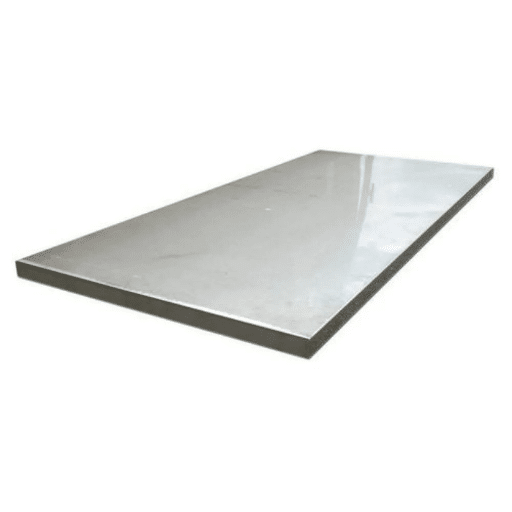
- Form: Round bar, forging billet, plate, sheet, wire, or powder
- Heat treatment condition: Solution-treated, aged, or annealed
- Melt practice: VIM+VAR or VIM+ESR
- Certification: EN 10204 3.1 or 3.2 material certificate, full chemical analysis, mechanical test report
- NDT: Ultrasonic inspection, dye penetrant, or radiographic as required
Sourcing from China
Global aerospace supply chains increasingly source specialty alloys from qualified Chinese manufacturers. The key is verification, not assumption.
In 2023, a Southeast Asian MRO facility needed AMS 5662 bar for turbopump refurbishment on short notice. Their traditional European supplier quoted 14 weeks. A qualified Chinese supplier delivered VIM+ESR material with full AMS-compliant documentation in 4 weeks. The buyer verified spectrometer calibration certificates, third-party inspection reports, and past NADCAP audit results before placing the order. The material passed incoming inspection on arrival and was cleared for flight-critical use.
When evaluating a Chinese supplier for Inconel 718 aerospace material, verify the following:
- VIM and ESR/VAR furnace capability
- In-house direct-reading spectrometer and tensile testing equipment
- Experience exporting to aerospace or defense contractors with documented supply history
- Willingness to provide EN 10204 3.2 certificates with third-party inspection
- Lead time and stock availability for your specific form and size
Submit your RFQ today. Our technical team will respond within 24 hours with material availability, pricing, and delivery schedule.
FAQ: Inconel 718 Aerospace
Q: What temperature can Inconel 718 withstand in continuous aerospace service?
A: Continuous service temperature is 650°C. Short-term peaks to 700°C are acceptable, but prolonged exposure above 650°C reduces creep life.
Q: Is Inconel 718 stronger than titanium for aerospace applications?
A: At room temperature, Ti-6Al-4V offers higher specific strength. Above 315°C, Inconel 718 retains strength while titanium weakens. For hot-section components, Inconel 718 is the stronger choice.
Q: Can GH4169 replace Inconel 718 in Western aerospace programs?
A: Yes, when the supplier provides full chemical and mechanical equivalence documentation aligned with AMS 5662 or ASTM B637. GB/T 14992 chemistry matches UNS N07718. The barrier is certification, not chemistry.
Q: What is the difference between AMS 5662 and AMS 5663?
A: AMS 5662 uses double aging for balanced strength and toughness. AMS 5663 uses direct single aging for higher tensile and yield strength at the cost of slightly reduced ductility.
Q: How does Inconel 718 perform in additive manufacturing?
A: With proper heat treatment and HIP, additively manufactured Inconel 718 meets AMS 5662 mechanical properties. Anisotropy and residual stress must be managed through process control and post-processing.
Q: What is the typical fatigue life of Inconel 718 turbine discs?
A: Low-cycle fatigue life exceeds 50,000 cycles at typical disc stresses. Actual life depends on geometry, surface finish, and operating temperature profile.
Q: Why is Inconel 718 used instead of Inconel 625 in jet engine discs?
A: Inconel 718 delivers superior creep resistance and higher specific strength in the 500–700°C range. Inconel 625 is better for sustained temperatures above 800°C but lacks the strength margin required for rotating disc applications.
Q: What certifications are required for aerospace Inconel 718?
A: Minimum requirements include AMS 5662 or 5663, VIM+VAR/ESR melt practice, EN 10204 3.1/3.2 material certificates, full chemical analysis, mechanical test reports, and ultrasonic NDT.
Q: How much does Inconel 718 cost per kilogram for aerospace grade?
A: Aerospace-grade bar and forging stock typically range from 35to35to55 per kilogram. The final price depends on specification, form, quantity, and certification requirements.
Q: What are the main machining challenges with Inconel 718?
A: Rapid work hardening, high cutting forces, and elevated temperatures at the tool tip reduce tool life. Rigid setups, slow speeds, positive rake angles, and coated carbide or ceramic inserts are essential.
Conclusion
Inconel 718 aerospace dominance rests on a simple formula. It offers unmatched strength-to-creep resistance between 500°C and 700°C, proven weldability, and 60 years of flight-certified service history. From CFM LEAP blisks to SpaceX Merlin turbopumps, it remains the material engineers specify when failure is not an option.
The alloy’s future is equally promising. Additive manufacturing is expanding design freedom, while qualified Chinese suppliers are broadening the certified supply base beyond traditional Western mills. Whether you need AMS 5662 bar for a turbine disc or GH4169 forging stock for a rocket component, the key is demanding full traceability, VIM/ESR melt documentation, and third-party verification.
Request a quote for AMS 5662/5663 Inconel 718 bar, forging, or custom-processed billet. We ship with full MTR and EN 10204 3.1/3.2 documentation. Our metallurgical engineers confirm your specification compliance within 24 hours.